 Photo:
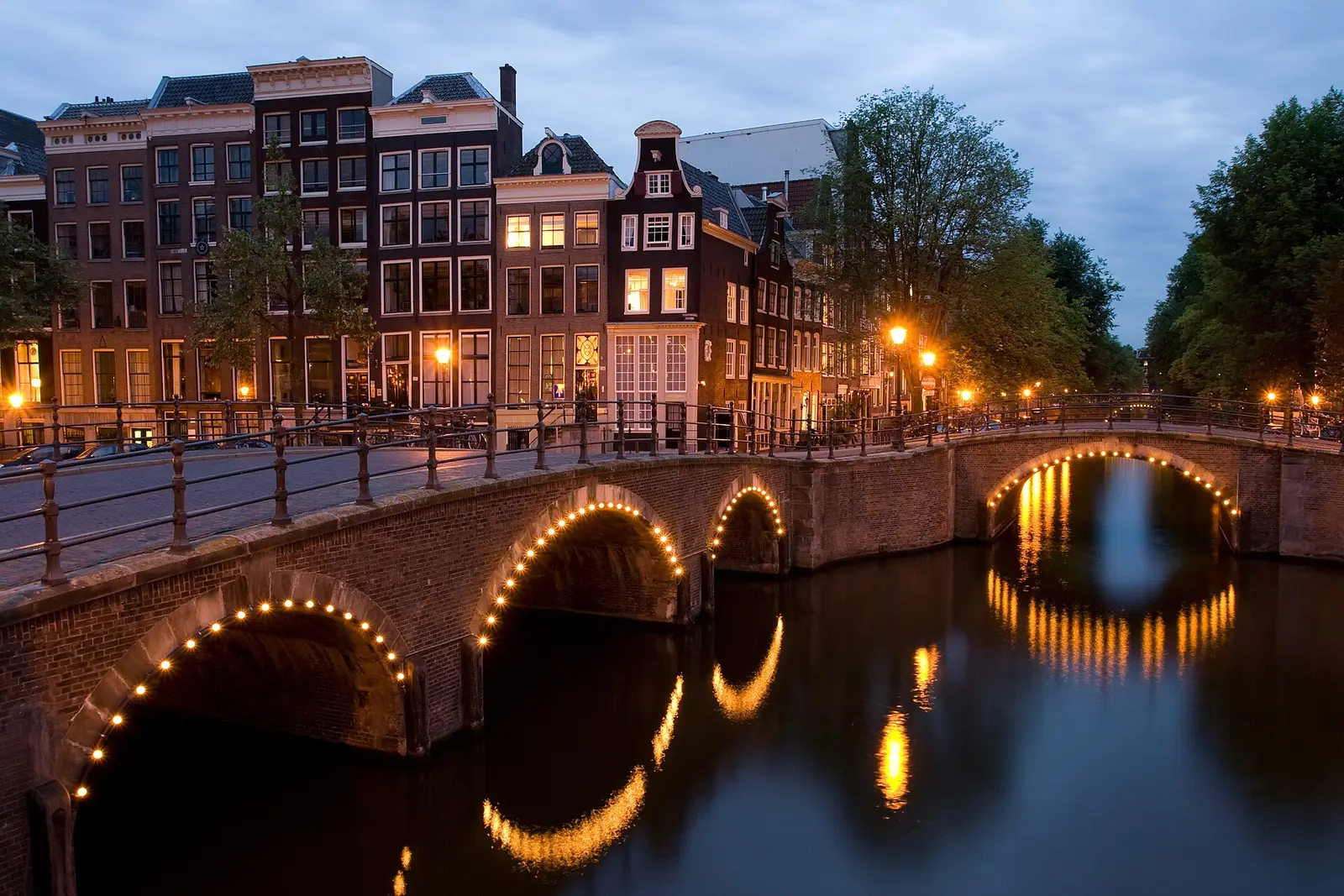
Amsterdam grew from a dam on the Amstel into one of the richest ports of 17th-century Europe, and the ring of canals its merchants dug is still the heart of the city: tall, narrow brick houses along the water, humpbacked bridges and houseboats under the elms. The center is compact, about half an hour on foot from Centraal Station to the Rijksmuseum, and most people who live here get around by bike. Between the canals sit Rembrandt and Vermeer at the Rijksmuseum, Van Gogh next door, and the house where Anne Frank wrote her diary.
This guide covers when to go, where to stay, what to see, a walk through the Jordaan, a day in Haarlem, what to eat, and the history, art and customs that make the city make sense.
What Amsterdam is good for
Friends' trips
Hire an electric boat and steer yourselves around the canals, graze your way through the Foodhallen, then share bitterballen and beer on a terrace by the water. The free ferry behind Centraal Station crosses to Noord, where bars and restaurants fill the old shipyards.
Bachelorette and bachelor weekends
Amsterdam welcomes groups but not rowdiness: drinking in the street is banned in most of the center, and drunken nuisance is fined. Plan the weekend around a canal boat with drinks, a jenever tasting, a long dinner in De Pijp and a club night, and it goes down well.
Weddings and honeymoons
A legal wedding in the Netherlands needs one partner who is Dutch or lives in the country, so most visiting couples hold a symbolic ceremony in a canal house, a garden or on a boat and sign the papers at home. The city has its own place in wedding history: the world’s first same-sex marriages were held at its city hall in 2001.
Couples
A boat on the canals after dark, when the bridges light up, dinner in the Jordaan and an early walk in the Vondelpark before the city wakes.
Families
Hands-on science at NEMO, the zoo and planetarium at Artis, a replica East Indiaman moored at the Maritime Museum, and poffertjes after a morning in the Vondelpark. Children cycle everywhere here, and the park paths are a safe place to try.
Solo travel
Safe, flat, compact and easy to find your way around, with English spoken almost everywhere. Brown cafés are made for sitting alone with a book, and a walking or cycling tour is an easy way to meet people.
Food lovers
Raw herring from a stall, bitterballen with mustard, apple pie on the Noordermarkt, an Indonesian rijsttafel and stroopwafels warm from the Albert Cuyp market.
History and art
The canal ring of the Golden Age, Rembrandt and Vermeer at the Rijksmuseum, a Catholic church hidden in an attic, and the Anne Frank House.
Plan your trip
When to go
April and May bring the tulips, in the city and at Keukenhof, and King’s Day on 27 April, when the whole city wears orange. June to August are the warmest months, with long evenings and the most visitors. September is often mild and calmer. Winter is cold, damp and dark by late afternoon, brightened by the Light Festival on the canals from late November to mid-January.
How long to stay
Three days covers the canal ring, the Rijksmuseum and the Van Gogh Museum, the Anne Frank House and the Jordaan at a human pace. Four days adds the Jewish Cultural Quarter, Noord across the water and a slower day in the parks. With five, add Haarlem, The Hague or the windmills of the Zaan.
Getting there
Schiphol (AMS) is one of Europe’s busiest airports, and trains from the station under the terminal reach Amsterdam Centraal in about 15 minutes, several times an hour by day and hourly through the night. Eurostar trains run direct from London in about four hours and from Paris in about three and a half, and ICE trains come in from Germany.
Getting around
Walk, and watch for bikes: the red lanes are theirs, and they will not stop. Trams cover the center, the metro runs north to south under the city, and free ferries cross the IJ to Noord from behind Centraal Station. Tap a contactless bank card on the reader when you board and again when you get off; trams and buses no longer take cash. If you hire a bike, keep right, signal with your hand and lock it to something fixed.
Tickets
Anne Frank House tickets are sold only on its own website, released every Tuesday for visits six weeks later, and they go fast. Book the Van Gogh Museum and the Rijksmuseum ahead too, for a time slot. The I amsterdam City Card covers public transport and entry to many museums, though not the Anne Frank House.
Money and tipping
Cards are accepted almost everywhere and some places take nothing else, so you rarely need cash. Tipping is appreciated, not expected: round up, or leave 5 to 10% in a restaurant for good service. Hotels add a tourist tax of 12.5% of the room price.
Weather, month by month
Spring
March to May
Cool and changeable, from about 10°C in March to 17°C in May, with bright spells, showers and the tulips out in April.
Summer
June to August
Mild to warm, usually 20 to 23°C by day, with long light evenings: in late June the sun sets after 10pm. Heat waves come but rarely last.
Autumn
September to November
September is often mild and settled. October brings the first storms and yellow leaves on the canals, and November is grey, wet and windy.
Winter
December to February
Cold and damp, around 5 to 7°C by day, dark by about 4:30pm in December, with the odd frost. In the hardest winters the canals freeze and the city goes skating.
Top sights
 01
The Rijksmuseum
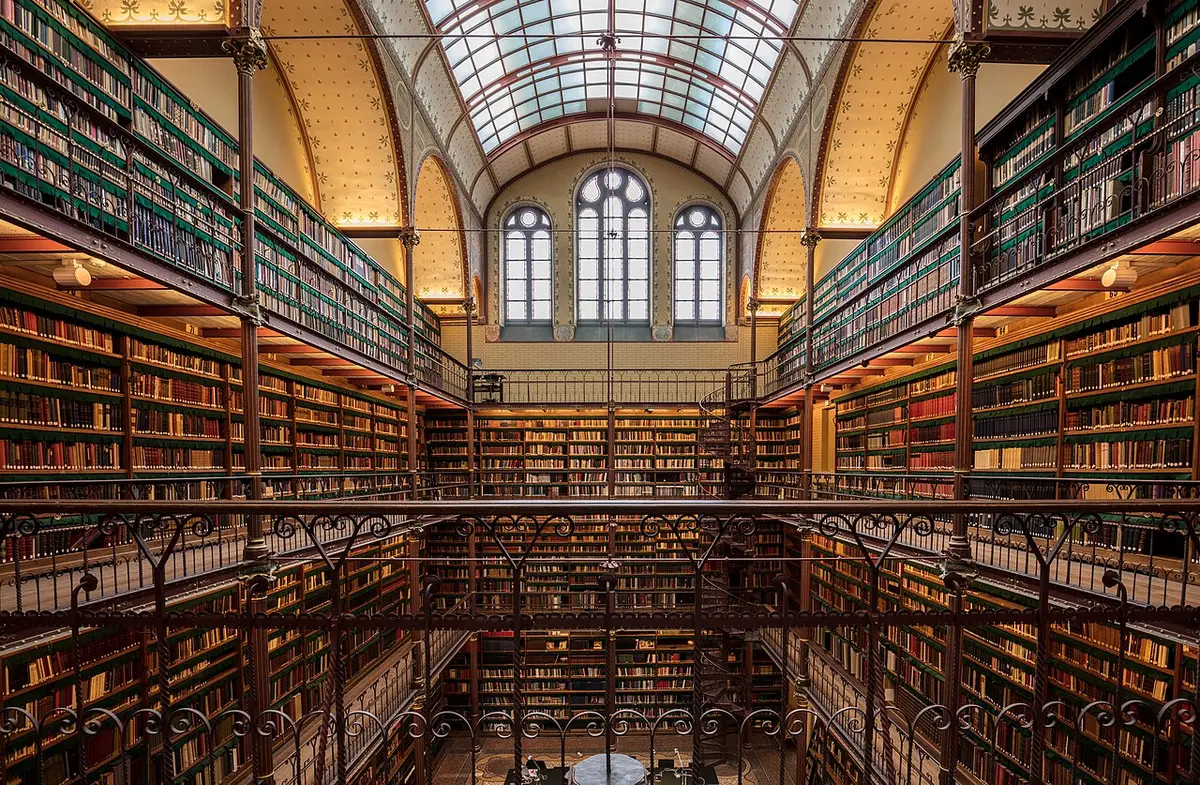
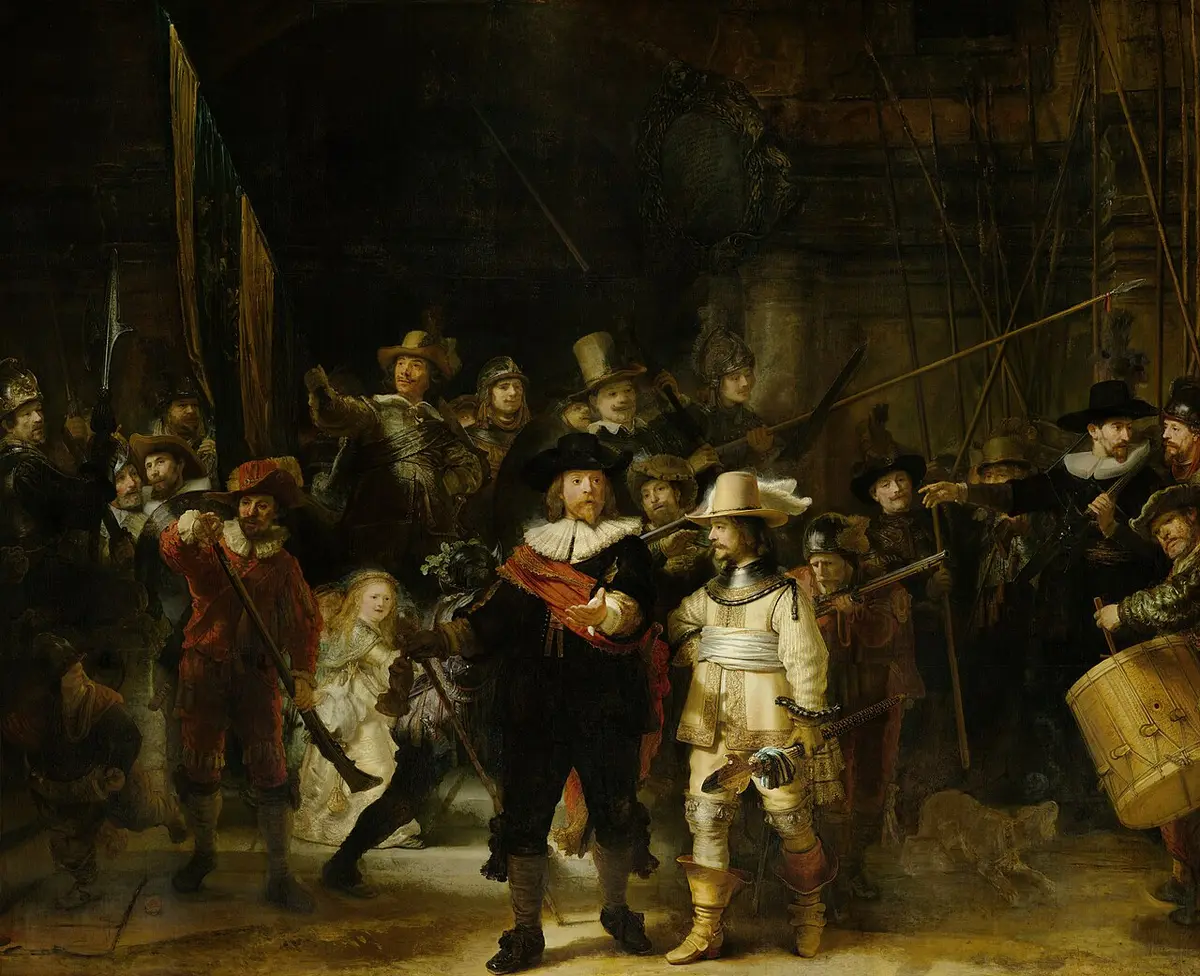
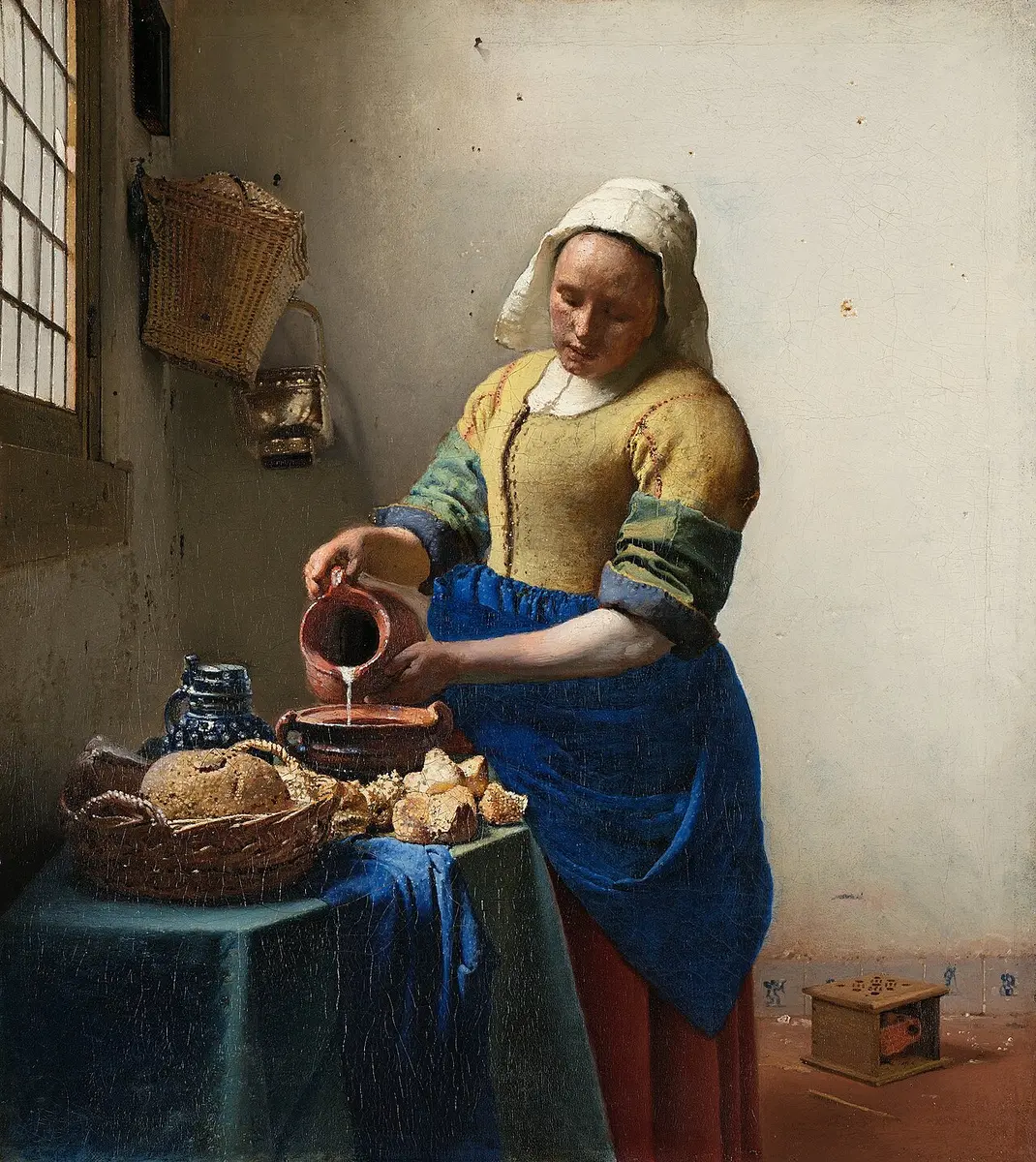
The national museum, in Pierre Cuypers’s building of 1885, holds the great Dutch painting of the Golden Age: Rembrandt’s Night Watch, Vermeer’s Milkmaid and Little Street, and room after room of Hals, Steen and Ruisdael, with ship models, Delftware and dolls’ houses between them. The Night Watch is being restored in a glass room in its gallery, so you can watch the restorers at work.
Book a time slot and go at opening time, straight to the Gallery of Honour. Before you leave, look down into the library, the building’s most beautiful room.
Photo: Michael D Beckwith, CC0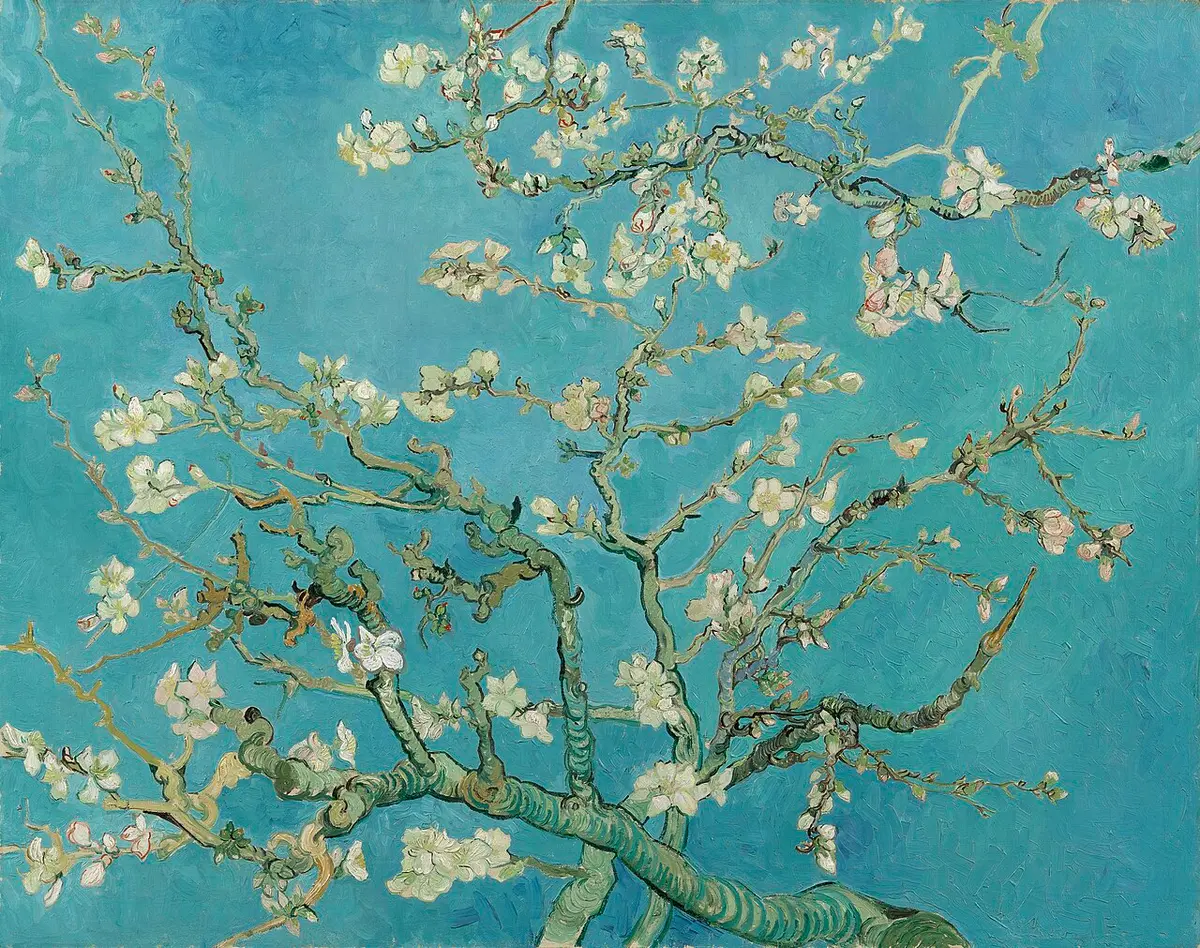 02
The Van Gogh Museum
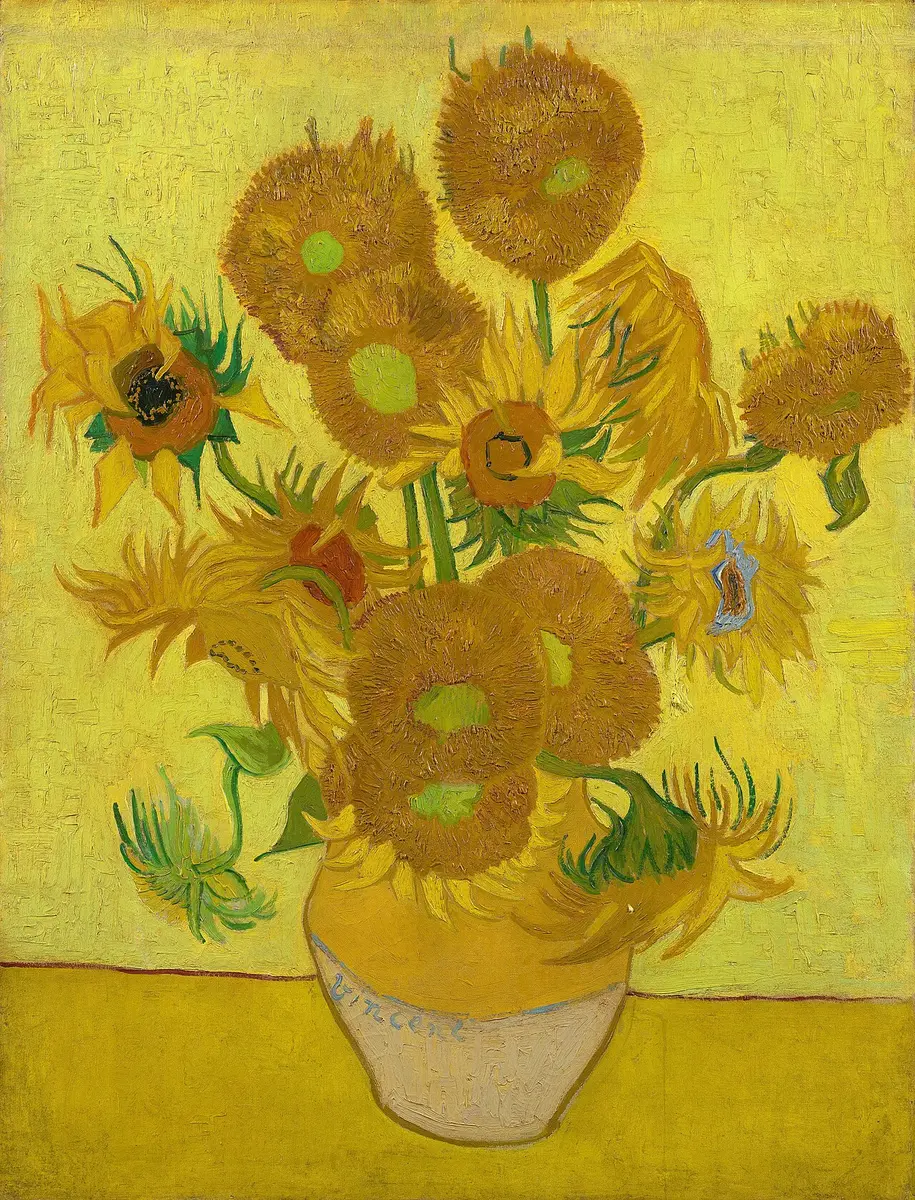
The largest collection of Van Gogh’s work anywhere, about 200 paintings with hundreds of drawings and letters, hung so you follow him from the dark Potato Eaters of 1885 through Paris and Arles to his last months at Auvers. Sunflowers and The Bedroom are here, and Almond Blossom, painted for his newborn nephew.
Tickets are for a time slot and sell out on busy days: book ahead on the museum’s website.
Photo: Vincent van Gogh, Public domain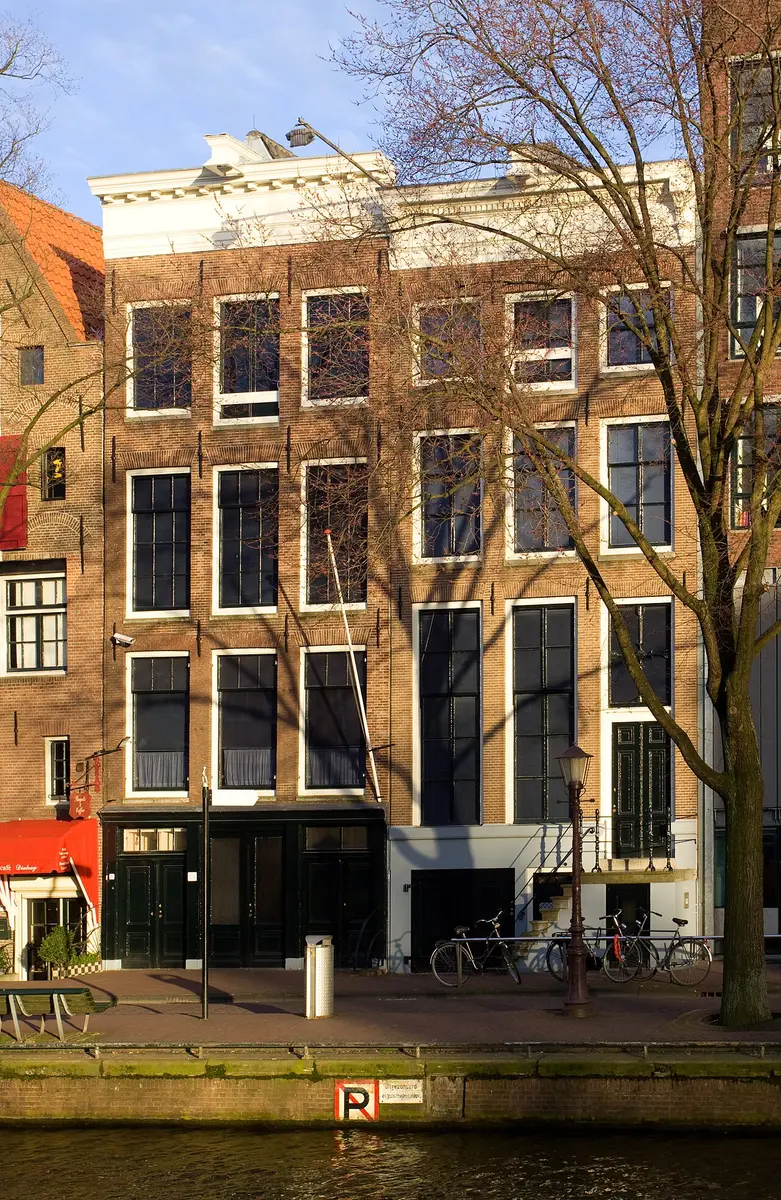 03
The Anne Frank House
From July 1942 to August 1944, Anne Frank, her family and four others hid in the rooms behind Otto Frank’s business at Prinsengracht 263, reached through a door behind a bookcase. The rooms are left empty, as Otto wished after the war, and the diary Anne kept here is on show.
Tickets are sold only on the museum’s own website, released every Tuesday for visits six weeks later.
Photo: Massimo Catarinella, CC BY-SA 3.0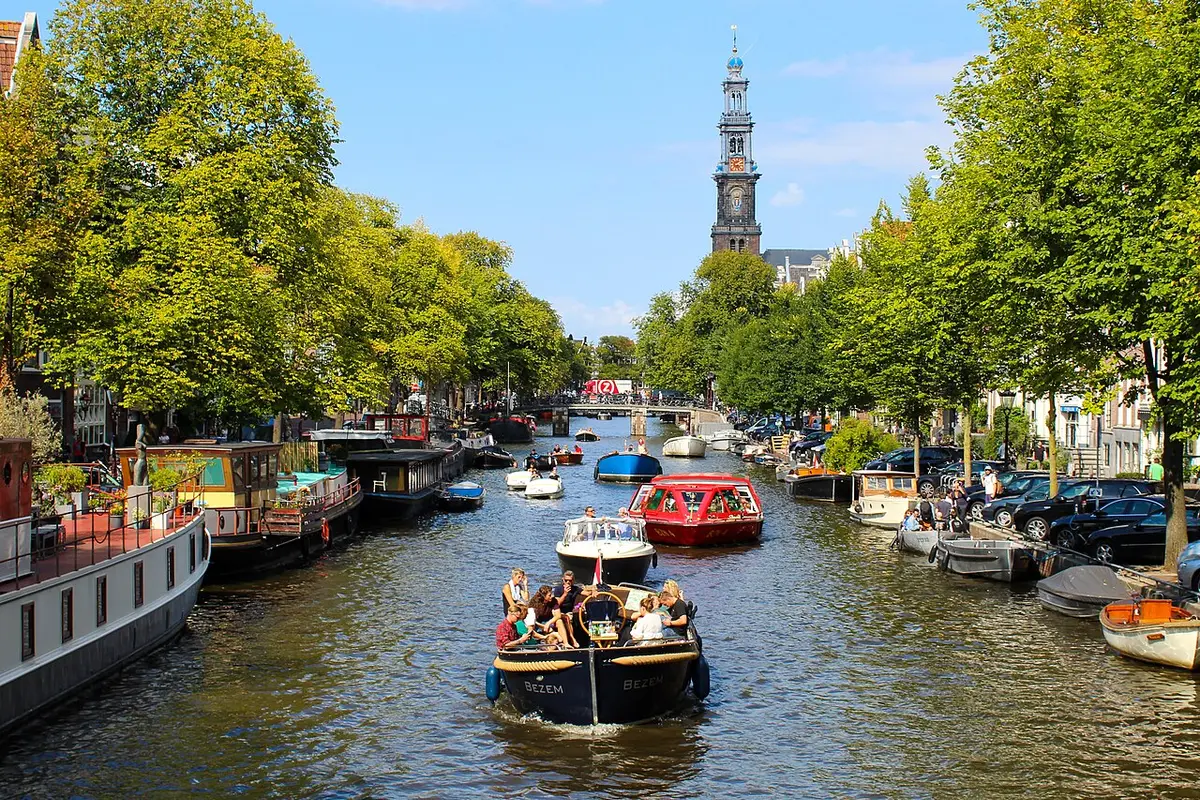 04
The canal ring
In 1613 the city began digging three new canals, the Herengracht, the Keizersgracht and the Prinsengracht, in rings around the old town, and lined them with merchants’ houses. Four centuries on the ring is still lived in and still works as planned, and UNESCO listed it in 2010. See it first from the water, then on foot along the small streets that cross it.
The Nine Streets, the shopping lanes between the Singel and the Prinsengracht, make the best walk across the rings.
Photo: Juke Schweizer, CC BY-SA 4.0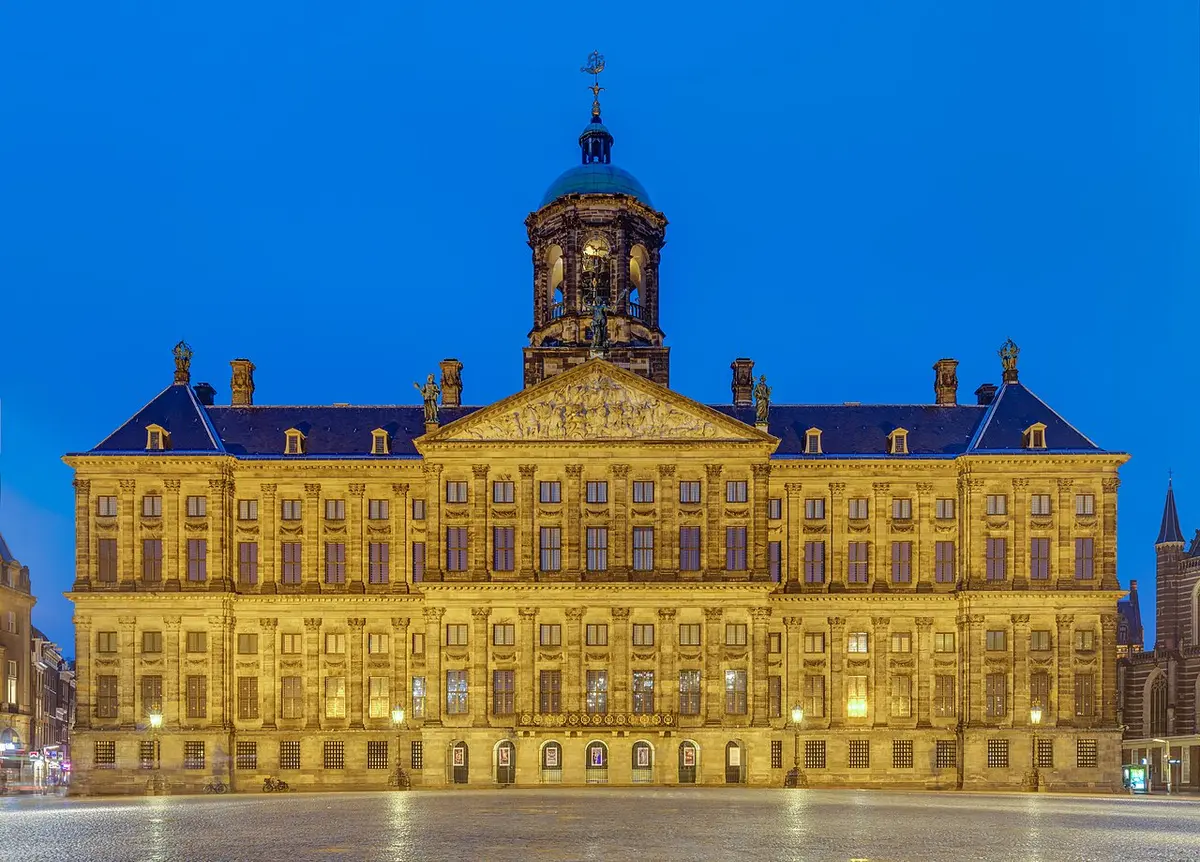 05
The Royal Palace and the Dam
Built from 1648 as the town hall, on 13,659 wooden piles, it became a royal palace when Louis Napoleon moved in in 1808, and it is still used for state occasions. Inside, the Citizens’ Hall puts the world at your feet: maps of the two hemispheres and the heavens set in marble in the floor.
Open most days, but closed during royal and state events: check the calendar before you go.
Photo: Diego Delso, CC BY-SA 4.0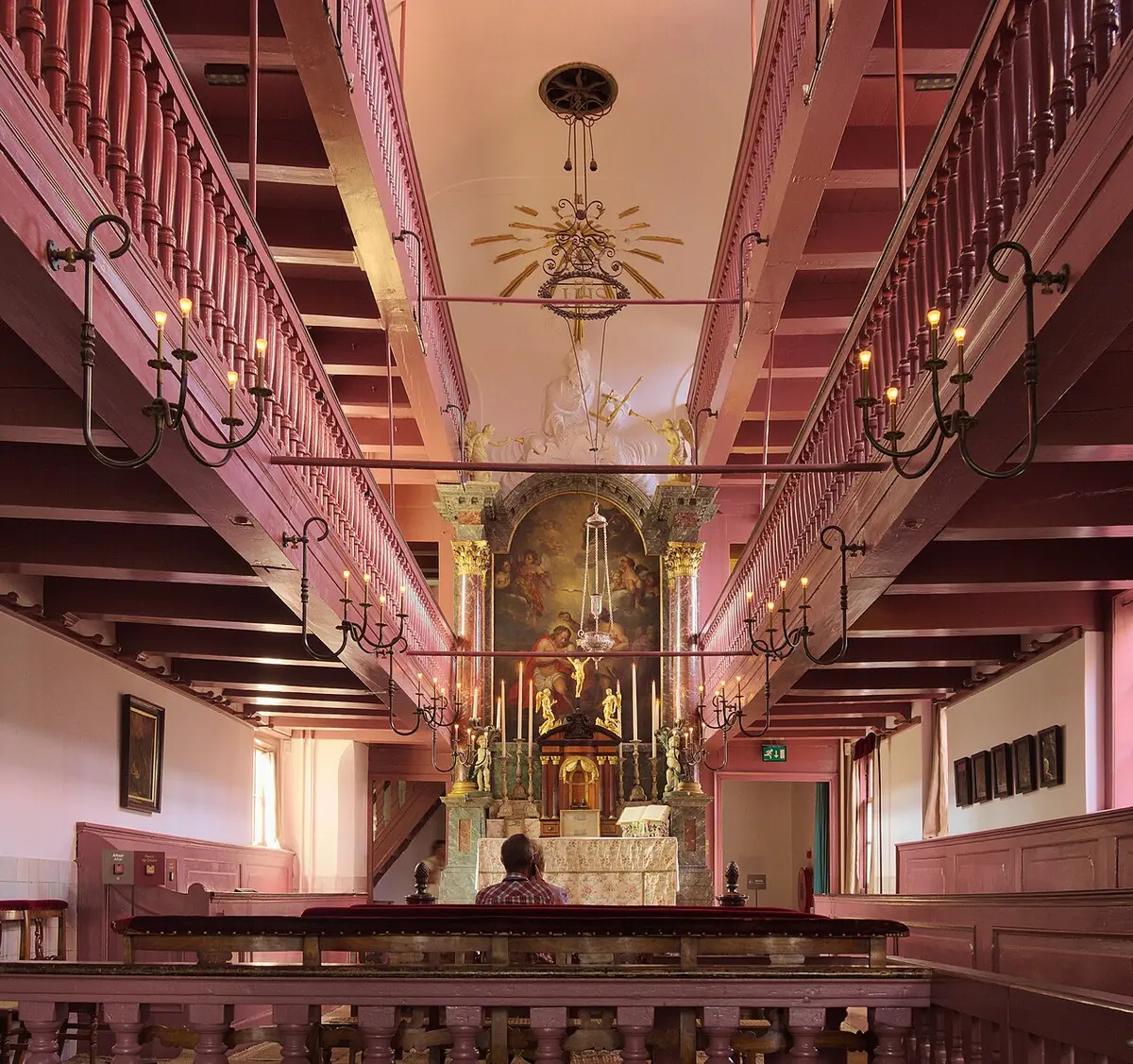 06
Our Lord in the Attic
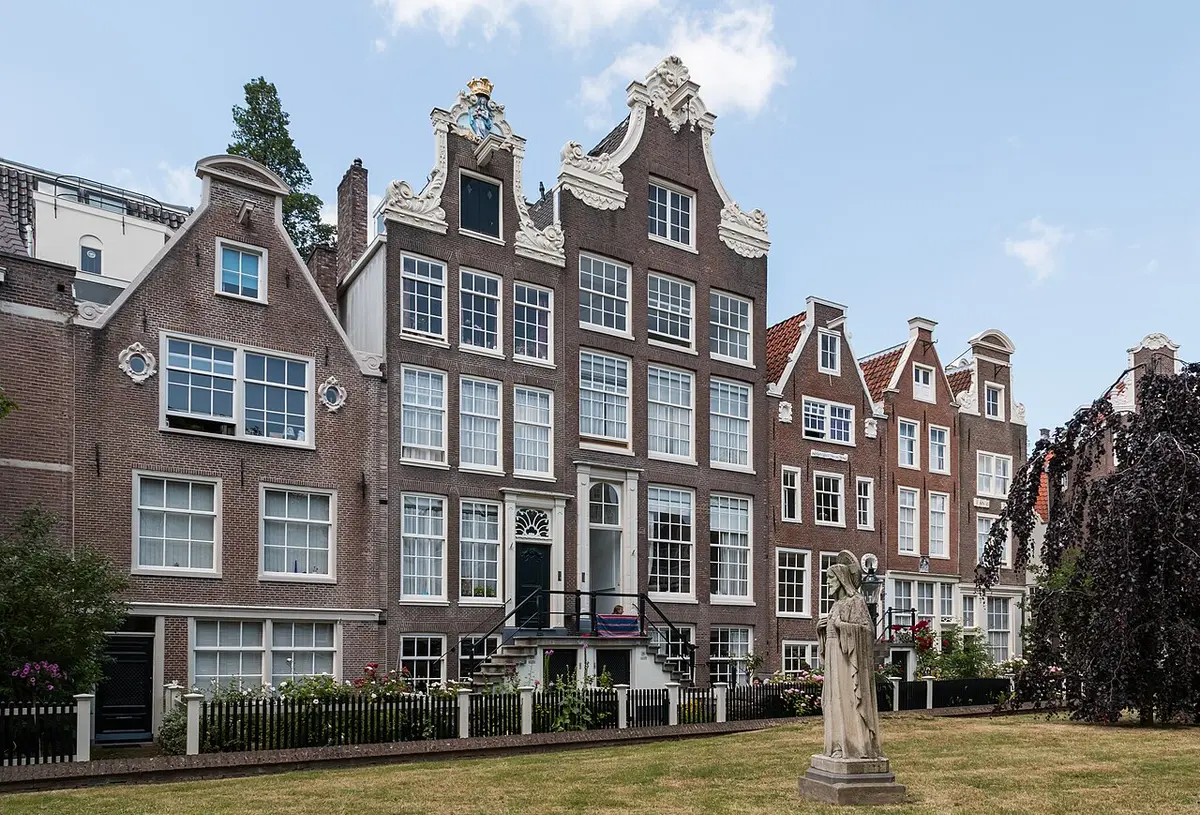
After 1578 Catholics could not worship in public, so in the 1660s the merchant Jan Hartman built a whole church in the attics of his canal house and the two behind it, with galleries, an organ and an altar, invisible from the street. It has been a museum since 1888, and services are still held.
Open every day. On the first Sunday of the month from September to June it opens at 11am, after the service.
Photo: C messier, CC BY-SA 4.0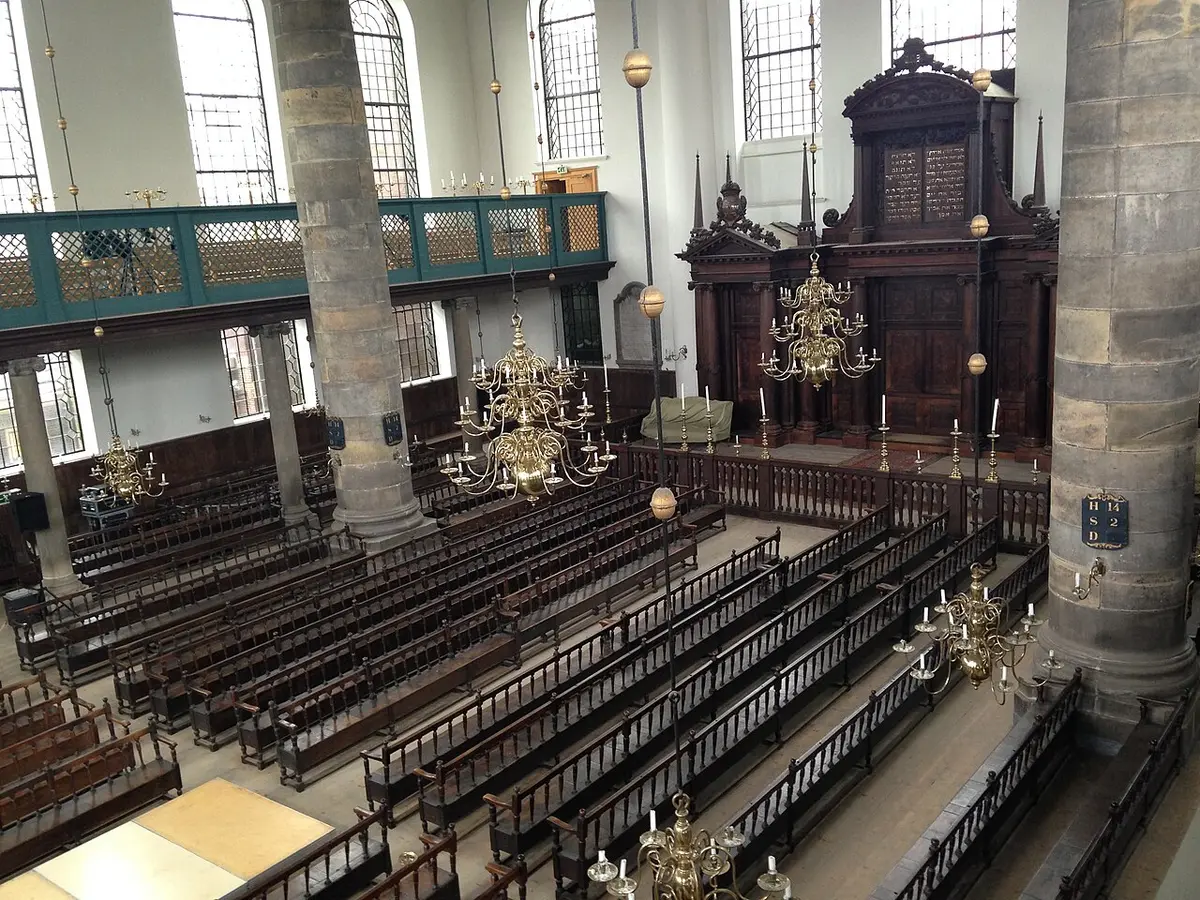 07
The Jewish Cultural Quarter
Four places around the Waterlooplein tell the story of Jewish Amsterdam: the Portuguese Synagogue of 1675, which has never had electric light and is still lit by candles; the Jewish Museum in four former synagogues; the National Holocaust Museum, opened in 2024; and the Hollandsche Schouwburg, the theater where Jews were held before deportation.
One ticket covers all four. The synagogue is closed on Saturdays and Jewish holidays.
Photo: Chajm Guski from Germany, CC BY-SA 2.0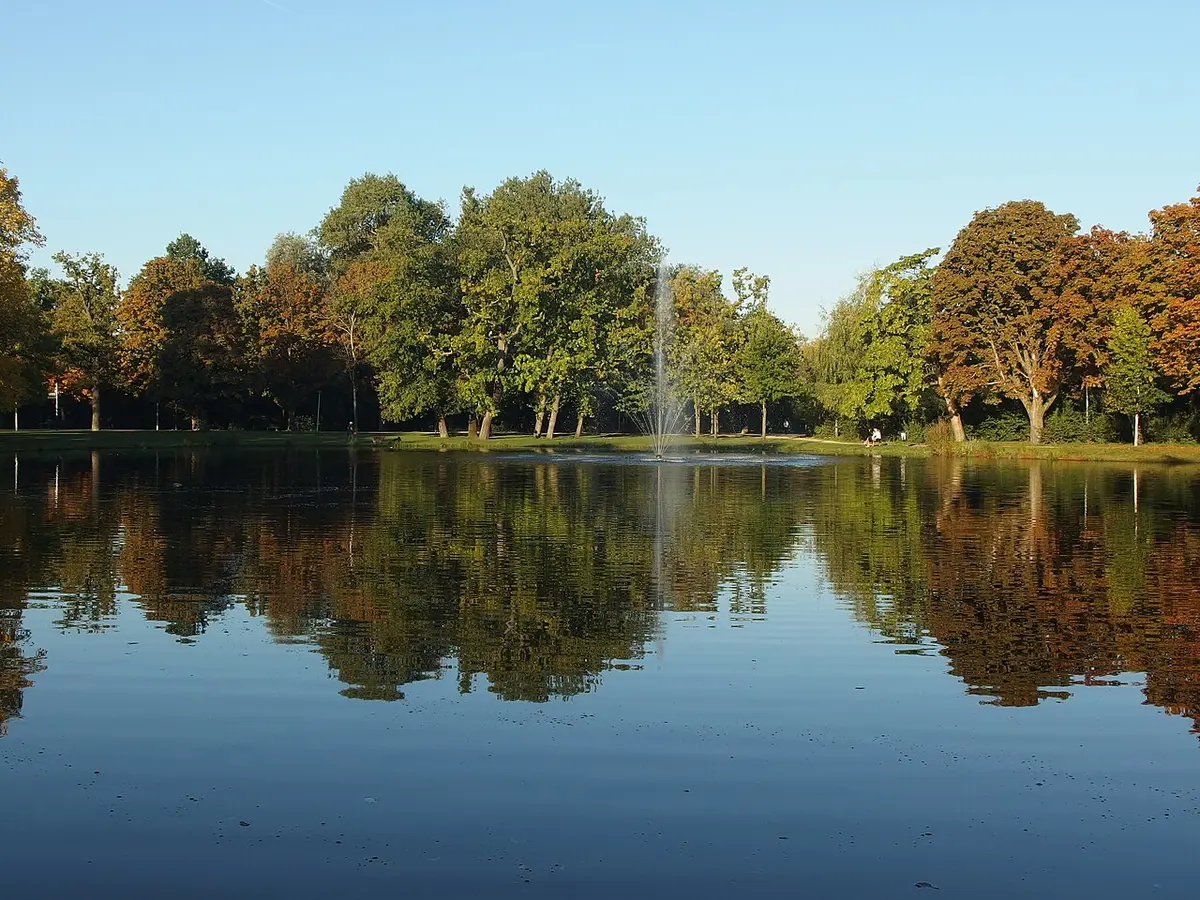 08
The Vondelpark
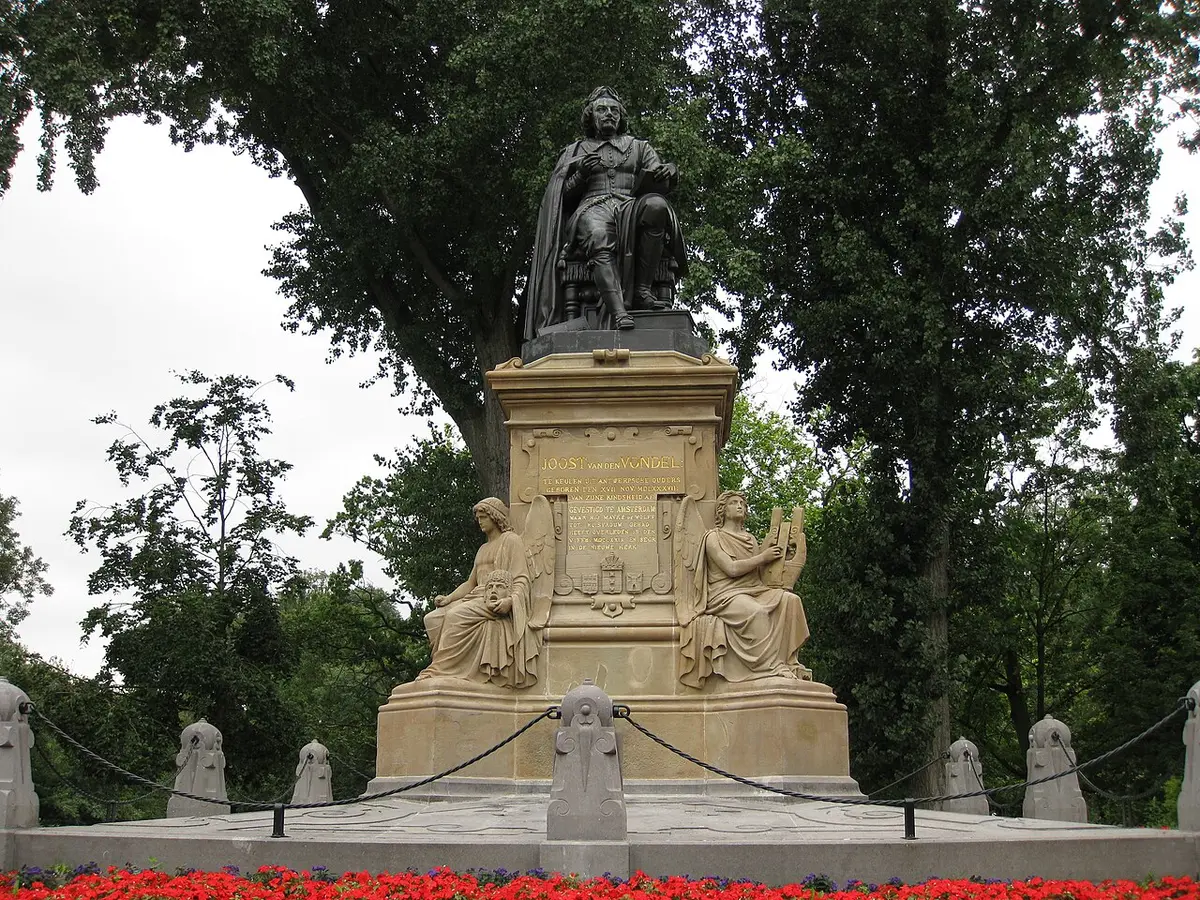
The city’s favorite park, opened in 1865 and named after the poet Joost van den Vondel, whose statue stands in it: ponds, lawns, a rose garden and cycle paths from the Museum Quarter out to the west. From May to September the open-air theater puts on free shows at weekends, and the Groot Melkhuis serves poffertjes.
Photo: Guilhem Vellut from Annecy, France, CC BY 2.0
Three hidden gems
A morning in the Jordaan
From Rembrandt’s church across the Prinsengracht into the old workers’ quarter: small canals, a market square, apple pie and the warehouses of the Brouwersgracht.
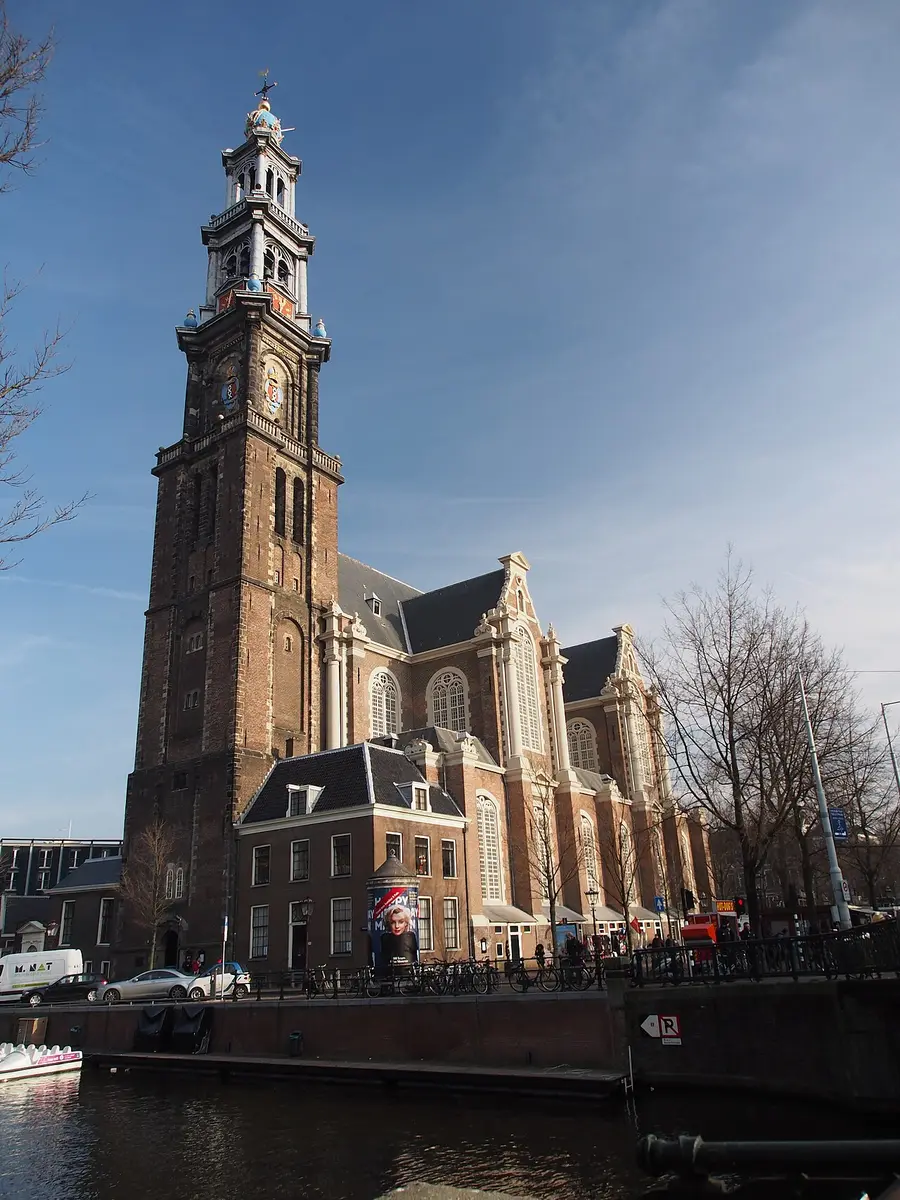
Start at the Westerkerk on the Prinsengracht, finished in 1631, whose tower is the tallest in the city. Rembrandt was buried here in 1669 in a rented grave whose place is lost; a plaque inside remembers him. Anne Frank could hear its bells from her hiding place a few doors along, and wrote about them in her diary. Outside, three triangles of pink granite set into the quay form the Homomonument, which remembers gay men and lesbians persecuted for who they were.
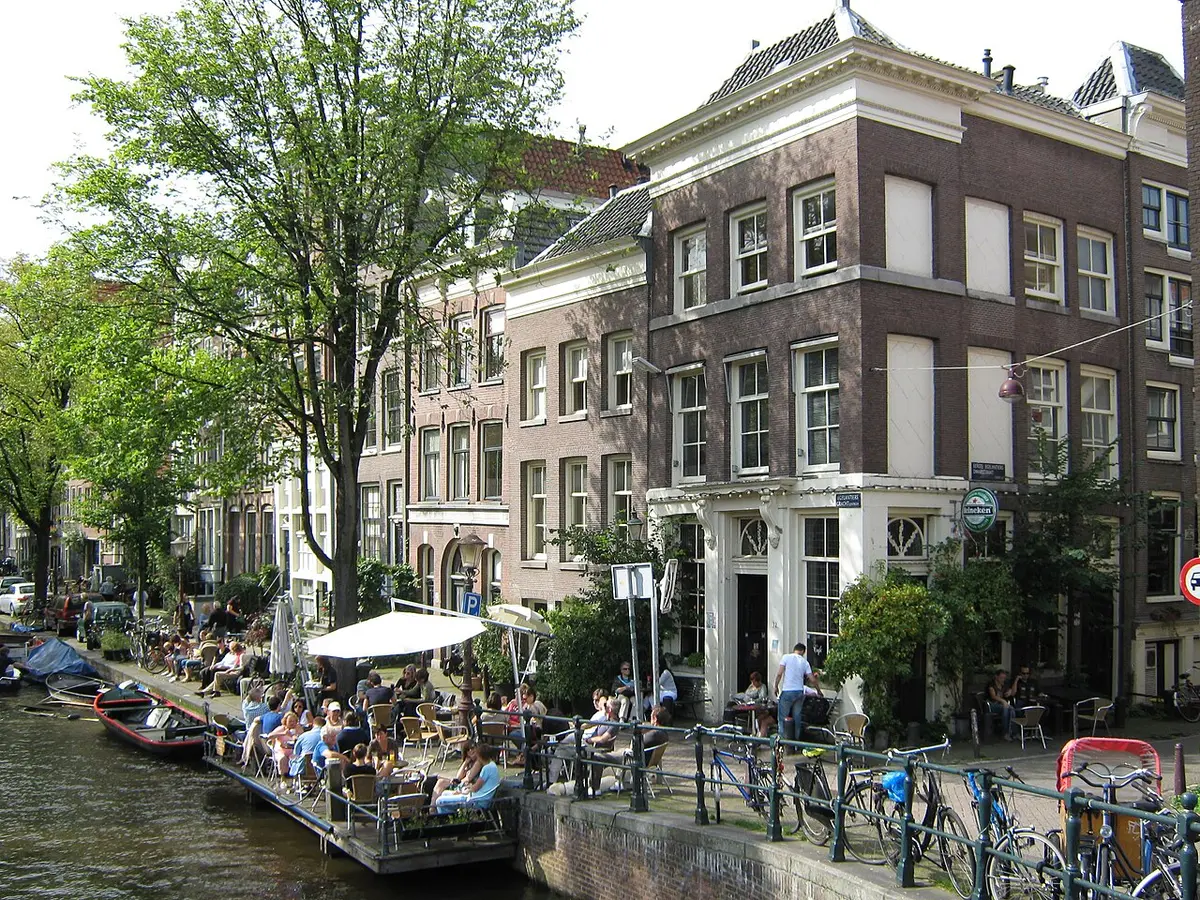
Cross the Prinsengracht and you are in the Jordaan, laid out in the 1610s for the workers and workshops the new canal ring kept out. Its canals are narrower, and its streets follow the old ditches of the fields that were here before, which is why they run at an angle to the rings. Walk along the Bloemgracht, once called the Herengracht of the Jordaan for its fine houses, then the Egelantiersgracht, where Café ’t Smalle has a terrace on the water.
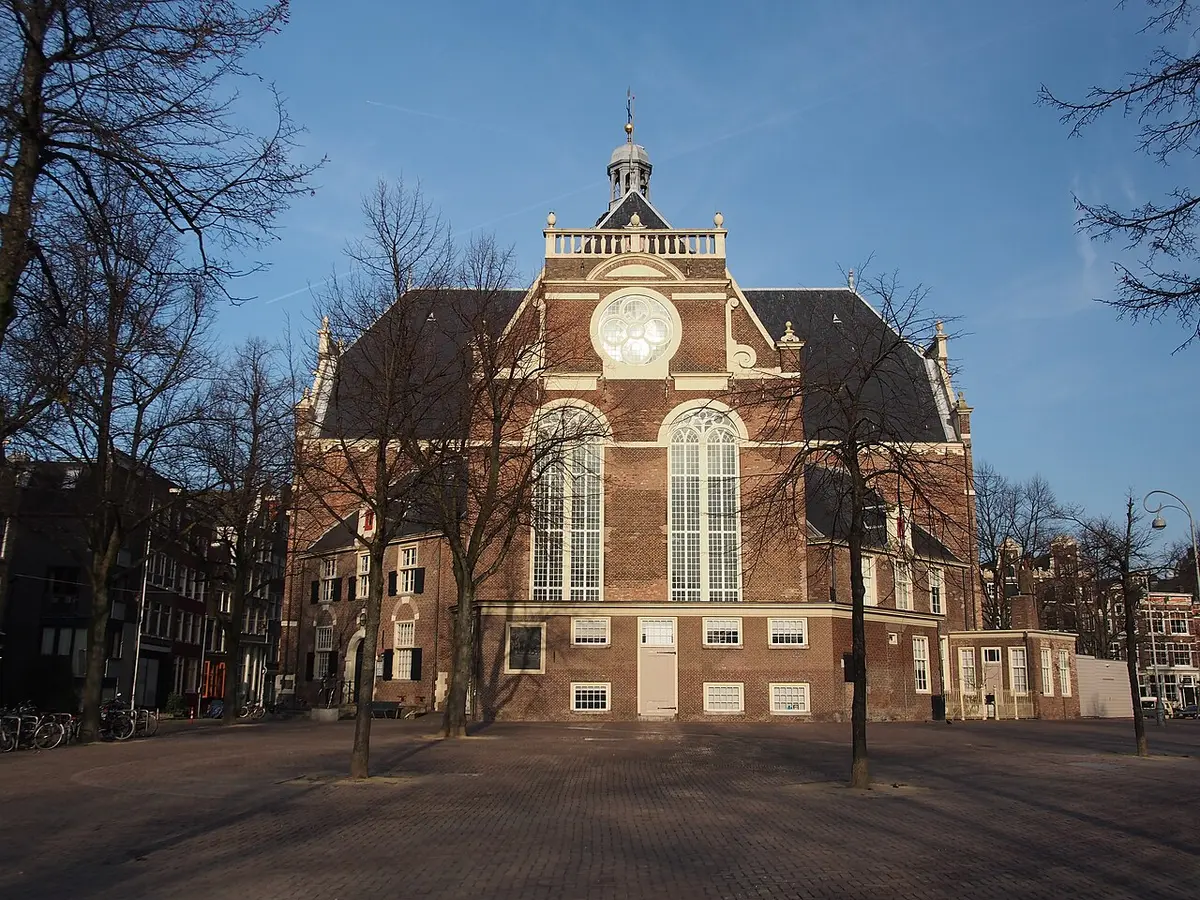
Head north to the Noordermarkt, the square around the Noorderkerk, built in the 1620s for the people of the Jordaan. On Monday mornings it holds a flea market and on Saturdays an organic farmers’ market, and on the corner Winkel 43 serves the apple pie people line up for.
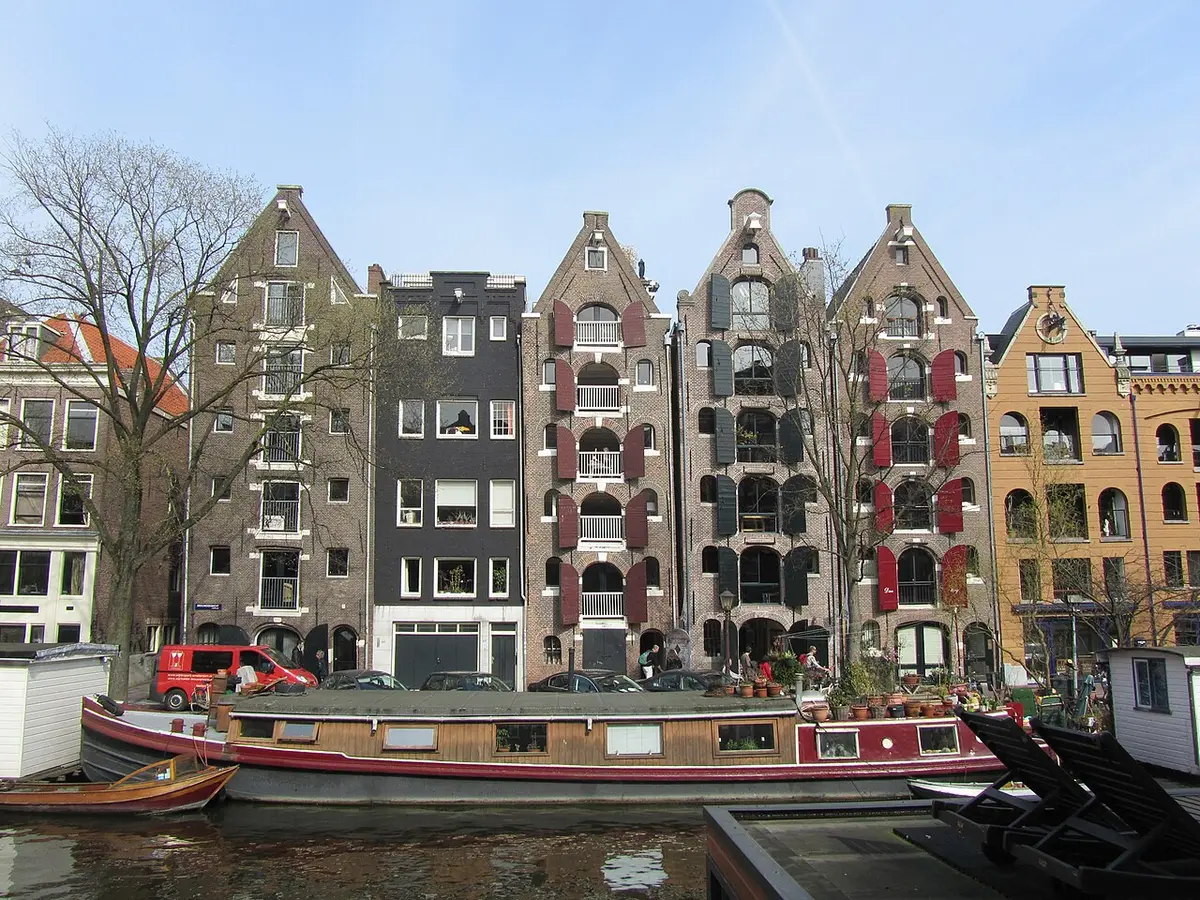
From here it is a few steps to the Brouwersgracht, the brewers’ canal, where the old warehouses still have their shutters and hoisting beams, most of them now apartments. It meets the canal ring at its northern end, and from its bridges you can look down each of the three great canals in turn.
End with lunch on the Haarlemmerstraat and the Haarlemmerdijk, the long street of small shops and cafés just to the north, or keep walking west to the Westerpark.
Where to stay
Pick the neighborhood first, then the hotel. Each link opens a map of places to stay around it.
Canal Ring and the Nine Streets
First visitThe three great canals and the small streets that cross them, between the Jordaan and the Amstel. Everything is a short walk away; rooms in canal houses are lovely, cost more and come with steep stairs.
See hotels in Canal Ring and the Nine StreetsJordaan
Couples and friendsWest of the canal ring, a former working-class quarter of narrow canals, small galleries, brown cafés and Saturday markets. Quiet streets and good restaurants, with the Anne Frank House at its edge.
See hotels in JordaanOld Center
Short staysThe medieval heart between Centraal Station, the Dam and the Nieuwmarkt, including the Red Light District. Easy for arrival and full of history, and loud on weekend nights.
See hotels in Old CenterDe Pijp
Food and nightlifeA 19th-century district south of the center, built around the Albert Cuyp market, with small restaurants and bars on every block and a younger crowd.
See hotels in De PijpMuseum Quarter
Families and museumsWide streets and grand houses around the Museumplein, with the Rijksmuseum, the Van Gogh Museum, the Stedelijk and the Concertgebouw, and the Vondelpark next door. Calm at night.
See hotels in Museum QuarterPlantage and Oost
Budget and local lifeLeafy streets east of the center around Artis, the Hortus Botanicus and the Jewish Cultural Quarter, running out to the Oosterpark and the Dappermarkt. Better value, with trams and the metro into town.
See hotels in Plantage and OostThe 10 best budget hotels
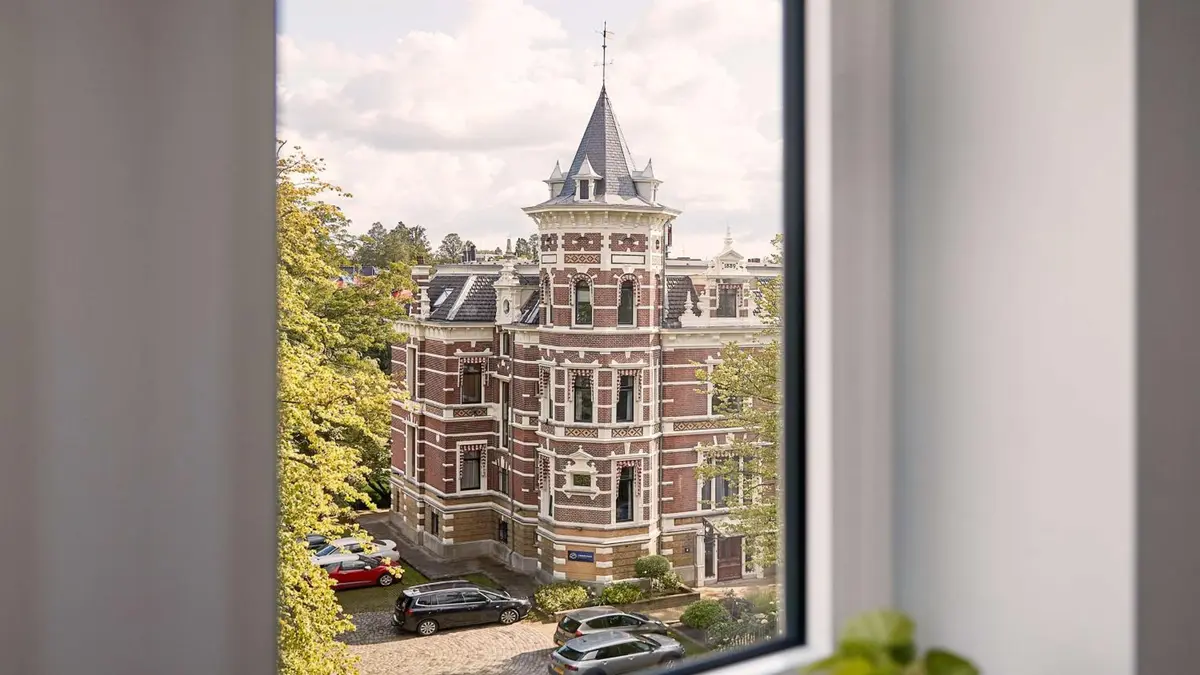
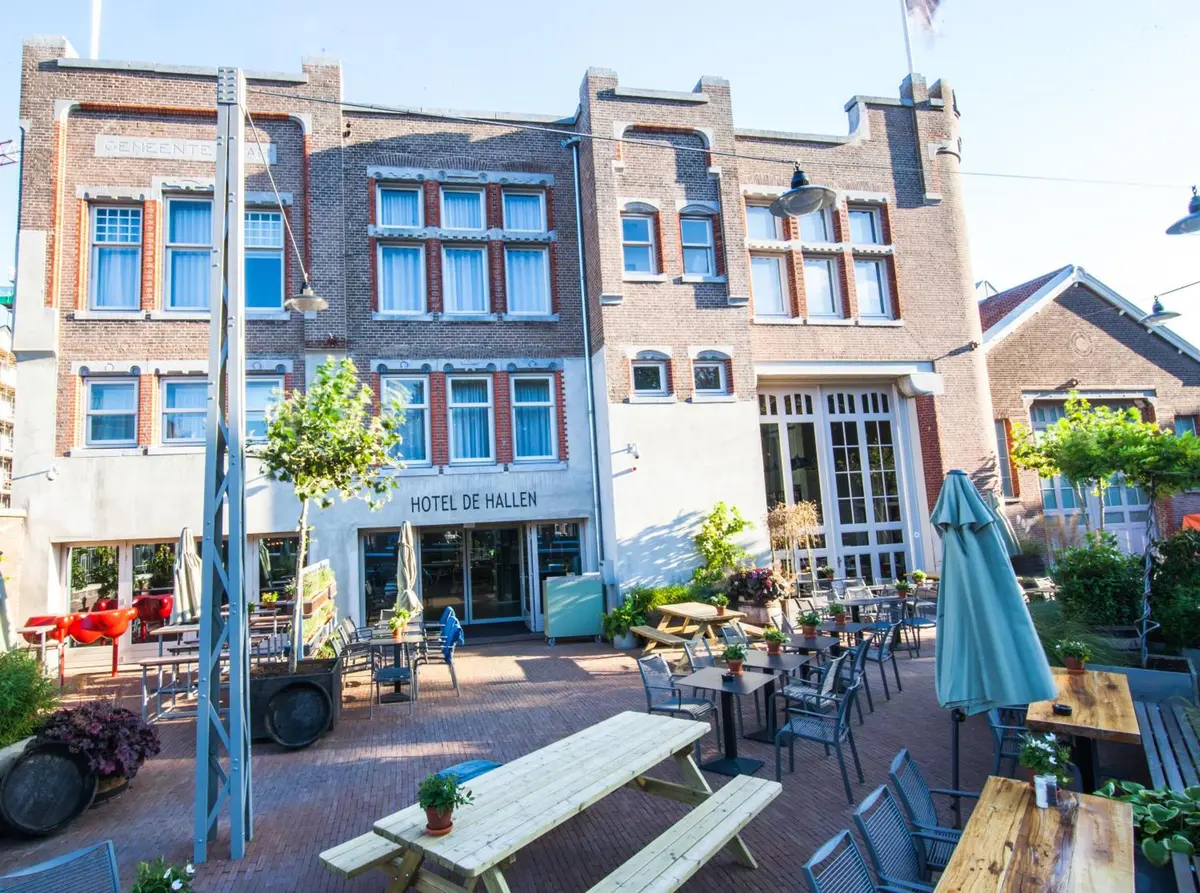
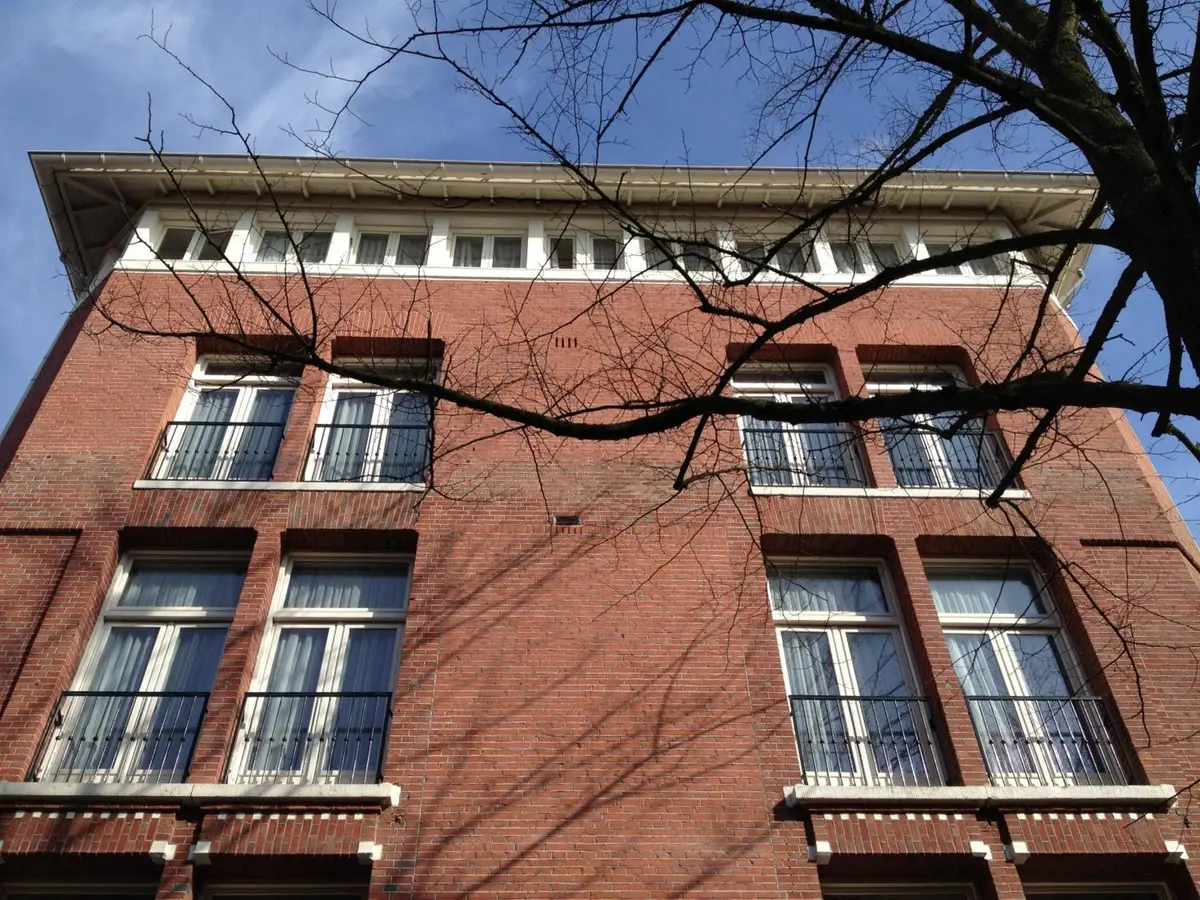
Well-reviewed hotels at the lower end of Amsterdam’s prices, best-reviewed first. On a weeknight in November 2026 they cost about €95 to €200 for two; prices change daily, so check your own dates.
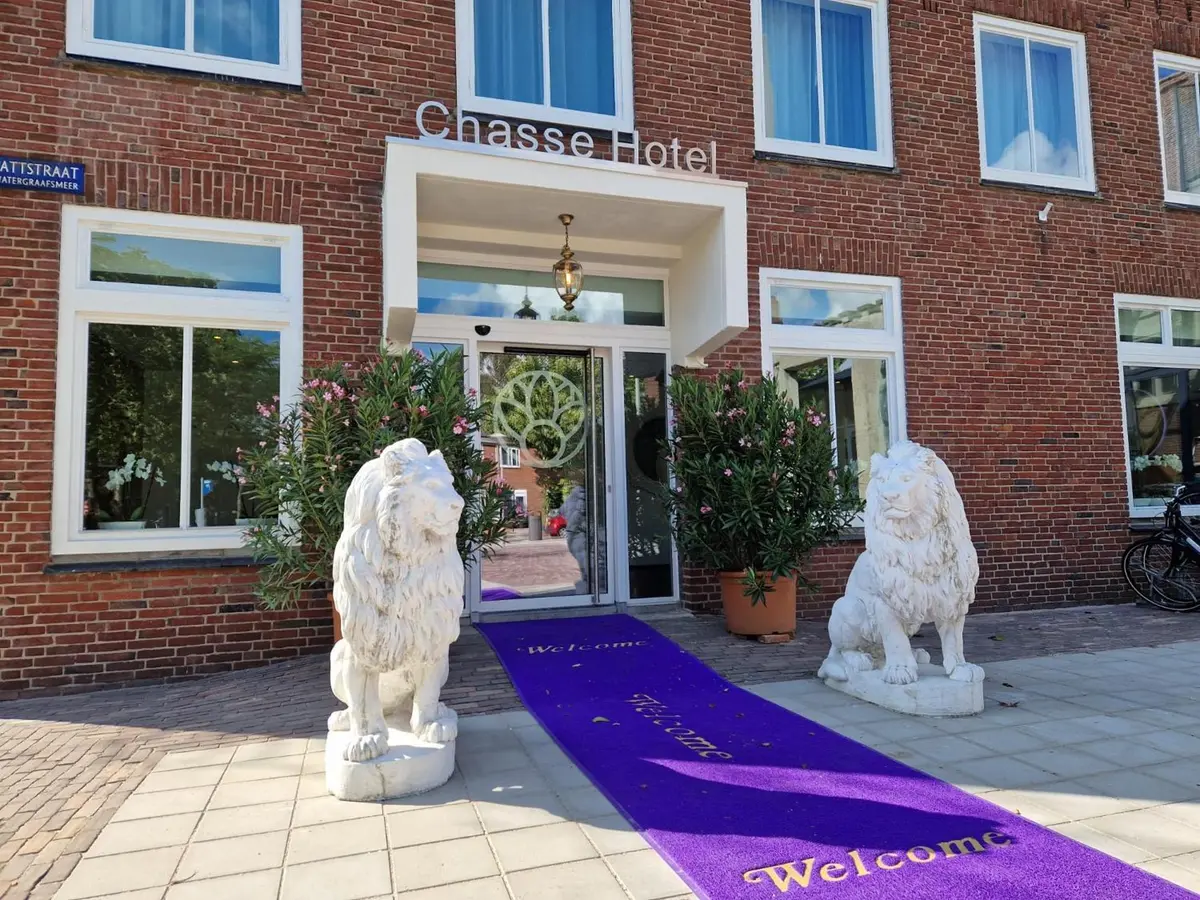 01
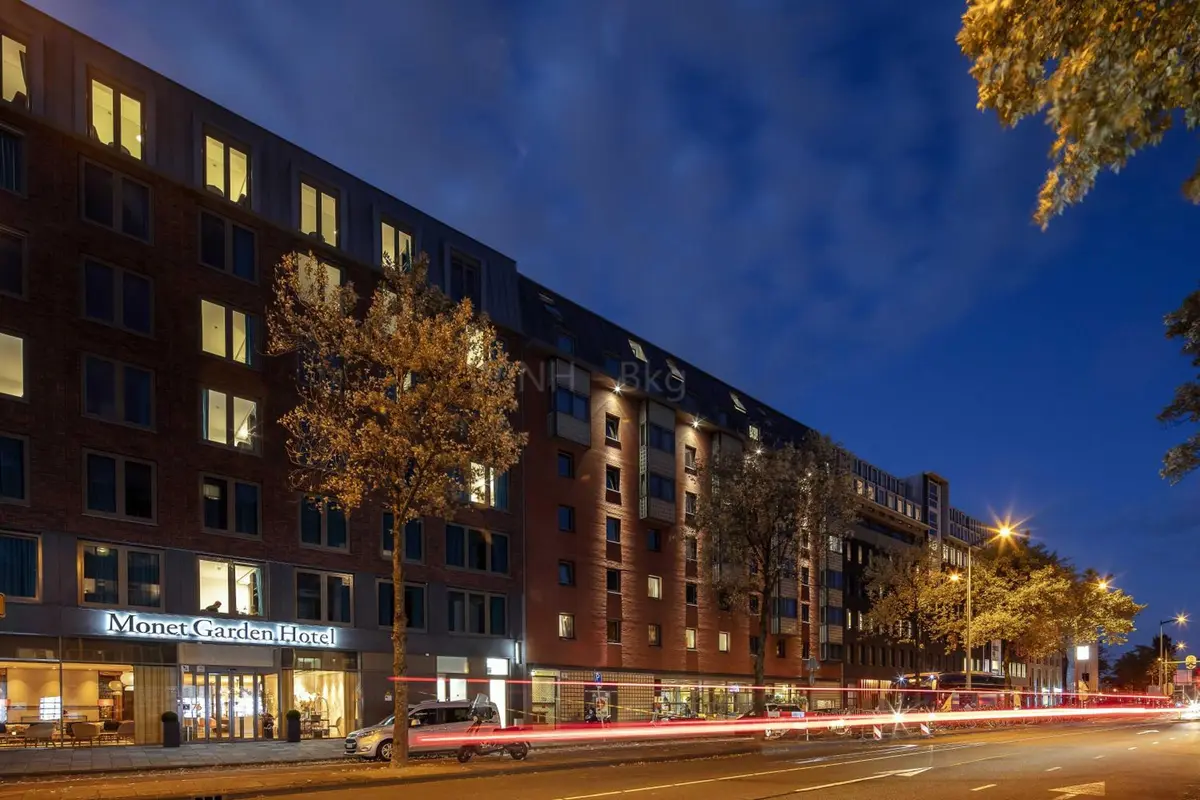 02
 03
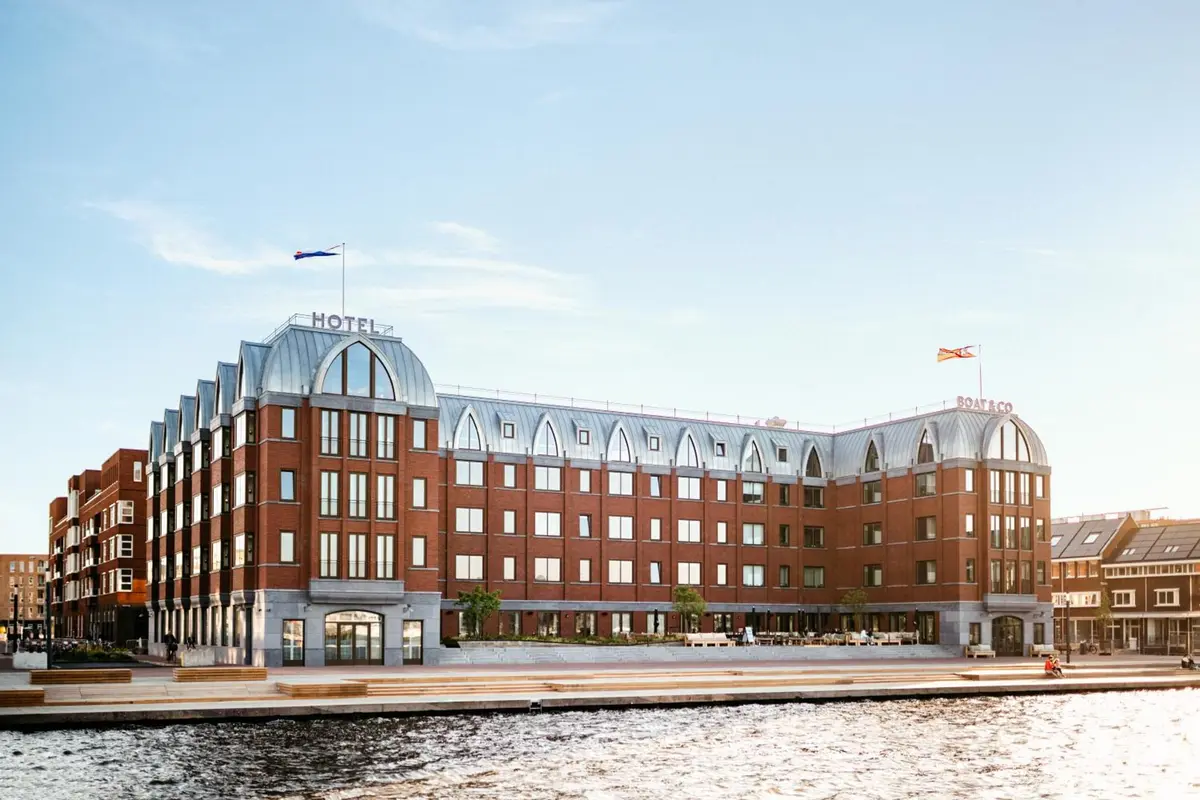 04
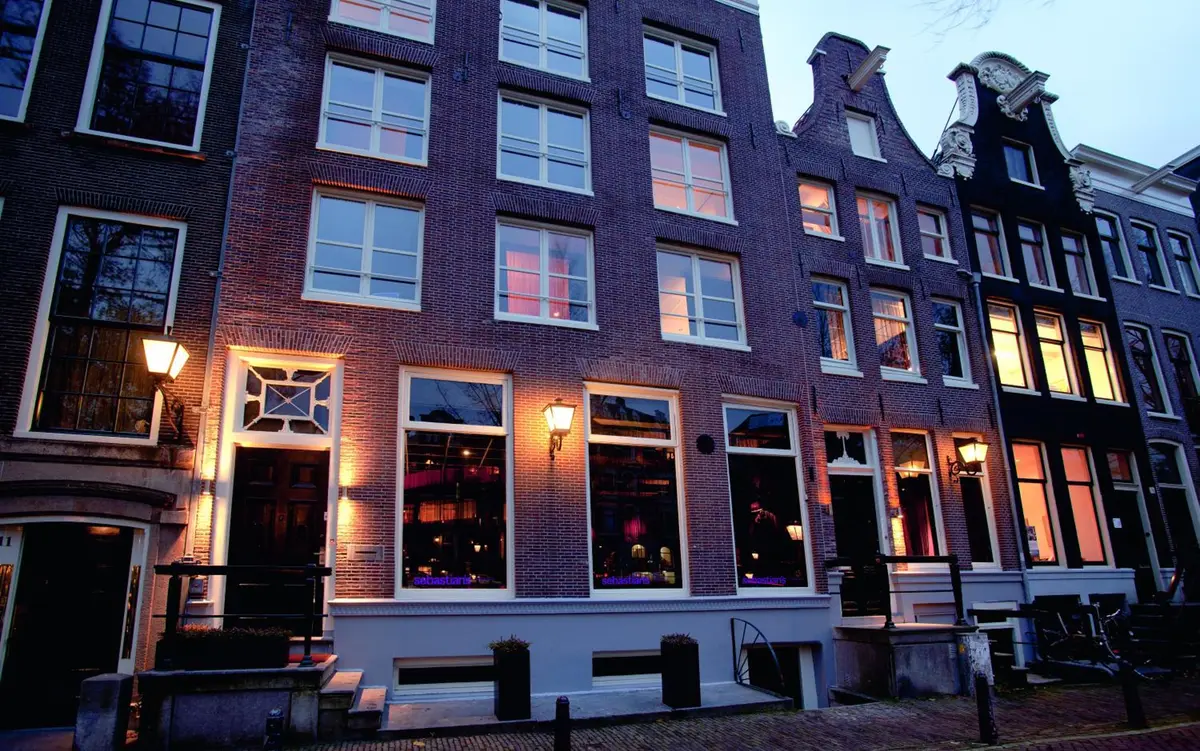 05
 06
 07
 08
 09
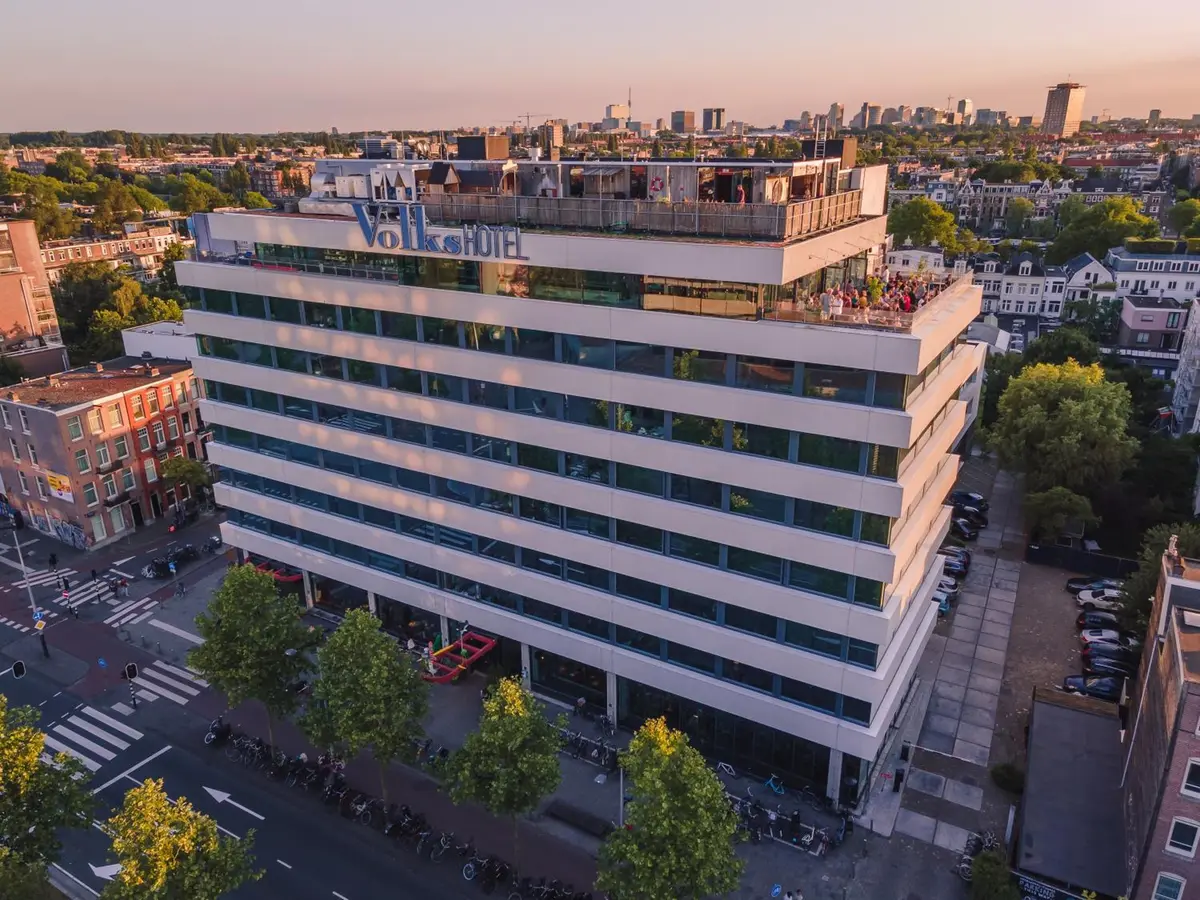 10
Hotel links go to Stay22. If you book, we may earn a commission, at no cost to you.
Food and drink
Dutch cooking is simple and filling, and Amsterdam does its best work with snacks, fish, cheese and baking, alongside the Indonesian food that came home from the colonial era. Lunch is often a sandwich, and dinner starts early, from about 6pm.
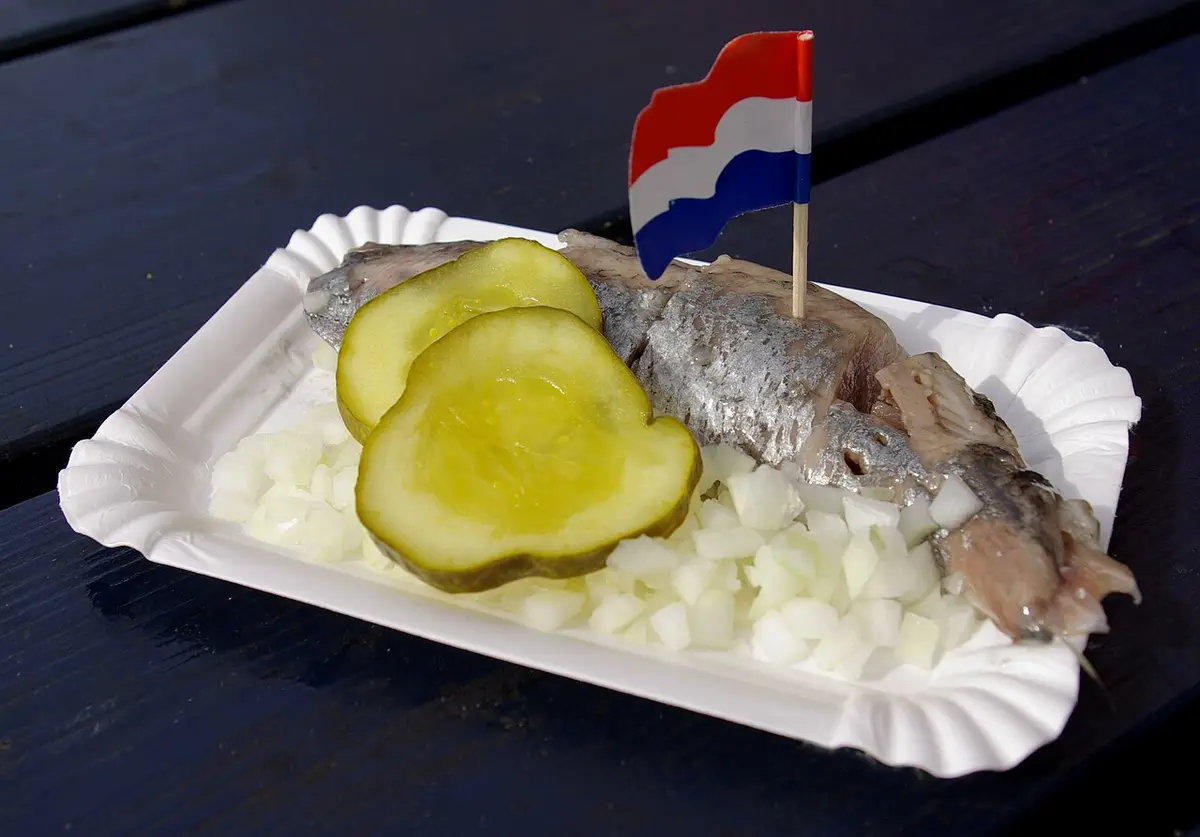
Hollandse Nieuwe
Raw herring, lightly cured, eaten at a stall with chopped onion and pickles, or held by the tail and lowered in. The new season’s catch arrives in June.
Photo: Janericloebe, Public domain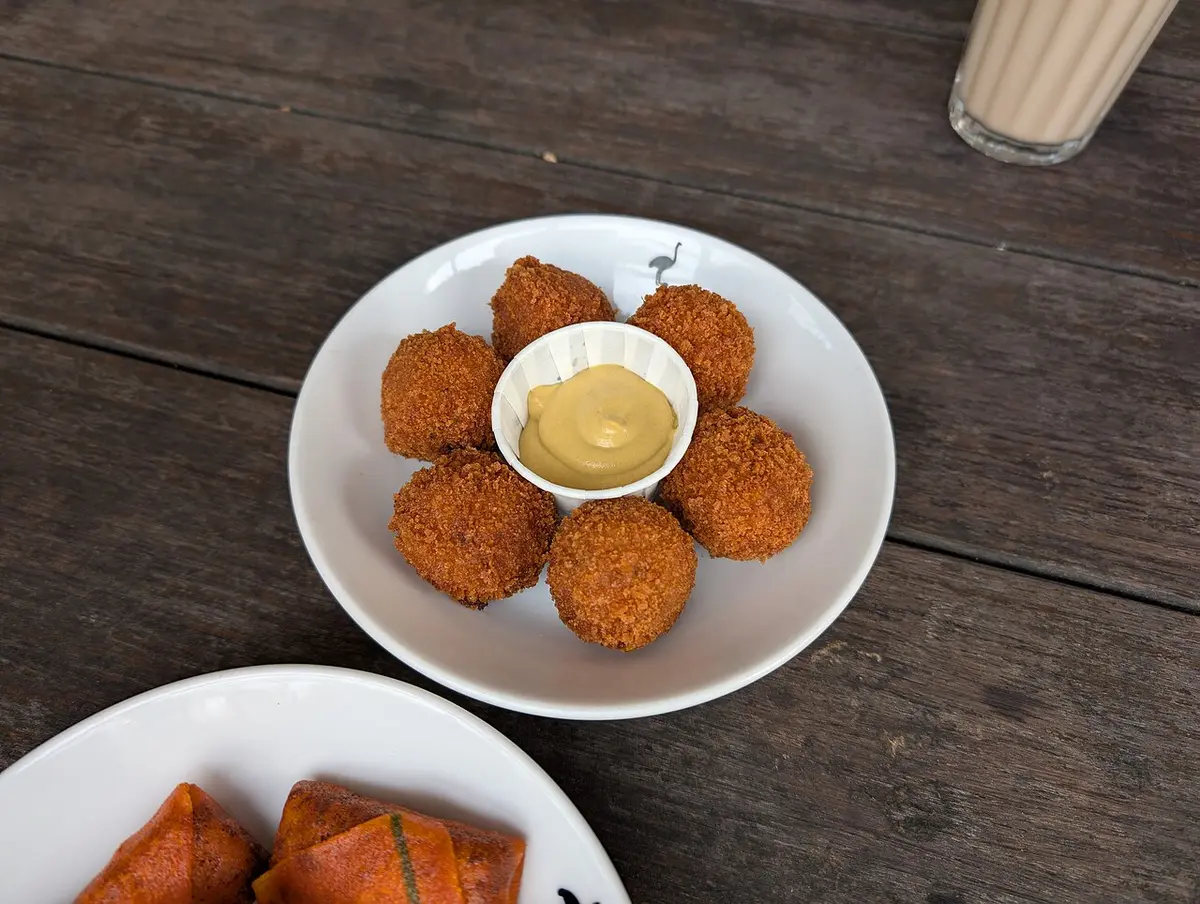
Bitterballen
Crisp fried balls of thick beef ragout, served with mustard alongside a beer. Give them a minute before you bite.
Photo: Andy Li, CC0
Appeltaart
Deep apple pie with cinnamon in a crumbly crust, served with a heap of whipped cream. Winkel 43 on the Noordermarkt is the famous one.
Photo: Flanamsterdam, CC BY-SA 4.0
Stroopwafel
Two thin waffles with syrup between them, best warm from a market stall.
Photo: Takeaway, CC BY-SA 3.0Rijsttafel
The “rice table”: a colonial-era feast of many small Indonesian dishes, satay, curries, sambals and vegetables, set around a bowl of rice and shared.

Patat
Thick fries in a paper cone, with mayonnaise, or oorlog (“war”): mayonnaise, peanut satay sauce and raw onion.
Photo: www.snack-nieuws.nl, CC BY 2.0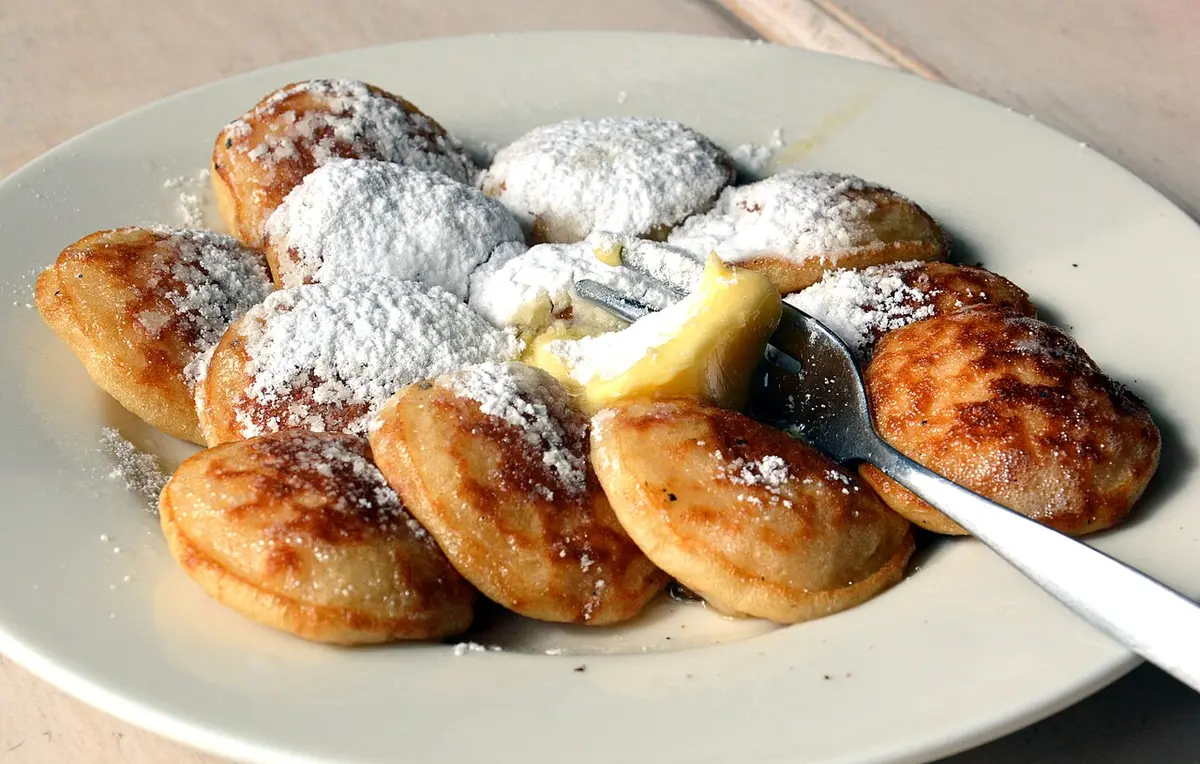
Poffertjes
Tiny puffed pancakes from a special pan, with butter and powdered sugar.
Photo: Illustratedjc, CC BY-SA 4.0Oude kaas
Aged Gouda, hard and crumbly with crunchy crystals, eaten in cubes with mustard or on bread.
Eat herring from a stall, bitterballen in a brown café and Indonesian food anywhere; Surinamese sandwiches are a local favorite too. The Albert Cuyp market in De Pijp runs Monday to Saturday, the Foodhallen in Oud-West gathers dozens of stalls under one roof, and the Noordermarkt holds an organic farmers’ market on Saturdays.
Three canals and a plan
How a town on a dam in the Amstel grew rich on the world’s trade, took in the people others drove out, and dug the ring of canals you walk today.
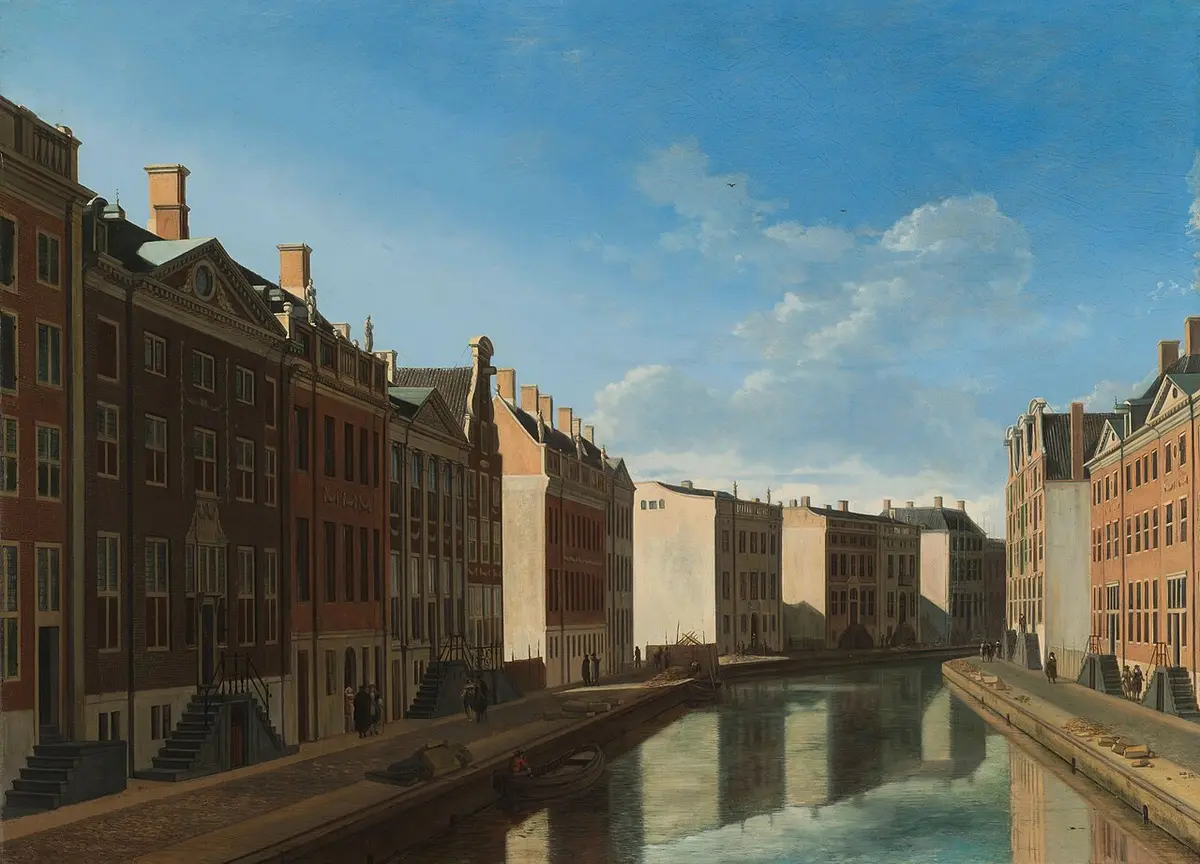
Amsterdam began as a dam. In the 13th century the people living where the Amstel met the IJ built one across the river to hold back the sea, and the first written mention of the town, in 1275, is a toll privilege granted to the people near it. The Dam is still the main square, and for three centuries the town stayed inside the curve of its medieval moats, trading grain and herring around the Baltic.
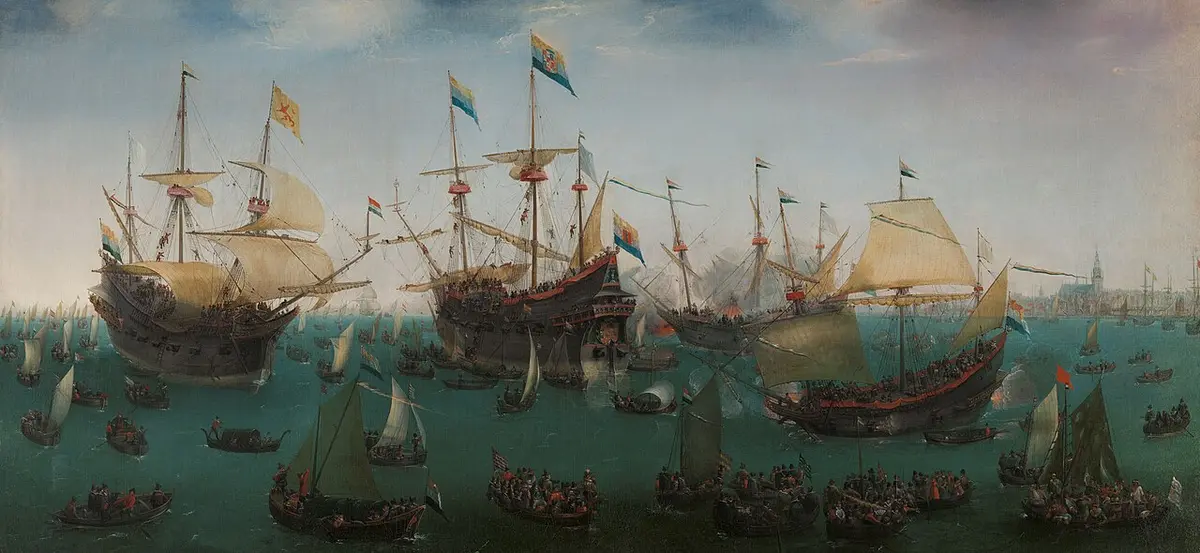
Then the world came to it. When Spanish troops took Antwerp in 1585, its Protestant merchants moved north with their money, contacts and skills. In July 1599 a fleet came home from the East Indies loaded with pepper and cloves, and the city went out on the water to greet it; three years later the Dutch East India Company was founded, with Amsterdam as its largest chamber. An exchange bank followed in 1609, and a stock exchange soon after.
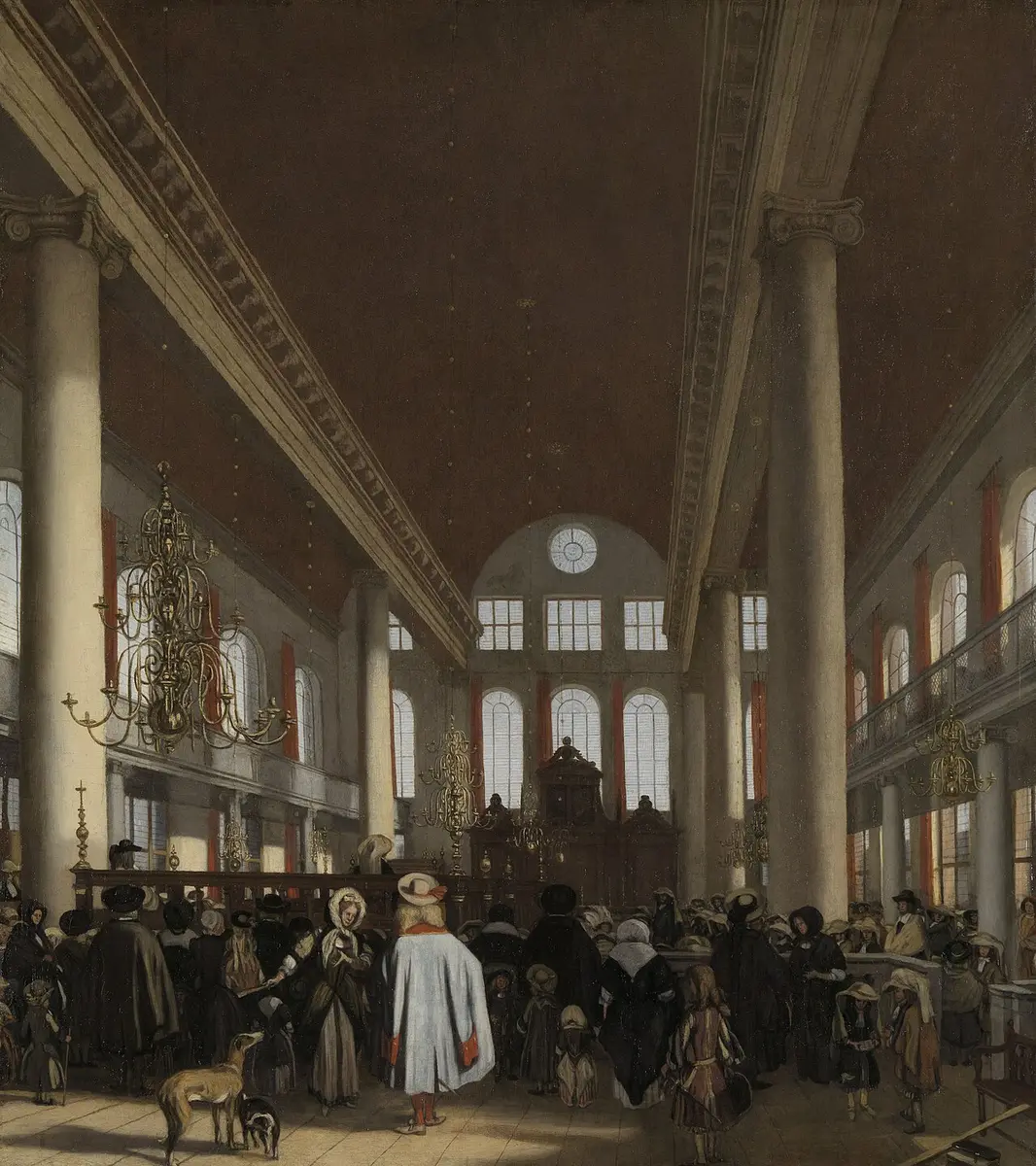
Amsterdam also took in people others had driven out. Sephardic Jews whose families had been forced to convert in Spain and Portugal settled here and returned openly to Judaism, and in 1675 they opened the Portuguese Synagogue, one of the largest in the world. Huguenots came from France after 1685. Catholics were tolerated as long as they worshipped out of sight, in churches built inside houses, and the city’s printers published books that were banned elsewhere.
The old town filled up, and in 1613 the council began the plan that still shapes Amsterdam: three new canals in rings around the center, the Herengracht, the Keizersgracht and the Prinsengracht, with the lots along them sold to the rich and the land beyond left to workshops and workers, in what became the Jordaan. The ring was dug in two stages, west first and then, from the 1660s, east to the Amstel.
The Golden Age city was drawn on paper first: rings of water for the rich, a grid of workshops beyond, and every house on piles.
Everything stood on wood. Below the soft peat and clay lies a firm layer of sand, and every house was set on wooden piles driven down to it; the new town hall needed 13,659. Canal frontage was costly, so houses rose narrow, deep and tall, with fancy gables and a beam at the top for hoisting goods through the windows, and some were built leaning slightly forward, partly so the loads would swing clear.
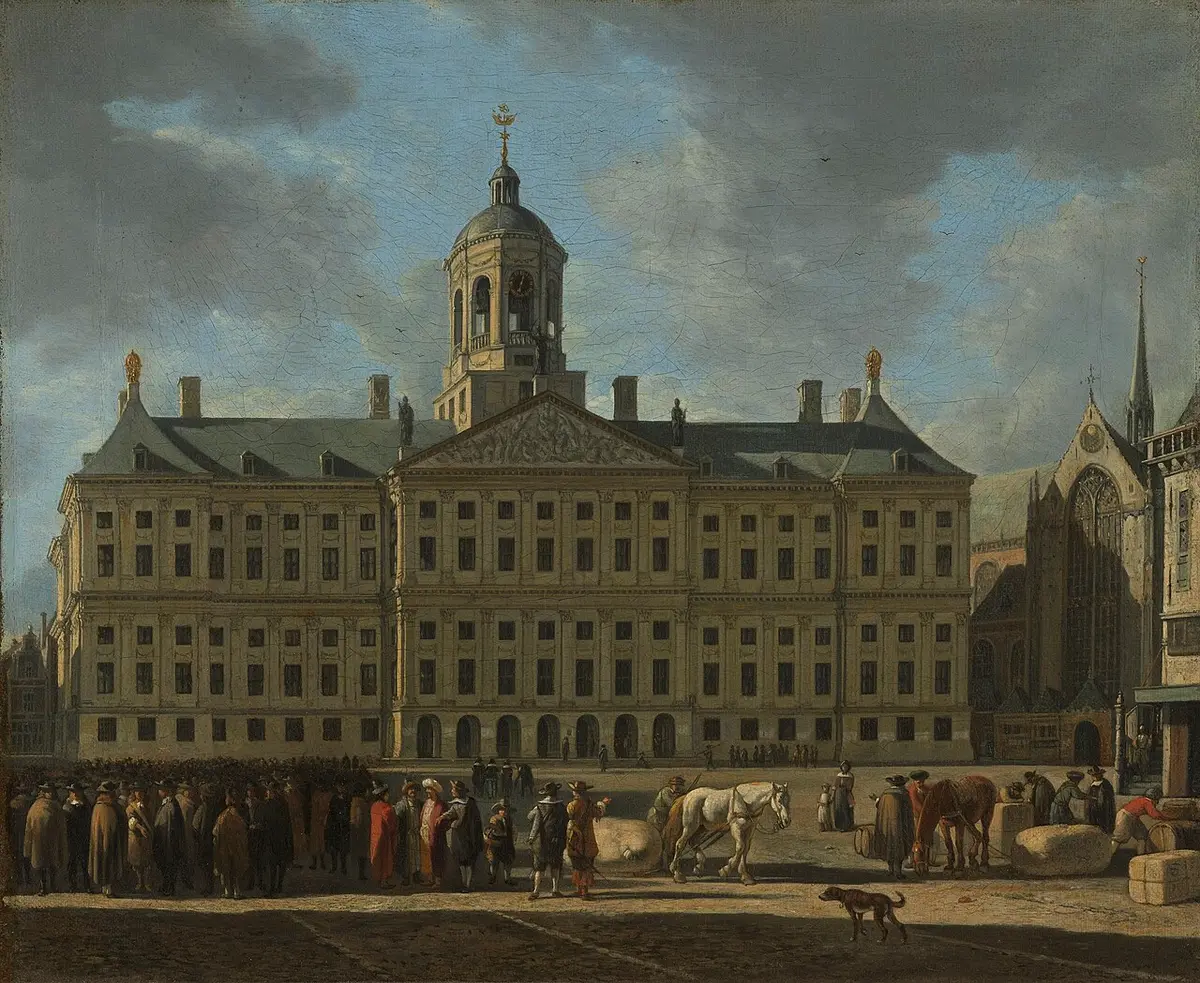
The town hall on the Dam was the age’s monument to itself. Begun in 1648, the year Spain recognized Dutch independence at the Peace of Münster, and inaugurated in 1655, it was a palace for a republic run by merchants; Vondel wrote a long poem for its opening, and Berckheyde painted it again and again. The boom did not last. In 1672, the “disaster year”, France, England and two German bishoprics attacked the Republic at once, and trade never quite recovered its lead. But the plan held, and in 2010 UNESCO listed the canal ring as a World Heritage Site, still lived in and still working as designed.
Art
Rembrandt
The Night Watch and The Jewish Bride in the Rijksmuseum, and the Rembrandt House on the Jodenbreestraat, where he lived and worked from 1639 until he lost it after his bankruptcy, with his etchings and a reconstructed studio.
Vermeer and the Golden Age
Four Vermeers hang in the Rijksmuseum, among them The Milkmaid and The Little Street, with Hals, Steen, De Hooch and Ruisdael around them.
Van Gogh
The Van Gogh Museum grew from the family collection that his brother Theo’s widow and son kept together, from The Potato Eaters to the last wheat fields at Auvers.
The Stedelijk
The city’s museum of modern art and design, in a building of 1895 with a white extension of 2012 that locals call the bathtub: Mondrian, Malevich, Rietveld’s Red and Blue Chair and the Cobra painters.
The Amsterdam School
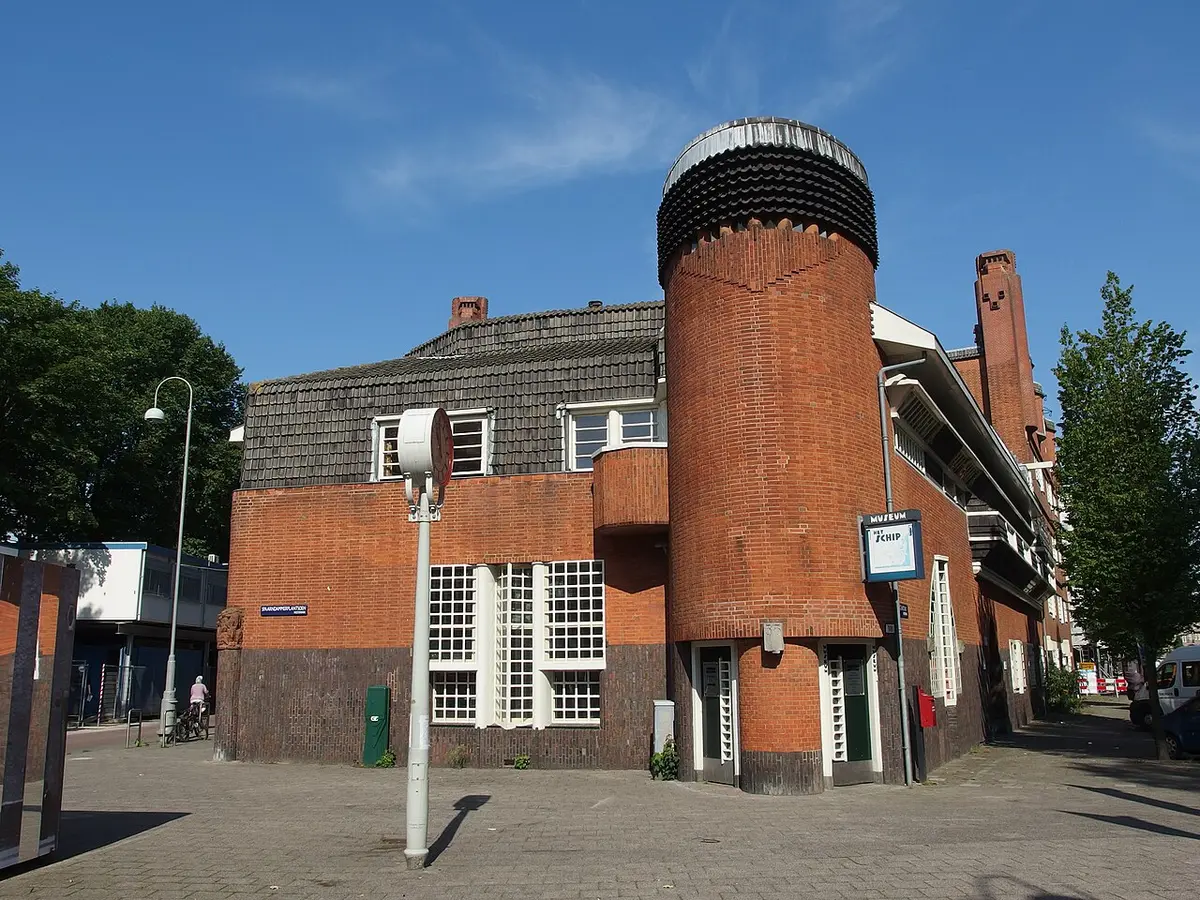
Brick buildings of the 1910s and 1920s with rounded corners, sculpted towers and wavy roofs, built as housing for workers: see Het Schip in the Spaarndammerbuurt and De Dageraad in the south.
A city of printers and poets
The Golden Age’s great poet, a colonial official who shook his country, a girl in a hidden annex, and a French novelist who found the circles of hell in the canals.
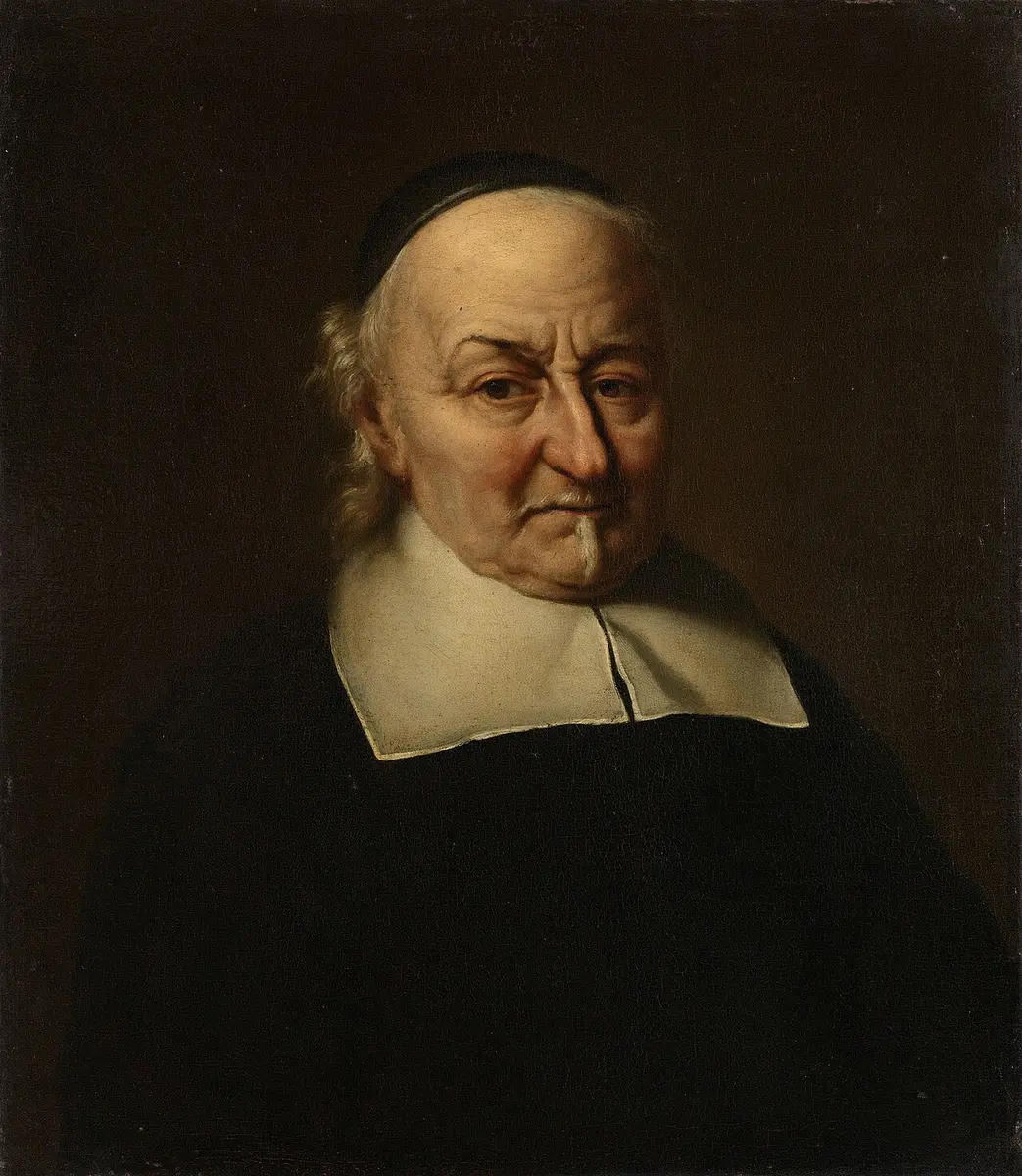
Joost van den Vondel
1587 to 1679
Born in Cologne to Mennonite refugees from Antwerp, Vondel grew up in Amsterdam, kept a silk shop in the Warmoesstraat and became the great poet of the Golden Age. His play Gijsbrecht van Aemstel, set in the siege of medieval Amsterdam, opened the city’s first theater on 3 January 1638 and was staged every New Year until 1968. He wrote the poem for the town hall’s opening in 1655 and lies in the Nieuwe Kerk.
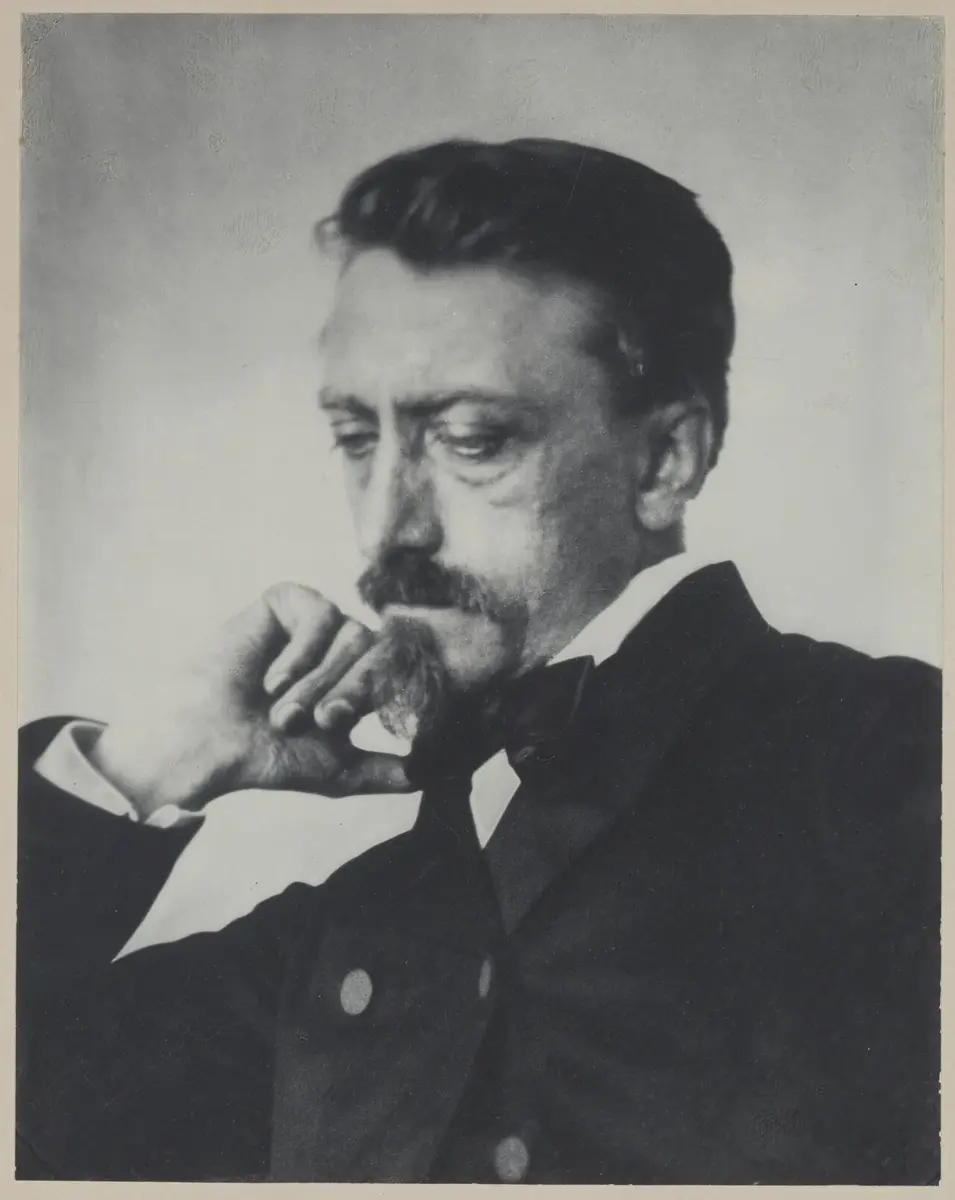
Multatuli
1820 to 1887
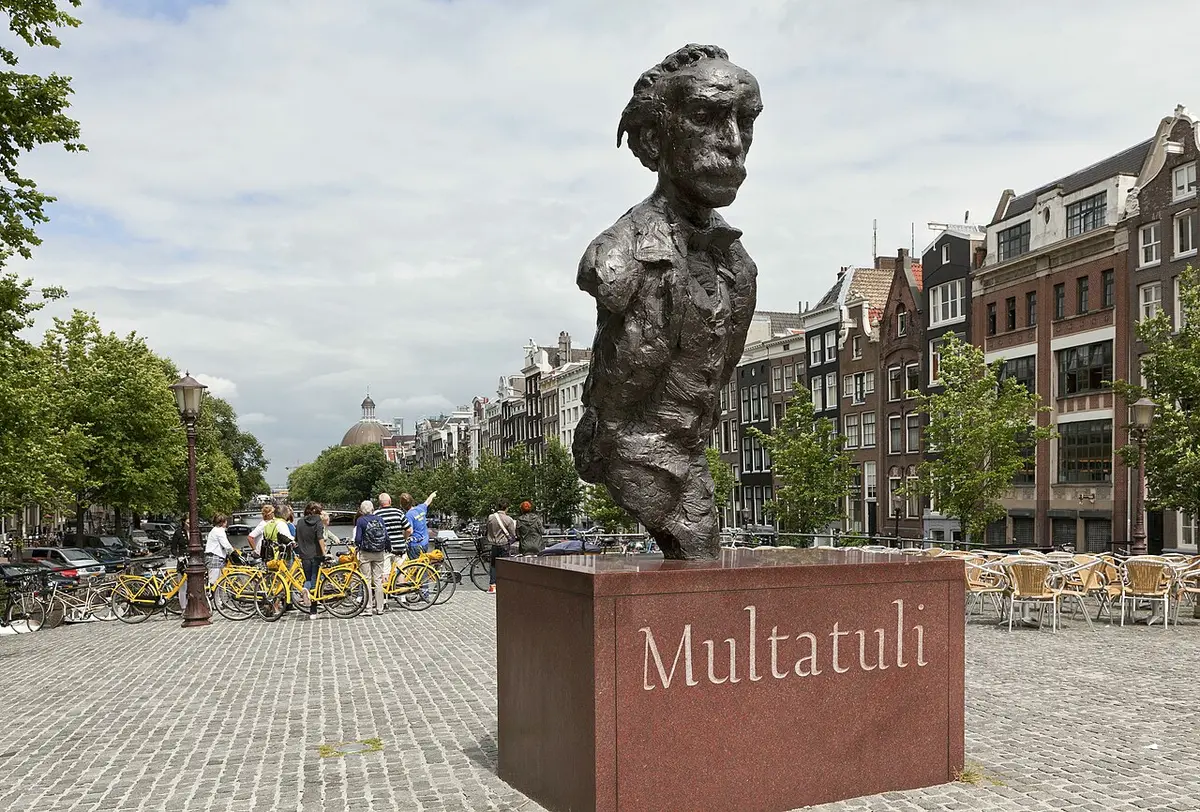
Eduard Douwes Dekker was born in Amsterdam and went out to the Dutch East Indies as a colonial official, and resigned when his superiors ignored his charges that the Javanese were being abused. Writing as Multatuli, Latin for “I have suffered much”, he told the story in Max Havelaar (1860), written in a few weeks in a Brussels hotel room, and it shook the Netherlands. His birthplace in the Korsjespoortsteeg is a small museum, and his bust stands on the Torensluis.
Anne Frank
1929 to 1945
Born in Frankfurt, Anne Frank came to Amsterdam at four when her family fled Nazi Germany. In the annex on the Prinsengracht she kept the diary she was given for her 13th birthday, and began to rewrite it for publication after a wartime radio appeal to keep such records. She died in Bergen-Belsen in early 1945. Her father, the only one of the eight in hiding to survive, published it in 1947 as Het Achterhuis.
Albert Camus
1913 to 1960
Camus set his last completed novel in Amsterdam. In The Fall (1956), a Parisian lawyer tells his story night after night to a stranger in a bar called Mexico City in the Red Light District, and likens the city’s concentric canals to the circles of hell.
Hence Amsterdam, Turk-Christian-Pagan-Jew,
Staple of Sects and Mint of Schisme grew;
That Bank of Conscience, where not one so strange
Opinion but finds Credit, and Exchange.
In vain for Catholicks our selves we bear;
The universal Church is onely there.
Andrew Marvell, The Character of Holland (written 1653), from his Miscellaneous Poems (1681)
Culture
King’s Day
On 27 April (the 26th when the 27th is a Sunday) the city turns orange for the king’s birthday: anyone may sell in the street, the canals fill with boats and there is music on every square.
Remembrance and Liberation
At 8pm on 4 May the country stops for two minutes of silence for the war dead, with the national ceremony on the Dam. The next day, Liberation Day, brings festivals across the city.
Pride
Pride Amsterdam ends with the Canal Parade on the first Saturday of August, when decorated boats sail the Prinsengracht and the Amstel past crowds on every bridge.
Sinterklaas
In mid-November Sinterklaas arrives by boat, rides through the city on a white horse and brings presents to children on the evening of 5 December.
The Light Festival
From late November to mid-January, works of light art line the canals, best seen from a boat after dark.
Brown cafés
Old bars with walls darkened by centuries of smoke, where the city drinks, talks and reads the paper. The word for the mood is gezellig: cozy, sociable, at ease.
Music and nights out
The Concertgebouw
Opened in 1888 and famous for its sound, the home of the Royal Concertgebouw Orchestra holds free half-hour lunchtime concerts most Wednesdays, with free tickets online.
Opera and ballet
The Dutch National Opera and the Dutch National Ballet share the modern theater on the Amstel at the Waterlooplein.
Jazz
The Bimhuis, a black box perched beside the Muziekgebouw on the IJ, is the city’s home of jazz and improvised music.
Rock and pop
Paradiso, in a 19th-century church, and the Melkweg, in a former dairy, have staged rock and pop since around 1970.
Dance music
Every October the Amsterdam Dance Event fills clubs and venues across the city for five days.
Nature and day trips
The Vondelpark
The central park: ponds, lawns, a rose garden, playgrounds and cafés, and bikes on every path.
The Amsterdamse Bos
A forest park on the southern edge of the city, planted from the 1930s, with a rowing course, a goat farm, woodland trails and an open-air theater.
The Hortus Botanicus
One of the world’s oldest botanical gardens, founded in 1638 to grow medicinal plants, with a palm house and hothouses of tropical plants.
The Westerpark
A park around a 19th-century gasworks whose buildings now hold cafés, a cinema and, on some Sundays, a market.
The water
The city looks different from the water. Hire an electric boat for the canals, or take the free ferry to Noord for the view back over the harbor.
Day trips
The beach at Zandvoort is about half an hour by train, the Keukenhof tulip gardens open for a few weeks each spring, and the old villages of Waterland, such as Marken and Monnickendam, make a day out by bike or bus.
A day in Haarlem
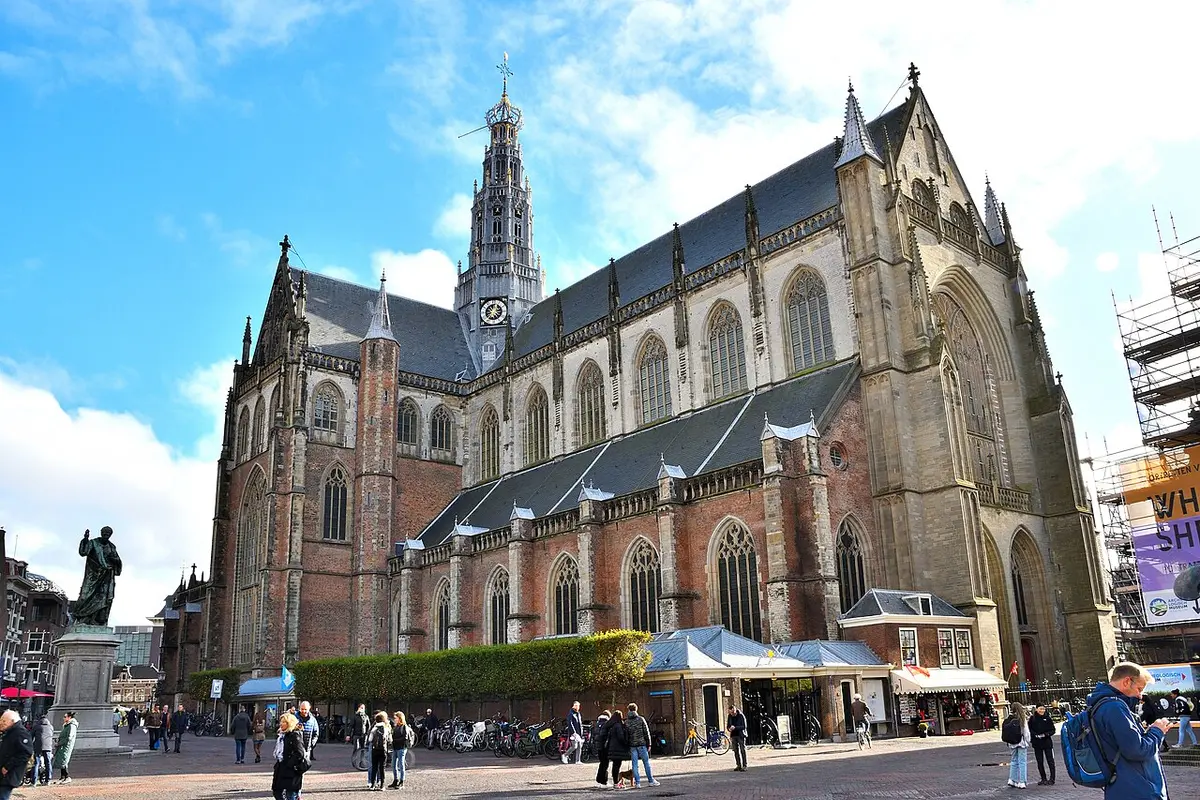
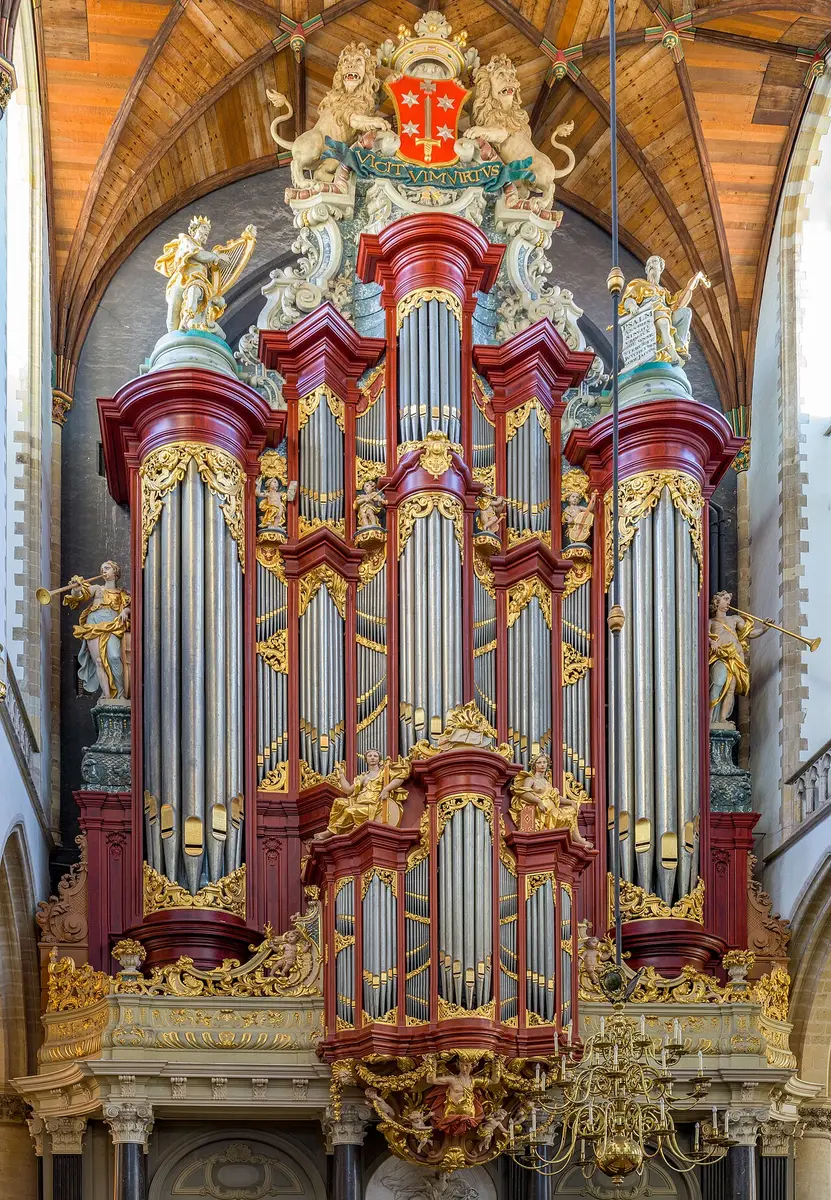
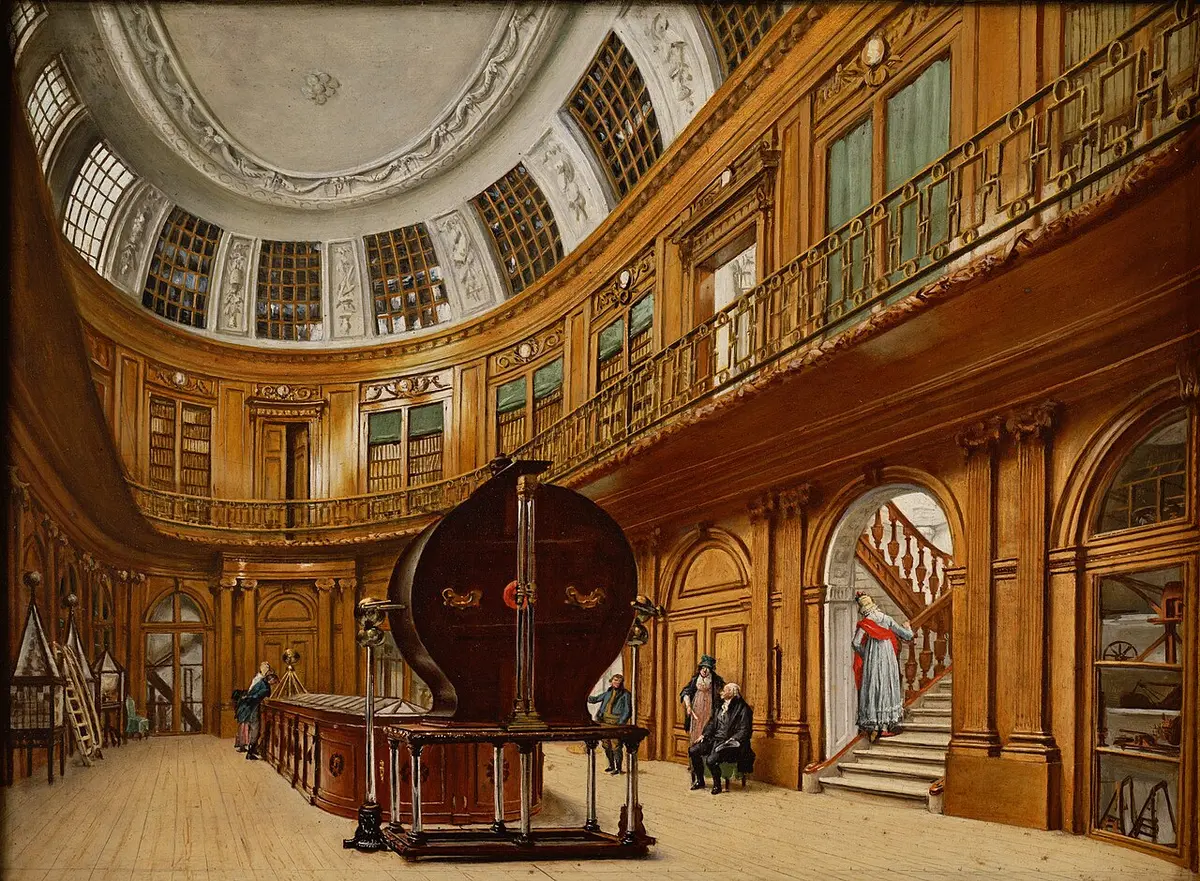
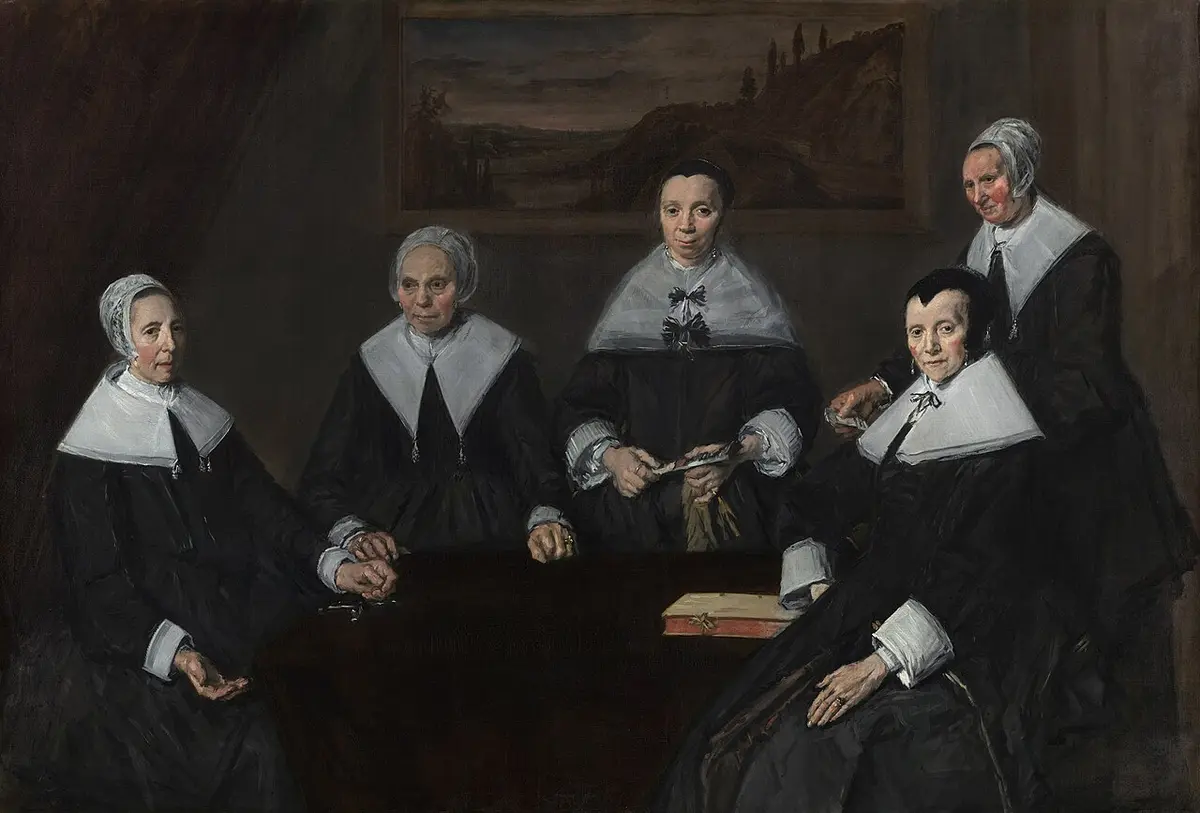
Fifteen minutes by train from Centraal Station, Haarlem is Amsterdam at a smaller, slower scale: a great church on a market square, the oldest museum in the country and a hall of portraits by Frans Hals.
People and customs
Bikes first
Bike lanes are for bikes, and locals ride fast. Look both ways before you step off the curb, and never stand in a red lane.
Plain speaking
The Dutch say what they think and mean no rudeness by it. A direct answer is just an answer.
Coffee shops
Coffee shops sell cannabis to adults over 18; cafés sell coffee. Smoking cannabis in the street is banned in the Red Light District and around the Dam, with fines.
The Red Light District
It is a neighborhood where people live. Do not photograph the women in the windows, and keep your voice down at night.
Early dinners
The Dutch eat dinner from about 6pm, and many kitchens close by 10pm.
A few words
Almost everyone speaks English, but dank je wel (thank you) and goedemorgen (good morning) are appreciated.
Questions
How many days do you need in Amsterdam?
Three days covers the canal ring, the Rijksmuseum, the Van Gogh Museum, the Anne Frank House and the Jordaan. Four days adds the Jewish Cultural Quarter, Noord and the parks, and five leaves time for Haarlem or The Hague.
Where should I stay in Amsterdam on a first visit?
The canal ring or the Jordaan, where everything is walkable. The Museum Quarter is calmer and close to the big museums, De Pijp is best for food and nightlife, and the Plantage and Oost are better value, a short tram ride from the center.
When is the best time to visit Amsterdam?
April to June and September. April brings the tulips and King’s Day, summer is warmest and busiest, and winter is cold and dark but quieter, with the Light Festival on the canals.
How do I get from Schiphol Airport to central Amsterdam?
Take the train from the station under the terminal to Amsterdam Centraal: about 15 minutes, several times an hour by day and hourly through the night.
Do I need to book the Anne Frank House in advance?
Yes. Tickets are sold only on the museum’s own website, released every Tuesday for visits six weeks later, and there is no ticket desk at the door.
Is Amsterdam good for a bachelor or bachelorette party?
Yes, if you plan it around boats, food and bars rather than a crawl through the Red Light District: drinking in the street is banned in most of the center, and drunken nuisance is fined. A canal boat, a jenever tasting and a club night go down well.
Plan Amsterdam with your group
Everyone swipes on the sights they want. SwipeSights builds the days around the picks, in walking order.