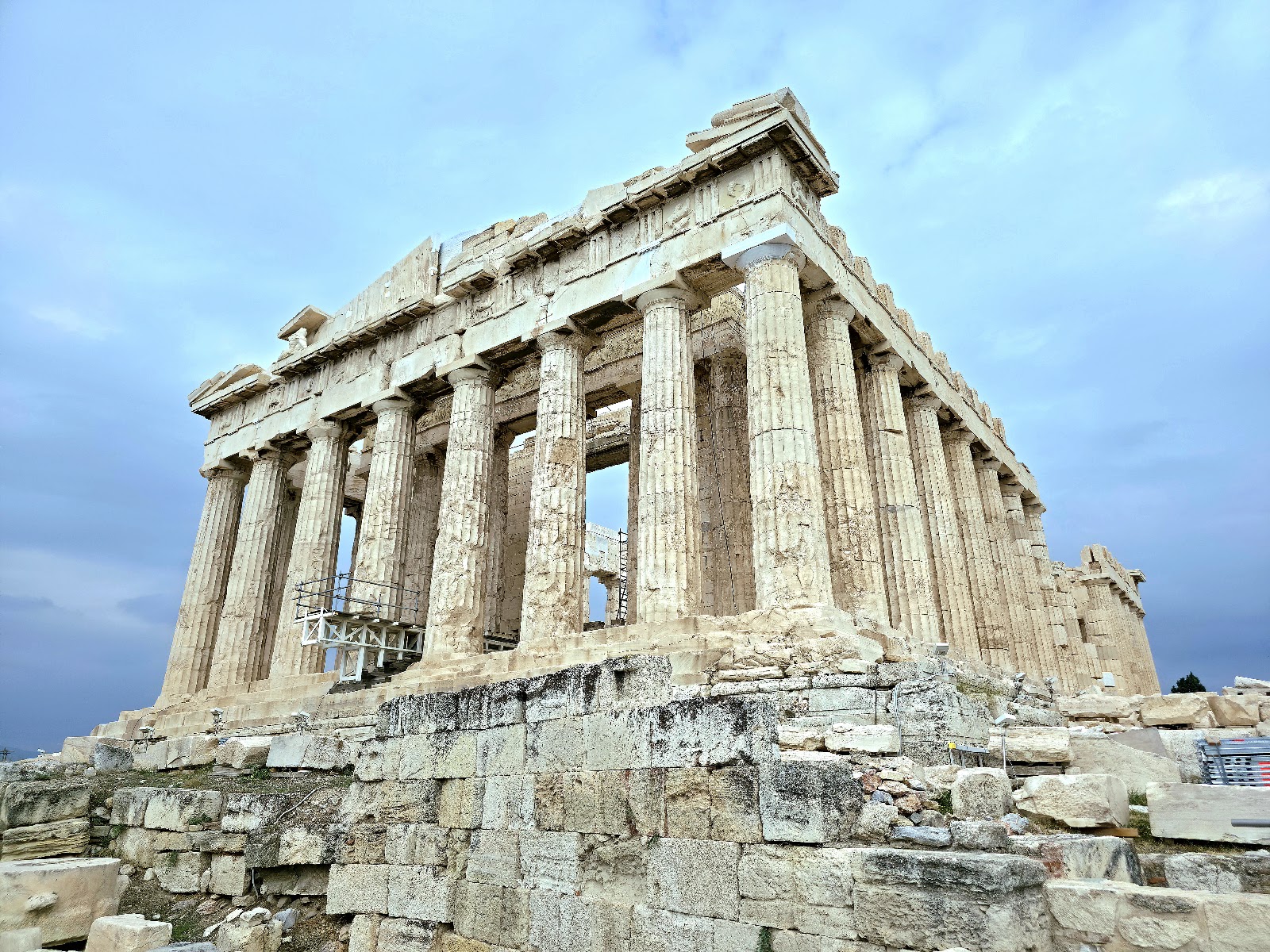
Athens
Where Western civilization first drew breath
You climb past olive trees to a marble crown that has watched over the city for 2,500 years. Below, Athens hums with souvlaki smoke, café-lined squares, and graffiti-bright lanes. Ancient and chaotic, it rewards the curious and the hungry alike.
How long to stay?
One or two days means the essentials: the Acropolis and its excellent museum at opening, a wander through the Ancient Agora, lunch in Plaka's lanes, and sunset drinks on a Monastiraki rooftop facing the floodlit Parthenon.
Gritty, sun-baked and gloriously alive. Ancient ruins sit beside street art and bustling tavernas. Locals linger over frappés for hours. It feels lived-in and unpolished rather than museum-perfect, which is the charm.
Plaka and Monastiraki put you in the historic heart, walkable to everything with Acropolis views. Koukaki and Pangrati are quieter, residential and full of good food. Psyrri suits night owls.
Hit the Acropolis right at opening (8am) or in the last hours before closing to dodge crowds and midday heat. A combined ticket covers seven ancient sites for one price.
April to early June and September to October bring warm days, blue skies and manageable crowds. July and August are brutally hot and packed; winter is mild, quiet and cheap.
Athens International Airport (ATH) links to most of Europe. The Metro Line 3 runs from the airport into the center in about 40 minutes. The X95 express bus is a cheaper alternative.
Currency is the euro; Greek uses its own alphabet but English is widely spoken in tourist areas. Tipping is appreciated but not obligatory. Carry cash for small tavernas and kiosks.