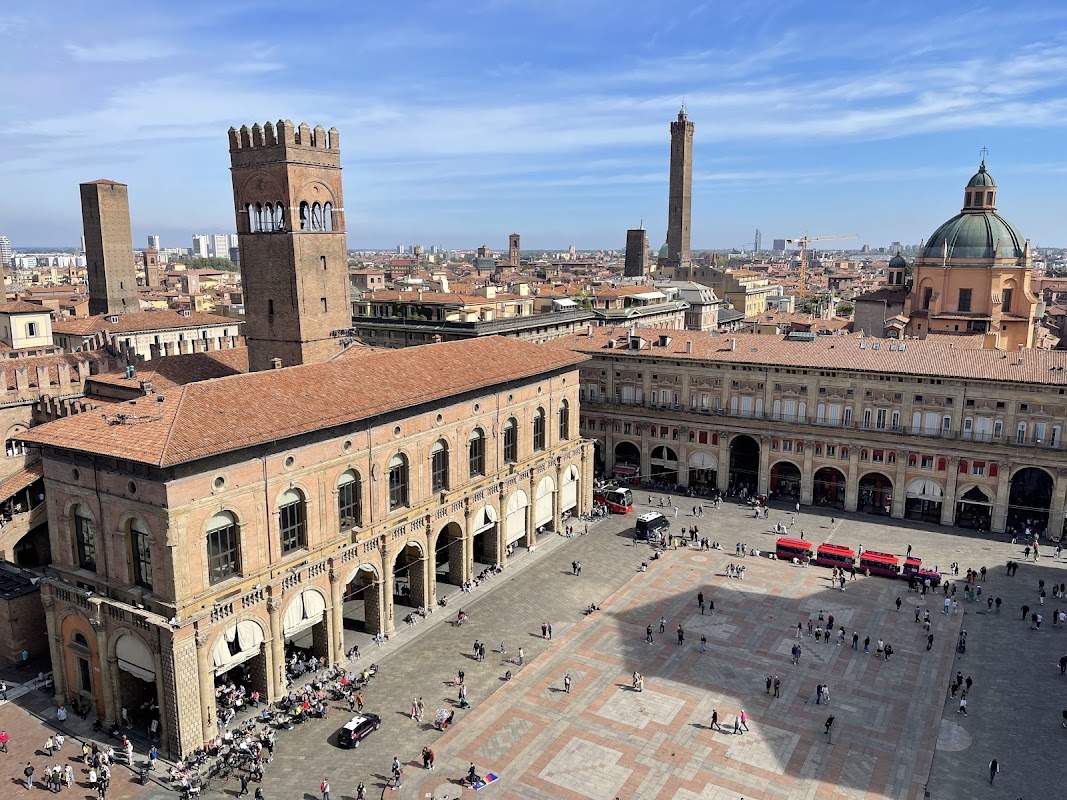
Bologna
Red roofs, long lunches, deep arcades
Italy's gastronomic capital wears a terracotta blush. You'll walk endless porticoes between medieval towers, dip into tortellini and mortadella at bustling food markets, and discover a city that's lived-in and student-young rather than polished for tourists. Bologna feels gloriously, deliciously real.
How long to stay?
One or two days centers on Piazza Maggiore, the unfinished Basilica di San Petronio and Neptune's Fountain. Graze through Mercato di Mezzo, climb a tower, then loop the Quadrilatero's food stalls before an evening aperitivo under the arcades.
Earthy, intellectual and unhurried. Home to Europe's oldest university, Bologna hums with students, cyclists and market chatter. Less postcard-perfect than Florence, more honest, with politics, jazz bars and serious eating woven into daily rhythm.
Stay inside the centro storico near Piazza Maggiore or the Quadrilatero for walkable food and sights. The University district around Via Zamboni is lively and cheaper; near the train station suits quick arrivals.
Skip the chains and eat where the locals queue: the Quadrilatero's tiny delis and Mercato delle Erbe serve the real thing. Order tagliatelle al ragù, never spaghetti bolognese, which isn't a local dish.
Spring (April to June) and early autumn (September to October) bring mild weather and food festivals. Summer turns hot and humid with many shops shuttered in August; winter is foggy but cozy and quiet.
Bologna Guglielmo Marconi Airport sits 6km out, linked to the center by the Marconi Express monorail in seven minutes. The central station is a major high-speed rail hub, under 40 minutes to Florence and roughly an hour to Milan.
Italian is spoken and the euro is used. Bologna is wonderfully flat and walkable, but those marble porticoes get slippery in rain, so wear grippy shoes. Tipping is modest; a cover charge often appears on restaurant bills.