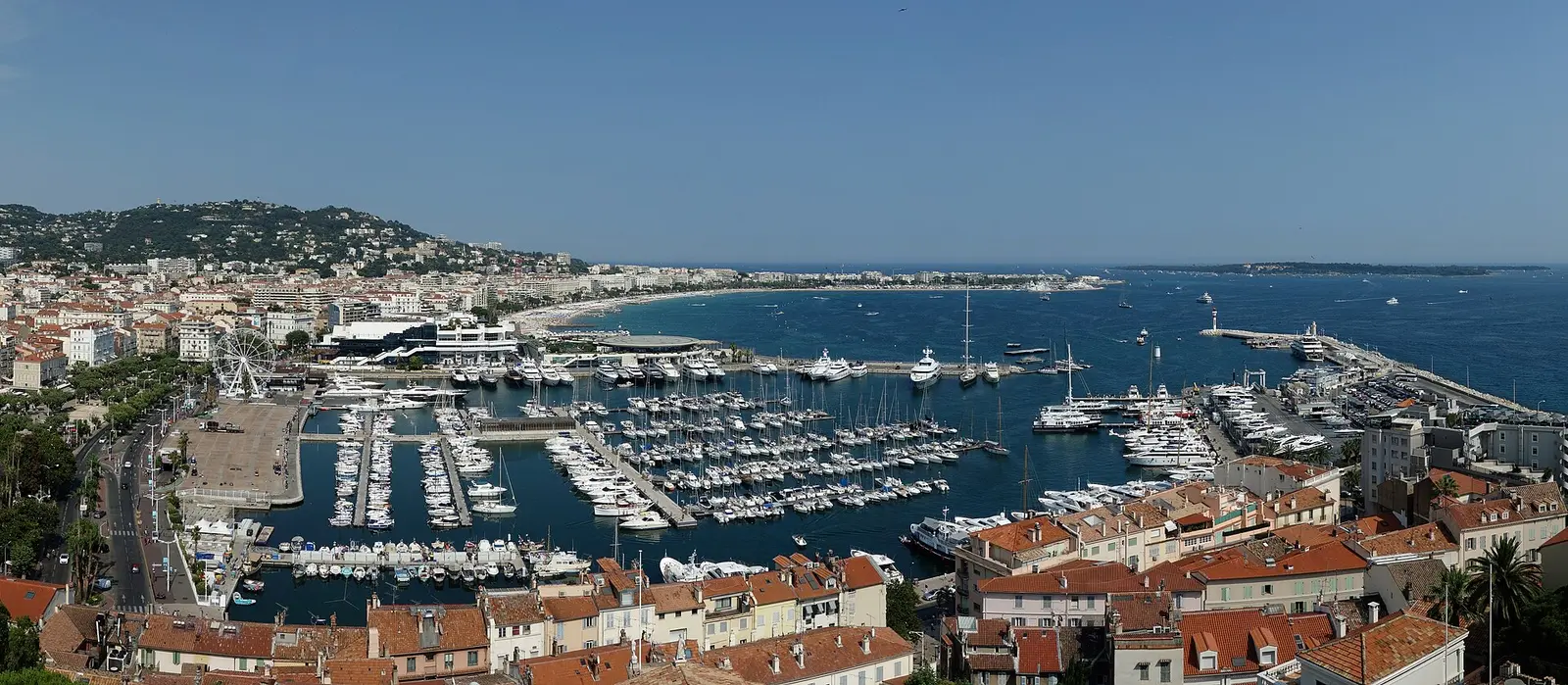
 Photo:
Cannes curves around a bay on the French Riviera, between the red hills of the Esterel and the cape of Antibes. The Croisette runs along the water past palace hotels and beaches, the old town of Le Suquet climbs the hill above the harbor, and the Lérins Islands lie fifteen minutes offshore. It is a small town, easy to walk, with a famous film festival in May and mild, bright weather most of the year.
This guide covers when to go, where to stay, what to see, the islands, what to eat, and the story of how a fishing village became the Riviera’s best-known resort.
What Cannes is good for
Friends' trips
Take the boat to the Lérins Islands for a day of swimming and picnics, spend an afternoon at a beach club, and finish with dinner in the lanes of the Suquet. Antibes, Nice and Monaco are all an easy train ride along the coast.
Bachelorette and bachelor weekends
Book a beach club lunch that runs into the evening, charter a boat for a swim off the islands, then dinner in the Suquet and the bars and casino around the Palais des Festivals. In July and August, time it for a fireworks night over the bay.
Weddings and honeymoons
A legal wedding in France needs one partner, or a parent, to have lived in the town for at least a month, so most visiting couples marry at home and celebrate here, in hotels, villas and beach restaurants along the coast. For a honeymoon, pair the sea with the hill villages behind it, Mougins and Grasse among them.
Couples
Sunset from the tower of the Suquet, a boat to Île Saint-Honorat for a quiet afternoon among the monks’ vines, and a late walk along the Croisette.
Families
Sandy public beaches with a gentle slope, such as the Plage du Midi, boat rides to the islands, the Iron Mask’s cell in the Fort Royal, and fireworks over the bay on summer nights.
Solo travel
Safe, compact and easy to leave for the day: trains reach Antibes in about 10 minutes and Nice in about half an hour, and the counters of the Marché Forville make eating alone easy.
Food lovers
The Marché Forville in the morning, socca and pissaladière by the slice, fish restaurants around the Vieux-Port, and a glass of the monks’ wine on Île Saint-Honorat.
History and art
A monastery island settled around 410, the prison of the Man in the Iron Mask, the monks’ tower on the Suquet, and Bonnard’s museum in Le Cannet.
Plan your trip
When to go
June and September bring beach weather and a warm sea without the peak crowds. July and August are hot and busy, with fireworks over the bay. May belongs to the film festival, when the area around the Palais is fenced off and prices climb. Winter is mild and quiet, and some beach restaurants close.
How long to stay
Two days covers the Croisette, the Suquet and a day on the Lérins Islands. Three or four leave time for the beach and for day trips along the coast to Antibes, Nice or Grasse.
Getting there
Nice Côte d’Azur Airport (NCE) is about 27 km east. Regional trains from Nice Saint-Augustin, a short free tram ride from the terminals, reach Cannes in about 30 to 40 minutes, and the airport express bus takes about 50. High-speed trains from Paris take about five hours, and regional trains run along the coast from Marseille and from the Italian border.
Getting around
Walk: the station, the Croisette, the Vieux-Port and the Suquet are all within about 20 minutes of each other. Palm Bus runs the city buses, boats for the islands leave from the Vieux-Port, and regional trains stop at Cannes and Cannes-La Bocca. Driving and parking in summer are slow and expensive.
Booking
Book rooms early for the film festival in May and for the big trade fairs, when hotels fill months ahead. Boats to the islands sell tickets at kiosks on the Vieux-Port and online, and a beach club lounger in July and August is worth reserving.
Money and tipping
Service is included in restaurant prices, so tipping is optional: round up or leave a few euros for good service. Private beaches charge for loungers and umbrellas, and prices rise the closer you get to the Croisette. Hotels add a small city tax per person per night.
Weather, month by month
Spring
March to May
Mild and bright, from about 15°C in March to over 20°C in May, with the sea still cool for swimming.
Summer
June to August
Hot and dry, with highs around 27 to 28°C in July and August and the sea warm enough for long swims.
Autumn
September to November
September is still summer and October is mild, while November brings the heaviest rain of the year, often in short storms.
Winter
December to February
Mild, sunny days around 13°C and cool nights. Quiet streets, and mimosa in flower in the hills from late January.
Top sights
 01
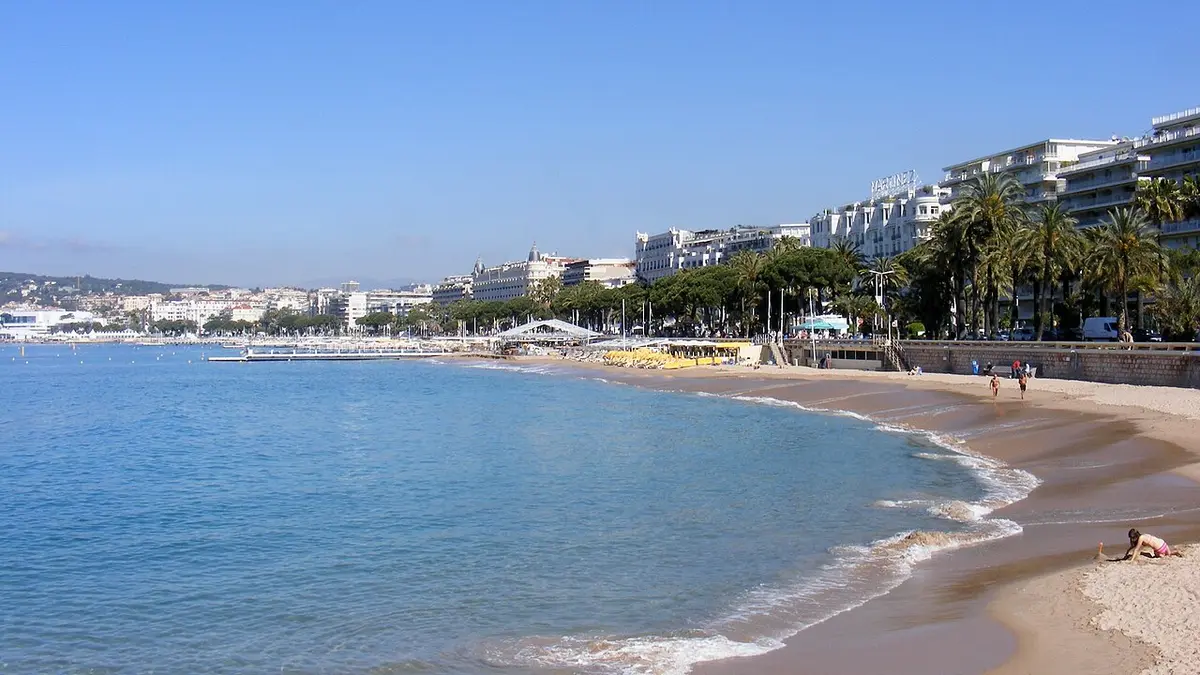
La Croisette
The seafront promenade runs about two kilometers from the Palais des Festivals to the Pointe Croisette, lined with palms, palace hotels and beaches. Its name comes from a small cross that once stood on the point. Most of the sand below belongs to private beach restaurants, but the Plage Macé, near the Palais, is public, and so are the blue chairs along the promenade.
Walk it early in the morning or toward sunset, and carry on to the Pointe Croisette for the view back across the bay to the Suquet and the Esterel.
Photo: Kazimierz Mendlik, CC BY-SA 3.0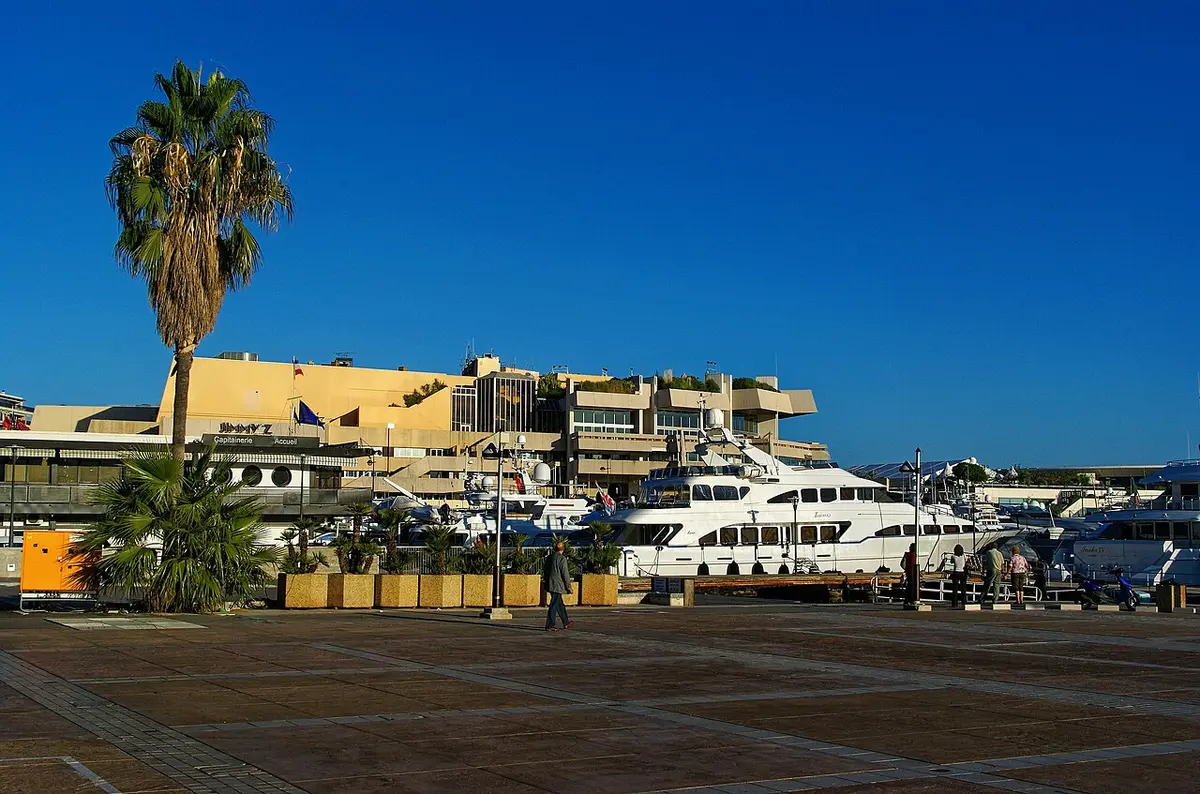 02
The Palais des Festivals
The film festival’s home since 1983, a low concrete building on the harbor that locals call the Bunker. Its 24 steps get the red carpet in May, and the rest of the year anyone can climb them for a photo. Around it, about 140 handprints of actors and directors are set in the pavement.
The tourist office is inside, at the start of the handprint trail.
Photo: Txllxt, CC BY-SA 4.0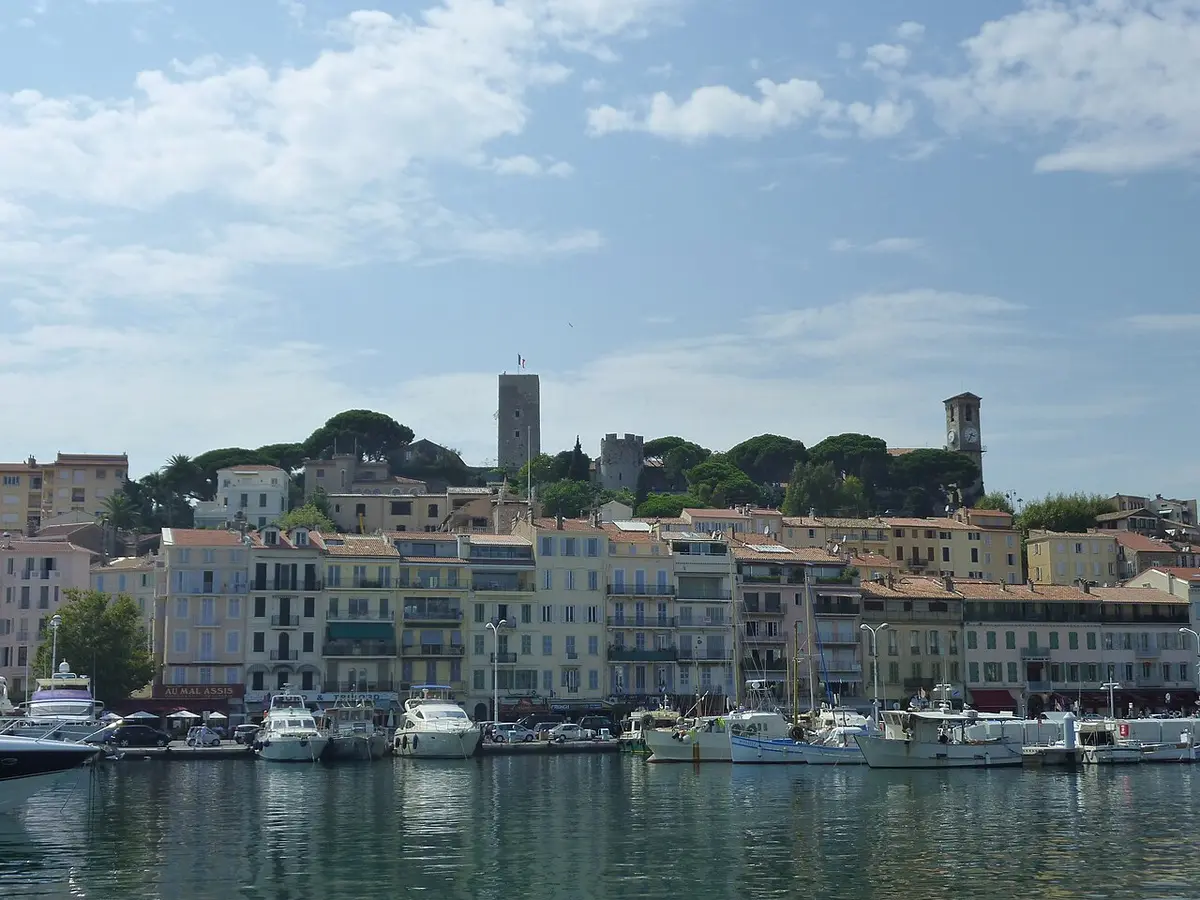 03
Le Suquet
The old town climbs the hill above the Vieux-Port in stepped lanes to the church of Notre-Dame-d’Espérance, begun in 1521 and finished more than a century later, and to the castle of the monks of Lérins, whose square tower was begun around 1080. The castle now holds the Musée des Explorations du Monde, with antiquities, art from the Himalayas, the Pacific and the Americas, and musical instruments from around the world.
Climb the 109 steps of the tower for the widest view in Cannes. The museum is closed on Mondays.
Photo: Miniwark, CC BY-SA 3.0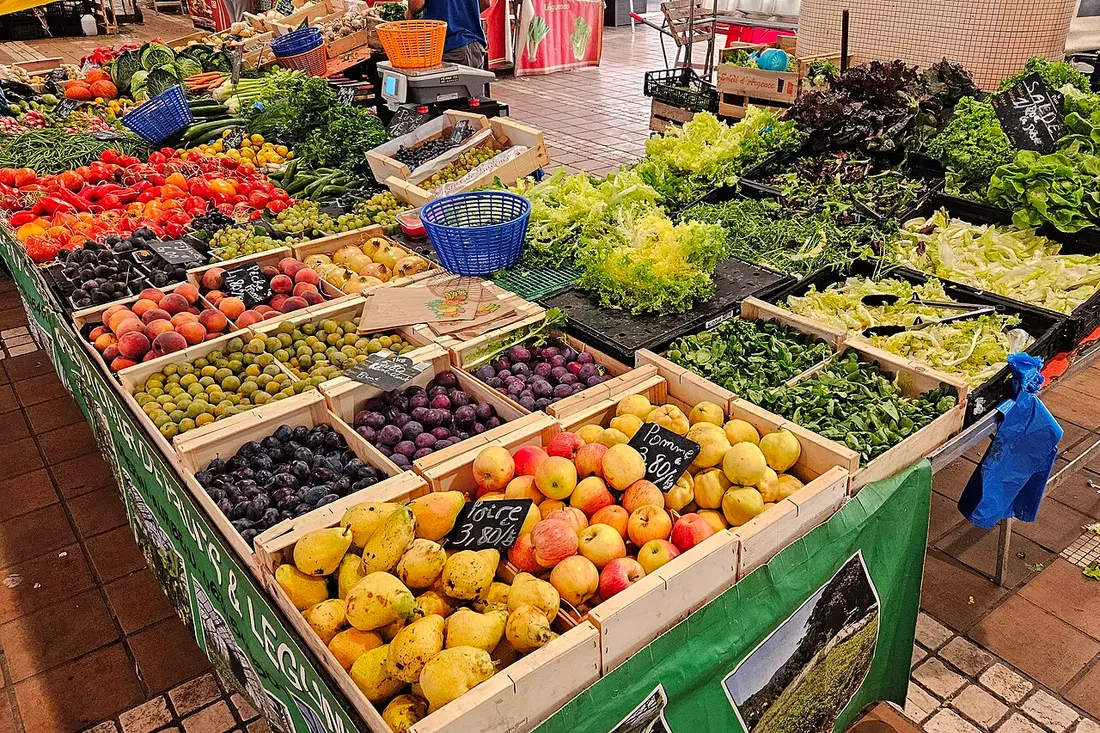 04
The Marché Forville
The covered market at the foot of the Suquet, where Cannes shops each morning for fish, cheese, olives, flowers and vegetables from the Provençal hinterland. On Mondays the food stalls give way to a flea market.
Come before 11am. It is open every morning in July and August, and Tuesday to Sunday the rest of the year.
Photo: Iswoar, CC BY-SA 4.0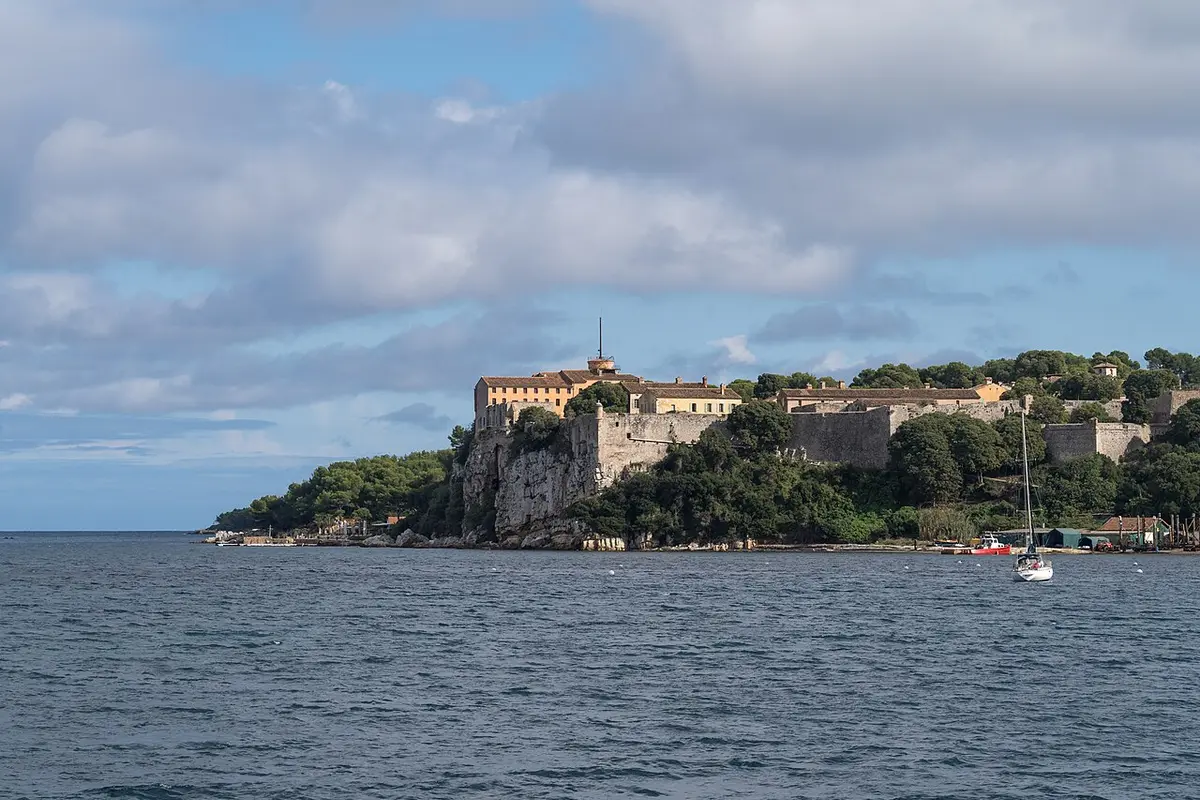 05
Île Sainte-Marguerite
The largest of the Lérins Islands, about 15 minutes by boat from the Vieux-Port, is a forest of pines and eucalyptus ringed by coves. On its cliff stands the Fort Royal, where the Man in the Iron Mask was held from 1687 to 1698. The Musée du Masque de Fer shows his cell, the cells of Protestant pastors imprisoned after 1685, and finds from shipwrecks along the coast.
Take a picnic and walk the path around the island. Off its south side, six sculpted faces by Jason deCaires Taylor lie in shallow water for snorkelers.
Photo: Alexkom000, CC BY 4.0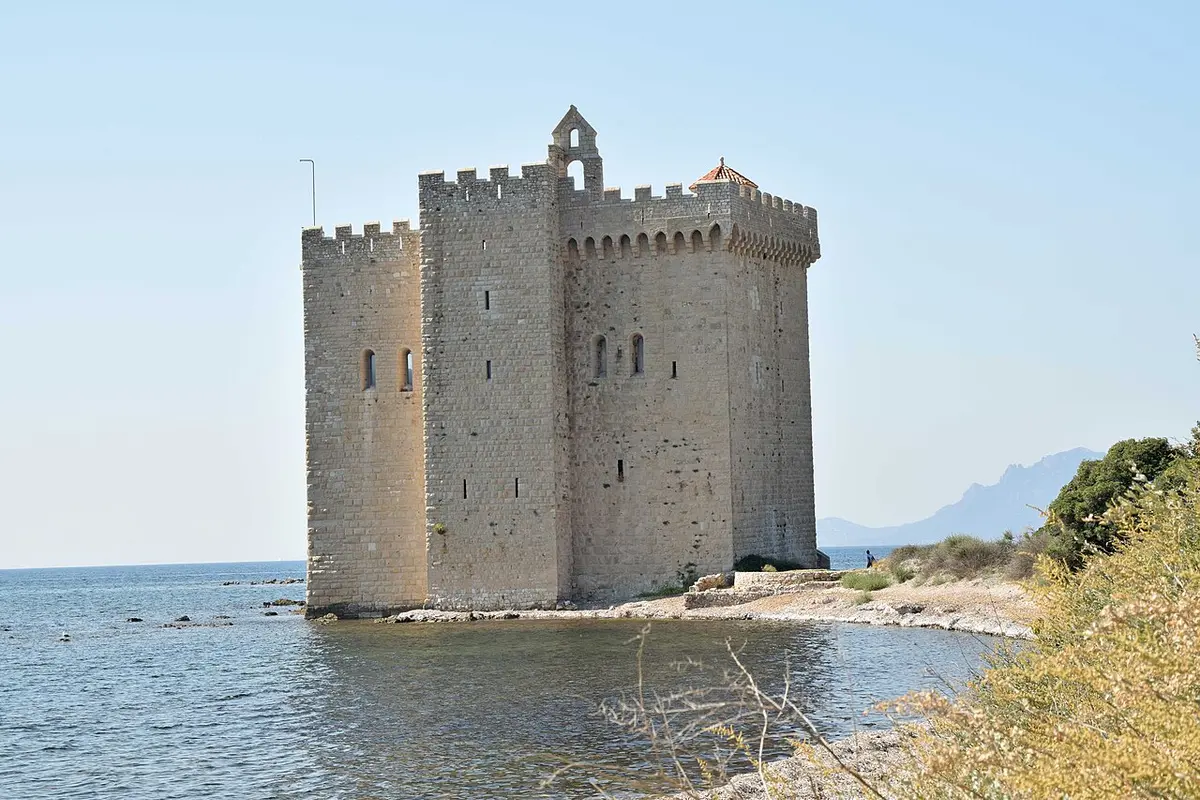 06
Île Saint-Honorat
A monastery island since Honoratus settled here around 410, and still home to a community of Cistercian monks, who pray, tend their vineyards and make wine and liqueur. The fortified monastery on the shore, built from the 11th century against raids from the sea, is open to visitors.
The monks’ boats run from the Vieux-Port in about 20 minutes. Dress modestly, keep your voice down near the abbey, and buy a bottle of their wine before you leave.
Photo: Helge Høifødt, CC BY-SA 4.0
Three hidden gems
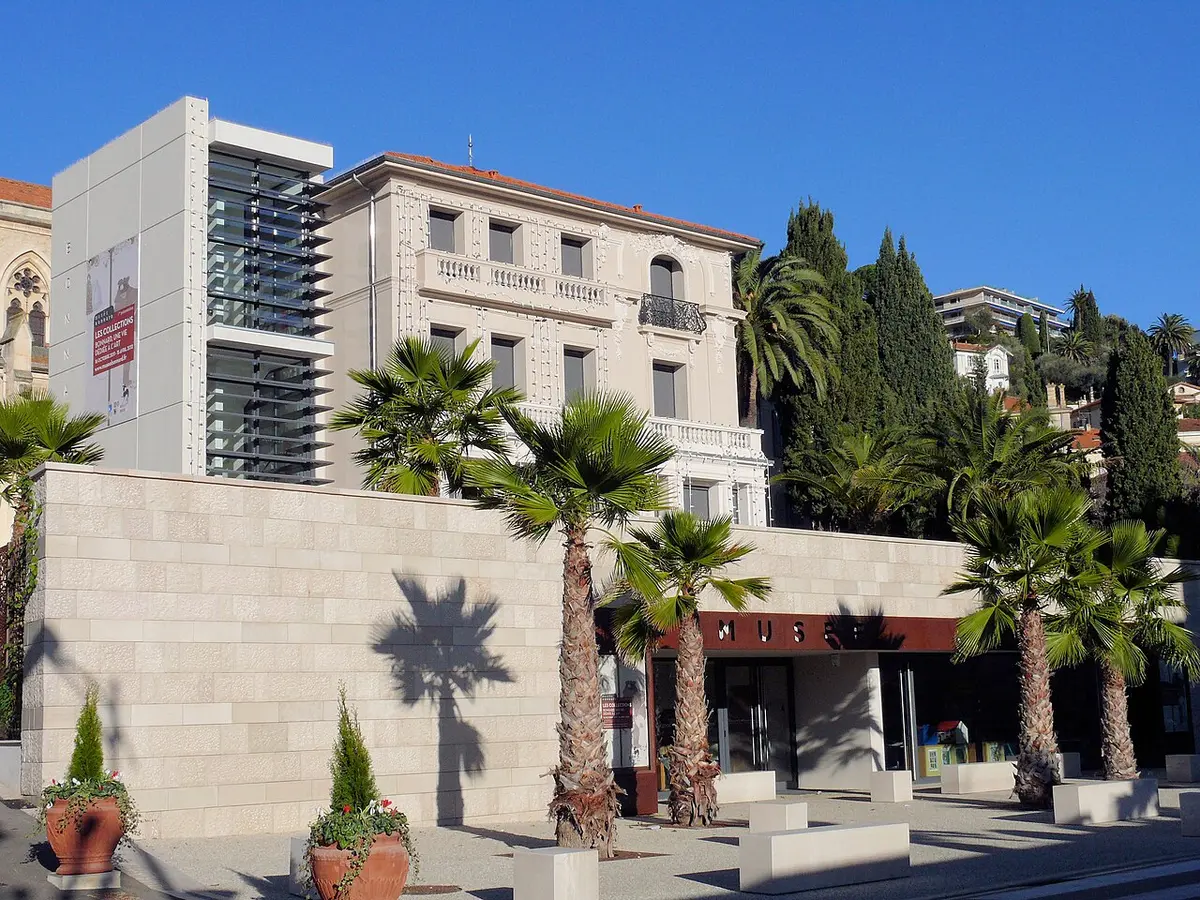
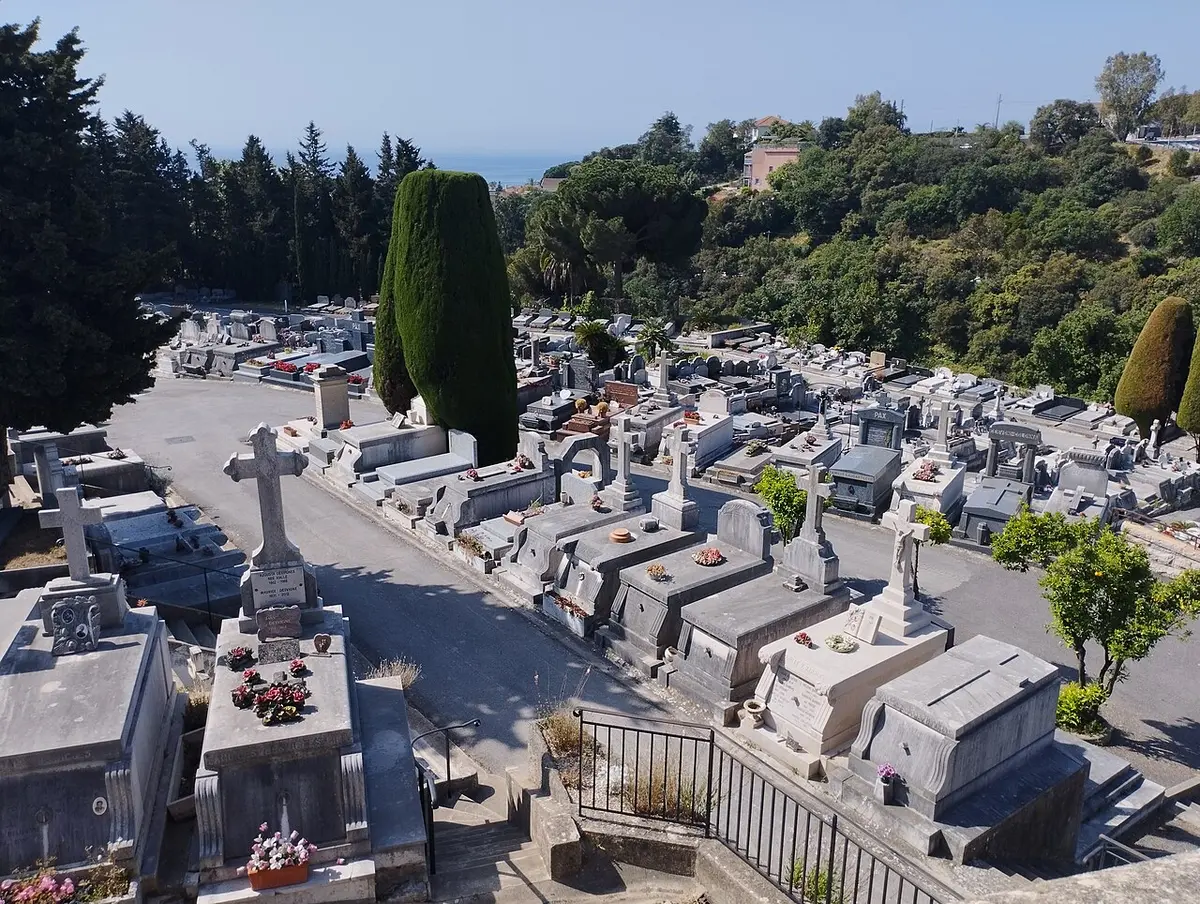
Where to stay
Pick the neighborhood first, then the hotel. Each link opens a map of places to stay around it.
La Croisette
CouplesThe seafront between the Palais des Festivals and the Pointe Croisette: palace hotels, beach clubs and the best-known addresses in town. Walk everywhere, pay the most, and expect crowds during festivals.
See hotels in La CroisetteLe Suquet
Atmosphere and foodThe old town on the hill above the harbor: steep lanes, small restaurants along the Rue Saint-Antoine and the market at its foot. Full of character, lively on summer nights, and a climb from the station.
See hotels in Le SuquetRue d’Antibes
First visit and short staysThe shopping street one block back from the Croisette and the streets around the station: mid-range hotels, easy trains along the coast and the beach five minutes away.
See hotels in Rue d’AntibesLa Californie
Quiet staysVillas and gardens on the hill east of the center, where Picasso lived in the 1950s, with Palm Beach and the public beaches of the Boulevard Gazagnaire below. Calm and green, and a bus ride or a long walk from the center.
See hotels in La CalifornieLa Bocca
Families and beachesWest of the center, with long public sandy beaches, local shops and its own train station. Less glamorous and better value, a few minutes from the center by train or bus.
See hotels in La BoccaLe Cannet
Local lifeA separate town on the hills just above Cannes, with an old village center, the Musée Bonnard and lower prices. Buses run down to the Croisette.
See hotels in Le CannetThe 10 best budget hotels
Well-reviewed hotels at the lower end of Cannes’s prices, best-reviewed first. On a weeknight in November 2026 they cost about €125 to €290 for two; prices change daily, so check your own dates.
 01
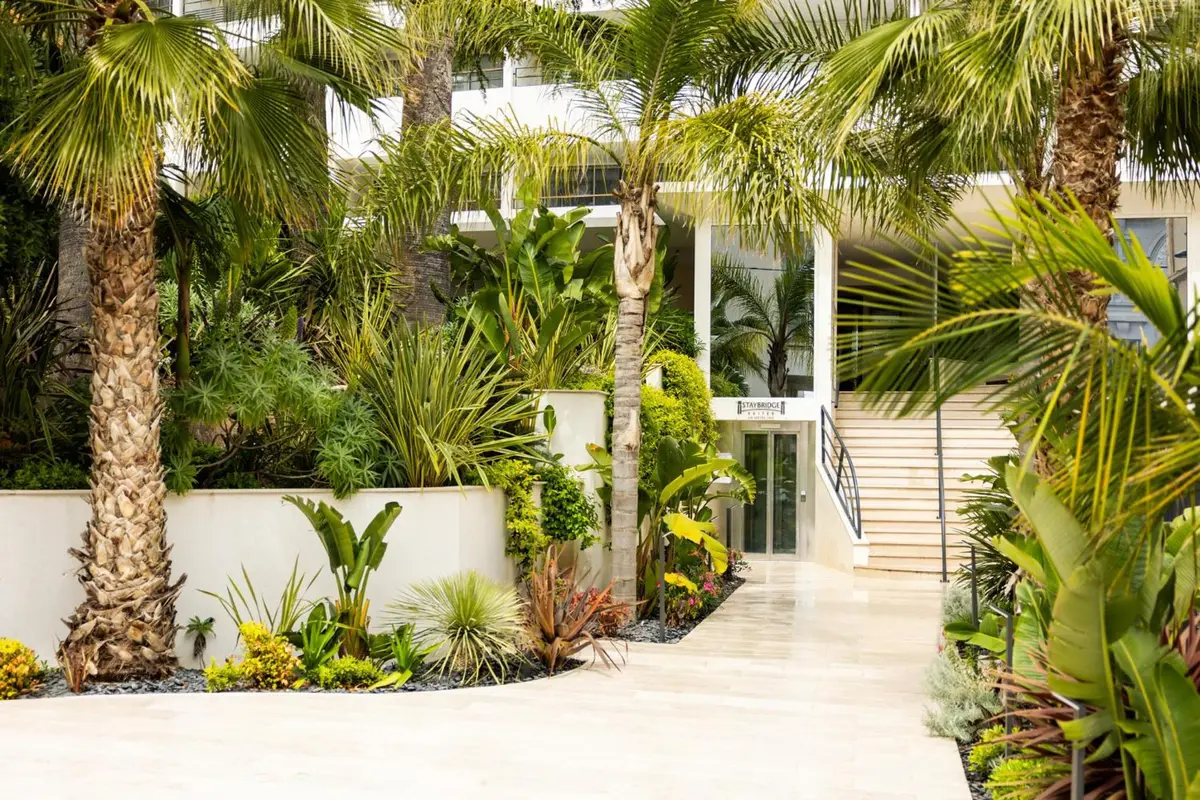
Staybridge Suites - Cannes Centre by IHG
9.21,667 reviewsLe Suquet
6 min walk to Cannes station
See prices 02
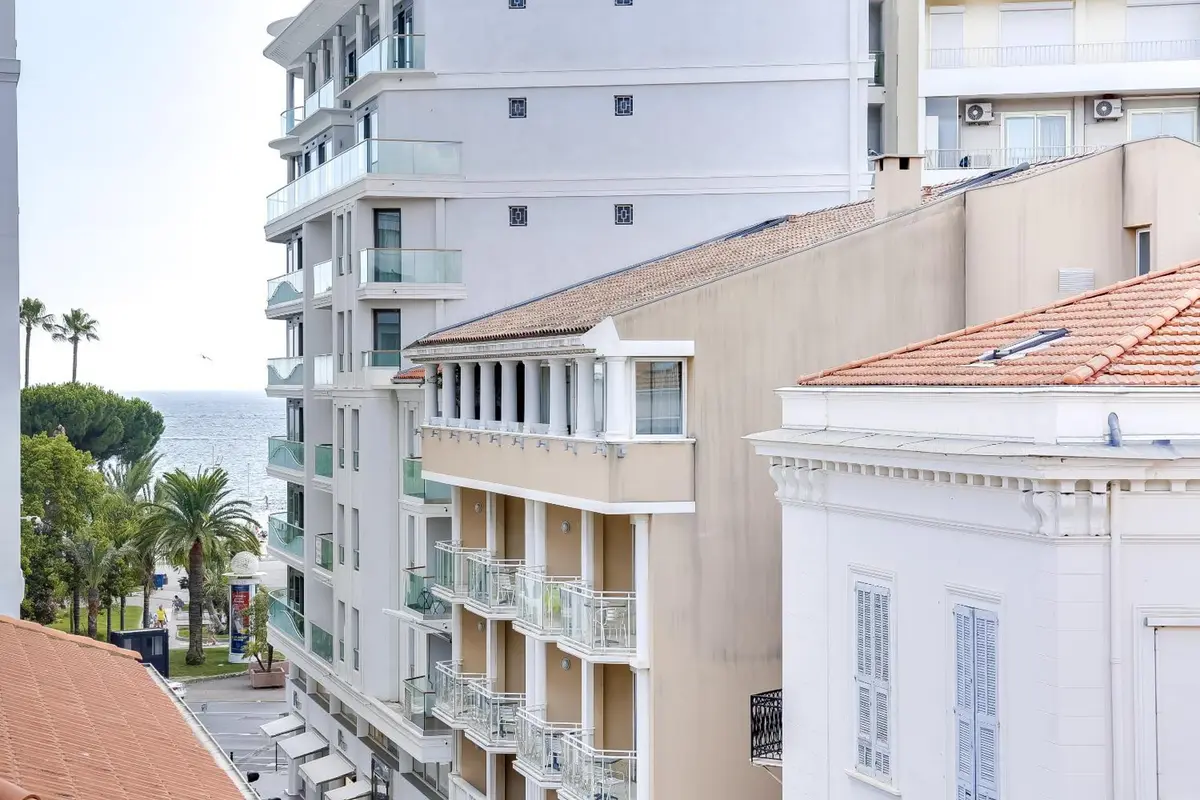 03
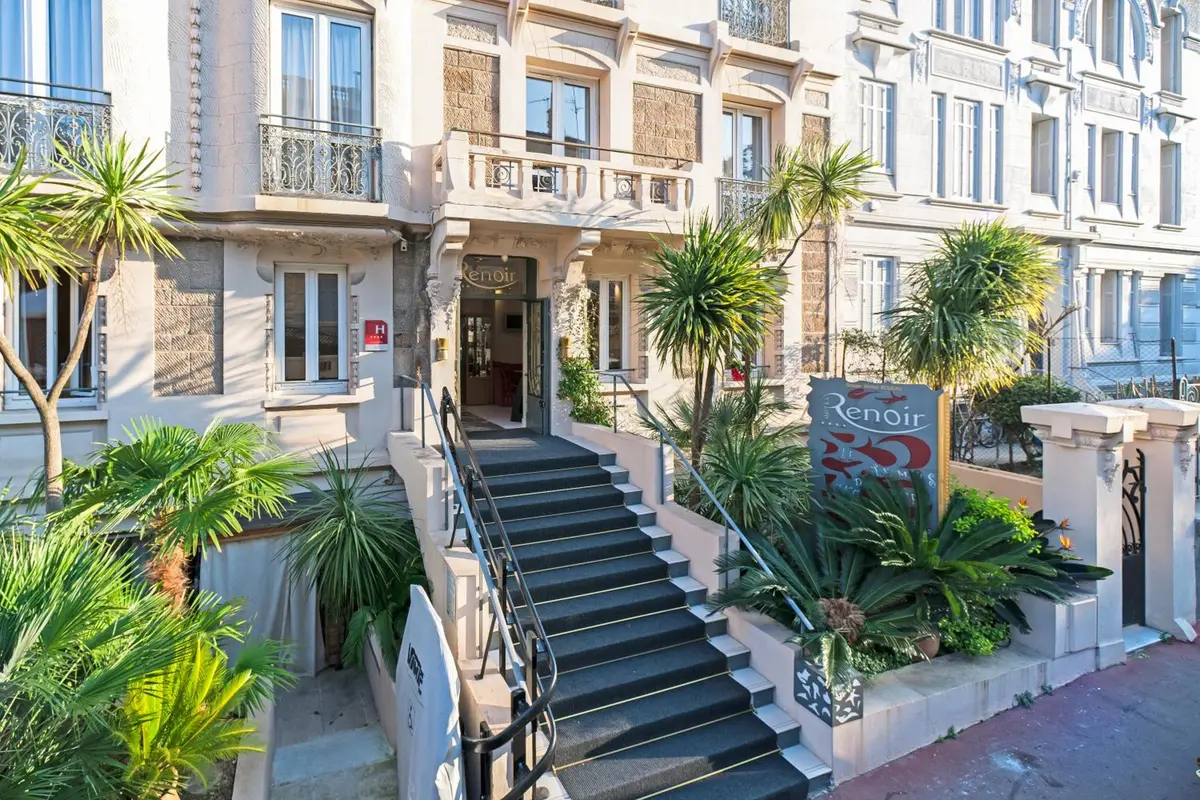 04
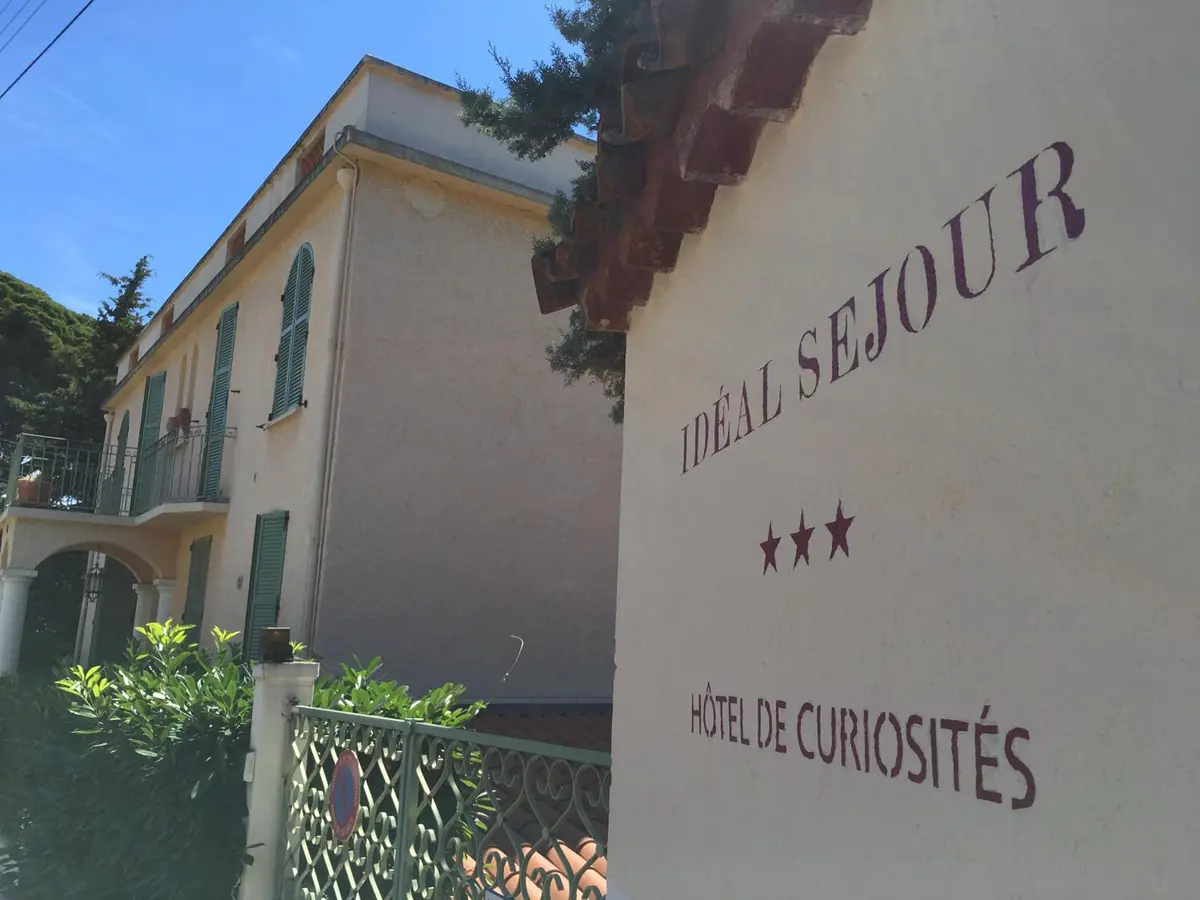 05
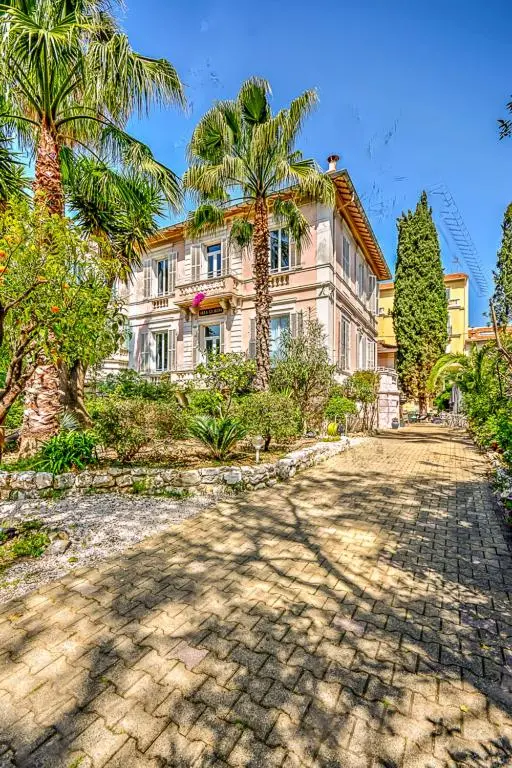
Ideal Sejour Cannes - Hôtel de Charme
8.8561 reviews1.0 km north of Le Suquet
16 min walk to Le Suquet
See prices 06
 07
Villa Claudia Hotel Cannes Centre - Parking
8.6853 reviewsRue d’Antibes
6 min walk to the Croisette
See prices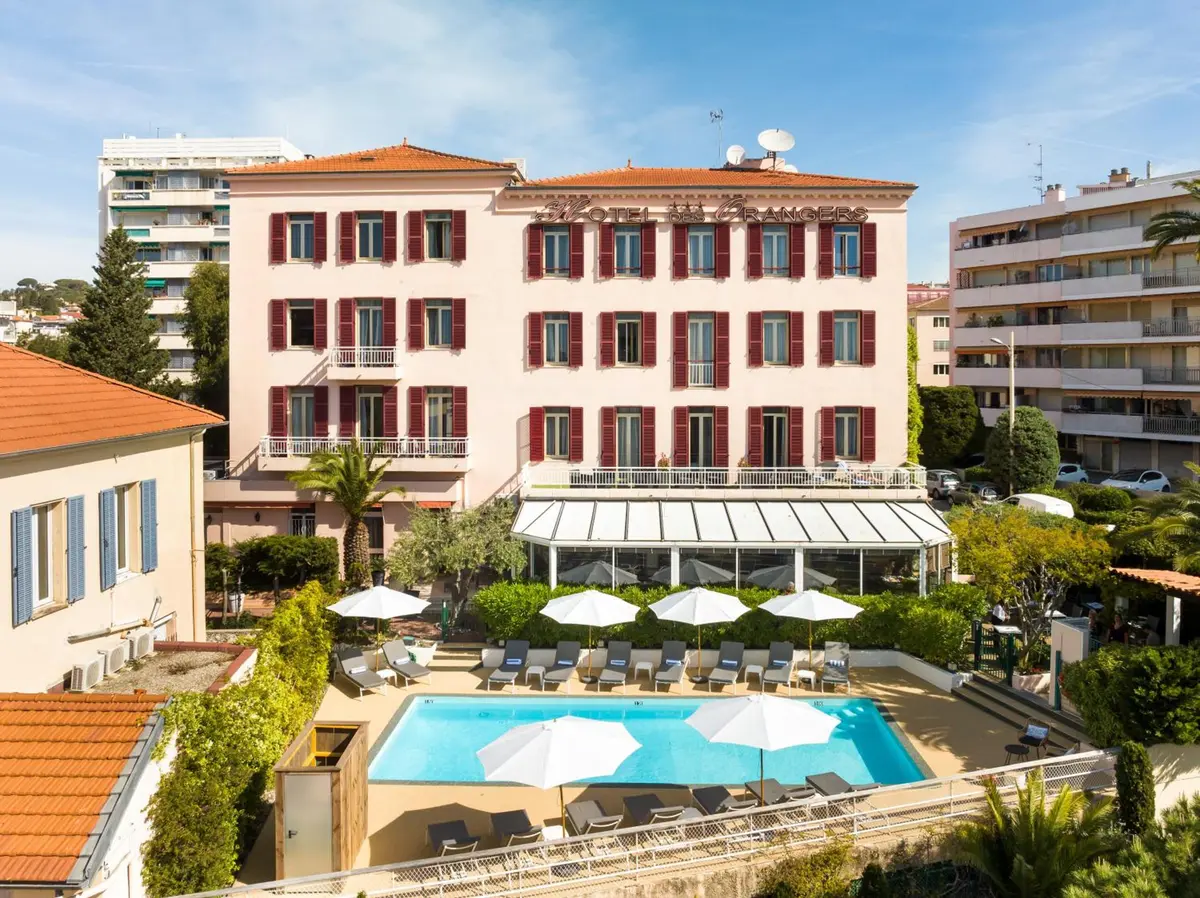 08
 09
 10
Hotel links go to Stay22. If you book, we may earn a commission, at no cost to you.
Food and drink
Cannes eats like the rest of the Riviera: olive oil, tomatoes, garlic, fish and anchovies, with the dishes of nearby Nice on most menus. Lunch runs from about noon to 2pm and dinner from 7:30 or 8pm, later in summer.
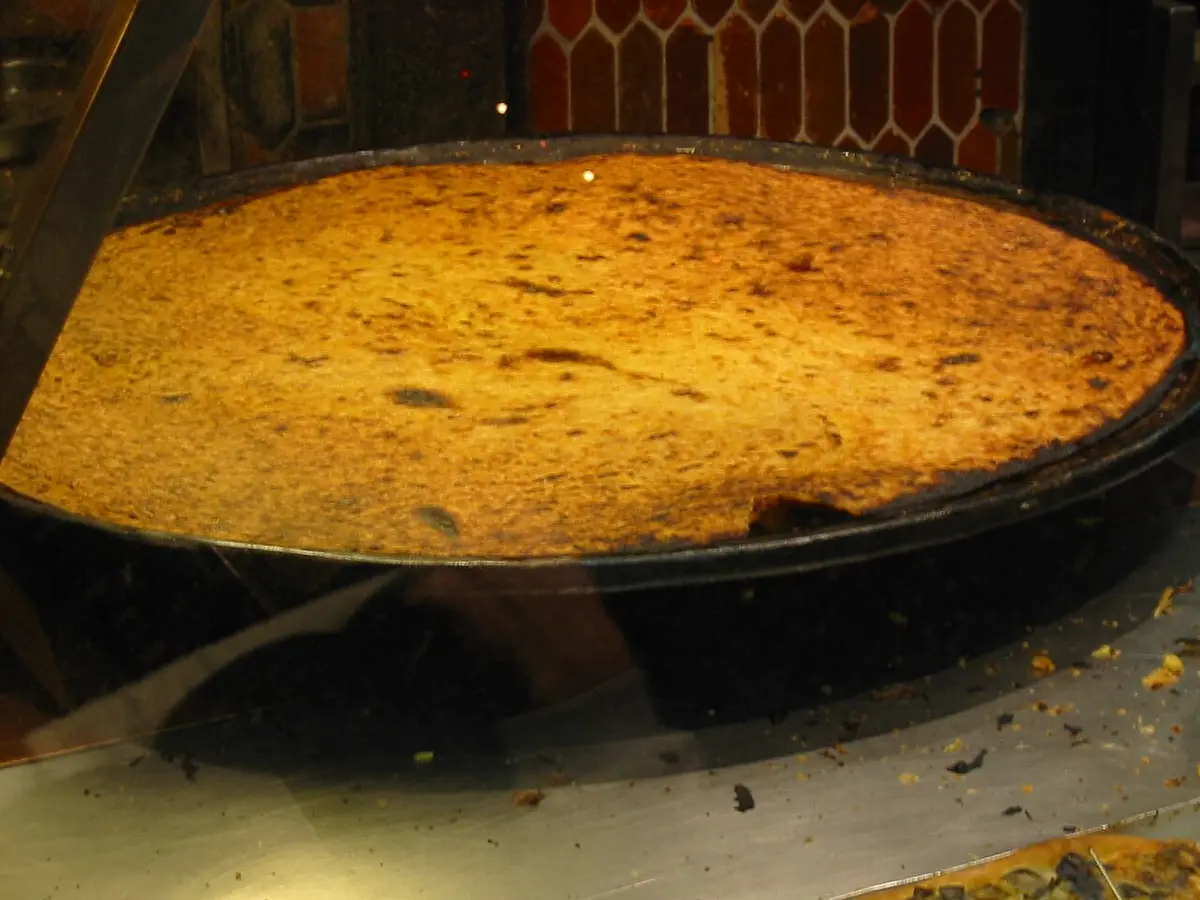
Socca
A thin pancake of chickpea flour and olive oil, baked in a wide pan in a very hot oven and eaten hot, with black pepper.
Photo: Paul Downey from Berkhamsted, UK, CC BY 2.0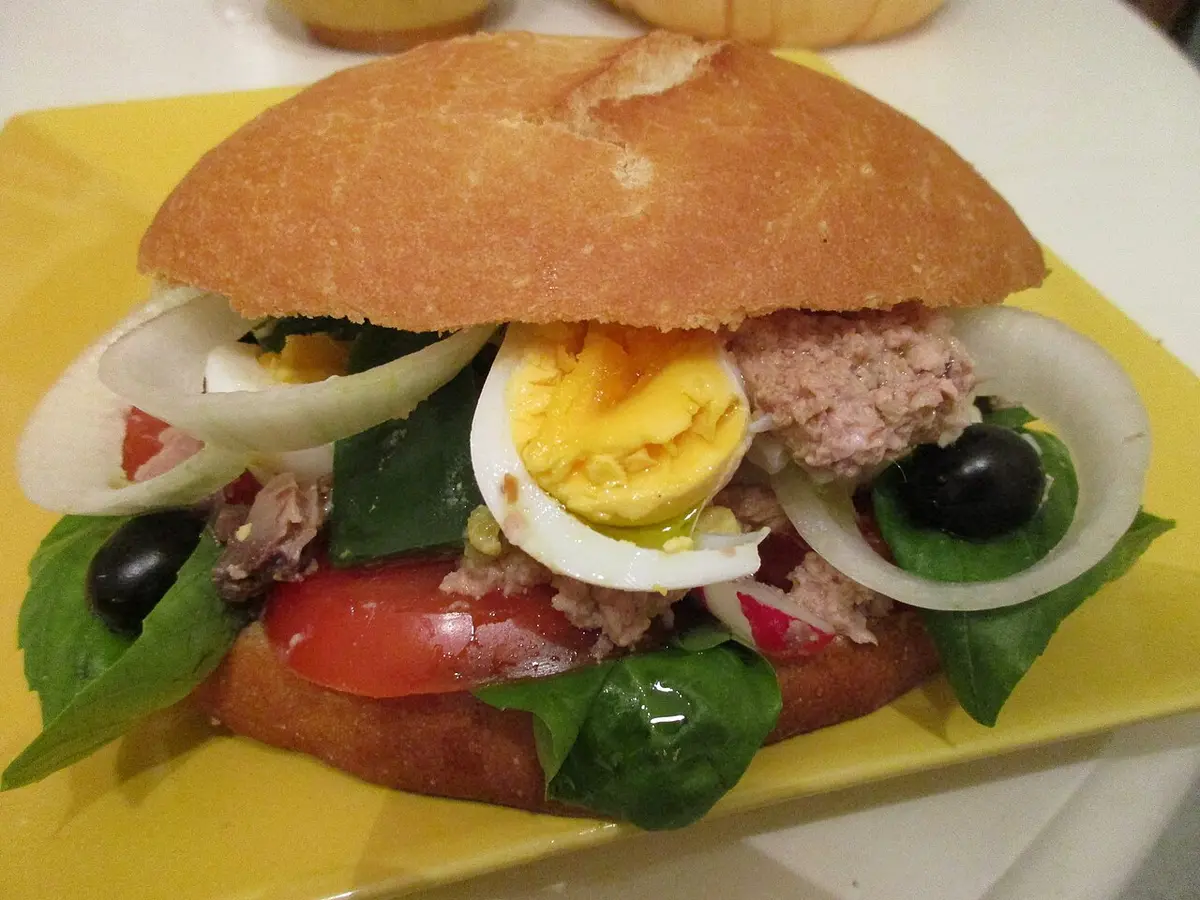
Pan bagnat
A round loaf soaked in olive oil and filled with tuna or anchovies, hard-boiled egg, tomato, onion and olives: a salade niçoise in a sandwich.
Photo: Arnaud 25, CC BY-SA 4.0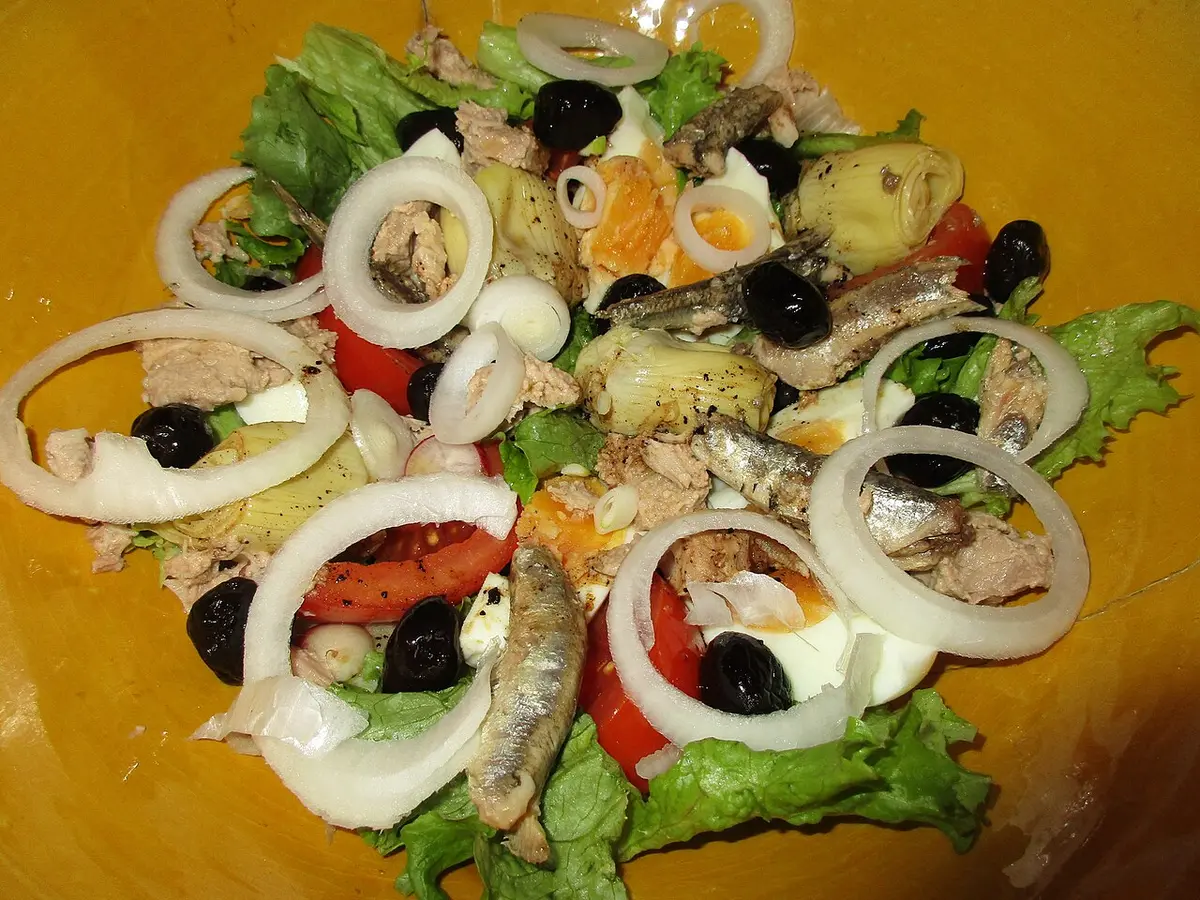
Salade niçoise
Tomatoes, hard-boiled eggs, black olives, onion and anchovies or tuna, dressed with olive oil. Purists leave out anything cooked except the eggs.
Photo: Arnaud 25, CC BY-SA 4.0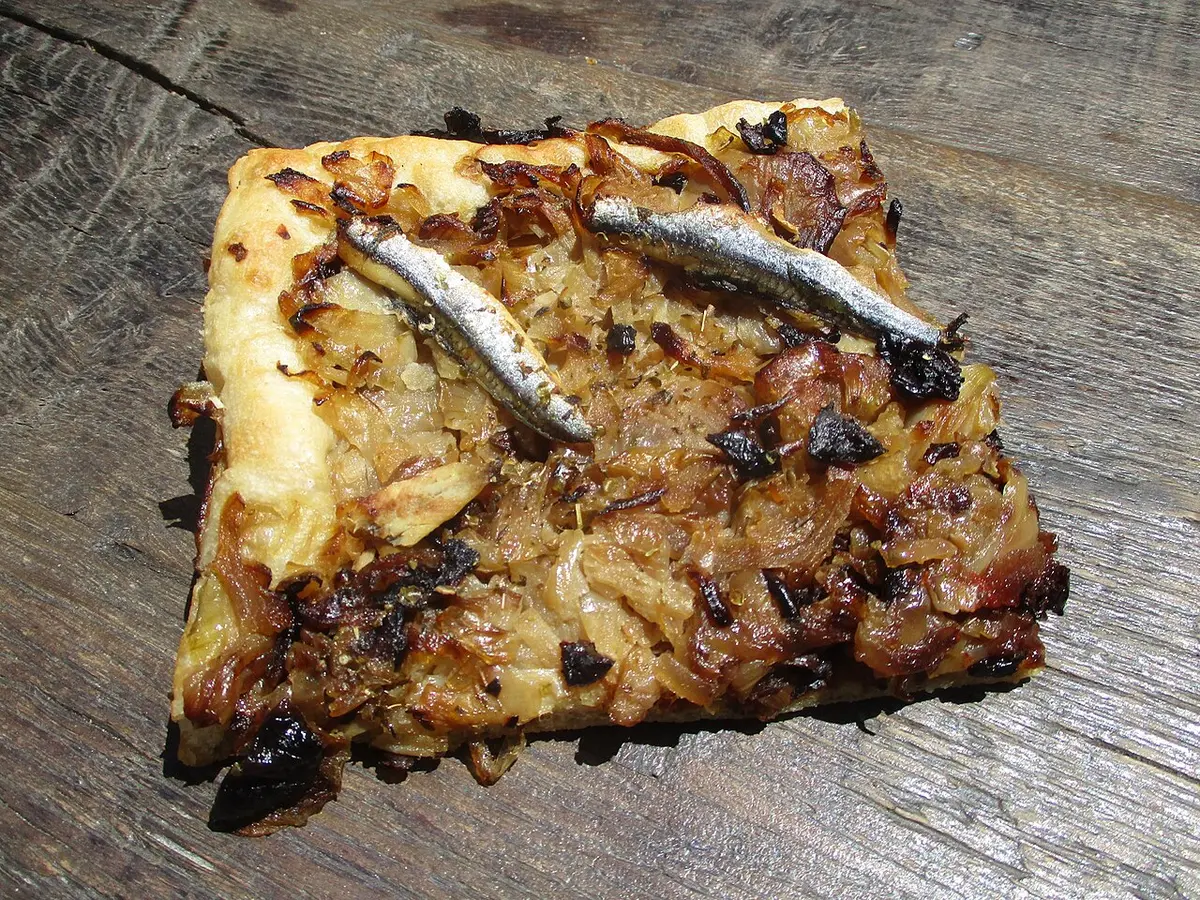
Pissaladière
Bread dough spread with slow-cooked onions and topped with anchovies and black olives, sold by the slice.
Photo: Arnaud 25, CC BY-SA 4.0Petits farcis
Small tomatoes, zucchini, onions and peppers stuffed with meat, herbs and breadcrumbs, then baked.
Bouillabaisse
The fish stew of Marseille, served in two courses: the broth with rouille and croutons, then the fish. A proper one is ordered ahead and costs a good deal.
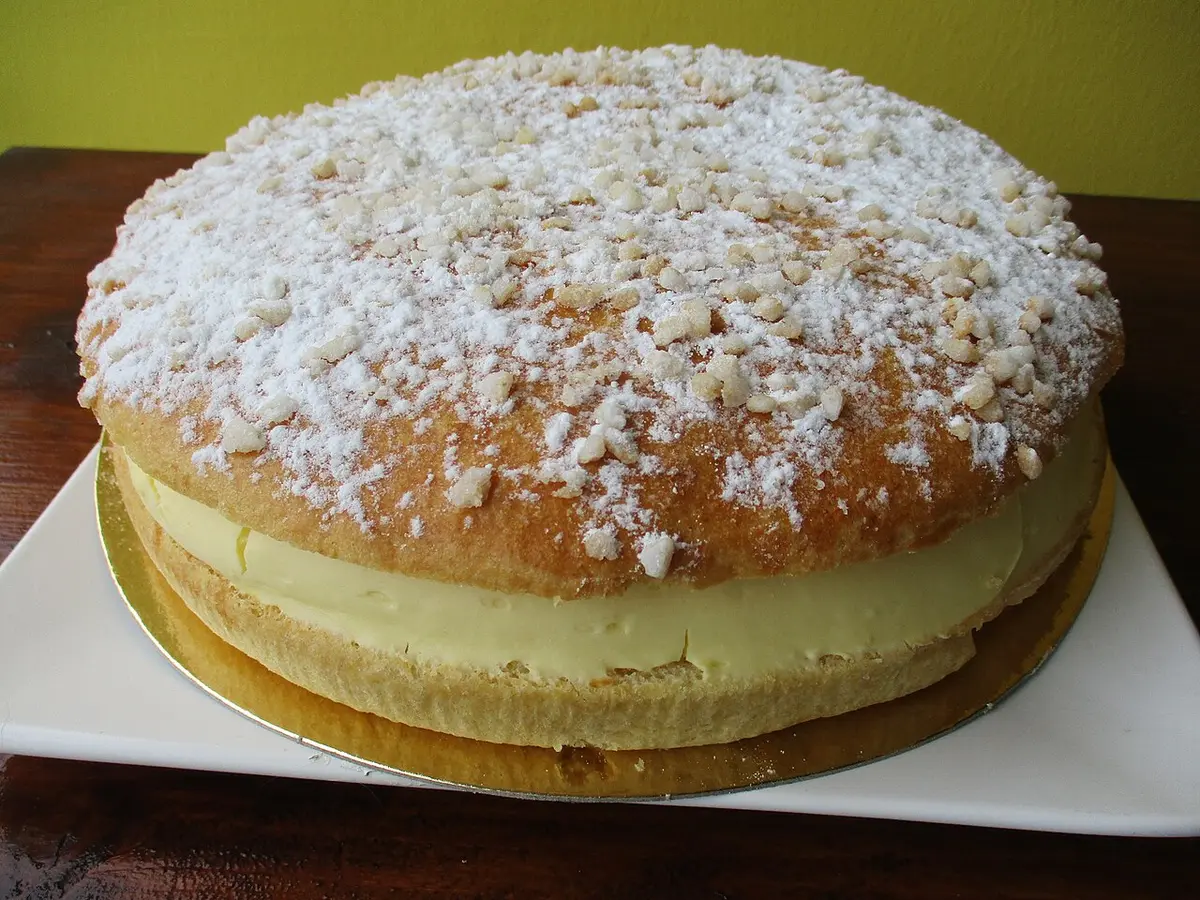
Tarte tropézienne
A sugar-topped brioche split and filled with cream, first made in Saint-Tropez in the 1950s and sold in bakeries all along the coast.
Photo: Arnaud 25, CC0Buy picnic food at the Marché Forville and the delicatessens of the Rue Meynadier, eat socca and pissaladière at the market counters, and climb to the Rue Saint-Antoine in the Suquet for dinner. On the Croisette you pay for the view.
The lord who stopped for the night
In December 1834 a former Lord Chancellor of Britain, turned back by a closed border, spent a night in a fishing village. He came back every winter for more than thirty years, and the Riviera followed him.
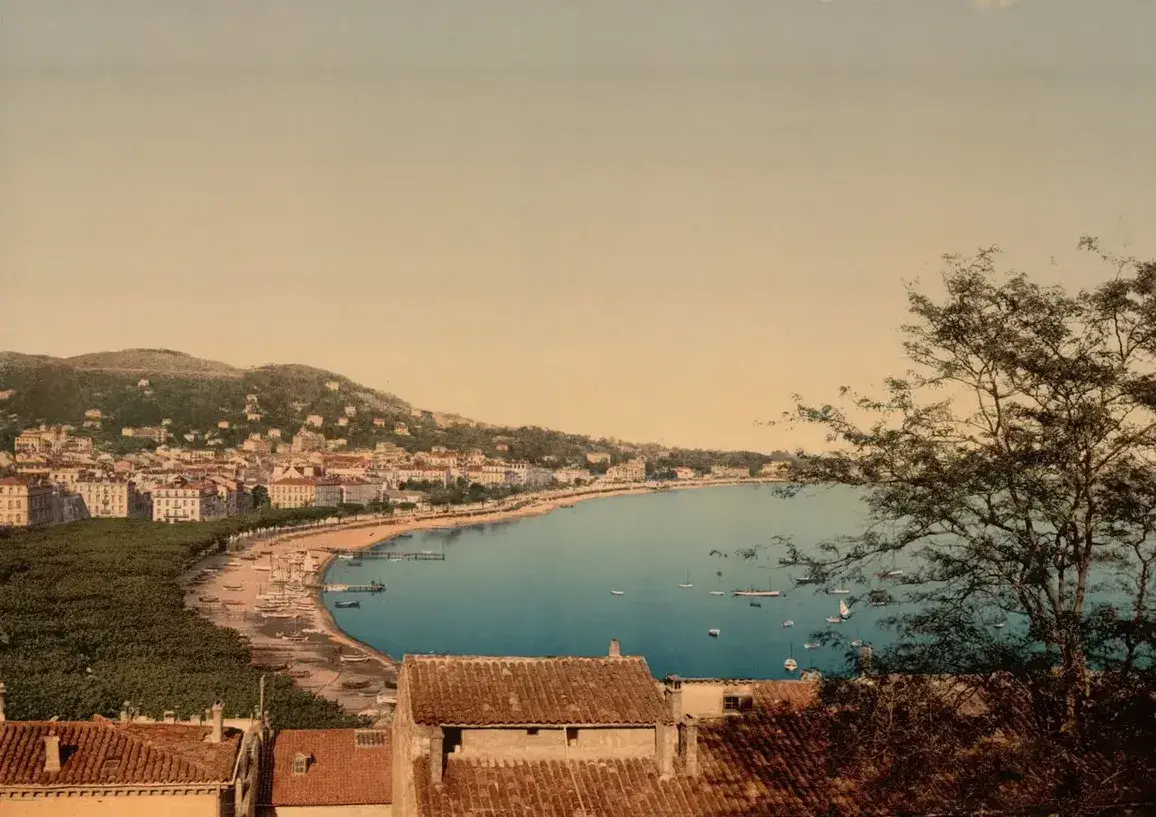
For most of its history Cannes was a fishing village at the foot of the Suquet, long ruled by the abbots of Lérins, who built the tower that still stands on the hill. Its people fished and traded along the coast, and the islands offshore were better known than the town: a monastery on one, a state prison on the other. Travelers on the road to Italy passed straight through.
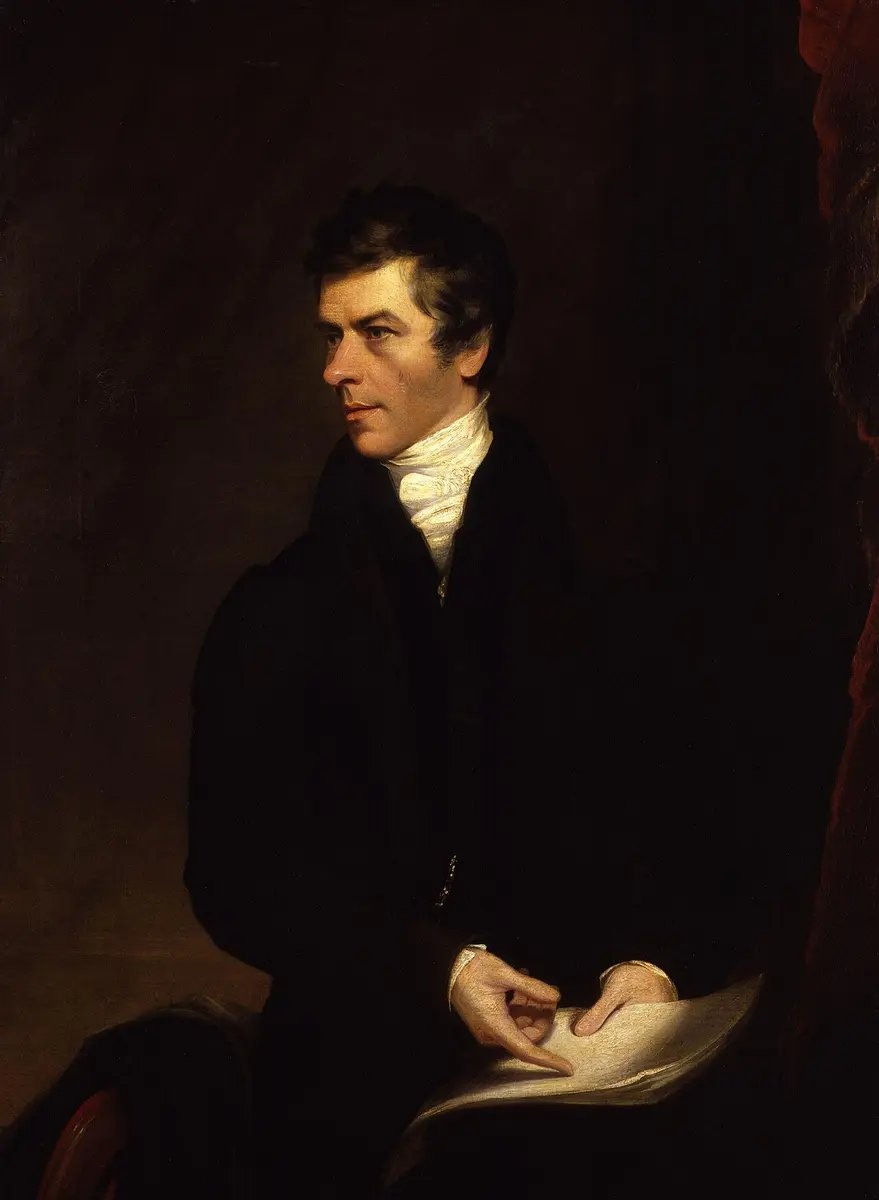
In December 1834 one of them stopped. Henry Brougham had been Lord Chancellor of Britain until the month before, and he was heading for Italy with his daughter Eleanor-Louise, who was ill. At the Var, the river that then marked the border with the Kingdom of Sardinia, the crossing into Nice had been closed because of cholera, so he turned back and took a room in Cannes.
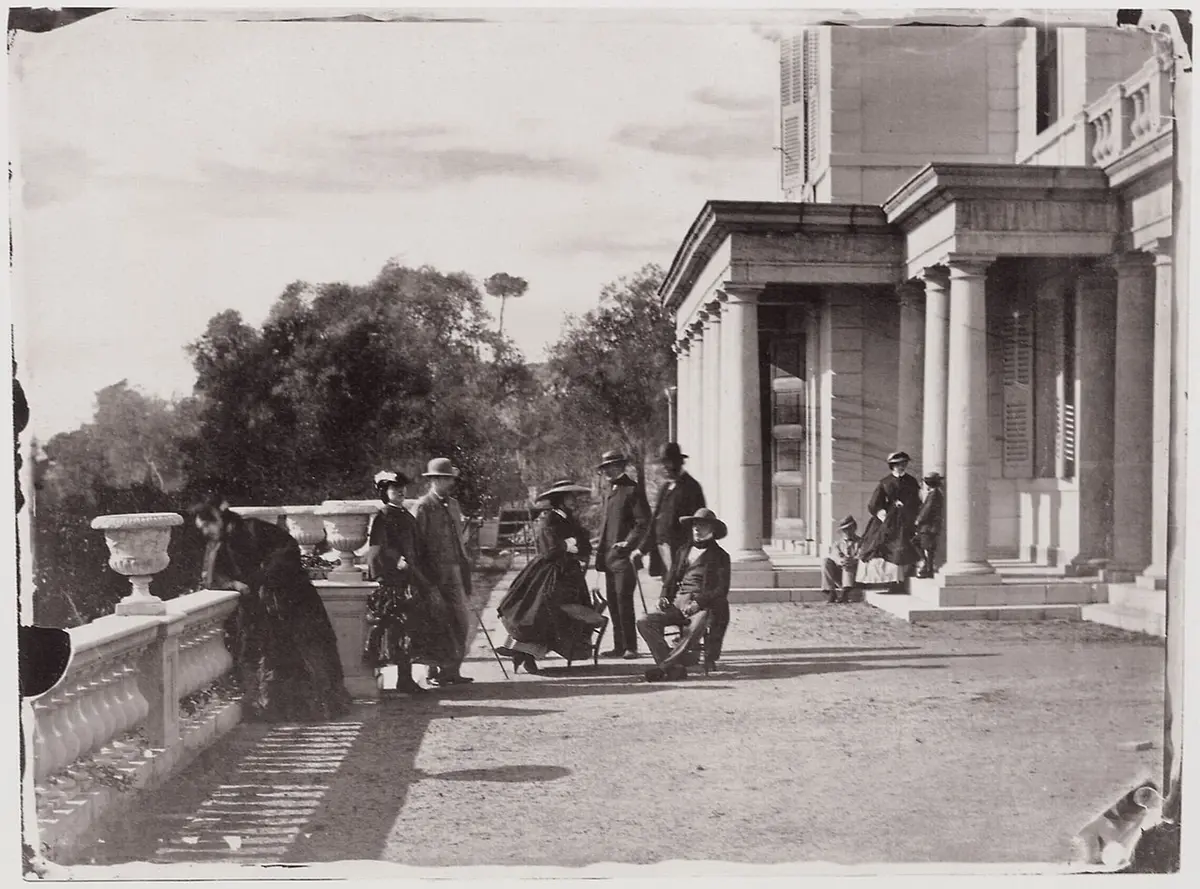
He liked what he found: the bay, the islands, the light and the mild winter. He bought land on the slope of the Croix-des-Gardes, west of the village, and built a villa named after his daughter, the Villa Éléonore-Louise. She died in 1839, but he came back every winter for the rest of his life, and he pressed King Louis-Philippe for money for a proper harbor, whose first stone was blessed in 1838.
Where a former Lord Chancellor wintered, others followed. British aristocrats built villas on the hills, then Russian grand dukes and bankers, with gardens of palms, English churches and tennis courts. In 1862 the photographer Charles Nègre recorded Brougham and his family on the terrace of his villa, and the next year the railway arrived and the carriage road along the shore, the future Croisette, was finished.
A quarantine on the Var sent one traveler back along the coast, and Cannes has lived on visitors ever since.
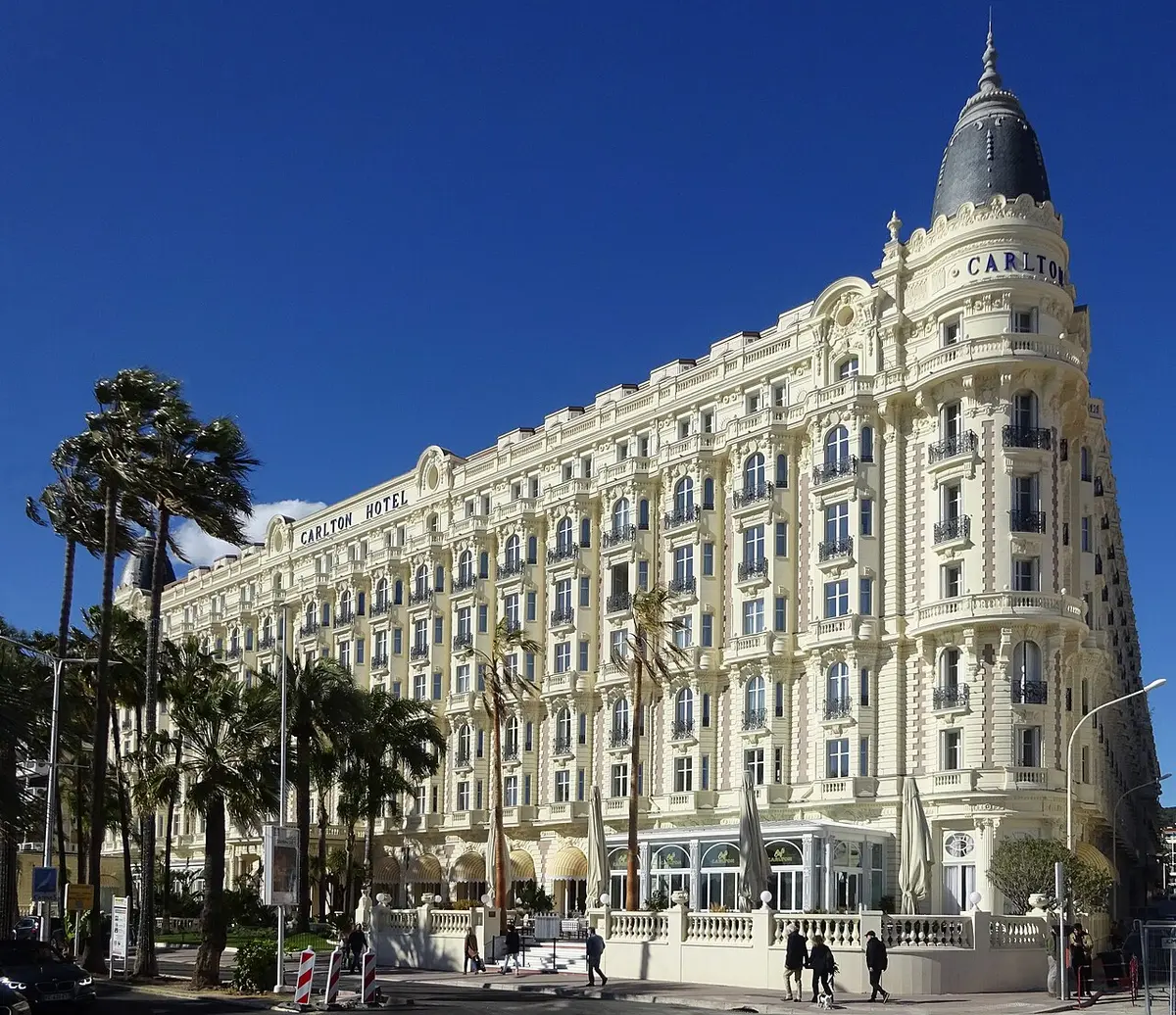
Brougham died in Cannes in May 1868, aged 89, and was buried in the Grand Jas cemetery above the town; his statue stands near the harbor. By then the fishing village had become a winter resort. The great hotels came in the new century: the Carlton opened on the Croisette in 1911, with money from Grand Duke Michael of Russia among others, and the Majestic and the Martinez followed in the 1920s, as the fashion for summer sun turned the winter season into a year-round one.
The last arrival was the cinema. In 1939 France chose Cannes for an international film festival, an answer to Venice, where the awards had bent to politics. The first edition was due to open at the start of September 1939, as Germany invaded Poland, and was called off. It opened at last in September 1946, moved to May in 1951, and since 1983 has climbed the red-carpeted steps of the Palais des Festivals, a short walk from Brougham’s statue.
Art
The Musée des Explorations du Monde
In the monks’ castle on the Suquet, built on a Dutch baron’s gift of 1877: antiquities from around the Mediterranean, art from the Himalayas, the Pacific and the Americas, and a large collection of musical instruments.
Bonnard in Le Cannet
Pierre Bonnard lived at his villa, Le Bosquet, in Le Cannet from 1927 until his death in 1947, painting its garden and the view over the bay again and again. The Musée Bonnard, opened in 2011, was the first museum devoted to him.
Picasso on the hill
Picasso lived at the Villa La Californie above the Croisette from 1955 to 1961 and painted its studio many times, until a new building blocked his sea view and he moved to Mougins. The villa is private; for his Riviera work, take the train to the Musée Picasso in Antibes.
Cinema on the walls
Painted walls around the center show film scenes and stars, among them Gone with the Wind, Barbarella, Harold Lloyd and Jean-Paul Belmondo.
Culture
The film festival
For about two weeks in May the film industry takes over the Palais. Screenings are for accredited guests, but anyone can watch the arrivals from the barriers and see films for free in the evening at the Cinéma de la Plage, a screen on the Plage Macé.
Fireworks over the bay
On six evenings in July and August, teams from around the world compete in the Festival d’Art Pyrotechnique over the bay, free to watch from the beaches and the Croisette.
A festival of games
In late February the Palais fills with board games for the Festival International des Jeux, open to anyone who wants to play.
Boats in September
The Cannes Yachting Festival fills the Vieux-Port and Port Canto with hundreds of boats every September.
Pétanque
Under the plane trees of the Allées de la Liberté, beside the Vieux-Port, locals play pétanque in the afternoons, near a morning flower market.
Music and nights out
Classical in the Suquet
For a week in late July, the Nuits Musicales du Suquet bring recitals and chamber music to the square in front of Notre-Dame-d’Espérance, under the tower.
The orchestra
The Orchestre National de Cannes plays at the Palais des Festivals, part of a season of concerts, theater and dance from autumn to spring.
Jazz next door
Jazz à Juan, held every July since 1960 in the pine grove at Juan-les-Pins, is a short train ride east.
Nights out
Bars and restaurants in the Suquet stay busy late in summer, beach clubs along the Croisette hold evening parties, and the casino in the Palais des Festivals opens every evening.
Nature and day trips
The Lérins Islands
Paths loop around Sainte-Marguerite under pines and eucalyptus, past coves for swimming, and in summer boats anchor in the channel between the two islands.
Snorkeling with sculptures
Off the south side of Sainte-Marguerite, Jason deCaires Taylor’s underwater museum of 2021 sets six faces, modeled on local people, three to four meters down on the sand.
Beaches
The public beaches are the Plage Macé by the Palais, the long Plage du Midi west of the Vieux-Port, La Bocca, and the Boulevard Gazagnaire beyond Palm Beach. Most of the Croisette’s sand belongs to beach clubs.
The Esterel
West of Cannes, the red rocks of the Esterel drop into the sea along the Corniche d’Or road, with hiking trails and small coves, and regional trains stop at small stations along the coast.
La Croix-des-Gardes
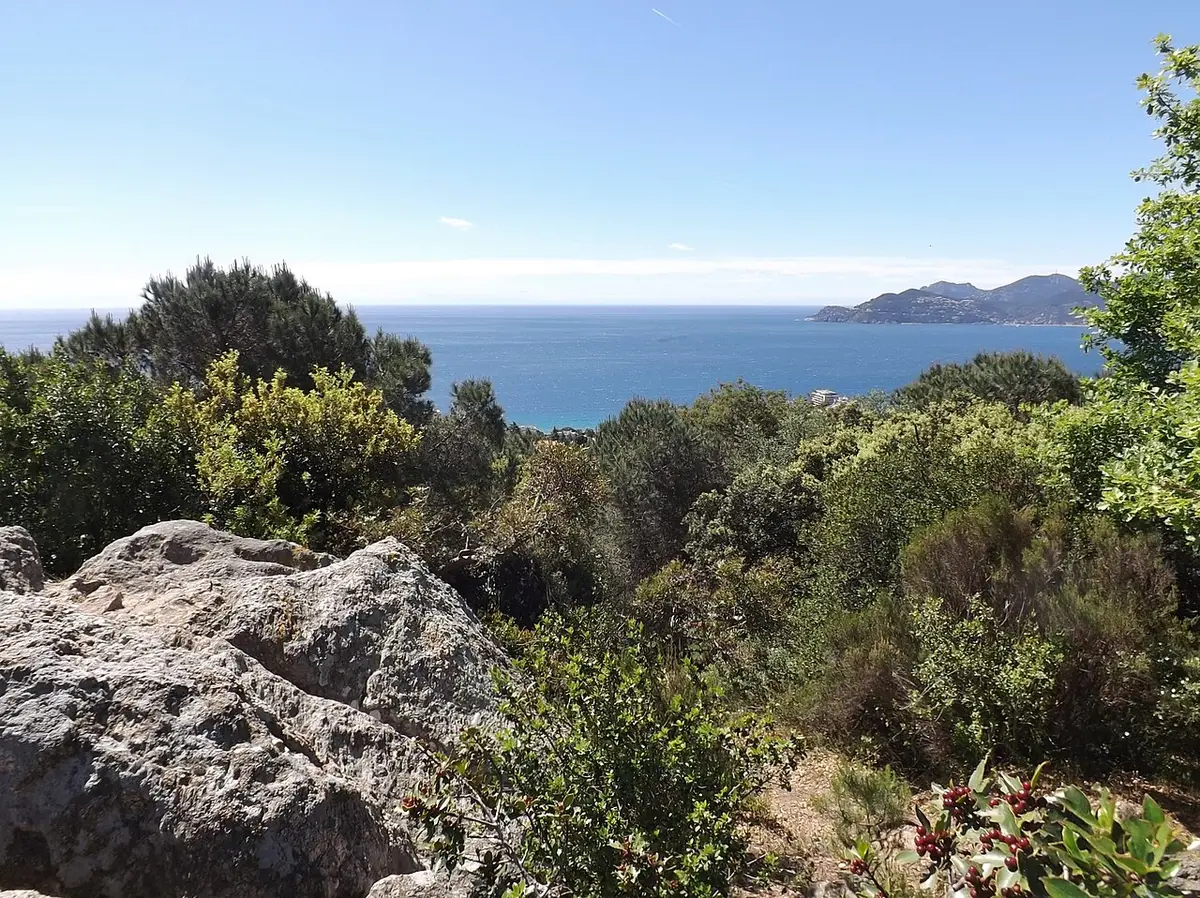
An 80-hectare forest park on the hill west of the center, with trails under the pines and views over the bay to the islands and the Esterel.
Day trips
Antibes is about 10 minutes away by train, Nice about half an hour and Monaco about an hour. Grasse, the perfume town in the hills, is about 25 minutes by train.
People and customs
Bonjour first
Say bonjour when you walk into a shop or a café, and bonsoir in the evening. It is expected, and it changes the welcome.
Beachwear stays on the beach
Cover up for shops, restaurants and churches; a swimsuit on the Rue d’Antibes draws looks.
Meal times
Lunch runs from about noon to 2pm and dinner from 7:30 or 8pm. Many restaurants close in between, and some beach restaurants close for the winter.
Festival weeks
During the film festival and the big trade fairs, hotel prices jump, restaurants fill up and the area around the Palais is fenced off. Book early or come another week.
The monks’ island
Saint-Honorat is a working monastery: dress modestly, keep noise down and respect the signs that close some areas to visitors.
A few words
Bonjour, merci and s’il vous plaît go a long way, and many people in hotels and shops speak English.
Questions
How many days do you need in Cannes?
Two days covers the Croisette, the Suquet and a day on the Lérins Islands. Three or four leave time for the beach and day trips to Antibes, Nice or Grasse.
Can you visit the Cannes Film Festival?
Screenings in the Palais are for accredited professionals and invited guests, but anyone can watch the red carpet arrivals from outside and see free films at the Cinéma de la Plage on the Plage Macé in the evening.
How do I get from Nice airport to Cannes?
Take the free tram to Nice Saint-Augustin station and a regional train, about 30 to 40 minutes, or the airport express bus, about 50 minutes. A taxi takes about 30 to 40 minutes without traffic.
Are there free beaches in Cannes?
Yes. The Plage Macé on the Croisette, the long Plage du Midi west of the Vieux-Port, La Bocca and the beaches along the Boulevard Gazagnaire are public and free. Most of the Croisette’s sand belongs to private beach clubs.
How do you get to the Lérins Islands?
Boats leave from the Vieux-Port: about 15 minutes to Île Sainte-Marguerite, and about 20 minutes to Île Saint-Honorat on the monks’ own boats.
When is the best time to visit Cannes?
June and September, for a warm sea and fewer crowds. July and August are hot and busy, May is festival month with high prices, and winter is mild and quiet.
Plan Cannes with your group
Everyone swipes on the sights they want. SwipeSights builds the days around the picks, in walking order.