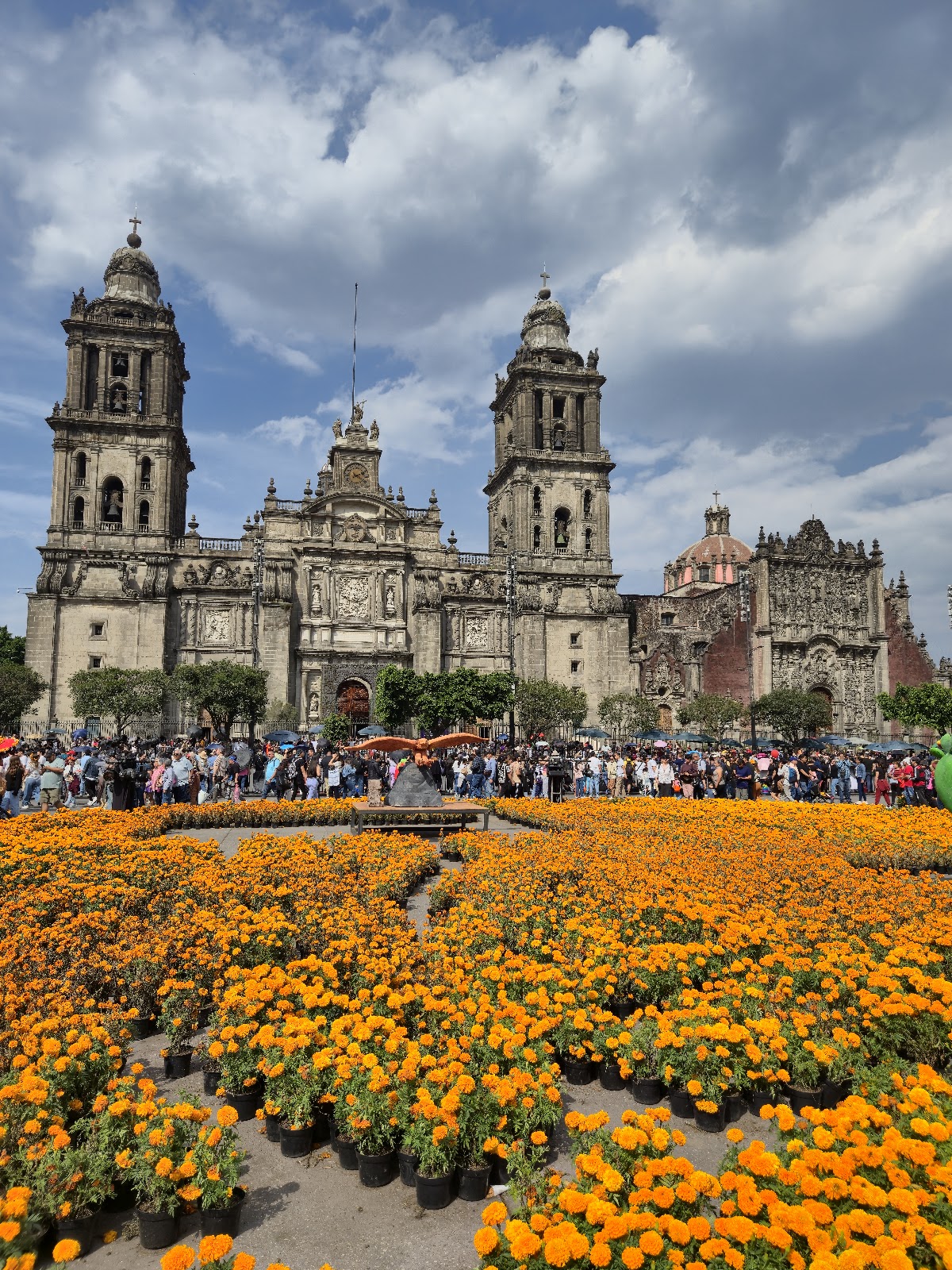
Ciudad De México
Ancient capital, endless modern sprawl
One of the planet's great megacities, built atop an Aztec lake. You step from a baroque cathedral onto Templo Mayor's exposed ruins, eat extraordinary street tacos, lose hours in a world-class anthropology museum, and watch a green park breathe air into the chaos.
How long to stay?
One or two days centers on the Centro Histórico: the vast Zócalo, the cathedral, Templo Mayor, and the gilded Palacio de Bellas Artes. Add a swing through Chapultepec for the Anthropology Museum, the city's single must-see.
Vast, layered, and endlessly alive: pre-Hispanic, colonial, and cutting-edge stacked atop each other. Leafy, walkable enclaves like Roma and Condesa sit within an enormous, energetic metropolis. World-class food, art, and a warm, welcoming pulse.
Roma and Condesa are the sweet spot: tree-lined, café-rich, walkable. Polanco is upscale and polished. The Centro Histórico puts you among the monuments. Coyoacán feels like a village within the city.
Eat where the lines are: standing tacos al pastor off a vertical spit, then chase them with a mezcal in Roma. Use Uber at night, and visit the Anthropology Museum on a weekday to dodge the crowds.
March to May is dry and warm; the rainy season (June to September) brings short, dramatic afternoon downpours. For atmosphere, time Day of the Dead in early November, but book well ahead.
Benito Juárez International (MEX) sits east of center; a newer airport (AIFA) lies further north. Use authorized airport taxis or ride-hailing into town. Traffic is heavy, so allow extra time for transfers.
Spanish is essential outside tourist zones; English is patchy. The peso is currency, cash useful for street food. The altitude (2,240m) can leave you breathless, and afternoon rain is common in summer.