 Photo:
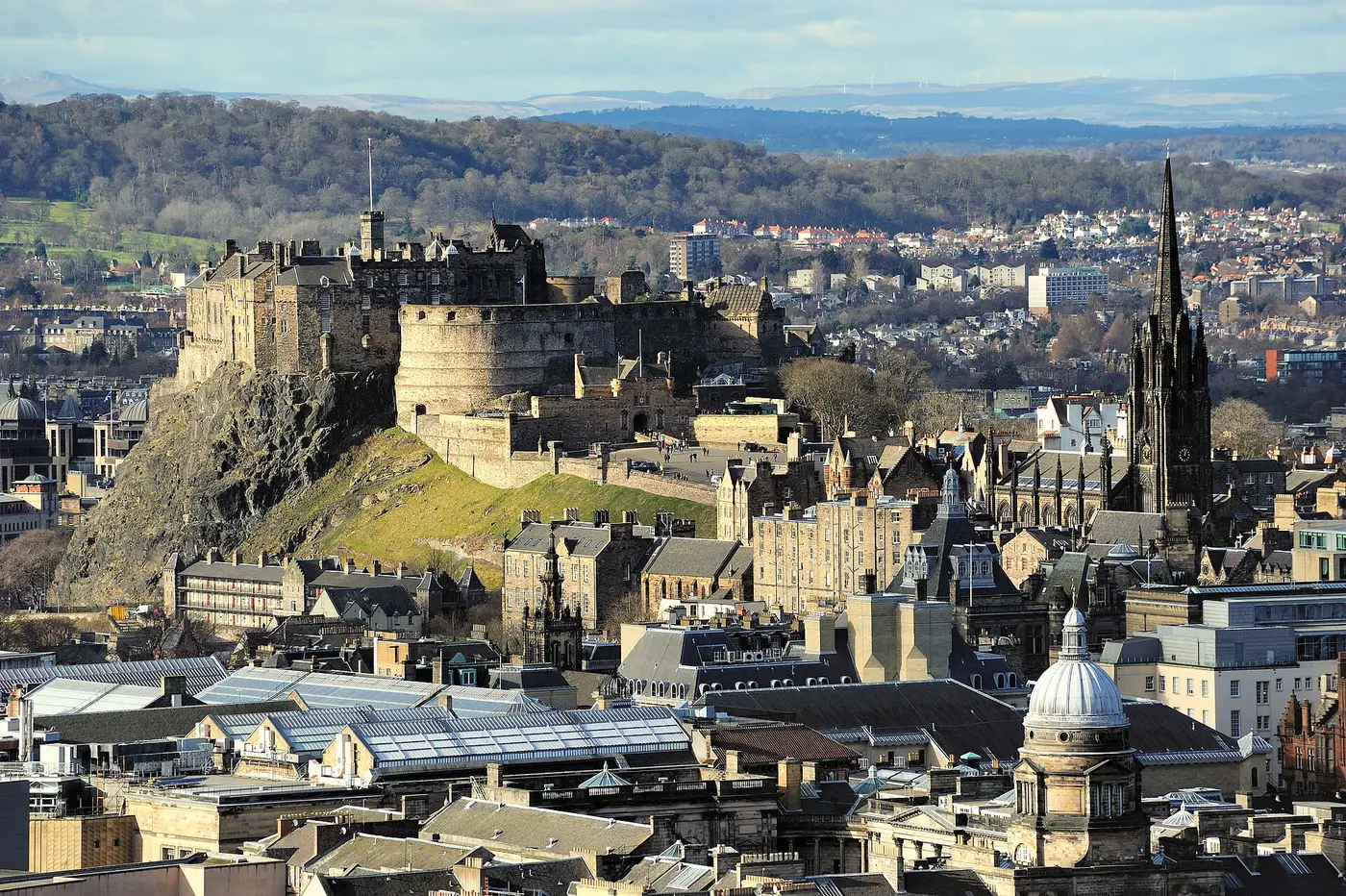
Edinburgh is Scotland’s capital, built on hills and old volcanoes above the Firth of Forth. The castle stands on its rock at the top of the Old Town, a ridge of tall stone tenements and steep closes running down the Royal Mile to a royal palace; across the valley, the Georgian New Town is all straight streets and squares. The two together are a World Heritage Site, and almost everything worth seeing is a walk away, with Arthur’s Seat rising wild in the middle of the city.
This guide covers when to go, where to stay, what to see, a walk along the Water of Leith, a day by the Forth bridges, what to eat and drink, and the history, festivals and customs that make the city make sense.
What Edinburgh is good for
Friends' trips
Pubs in the Grassmarket below the castle, a ghost tour through the Old Town’s closes, an early climb up Arthur’s Seat and a ceilidh to finish. Compact, easy to walk and full of things everyone agrees on.
Bachelorette and bachelor weekends
A classic stag and hen city: a whisky tasting, the bars of the Cowgate and the Grassmarket, a ceilidh where a caller teaches the steps, and clubs that stay open until 3am.
Weddings and honeymoons
Scotland makes it simple to marry from abroad: there is no residency requirement, both partners send marriage notices to the registrar of the district where they will marry at least 29 days ahead, and humanist ceremonies are legally binding. Visitors who need a UK visa apply for a Marriage Visitor visa. Couples marry in castles, country houses and on beaches, and many pair the city with a honeymoon in the Highlands.
Couples
Sunset on Calton Hill, a walk along the Water of Leith through Dean Village, and dinner by the water in Leith.
Families
The castle and its One O’Clock Gun, Dolly the sheep and the Grand Gallery at the free National Museum, the Camera Obscura’s illusions on the Royal Mile, and a scramble up Arthur’s Seat.
Solo travel
Safe, compact and friendly, with free museums and galleries, walking tours, and folk sessions in pubs where sitting alone with a pint and the music is normal.
Food lovers
Haggis and Cullen skink, oysters and langoustines by the Shore in Leith, a fish supper with salt and sauce, and whisky bars with hundreds of malts.
History and art
The castle, Holyroodhouse and the medieval Old Town, the Georgian New Town, and free national galleries of old masters, Scottish art and portraits.
Plan your trip
When to go
Late spring to early autumn (May to September) brings long light days, and in June the sky barely darkens. August is festival month, lively, crowded and at its most expensive. Spring and autumn are calmer, and winter is cold and dark by 4pm, brightened by Christmas markets and Hogmanay. Wind and showers can arrive in any season.
How long to stay
Two days covers the castle, the Royal Mile, Holyroodhouse and a climb up Arthur’s Seat or Calton Hill. Three adds the museums and galleries, Dean Village and Leith. With four, take a day trip to the Forth bridges, Stirling or the edge of the Highlands.
Getting there
Edinburgh Airport (EDI) lies west of the city. Trams run every 7 to 10 minutes to Princes Street and St. Andrew Square in about 30 minutes, and the Airlink 100 bus reaches Waverley Bridge in about 25. Trains from London King’s Cross take about four and a half hours to Waverley, and Glasgow is under an hour away. Most visitors who do not need a visa, Americans and EU citizens among them, must get an Electronic Travel Authorisation (ETA) before they travel to the UK.
Getting around
Walk: the center is small, but steep, with stairs and cobbles between the Old and New Towns. Lothian buses and the tram, which runs from the airport through Princes Street and down Leith Walk to Newhaven, take contactless cards, and bus fares are capped for the day. Wear shoes with grip in wet weather.
Tickets
Book Edinburgh Castle online ahead, especially in summer: once online tickets sell out, none are sold at the gate. Book Holyroodhouse and the Royal Yacht Britannia ahead in August too. The National Museum, the Scottish National Gallery and the Portrait Gallery are free. For the festivals, book Fringe shows and the Tattoo well in advance.
Money and tipping
Scotland uses the pound sterling. Scottish banks print their own notes, which are good throughout Scotland but sometimes turned down in England. Cards work almost everywhere. In restaurants tip about 10% if no service charge is added; in pubs nobody expects a tip. Since 24 July 2026, hotels add a visitor levy of 5% on the first five nights of a stay.
Weather, month by month
Spring
March to May
Cool and bright, from about 9°C to 14°C by day, with days lengthening fast and yellow gorse on Arthur’s Seat.
Summer
June to August
Mild rather than warm, usually 17 to 20°C, with light until after 10pm in June. Showers pass through, and a sea fog, the haar, can roll in off the Firth.
Autumn
September to November
Often crisp and golden in September and October, then wetter and windier, with the clocks going back at the end of October.
Winter
December to February
Cold and often windy, around 6 to 7°C by day, with sunset before 4pm in December and occasional snow on the hills.
Top sights
 01
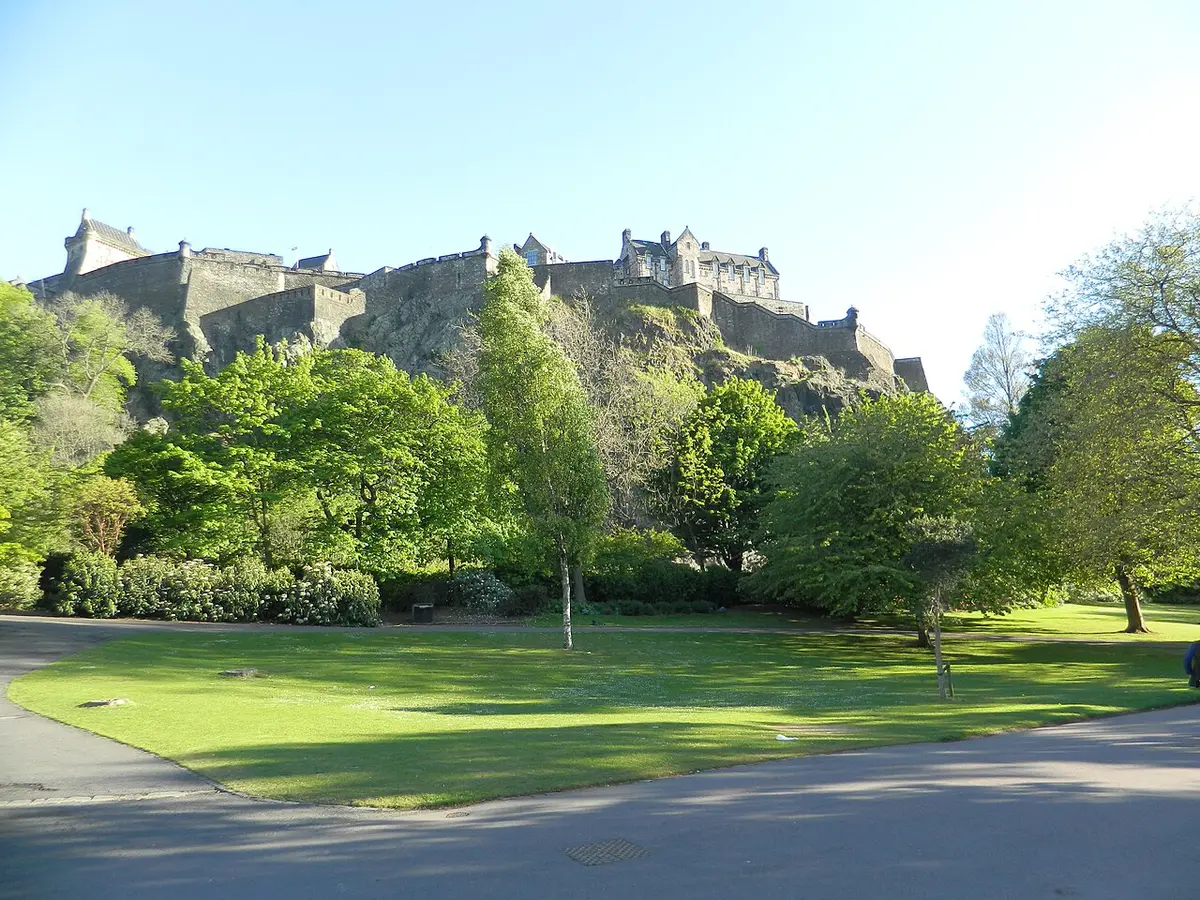
Edinburgh Castle
Built on the plug of an extinct volcano, the castle has guarded the city since at least the 12th century. Inside are St. Margaret’s Chapel, the oldest building in Edinburgh; the Honours of Scotland, the oldest crown jewels in the British Isles, in a new display since 2026; the Great Hall; and the small room where Mary, Queen of Scots, gave birth to the future James VI.
Book a timed ticket online: once they sell out, none are sold at the gate. The One O’Clock Gun is fired every day except Sundays, Good Friday and Christmas Day.
Photo: John Lord, CC BY-SA 2.0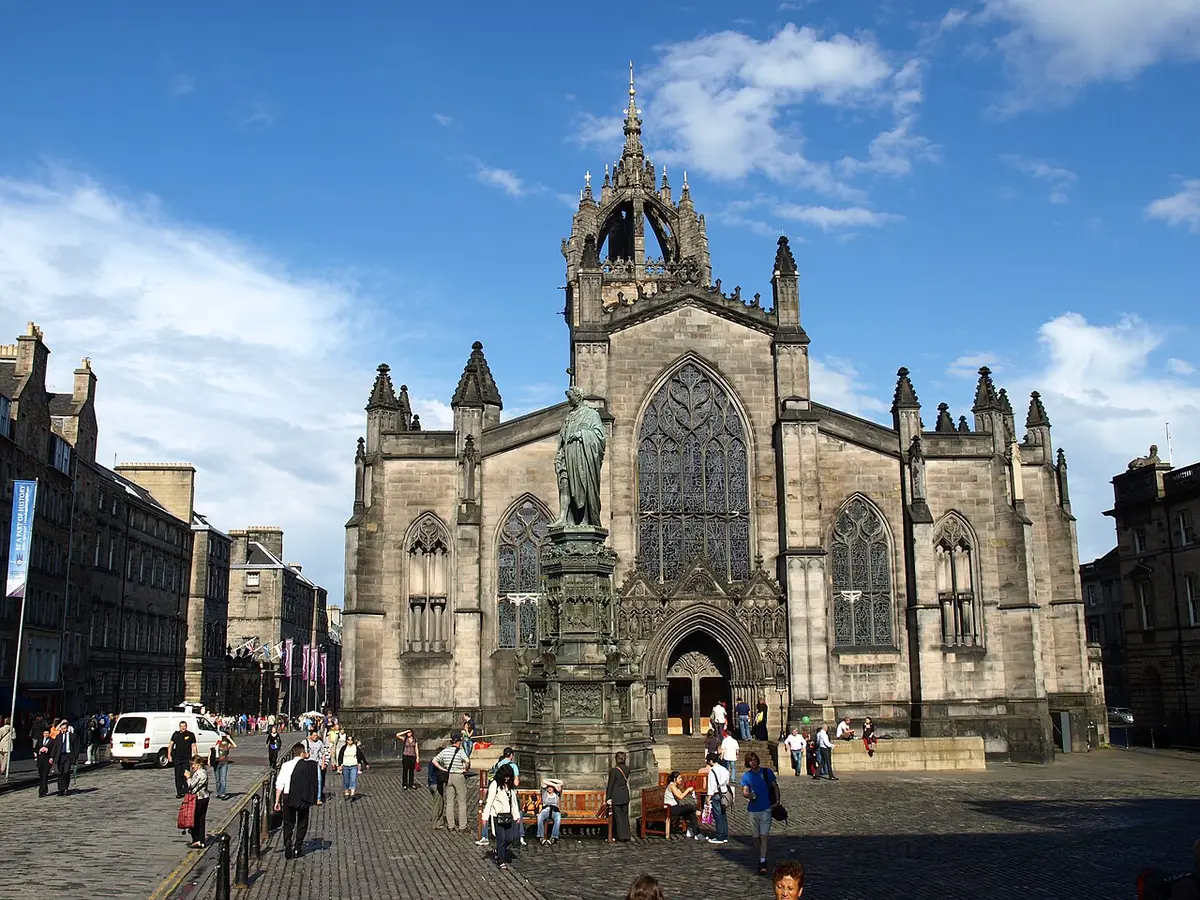 02
The Royal Mile and St. Giles’ Cathedral
The Royal Mile runs down the spine of the Old Town from the castle to Holyroodhouse, lined with tall stone tenements and cut by closes, narrow lanes that drop steeply away on either side. Halfway down stands St. Giles’, the High Kirk of Edinburgh, with its 15th-century crown spire. John Knox preached here from 1559, and the carved Thistle Chapel was added in 1911.
St. Giles’ is free to enter. In Parliament Square beside it, parking space 23 marks roughly where Knox was buried in 1572.
Photo: Bjdream, CC BY-SA 4.0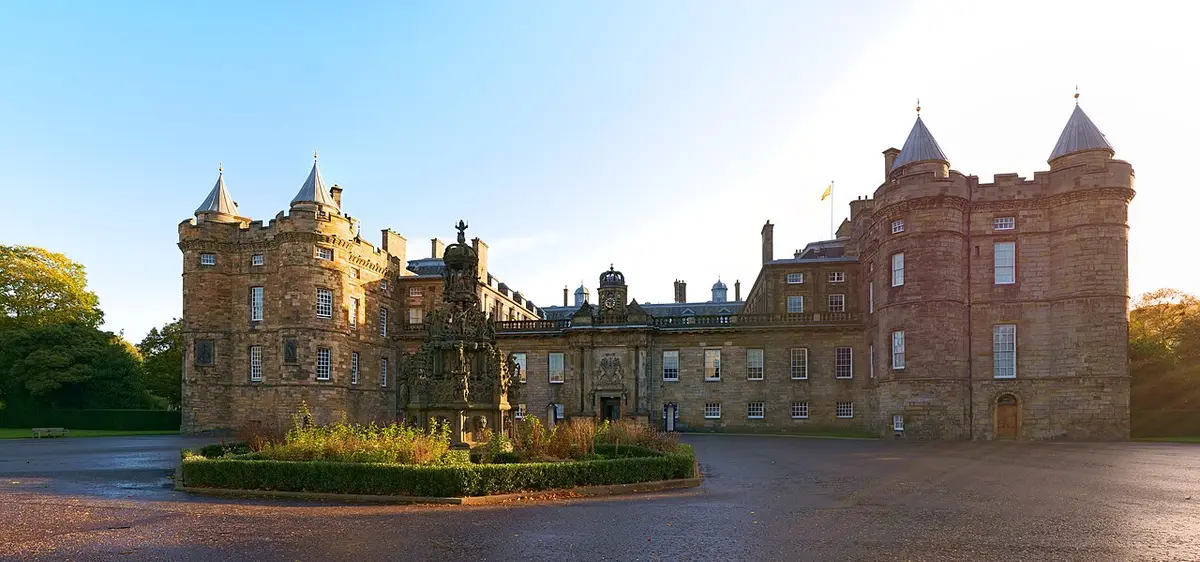 03
The Palace of Holyroodhouse
The King’s official residence in Scotland, at the foot of the Royal Mile. The tour runs through the state apartments to the rooms of Mary, Queen of Scots, in the old tower, where her secretary David Rizzio was murdered in 1566, and ends in the roofless nave of Holyrood Abbey, founded by David I in 1128.
Open Thursday to Monday outside summer, and closed when the King is in residence, usually for a week around the start of July.
Photo: Daniel Kraft, CC BY-SA 3.0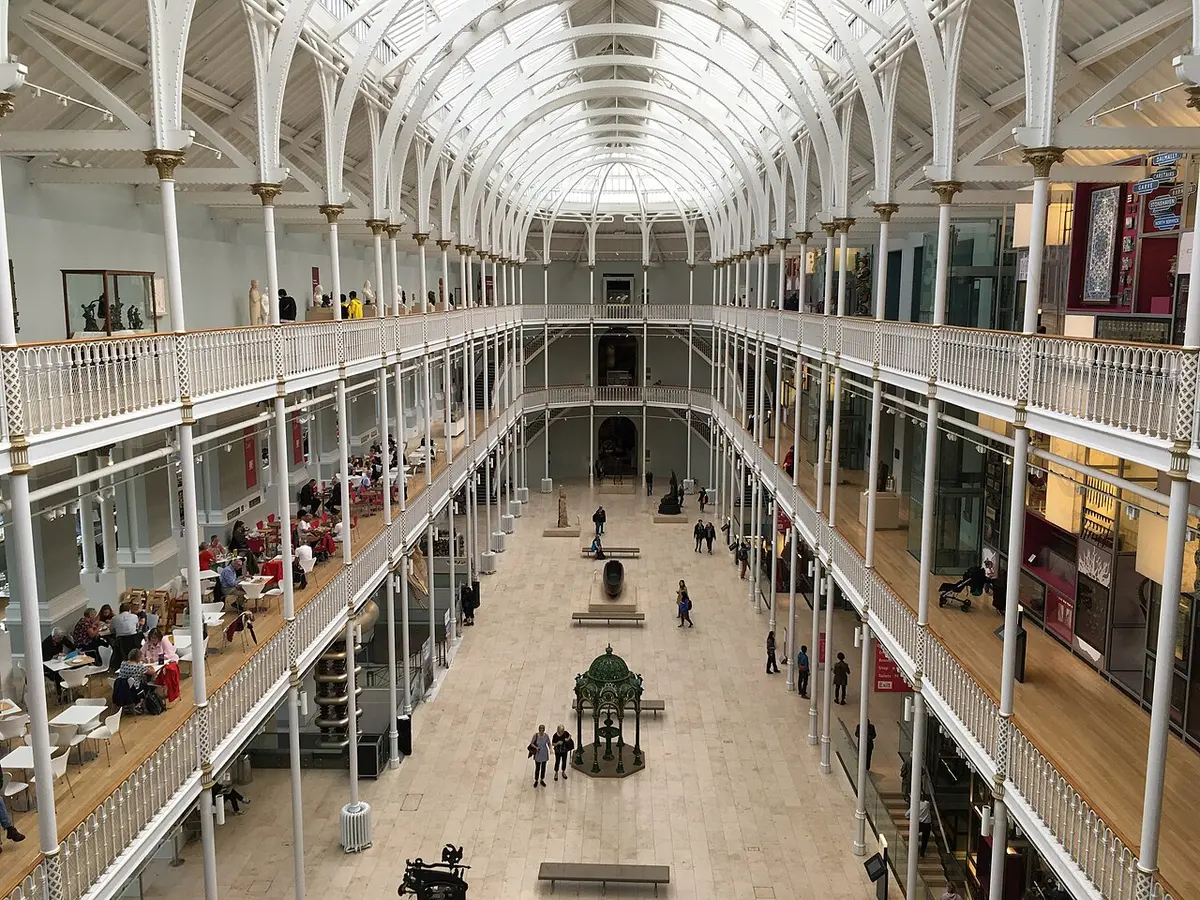 04
The National Museum of Scotland
Free, on Chambers Street: Scotland from its oldest rocks to Dolly the sheep, the first mammal cloned from an adult cell, with the Lewis chessmen, carved from walrus ivory in the 12th century, and a Victorian Grand Gallery of white iron under a glass roof.
Take the lift to the roof terrace for a free view over the Old Town to the castle.
Photo: Elshad, CC BY-SA 4.0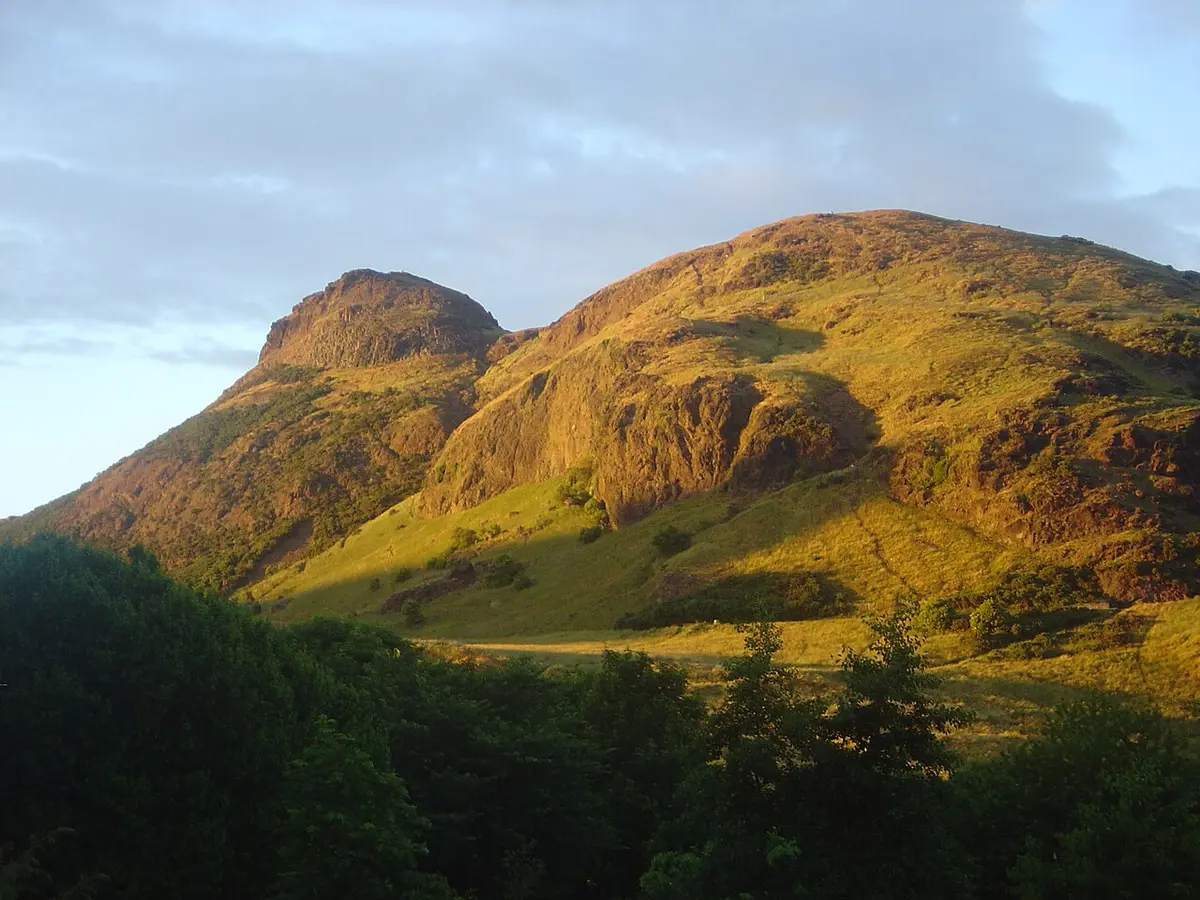 05
Arthur’s Seat and Holyrood Park
An extinct volcano some 340 million years old rises 251 meters over the city, the heart of a wild park of crags, lochs and grassland a few minutes from the Royal Mile. The climb from the palace takes about 45 minutes, past the Salisbury Crags, where the geologist James Hutton found proof that molten rock had forced its way through older layers.
Wear shoes with grip: the summit is rocky, windy and slippery after rain.
Photo: David Monniaux, CC BY-SA 3.0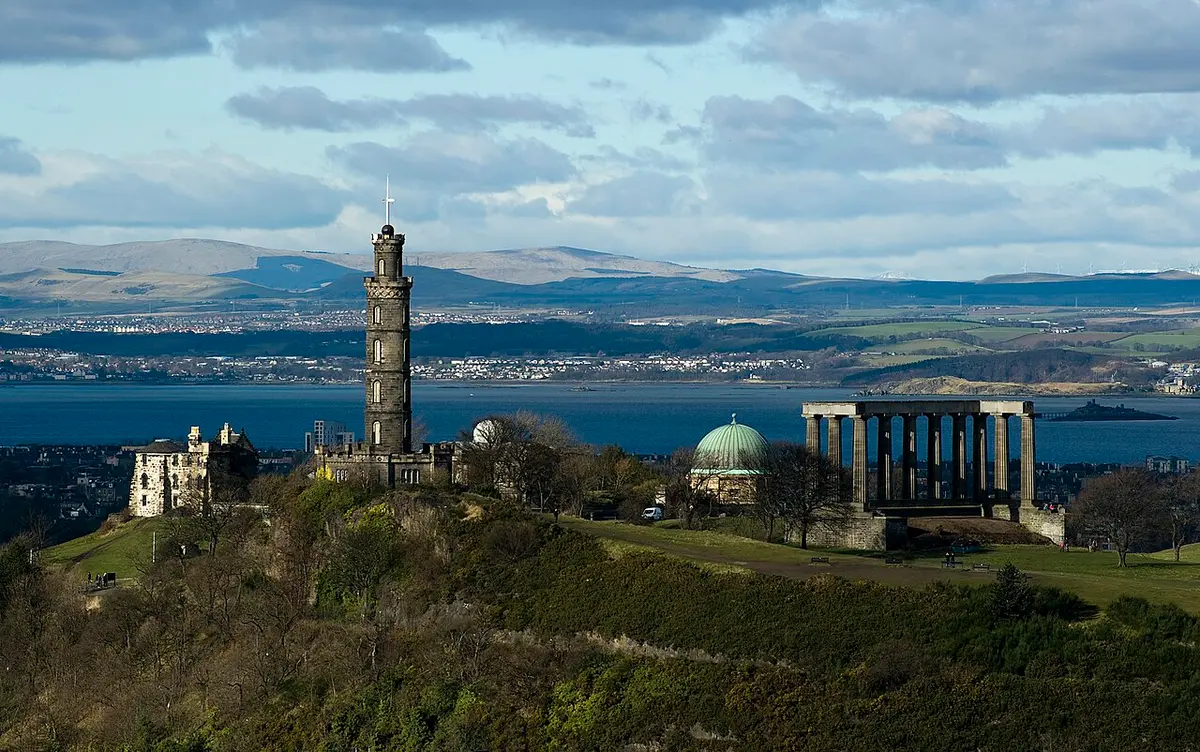 06
Calton Hill
A short climb from the east end of Princes Street, with the classic view back along it to the castle and the Old Town. On top stand the Nelson Monument, the City Observatory, now a contemporary art space, and the National Monument, twelve columns modeled on the Parthenon, begun in 1826 and abandoned in 1829 when the money ran out.
Come at sunset, or on 30 April for the Beltane Fire Festival.
Photo: Saffron Blaze, CC BY 3.0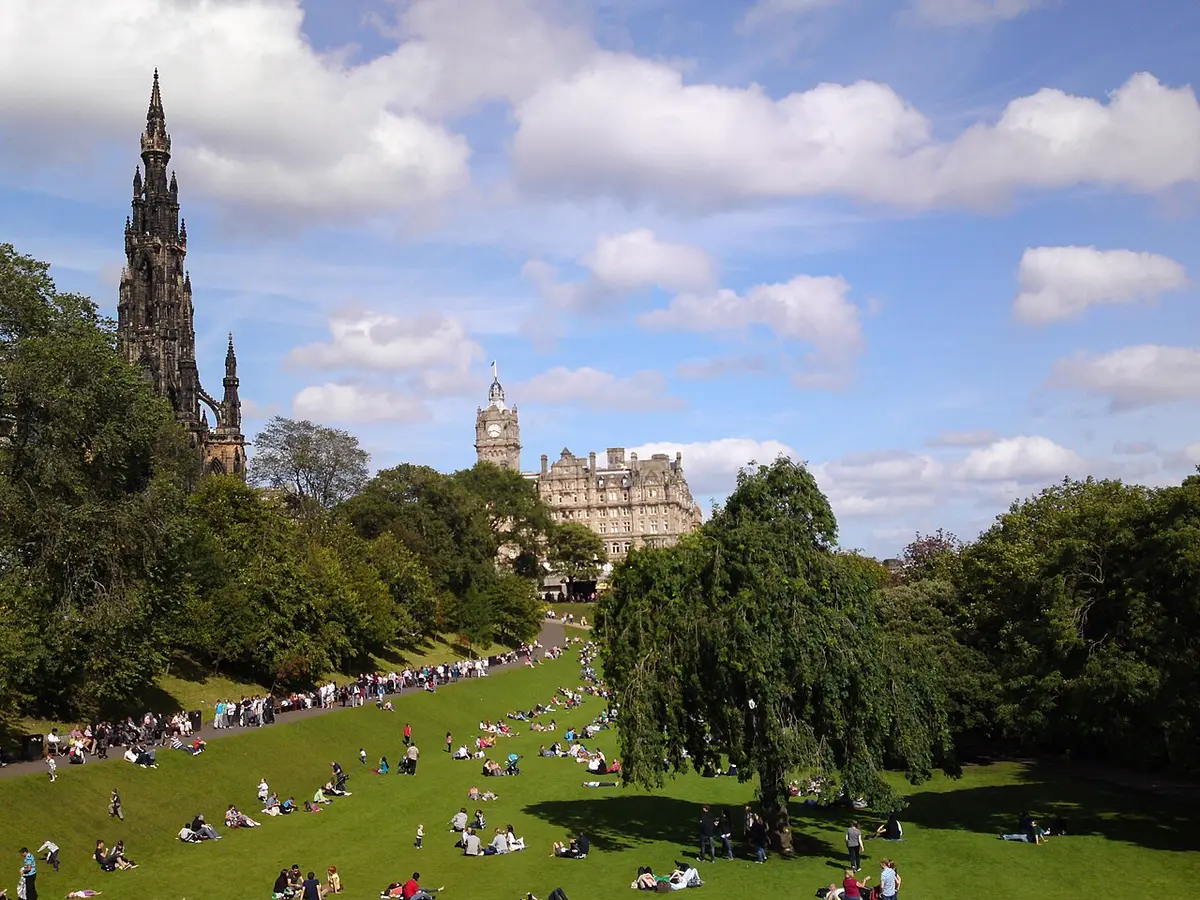 07
Princes Street Gardens and the Scott Monument
The gardens fill the valley below the castle, where the Nor Loch, the Old Town’s foul lake, was drained from the 1760s as the New Town rose. At their eastern end the Scott Monument, a Gothic spire 61 meters high, honors the novelist Walter Scott, and the Scottish National Gallery stands on the Mound between the two halves.
Climb the monument’s 287 steps for the view (a small fee). In the West Gardens, the Ross Fountain frames the castle.
Photo: Chris Morgan, CC BY-SA 2.0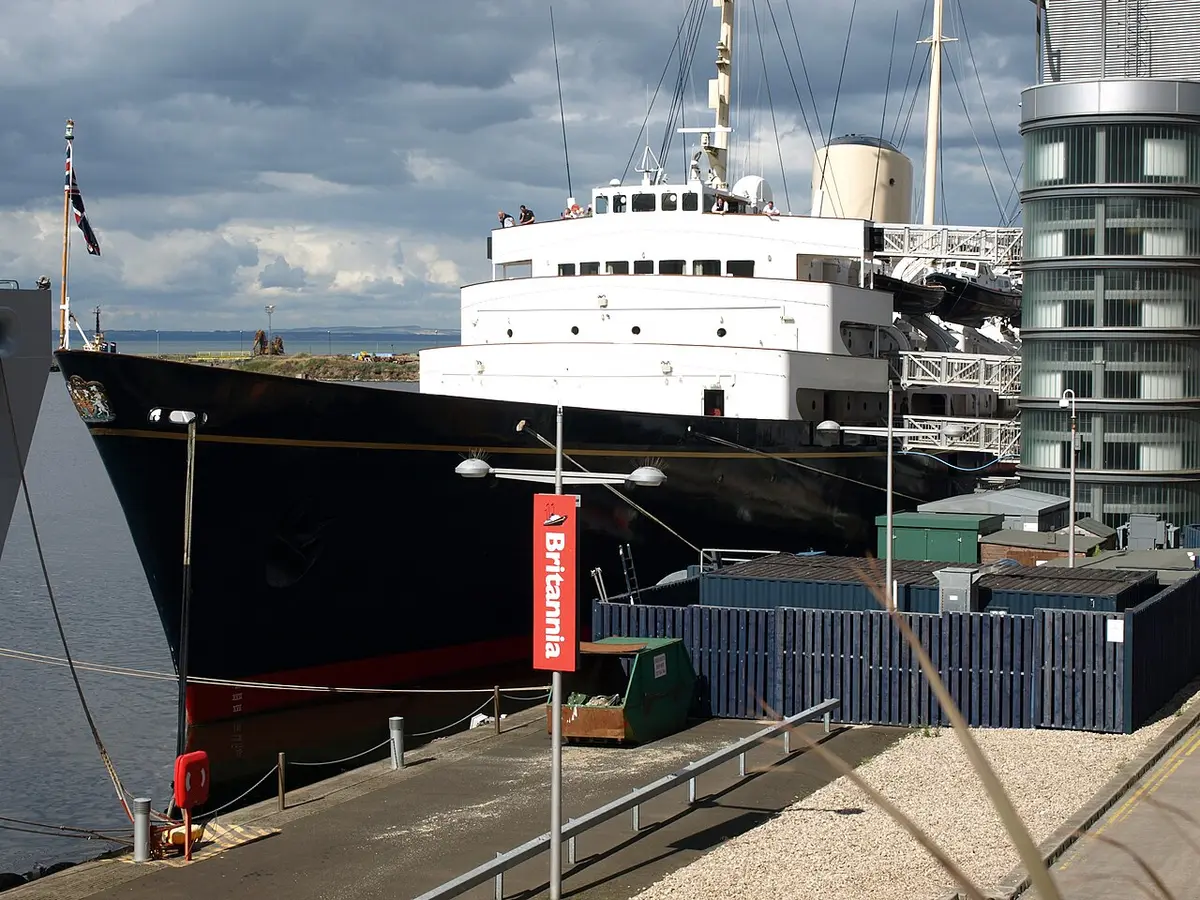 08
The Royal Yacht Britannia
The royal family’s yacht from 1954 to 1997, now moored at Ocean Terminal in Leith: the bridge, the state apartments where presidents were entertained, the Queen’s bedroom and a gleaming engine room, with tea served on the royal deck.
Take the tram to the Ocean Terminal stop and allow about two hours.
Photo: Andrew Abbott, CC BY-SA 2.0
Three hidden gems
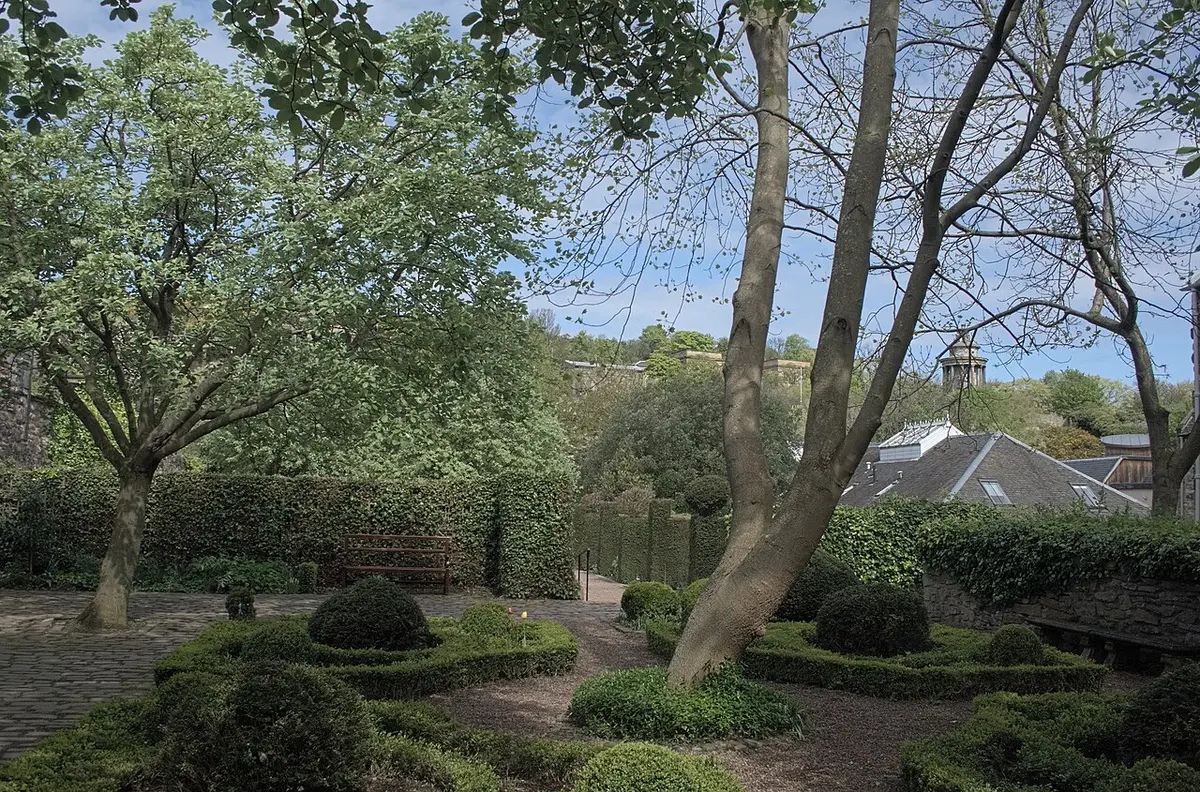
Along the Water of Leith, from Dean Village to Stockbridge
Down from the West End into a mill village in a wooded gorge, then along the river under Telford’s bridge and past a temple over a spring, to the cafés of Stockbridge and the Botanic Garden.
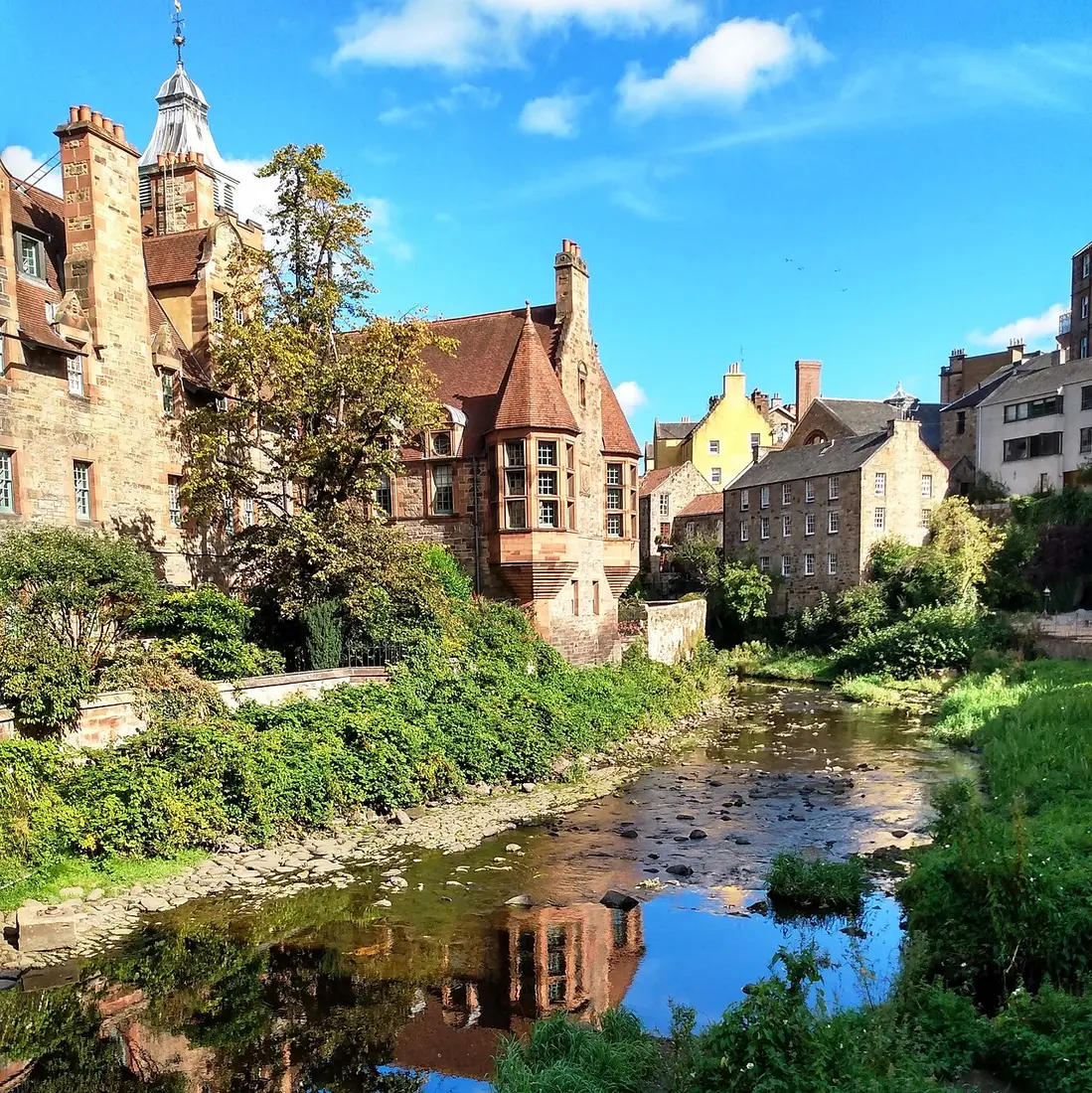
Start at the west end of Princes Street and walk down Bell’s Brae into Dean Village. For more than 800 years this was a milling village, grinding grain for the town with the power of the Water of Leith. The bakers’ guild, the Incorporation of Baxters, built its meeting house here, and a carved stone dated 1675 with the bakers’ emblems still sits over a doorway at the top of the brae. Well Court, the red-roofed block across the river, went up in the 1880s as model housing for working families.
Take the Water of Leith Walkway downstream. The river runs in a deep green gorge here, and the city above disappears. Soon Thomas Telford’s Dean Bridge strides high overhead on four slender arches, carrying the road to the New Town.
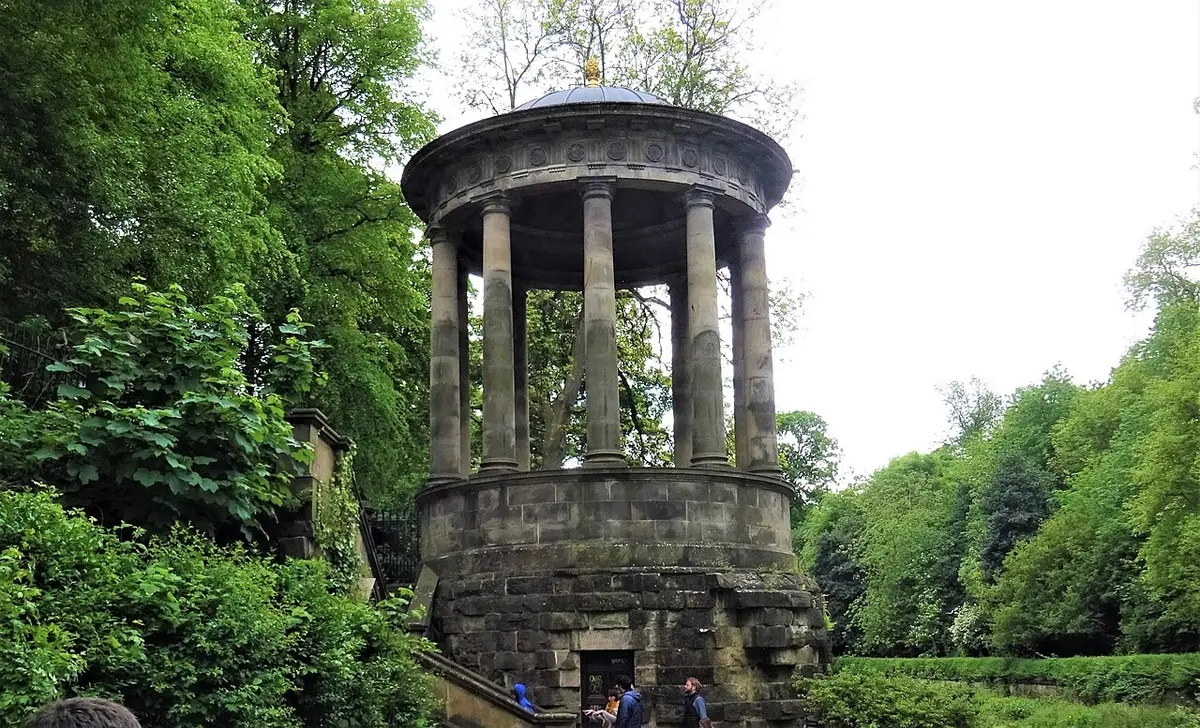
A little farther on, St. Bernard’s Well stands by the path: a round temple of Doric columns begun in 1789 over a mineral spring that Georgian Edinburgh drank for its health. It was designed by Alexander Nasmyth, the painter of the best-known portrait of Robert Burns, and a statue of Hygieia, the Greek goddess of health, stands in the middle.
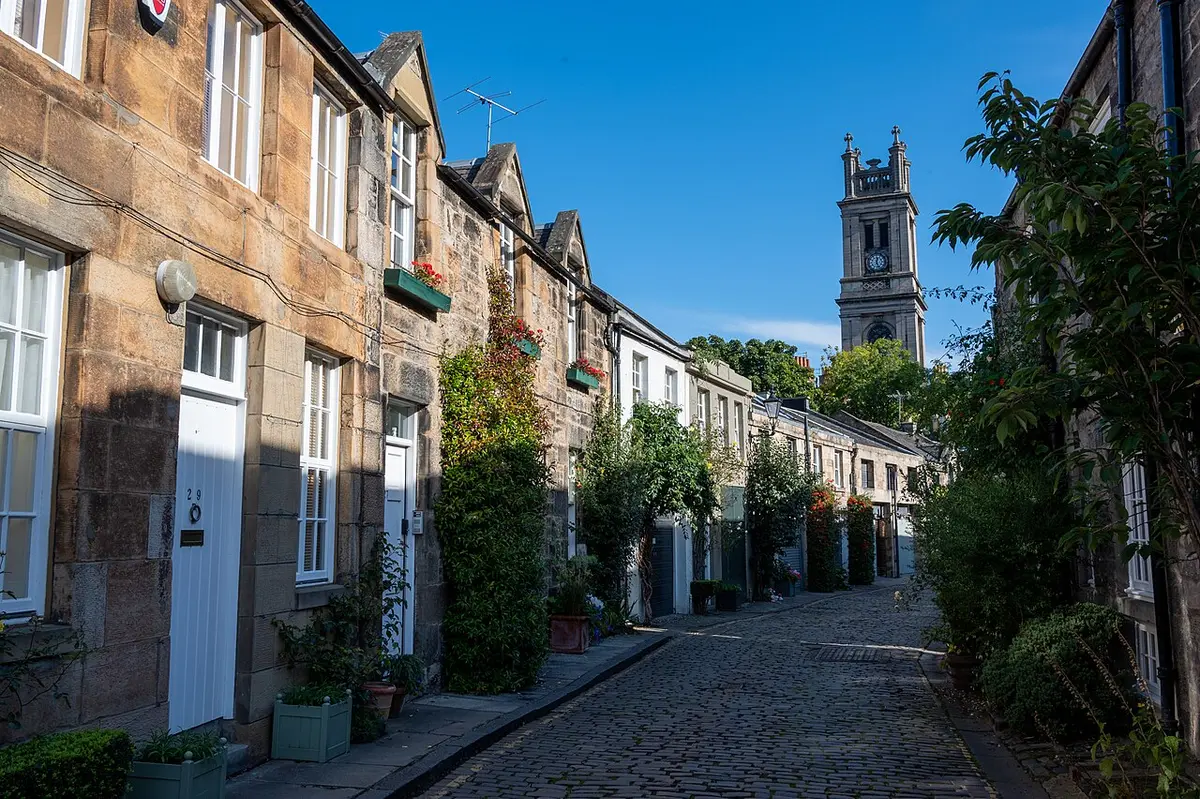
The path comes out in Stockbridge, once a village of its own, now a street of cafés, bakeries and small shops, with a food market on Sundays. Behind the main street, Circus Lane curves between little stone mews houses toward the clock tower of St. Stephen’s church.
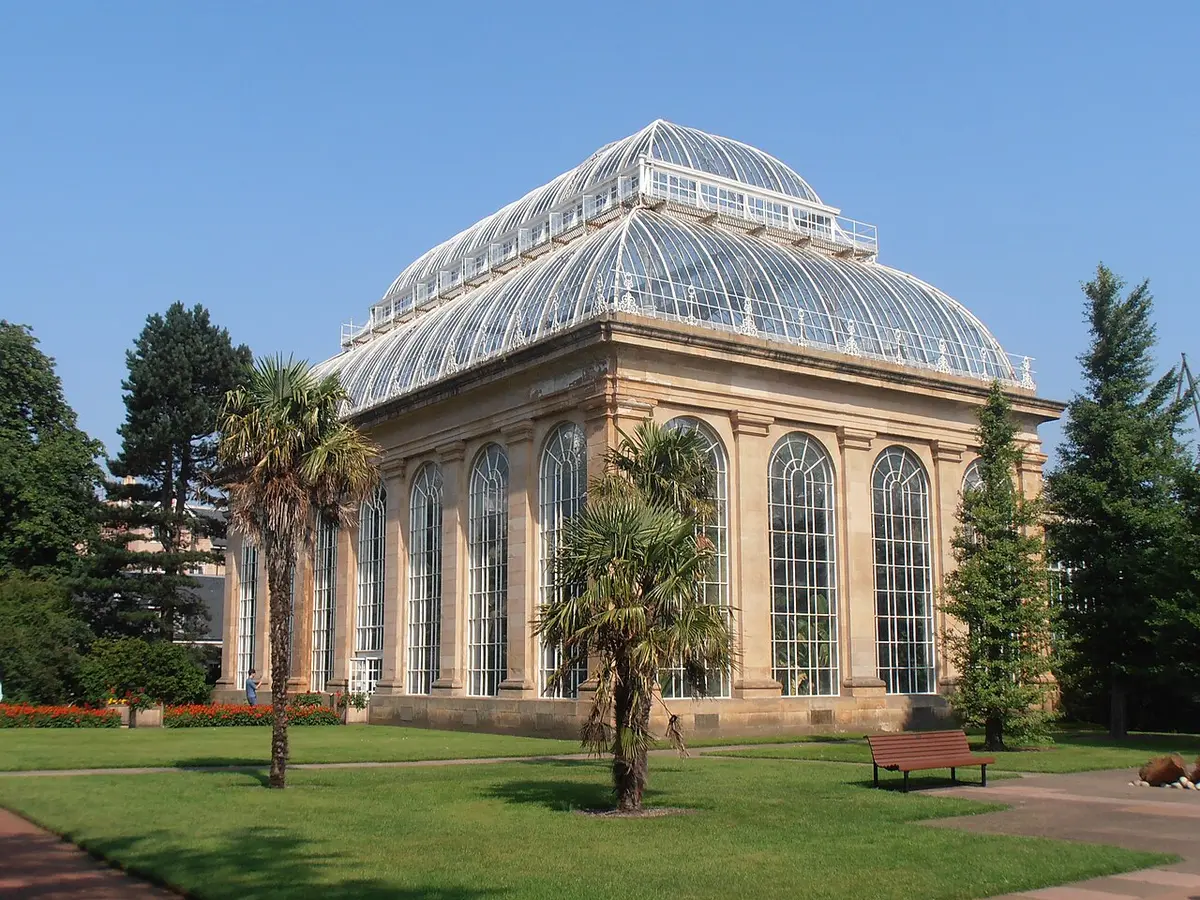
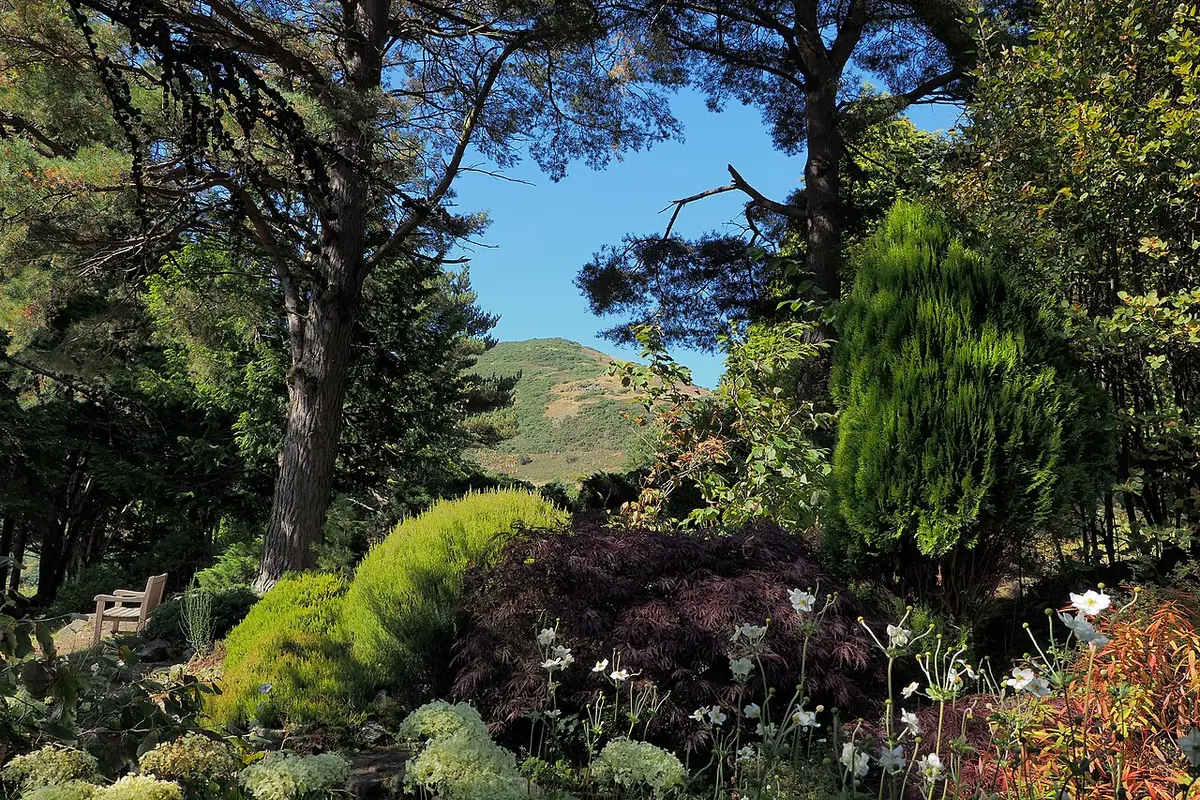
From Stockbridge it is a ten-minute walk to the Royal Botanic Garden, 70 acres of plants and lawns with the castle on the skyline, free to enter. Its Victorian Palm Houses, closed for five years of restoration, open again from 2 October 2026; book tickets ahead.
Where to stay
Pick the neighborhood first, then the hotel. Each link opens a map of places to stay around it.
Old Town
First visitThe Royal Mile and the steep closes and wynds that run off it, from the castle down to Holyroodhouse, with the Grassmarket’s pubs below the castle rock. Everything is close, but the streets are steep, cobbled and at their busiest in August.
See hotels in Old TownNew Town
Comfort and shoppingThe Georgian grid laid out from 1767 between Princes Street and Queen Street: elegant squares, the shops of George Street and flat walks to everything, with Waverley station and the tram at its eastern end.
See hotels in New TownStockbridge
CouplesA village within the city on the Water of Leith, with cafés, delis, small shops and a Sunday market, the Botanic Garden and Dean Village a short walk away. Quiet at night, about 15 minutes on foot from Princes Street.
See hotels in StockbridgeLeith
Food loversEdinburgh’s port, a tram ride from the center: restaurants and bars along the Shore, where the Water of Leith meets the sea, and the Royal Yacht Britannia at Ocean Terminal.
See hotels in LeithWest End and Haymarket
Trains and easy arrivalsGeorgian crescents around Haymarket station, where the Glasgow trains and the airport tram stop, with the Usher Hall and the theaters of Lothian Road nearby and Dean Village a short walk away.
See hotels in West End and HaymarketSouthside and Newington
BudgetSouth of the Old Town around the university: guest houses, good-value hotels and cheap places to eat, with Holyrood Park and Arthur’s Seat on the doorstep and the Royal Mile 15 to 20 minutes away on foot.
See hotels in Southside and NewingtonThe 10 best budget hotels
Well-reviewed hotels at the lower end of Edinburgh’s prices, best-reviewed first. On a weeknight in November 2026 they cost about €110 to €180 for two; prices change daily, so check your own dates.
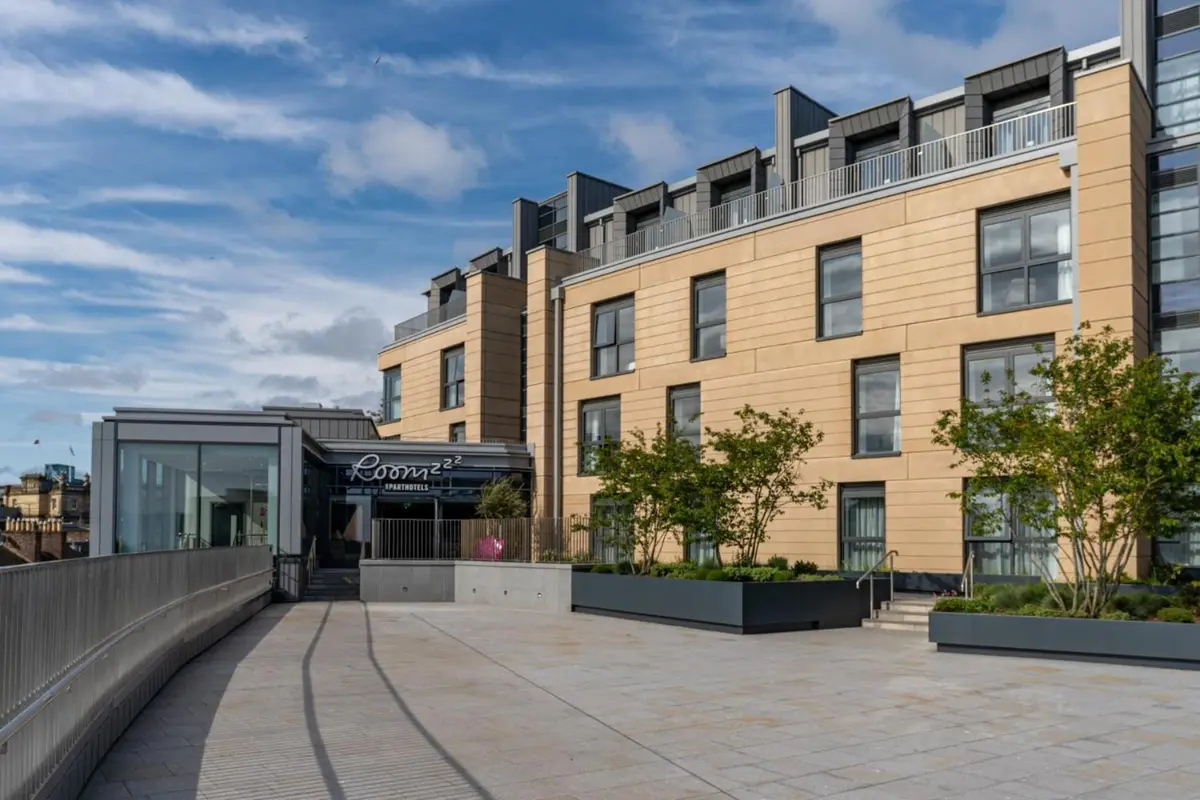 01
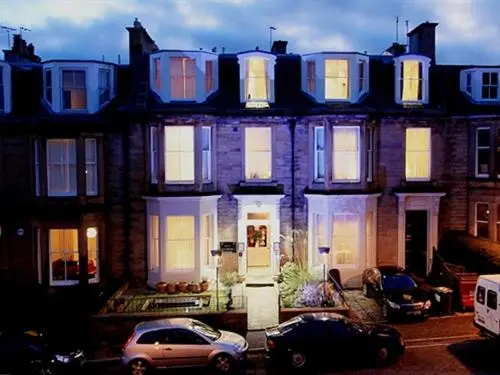 02
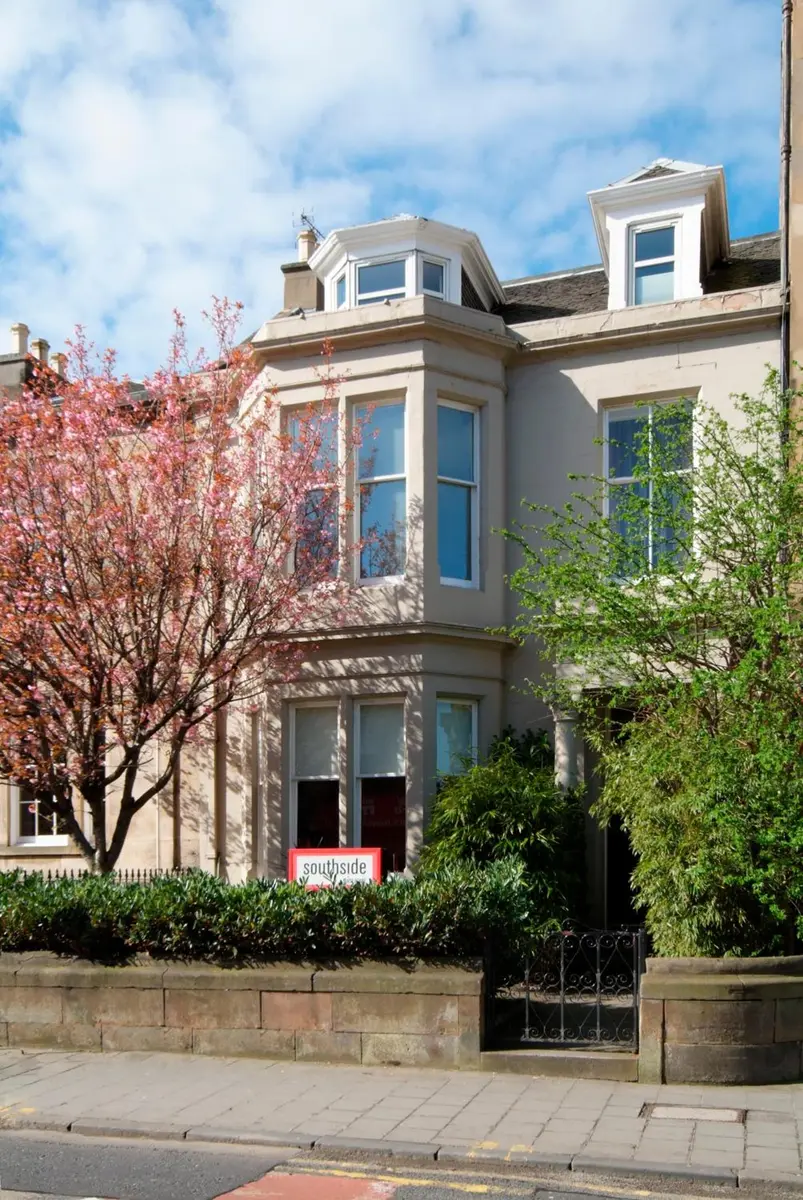 03
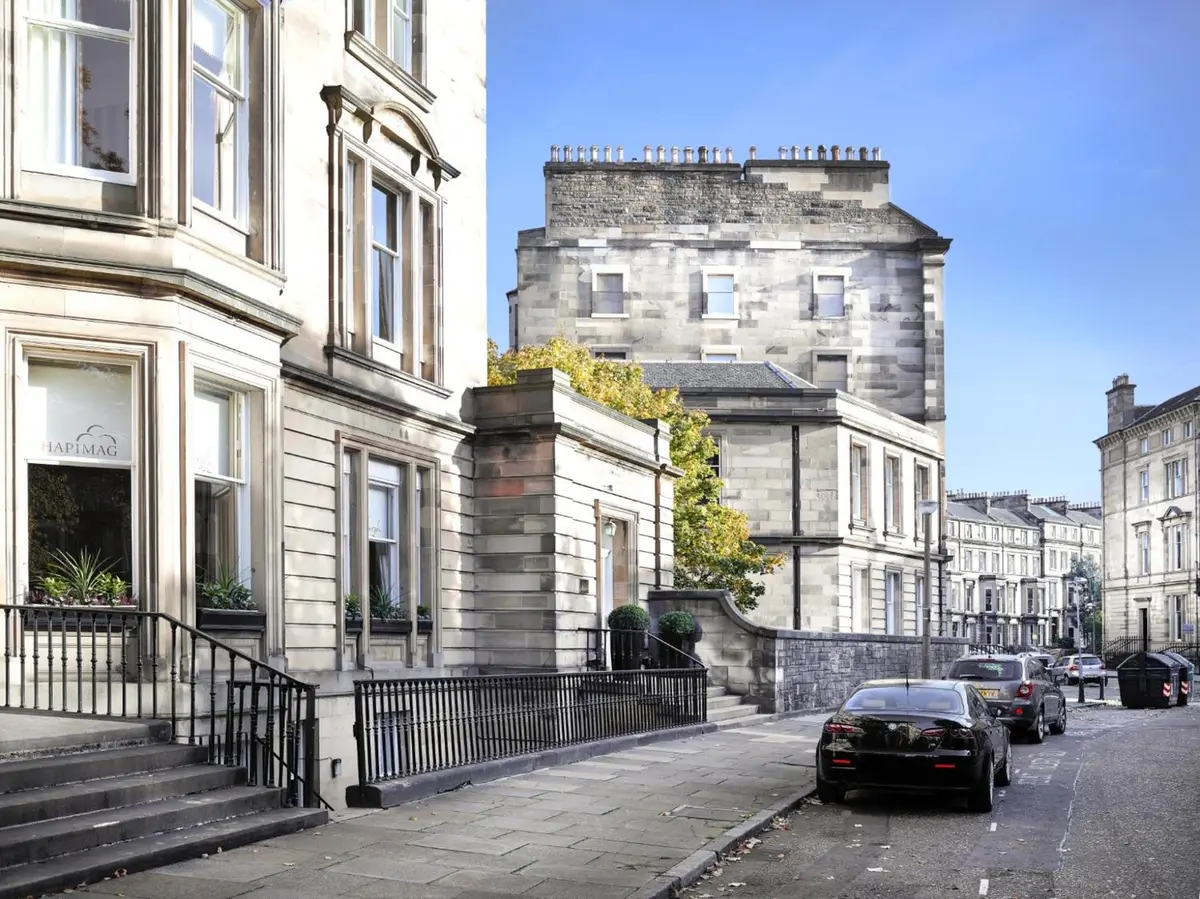 04
Hapimag Resort Edinburgh
9.41,041 reviewsWest End and Haymarket
9 min walk to Haymarket station
See prices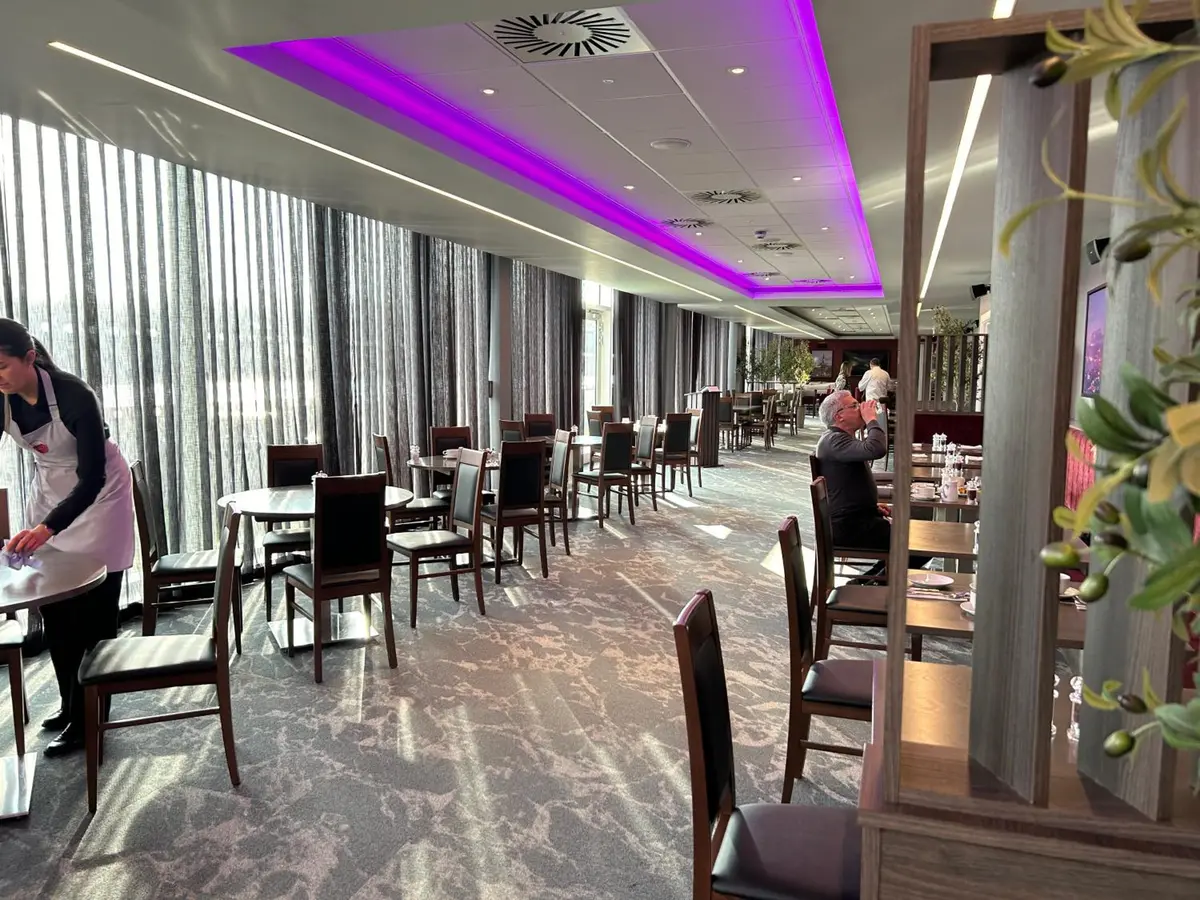 05
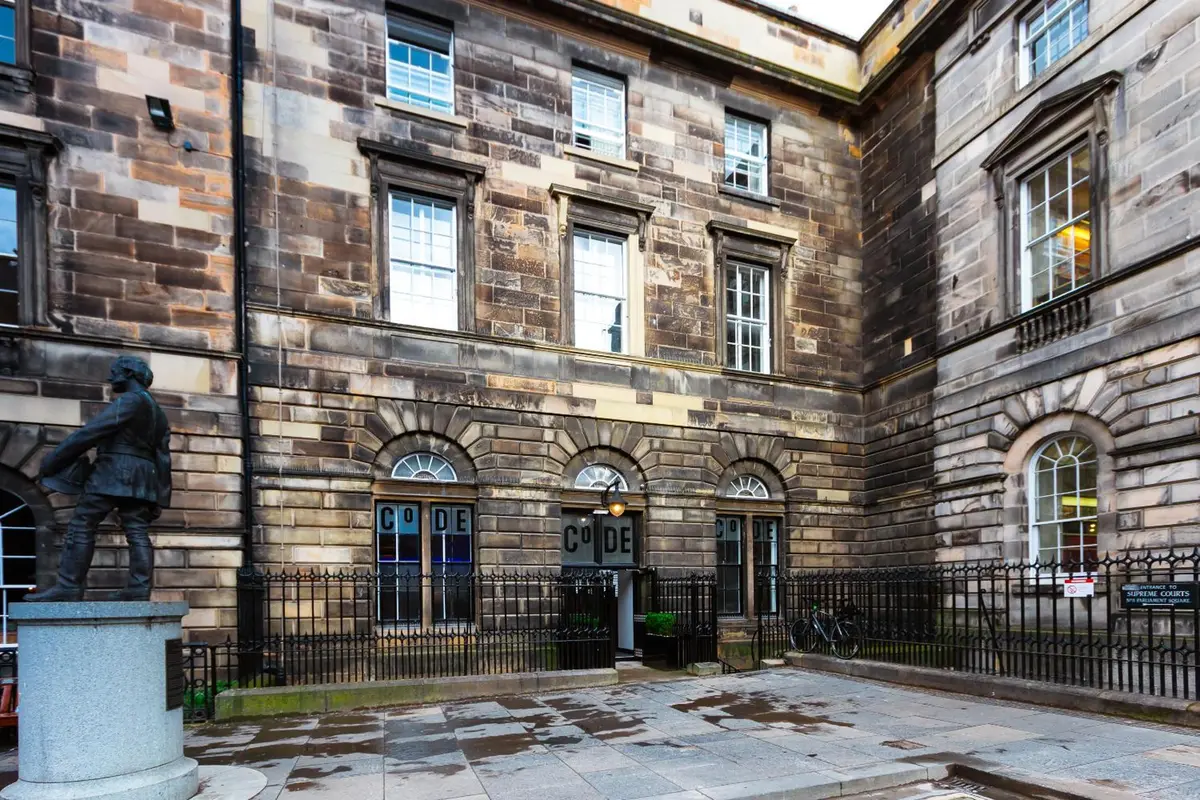 06
 07
 08
 09
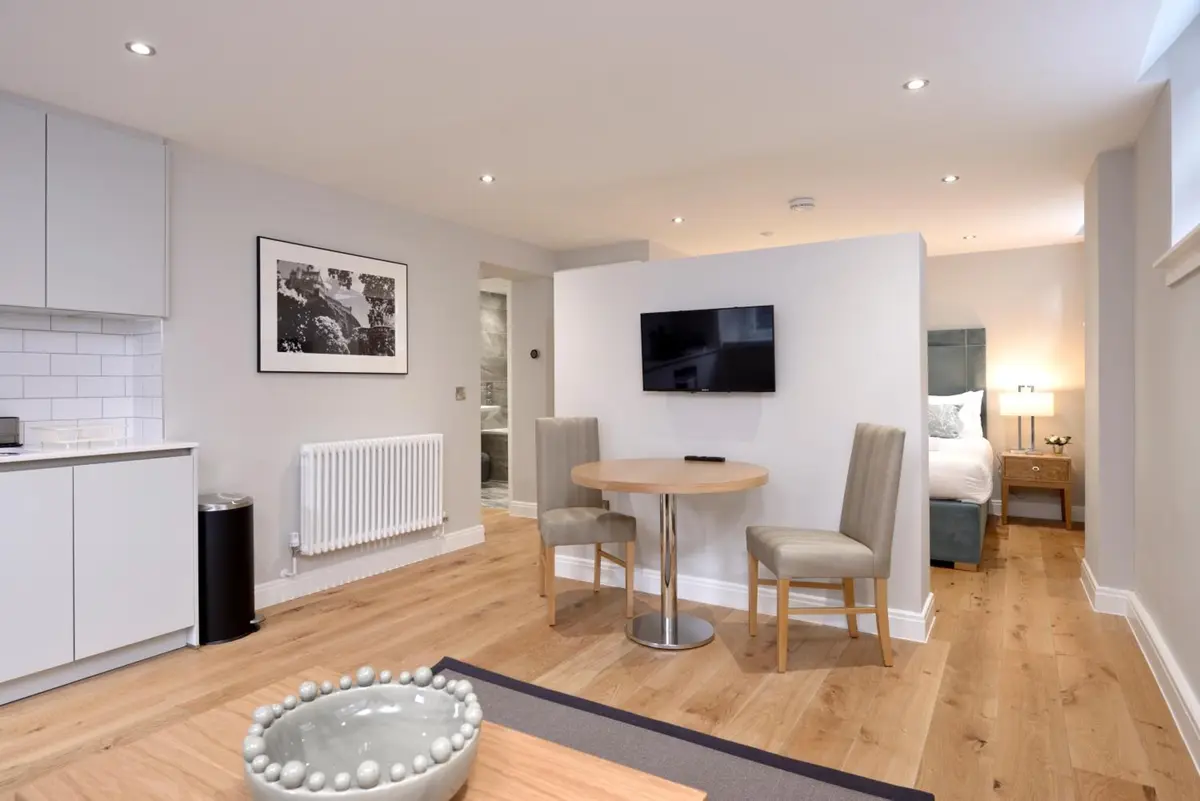
Destiny Scotland New Town Apartments
9.11,371 reviewsNew Town
10 min walk to Waverley station
See prices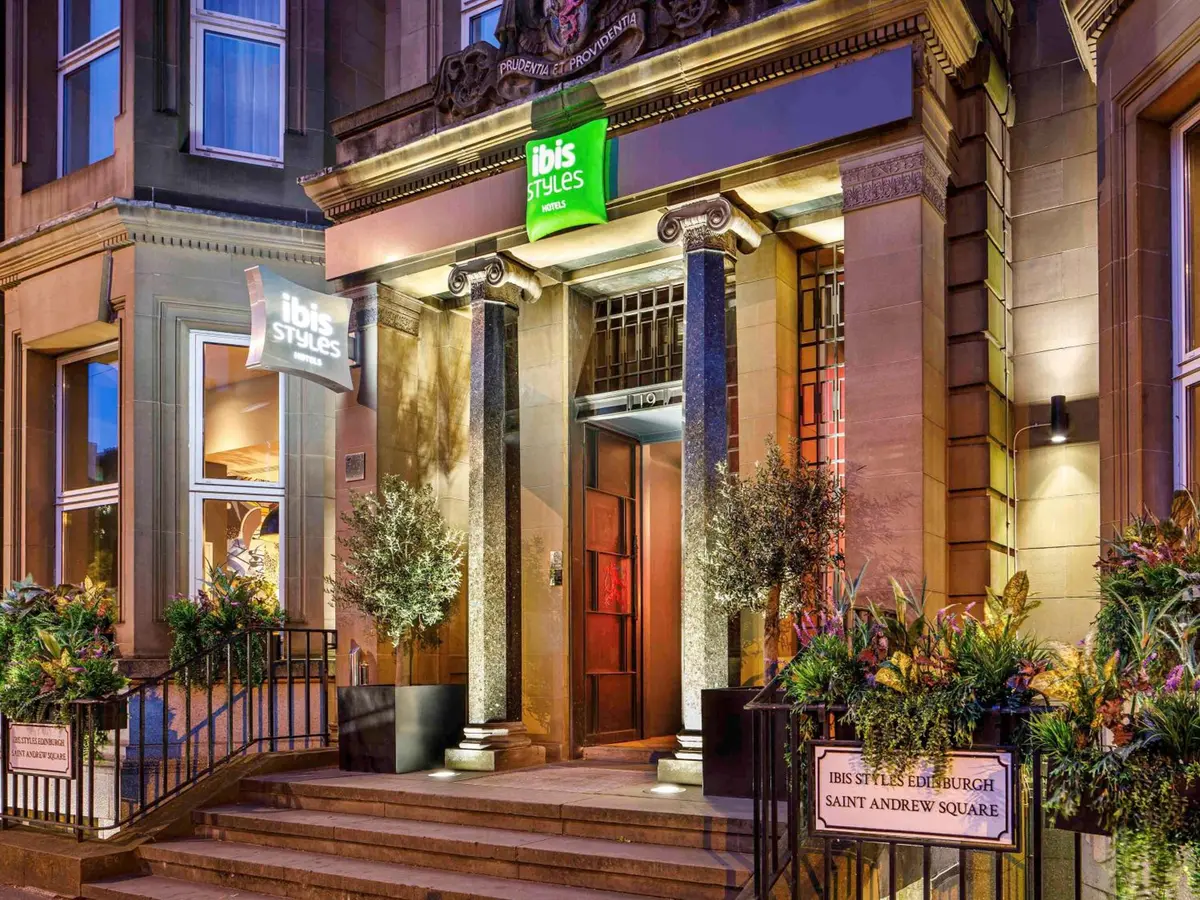 10
ibis Styles Edinburgh St Andrew Square
9.09,000 reviewsNew Town
7 min walk to Waverley station
See prices
Hotel links go to Stay22. If you book, we may earn a commission, at no cost to you.
Food and drink
Scottish cooking starts with what the land and the cold sea give: beef, lamb, game, salmon and shellfish, oats and root vegetables. Edinburgh adds a lively restaurant scene, from the waterfront in Leith to the pubs of the Old Town. Lunch runs from about noon and dinner from 7pm.
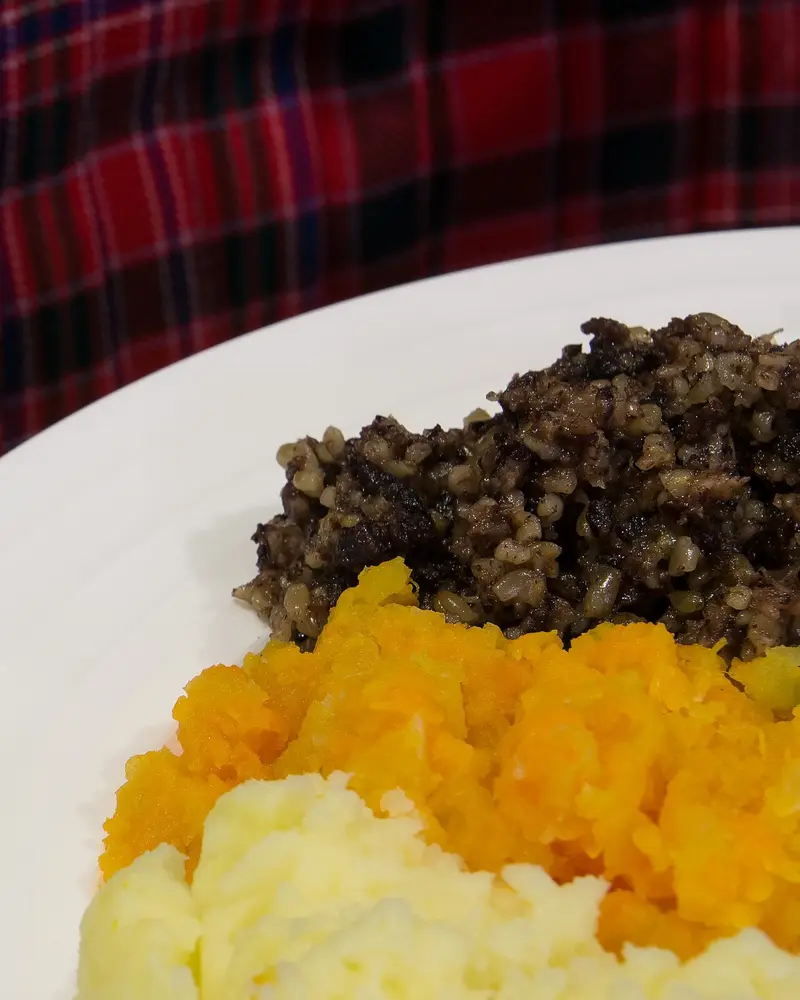
Haggis, neeps and tatties
Sheep’s heart, liver and lungs minced with oatmeal, onion and spices, served with mashed swede and potato. It is the centerpiece of Burns Night on 25 January, and on pub menus all year.
Photo: Colin, CC BY-SA 4.0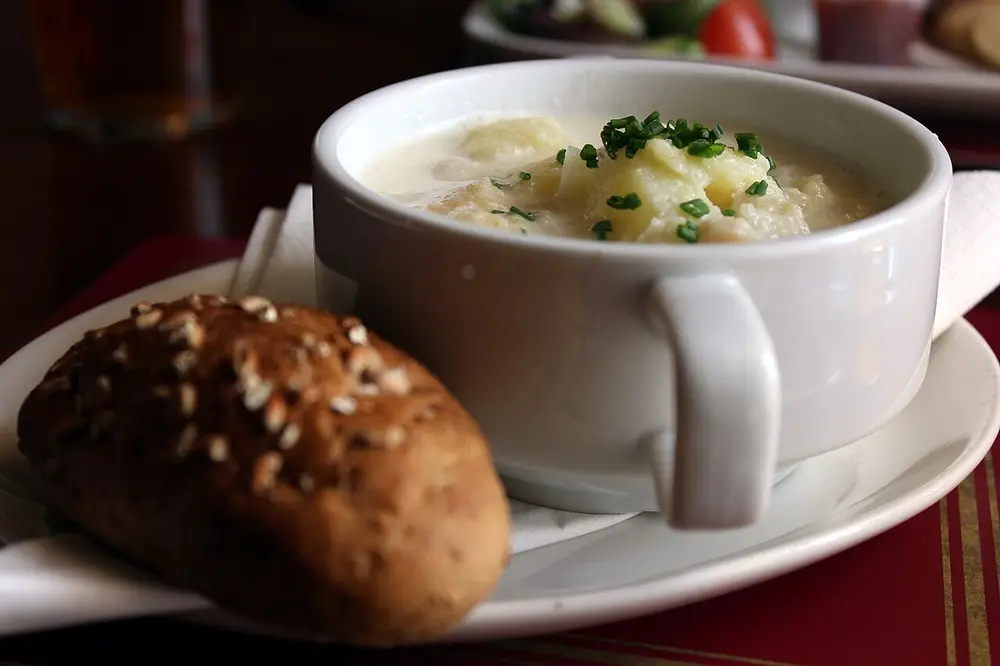
Cullen skink
A thick soup of smoked haddock, potato and onion in milk, named after the fishing village of Cullen on the Moray coast.
Photo: Metukkalihis, CC BY-SA 3.0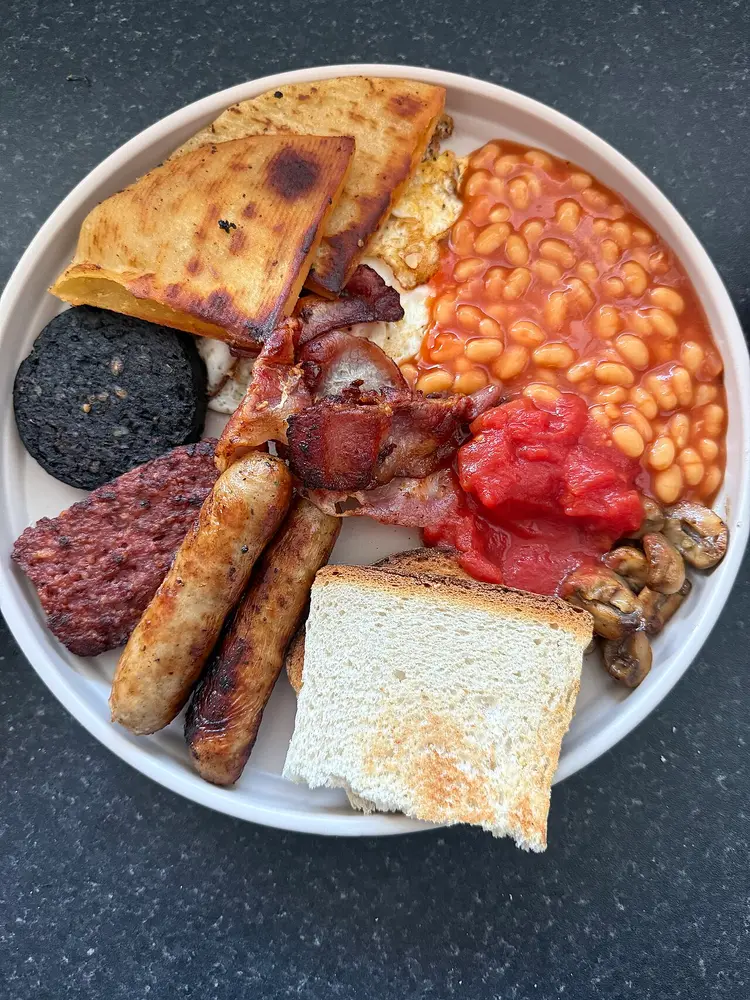
Scottish breakfast
Bacon, eggs and sausages with the local additions: square Lorne sausage, black pudding, tattie scones and often haggis.
Photo: Copowell472, CC BY-SA 4.0Fish supper
Fish and chips, which in Edinburgh come with salt and sauce, brown sauce thinned with vinegar, rather than salt and vinegar.
Scotch pie
A small round pie of spiced minced mutton or beef in a firm pastry case, sold in bakeries and at football grounds.
Cranachan
Raspberries folded into whipped cream with honey, a splash of whisky and toasted oatmeal, a summer dessert.
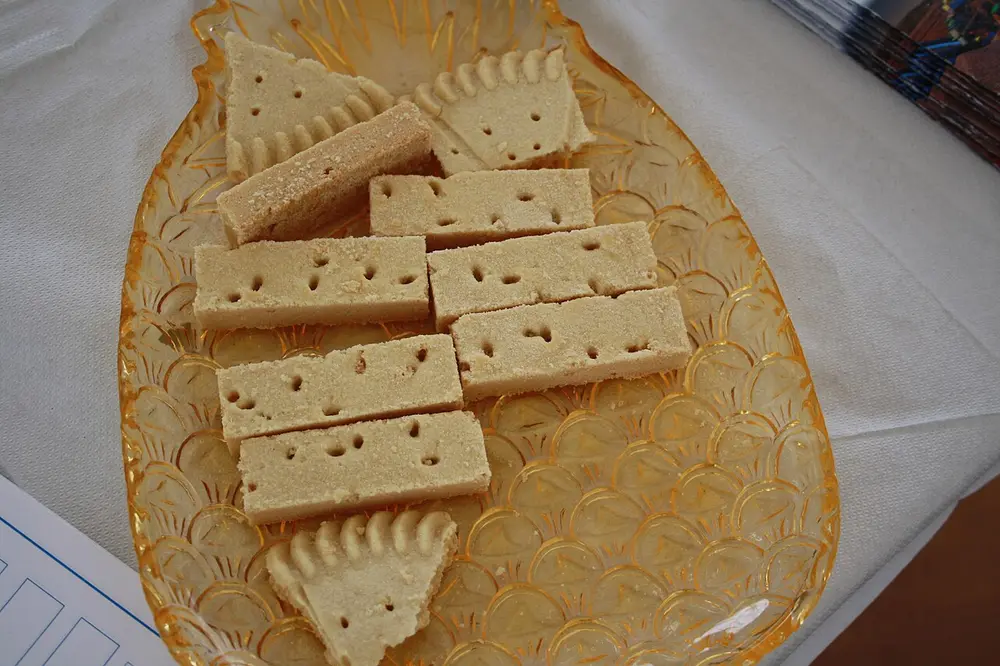
Shortbread
Butter, sugar and flour, baked pale and crumbly in fingers or in round petticoat tails cut into wedges.
Photo: Peter Craven, CC BY 2.0Eat seafood along the Shore in Leith, cafés and the Sunday market in Stockbridge, and haggis with a pint in the Old Town’s pubs. The Grassmarket and Victoria Street are lively at night, and Nicolson Street and the Southside are the best value.
The queen at the foot of the Royal Mile
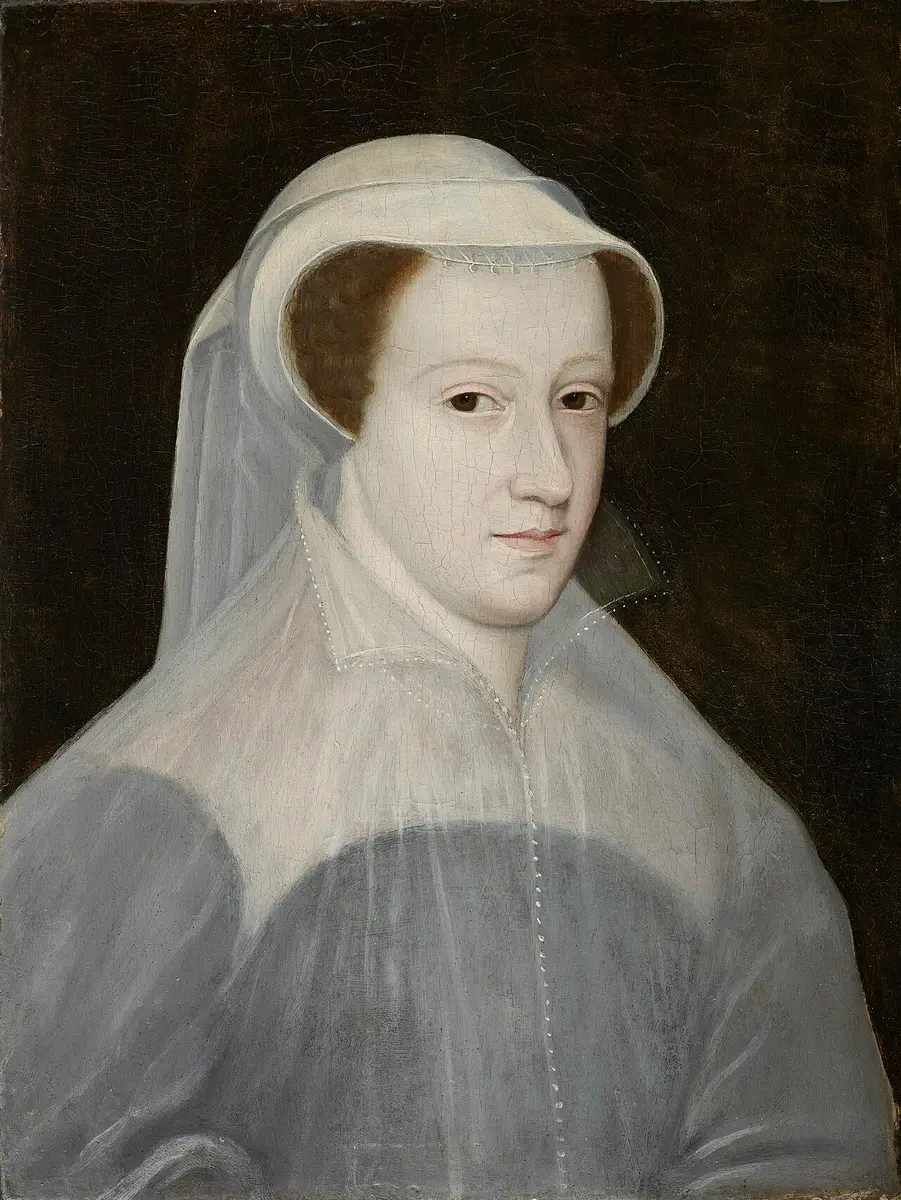
Mary, Queen of Scots, came home to Edinburgh in 1561, a widow of eighteen. Six years of marriages, murder and quarrels with a preacher ended with her in prison and her son on the throne.
Mary Stuart landed at Leith on 19 August 1561, a queen since she was six days old and a widow at eighteen. She had grown up at the French court and married its heir, Francis, who became king in 1559 and died the following year. While she was away, Scotland had turned Protestant: its Parliament had broken with Rome and banned the Mass, and a preacher at St. Giles’, John Knox, distrusted everything about her. A thick sea fog hung over the port as she came ashore, and Knox read the gloom as a sign of what she would bring.
She made her home in the Palace of Holyroodhouse at the foot of the Royal Mile and heard Mass in her own chapel. Knox thundered against it from his pulpit, and she summoned him to the palace to argue; at one meeting she wept with anger, and by his own account he was unmoved. Yet for four years she ruled with care, and a Catholic queen and a Protestant church lived side by side.
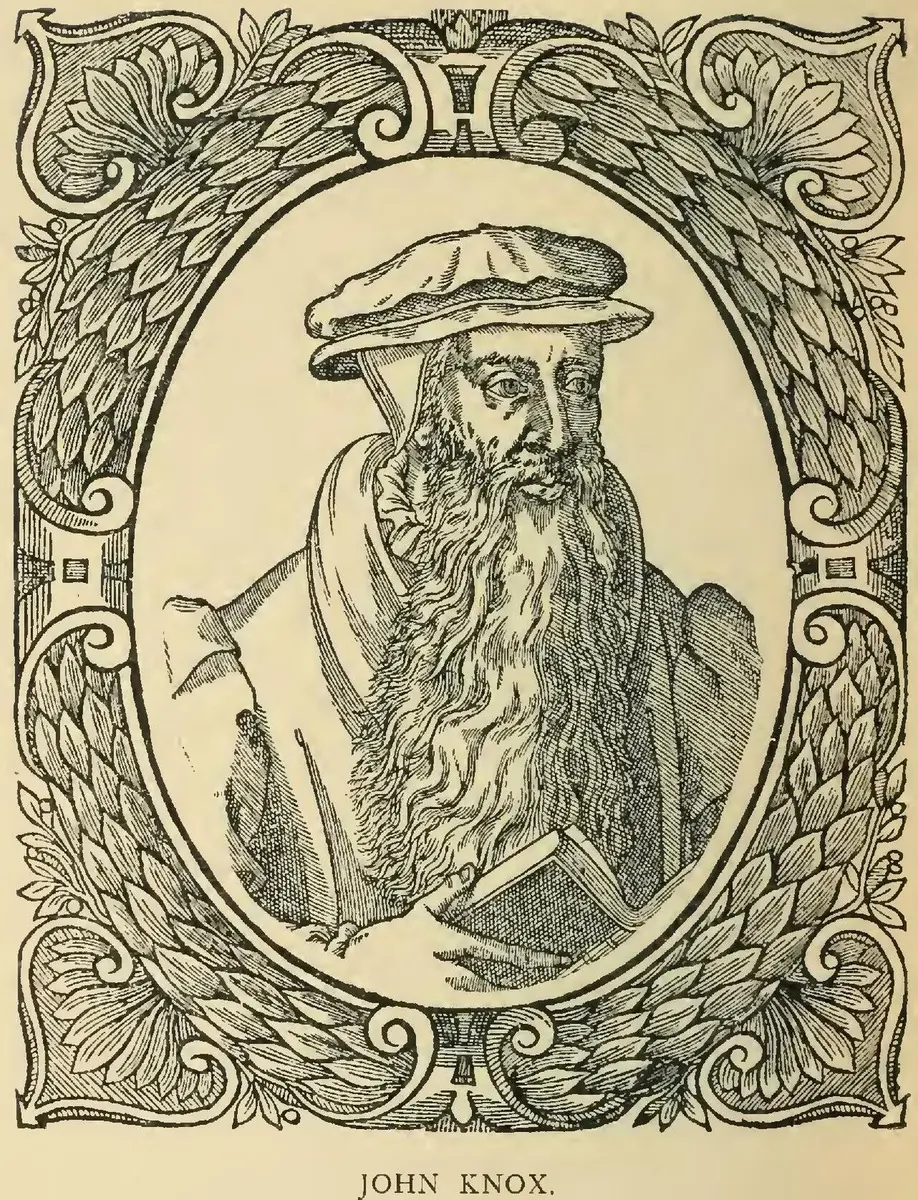
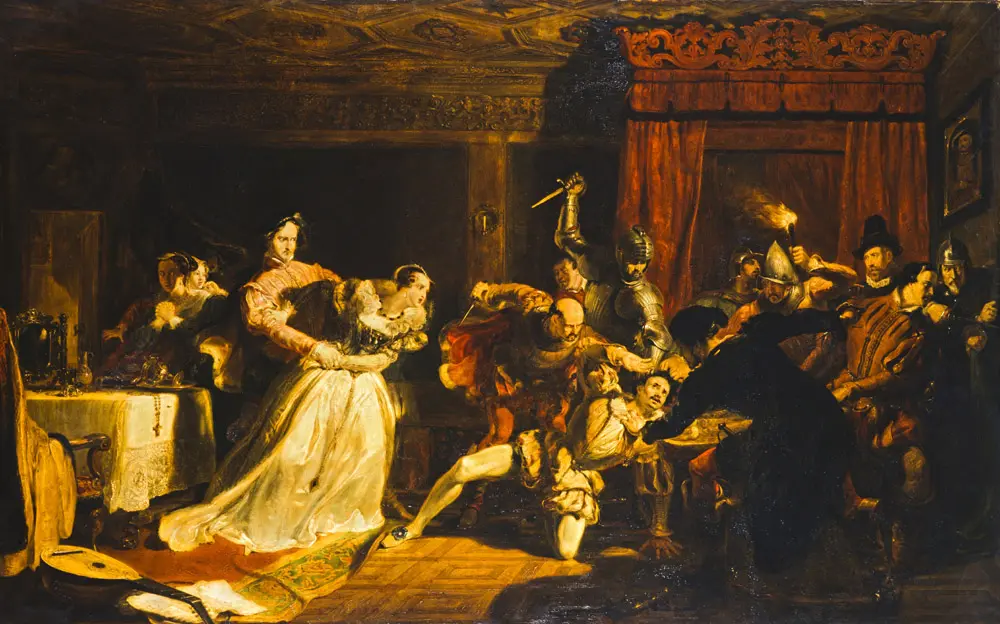
In July 1565 she married her cousin Henry Stuart, Lord Darnley, at Holyrood. The marriage soured within months, and Darnley grew jealous of David Rizzio, her Italian secretary. On the evening of 9 March 1566, Darnley and a band of armed lords burst into her small supper room, dragged Rizzio from her side and stabbed him to death, with 57 wounds by one count. Mary was six months pregnant. A small plaque in the palace marks the place, and guides still point to a reddish stain on the floorboards.
That June, in a small room in the castle, she gave birth to a son, James. Darnley did not see him grow up. In February 1567 the house at Kirk o’ Field, on the edge of the town, where he lay recovering from illness, was blown up in the night, and he was found dead in the garden, apparently smothered. The site now lies under the university’s Old College. Suspicion fell on the Earl of Bothwell, and in May Mary married him at Holyrood.
Six years at Holyrood made her the most famous of Scotland’s monarchs, and cost her the crown.
The lords rose against them. At Carberry Hill, east of the city, in June 1567, her army melted away without a battle. Bothwell fled, and Mary was led back into Edinburgh through crowds that called her an adulteress and a murderer. Held in Lochleven Castle, she was forced to give up the crown to her one-year-old son. She escaped the next spring, lost at Langside, crossed into England to seek her cousin Elizabeth’s help, and spent the rest of her life a prisoner. She was beheaded at Fotheringhay in 1587.
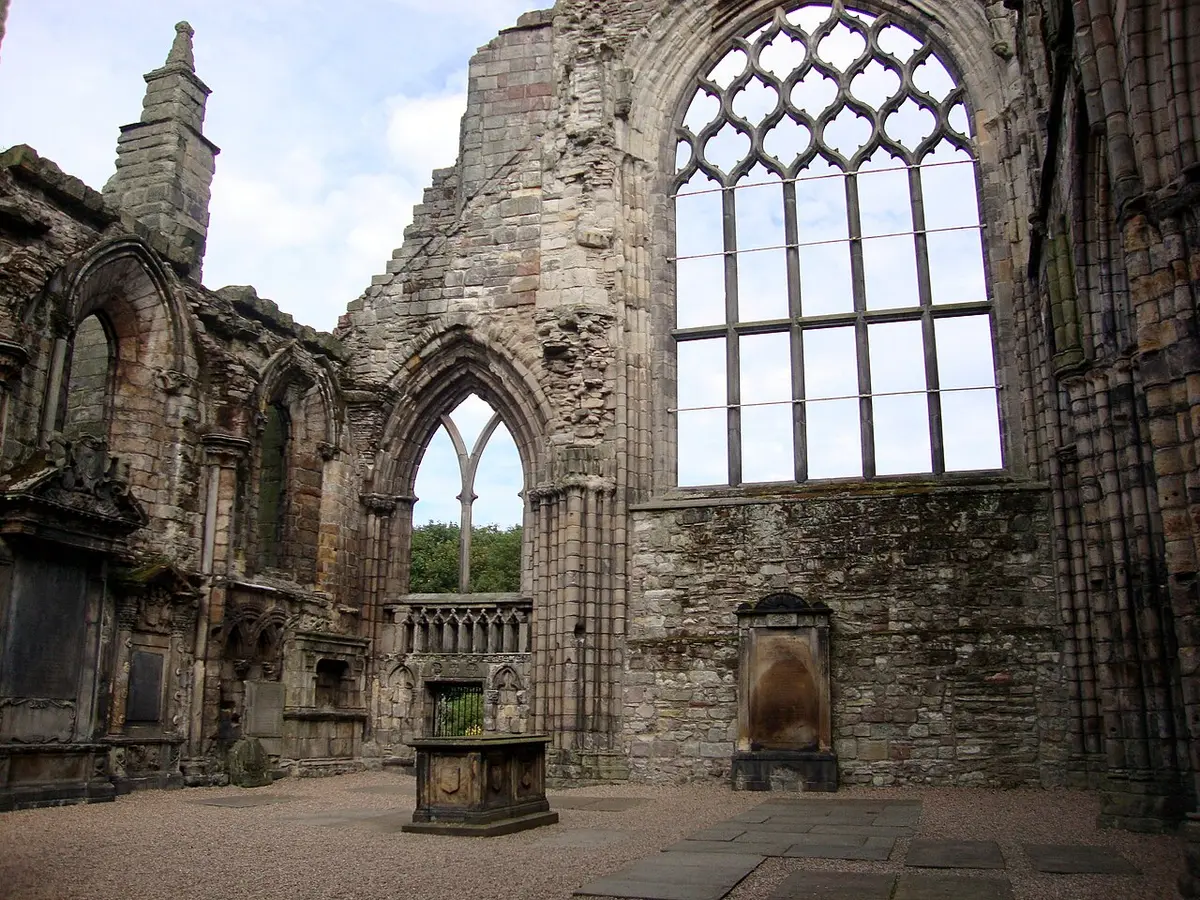
Her son was crowned James VI as a baby, and in 1603 he inherited the English throne too and moved his court to London. In Edinburgh you can still follow her: the rooms in the old tower at Holyroodhouse, the roofless abbey beside them, the castle room where James was born, and the Honours of Scotland in the Crown Room, first used together at her coronation in 1543, when she was nine months old.
Art
The Scottish National Gallery
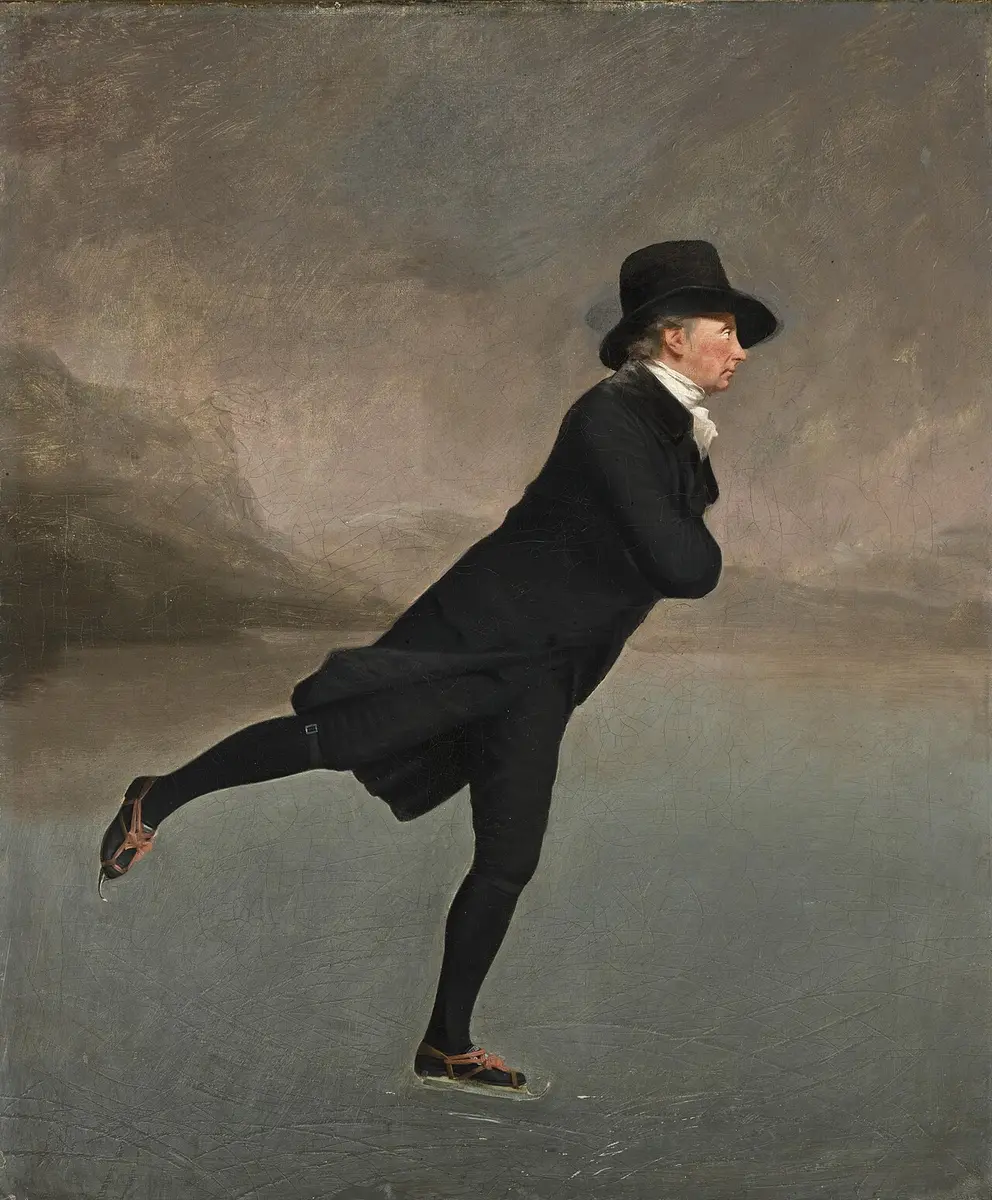
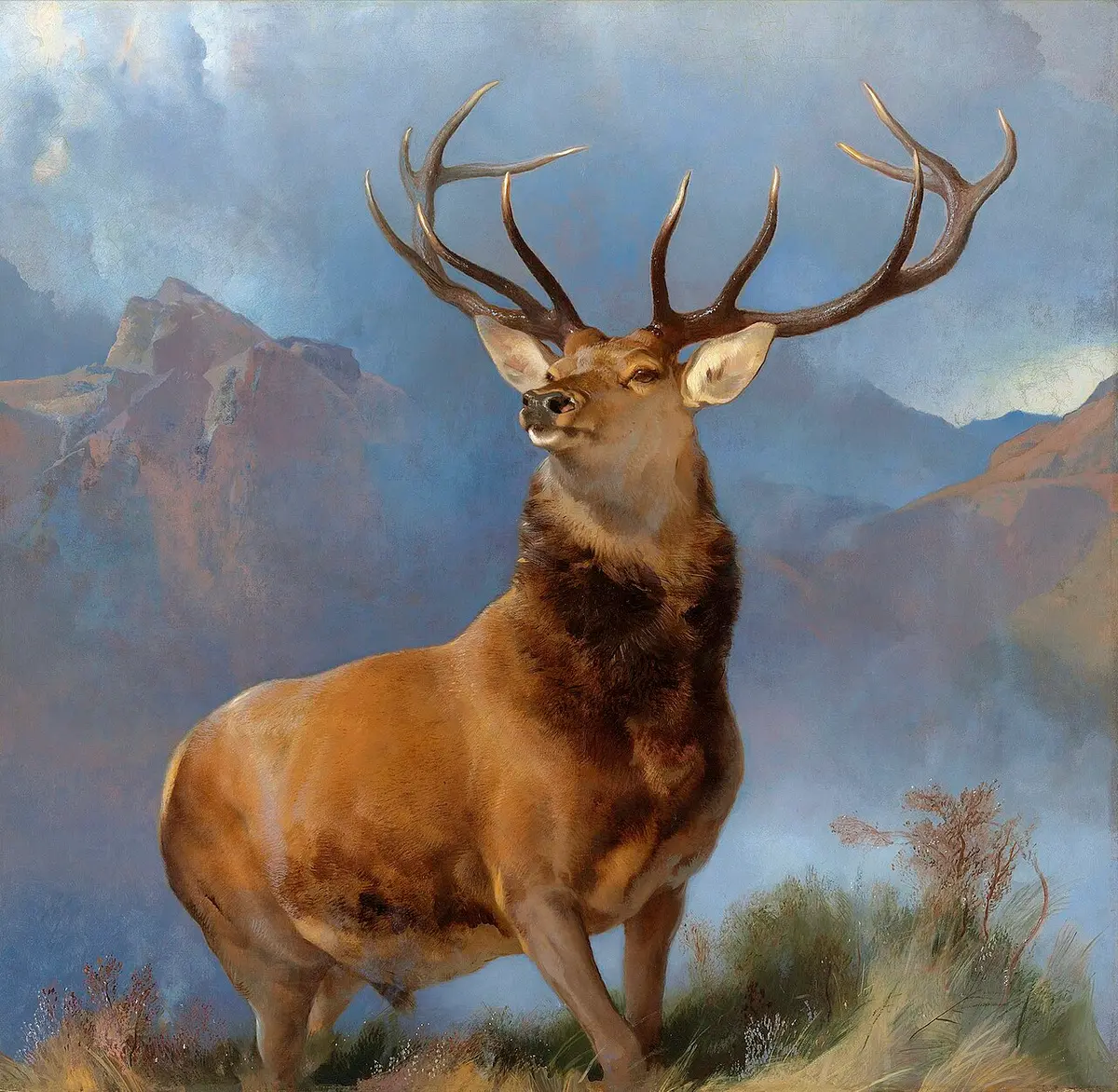
On the Mound, free: European painting from the Renaissance to the Impressionists, and, in galleries that opened in 2023 below it, Scottish art from Raeburn’s skating minister to Landseer’s Monarch of the Glen.
The Scottish National Portrait Gallery
A red sandstone Gothic building on Queen Street, finished in 1890, telling Scotland’s story in faces. In the Great Hall, William Hole’s painted frieze parades famous Scots from Saint Ninian to Thomas Carlyle. Free.
Modern art
The Scottish National Gallery of Modern Art fills two buildings in parkland near Dean Village, with a lawn sculpted into curving terraces by Charles Jencks in front. Free.
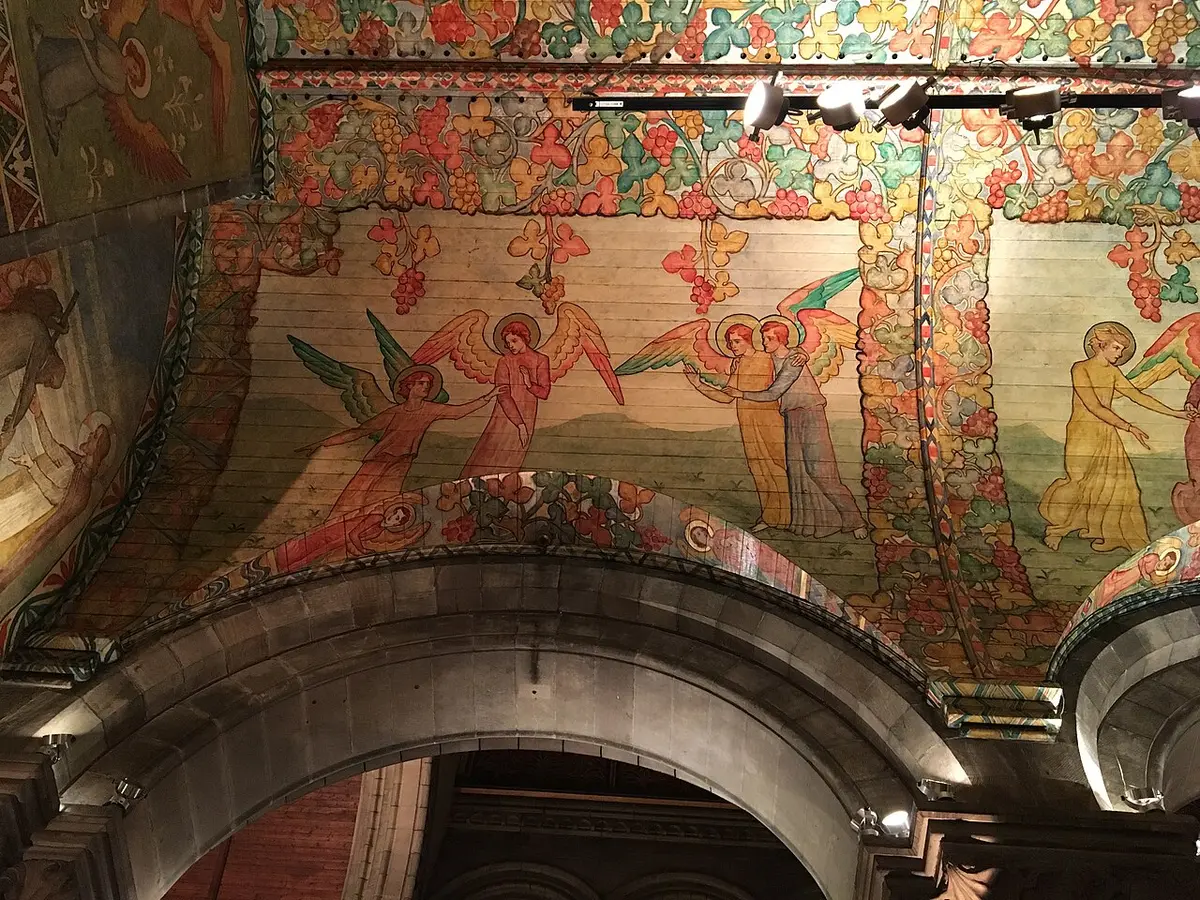
Phoebe Anna Traquair
The Arts and Crafts painter covered the walls of the Song School at St. Mary’s Episcopal Cathedral from 1888 to 1892 and a whole church, now the Mansfield Traquair Centre, from 1893 to 1901. Both open only on set days, so check before you go.
The first City of Literature
In 2004 Edinburgh became the first city UNESCO named a City of Literature: home to a plowman poet, the novelist whose books gave the station its name, a boy from Heriot Row and a schoolmistress in her prime.
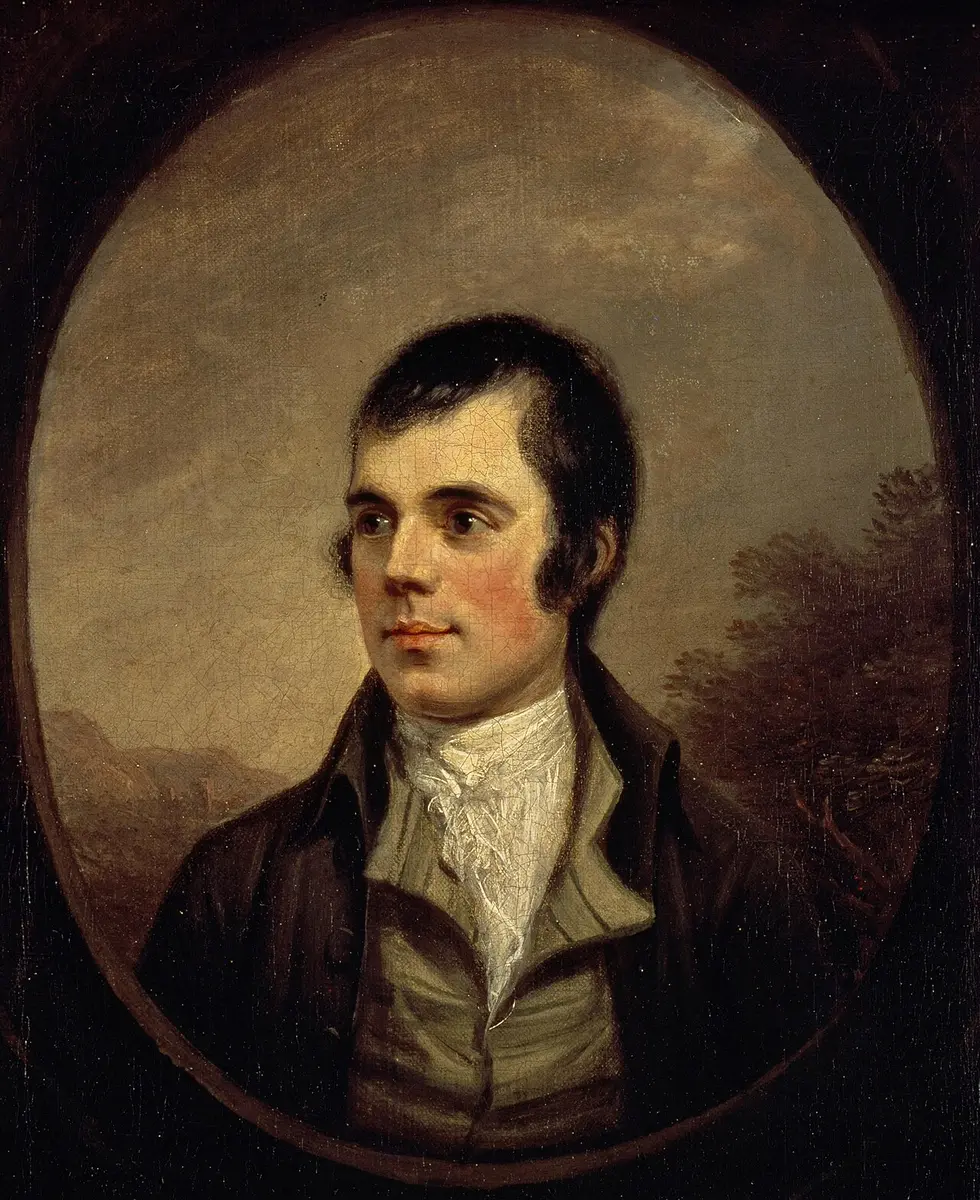
Robert Burns
1759 to 1796
Burns rode into Edinburgh in November 1786, an Ayrshire farmer whose first book of poems had just made him famous, and spent the winter as the talk of the city’s drawing rooms. The Edinburgh edition of his poems came out in April 1787, with Alexander Nasmyth’s portrait engraved at the front. At a gathering in Sciennes that winter, a boy of fifteen named Walter Scott watched him and never forgot it.
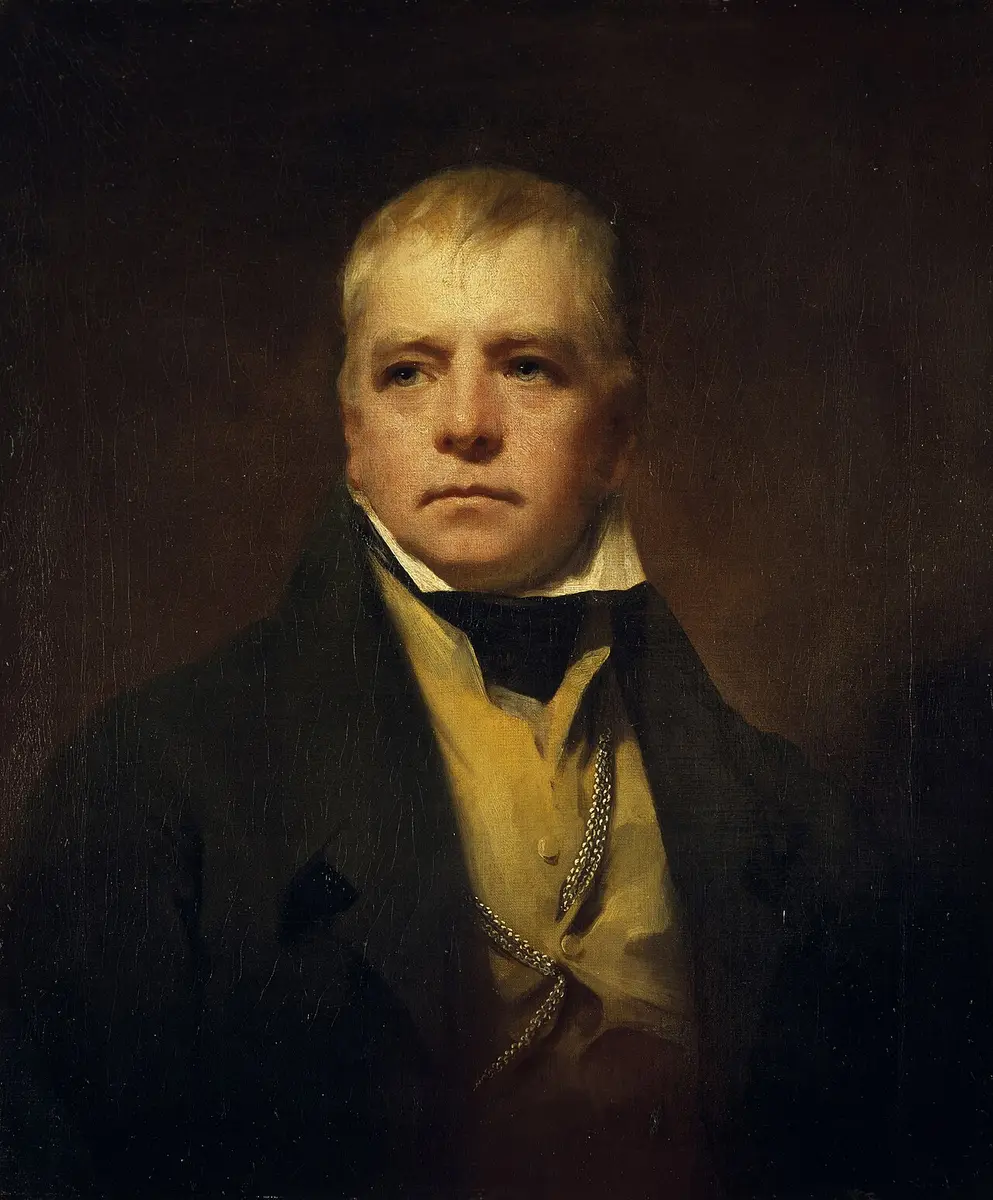
Walter Scott
1771 to 1832
Born in the Old Town and trained as a lawyer, Scott made Scotland’s past famous across Europe, first in verse and then in Waverley (1814) and the novels that followed it, published without his name. The Heart of Midlothian (1818) takes its title from the old Tolbooth prison on the Royal Mile. Waverley station is named after his novels, and his monument towers over Princes Street.
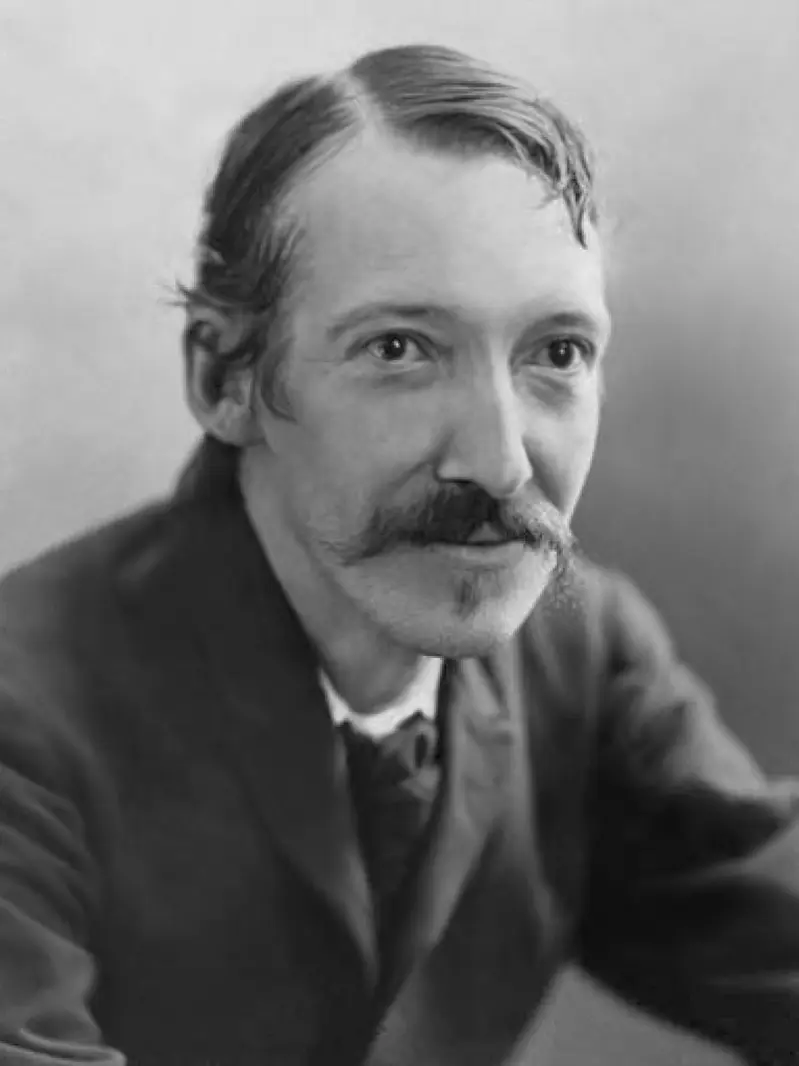
Robert Louis Stevenson
1850 to 1894
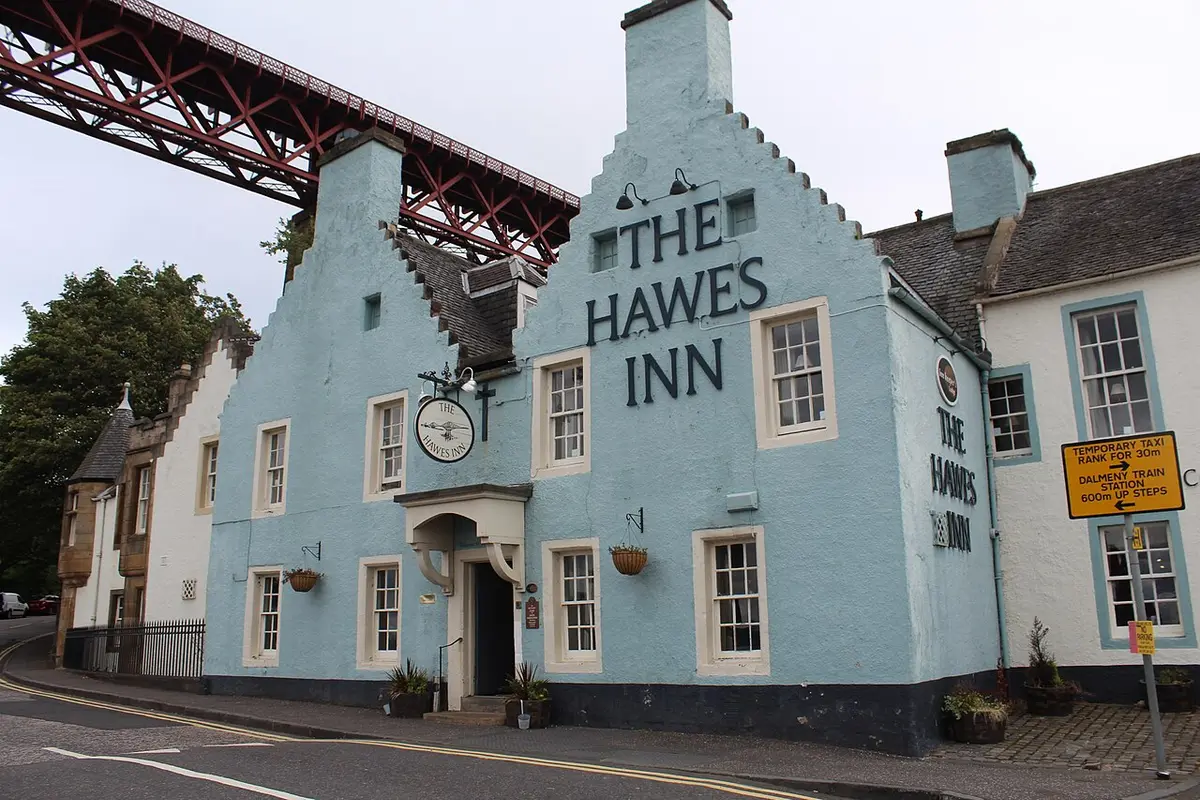
Stevenson grew up at 17 Heriot Row in the New Town and spent his student years in the taverns of the Old Town. His family owned a cabinet made by Deacon Brodie, the respectable craftsman who burgled houses by night and was hanged in 1788, and that double life fed Strange Case of Dr Jekyll and Mr Hyde (1886). The same year, Kidnapped sent young David Balfour to the Hawes Inn at Queensferry, where he is tricked aboard a ship.
Muriel Spark
1918 to 2006
Born in Bruntsfield and schooled at James Gillespie’s, Spark drew on one of her teachers there, Christina Kay, for The Prime of Miss Jean Brodie (1961), the story of an Edinburgh schoolmistress in the 1930s and the girls she chooses as her set.
There watching high the least alarms,
Thy rough, rude fortress gleams afar;
Like some bold vet’ran, gray in arms,
And mark’d with many a seamy scar:
The pond’rous wall and massy bar,
Grim-rising o’er the rugged rock,
Have oft withstood assailing war,
And oft repell’d th’ invader’s shock.
Robert Burns, Address to Edinburgh (1787), from The Poetical Works of Robert Burns (1887)
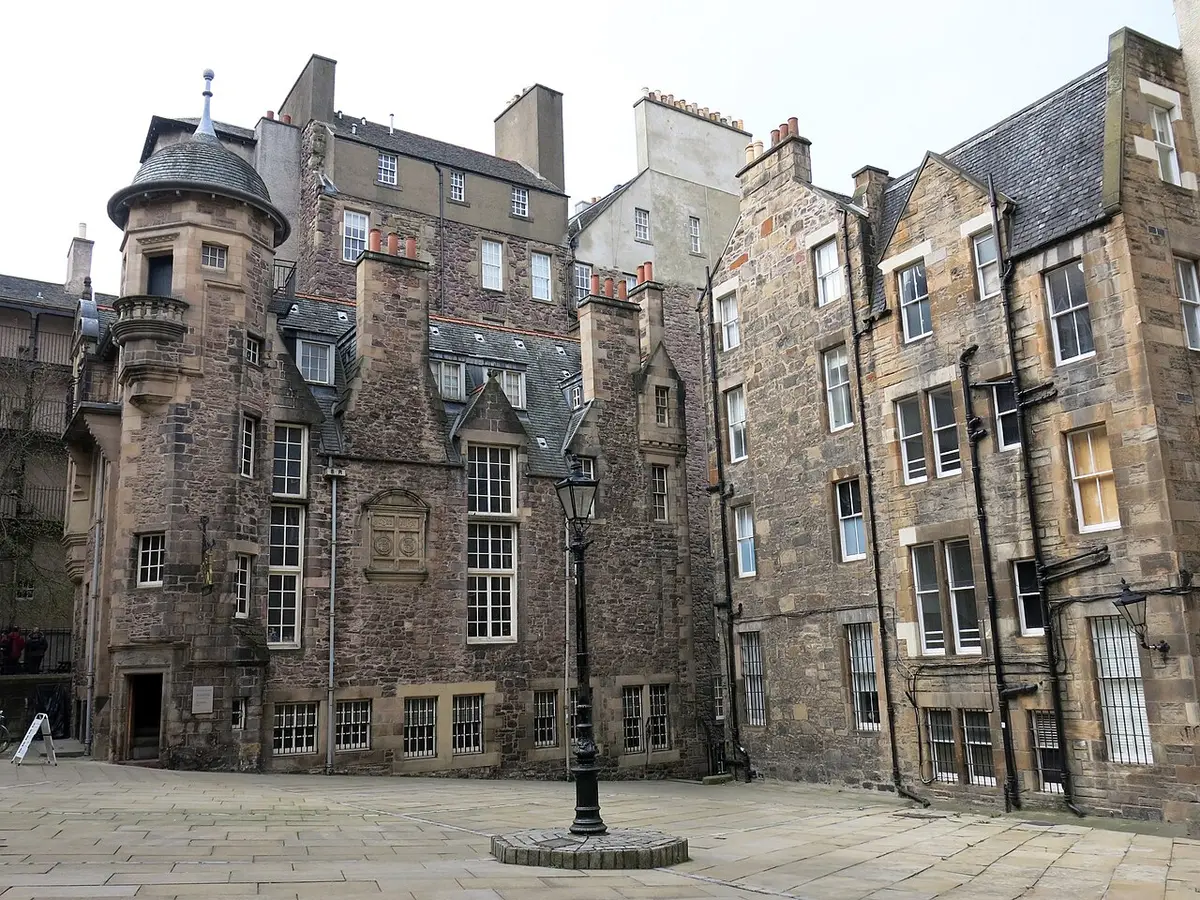
Culture
The August festivals
Every August the Edinburgh International Festival, founded in 1947, fills the concert halls; the Fringe, the world’s largest arts festival, takes over basements, churches and courtyards across the city; and the Royal Edinburgh Military Tattoo, first held in 1950, plays on the castle esplanade each night.
Hogmanay
New Year’s Eve is Scotland’s great celebration, with a street party and fireworks over the castle. At noon on New Year’s Day, swimmers in fancy dress plunge into the Forth at South Queensferry for the Loony Dook.
Burns Night
On 25 January, suppers across the city pipe in the haggis, address it with Burns’s poem, and toast the poet with whisky before a ceilidh.
Beltane
On 30 April the Beltane Fire Festival lights up Calton Hill with drums, fire and costumed performers marking the start of summer.
Rugby and football
Scotland play their Six Nations home games at Murrayfield in February and March, and the city’s football is split between Hearts at Tynecastle and Hibernian at Easter Road.
The underground city
Ghost stories cling to the Old Town, and tours lead into the vaults under South Bridge and the Real Mary King’s Close, a street sealed beneath the City Chambers in the 1700s.
Music and nights out
Folk sessions
Sandy Bell’s on Forrest Road has hosted free traditional music most nights for decades, and several Old Town pubs keep their own sessions.
Ceilidhs
An evening of Scottish country dancing to a live band. A caller shouts the steps, so no one needs to know them in advance.
Pipes and drums
Pipers play along the Royal Mile, and in August the massed pipes and drums close the Tattoo on the castle esplanade.
Concerts
The Usher Hall hosts the Royal Scottish National Orchestra, and the Queen’s Hall is home to the Scottish Chamber Orchestra.
Nights out
The Grassmarket and the Cowgate in the Old Town, Rose Street in the New Town, Lothian Road in the West End, and the bars along the Shore in Leith.
Nature and day trips
Holyrood Park
Arthur’s Seat, the Salisbury Crags and three small lochs in a wild park right in the city, with swans on St. Margaret’s Loch and paths for every level.
The views
Calton Hill at sunset, the summit of Arthur’s Seat, the National Museum’s roof terrace and Blackford Hill in the south all look over the whole city to the Firth of Forth.
The Water of Leith
A walkway follows the city’s river for about 12 miles from Balerno to Leith, through Dean Village and Stockbridge.
The Royal Botanic Garden
Seventy acres of gardens in Inverleith, free to enter, with a rock garden, a Chinese hillside and the restored Victorian Palm Houses, reopening on 2 October 2026.
Portobello
Edinburgh’s beach, about 20 minutes by bus from the center, with a long promenade and a Victorian swim center that keeps its Turkish baths.
Day trips
Linlithgow Palace, where Mary, Queen of Scots, was born, is 20 minutes by train, Stirling Castle under an hour, and the coast at North Berwick about 35 minutes.
A day by the Forth bridges
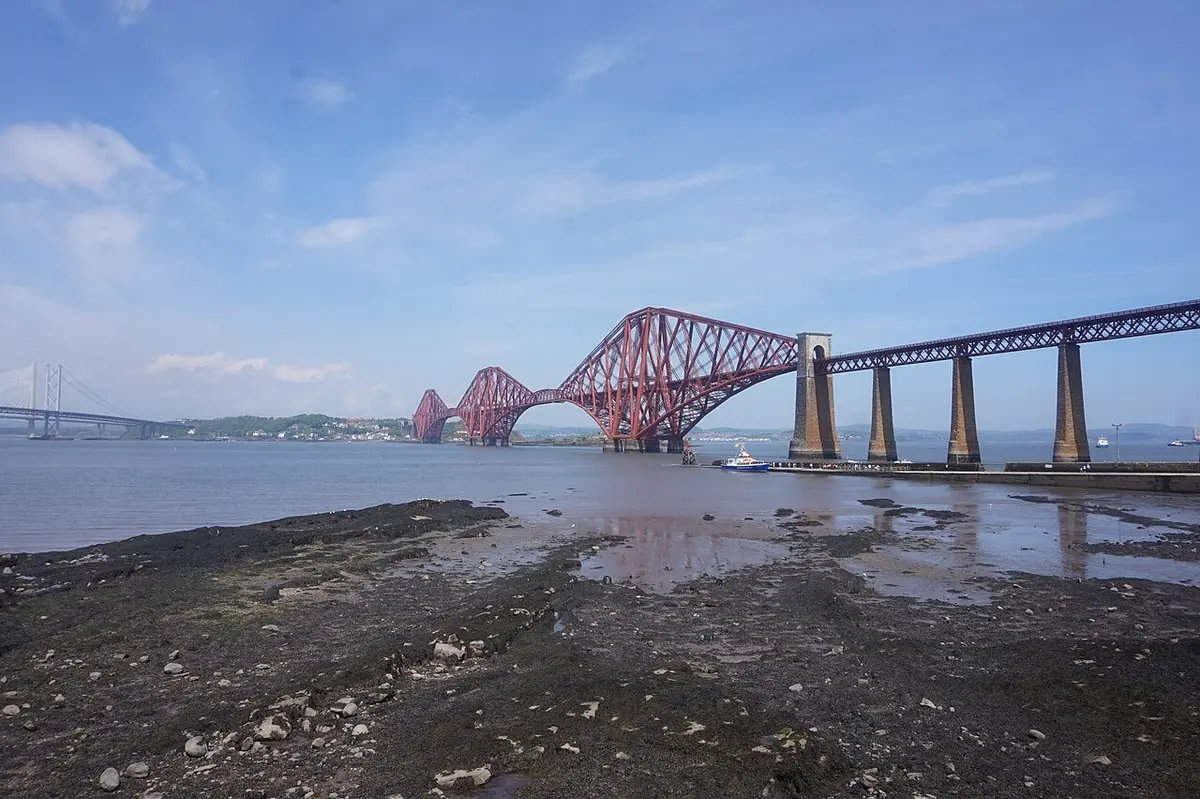
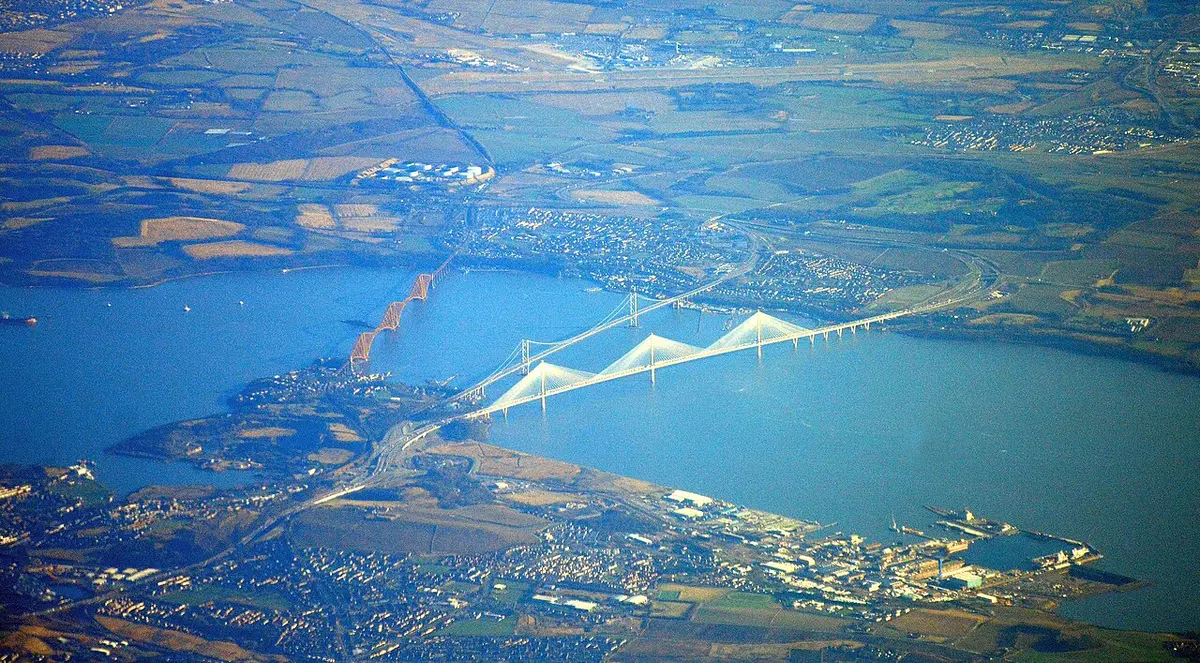
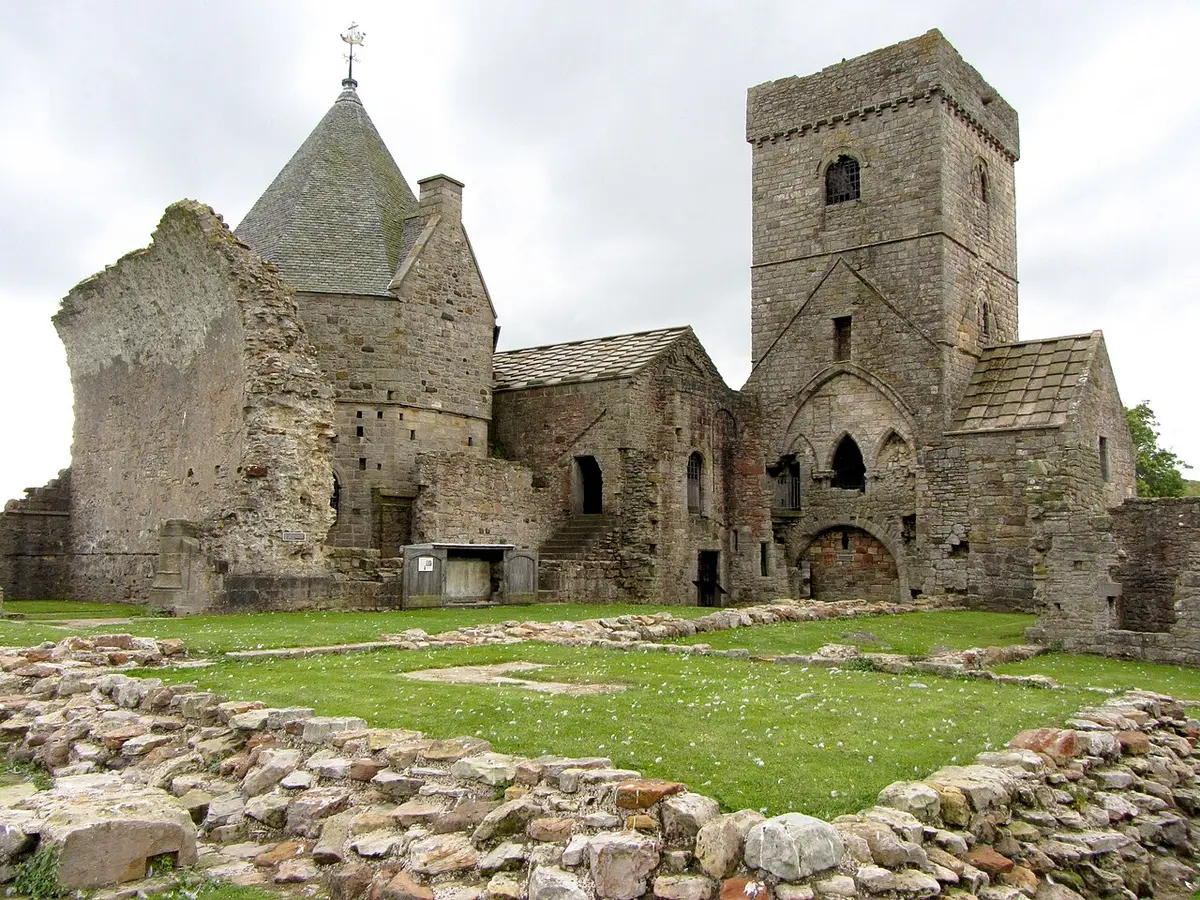
Fifteen minutes by train from Waverley to Dalmeny, then a walk down to South Queensferry, where three bridges from three centuries cross the Firth of Forth and boats leave for an island abbey.
People and customs
Scottish, not English
Scotland is part of the United Kingdom but has its own law, church, schools and banknotes. Call people Scottish or British, never English.
Rounds
In pubs, friends take turns buying drinks for the whole group. If someone buys you one, buy the next.
Weather
Four seasons in a day is not a joke here: carry a light waterproof and a layer all year.
Hills and closes
The Old Town is steep, and its closes are often stairs. Allow extra time between the Royal Mile and Princes Street.
August prices
During the festivals hotels cost far more and fill early. Book months ahead, or come in July or September.
A few words
Aye means yes, wee means small, and braw means fine. A thank you and a little patience with the accent go a long way.
Questions
How many days do you need in Edinburgh?
Two days covers the castle, the Royal Mile, Holyroodhouse and a climb up Arthur’s Seat or Calton Hill. Three or four days add the museums and galleries, Dean Village and Leith, and a day trip to the Forth bridges or Stirling.
Where should I stay in Edinburgh on a first visit?
The Old Town or the New Town, both within walking distance of everything: the Old Town puts you on the Royal Mile, the New Town is flatter and quieter. Stockbridge and Leith feel more local, and the Southside is the best value.
When is the best time to visit Edinburgh?
May to September, for long light days, with August the busiest and most expensive month because of the festivals. Spring and autumn are quieter, and winter is cold and dark early but lively at Christmas and Hogmanay.
How do I get from Edinburgh Airport to the city center?
The tram runs every 7 to 10 minutes to Princes Street and St. Andrew Square in about 30 minutes, and the Airlink 100 bus reaches Waverley Bridge in about 25 minutes. A taxi takes around half an hour outside rush hour.
Is Edinburgh worth visiting during the Festival Fringe in August?
Yes, if you plan ahead: thousands of shows play across the city and the atmosphere is like nothing else. Hotels cost far more and fill early, so book months ahead, or come in July or September for a calmer city.
Do I need to book Edinburgh Castle in advance?
Yes. Book a timed ticket on the official site, especially from April to October. When online tickets sell out, none are sold at the gate.
Plan Edinburgh with your group
Everyone swipes on the sights they want. SwipeSights builds the days around the picks, in walking order.