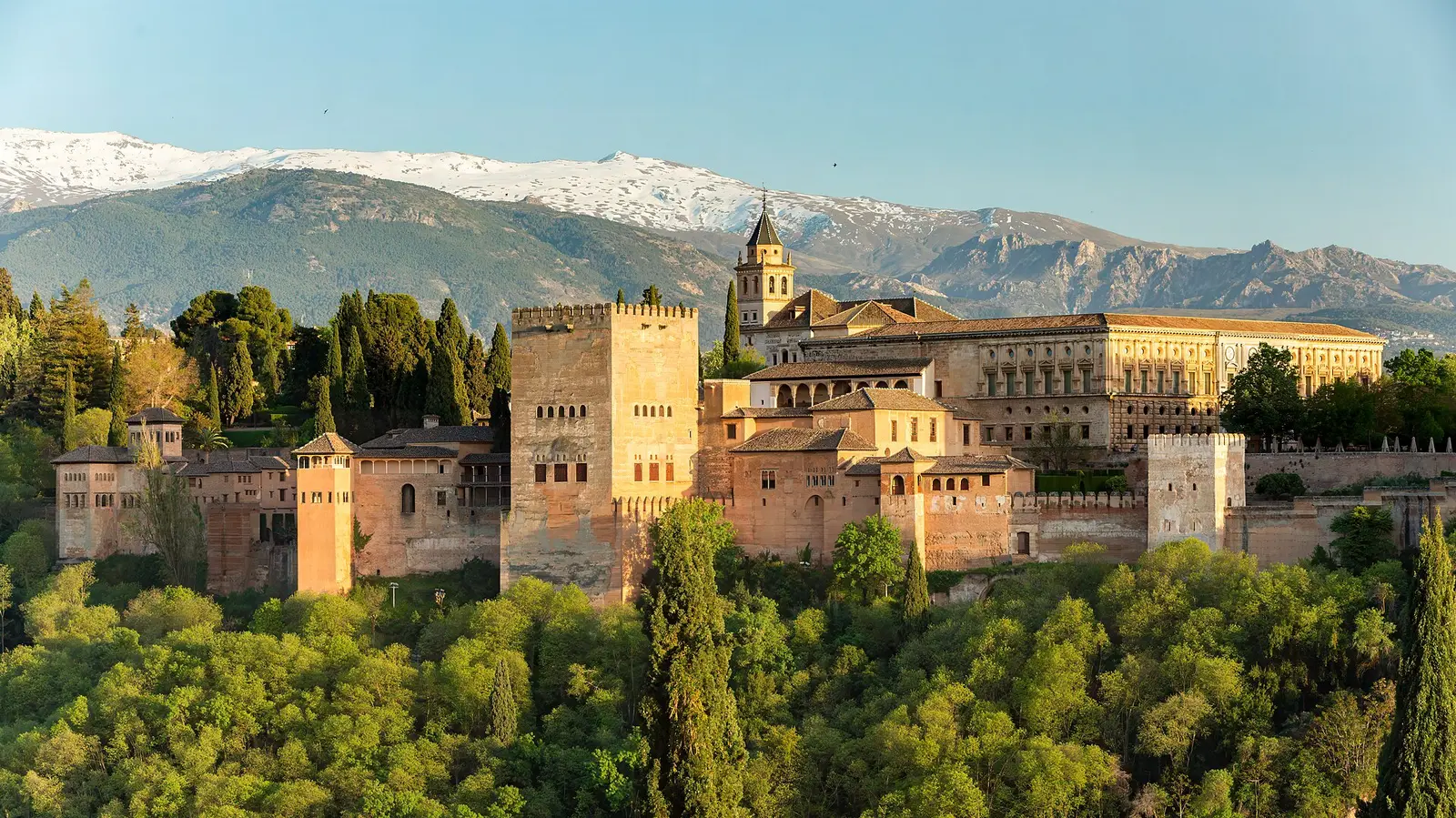
 Photo:
Granada lies at the foot of the Sierra Nevada, where the Darro meets the Genil. On one hill stands the Alhambra, the palace city of the Nasrid sultans, the last Muslim rulers in Spain; on the hill facing it, the whitewashed lanes of the Albaicín climb to the viewpoints. Between them is a lively student city where a drink at the bar still comes with a small plate of food, free.
This guide covers when to go, where to stay, what to see, a walk along the Darro and up through the Albaicín, a day in the Alpujarra, what to eat, and the history, poetry and music that make the city make sense.
What Granada is good for
Friends' trips
Make dinner a tapas crawl, with a free plate arriving with every drink, watch the sun set behind the Alhambra from the Mirador de San Nicolás and end the night at a flamenco show in a Sacromonte cave. In winter, the ski slopes of the Sierra Nevada are under an hour away.
Bachelorette and bachelor weekends
Granada is a big student city, and its nights are cheap and long: tapas in the Realejo and on Calle Navas, flamenco in a cave, then the bars around Calle Elvira and Pedro Antonio de Alarcón. An Arab-style bathhouse makes a calm morning after.
Weddings and honeymoons
A civil wedding in Spain needs one partner to be a Spanish citizen or a legal resident, so visiting couples usually marry at home and hold a symbolic ceremony here. For a honeymoon: a room with an Alhambra view, a night visit to the Nasrid Palaces and a day among the white villages of the Alpujarra.
Couples
Sunset at San Nicolás, a night visit to the Nasrid Palaces, dinner on a terrace facing the Alhambra and a slow walk back along the Darro.
Families
Ramparts and towers to climb in the Alcazaba, cave houses in Sacromonte, the hands-on Parque de las Ciencias science museum, and snow to play in on the Sierra Nevada in winter.
Solo travel
A compact student city, easy to walk and full of counters where eating alone is normal; with free tapas, dinner can be a drink in three bars. A walking tour or a flamenco night is an easy way to meet people.
Food lovers
A free tapa with every drink, broad beans with Trevélez ham, a salad of oranges and salt cod, the Sacromonte omelet for the brave, and piononos from Santa Fe.
History and art
The Nasrid Palaces and the Generalife, the tombs of Isabella and Ferdinand in the Royal Chapel, the Renaissance cathedral, and the house where Lorca spent his summers.
Plan your trip
When to go
Spring (March to May) and autumn (September to November) bring warm days and cool nights, and the gardens of the Generalife are in flower in May. July and August are hot, often above 35°C. Winter days are bright and cool, nights drop toward freezing and the Sierra Nevada turns white. The big festivals are Holy Week, the Day of the Cross on 3 May and the Corpus fair in late May or June.
How long to stay
Two days covers the Alhambra, the Albaicín and the cathedral quarter. Three days leaves time for Sacromonte, the Cartuja and a slower evening of tapas. With four, add a day in the Alpujarra villages or, in winter, on the ski slopes of the Sierra Nevada.
Getting there
Granada’s Federico García Lorca Airport (GRX) is about 17 km west of the city, with buses to the center in about 45 minutes. Málaga’s airport has far more flights, and direct buses from it reach Granada in about two hours; from Málaga’s city station, direct trains take a little over an hour. High-speed trains from Madrid take about three and a half hours.
Getting around
Walk, and expect hills: the Albaicín and the Alhambra are steep climbs from the center. Small minibuses do the climbing: the C30 to the Alhambra from Plaza Isabel la Católica, the C31 and C32 through the Albaicín, and the C34 to Sacromonte from Plaza Nueva. Much of the old center is closed to private cars, and a single light-rail line crosses the city from north to south.
Tickets
Book the Alhambra on its official site as early as you can: tickets are limited each day and sell out weeks ahead in spring and summer. Each ticket carries its holder’s name, so bring the passport or ID you booked with, and the Nasrid Palaces can only be entered in the half-hour slot printed on it. Night visits to the palaces run from Tuesday to Saturday in summer and on Friday and Saturday evenings in winter.
Money and tipping
Tipping is not expected: round up in bars and leave a few euros for good service at dinner. In most bars a tapa comes free with each drink, so dinner can be a few rounds. Carry some cash for small bars; cards are accepted almost everywhere else.
Weather, month by month
Spring
March to May
Mild days, from about 18°C in March to the mid-20s in May, with cold nights early on and the gardens in flower.
Summer
June to August
Hot and dry, often 35°C or more in July and August, though the city stands at about 700 meters and the nights cool down.
Autumn
September to November
A warm September and a golden October, with rain and chilly nights returning in November.
Winter
December to February
Sunny days around 12 to 14°C and nights near freezing, with snow on the Sierra Nevada above the city.
Top sights
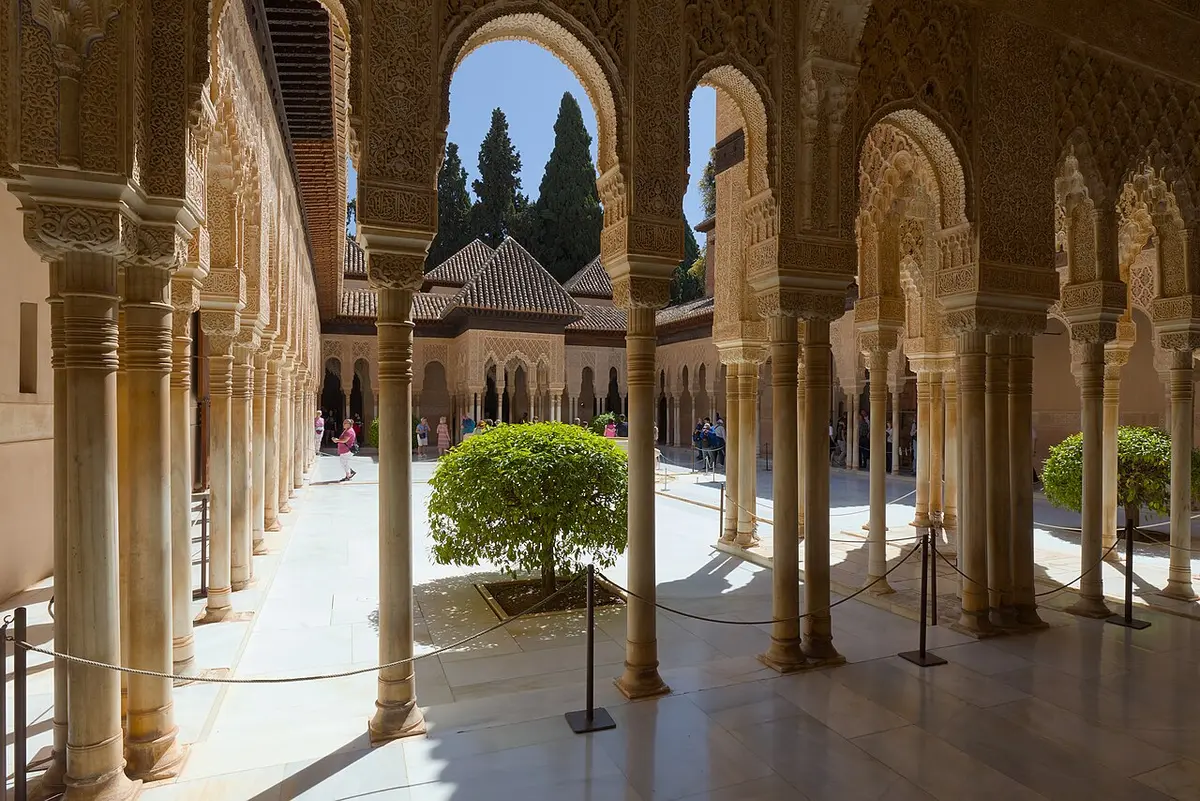 01
The Nasrid Palaces
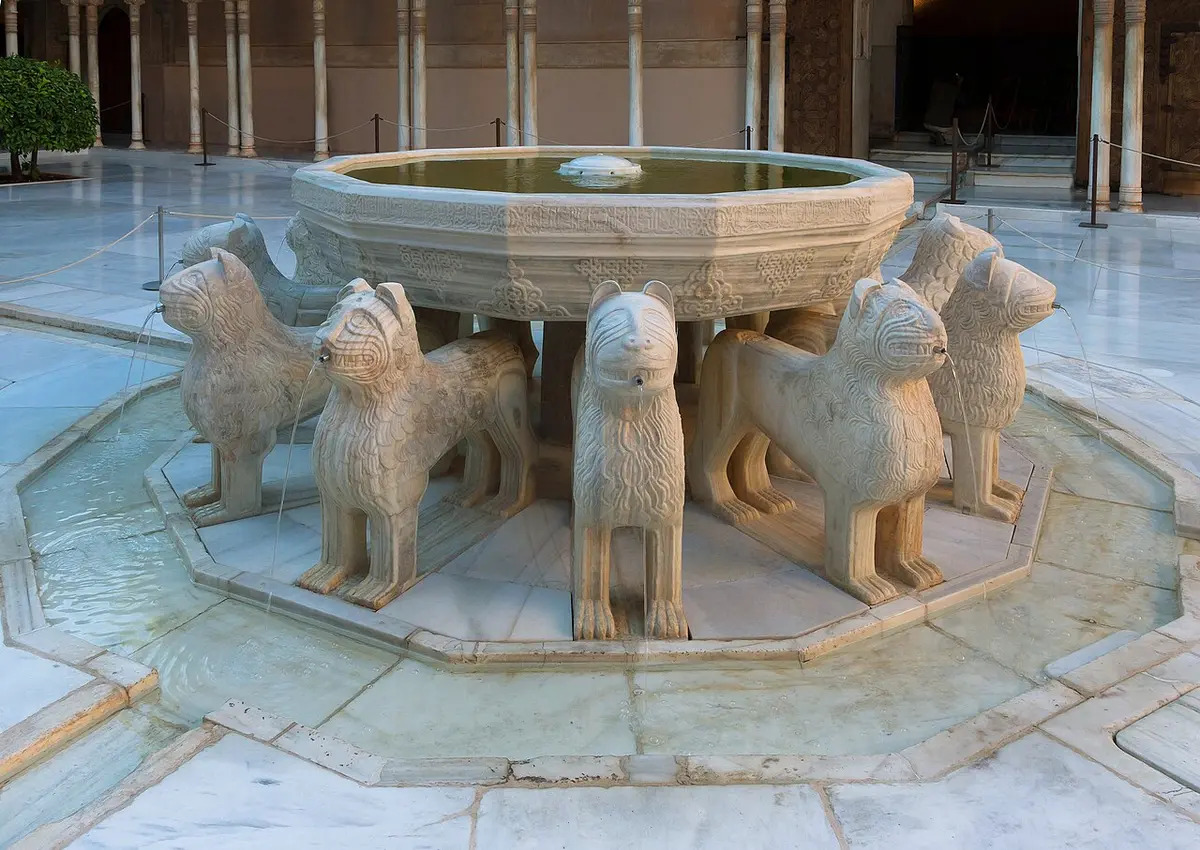
The heart of the Alhambra: the palaces of the Nasrid sultans, built mostly in the 14th century under Yusuf I and Muhammad V. Walk from the Court of the Myrtles and its long pool into the Hall of the Ambassadors, then on to the Court of the Lions, where slender marble columns carry walls of carved plaster and twelve stone lions hold up the fountain.
Enter only in the half-hour slot on your ticket, with the ID you booked with. Take the first slot of the morning, or book a night visit.
Photo: Benjamin Smith, CC BY-SA 4.0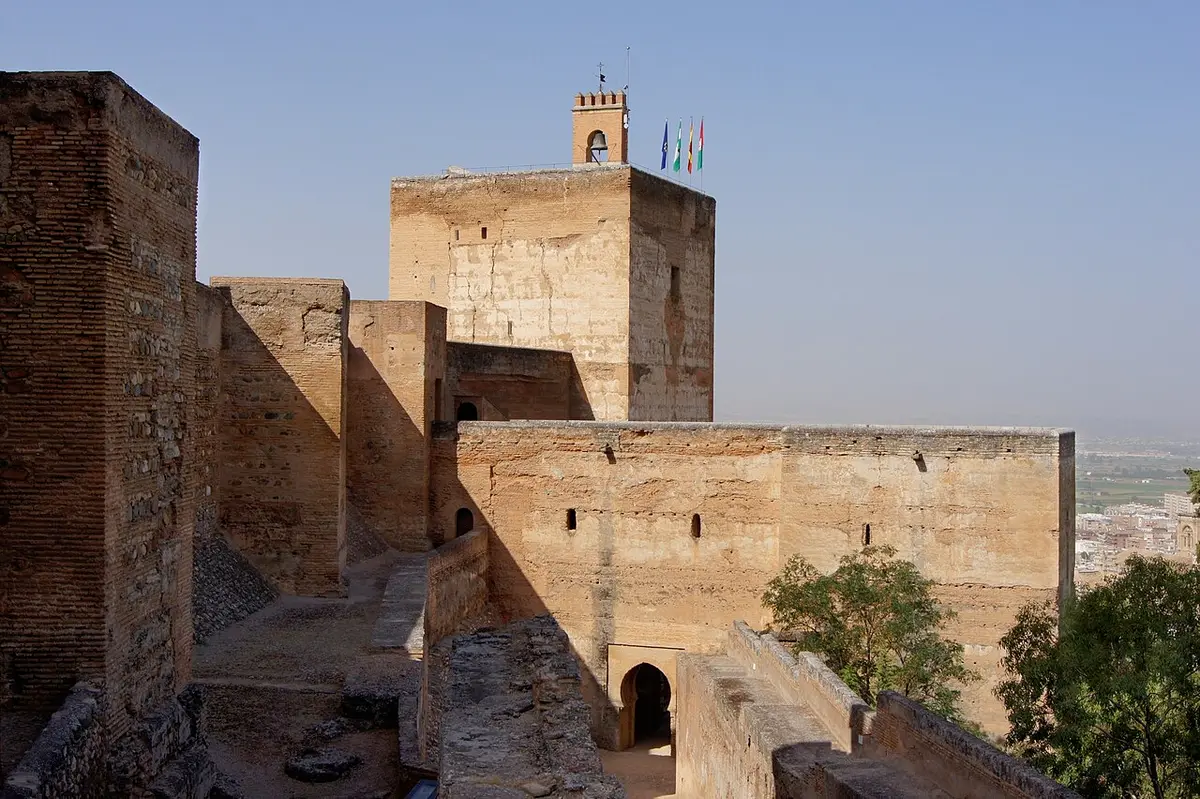 02
The Alcazaba and the Palace of Charles V
The Alcazaba, the fortress at the western tip of the hill, is the oldest part of the Alhambra; climb the Torre de la Vela for the view over the city to the Sierra Nevada. Nearby, Charles V began a Renaissance palace with a round courtyard in 1527, the year after his honeymoon here. It holds the Alhambra Museum and the Museum of Fine Arts.
The palace of Charles V and the Alhambra Museum inside it are free to enter, with no Alhambra ticket needed; the Museum of Fine Arts upstairs charges a small fee, waived for EU citizens.
Photo: Jebulon, CC0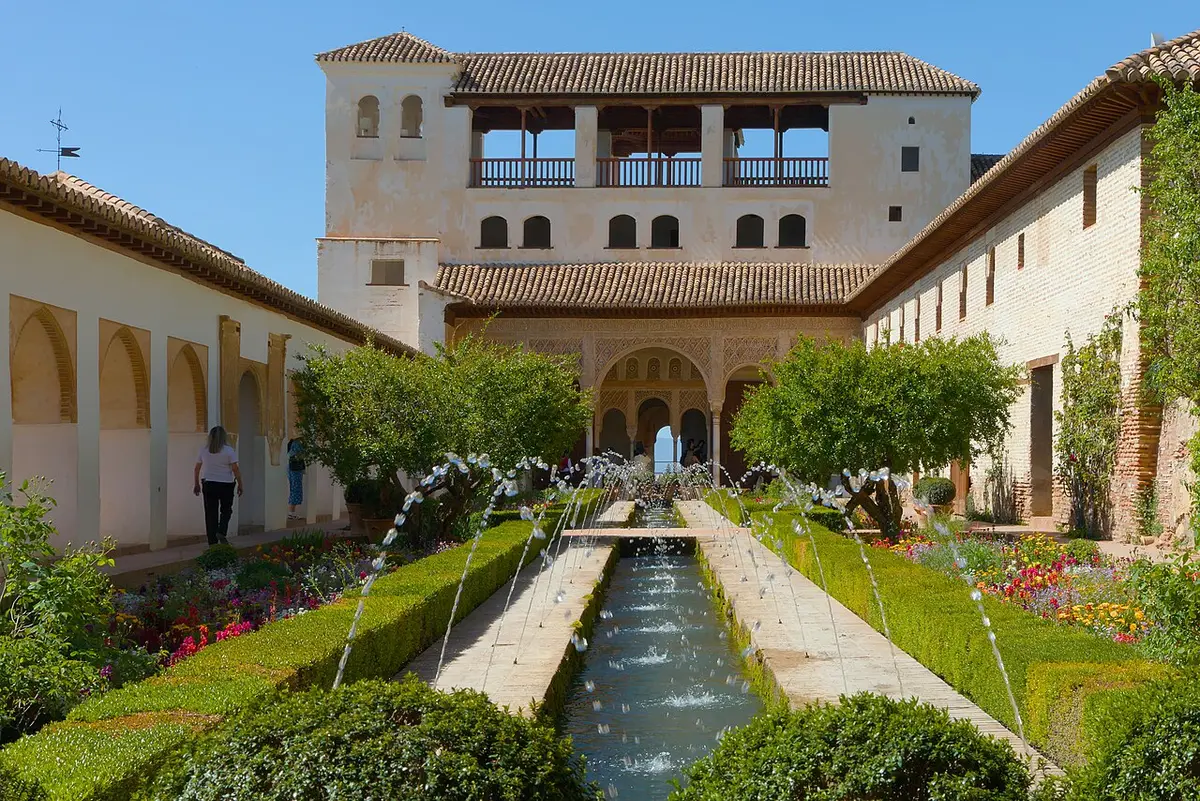 03
The Generalife
The summer estate of the sultans, on the slope above the palaces, from the early 14th century. Its Patio de la Acequia is a long pool lined with jets of water and flower beds, and the terraced gardens around it look back over the Alhambra and the Albaicín.
Included in the general Alhambra ticket. The gardens are at their best in May and June.
Photo: Benjamin Smith, CC BY-SA 4.0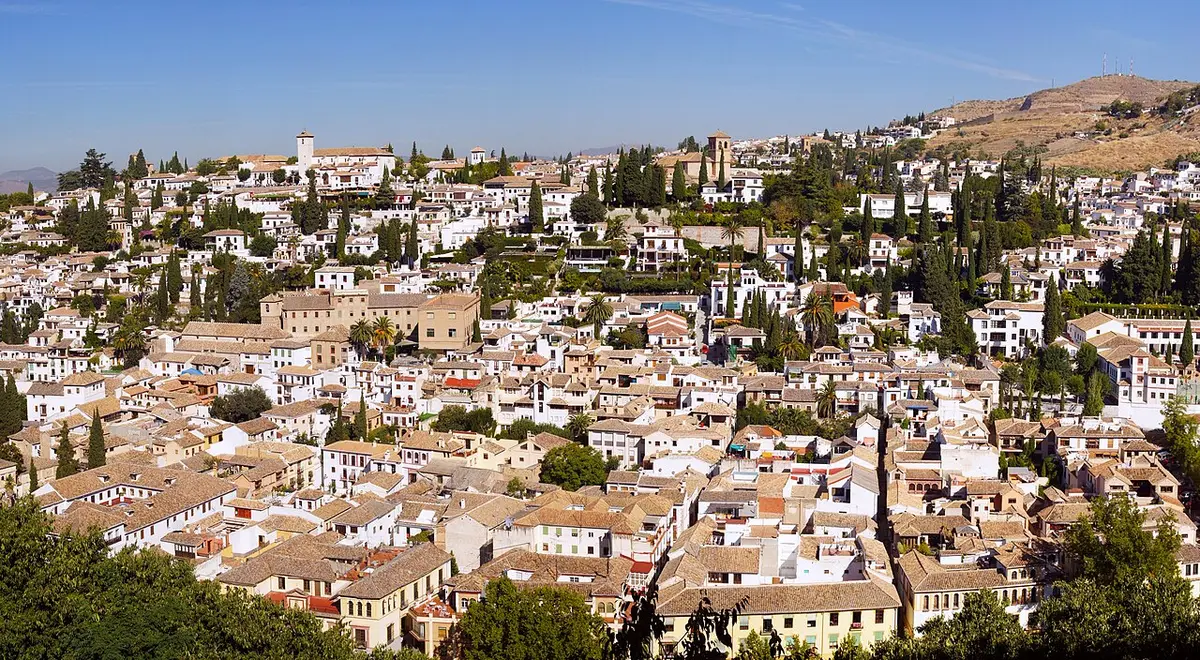 04
The Albaicín and San Nicolás
The old Moorish quarter covers the hill across the Darro from the Alhambra: a maze of lanes, small squares, cisterns and carmenes, walled houses with gardens of fruit trees and vines. At the top, the Mirador de San Nicolás has the classic view of the Alhambra with the Sierra Nevada behind it. The quarter has shared the Alhambra’s UNESCO listing since 1994.
Come for sunset and come early, as the terrace fills up. The C31 minibus climbs from Plaza Nueva.
Photo: Bert K., CC BY 2.0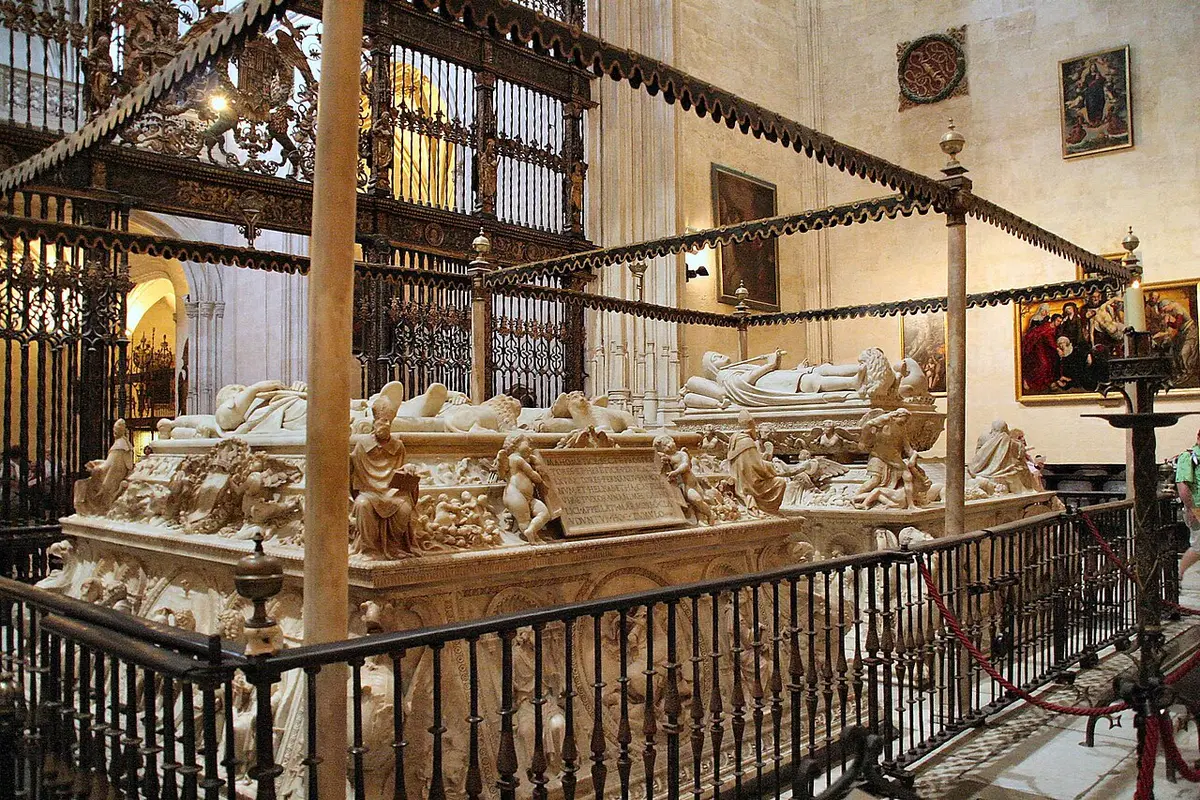 05
The Royal Chapel
Isabella and Ferdinand chose to be buried in the city they took in 1492, and this Gothic chapel was built for them from 1505 to 1517. Their marble tombs, by Domenico Fancelli, lie beside those of their daughter Joanna and her husband Philip the Handsome, with the plain lead coffins in the crypt below. The sacristy holds Isabella’s crown and scepter and paintings from her own collection, by Rogier van der Weyden, Memling and Botticelli.
Open every day. The cathedral is next door, with its own entrance and ticket.
Photo: Javi Guerra Hernando, CC BY-SA 4.0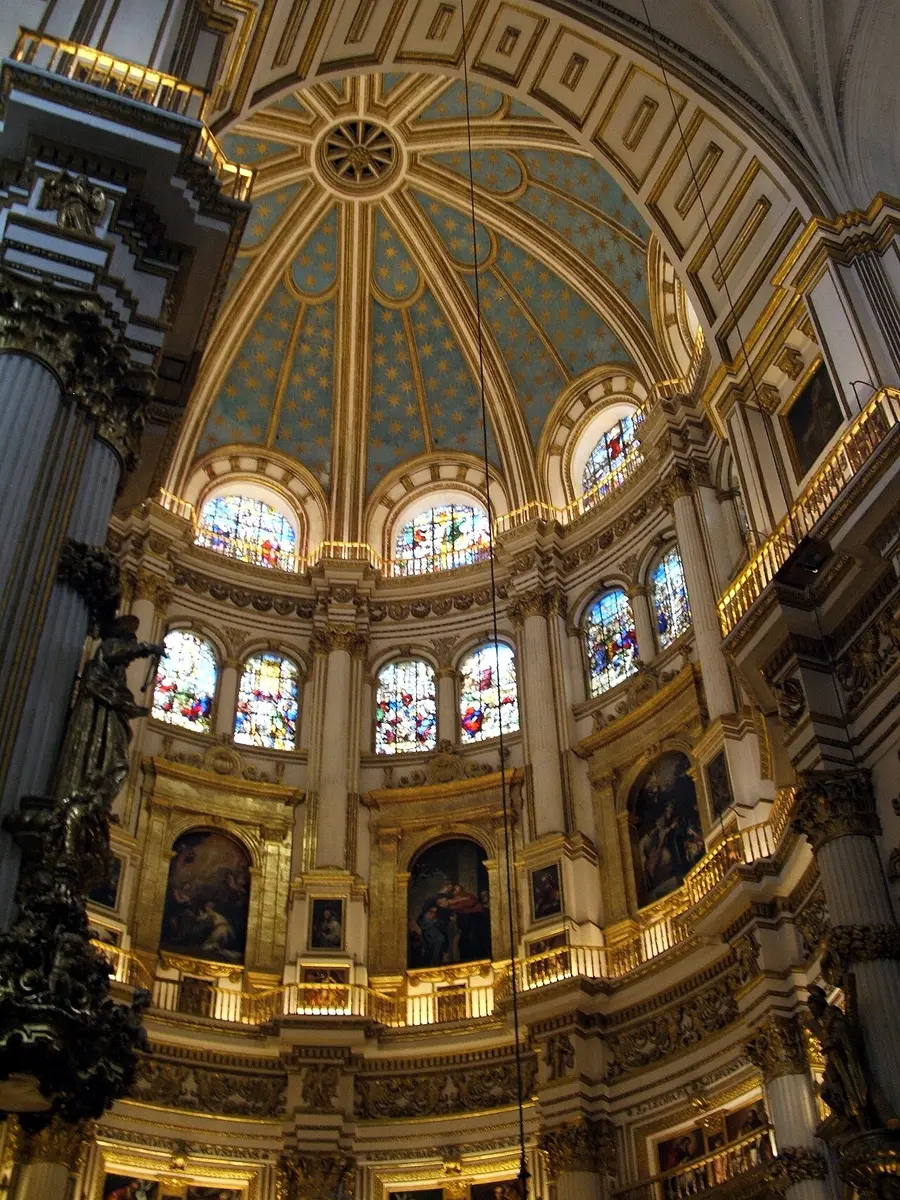 06
Granada Cathedral
Begun in 1518 on the site of the city’s main mosque and finished almost two centuries later, it is one of the great Renaissance churches of Spain, largely the work of Diego de Siloé. The round main chapel is lined with gold, stained glass and seven canvases of the life of the Virgin by Alonso Cano, the Granada-born artist who also redesigned the main front in 1667.
Photo: PerryPlanet, Public domain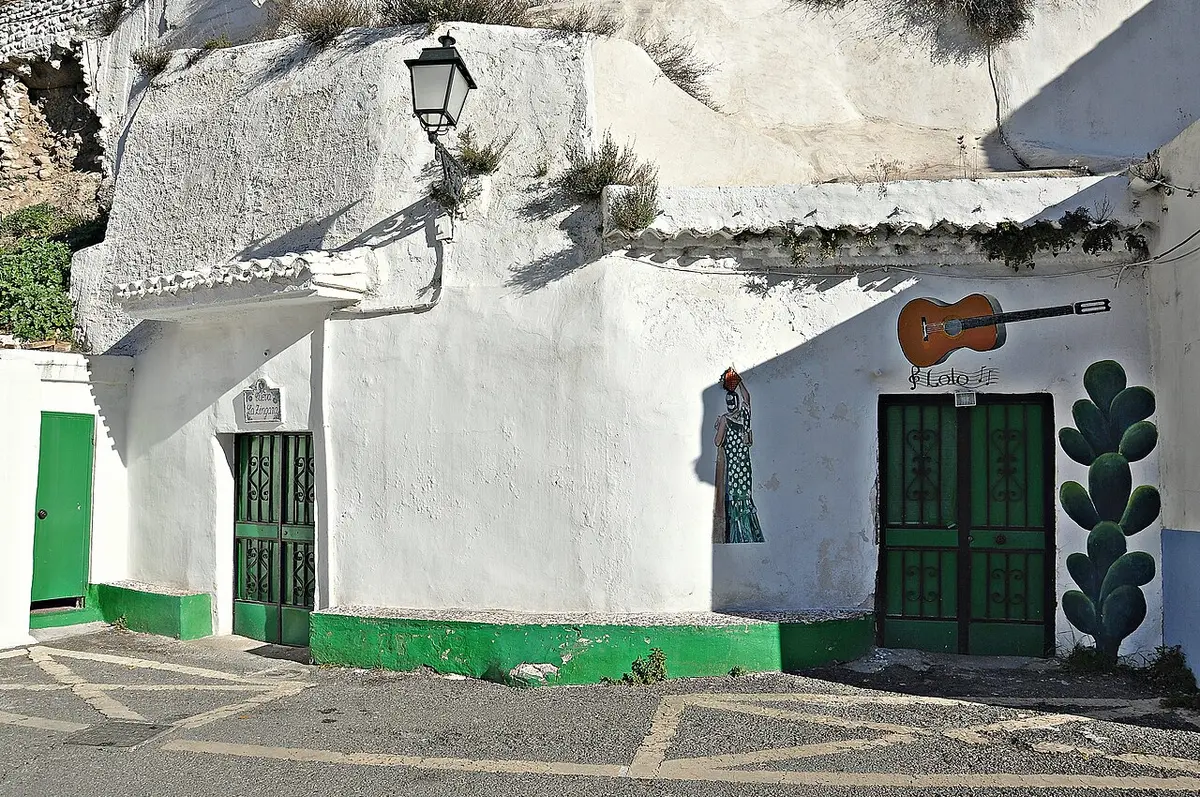 07
Sacromonte
Beyond the Albaicín, whitewashed cave houses are dug into the hillside, for centuries the home of Granada’s gitano community and of the zambra, a flamenco of weddings and celebrations. The Cuevas del Sacromonte museum shows how the caves were lived in, and the abbey at the top was founded in 1609 over caves where the so-called lead books, later judged forgeries, had been found.
Come back at night for flamenco in a cave. The C34 minibus runs up from Plaza Nueva.
Photo: Alberto-g-rovi, CC BY 3.0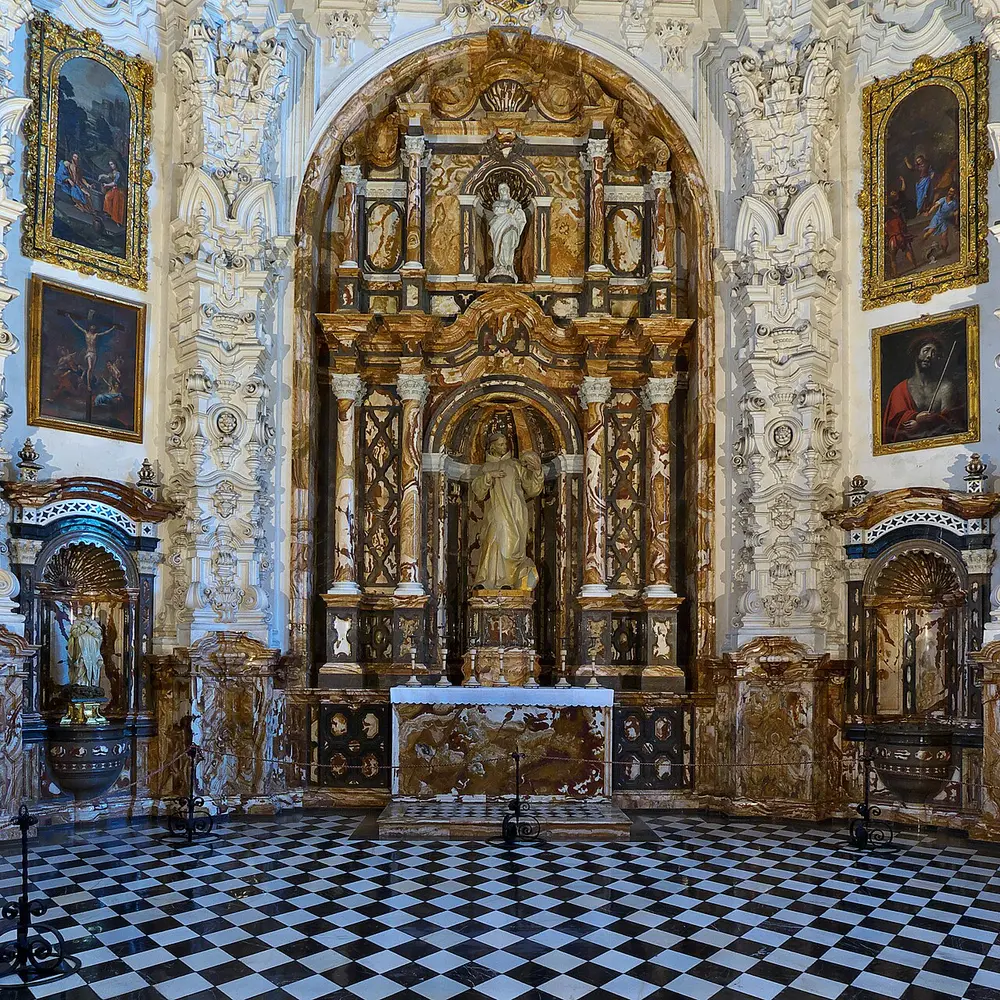 08
The Cartuja
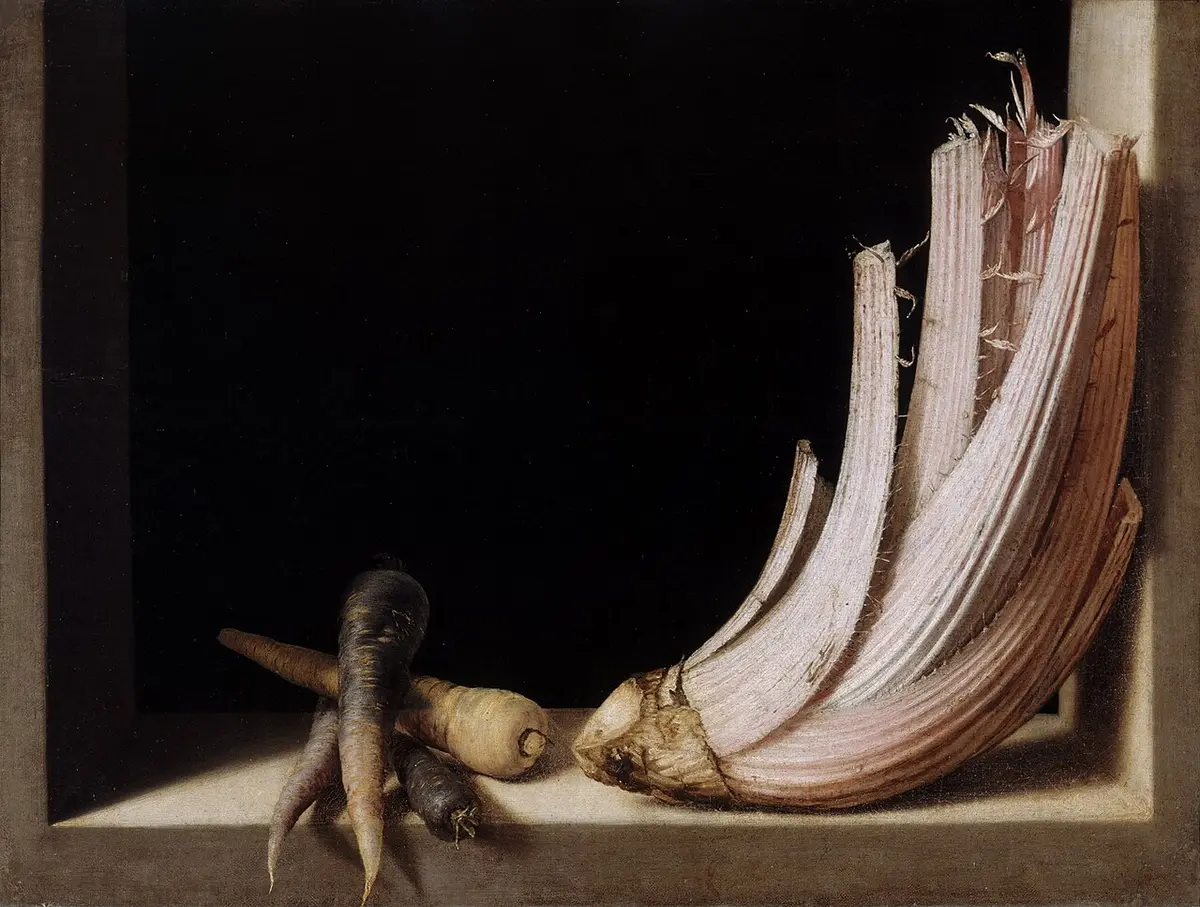
A Carthusian monastery founded in 1506 on the northern edge of the city. Plain cloisters lead to one of the most extravagant rooms in Spain, the sacristy of 1727 to 1764, all white stucco, colored marble and inlaid wood. The painter Juan Sánchez Cotán spent his last years here as a lay brother, and his canvases hang in the monastery.
About half an hour on foot north of the center, or a short bus ride.
Photo: José Luis Filpo Cabana, CC BY 3.0
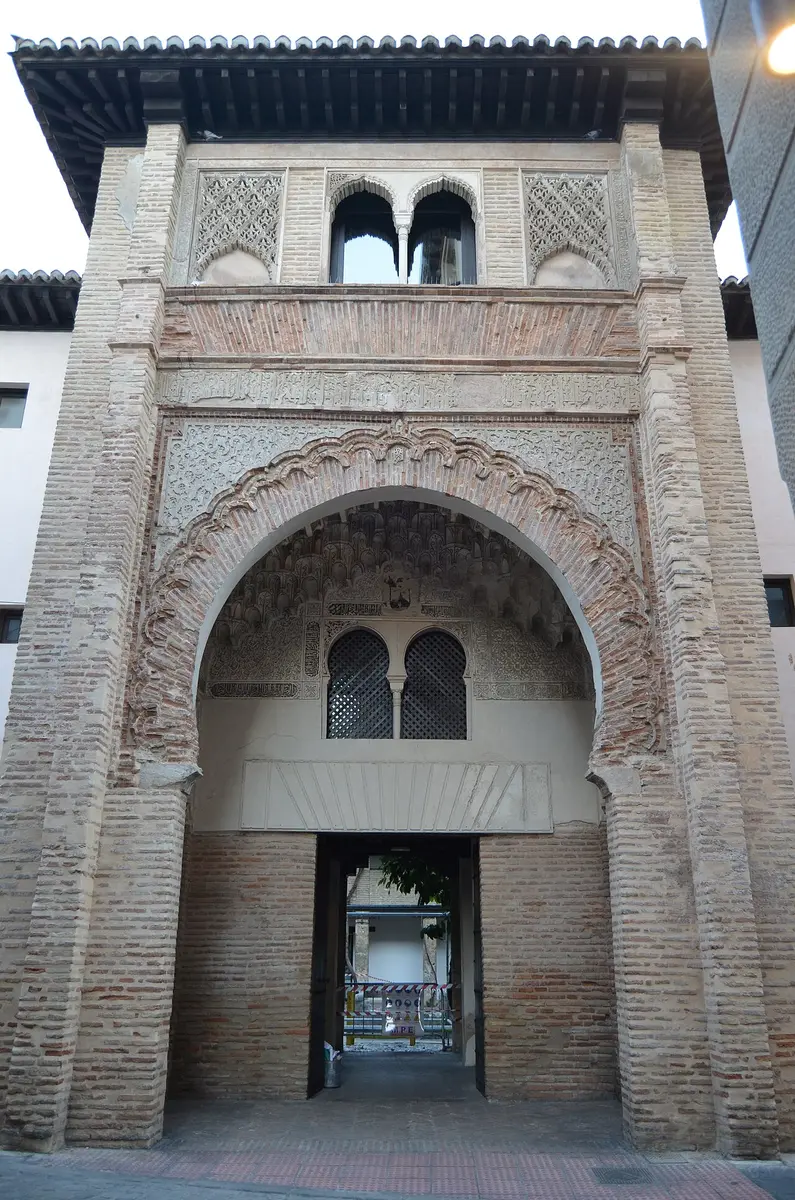
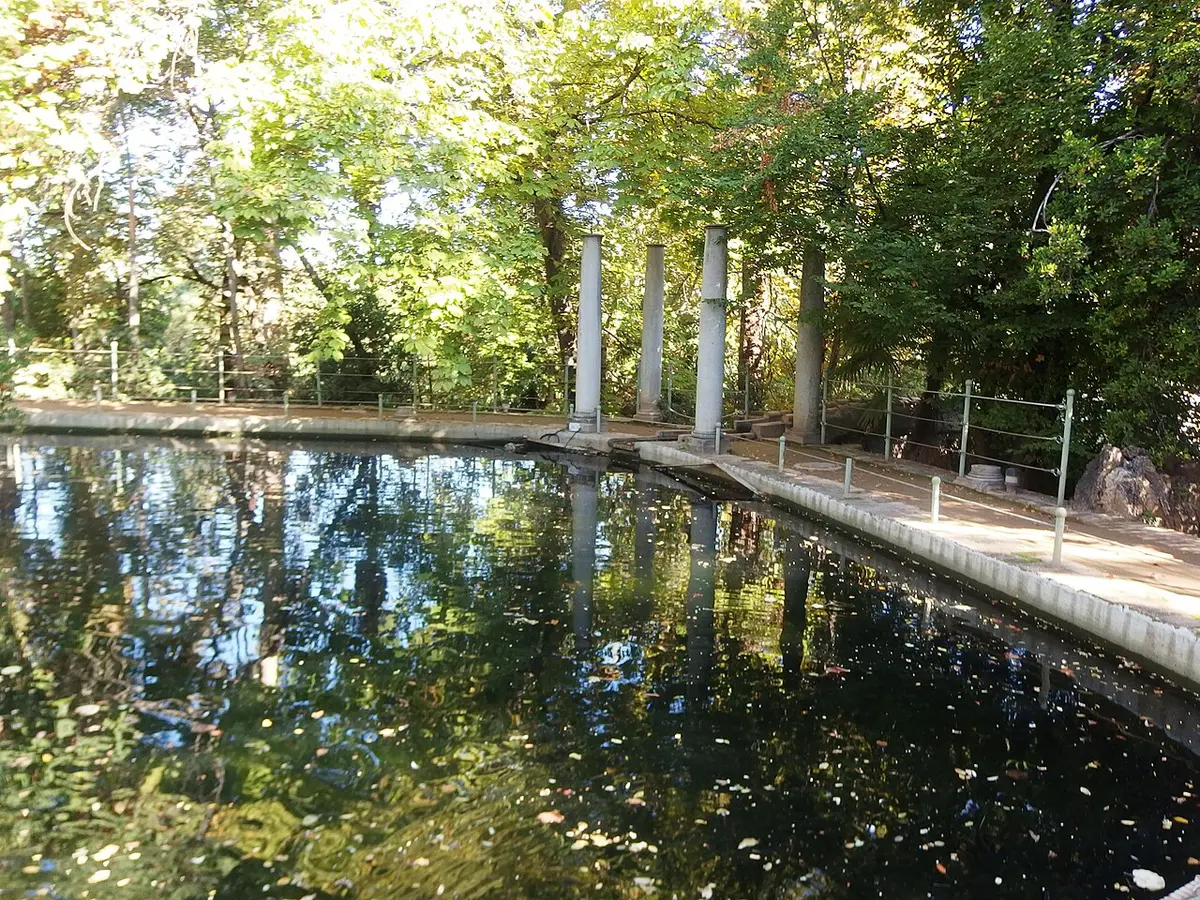
Three hidden gems
Along the Darro and up the Albaicín
From Plaza Nueva along the river below the Alhambra, past 11th-century baths, then up through the lanes of the old Moorish quarter to the view at San Nicolás, and down past the tea houses.
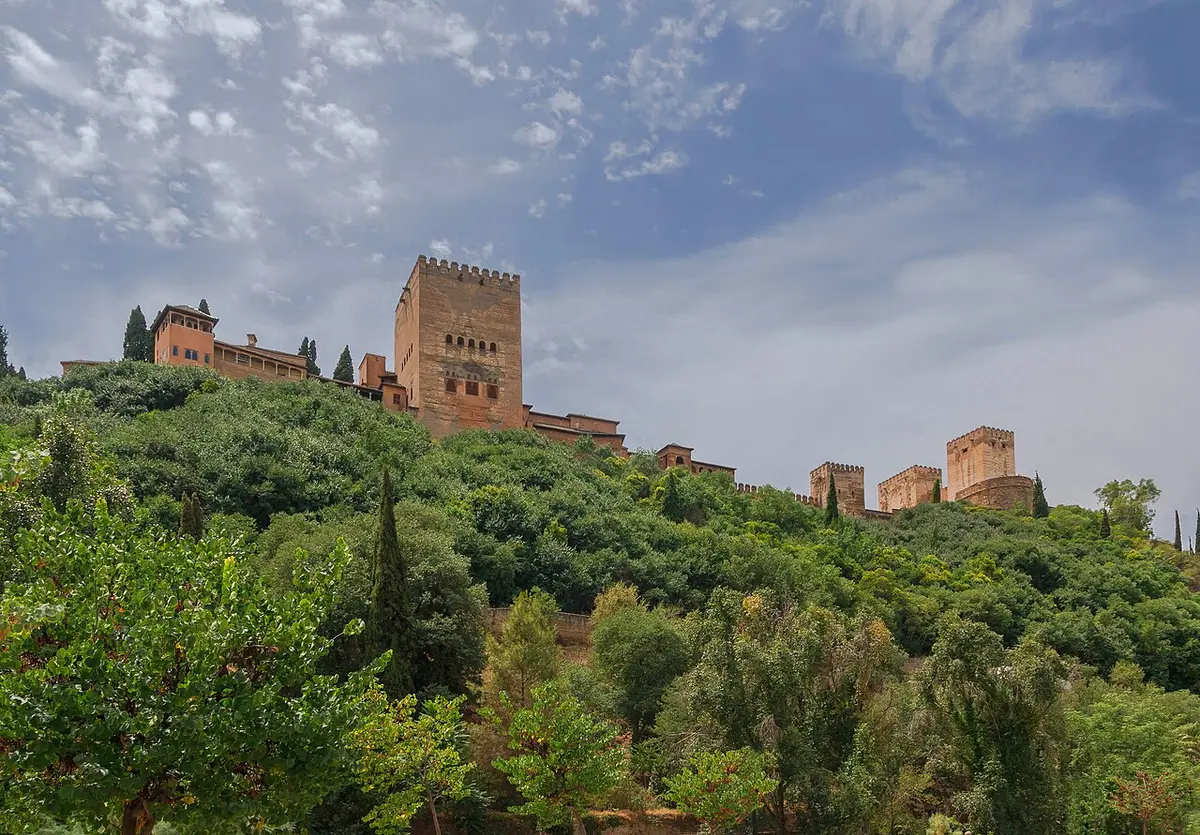
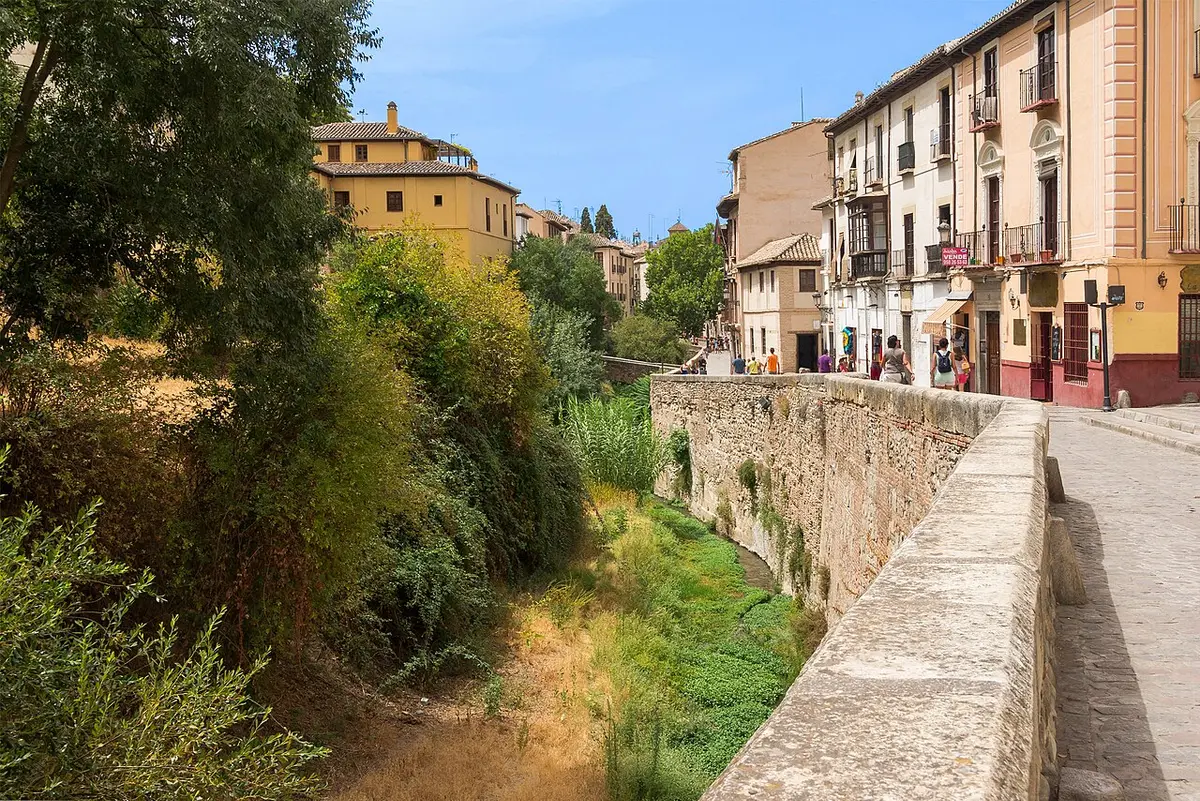
Start in Plaza Nueva, at the foot of both hills, and follow the Carrera del Darro upstream from the little church of Santa Ana. The narrow street runs between a line of old houses and the river, with stone bridges crossing to the Alhambra side and the walls and towers of the palace high above on your right.
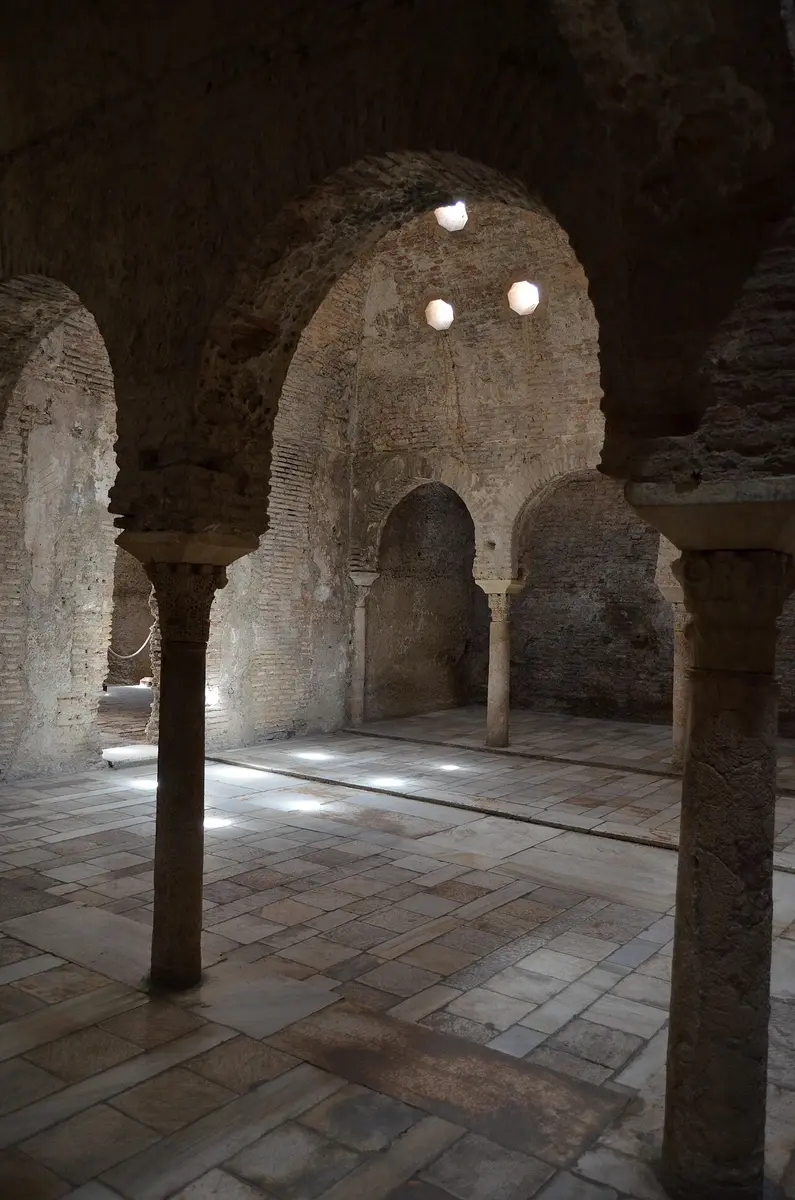
At number 31, a plain doorway leads into El Bañuelo, public baths built in the 11th century under the Zirid kings, with star-shaped skylights in the brick vaults and columns and capitals reused from older buildings. It is one of the oldest and most complete Arab baths in Spain, open for a small fee.
The street opens out at the Paseo de los Tristes, named, it is said, for the funeral processions that once passed this way to the cemetery. Cafés line the river here, and the view up to the Comares tower and the Alhambra walls is the best from below, especially when they are lit at night.
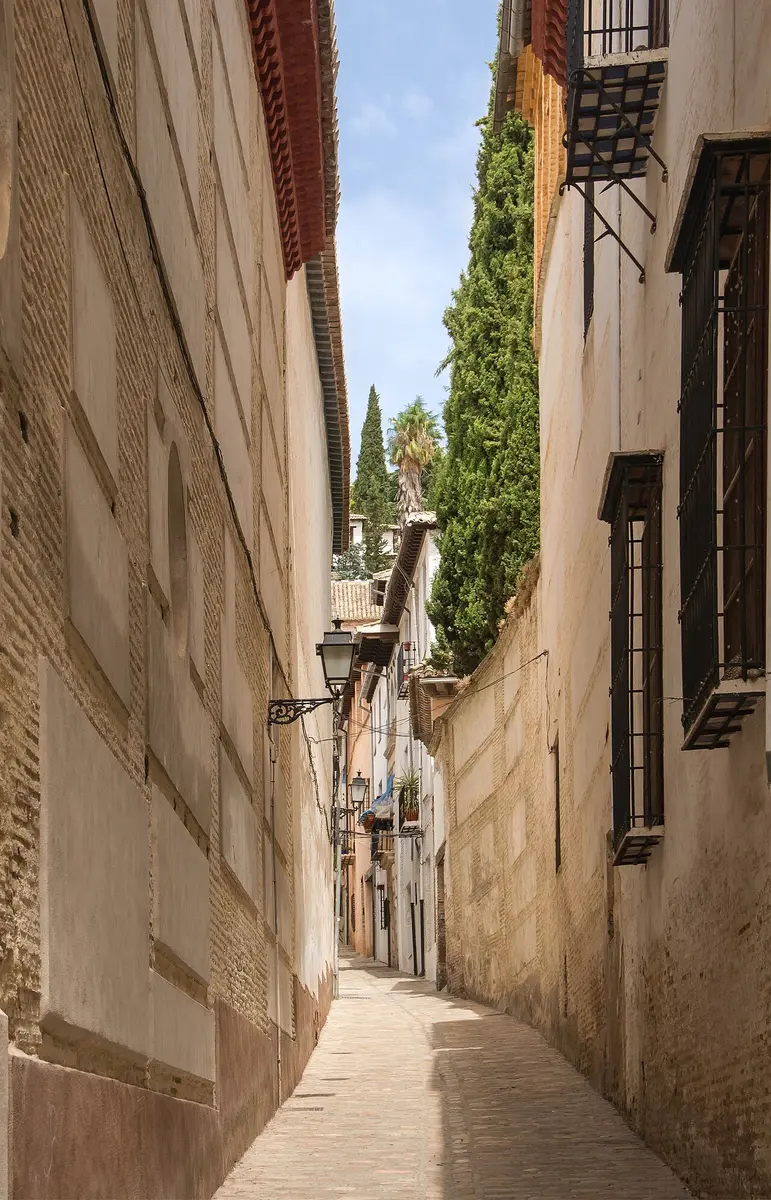
From here, climb the Cuesta del Chapiz and turn left into the lanes of the Albaicín. This hill was the first city of the Zirids, and after 1492 it remained the Muslim quarter, where the revolt of 1499 began; its churches stand on the sites of mosques, and its old cisterns, the aljibes, still sit in the small squares. Follow the signs to the Mirador de San Nicolás, where the whole length of the Alhambra lies across the valley with the Sierra Nevada behind it.
Go down by the Cuesta de San Gregorio to Calle Calderería Nueva, a steep lane of tea houses and shops selling lamps, leather and spices, which brings you out on Calle Elvira, a few minutes from Plaza Nueva.
Where to stay
Pick the neighborhood first, then the hotel. Each link opens a map of places to stay around it.
Centro
First visitAround the cathedral, the Royal Chapel and Plaza Bib-Rambla: flat, full of shops and tapas bars, with the minibuses for the Alhambra and the Albaicín close by. Busy by day and the easiest base.
See hotels in CentroAlbaicín
Views and atmosphereThe old Moorish quarter on the hill facing the Alhambra: whitewashed lanes, walled garden houses called carmenes and the best viewpoints in the city. Quiet at night, but steep, cobbled and hard work with luggage.
See hotels in AlbaicínRealejo
Food and local lifeThe old Jewish quarter on the slope below the Alhambra, with busy tapas bars around the Campo del Príncipe and murals on its walls. Central, lived-in and a little uphill.
See hotels in RealejoSacromonte
Flamenco and cavesCave houses dug into the hillside beyond the Albaicín, with flamenco shows at night. Few places to stay, a long walk from the center, and the C34 minibus down to Plaza Nueva.
See hotels in SacromonteAlhambra hill
Couples and early startsA handful of hotels on the hill itself and on the wooded slopes below the walls: calm at night and close to the palaces, with a climb back up from town.
See hotels in Alhambra hillPedro Antonio de Alarcón
Budget and nightlifeThe student district southwest of the center, with cheap bars, late nights and good-value rooms, about 15 minutes on foot from the cathedral.
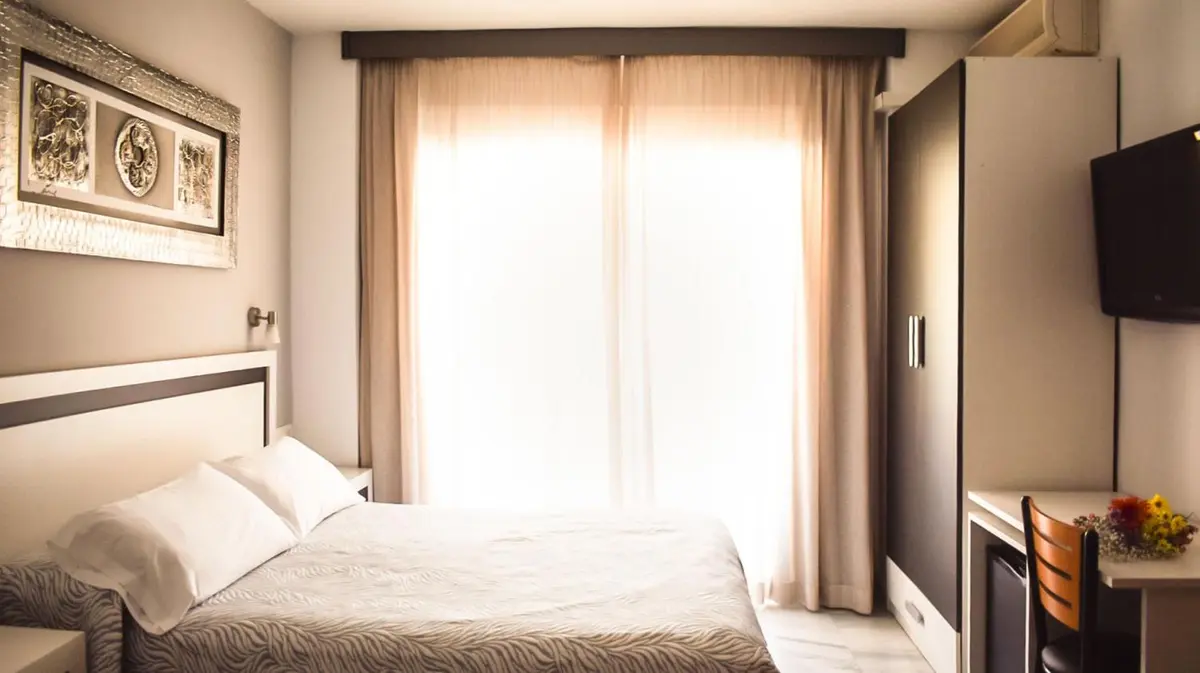
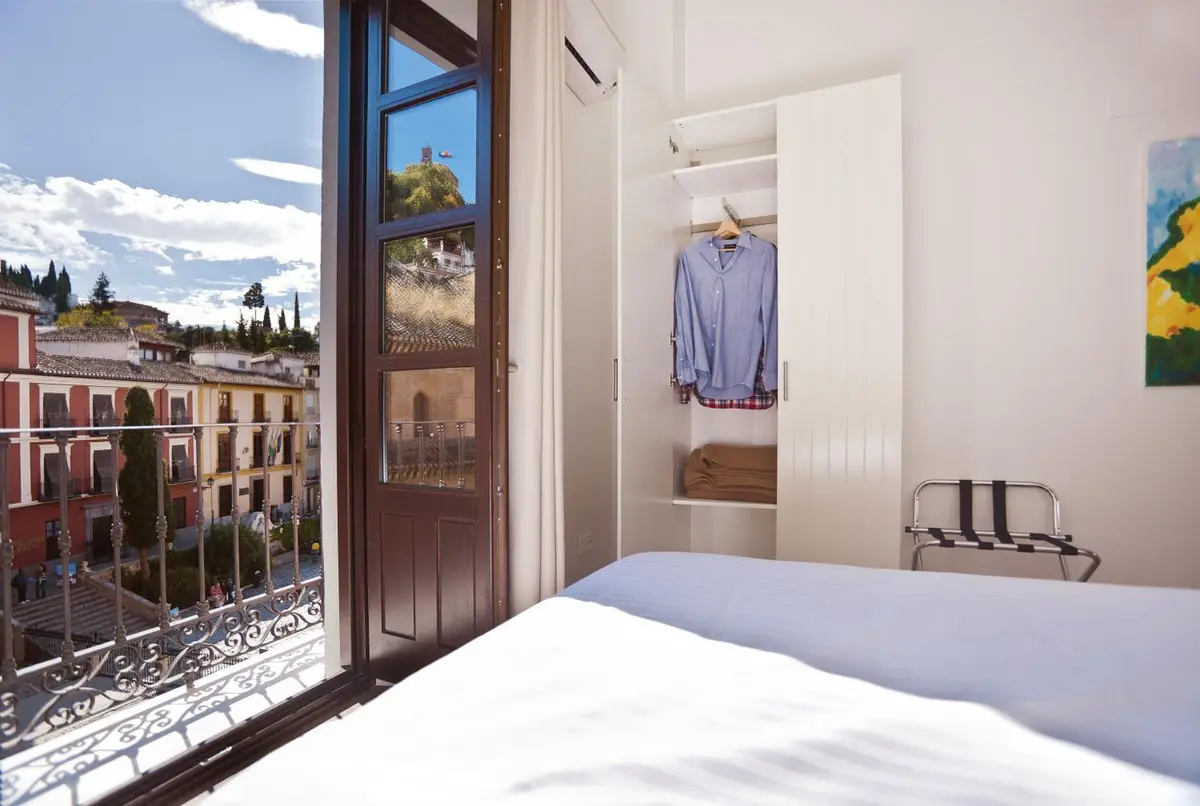
See hotels in Pedro Antonio de AlarcónThe 10 best budget hotels
Well-reviewed hotels at the lower end of Granada’s prices, best-reviewed first. On a weeknight in November 2026 they cost about €35 to €70 for two; prices change daily, so check your own dates.
 01
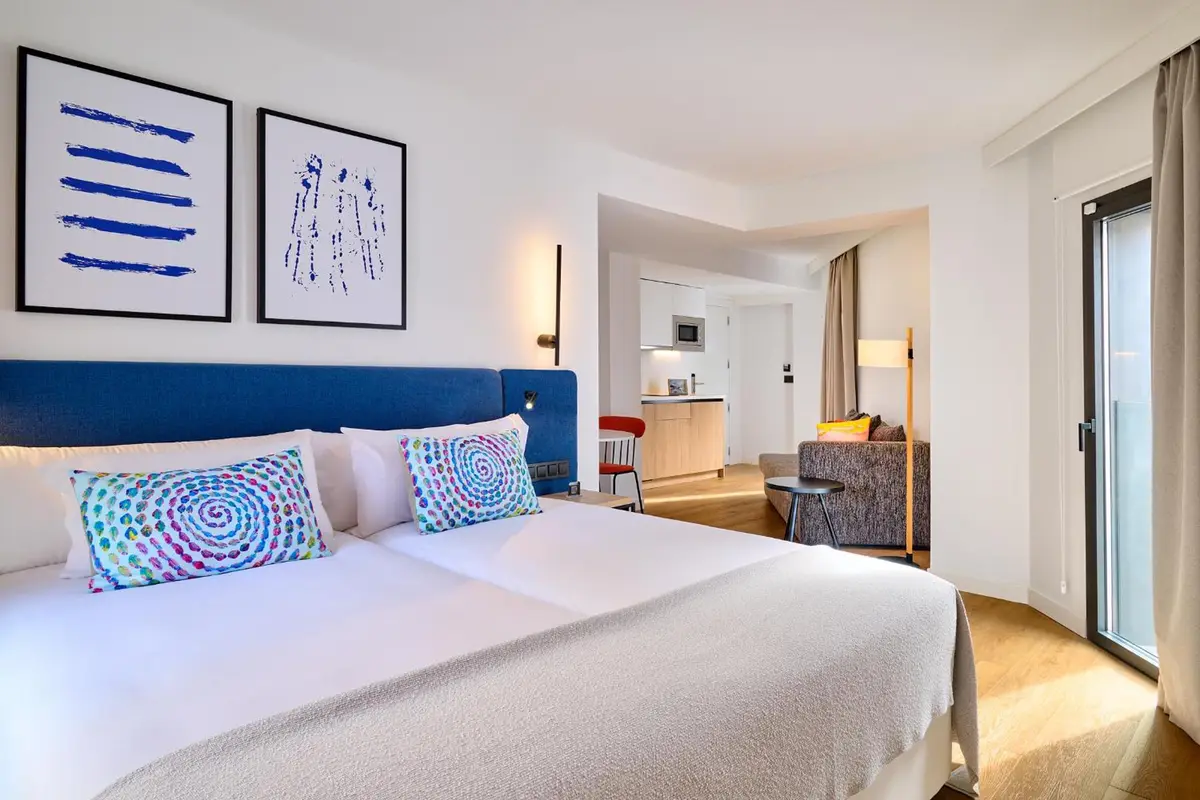
Apartamentos Luna Suites Granada
9.2995 reviewsCamino de Ronda
14 min walk to Granada station
See prices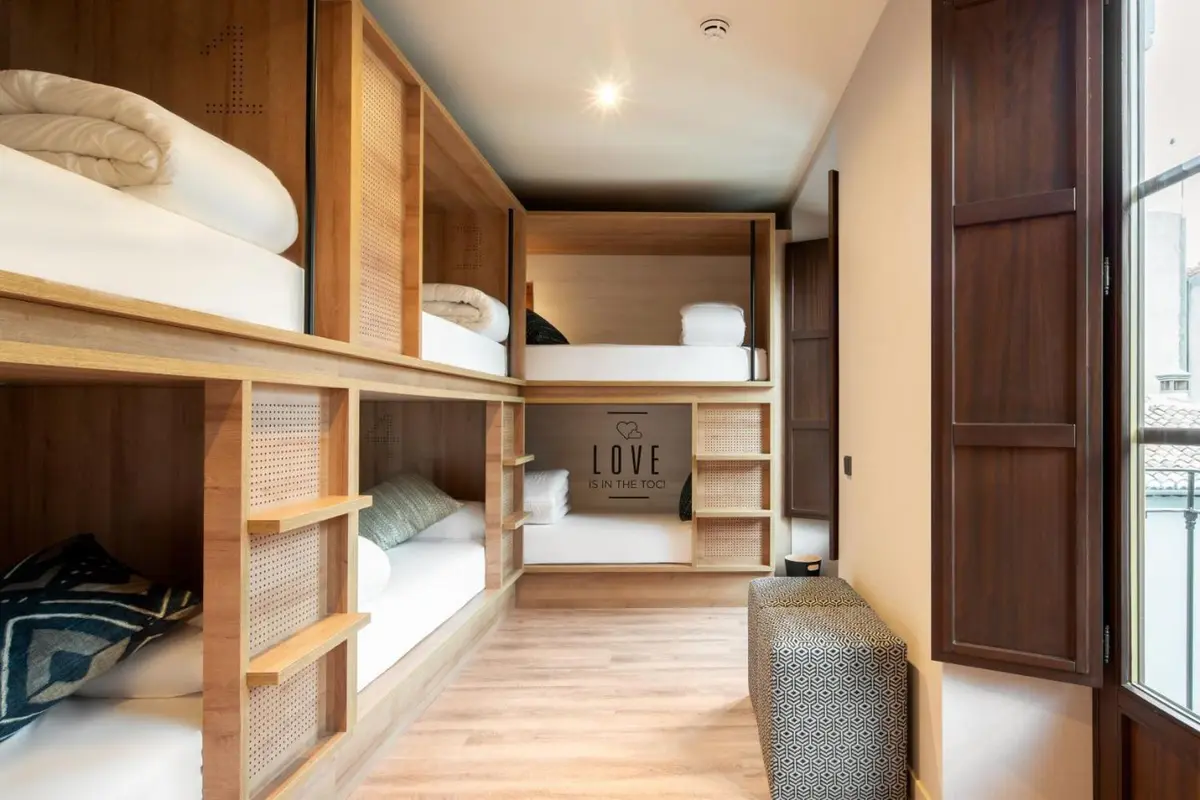 02
 03
 04
Apartamentos Reyes Católicos by Medina Living
9.02,276 reviewsPlaza Nueva
1 min walk to Plaza Nueva
See prices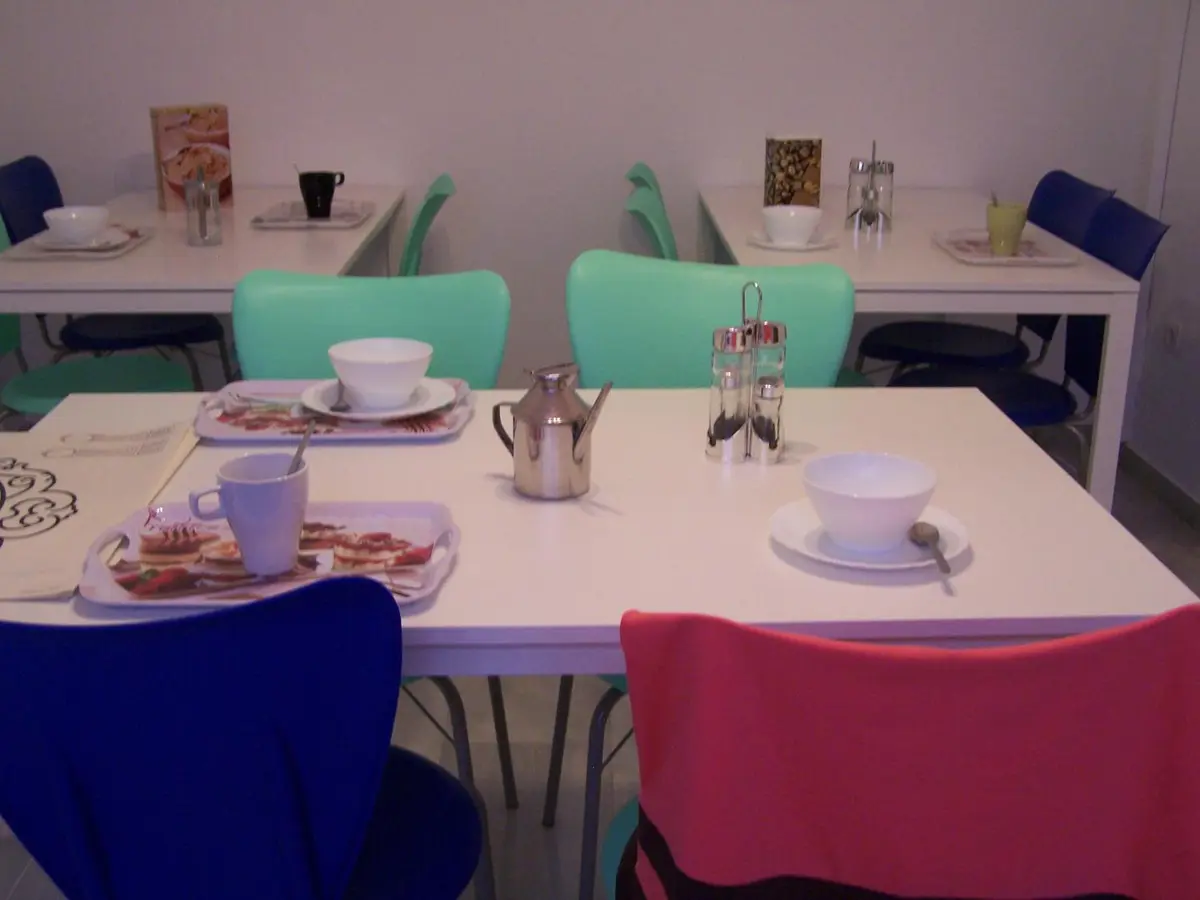 05
 06
Hotel Albero
9.01,690 reviews1.9 km southeast of Alhambra hill
29 min walk to the Alhambra entrance
See prices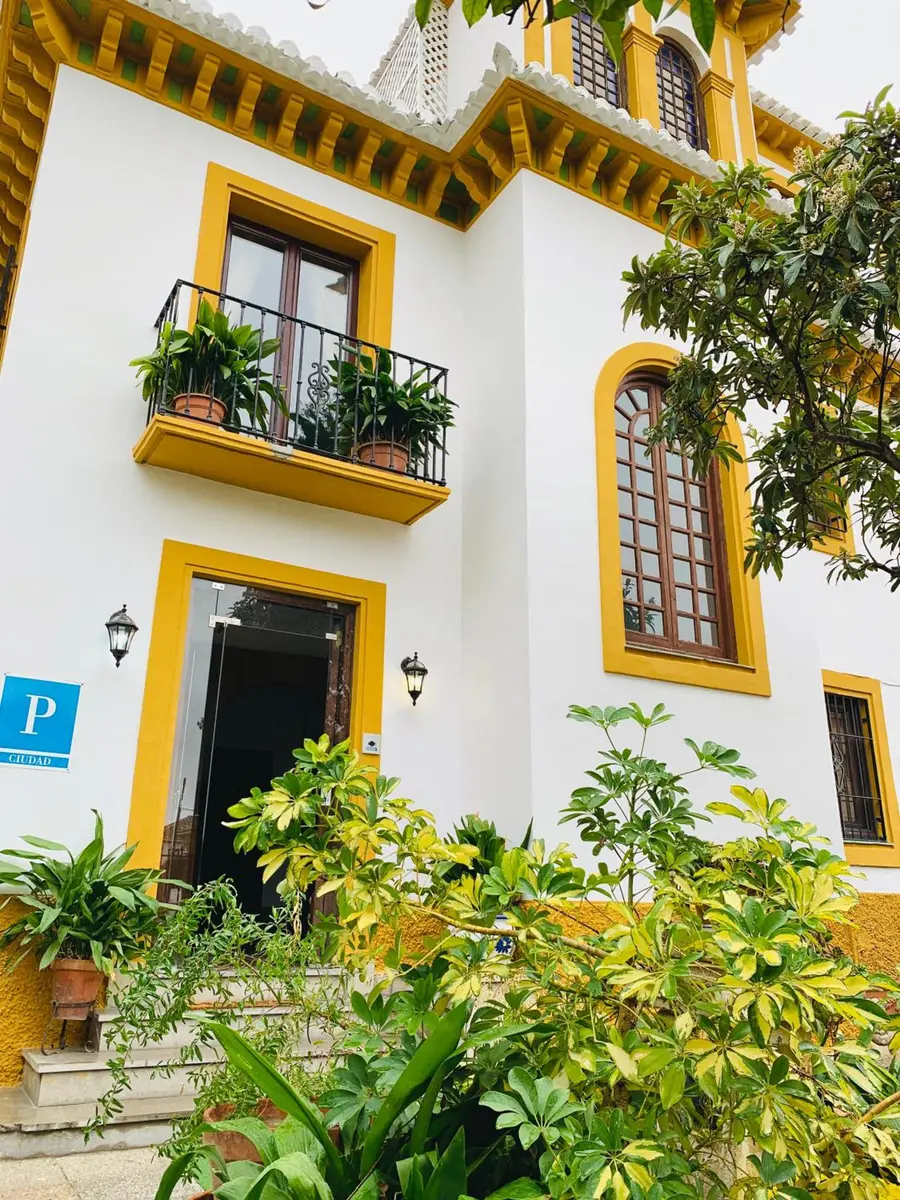 07
 08
 09
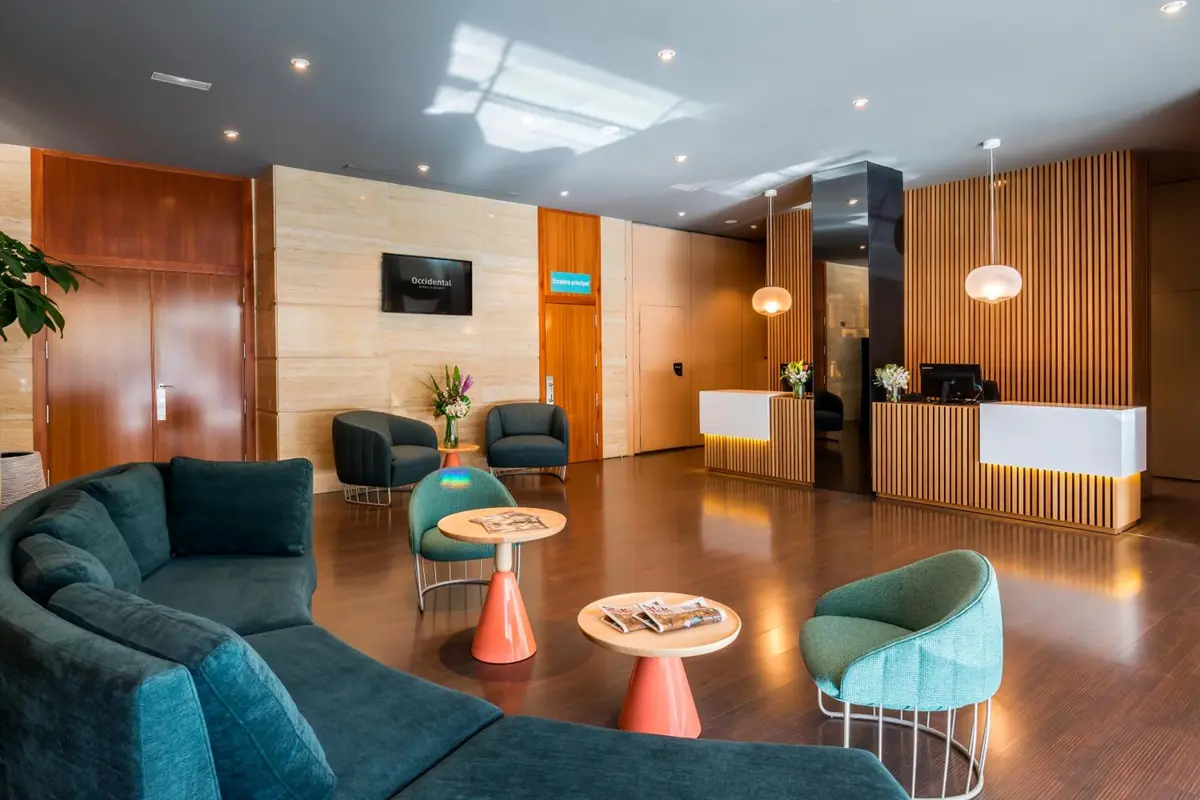
Occidental Granada
8.93,492 reviewsPedro Antonio de Alarcón
14 min walk to Granada Cathedral
See prices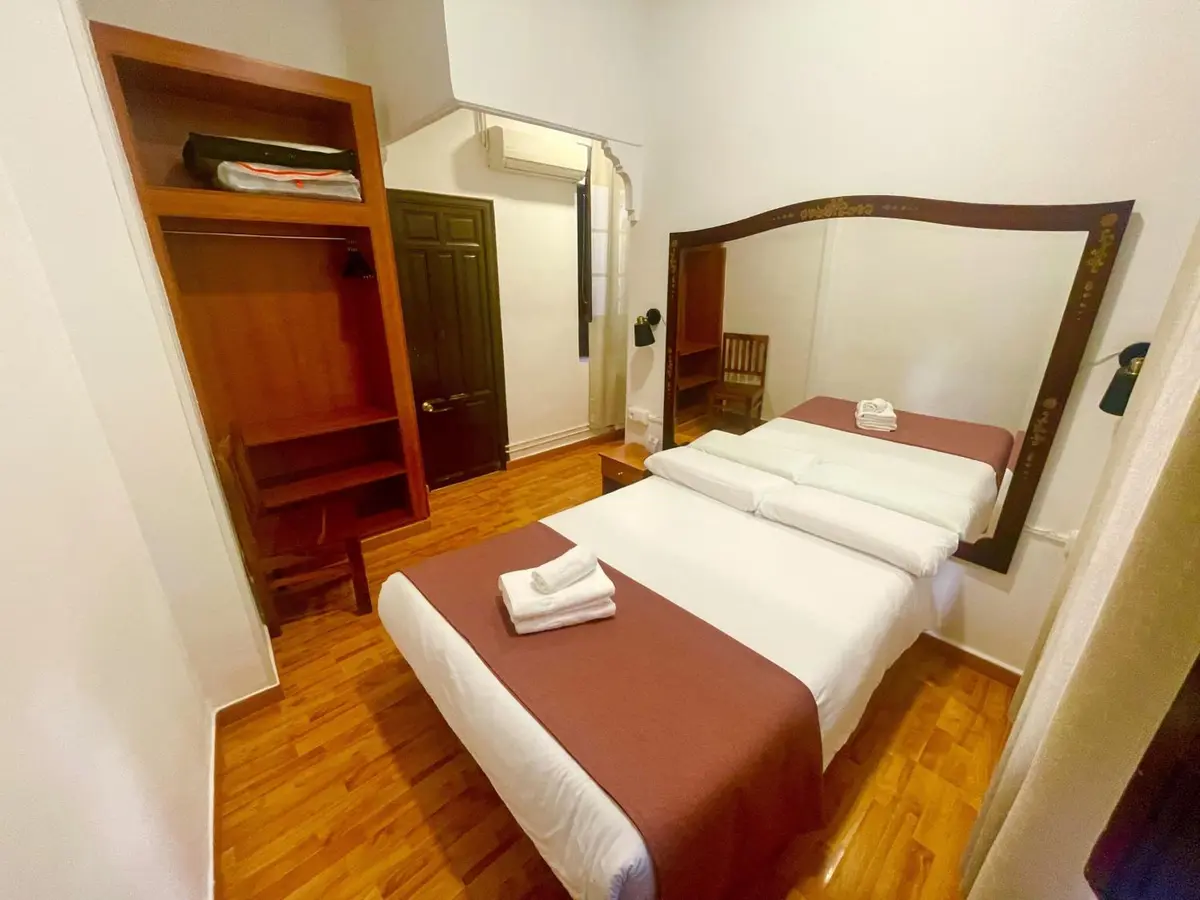 10
Arteaga Hostal & Baños Arabes Elvira
8.92,166 reviewsGran Vía de Colón
6 min walk to Granada Cathedral
See prices
Hotel links go to Stay22. If you book, we may earn a commission, at no cost to you.
Food and drink
Granada is the city of the free tapa: order a beer or a glass of wine and a small plate comes with it, a different one with each round. The cooking draws on the mountains, the fertile plain around the city and its Moorish past. Lunch runs from about 2pm and dinner from 9pm.
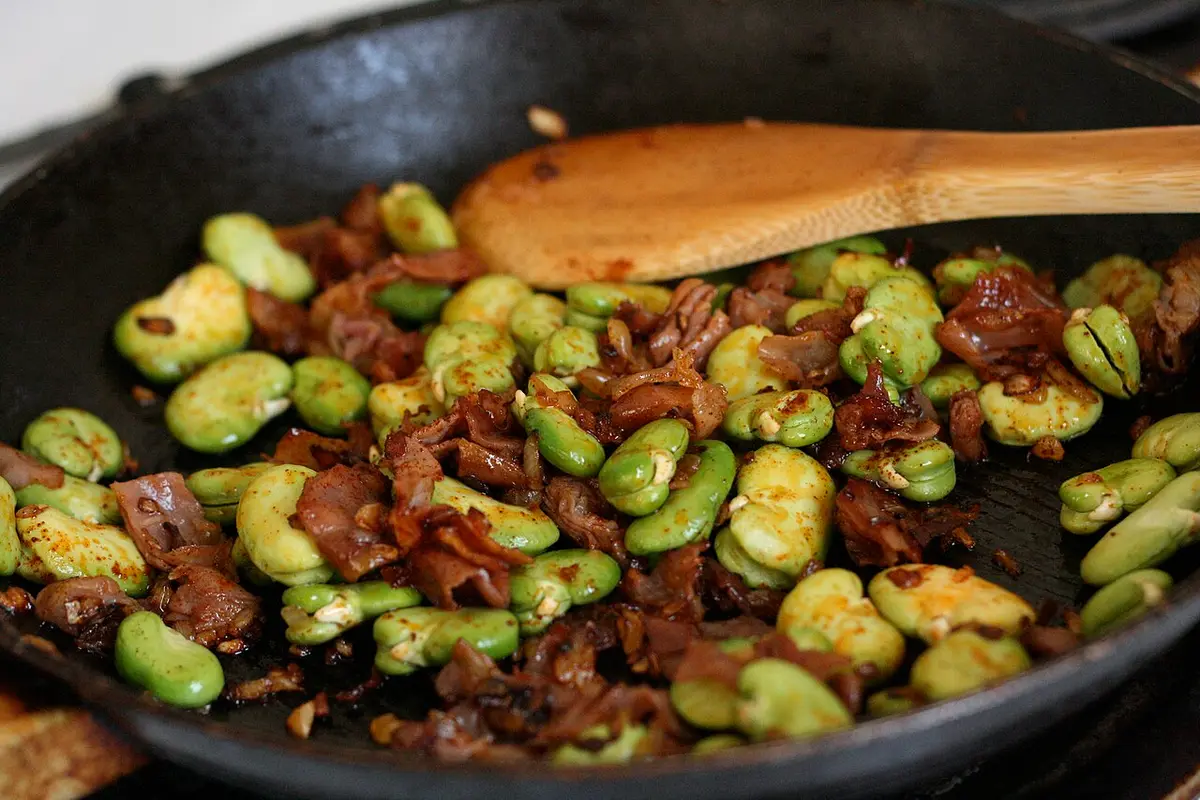
Habas con jamón
Young broad beans fried with cured ham, a Granada classic, at its best in spring.
Photo: Jennifer Woodard Maderazo from Barcelona, Spain, CC BY 2.0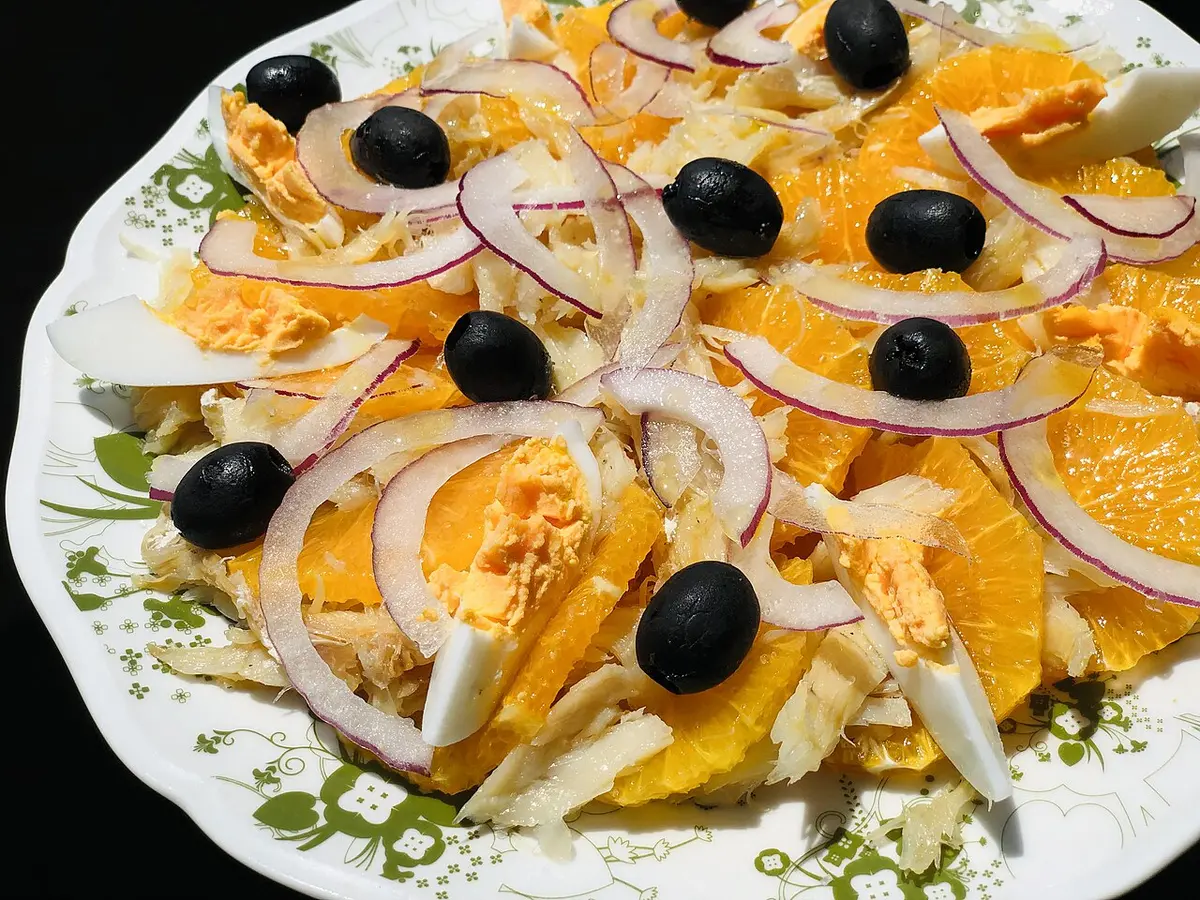
Remojón granadino
A salad of oranges, salt cod, onion and black olives dressed with olive oil, eaten in winter when the oranges are ripe.
Photo: EAT&ART TARO, CC BY-SA 4.0Tortilla del Sacromonte
An omelet made with offal, traditionally lamb brains and testicles, named after the Sacromonte abbey. For the adventurous.
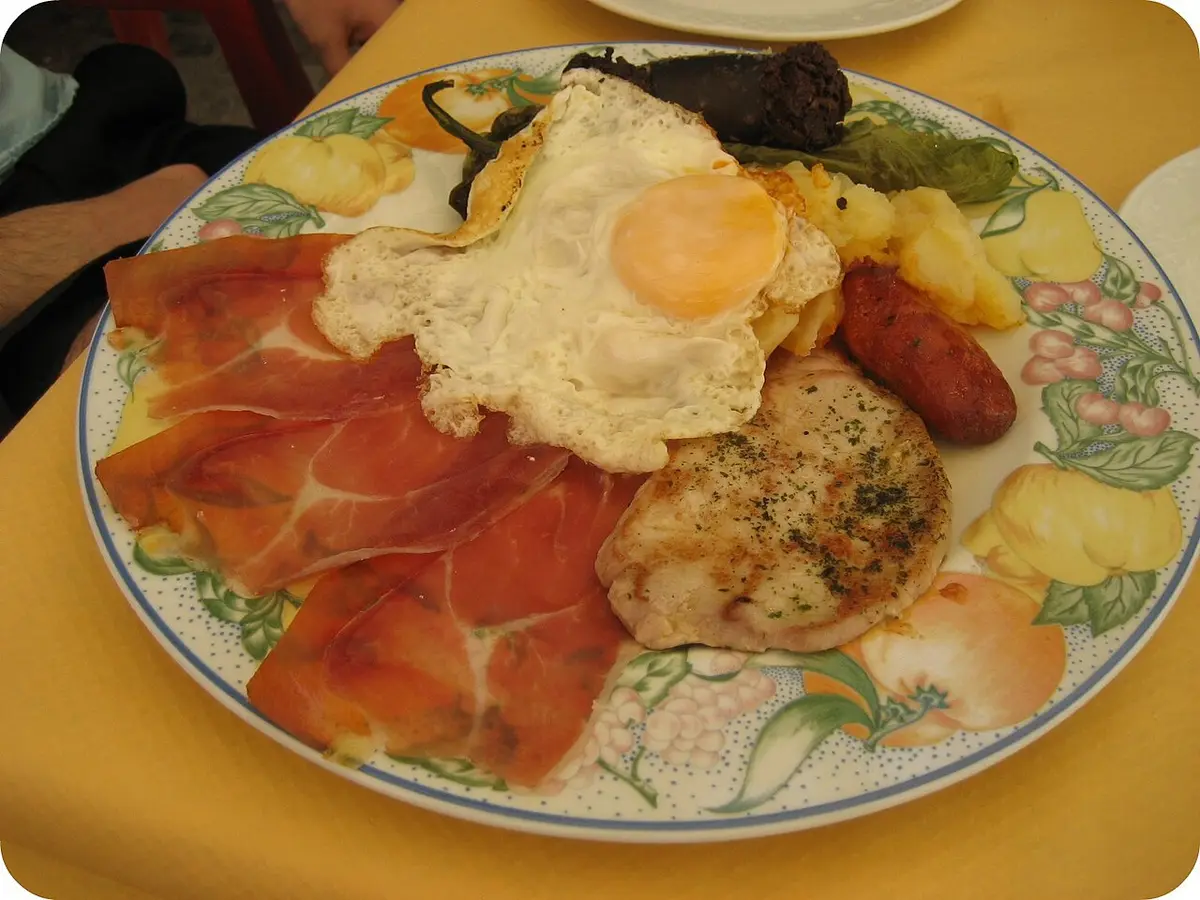
Plato alpujarreño
The mountain plate of the Alpujarra: fried potatoes and peppers, fried eggs, ham, chorizo and blood sausage.
Photo: Boca Dorada, CC BY-SA 2.0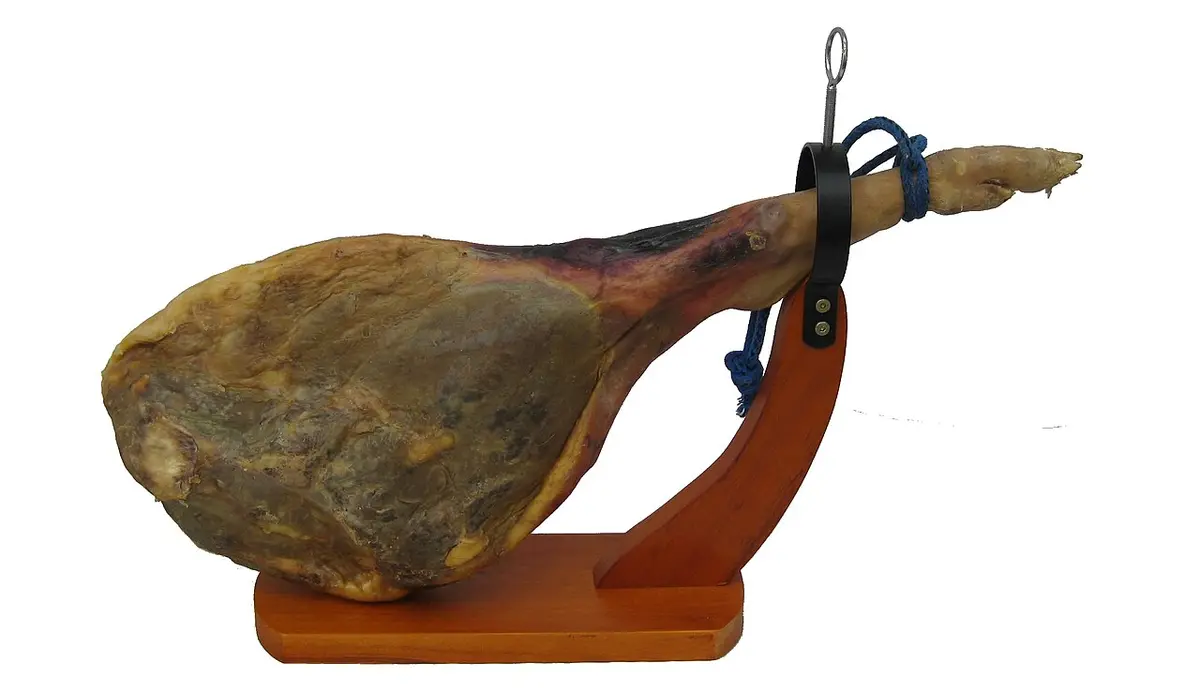
Jamón de Trevélez
Ham cured in the cold, dry air of Trevélez, one of the highest villages in Spain, on the southern slopes of the Sierra Nevada.
Photo: De grana, CC BY-SA 4.0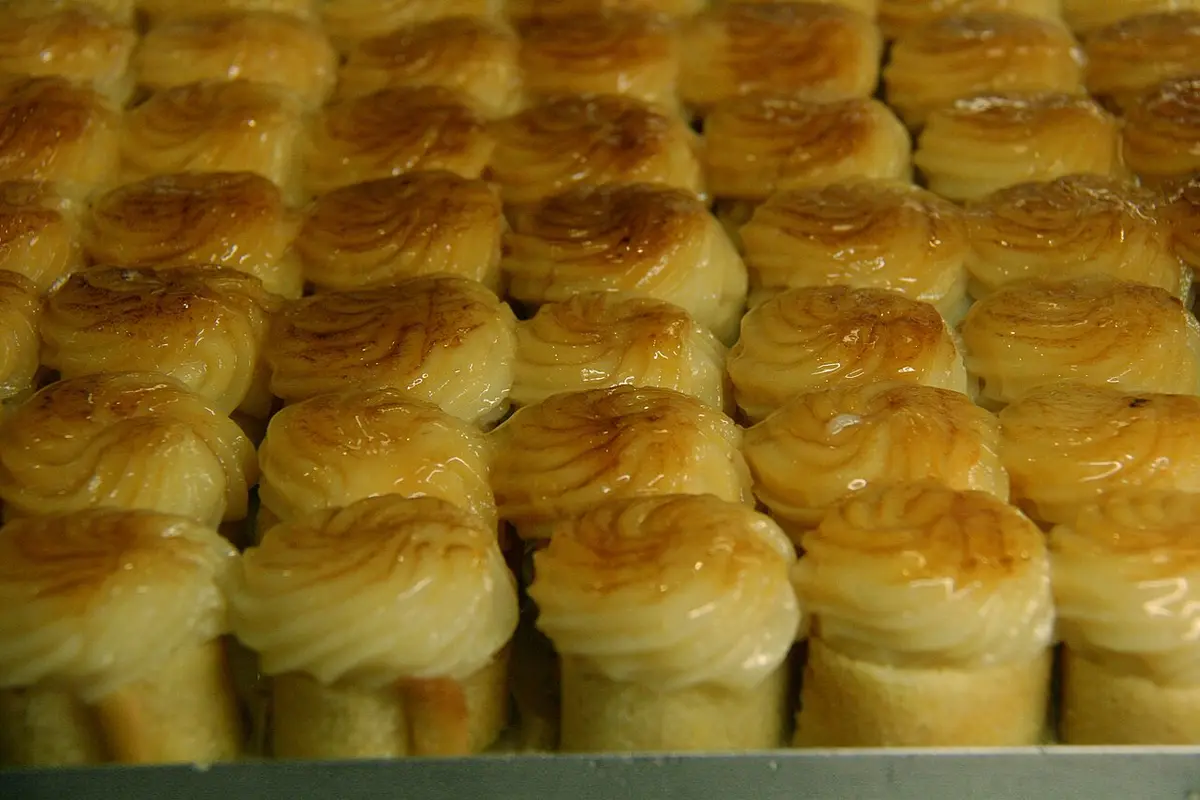
Piononos
Small rolls of syrup-soaked sponge topped with toasted cream, created in Santa Fe in 1897 and named after Pope Pius IX.
Photo: Tamorlan, CC BY 3.0Go for tapas in the Realejo around the Campo del Príncipe, on Calle Navas by the town hall and in the streets around Plaza Nueva and Calle Elvira. The San Agustín market, near the cathedral, sells local produce, and the tea houses line Calle Calderería Nueva. Piononos are sold across the city, and in Santa Fe, where they began.
The keys of the Alhambra
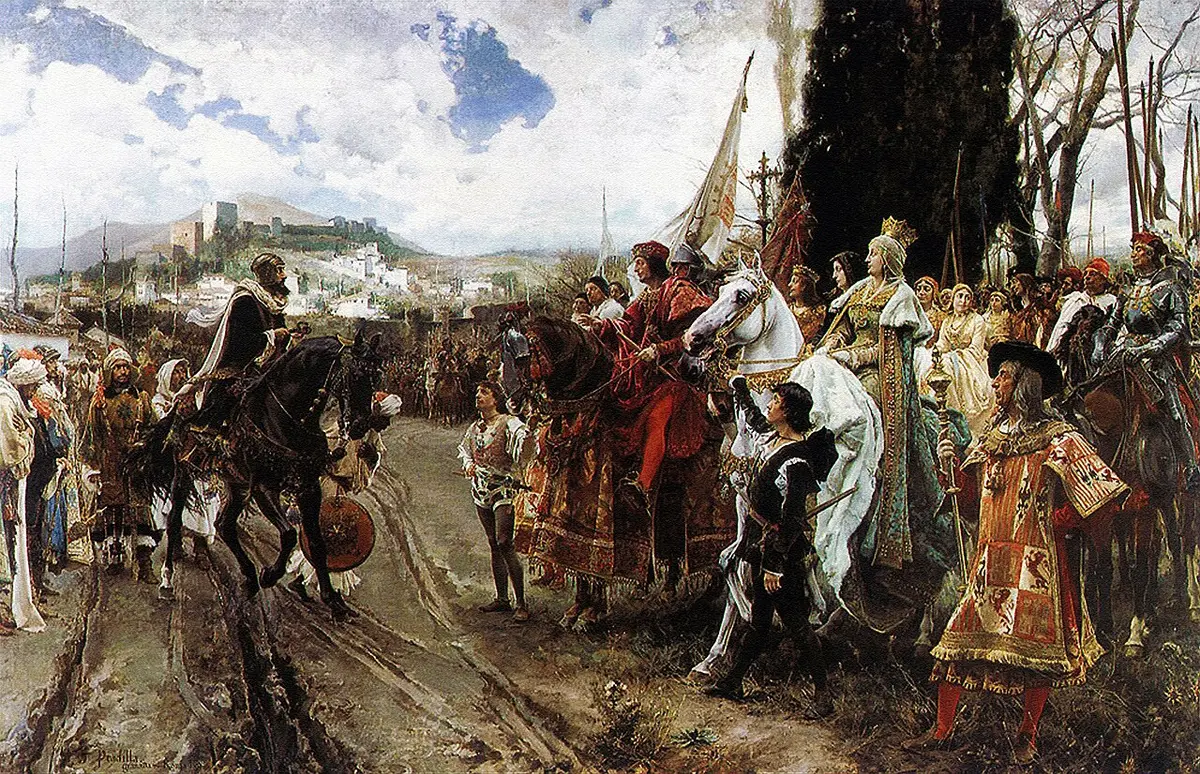
On 2 January 1492, Boabdil rode out of the Alhambra and handed Granada to Ferdinand and Isabella. How the last Muslim kingdom in Spain came to an end, and the legend of a sigh on the road south.
For two and a half centuries, the Nasrid sultans ruled a small mountain kingdom from the Alhambra. Their Granada outlived every other Muslim state in Spain by paying tribute to Castile, playing Christian rivals against each other and guarding its mountain passes, while the sultans built the palaces that still stand on the hill. By the 1480s, though, the kingdom was also at war with itself.
Its last sultan, Muhammad XII, known to the Spanish as Boabdil, rose against his own father. In 1483 the Castilians captured him at Lucena and released him as their vassal, to keep the kingdom divided, and for years it fought on two fronts, against Ferdinand and Isabella and between rival sultans, among them Boabdil’s uncle, El Zagal. One by one the towns fell: Ronda, Málaga, Baza, Almería.
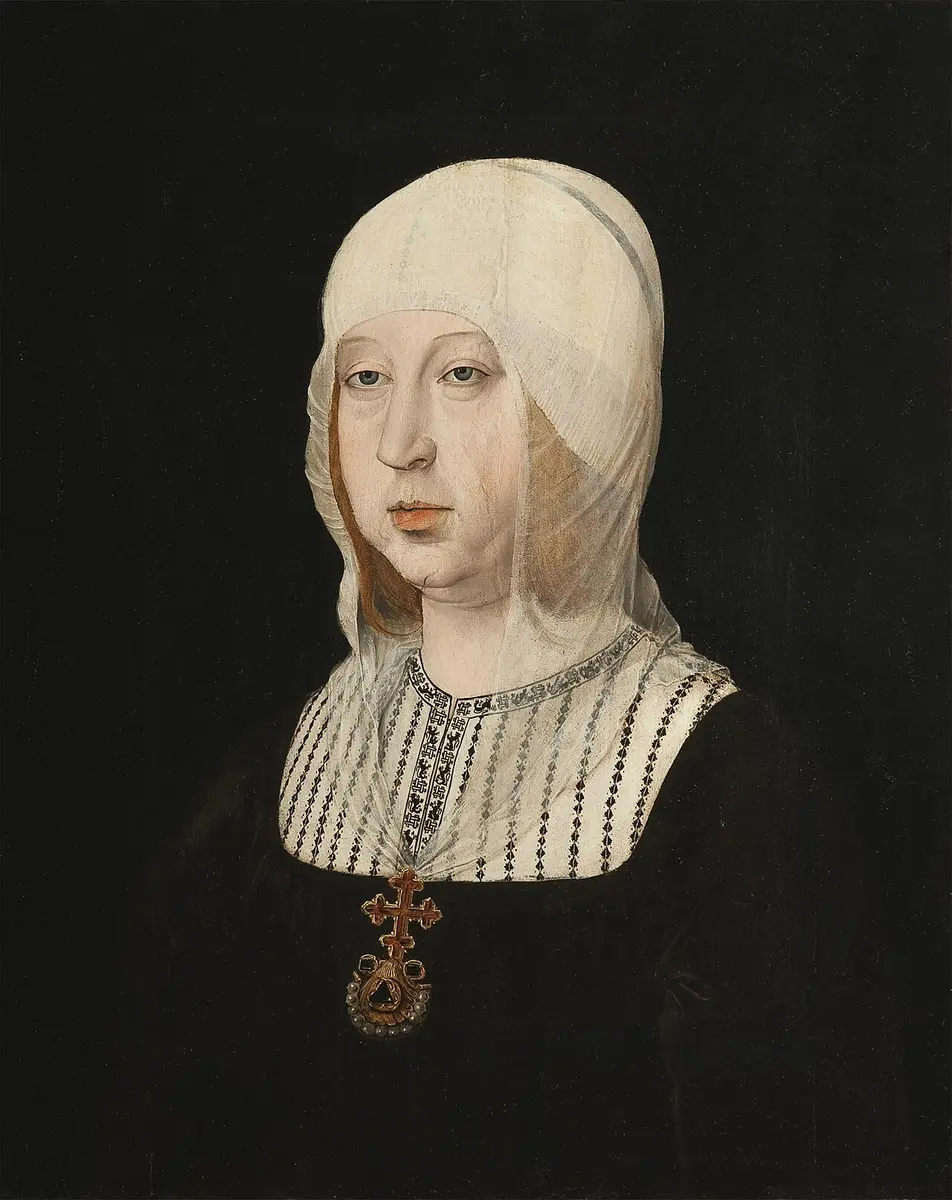
In April 1491 the Catholic Monarchs laid siege to Granada itself, and on the plain west of the city their army built a walled camp of stone, Santa Fe. Talks went on in secret through the autumn. The terms signed that November were generous: the Muslims of Granada could keep their faith, their mosques, their laws and their property.
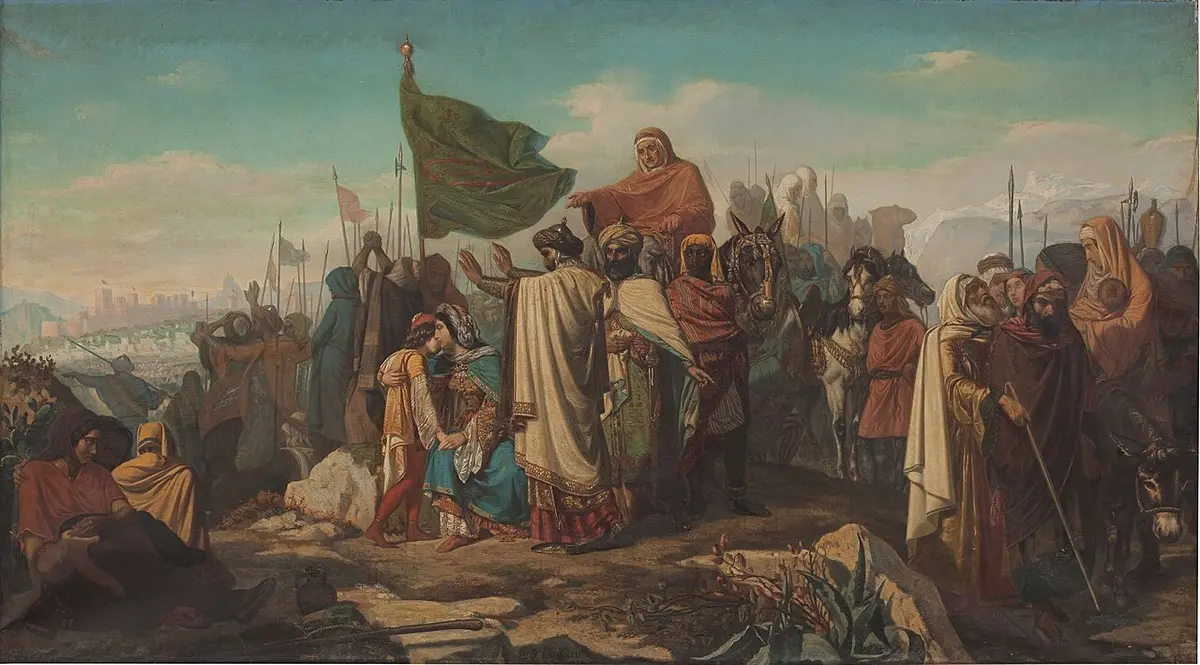
On 2 January 1492, Boabdil rode out of the Alhambra and handed the keys of the city to Ferdinand near the banks of the Genil; one account of the day has him call them the keys of this paradise. Christian troops had already entered the Alhambra, and the cross and the royal banners went up on the Torre de la Vela. That spring, from Granada and Santa Fe, the monarchs ordered the expulsion of Spain’s Jews and agreed to back Columbus’s voyage.
Granada fell not in a final battle but by treaty, with a set of keys handed over beside a river.
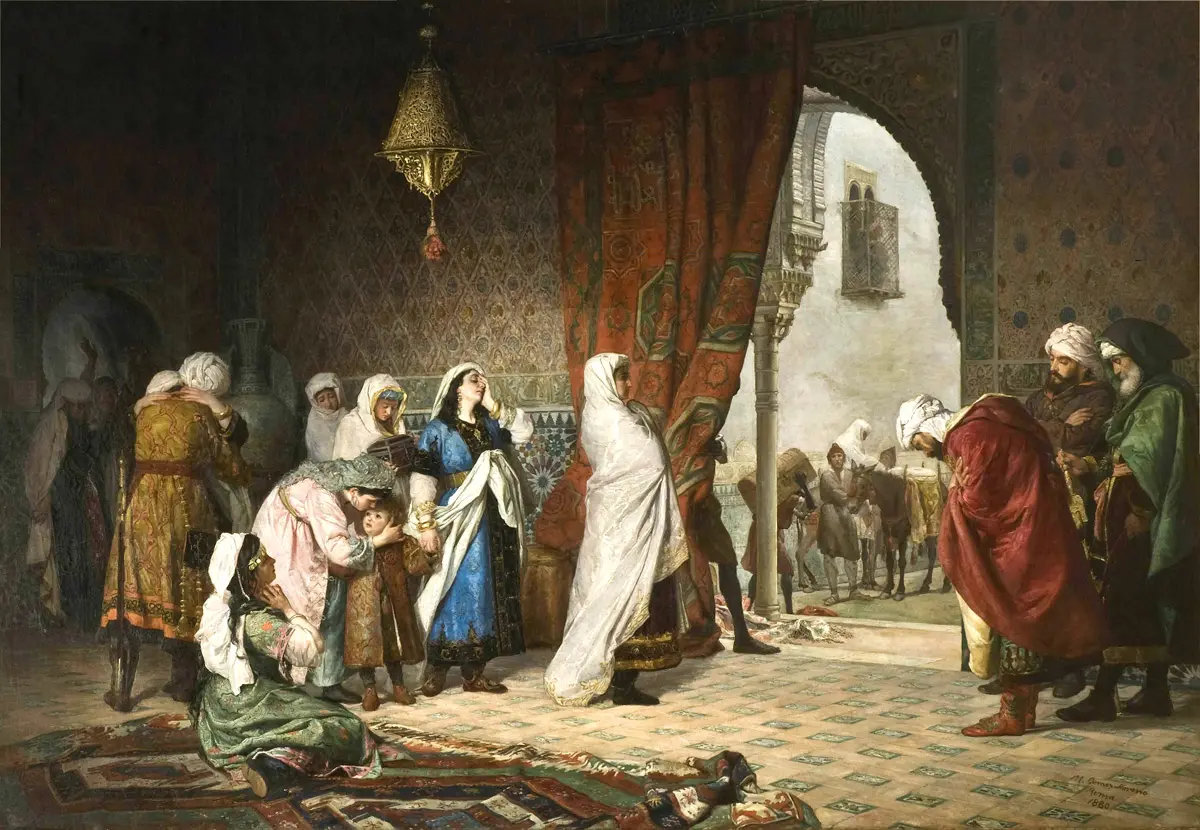
Boabdil was given a small lordship in the Alpujarra and left for Morocco the next year. Legend has him stop at a pass south of the city to look back at Granada and weep, and his mother, Aixa, tell him to weep like a woman for what he could not defend like a man. The story was written down decades later and may be invented, but the pass is still called the Suspiro del Moro, the Moor’s Sigh.
The treaty’s promises did not last a decade. From 1499, under Cardinal Cisneros, Granada’s Muslims were pressed to convert, Arabic books were burned in Bib-Rambla, and by 1501 the choice was baptism or exile. Isabella and Ferdinand were buried here, in the Royal Chapel, and their grandson Charles V raised his palace inside the Alhambra, a Renaissance court set down among the Nasrid halls.
Art
Nasrid decoration
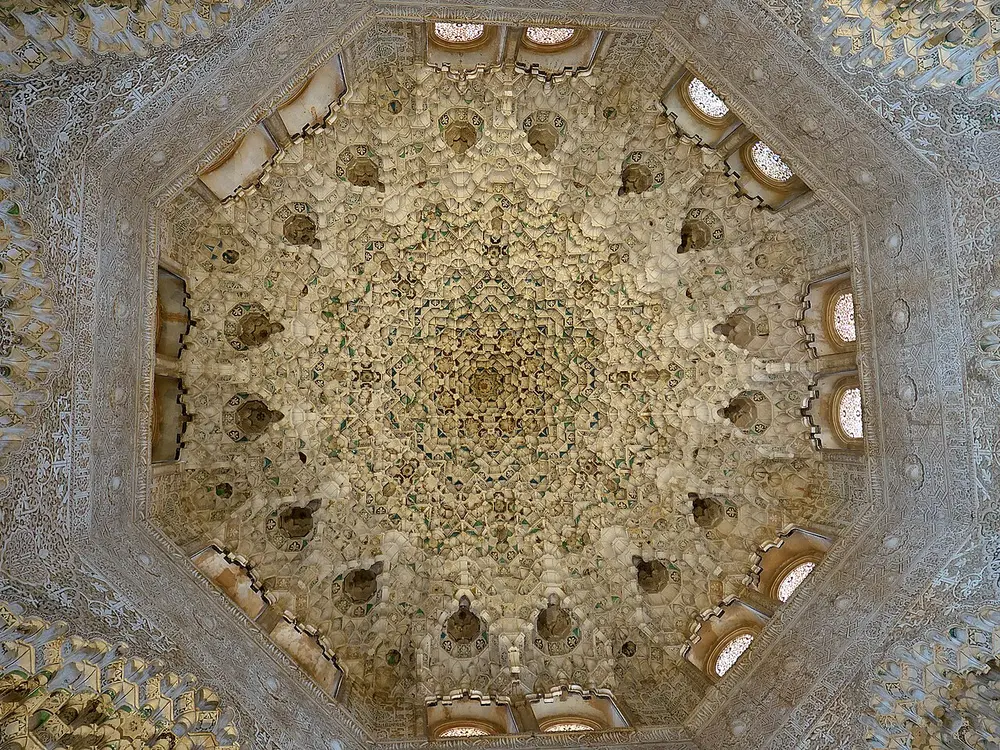
Carved plaster, tiled walls and cedar ceilings cover the rooms of the Nasrid Palaces, and the domes of the Hall of the Two Sisters and the Hall of the Abencerrajes are built of thousands of small cells called muqarnas, like a honeycomb.
Poems on the walls
Verses by court poets are carved into the plaster and set into the tiles of the palaces, and a poem runs around the rim of the basin of the Fountain of the Lions. Arabic calligraphy is part of the decoration everywhere you look.
Isabella’s paintings
The sacristy of the Royal Chapel holds the queen’s own collection: Flemish panels by Rogier van der Weyden, Dirk Bouts and Hans Memling, with Botticelli and Perugino from Italy.
Alonso Cano
Granada’s own painter, sculptor and architect (1601 to 1667) finished seven canvases of the life of the Virgin for the cathedral’s main chapel in 1664 and redesigned its main front three years later.
The Museum of Fine Arts
On the upper floor of the palace of Charles V, with no Alhambra ticket needed: Granada painting and sculpture, with Cano and the still lifes of Juan Sánchez Cotán, who spent his last years as a lay brother at the Cartuja.
Granada in poems and tales
Verses carved into palace walls, a ballad of loss that Byron put into English, an American who moved into the Alhambra, and the poet the city lost in 1936.
Ibn Zamrak
1333 to about 1393
Secretary and later vizier to Muhammad V, Ibn Zamrak wrote many of the verses that decorate the Nasrid Palaces. His poem on the dome of the Hall of the Two Sisters is set into its tiles, and around the Fountain of the Lions his lines compare the running water to a lover’s tears. Few poets can still be read on the walls they were written for.
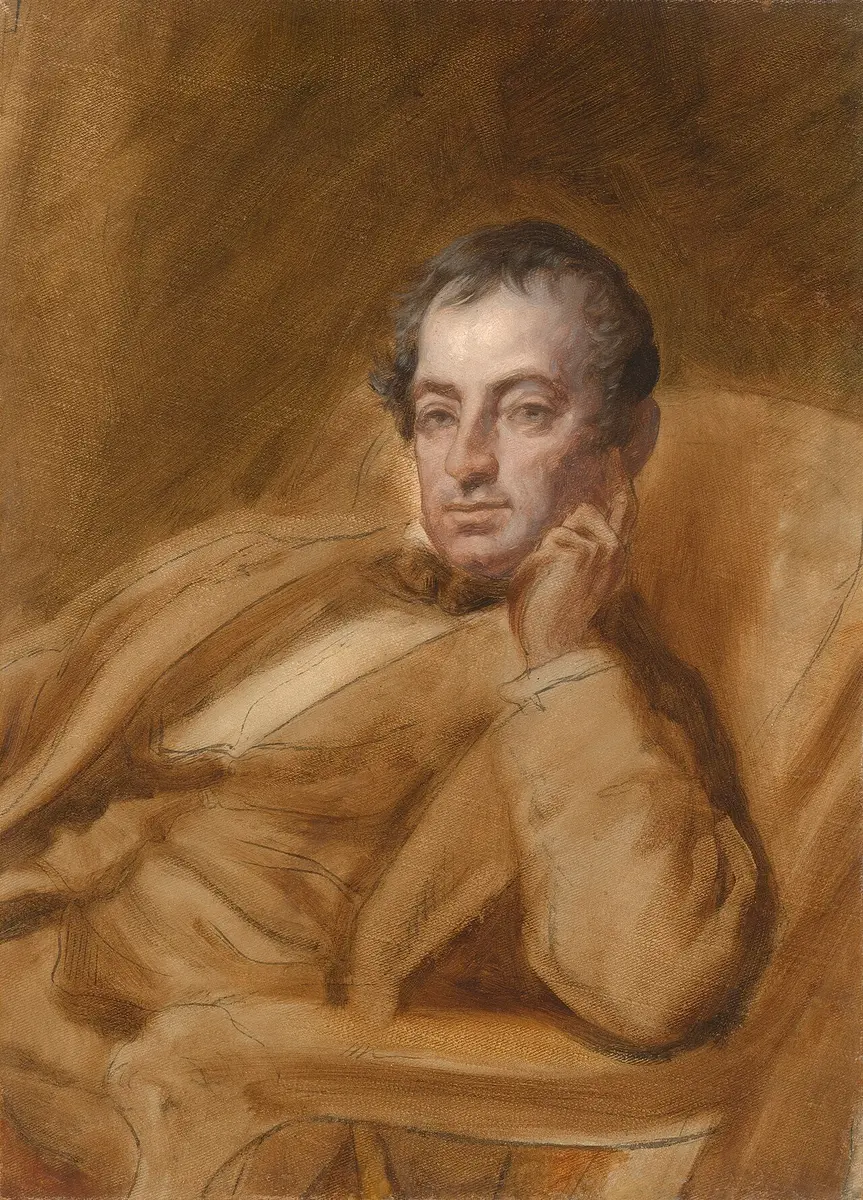
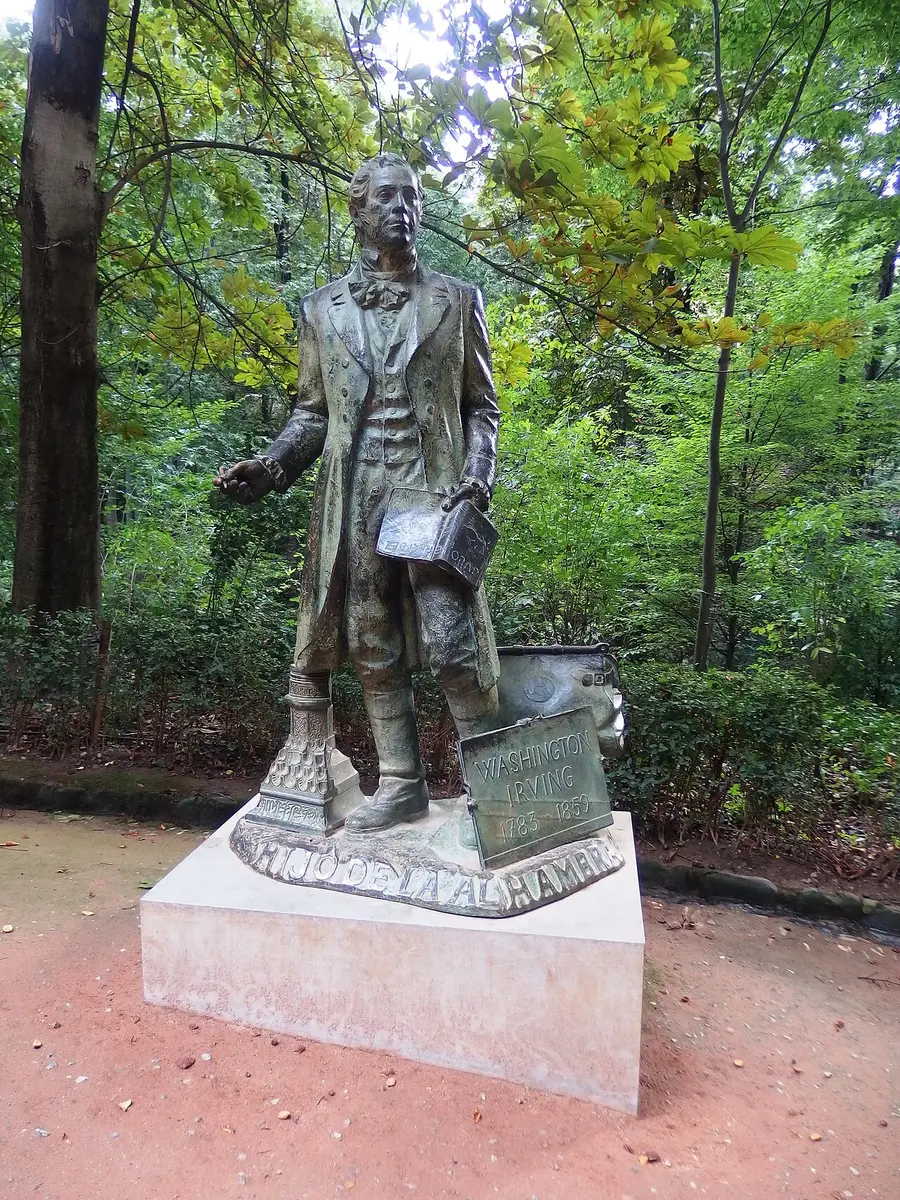
Washington Irving
1783 to 1859
The American writer came to Spain in 1826 to work on a life of Columbus, and in 1829 he was given rooms in the Alhambra, then neglected and home to a few families and old soldiers. He stayed about three months, until a posting to the US legation in London. Tales of the Alhambra (1832), a mix of legends, sketches and palace life, drew travelers to Granada for the rest of the century, and he returned to Spain as the American minister in 1842.
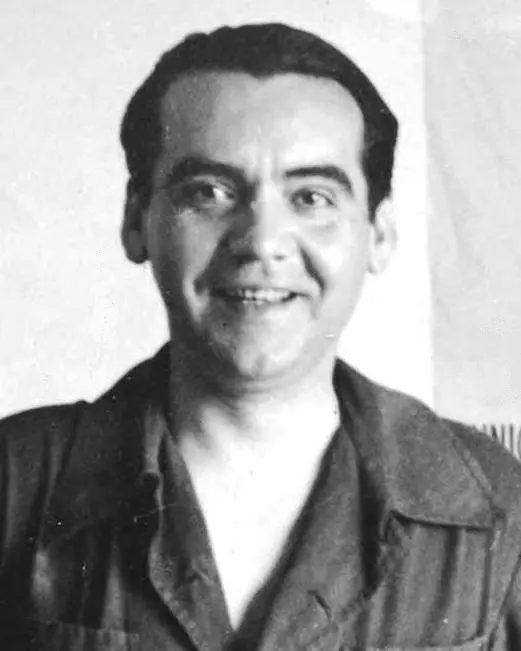
Federico García Lorca
1898 to 1936
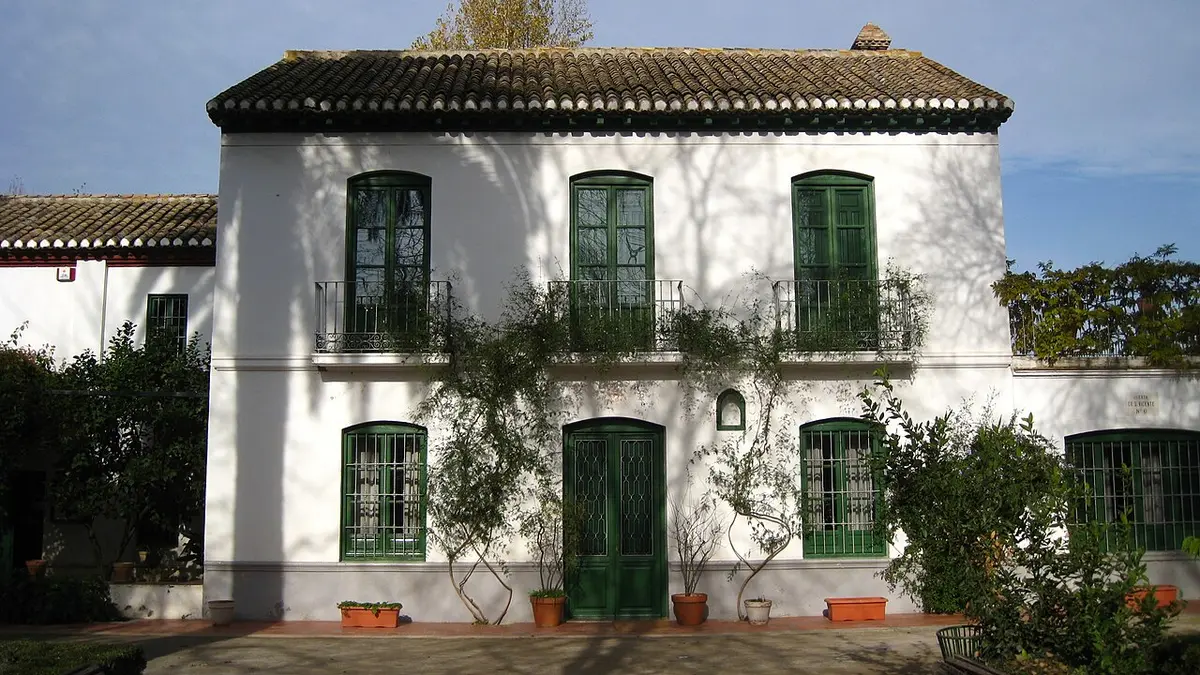
Born in Fuente Vaqueros, in the plain west of the city, Lorca grew up in Granada and in 1922, with the composer Manuel de Falla, organized a contest of cante jondo, deep flamenco song, in the Alhambra. Gypsy Ballads (1928) made him famous across Spain. He spent his summers at the family house, the Huerta de San Vicente, now a museum, and in August 1936 he was arrested in the city and shot by Nationalist forces between Víznar and Alfacar. His body has never been found.
The Moorish King rides up and down,
Through Granada’s royal town:
From Elvira’s gates to those
Of Bivarambla on he goes.
Woe is me, Alhama!
A Very Mournful Ballad on the Siege and Conquest of Alhama, from the Spanish, translated by Lord Byron (1818)
Culture
Holy Week
Processions fill the center every evening, and on the Wednesday the Cristo de los Gitanos climbs to the Sacromonte abbey by the light of bonfires lit along the hillside.
The Day of the Cross
On 3 May, squares, courtyards and shop fronts are dressed with crosses of flowers, shawls, copper pots and pottery, in a friendly contest between neighborhoods.
The Corpus fair
The city’s biggest festival, in late May or June: a week of fairground, flamenco dresses and late nights, opened by the Tarasca, a figure of a woman riding a dragon whose dress is said to set the season’s fashion.
The pomegranate
Granada is the Spanish word for pomegranate, and the fruit is everywhere: on the city’s coat of arms and on the bollards that line its streets.
Carmenes
A carmen is a walled house with a garden of fruit trees, vines and water, the typical home of the Albaicín. A few are open as museums, gardens or restaurants with views of the Alhambra.
A student city
The University of Granada, founded by papal bull in 1531, fills the city with students from across Spain and Europe, and keeps the bars busy and the nights late.
Music and nights out
Flamenco
Hear it in the caves of Sacromonte, where the zambra of gitano weddings became a show, and at Peña La Platería in the Albaicín, founded in 1949 and the oldest flamenco club in Spain, which opens to visitors on Thursday nights.
Manuel de Falla
The composer lived from 1922 to 1939 in a small house on the Alhambra hill, a museum since 1962, and with Lorca he staged the 1922 cante jondo contest in the Alhambra.
The International Festival
Every June and July since 1952, the International Festival of Music and Dance has brought orchestras, ballet and flamenco to the palace of Charles V and the gardens of the Generalife.
Enrique Morente
The great flamenco singer of the Albaicín (1942 to 2010) recorded Omega (1996) with the Granada rock band Lagartija Nick, setting words by Lorca and Leonard Cohen. Purists hated it; it is now a classic.
Nights out
Tapas in the Realejo and on Calle Navas, flamenco in Sacromonte, then bars and clubs around Calle Elvira and Pedro Antonio de Alarcón.
Nature and day trips
The Sierra Nevada
Mulhacén, at 3,479 meters the highest peak in mainland Spain, rises southeast of the city. The range has been a national park since 1999, with hiking in summer and a ski station at Pradollano, about 45 minutes away by bus, in winter.
The Alhambra woods
The Cuesta de Gomérez climbs from Plaza Nueva through the Gate of the Pomegranates into a shady wood of tall trees and running water below the Alhambra walls, loud with birdsong in spring.
The Darro valley
Past the Paseo de los Tristes, a path follows the river upstream into the countryside to the Fuente del Avellano, a shaded spring, a few minutes and a world away from the city.
Gardens
The Generalife, the Carmen de los Mártires on the Alhambra hill and the Parque García Lorca, with its rose garden around the Huerta de San Vicente.
The Alpujarra
White villages on the southern slopes of the Sierra Nevada, about an hour and a half away by road, with walking trails between them.
The coast
The Costa Tropical, around Almuñécar and Salobreña, is about an hour south by road: in late spring you can ski in the morning and reach the sea by the afternoon.
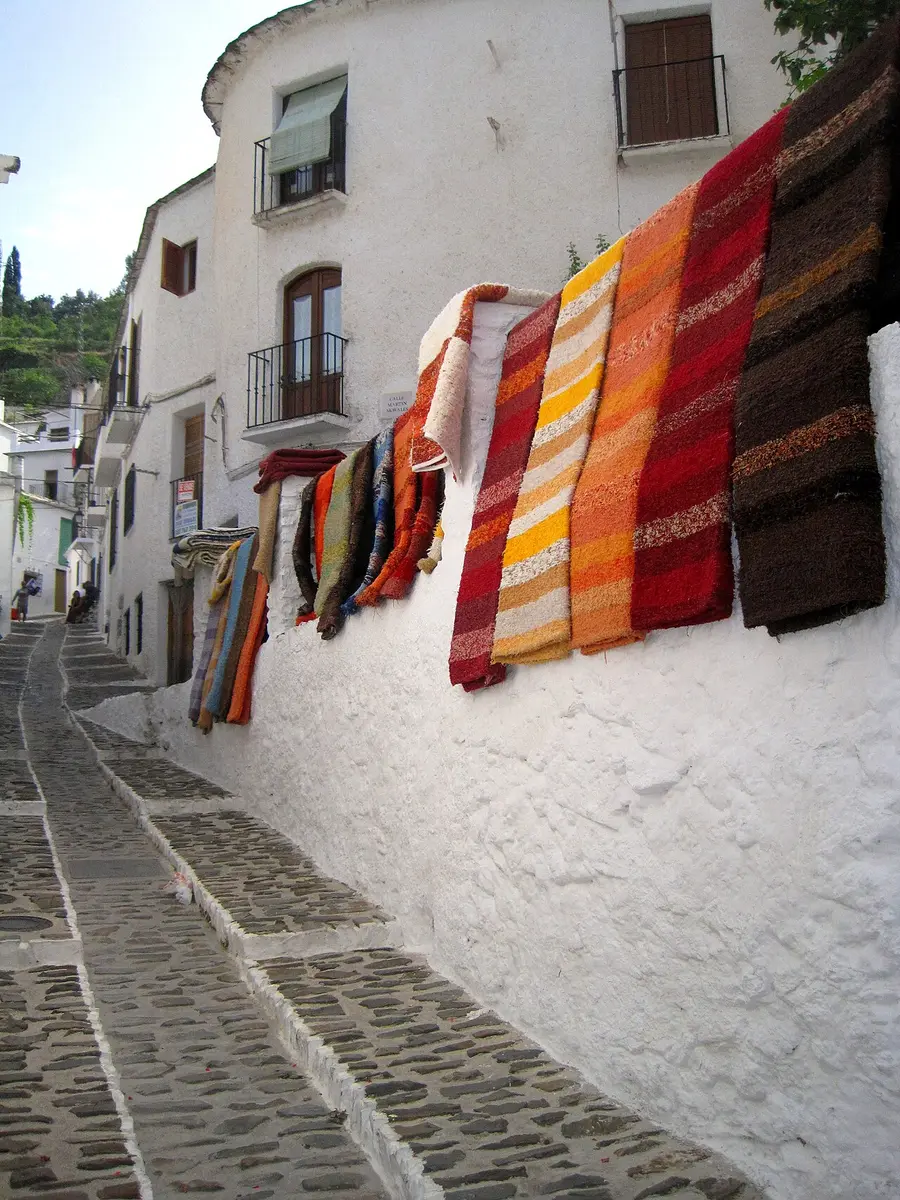
A day in the Alpujarra
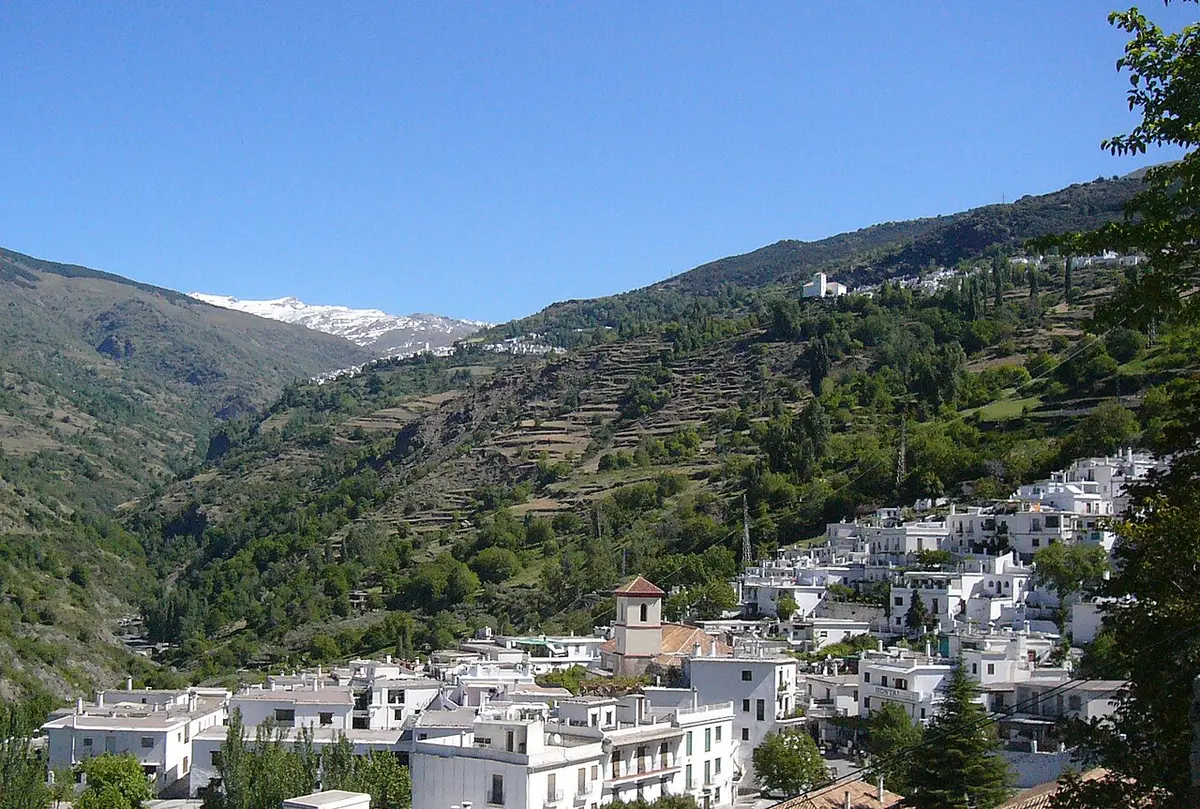
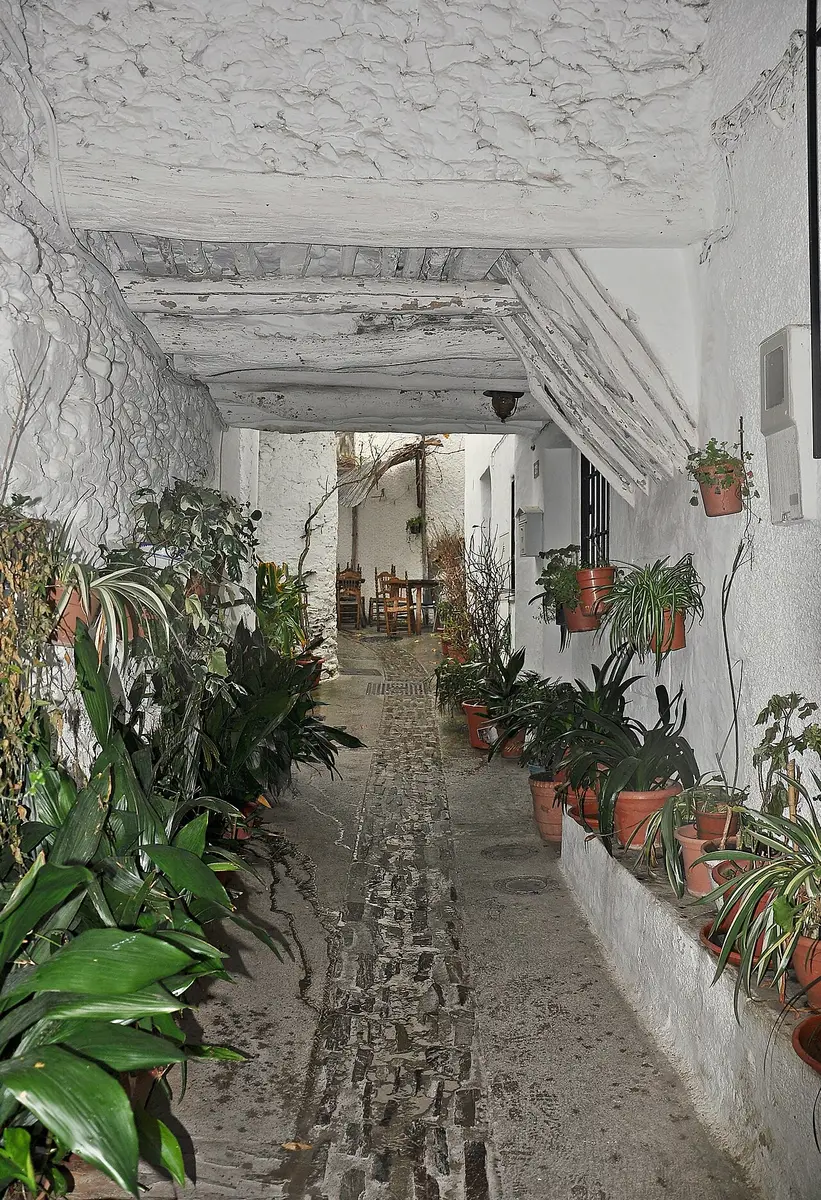
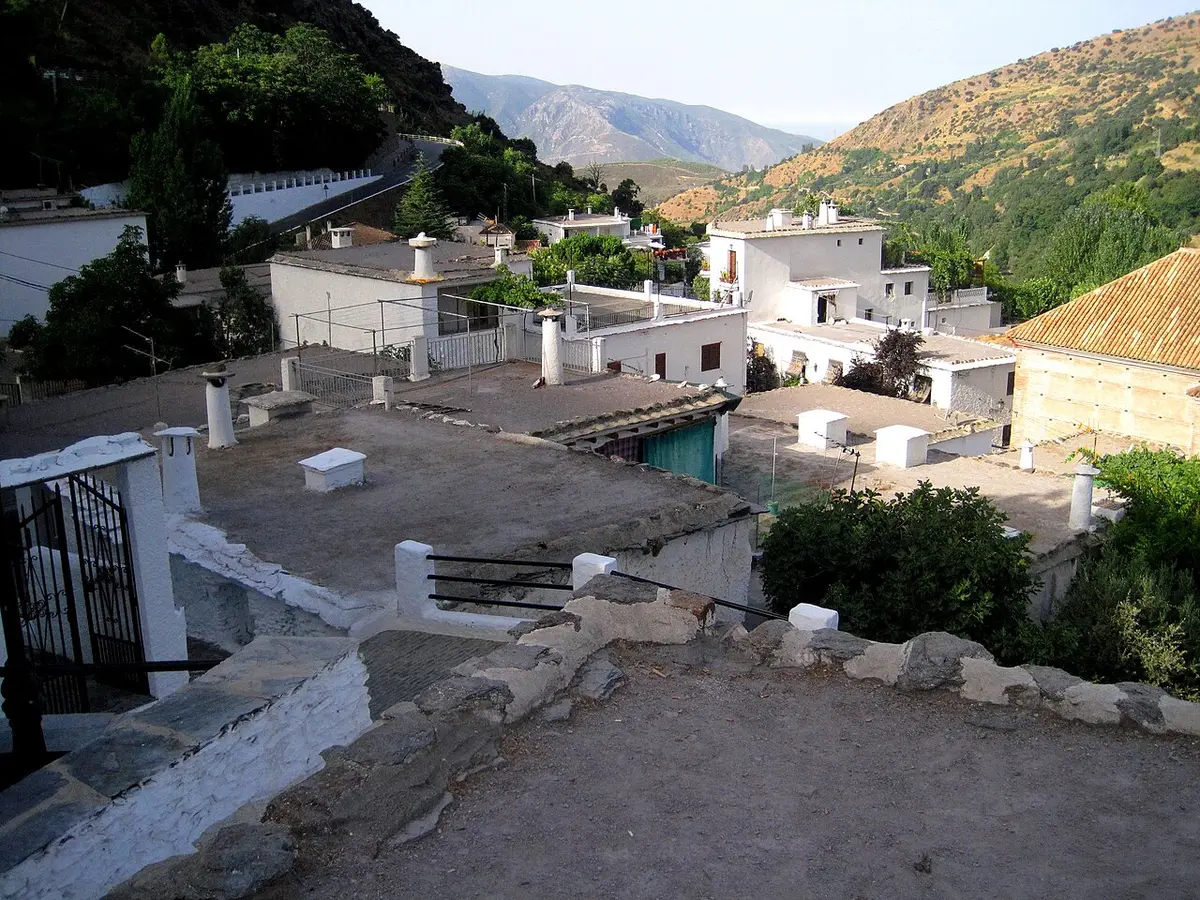
On the southern slopes of the Sierra Nevada, about an hour and a half from Granada by road, white villages cling to the sides of steep valleys. This is where the Moriscos rose in 1568, and the flat roofs and covered passages of its villages are often traced to the Berber villages of North Africa.
People and customs
Free tapas
In most bars a small plate comes free with each drink, and each round brings a different one. You rarely choose it; order larger plates, raciones, from the menu if you are hungry.
Late meals
Lunch runs from about 2pm and dinner starts around 9pm. Many kitchens close between the two.
Malafollá
Granada’s dry, blunt humor has its own name, the malafollá granaína. Brusque is not rude here, and it is often a joke.
Rosemary
Around the cathedral and the Alhambra, women may press a sprig of rosemary into your hand for luck and then ask for money or offer to read your palm. A firm no, gracias is enough.
Alhambra rules
Bring the ID you booked with, be at the Nasrid Palaces before your slot and wear good shoes for the gravel paths and hills.
A few words
Hola, gracias and por favor go a long way. The Andalusian accent drops the ends of words, so gracias often sounds like gracia.
Questions
How far ahead should I book the Alhambra?
As early as you can: tickets are limited each day and sell out weeks ahead in spring and summer. Buy only on the official site, and bring the ID you booked with.
How many days do you need in Granada?
Two days covers the Alhambra, the Albaicín and the cathedral quarter. Three leaves time for Sacromonte, the Cartuja and a slower night of tapas, and four adds a day in the Alpujarra or the Sierra Nevada.
Where should I stay in Granada?
The Centro, around the cathedral, is flat and close to everything. The Albaicín has the views and the atmosphere but steep lanes, the Realejo is best for tapas, and Pedro Antonio de Alarcón is the budget and student area.
How do I get to Granada from Málaga Airport?
Direct buses run from Málaga Airport to Granada’s bus station in about two hours. Or go into Málaga and take a direct train to Granada, a little over an hour.
Are tapas really free in Granada?
In most bars, yes: a small plate comes with each drink, and a different one with each round. For a bigger meal, order raciones from the menu.
When is the best time to visit Granada?
March to May and September to November, when days are warm and nights cool. July and August are very hot, and winter is sunny and cold, with snow on the Sierra Nevada.
Plan Granada with your group
Everyone swipes on the sights they want. SwipeSights builds the days around the picks, in walking order.