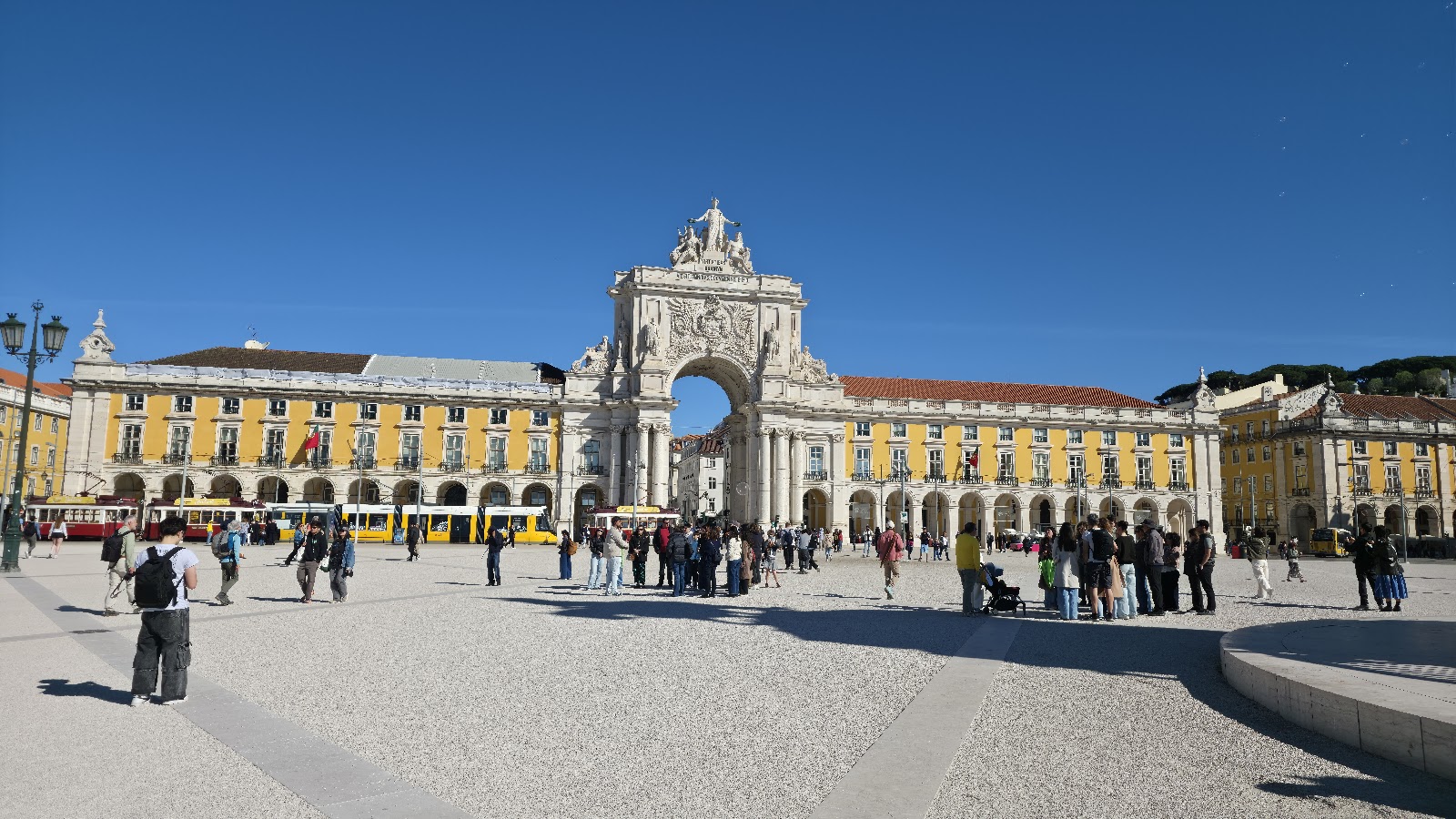
Lisbon
Seven hills, tiled facades, golden light
You ride a rattling yellow tram up cobbled hills, past azulejo-tiled walls and laundry strung between pastel houses. Lisbon spills toward the Tagus in a tumble of viewpoints, fado-soaked alleys and custard tarts. It is faded, luminous and impossibly romantic.
How long to stay?
A day or two covers the classics: wander Alfama's tangled lanes up to Castelo de São Jorge, catch a miradouro sunset, ride Tram 28, then head to Belém for the Jerónimos Monastery and a warm pastel de nata.
Soulful, sunlit and unhurried. Melancholy fado drifts from tiny bars while the city glows amber at dusk. It feels both grand and intimate, weathered yet warm, with a creative, easygoing energy.
Alfama and Baixa put you in the historic core, atmospheric but hilly. Chiado and Bairro Alto offer shopping by day and bars by night. Príncipe Real is stylish and leafy; Belém is calm and riverside.
Skip the long queue for Tram 28 by boarding at the quieter Martim Moniz terminus rather than mid-route. And buy a rechargeable Viva Viagem card for cheap trams, metro and the iconic funiculars.
March to May and September to October bring warm, sunny days and thinner crowds. Summer is hot, busy and lively with festivals. Winters are mild and rainy, but the light stays beautiful and prices drop.
Lisbon Airport (LIS) sits inside the city, about 7km from the center. The red metro line connects it downtown in around 20 minutes; taxis and Bolt or Uber are quick and affordable too.
Currency is the euro; English is widely spoken. The hills are steep, so pack comfortable shoes. Lunch runs late and dinner later. Watch your bag on crowded trams, a known pickpocket spot.