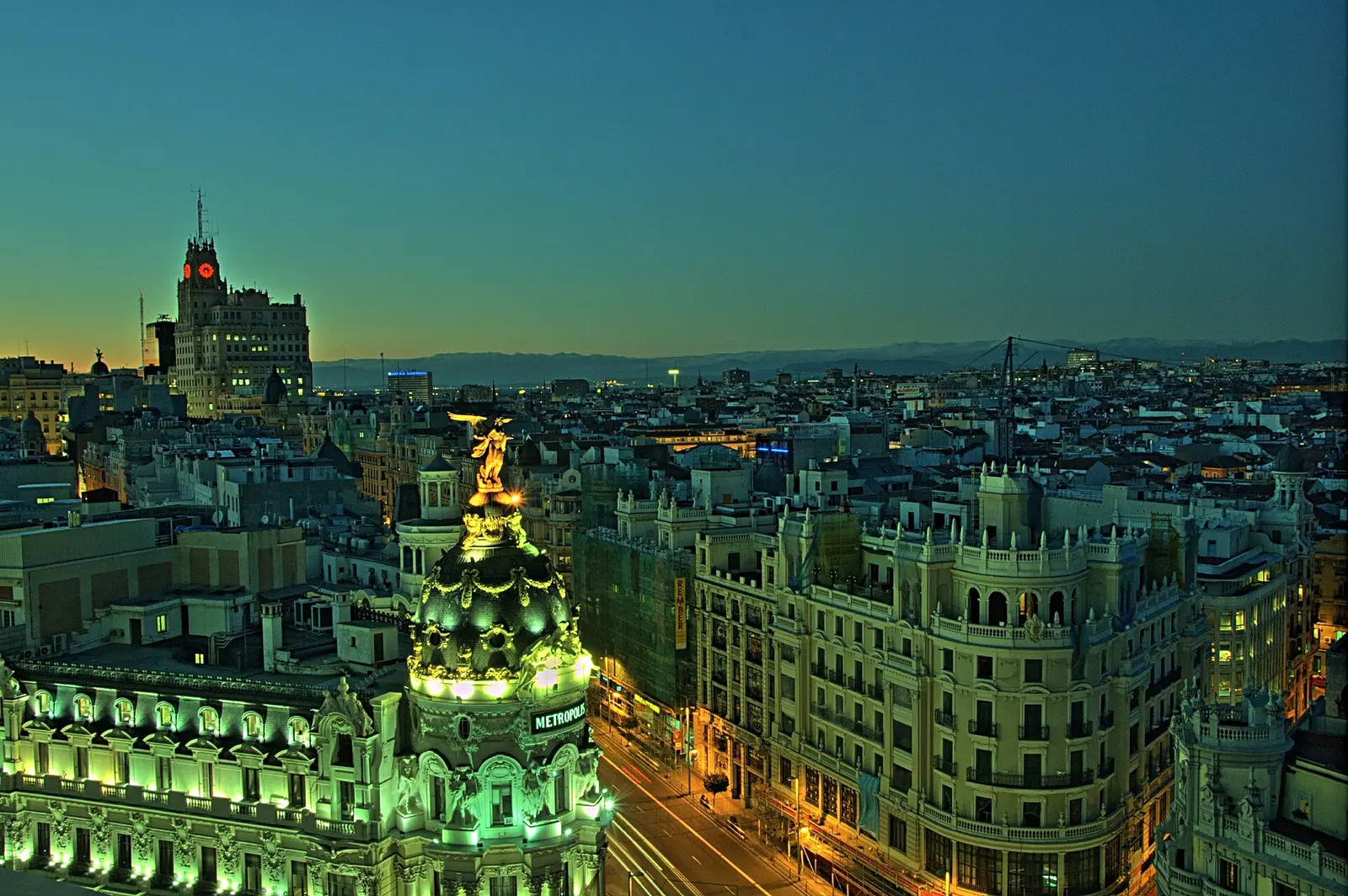
 Photo:
Madrid sits high on the plateau of Castile, a capital by royal choice since 1561, and it lives outdoors: on café terraces, in its squares and in the bars where the evening begins. Three of the world’s great art museums line one boulevard, the Paseo del Prado, the old center of the Habsburg kings is small enough to walk, and the Retiro park is a few minutes from all of it.
This guide covers when to go, where to stay, what to see, a walk from the Puerta del Sol to the Royal Palace, a day in Toledo, what to eat, and the history, art and customs that make the city make sense.
What Madrid is good for
Friends' trips
Hop between the tapas bars of the Cava Baja, spend Sunday morning at the Rastro flea market and the vermouth bars after it, row a boat on the Retiro lake and watch the sun go down from a rooftop terrace. The city is big, but its center is walkable and made for groups.
Bachelorette and bachelor weekends
Madrid’s nights start late and run until morning: a long dinner at ten, a flamenco show, the bars of Malasaña and Chueca, then clubs that fill after 1am. Finish with chocolate con churros at San Ginés, which is open around the clock.
Weddings and honeymoons
A civil wedding in Spain needs one partner to be a Spanish citizen or a legal resident, so visiting couples usually marry at home and hold a symbolic ceremony here. For a honeymoon, pair the city with a day in Toledo, or take the fast train south to Seville or Granada.
Couples
Sunset at the Temple of Debod, a rowing boat on the Retiro lake, dinner in the lanes of the Barrio de las Letras and a late flamenco show in a small tablao.
Families
Rowing boats and free weekend puppet shows in the Retiro, the Teleférico cable car to the Casa de Campo and its zoo, and the armor of the royal armory. On Calle del Arenal, a plaque marks the home of Ratoncito Pérez, the mouse who collects Spanish children’s milk teeth.
Solo travel
Safe, easy to get around and full of bars where eating alone at the counter is normal. The free museum hours and a walking or tapas tour make it easy to fill the days and meet people.
Food lovers
Cocido in stages at a long lunch, calamari sandwiches by the Plaza Mayor, huevos rotos, callos in winter, vermouth on tap and chocolate con churros at any hour.
History and art
Velázquez, Goya and Bosch at the Prado, Picasso’s Guernica at the Reina Sofía, the Royal Palace, and the arcaded Plaza Mayor of the Habsburg kings.
Plan your trip
When to go
Spring (April to June) and autumn (September and October) bring warm days and cool evenings. Madrid sits at about 650 meters, and July and August are hot and dry; in August many locals leave town, though the old-quarter festivals of San Cayetano, San Lorenzo and La Paloma fill La Latina and Lavapiés. Winter is cold but mostly sunny. Mid-May brings San Isidro, the city’s own festival, and the Book Fair fills the Retiro from late May.
How long to stay
Three days covers the Prado, the Royal Palace, the Retiro and the old center at a human pace. Four days adds the Reina Sofía and the Thyssen and a slow day in La Latina or Malasaña. With five, add a day trip to Toledo, Segovia or El Escorial.
Getting there
Madrid-Barajas Airport (MAD) is northeast of the city. Metro line 8 runs from the terminals to Nuevos Ministerios in about 15 to 20 minutes, with an airport supplement on the fare; the Airport Express bus runs 24 hours to Cibeles; and taxis charge a fixed fare to anywhere inside the M-30 ring road. High-speed trains reach Atocha and Chamartín from Barcelona in two and a half to three hours and from Seville in about two and a half.
Getting around
Walk the center: Sol, the Plaza Mayor, the palace and the museums are all within half an hour of each other on foot. The metro has 12 lines and a short branch, and since June 2026 you can tap a contactless bank card at the gates; a tourist pass covers one to seven days. City buses fill the gaps.
Tickets
Book the Royal Palace and the Prado ahead on their official sites. The Prado is free for its last two hours each day, the Thyssen on Monday afternoons, and the Reina Sofía, closed on Tuesdays, on most evenings from 7pm; expect lines. The Paseo del Arte pass covers all three museums for less than three tickets.
Money and tipping
Tipping is not expected: round up or leave a few euros for good service. On weekdays most restaurants serve a menú del día at lunch, a set meal that is the best value of the day, and many bars still bring a small free tapa, often olives or crisps, with a drink. Cards are accepted almost everywhere.
Weather, month by month
Spring
March to May
Mild and bright, from about 15°C in March to the mid-20s in May, with April showers and cool nights.
Summer
June to August
Hot and dry, often 35°C or more in July and August, with long light evenings. See sights in the morning, rest after lunch, go out late.
Autumn
September to November
Warm Septembers and golden Octobers, cooling into November, when the rain returns and the Retiro turns yellow.
Winter
December to February
Cold, crisp and mostly sunny, with days around 10°C and nights near freezing. Snow in the city is rare.
Top sights
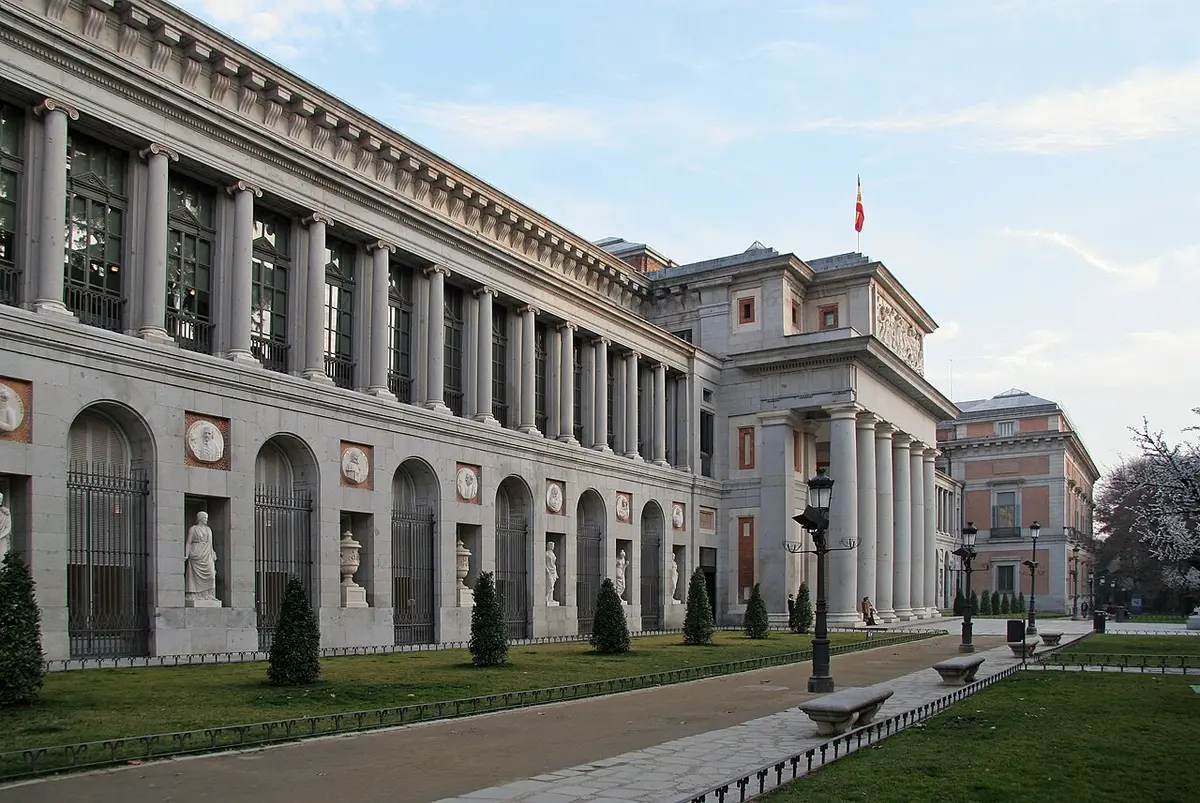 01
The Prado Museum
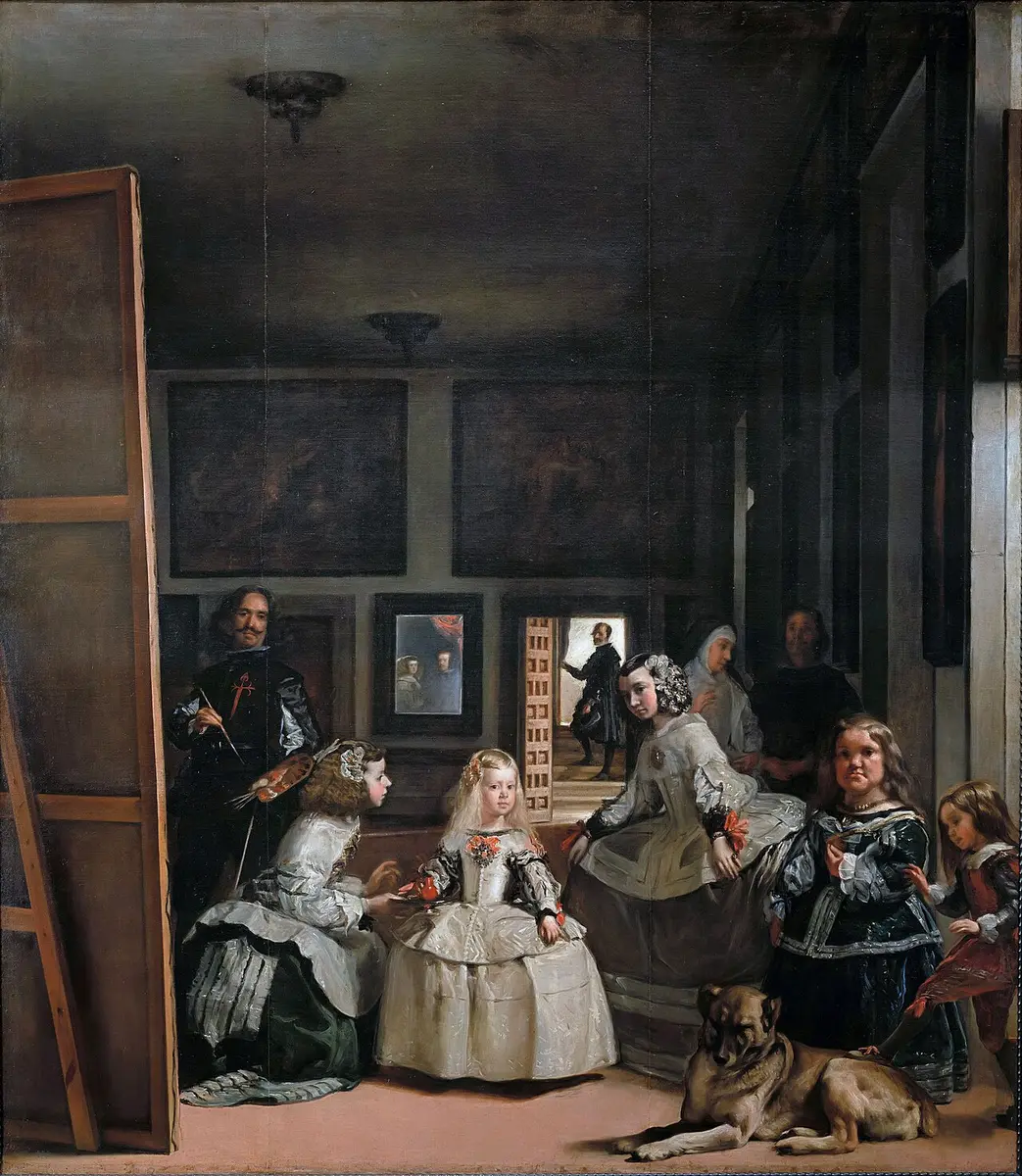
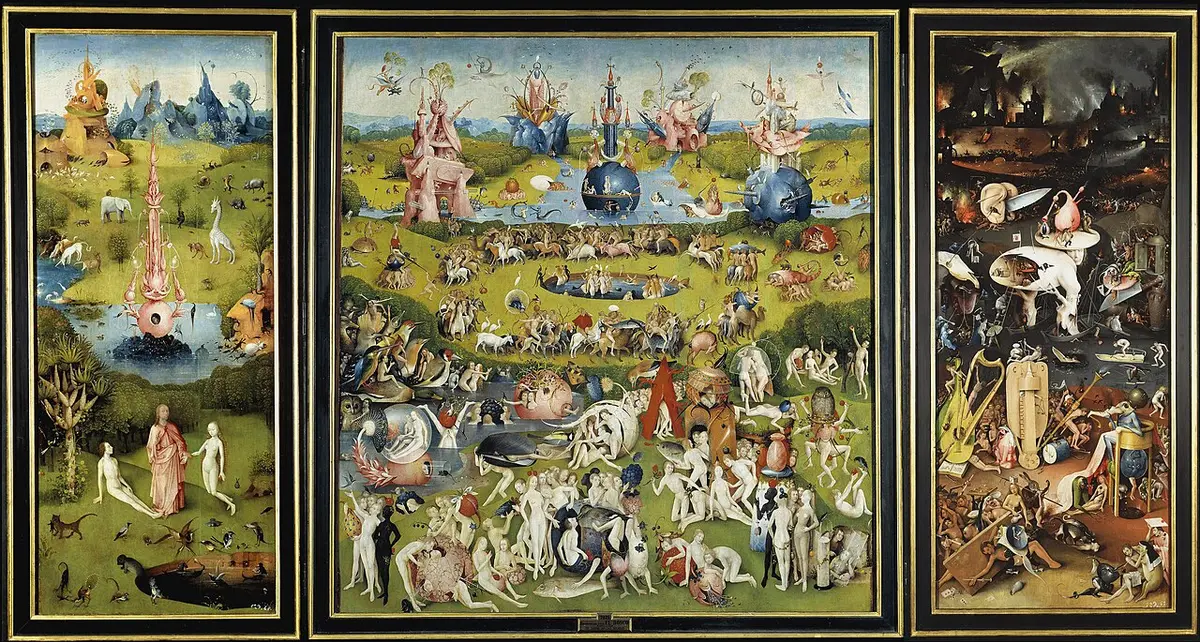
One of the world’s great collections of painting, in a building Juan de Villanueva designed for Charles III and opened as a royal museum in 1819. Come for Velázquez’s Las Meninas, Goya from his court portraits to the Black Paintings, El Greco, Titian, Rubens and Bosch’s Garden of Earthly Delights.
Book a timed ticket, or come in the free last two hours (6pm to 8pm, and 5pm to 7pm on Sundays and holidays) and choose a few rooms.
Photo: Brian Snelson from United Kingdom, CC BY 2.0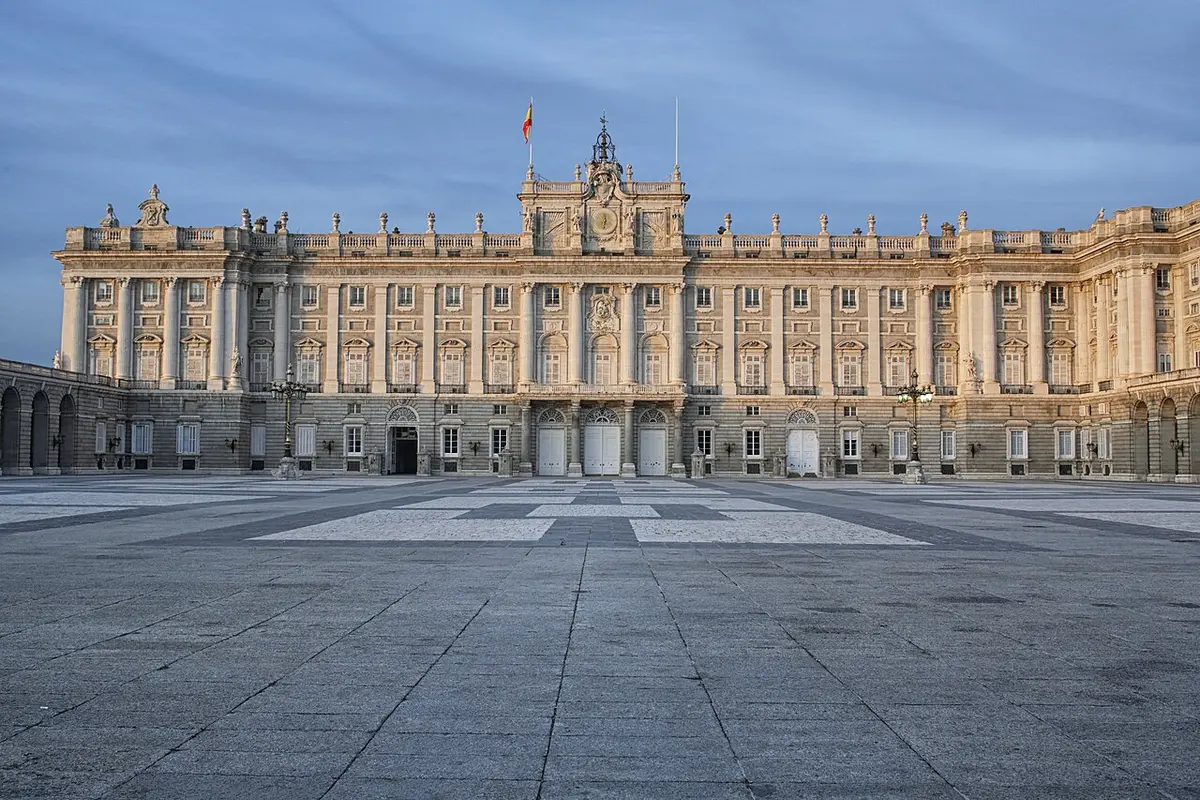 02
The Royal Palace
Built from 1738 on the site of the old Alcázar, which burned on Christmas Eve 1734, it is the largest royal palace in Europe by floor area, with 3,418 rooms. It is no longer a royal home and serves for state ceremonies; visits take in the grand staircase, the throne room and the royal armory. The Gallery of the Royal Collections opened next door in 2023.
The Changing of the Guard takes place on Wednesdays and Saturdays from 11am (10am in July and August). On the first Wednesday of most months, the solemn changing at noon brings horses, cannon and hundreds of soldiers.
Photo: Javier Perez Montes, CC BY-SA 4.0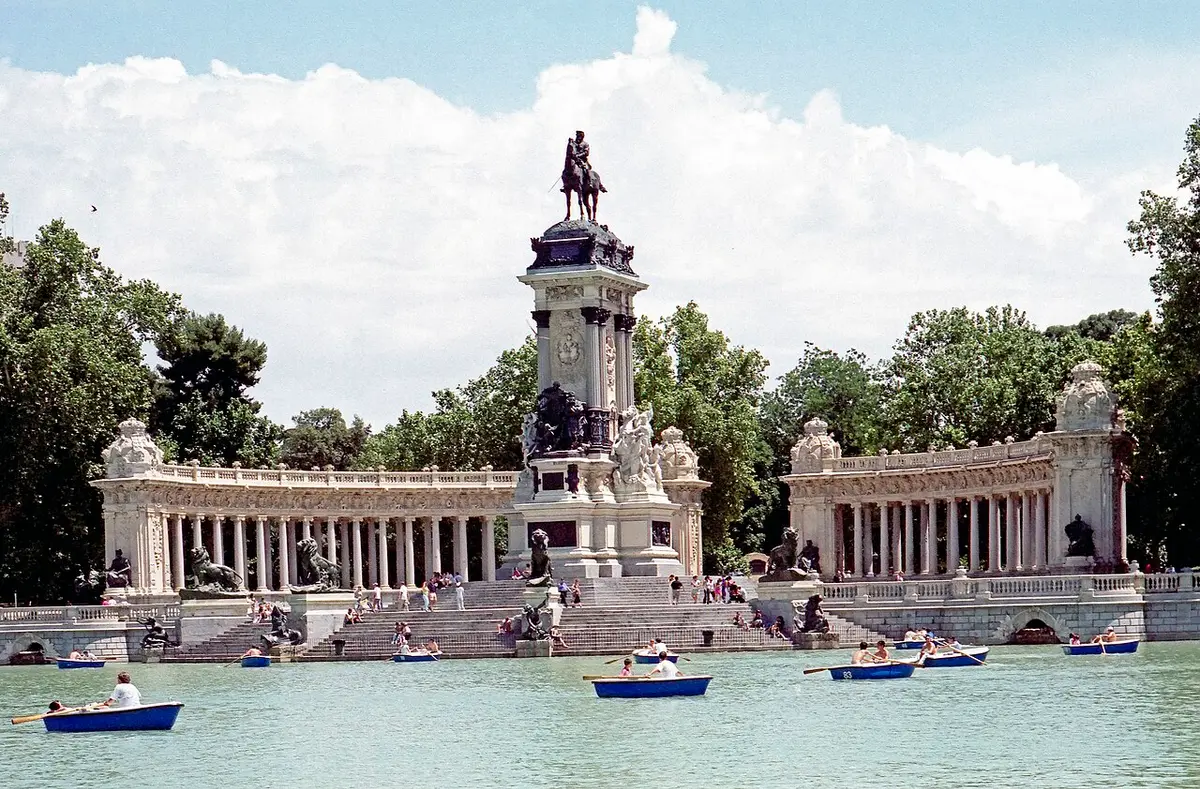 03
El Retiro
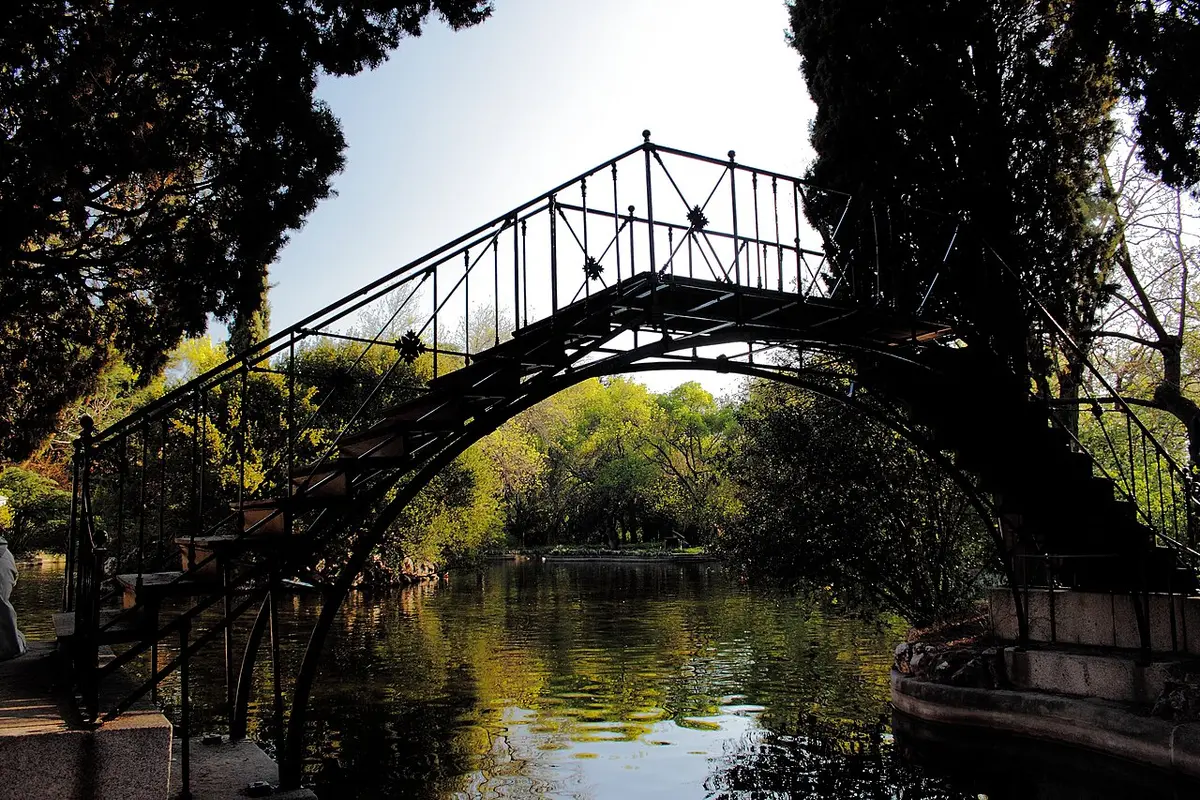
A royal garden from the 1630s, public since 1868 and a UNESCO World Heritage Site, with the Paseo del Prado, since 2021. Row a boat on the lake below the monument to Alfonso XII, walk the rose garden in May and look for the Fallen Angel, a fountain crowned by a statue of Lucifer.
The Crystal Palace, the park’s glass pavilion of 1887, is closed for restoration until about 2027.
Photo: Dennis G. Jarvis, CC BY-SA 2.0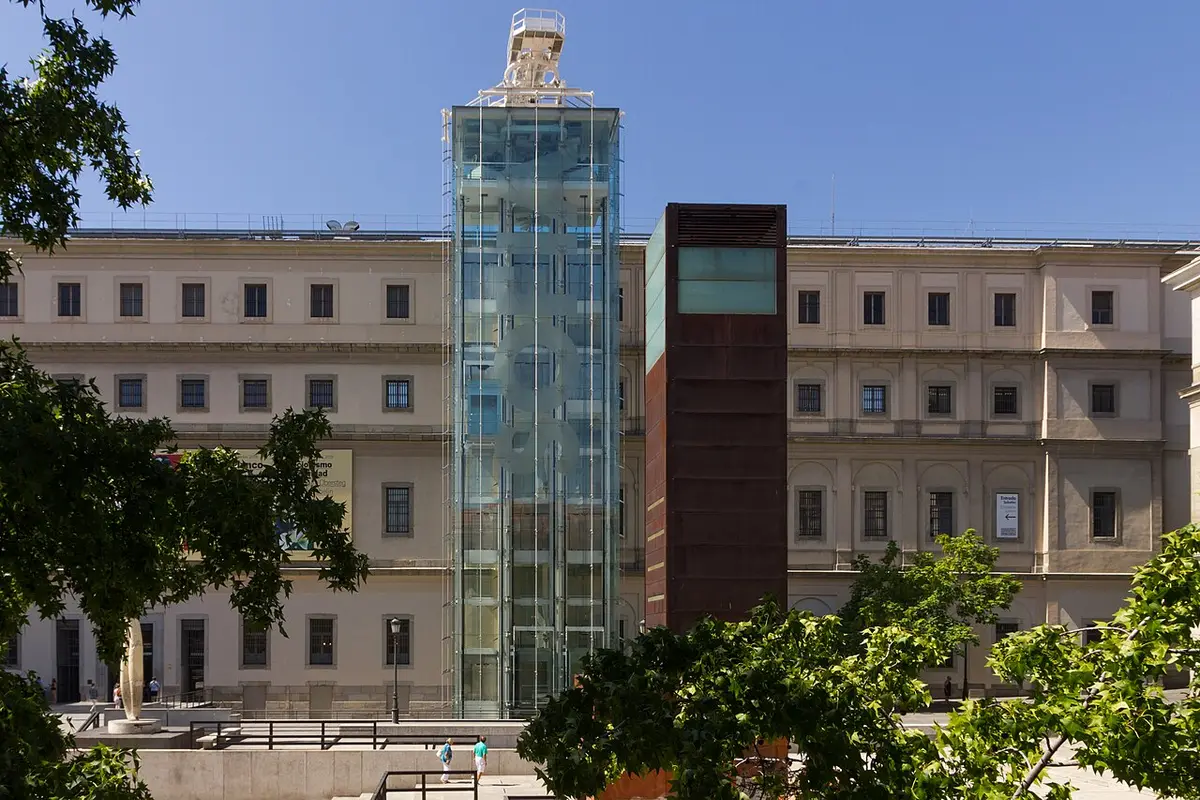 04
The Reina Sofía
Spain’s national museum of 20th-century art fills the city’s old general hospital and an extension by Jean Nouvel. Its heart is Picasso’s Guernica, painted in 1937 for the Spanish Republic’s pavilion at the Paris World’s Fair and brought to Spain only in 1981, with rooms of Dalí and Miró nearby.
Closed on Tuesdays. Entry is free on Monday and Wednesday to Saturday evenings from 7pm, and on Sundays from 12:30pm until it closes at 2:30pm.
Photo: Liberaler Humanist, CC BY-SA 3.0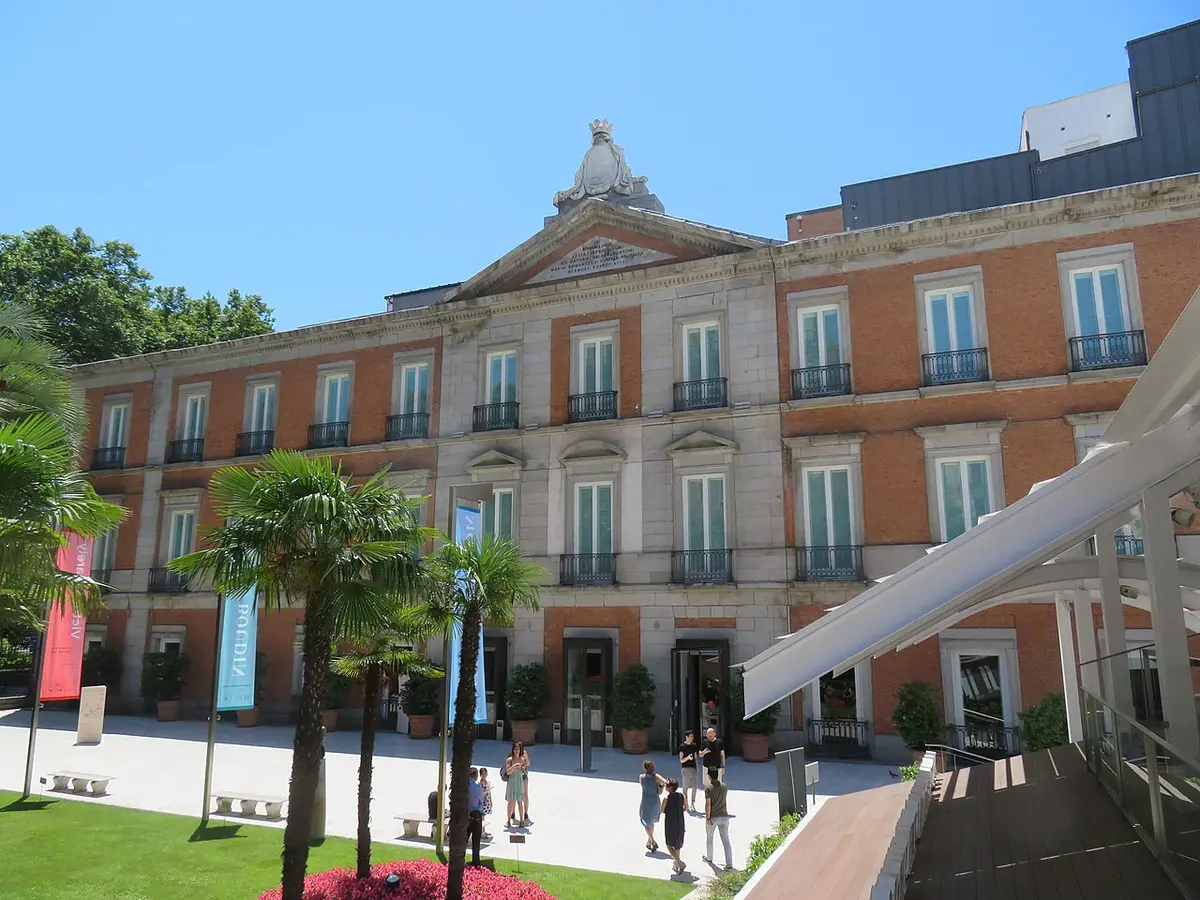 05
The Thyssen-Bornemisza Museum
The third of the great museums on the Paseo del Prado, and the one that fills the gaps: early Italian painting, Dutch masters, the Impressionists, German Expressionists and American painters, gathered by two generations of Thyssen-Bornemisza barons and shown in the Villahermosa Palace since 1992.
The permanent collection is free on Mondays from noon to 4pm.
Photo: Kyle Magnuson from Los Angeles, United States, CC BY 2.0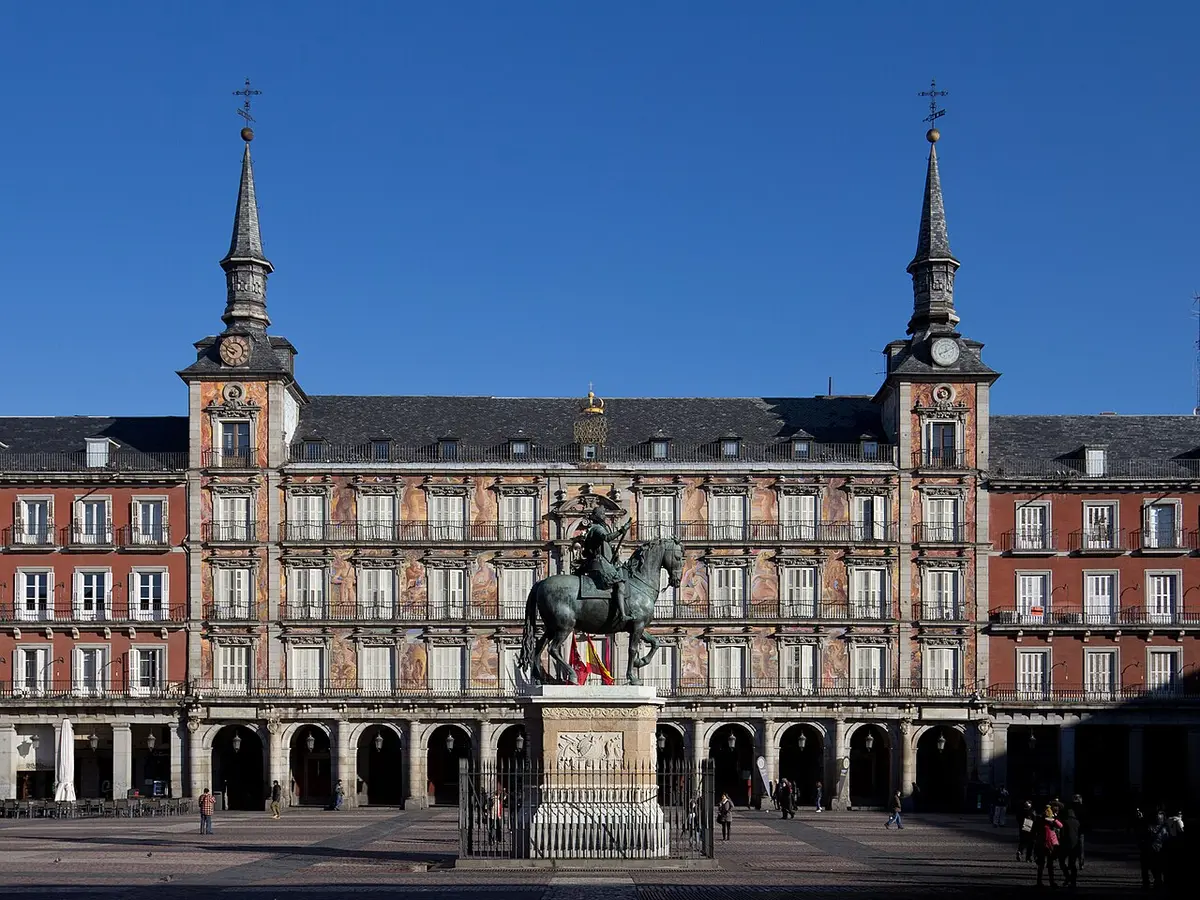 06
Plaza Mayor
The great arcaded square of Habsburg Madrid, finished in 1619, with 237 balconies looking down on the bronze of Philip III. It has seen markets, bullfights, royal celebrations and executions, and today holds a Christmas market in December and a stamp and coin market on Sunday mornings.
Eat in the streets around it: the terraces on the square charge for the view.
Photo: Carlos Delgado, CC BY-SA 3.0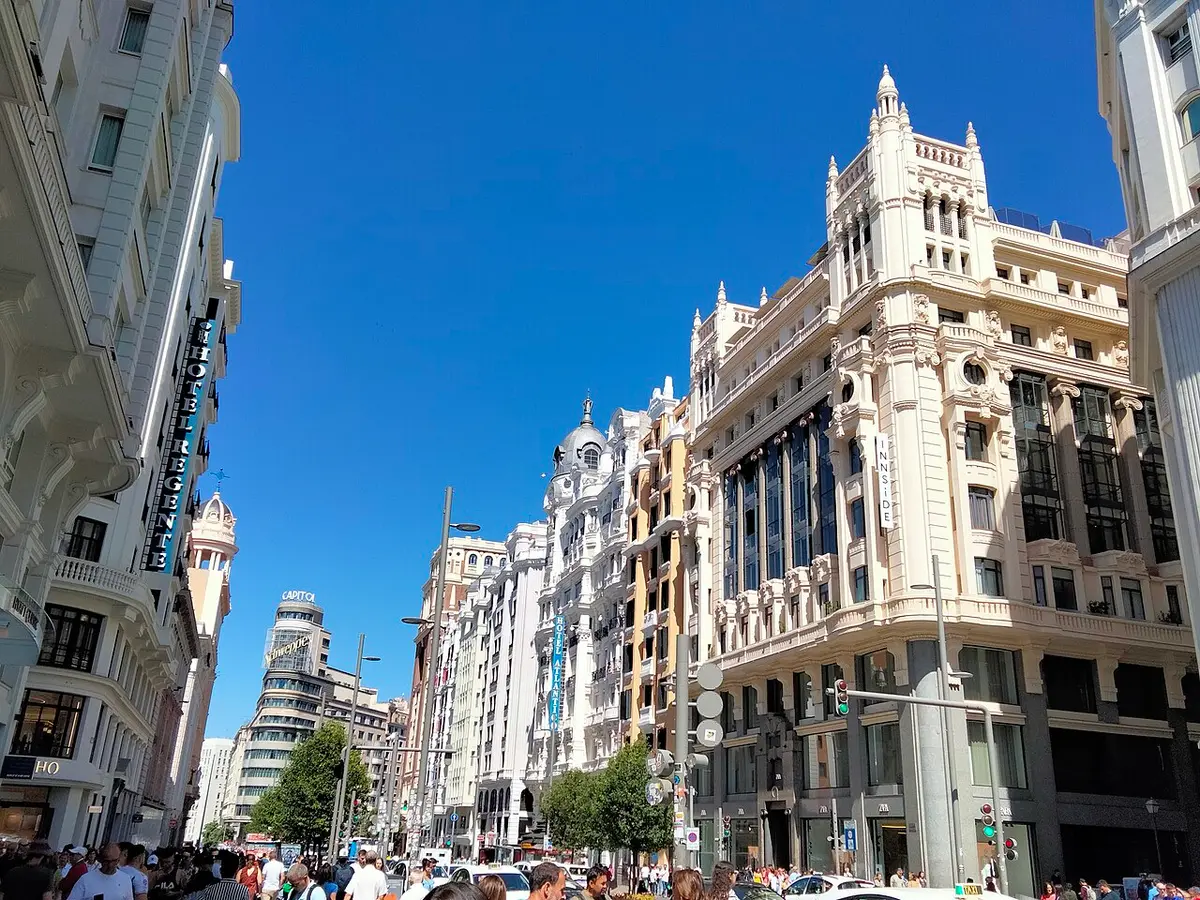 07
Gran Vía
Madrid’s grand avenue was cut through the old center from 1910 to 1929 and lined with banks, hotels, theaters and cinemas in the styles of the day, from the domed Metrópolis building at its eastern end to the Telefónica tower, the tallest building in the city when it went up. It is still the street for musicals, shopping and evening crowds.
For the view down the avenue at dusk, take the lift to the rooftop terrace of the Círculo de Bellas Artes on Calle de Alcalá, for a small fee.
Photo: Enric, CC BY 4.0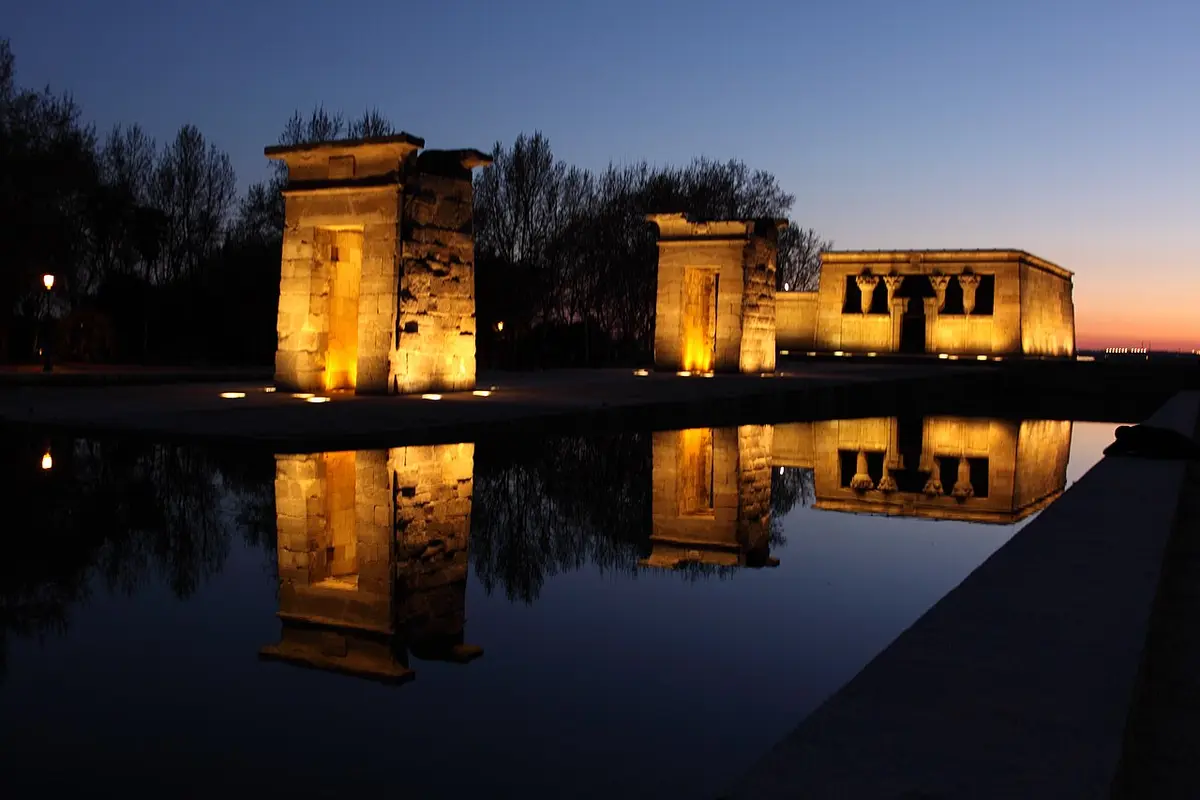 08
The Temple of Debod
A 2nd-century BC temple from Nubia, given to Spain by Egypt in 1968 for its help in saving the temples of Abu Simbel from the waters of the Aswan dam, and rebuilt stone by stone on a ridge in the Parque del Oeste. Come at sunset, when the stone turns gold and the sun goes down behind the Casa de Campo.
Inside is free, closed on Mondays and limited to 30 people at a time: book a slot on the city’s website.
Photo: Adrian Diez, CC BY-SA 3.0
Three hidden gems
From the Puerta del Sol to the Royal Palace
The Madrid of the Habsburg kings in one easy morning: the clock Spain watches at New Year, the great arcaded square, the oldest houses in town, a stretch of the Muslim wall and a bronze king balanced on two hooves.
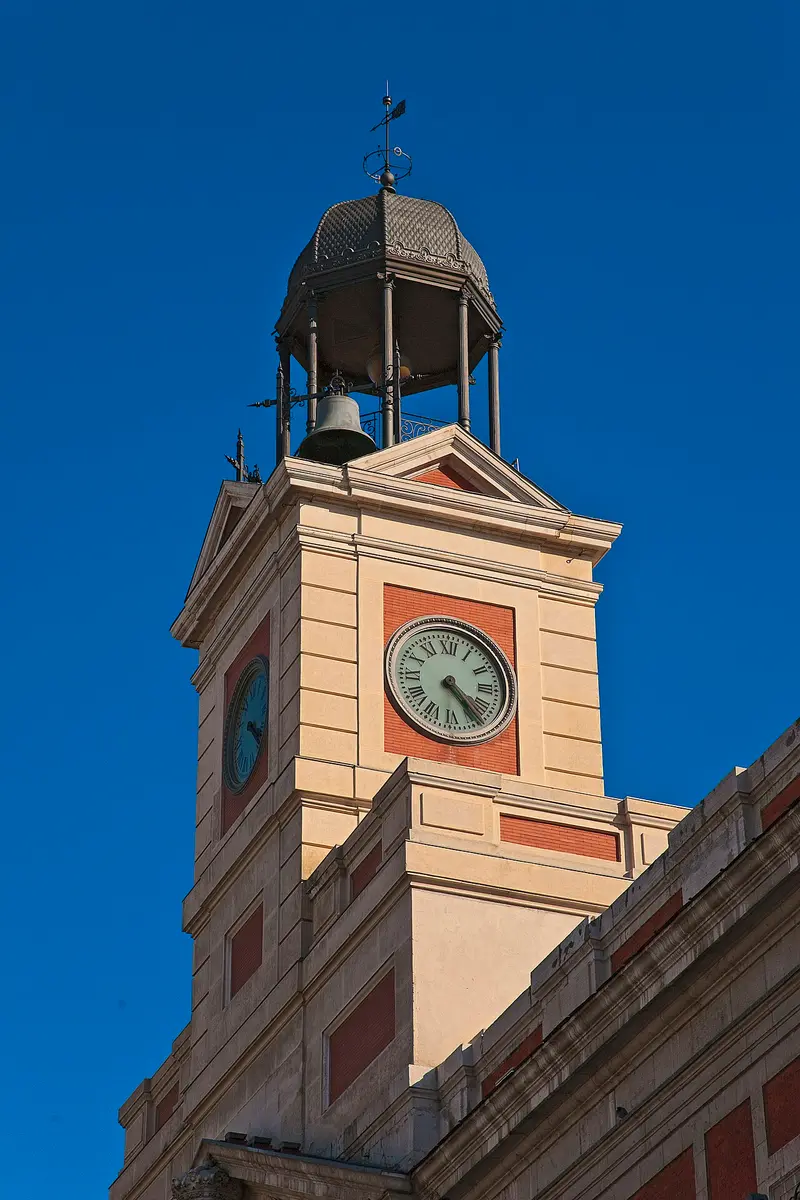
Start at the Puerta del Sol, under the clock of the Real Casa de Correos, the old post office built in the 1760s. At midnight on New Year’s Eve the whole country watches this clock on television and eats a grape at each of its twelve strokes. In the pavement by the door, a plaque marks Kilometer Zero, the point from which Spain’s main roads are measured, and across the square stands the bronze bear reaching into a strawberry tree, the emblem of the city.
Walk west along Calle Mayor and turn left into the Plaza Mayor, finished in 1619 under Philip III, whose statue stands in the middle. The square burned three times, and after the last fire, in 1790, Juan de Villanueva rebuilt it lower and closed its corners with arches. Leave by the steep steps of the Arco de Cuchilleros in the southwest corner. At the bottom is Botín, which Guinness lists as the oldest restaurant in the world, still roasting suckling pig and lamb in its wood oven.
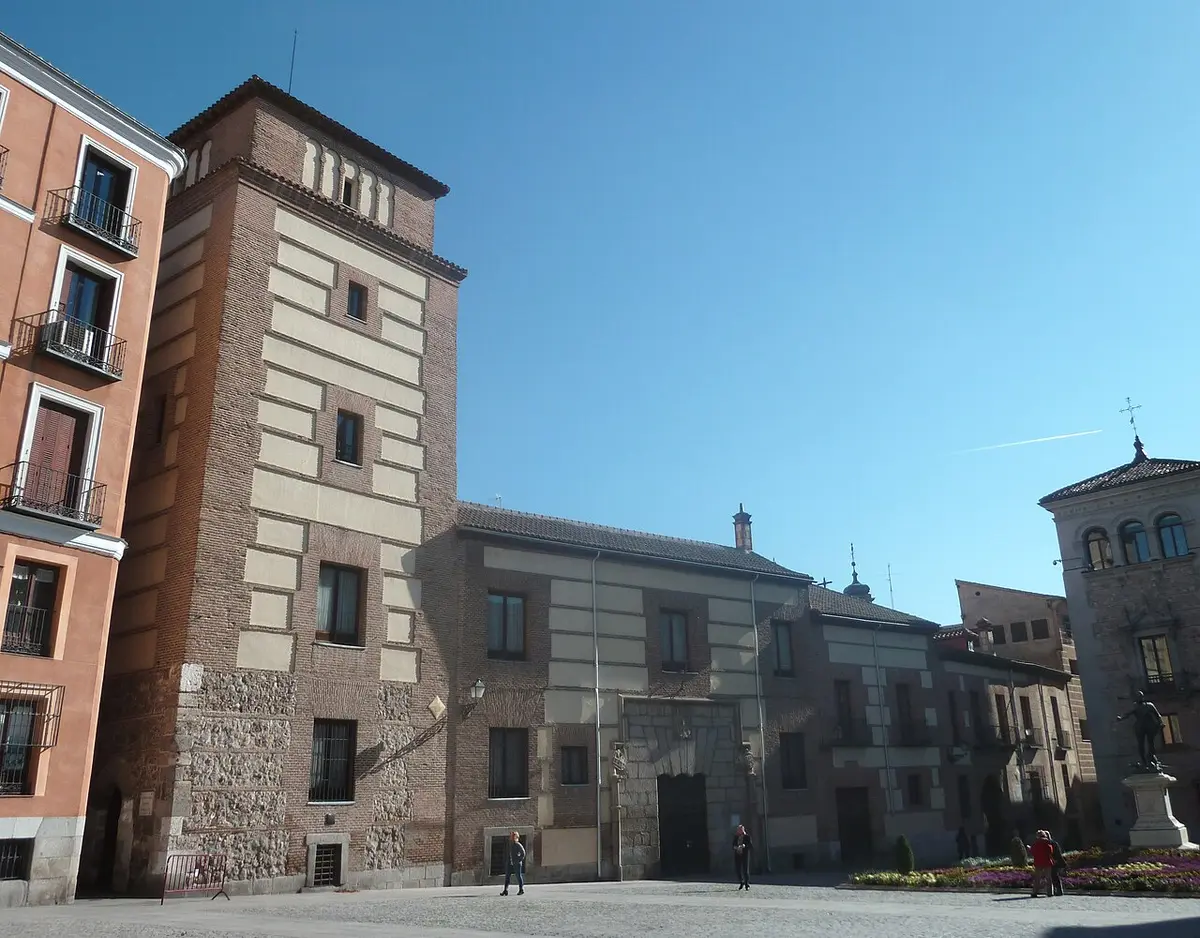
Back on Calle Mayor, the Mercado de San Miguel, an iron and glass market hall from 1916, is now a place to graze on oysters, ham and vermouth. A few steps on, the small Plaza de la Villa gathers three centuries of Madrid around one square: the brick Torre de los Lujanes of the 15th century, among the oldest buildings in the city, the Casa de Cisneros of the 16th, and the 17th-century Casa de la Villa, the old town hall.
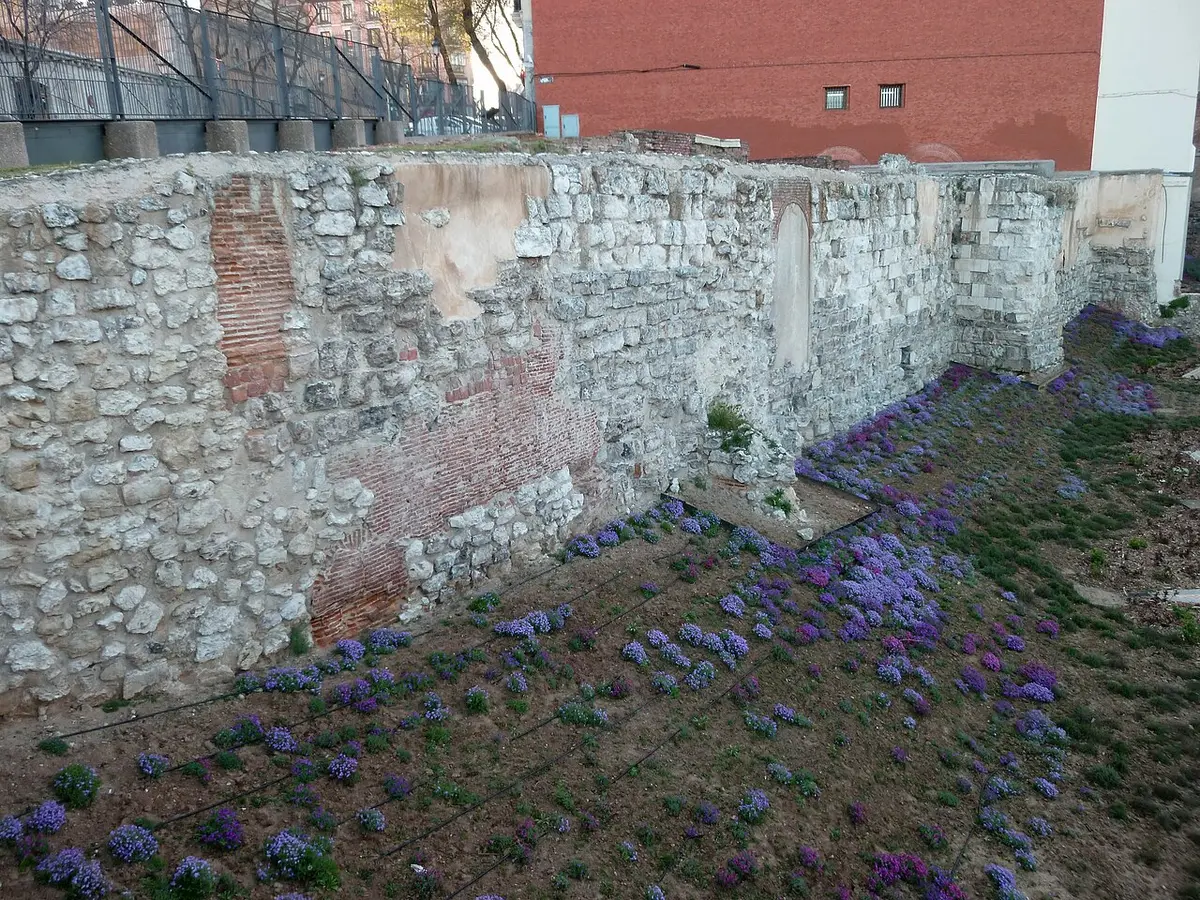
Calle Mayor ends at the Almudena Cathedral, begun in 1883 and consecrated only in 1993. Just below it, in the little Parque del Emir Mohamed I on the Cuesta de la Vega, runs the oldest stretch of wall in the city, built in the 9th century when Madrid was a Muslim fortress called Mayrit.
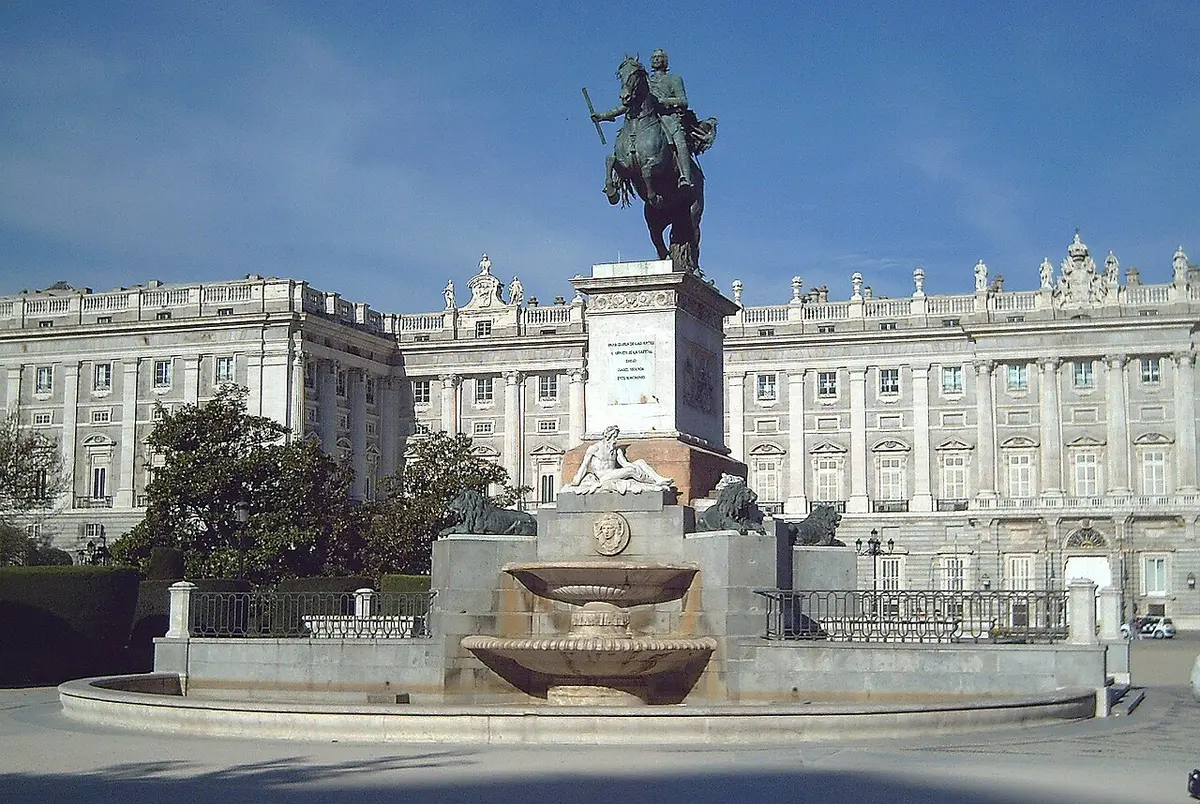
Walk around the cathedral to the Plaza de la Armería, the parade ground between church and palace, and the Royal Palace fills the view. Its east front faces the Plaza de Oriente, where Pietro Tacca’s bronze of Philip IV rears on its hind legs, one of the first large statues to balance that way; Galileo is said to have advised on it, with a solid back and a hollow front. Across the square stands the Teatro Real, the opera house, opened in 1850.
Where to stay
Pick the neighborhood first, then the hotel. Each link opens a map of places to stay around it.
Sol and Centro
First visitAround the Puerta del Sol and the Plaza Mayor, the old heart of the city. Everything is walkable, the metro is at the door and the streets are busy late into the night; rooms can be small and noisy.
See hotels in Sol and CentroBarrio de las Letras
Couples and museumsThe old literary quarter around Plaza de Santa Ana and Calle de las Huertas, where quotations are set into the pavement in bronze letters. Between Sol and the Prado, full of bars and small restaurants.
See hotels in Barrio de las LetrasLa Latina
Food and SundaysCrooked medieval lanes, the tapas bars of the Cava Baja, the Rastro flea market on Sunday mornings and the vermouth crowd after it. Central and lively, and loud on weekend nights.
See hotels in La LatinaMalasaña
Nightlife and friendsThe neighborhood of the 1808 uprising and of the Movida of the 1980s: vintage shops, cafés and bars around the Plaza del Dos de Mayo, with Chueca, the center of LGBTQ+ Madrid, next door.
See hotels in MalasañaSalamanca
Families and comfortA 19th-century grid of broad, quiet streets beside the Retiro, with the city’s smartest shops on Calle de Serrano. Calm at night and well served by the metro; rooms cost more.
See hotels in SalamancaLavapiés
Budget and local lifeSouth of the center, a hilly, mixed neighborhood of small theaters, cooking from around the world and good-value rooms, a short walk from the Reina Sofía. More workaday after dark.
See hotels in LavapiésThe 10 best budget hotels
Well-reviewed hotels at the lower end of Madrid’s prices, best-reviewed first. On a weeknight in November 2026 they cost about €120 to €220 for two; prices change daily, so check your own dates.
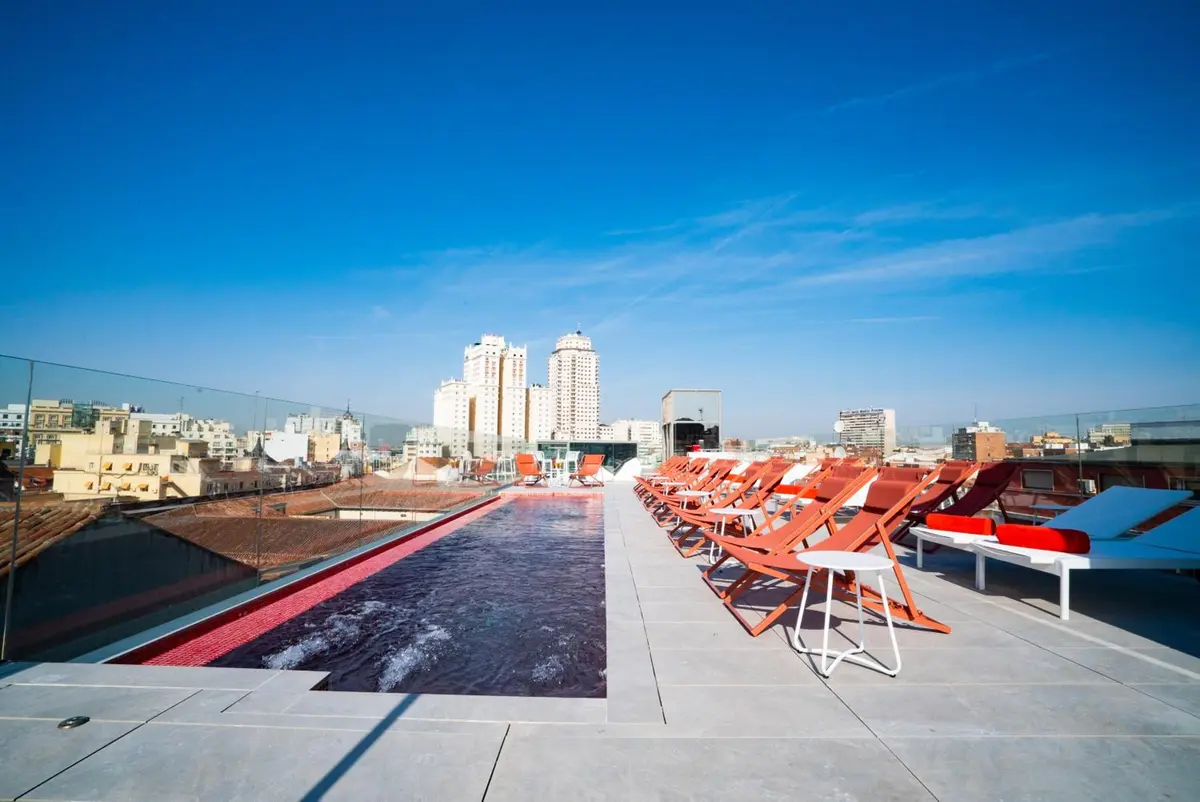 01
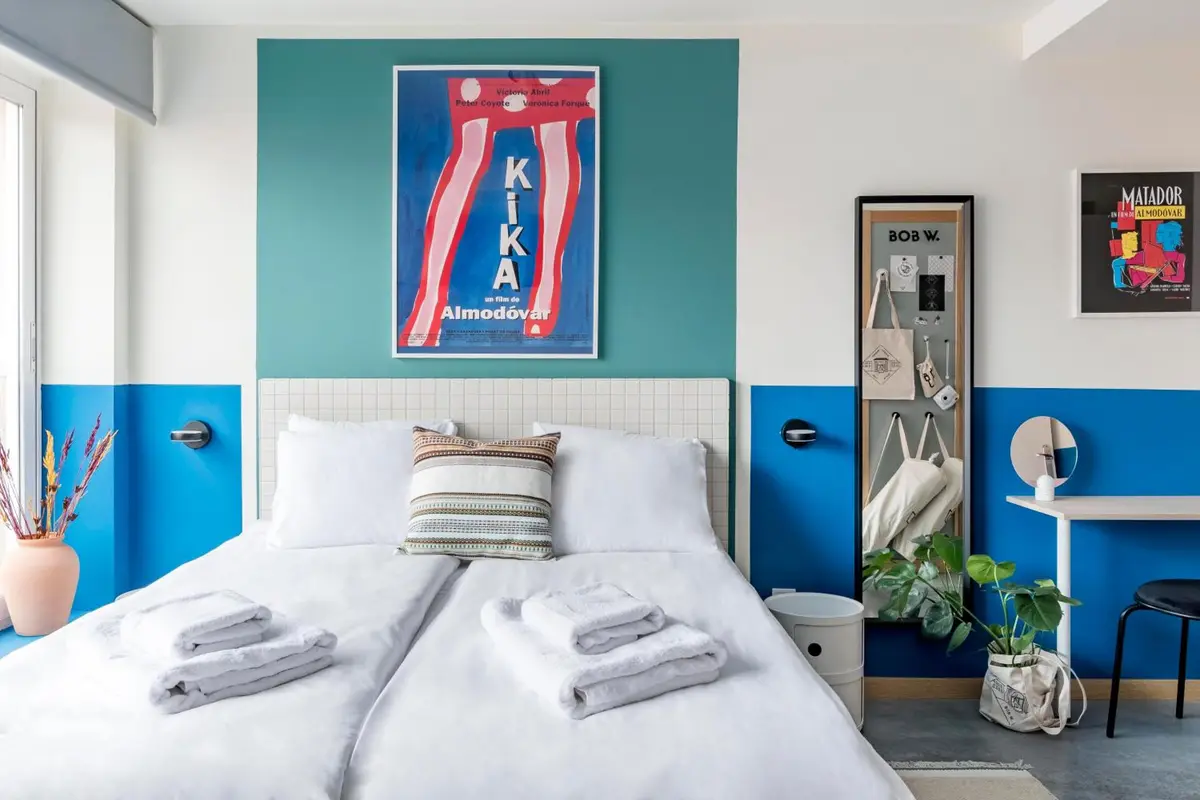 02
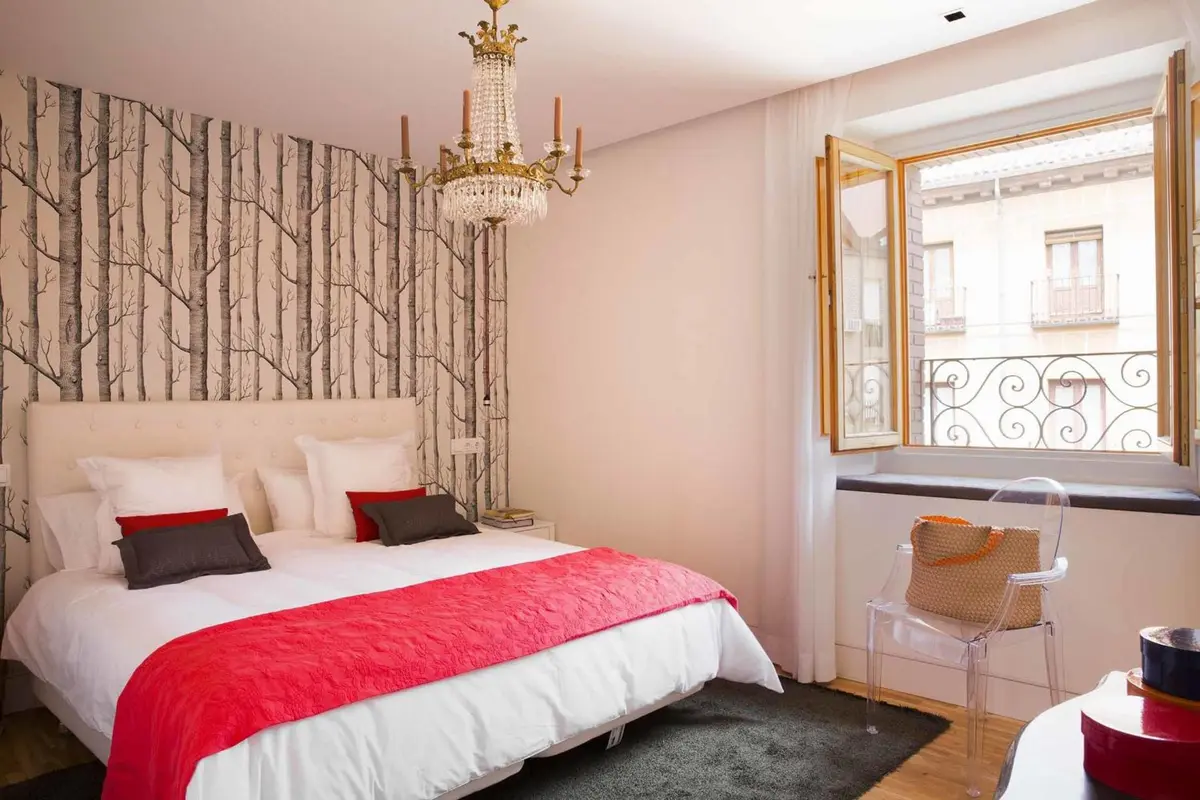 03
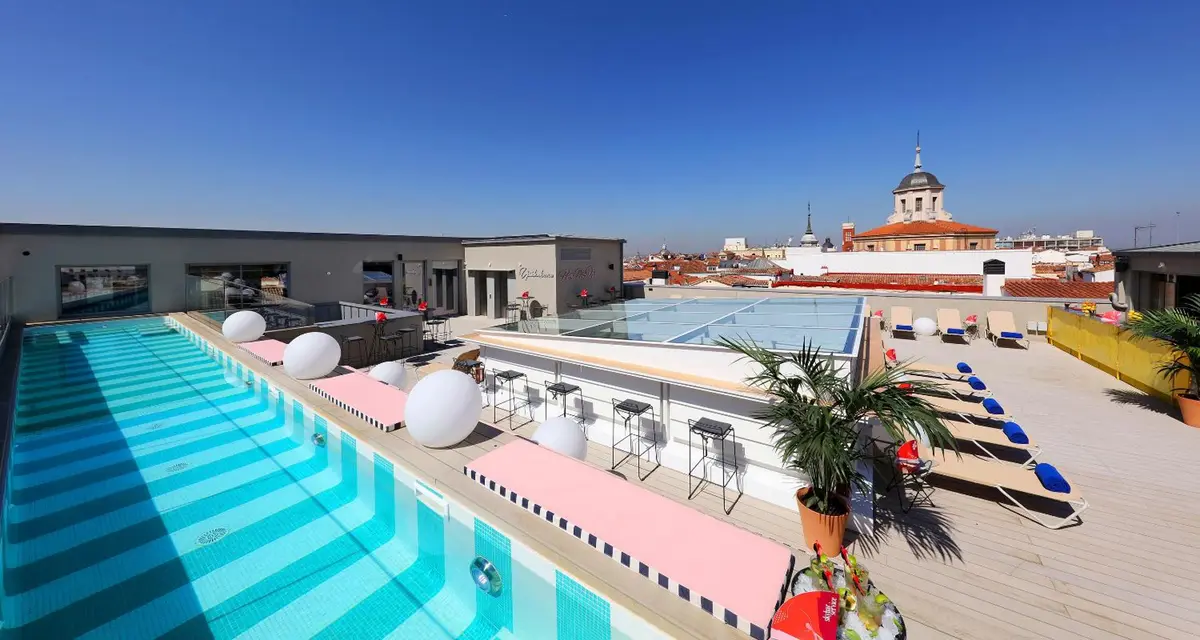 04
Axel Hotel Madrid - Adults Only
9.25,355 reviewsBarrio de las Letras
7 min walk to Puerta del Sol
See prices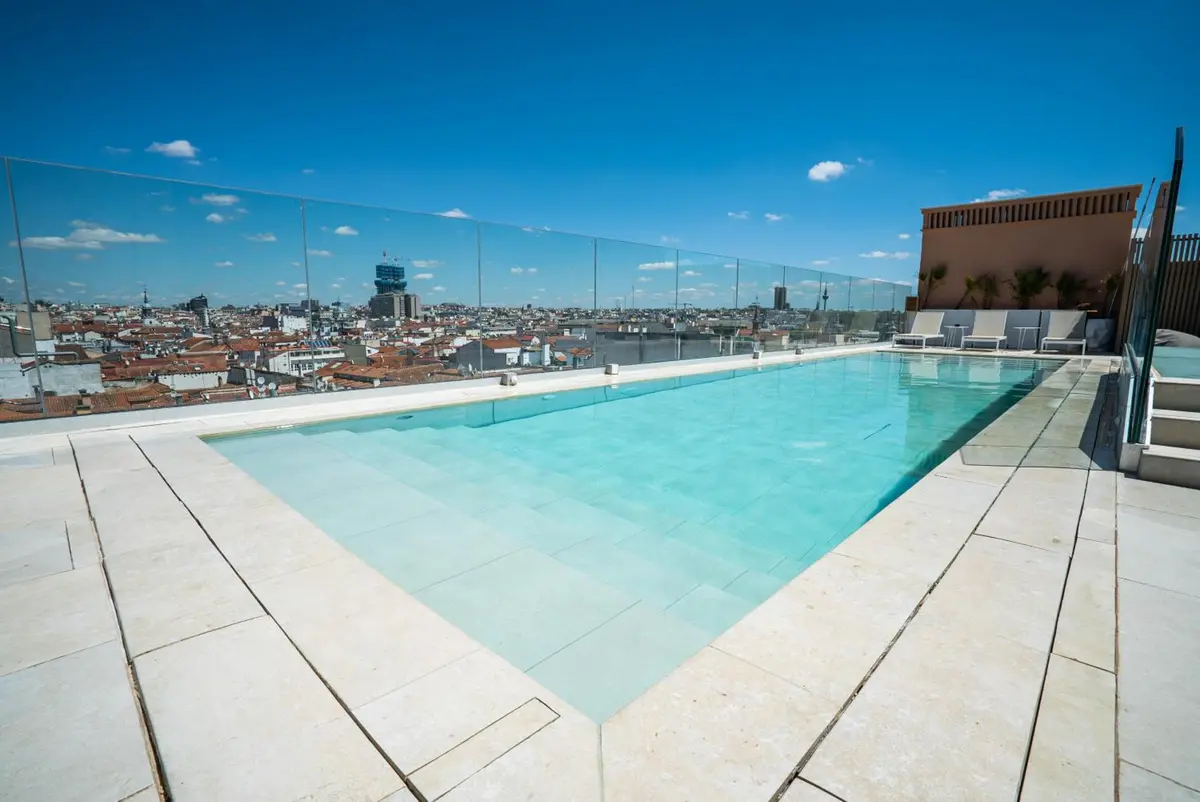 05
SmartRental Collection Gran Vía Capital
9.24,617 reviewsGran Vía
8 min walk to Puerta del Sol
See prices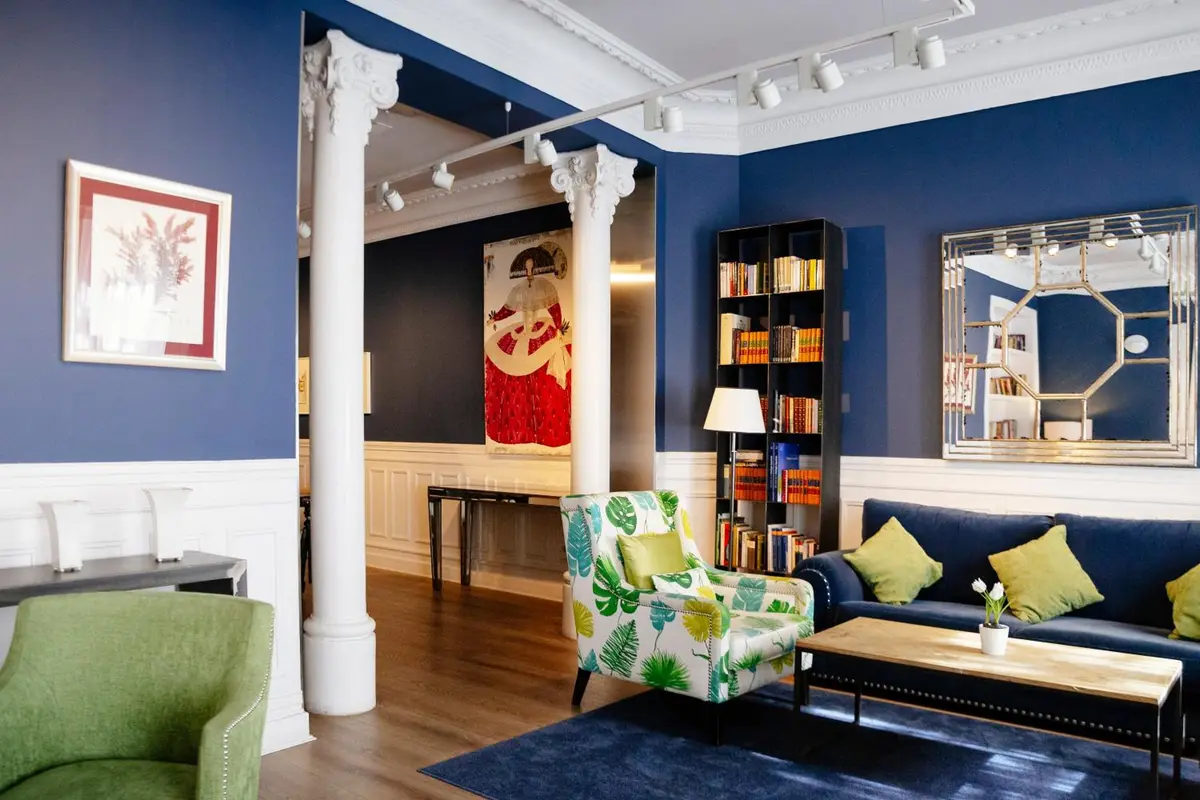 06
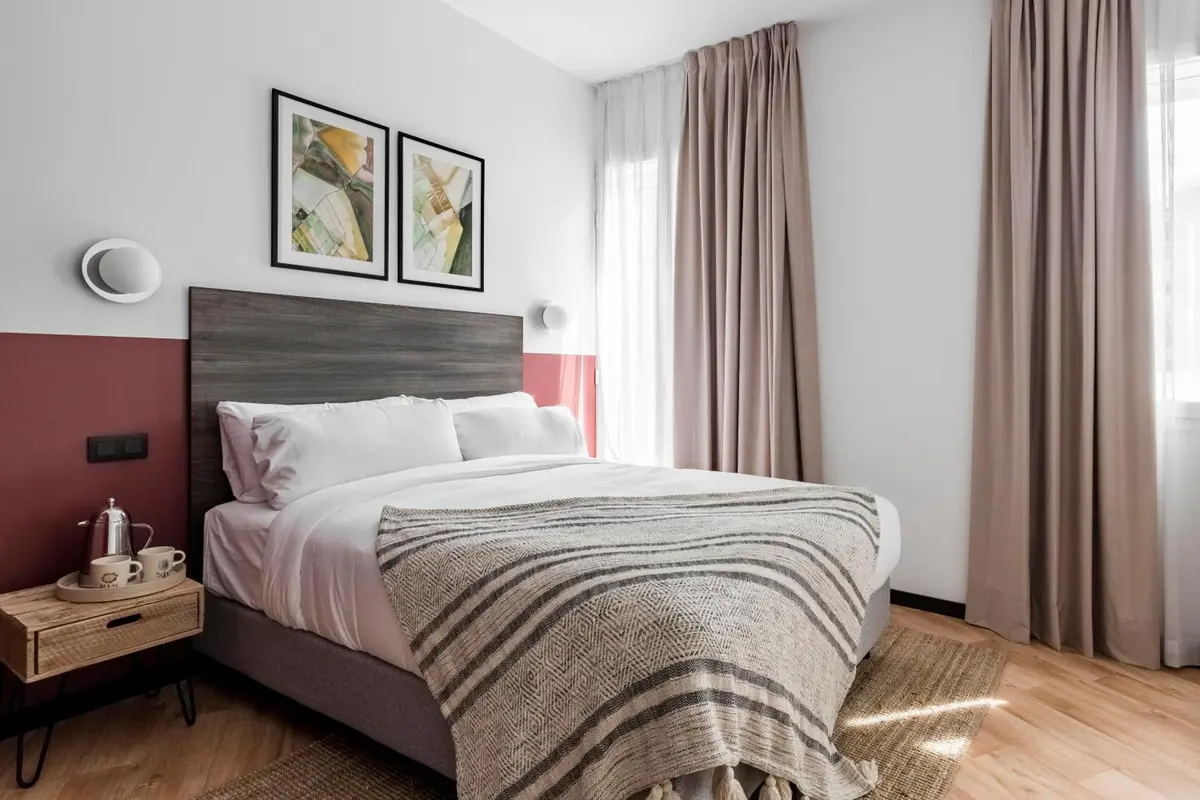 07
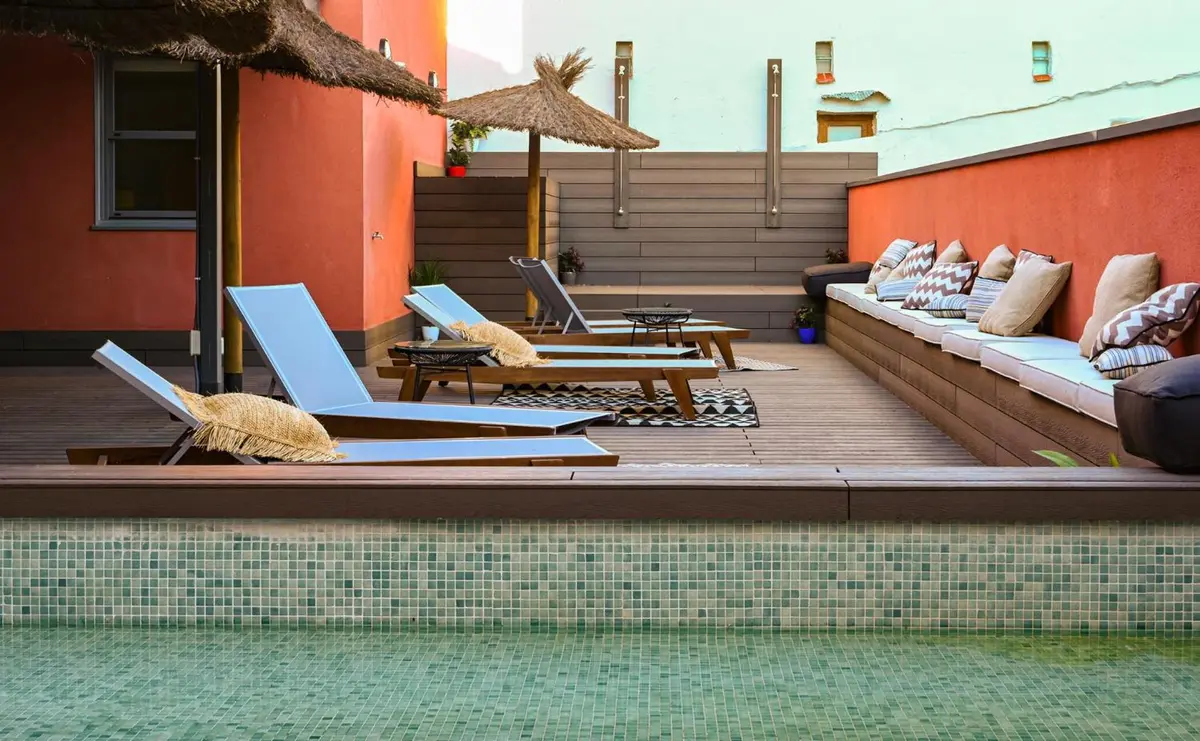 08
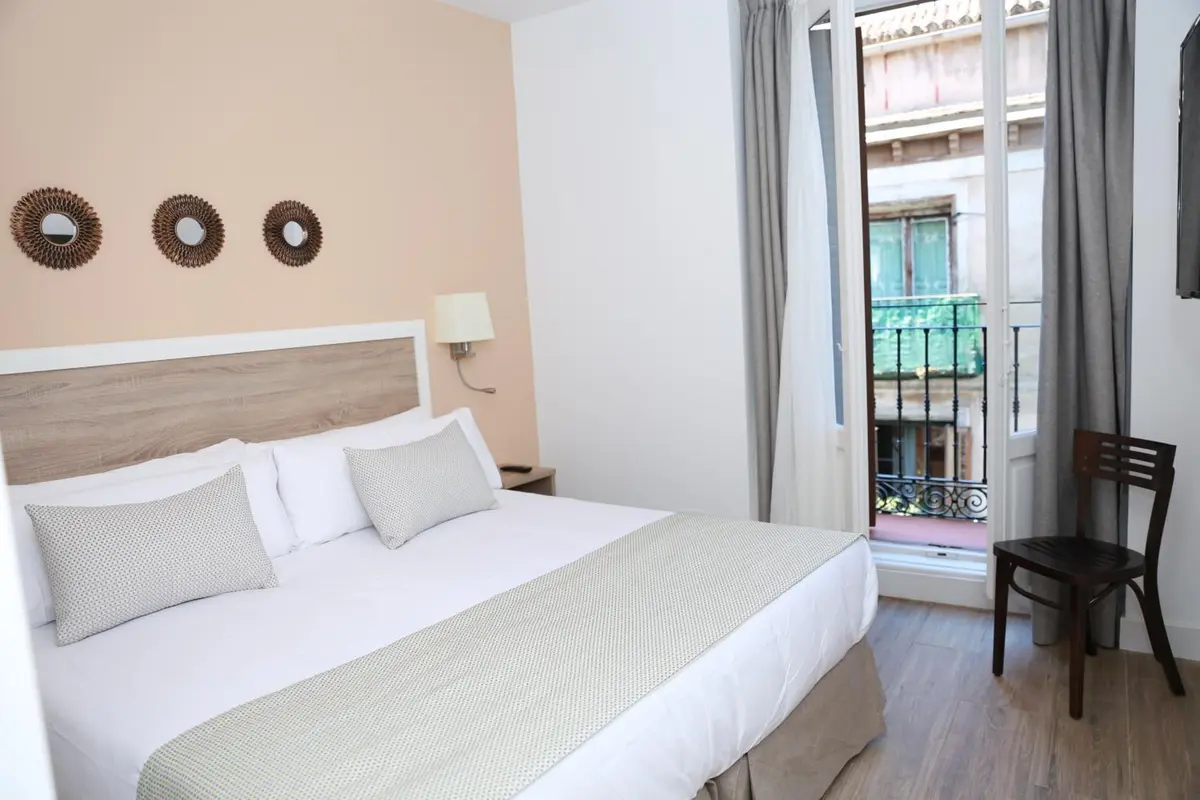 09
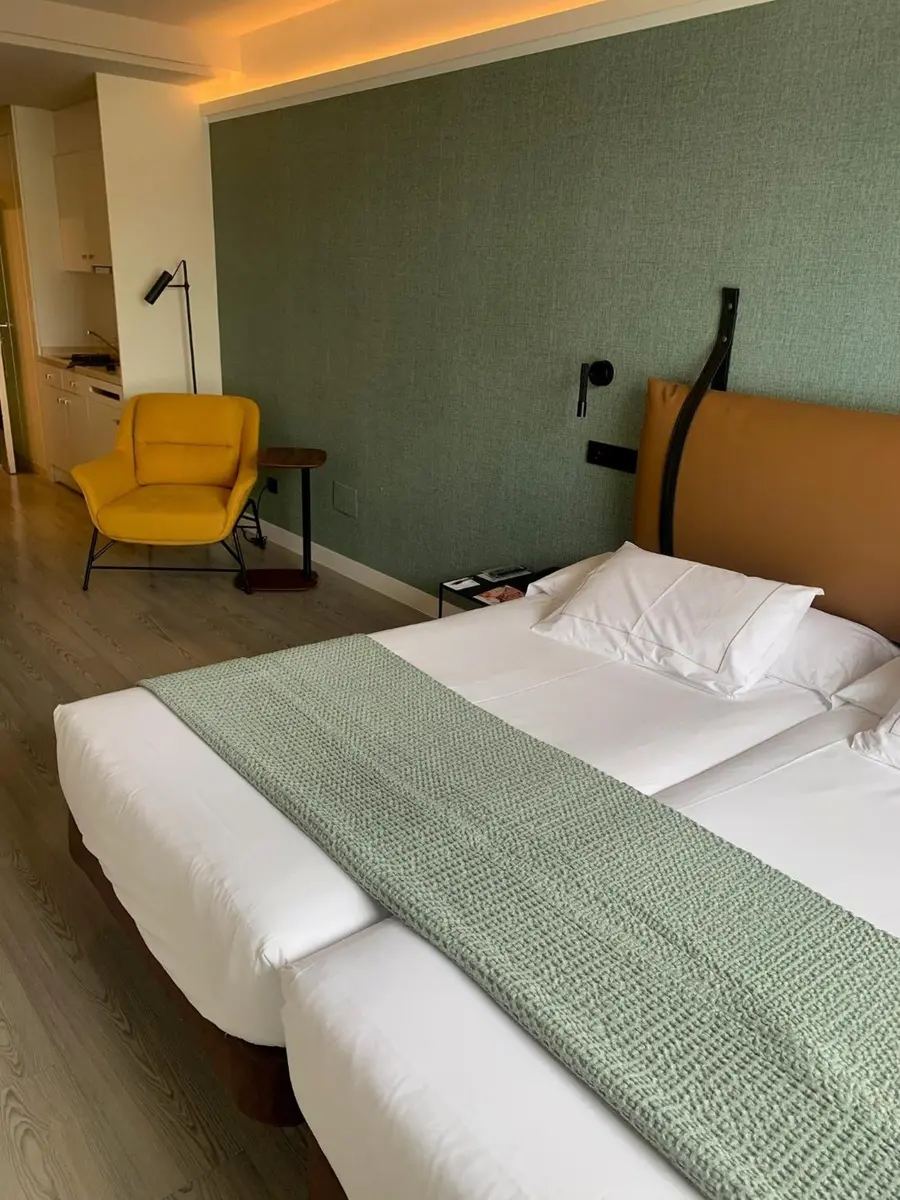 10
Suites Viena Plaza de España
9.11,858 reviewsPlaza de España
12 min walk to the Royal Palace
See prices
Hotel links go to Stay22. If you book, we may earn a commission, at no cost to you.
Food and drink
Madrid cooks with the whole of Spain’s larder, and its own dishes are hearty: stews, offal and fried squid, eaten standing at a bar or over a long lunch. Lunch runs from about 2pm and dinner from 9pm, and on weekdays most restaurants serve a set lunch, the menú del día.
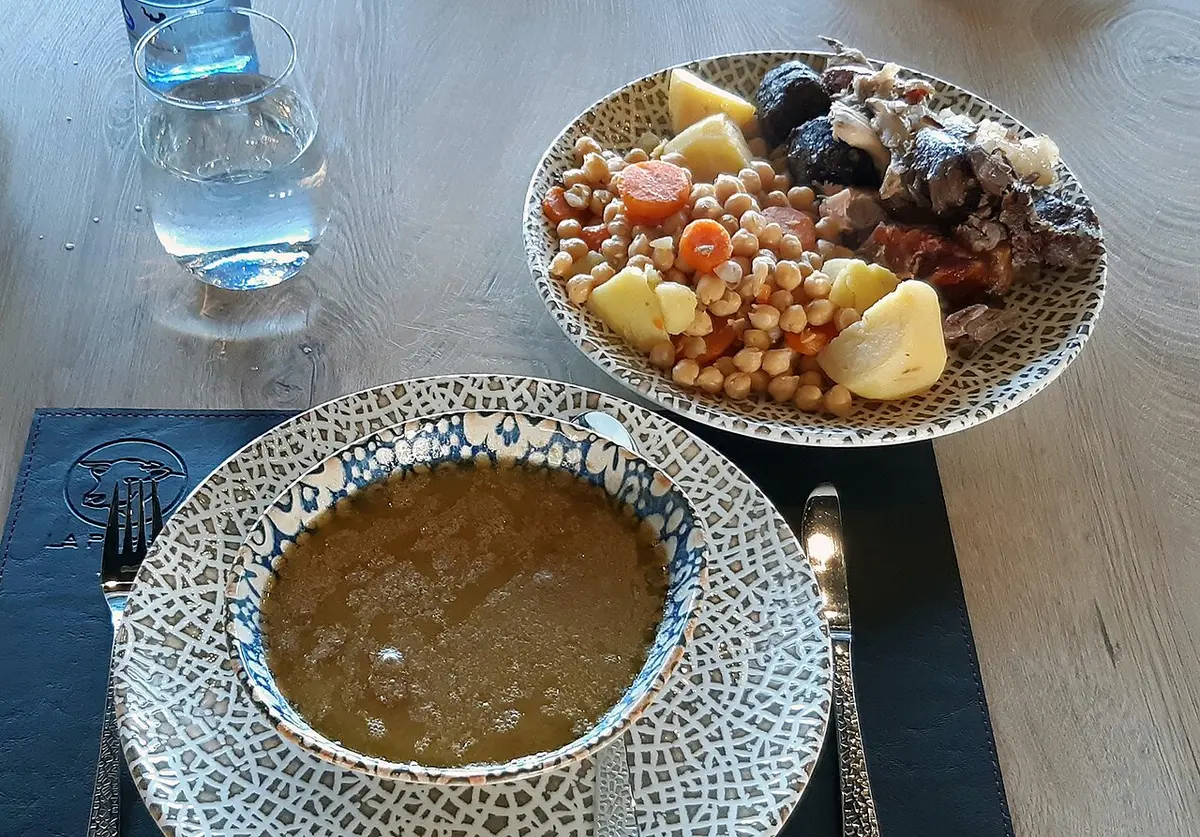
Cocido madrileño
Chickpeas, vegetables, beef, chicken, pork and chorizo simmered for hours and served in stages: the broth first, with fine noodles, then everything else. A winter lunch.
Photo: Smnt, CC BY-SA 4.0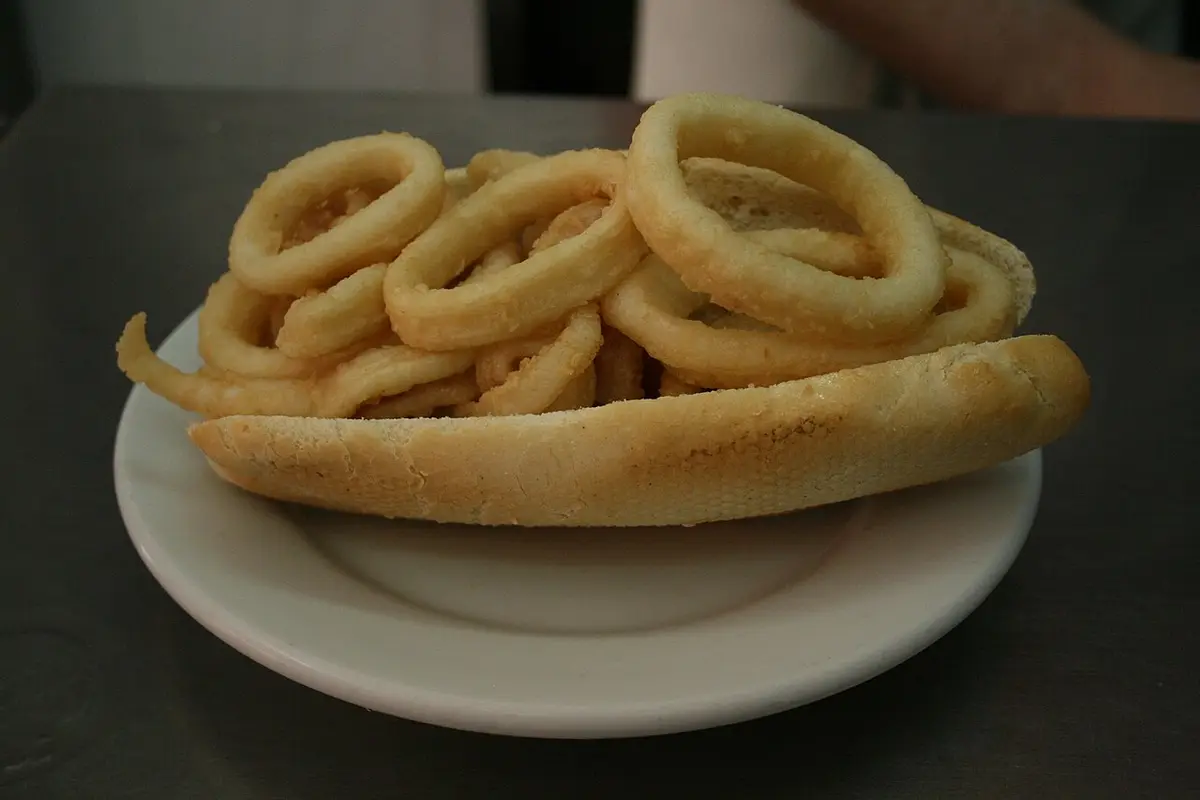
Bocadillo de calamares
Fried squid rings in a crusty roll, the classic snack of the bars around the Plaza Mayor.
Photo: Tamorlan, CC BY 3.0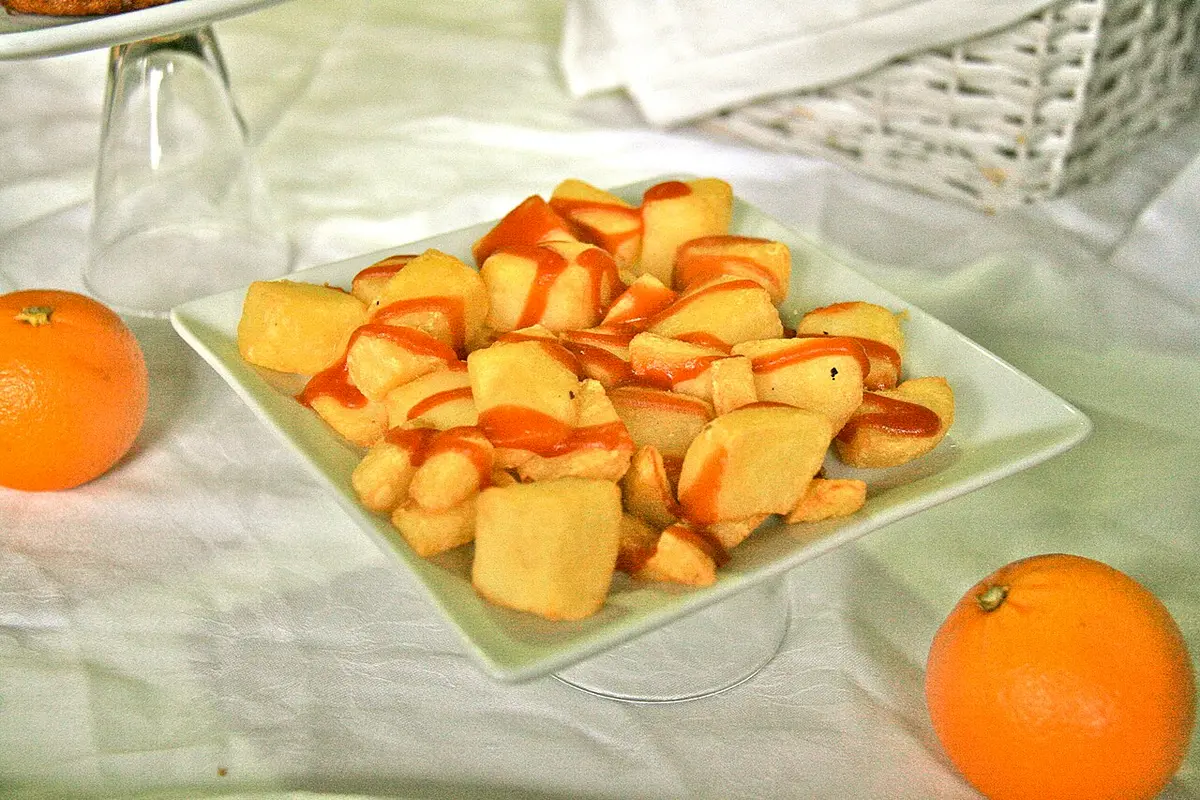
Patatas bravas
Fried potatoes with a spicy sauce, a bar staple that every place makes its own way.
Photo: Tamorlan, CC BY-SA 3.0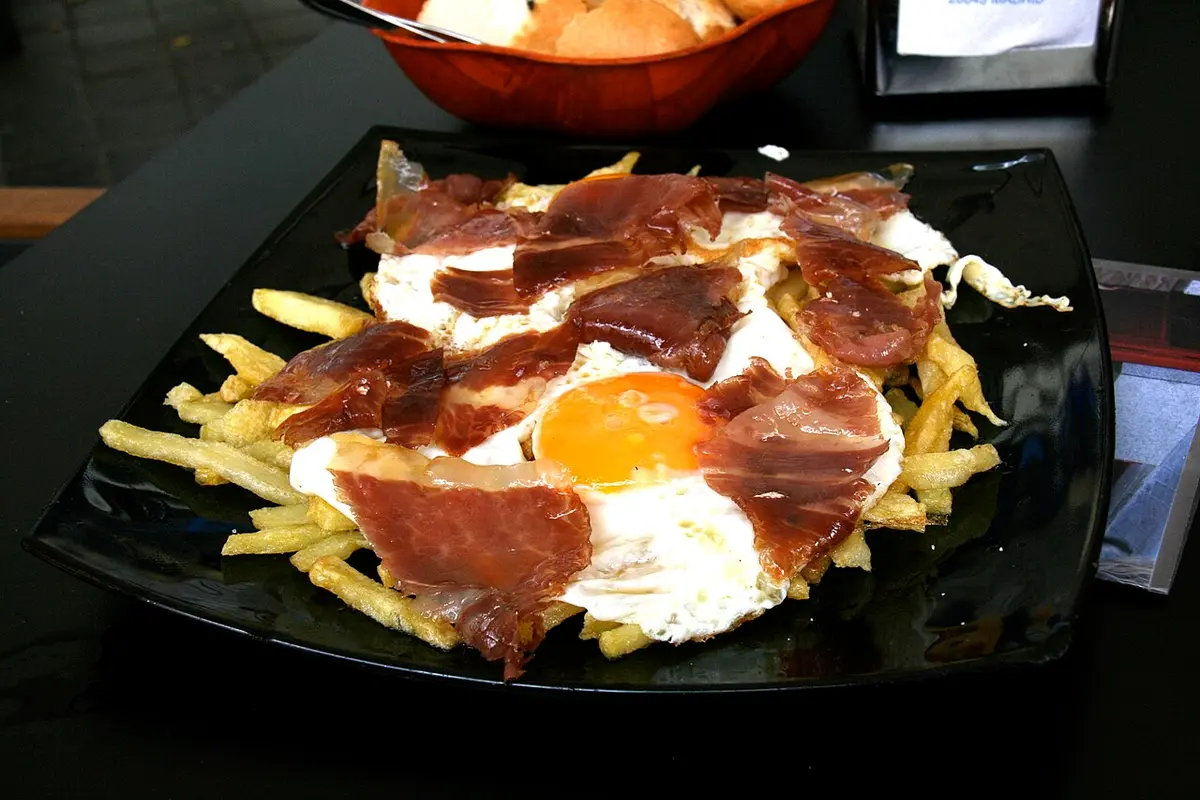
Huevos rotos
Fried eggs broken over chips, often with slices of ham or chorizo, and mixed at the table.
Photo: Tamorlan, CC BY-SA 3.0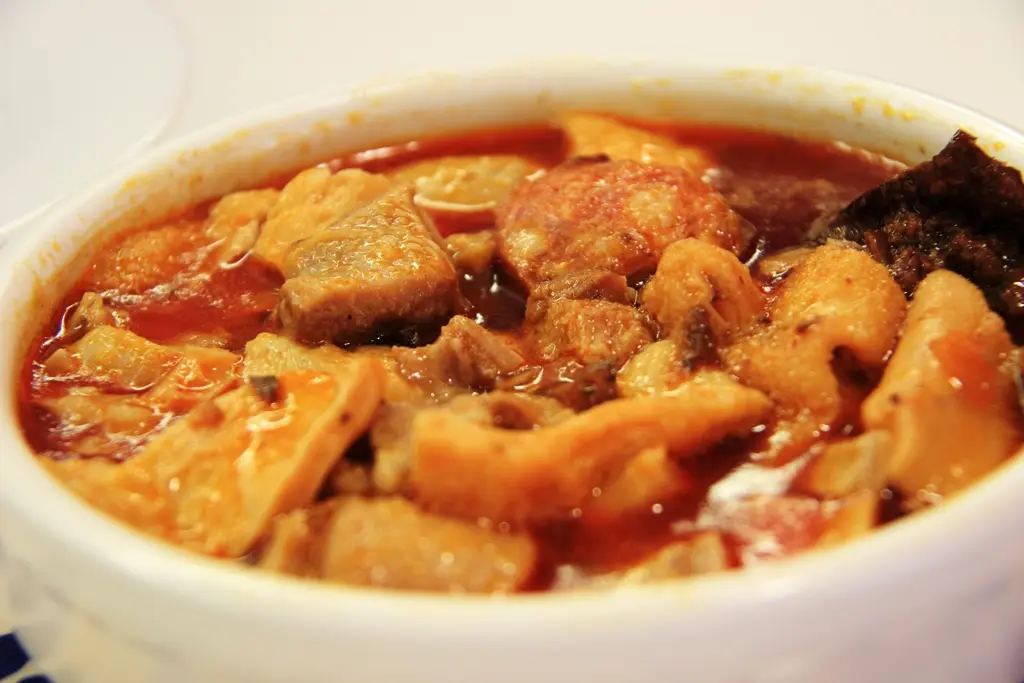
Callos a la madrileña
Tripe stewed slowly with chorizo, blood sausage and paprika. A winter dish, best in the old taverns.
Photo: Javier Lastras, CC BY 2.0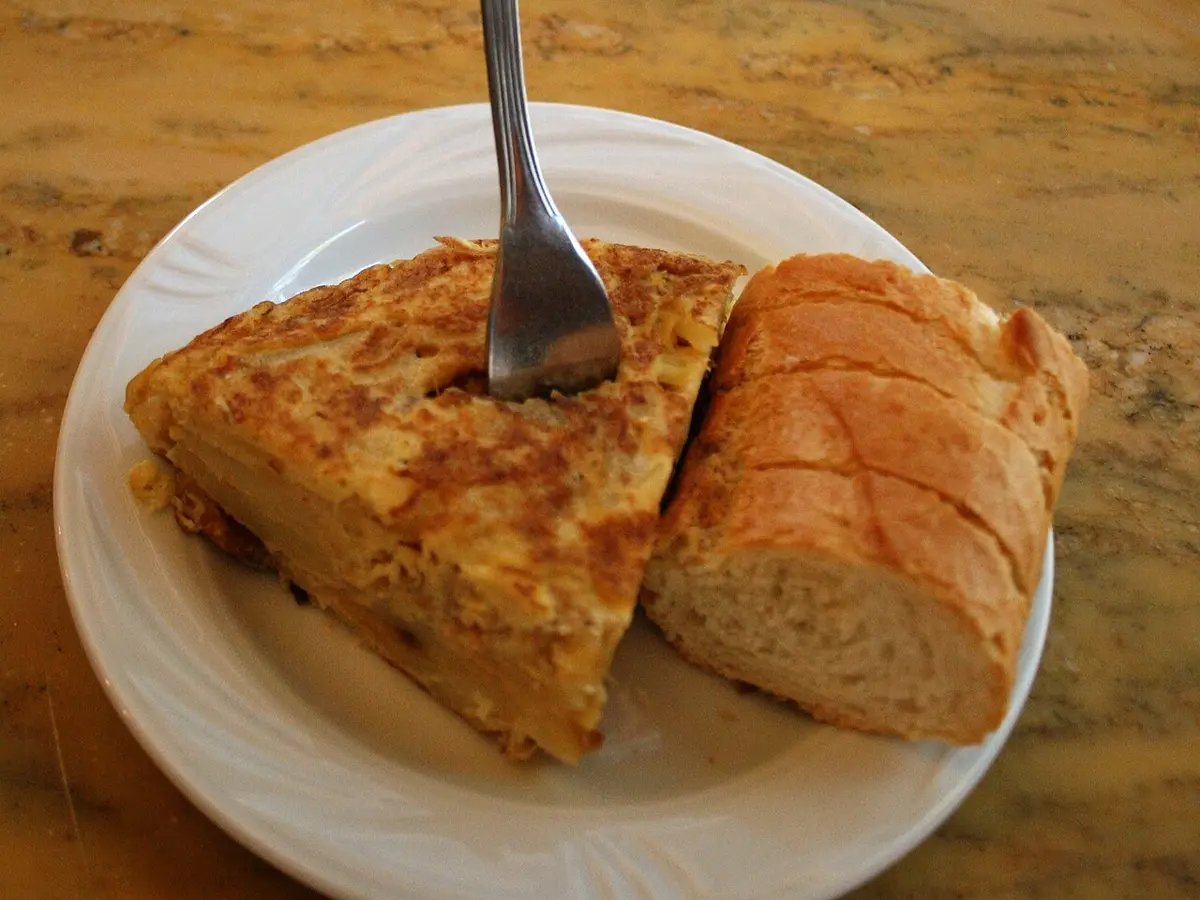
Tortilla de patatas
The Spanish omelet of eggs and potatoes, served in wedges at every bar. Madrid argues over onion or no onion, and over how runny the middle should be.
Photo: Tamorlan, CC BY 3.0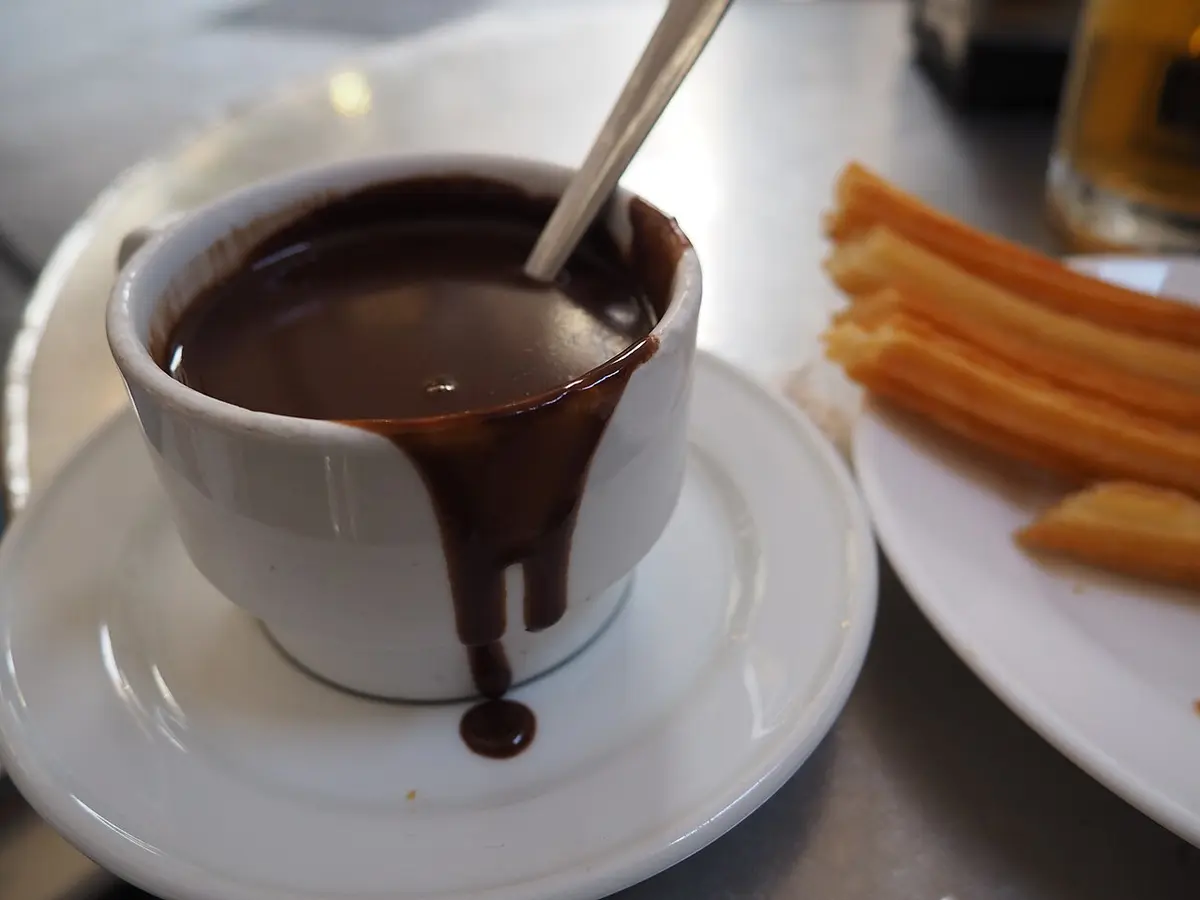
Chocolate con churros
Thick hot chocolate with fried dough for dipping, for breakfast or at dawn on the way home. The fatter version is called porras.
Photo: ctj71081, CC BY-SA 2.0Rosquillas de San Isidro
Small ring biscuits sold for the May festival: tontas are plain, listas wear a sugar glaze.
Graze on tapas along the Cava Baja in La Latina, eat a calamari sandwich in the streets around the Plaza Mayor and cocido at lunch in an old tavern, and try the market halls: San Miguel for show, San Antón in Chueca and San Fernando in Lavapiés for everyday. San Ginés, serving chocolate con churros since 1894, is open around the clock.
The day Madrid rose
On 2 May 1808, the people of Madrid turned on the French army that held their city. The revolt was crushed in a day, and Goya painted what came next.
In the spring of 1808, Madrid was an occupied city in all but name. French troops had crossed Spain as allies on their way to Portugal, and in March Marshal Joachim Murat rode into the capital with his army. Napoleon had drawn the Spanish royal family across the border to Bayonne, and on the morning of 2 May his soldiers came to the Royal Palace to take the last of them, among them the old king’s youngest son.
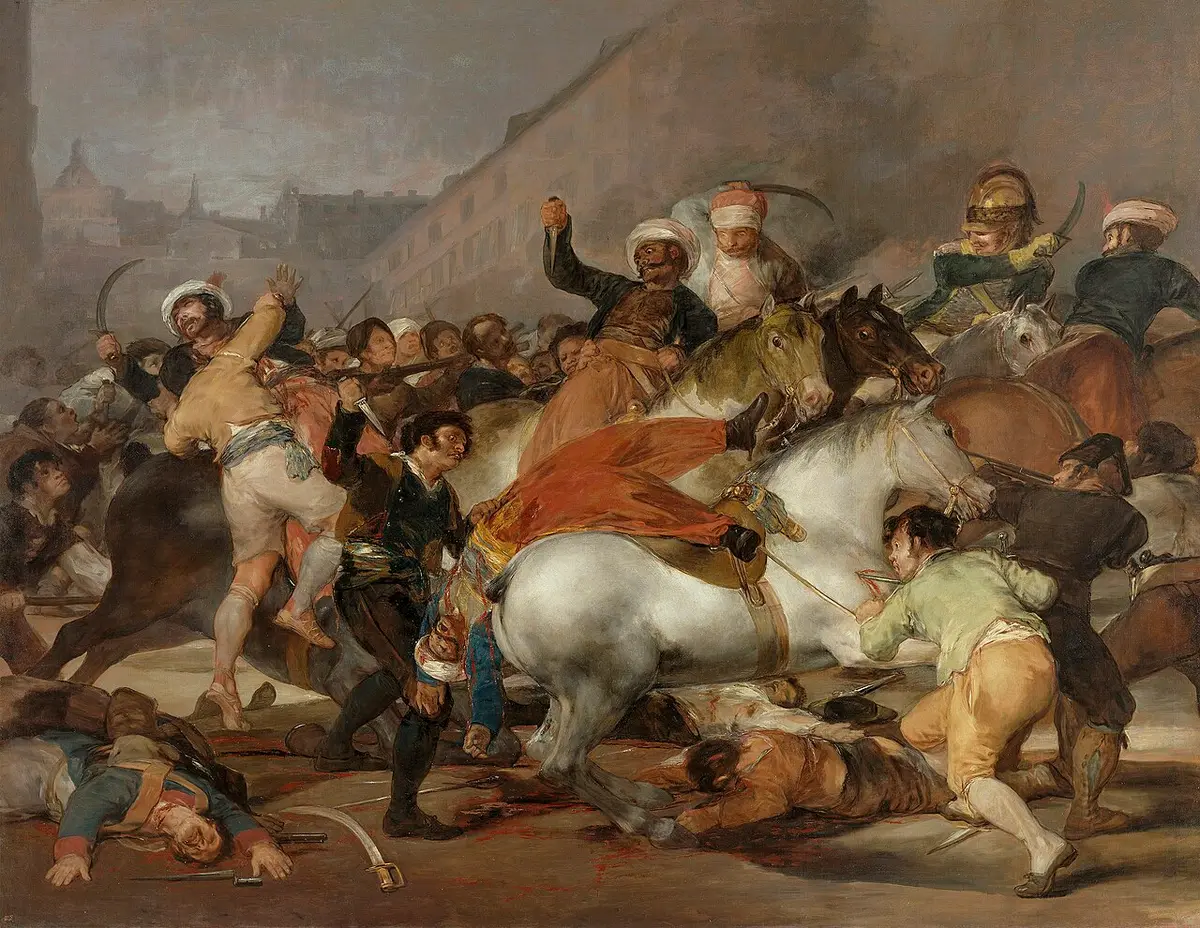
A crowd gathered in front of the palace to stop the carriages. Murat’s men fired into it, and the fighting spread through the streets. At the Puerta del Sol, townspeople armed with knives and whatever came to hand met the Mamelukes, the turbaned cavalry of Napoleon’s Imperial Guard. Goya painted that clash six years later as a whirl of horses, blades and bodies, with no hero at its center.
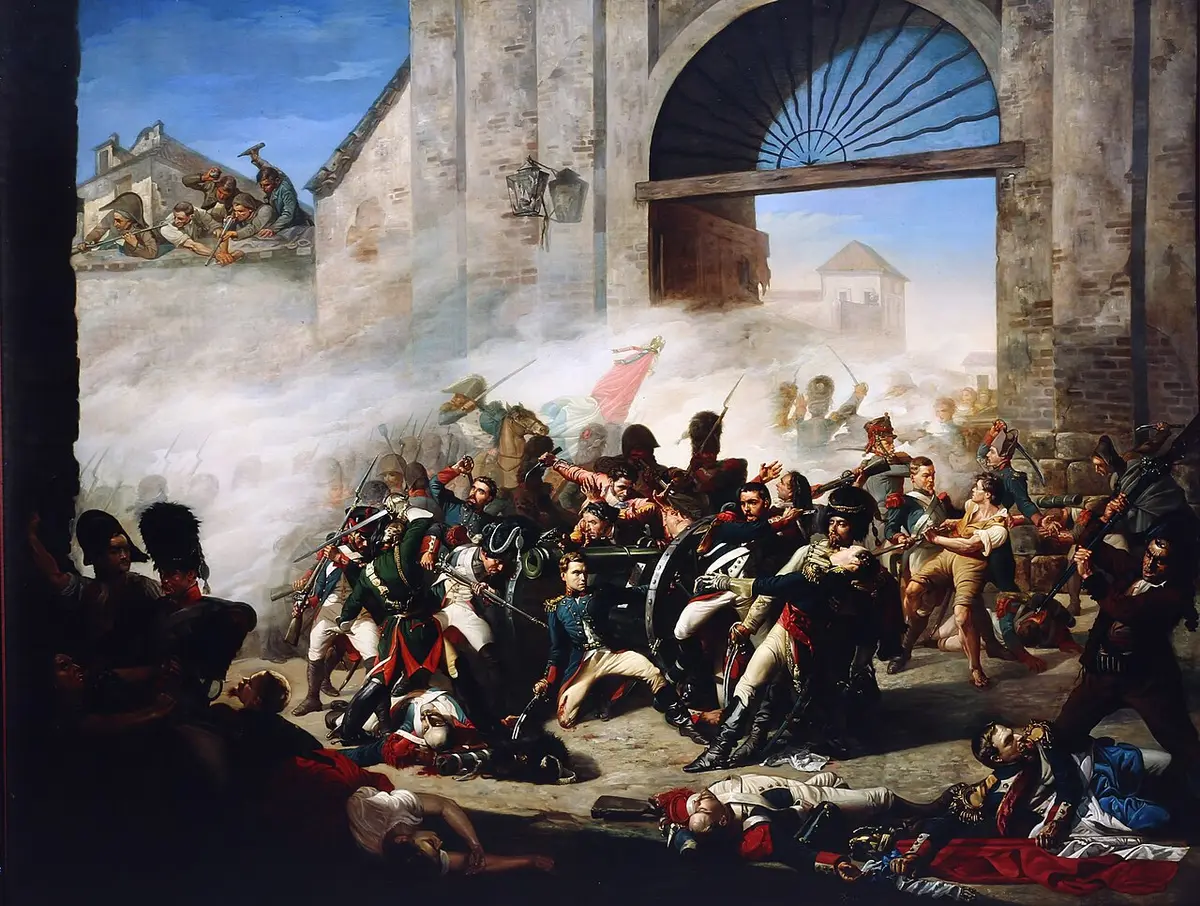
Across town, at the Monteleón artillery barracks, two officers, Luis Daoíz and Pedro Velarde, broke their orders to stay in quarters, opened the gates and handed out weapons. With a handful of soldiers and a crowd of neighbors they held the barracks against the French until both were killed. Among the dead that day was Manuela Malasaña, a young seamstress, and the neighborhood around the old barracks now carries her name.
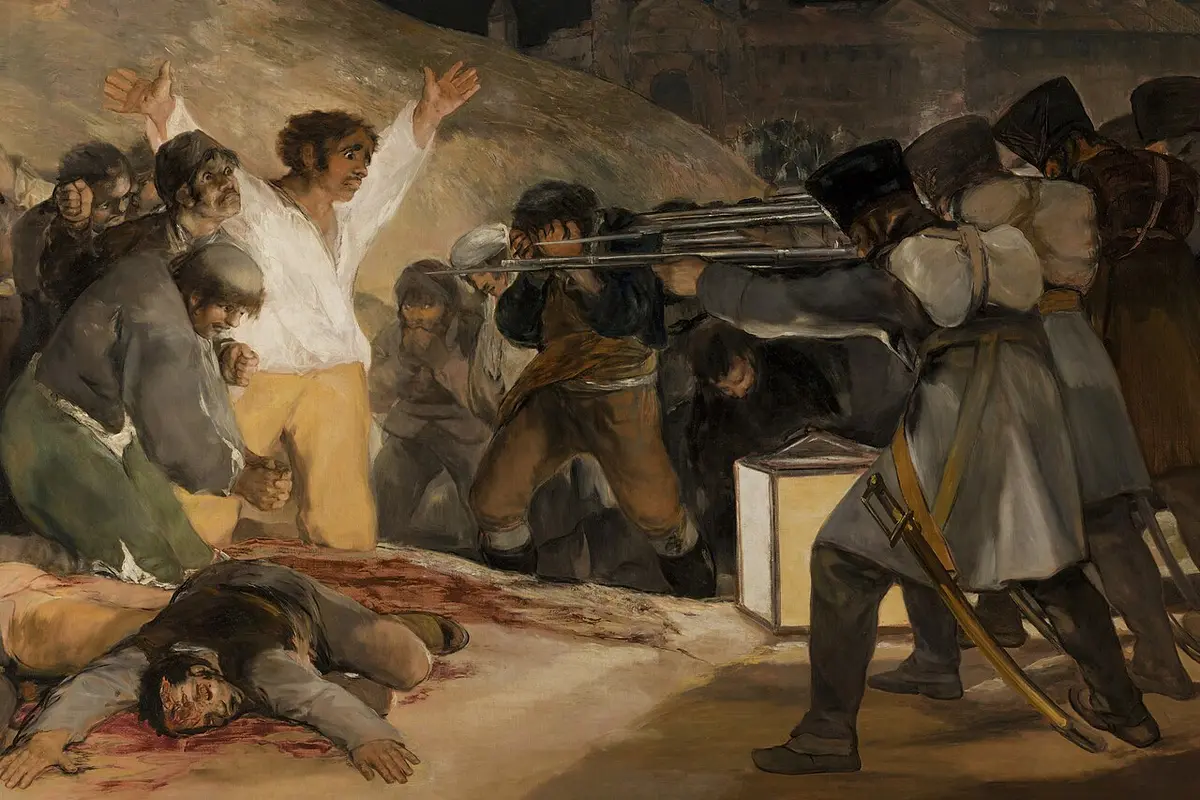
By the afternoon the revolt was over. That night and the next morning, French firing squads shot prisoners taken in the fighting, on the hill of Príncipe Pío beside the palace and at other spots around the city. In The Third of May 1808, Goya set a lantern on the ground, a faceless row of soldiers on the right, and on the left a man in a white shirt with his arms flung wide.
The revolt lasted a day; the war it began lasted six years.
On the same day, the mayors of Móstoles, a town south of Madrid, signed a proclamation calling on every Spaniard to take up arms, and the country answered. The war that followed, which Spain calls the War of Independence, lasted until 1814. That year, with the French gone, Goya asked the regency to let him record the rising in paint, and made both canvases. They hang in the Prado, a short walk from the obelisk in Plaza de la Lealtad. It was raised in 1840 on a spot where prisoners were shot, and it holds the remains of the day’s heroes.
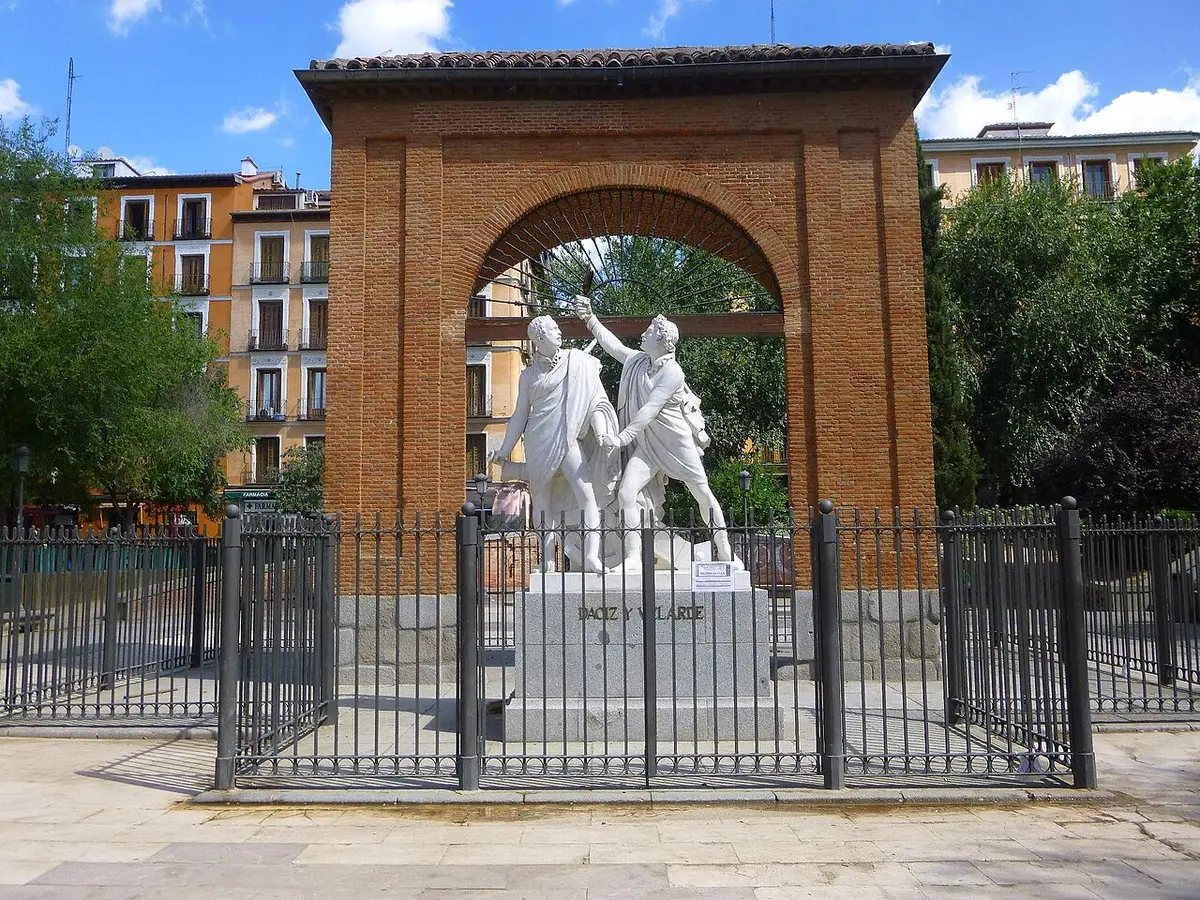
Madrid still keeps the date. The second of May is a holiday in the region, the square in front of the old barracks is the Plaza del Dos de Mayo, and the brick arch of the old Monteleón gate still stands in it, with a marble of the two officers underneath. On the evening of the holiday, the square fills for a neighborhood fiesta.
Art
Velázquez
Court painter to Philip IV, and the reason many people come to the Prado. Las Meninas (1656) puts the painter at his easel, the little princess and her maids in front of him, and the king and queen in a mirror at the back.
Goya
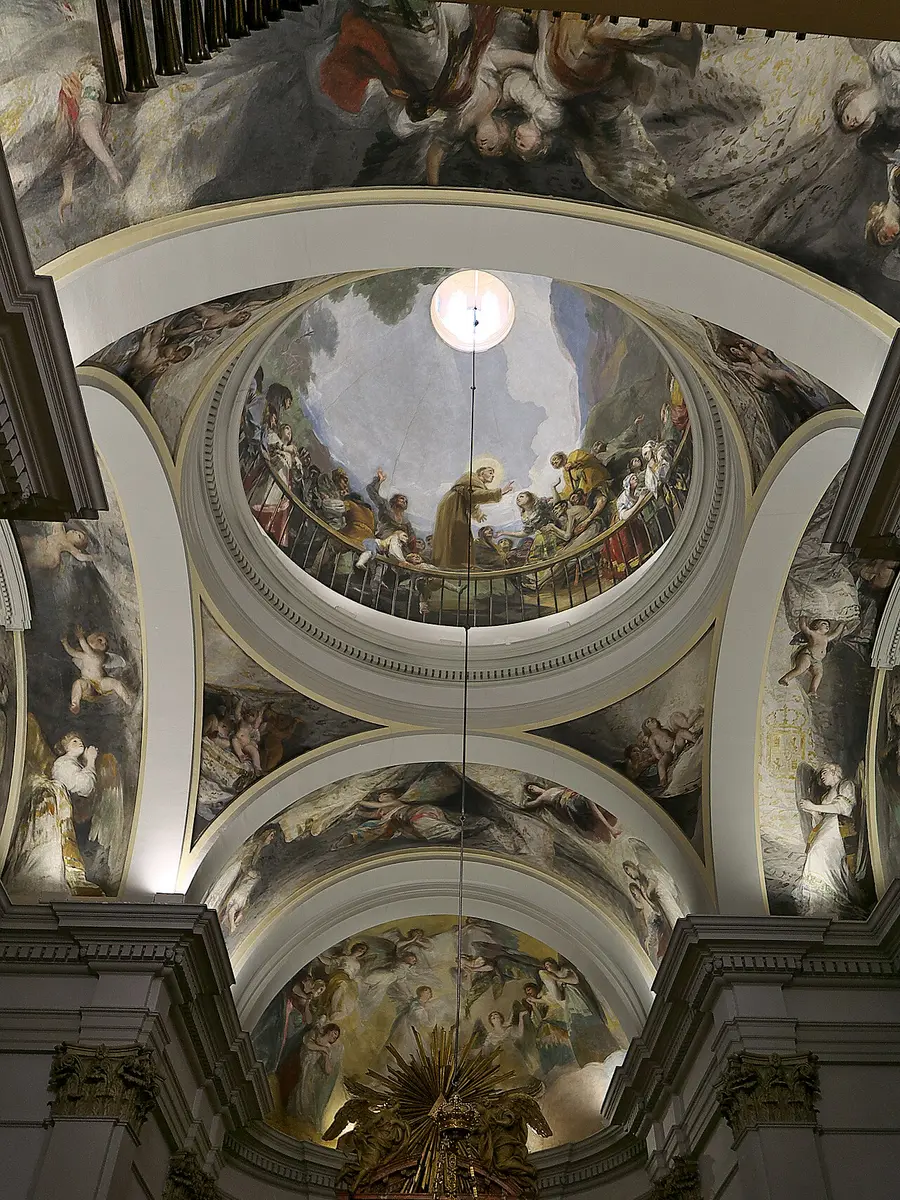
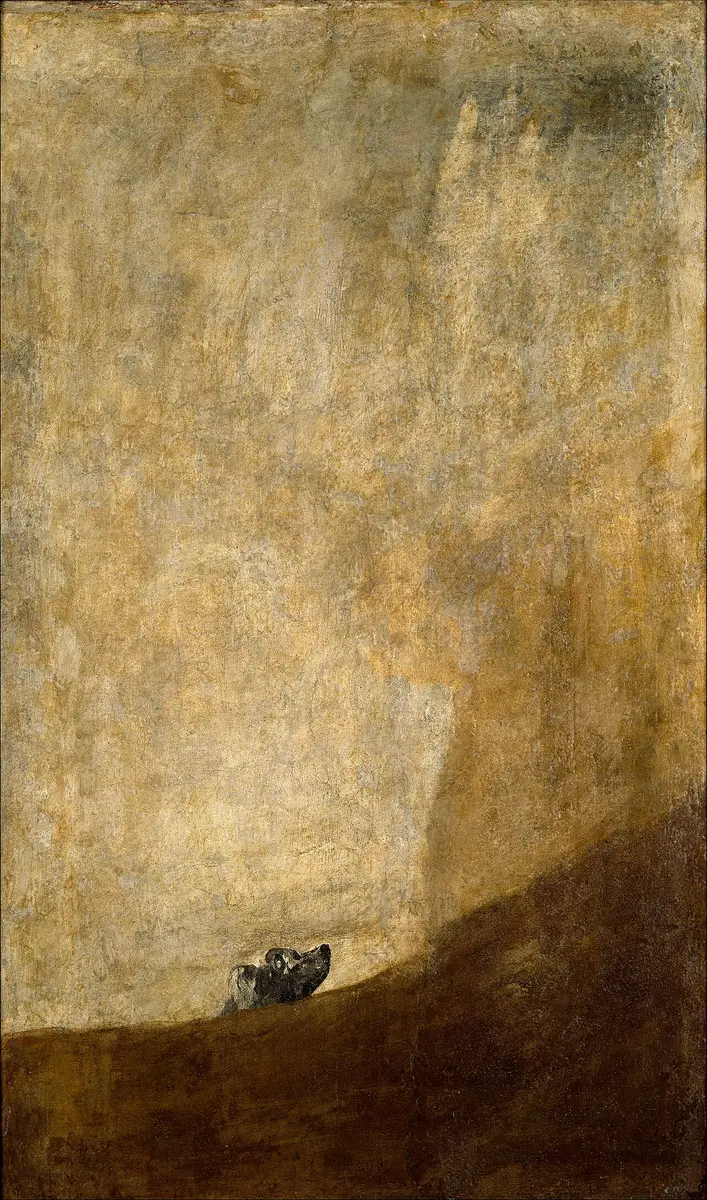
From tapestry designs and royal portraits to the Black Paintings he made on the walls of his house outside Madrid, moved to canvas in the 1870s and now at the Prado. His frescoes fill the dome of San Antonio de la Florida, where he is buried.
The Paseo del Arte
The Prado, the Reina Sofía and the Thyssen sit a short walk apart on the Paseo del Prado: the old masters, the 20th century with Picasso’s Guernica, and a private collection that fills the gaps between them.
Sorolla’s house
The Valencian painter of sea and sunlight built a house and garden in Chamberí in 1911, a museum of his work since 1932. It reopens in autumn 2026 after an expansion, with the house itself due for restoration next, so check before you go.
Contemporary Madrid
CaixaForum hides behind a vertical garden on the Paseo del Prado, and the Matadero, the old slaughterhouse by the river, is now a sprawling arts center.
A city of writers
Spain’s Golden Age was written in a few streets behind the Prado, where Cervantes and Lope de Vega lived as neighbors and rivals. Two centuries later, Galdós made the whole city his subject.
Miguel de Cervantes
1547 to 1616
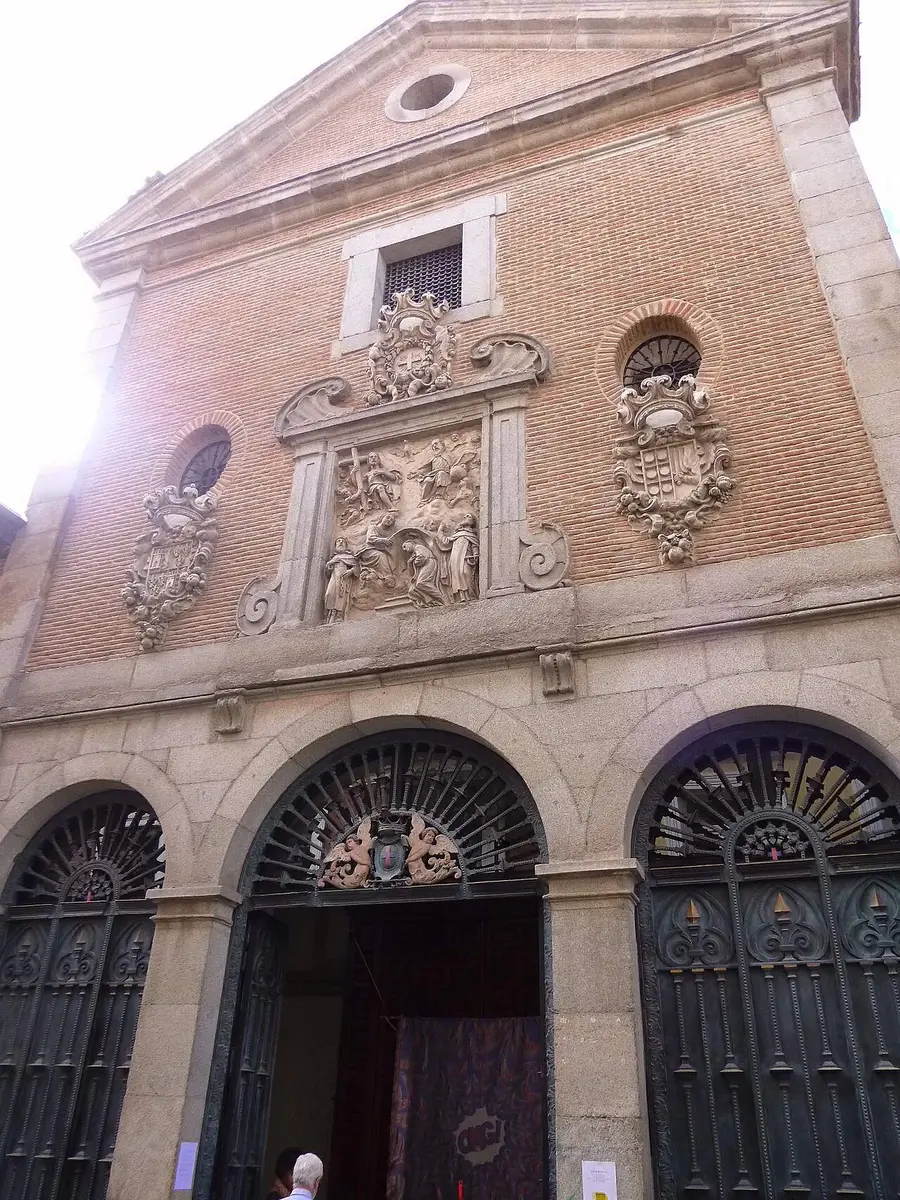
Cervantes spent his last years in the Barrio de las Letras. The first part of Don Quixote was printed in 1605 at Juan de la Cuesta’s press on Calle de Atocha, and the second followed in 1615. In Journey to Parnassus (1614) he bid the city a mocking farewell; the Prado he meant was the tree-lined promenade, two centuries before the museum. He died in April 1616 in a house on Calle del León and was buried in the Trinitarian convent nearby, where researchers announced in 2015 that they had found bones likely to be his.
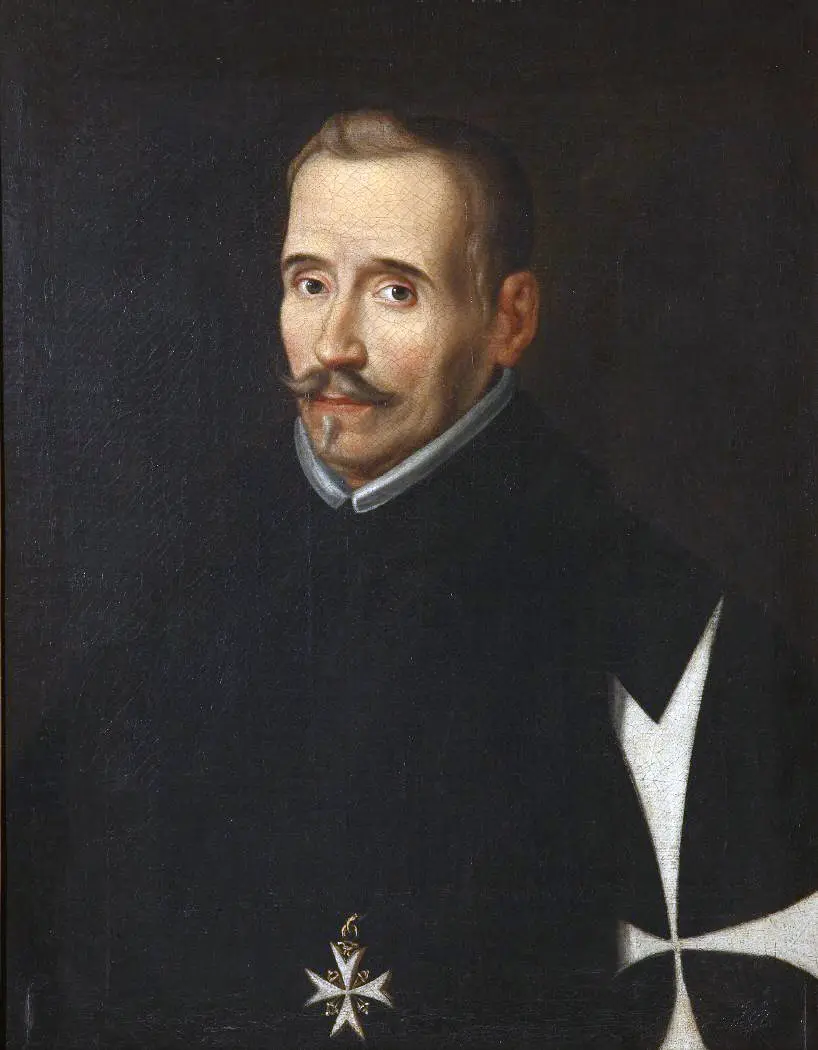
Lope de Vega
1562 to 1635
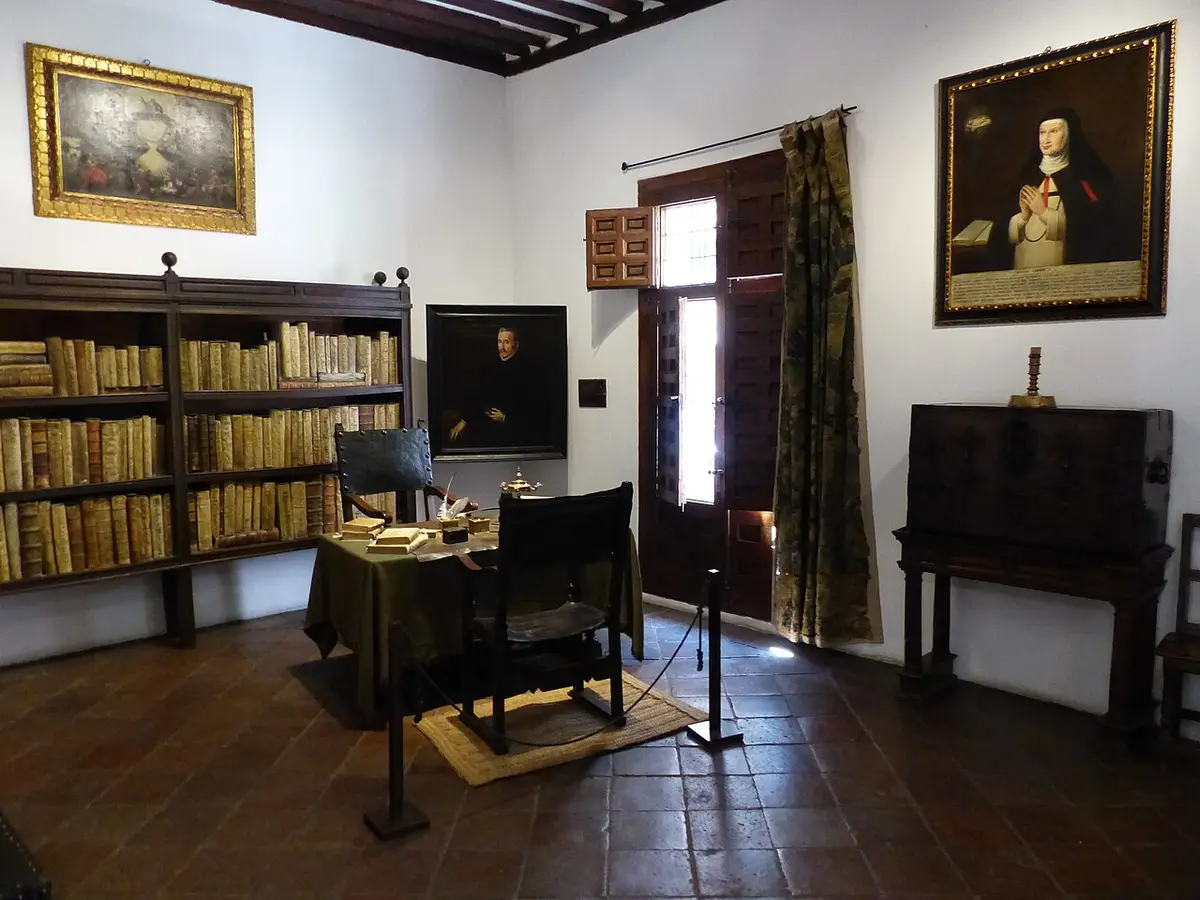
Born in Madrid, Lope wrote hundreds of plays and filled the city’s open-air theaters, the corrales de comedias. From 1610 until his death he lived in a house on what is now Calle de Cervantes, kept as a museum with his study and small garden; visits are free and guided, booked ahead. In a twist Madrid enjoys, Cervantes lies in the convent on Calle de Lope de Vega.
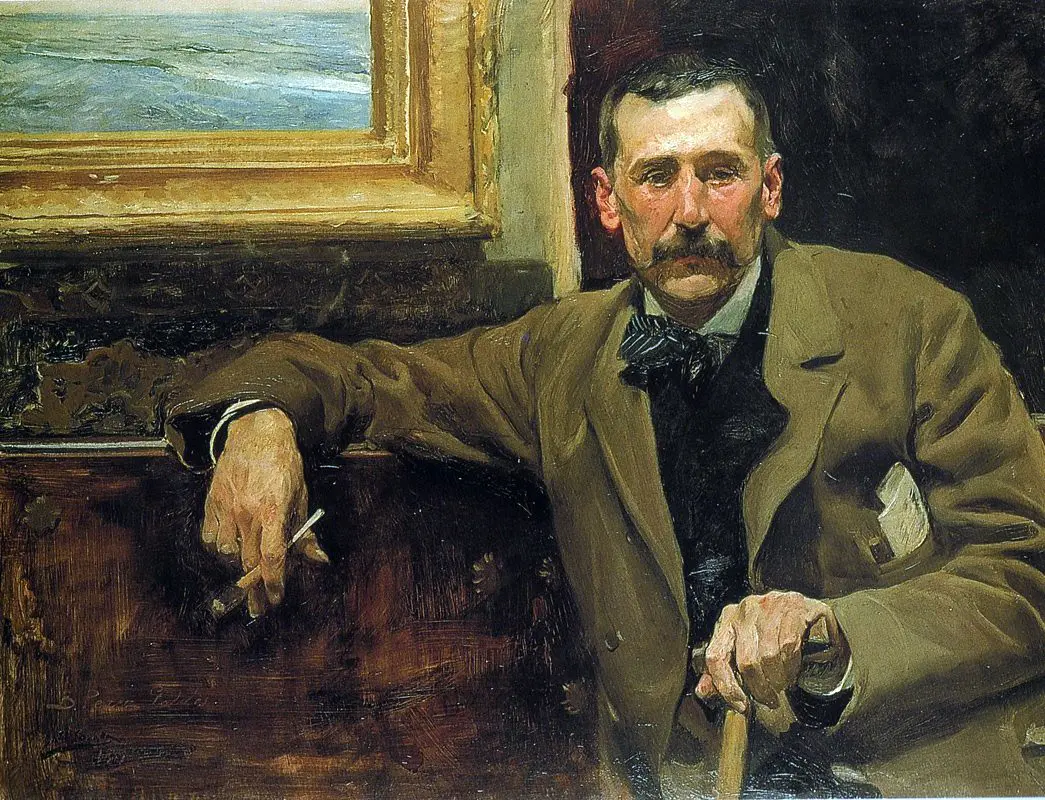
Benito Pérez Galdós
1843 to 1920
Born in the Canary Islands, Galdós came to Madrid at 19 to study law and made the city his great subject. Fortunata y Jacinta (1887) is set among the shops, stairways and cafés between the Puerta del Sol and the Plaza Mayor, and his National Episodes retell Spain’s 19th century in 46 novels. In January 1919, blind, he was brought to the Retiro to touch his own statue.
Ernest Hemingway
1899 to 1961
Hemingway first came to Madrid in 1923 and kept coming back for the bullfights of San Isidro and the Prado. The Sun Also Rises (1926) ends over lunch at Botín, and during the Civil War he reported from the Hotel Florida on Plaza del Callao, where he wrote his play The Fifth Column. The hotel was demolished in 1964.
Farewell, Madrid, thy Prado, and thy springs
Distilling nectar and ambrosial rain!
Farewell, ye gay assemblies, pleasant things
To cheer one aching bosom, and delight
Two thousand faint, aspiring underlings!
Miguel de Cervantes, Journey to Parnassus, Chapter I (1614), translated by James Young Gibson (1883)
Culture
San Isidro
On 15 May the city honors its patron, a farm laborer of the 12th century, with picnics on the Pradera de San Isidro, chotis dancing and madrileños dressed as chulapos and chulapas, in checked caps and Manila shawls.
La Movida
After Franco died in 1975, Madrid broke loose: punk bands, late bars in Malasaña, fanzines, and the first films of Pedro Almodóvar.
Madrid on film
Almodóvar has filmed the city for four decades, from Women on the Verge of a Nervous Breakdown (1988) on. In Alejandro Amenábar’s Open Your Eyes (1997), a man runs down a completely empty Gran Vía, a scene Hollywood remade in Times Square for Vanilla Sky.
Pride
For about ten days from late June, Madrid Pride turns Chueca and the center into one long street party, with open-air concerts on the squares. It is one of the biggest Pride festivals in Europe.
El Rastro
Every Sunday and holiday morning, the flea market runs down the Ribera de Curtidores from La Latina, and then everyone goes for a vermouth.
Football
Real Madrid plays at the Santiago Bernabéu on the Castellana, rebuilt with a retractable roof, and Atlético at the Metropolitano in the east of the city. The Bernabéu’s museum and stadium tour run most days.
Music and nights out
Flamenco
Madrid has some of Spain’s best tablaos, small flamenco stages with dinner or a drink. Corral de la Morería, open since 1956, is the most famous; more gather around Plaza de Santa Ana and the Barrio de las Letras.
Zarzuela and the chotis
Zarzuela, Spain’s light opera, has its own theater, the Teatro de la Zarzuela, open since 1856. The chotis, danced cheek to cheek on the space of a single tile, is Madrid’s own dance.
Opera
The Teatro Real, facing the Royal Palace across the Plaza de Oriente, opened in 1850 and reopened in 1997 after a long restoration.
Jazz
Café Central, a jazz club since 1982, moved in April 2026 from Plaza del Ángel into the Ateneo, the old cultural club in the Barrio de las Letras, and still has concerts every night.
Nights out
Dinner at ten, bars at midnight, clubs from one or two until dawn. Malasaña and Chueca for bars, La Latina for Sunday afternoons, and chocolate con churros at San Ginés on the way home.
Nature and day trips
El Retiro
More than a square kilometer of lawns, avenues and fountains in the middle of the city: the boating lake, the rose garden, the Fallen Angel and, in late May and June, the stalls of the Book Fair.
Casa de Campo
The old royal hunting estate across the river is the city’s biggest park, with woods, a lake, the zoo and an amusement park. The Teleférico cable car has crossed to it from the Parque del Oeste since 1969.
Madrid Río
When the M-30 ring road was buried in tunnels along the Manzanares, the riverbank became a long park of bike paths, playgrounds and fountains, opened in 2011 and crossed by the 18th-century Toledo Bridge.
The Botanical Garden
The Real Jardín Botánico, laid out beside the Prado under Charles III in 1781, is a calm hour between museums.
Sunset views
The Temple of Debod and the Parque del Oeste look west over the Casa de Campo, and the terrace of the Círculo de Bellas Artes looks down the Gran Vía.
Day trips
The Sierra de Guadarrama, a national park since 2013, is about an hour away for hiking, with snow on its peaks in winter. Toledo, Segovia and El Escorial are all easy days out by train.
A day in Toledo
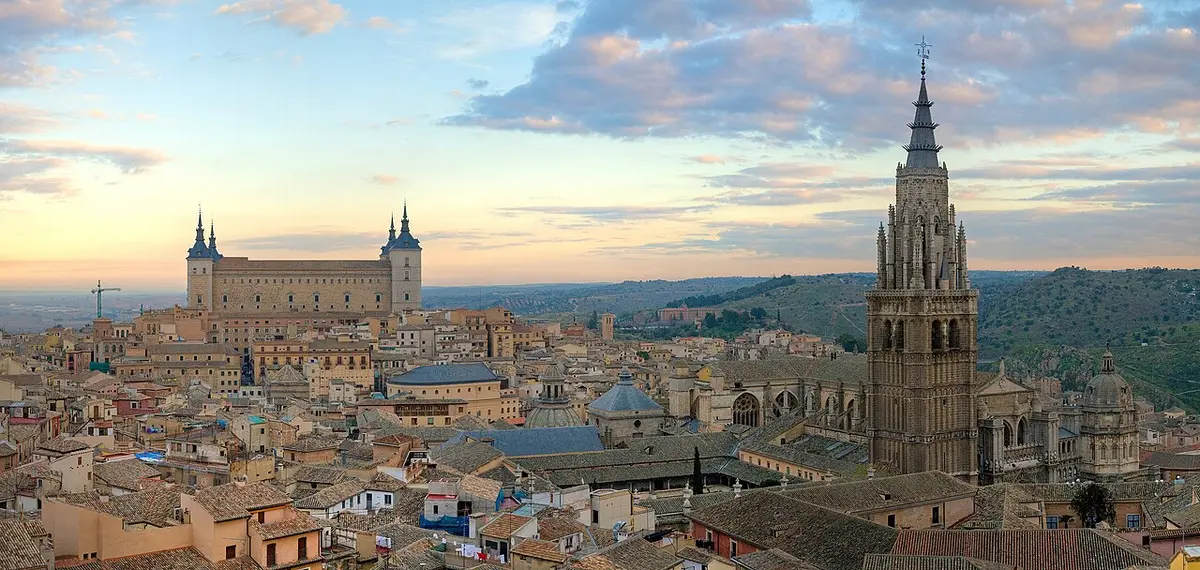
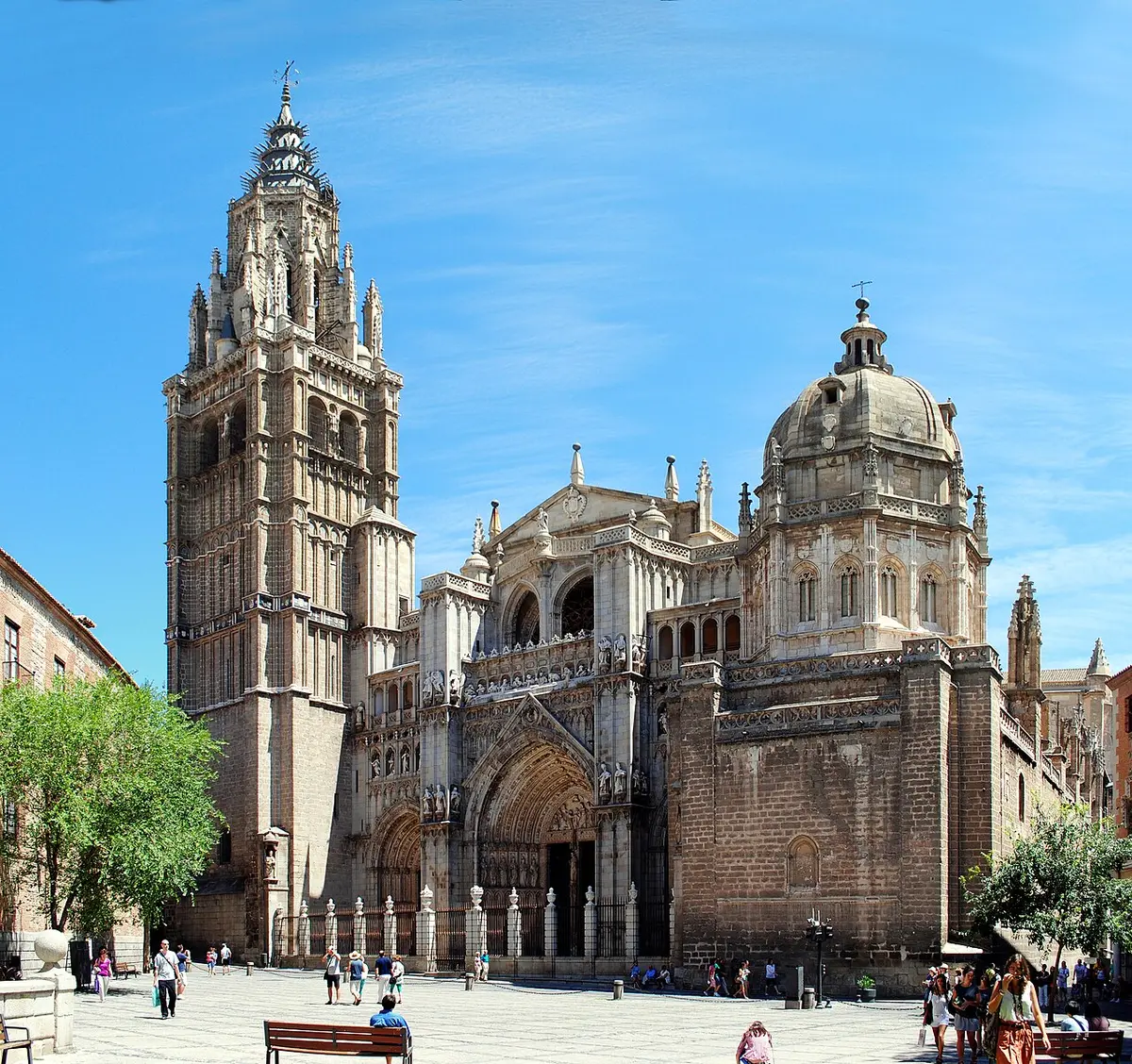
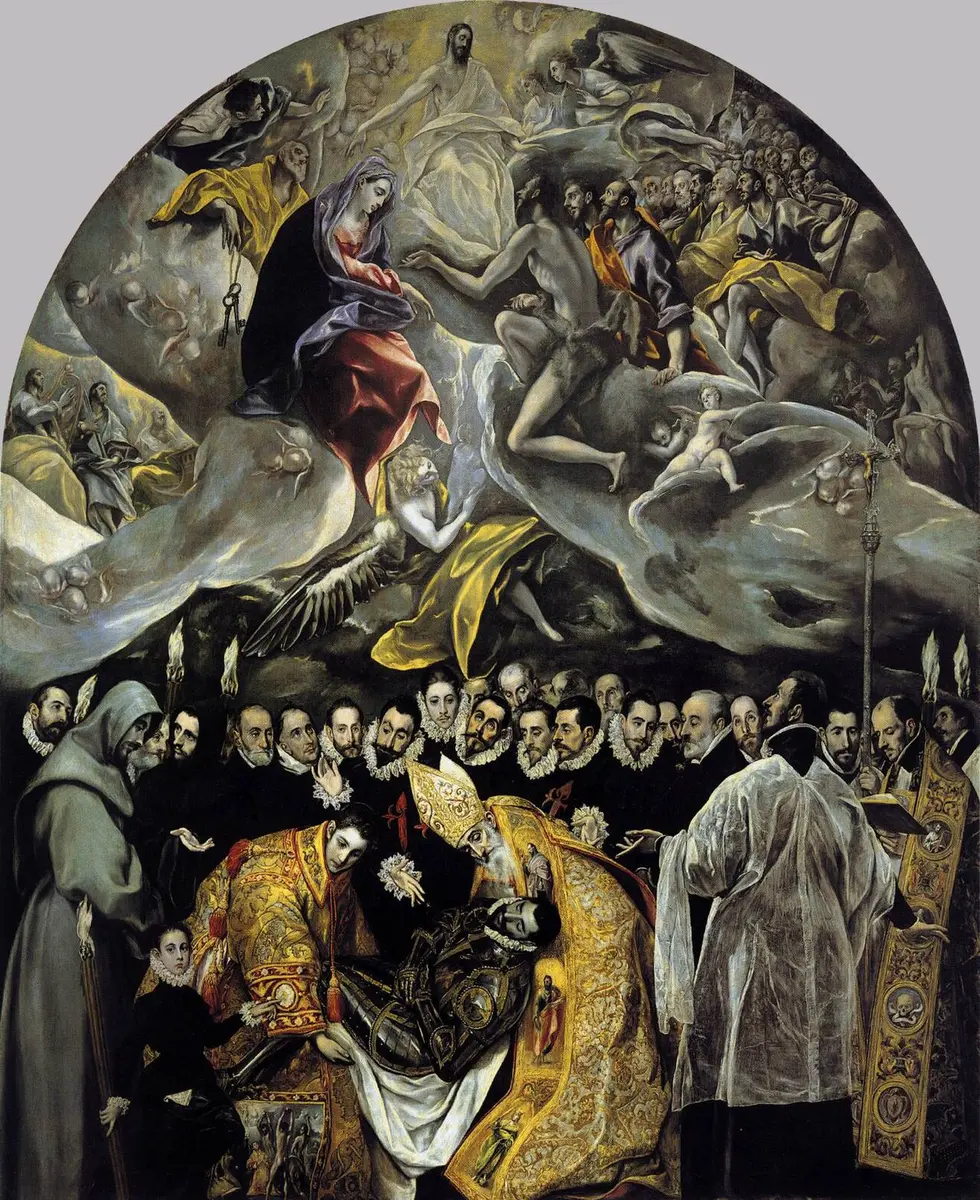
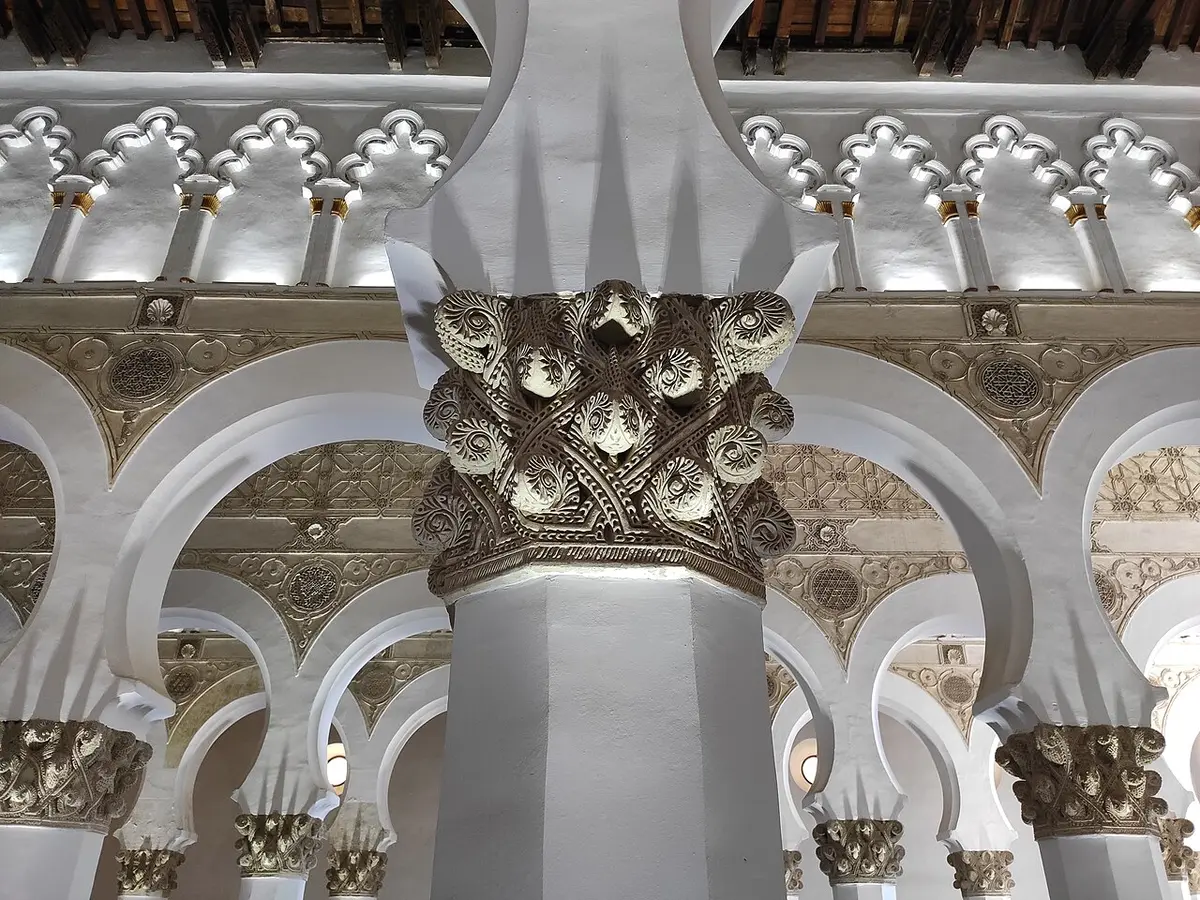
Half an hour by fast train from Atocha, Toledo stands on a rocky hill in a loop of the Tagus, the city Spaniards call the city of three cultures for the Christians, Muslims and Jews who once shared it. Go early, and wear shoes for steep cobbles.
People and customs
Late hours
Lunch runs from about 2pm to 4pm and dinner starts at 9pm or later. Many kitchens close between the two.
The menú del día
On weekdays, most restaurants serve a set lunch: a first course, a main, bread, a drink and dessert or coffee for a fixed price.
Sundays
Sunday morning means the Rastro and a vermouth before lunch. In the center, the big shops open on Sundays too.
Pickpockets
Madrid is generally safe, but pickpockets work the Puerta del Sol, the Gran Vía, the Rastro and crowded metro cars. Keep bags closed and phones off café tables.
Cats
A madrileño with Madrid-born parents and grandparents is called a gato, a cat, after a soldier said to have climbed the Muslim wall like one when Alfonso VI took the town.
A few words
Hola, gracias and por favor go a long way, and you will hear vale, meaning OK, in every other sentence.
Questions
How many days do you need in Madrid?
Three days covers the Prado, the Royal Palace, the Retiro and the old center. Four adds the Reina Sofía, the Thyssen and a slower day in La Latina or Malasaña, and five leaves time for a day trip to Toledo or Segovia.
Where should I stay in Madrid on a first visit?
Around the Puerta del Sol and the Plaza Mayor, where everything is walkable. The Barrio de las Letras is close to the museums, La Latina is best for tapas, Malasaña and Chueca for nightlife, and Salamanca for quiet, comfortable streets.
When is the best time to visit Madrid?
April to June and September to October, when days are warm and evenings cool. July and August are very hot, and winter is cold but mostly sunny.
How do I get from Madrid Airport to the city center?
Metro line 8 runs from the terminals to Nuevos Ministerios in about 15 to 20 minutes, with an airport supplement on the fare. The Airport Express bus runs 24 hours to Cibeles, and taxis charge a fixed fare to anywhere inside the M-30 ring road.
When is the Prado free?
From 6pm to 8pm Monday to Saturday and from 5pm to 7pm on Sundays and holidays, for the permanent collection. Expect a line, and book a timed ticket if you want a full visit.
Is Madrid good for a bachelorette or a group trip?
Yes: tapas crawls in La Latina, a flamenco show, rooftop terraces, and nights that start with dinner at ten and end at dawn in the clubs, with churros on the way home.
Plan Madrid with your group
Everyone swipes on the sights they want. SwipeSights builds the days around the picks, in walking order.