 Photo:
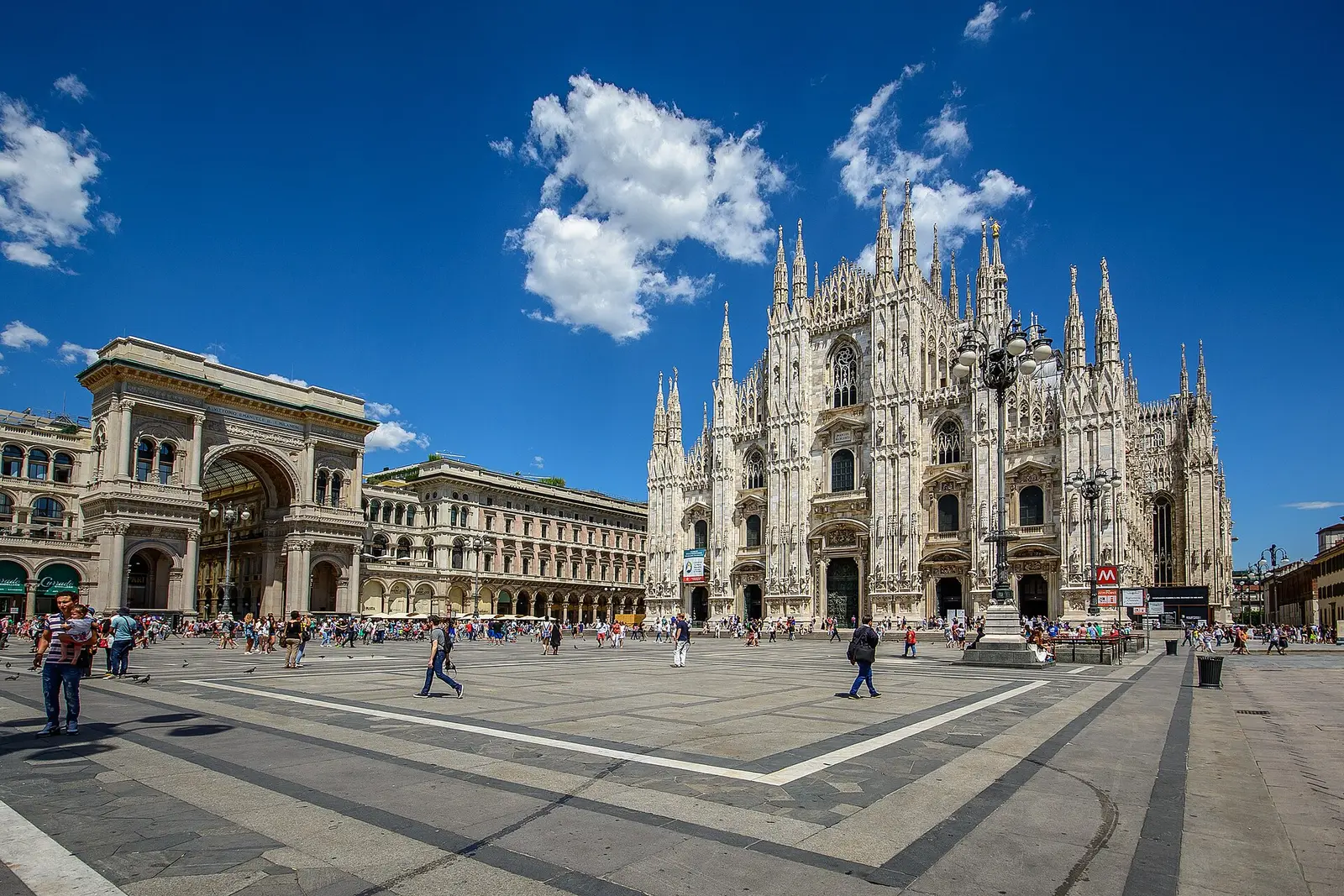
Milan lies on the flat plain of the Po, with the Alps on the horizon on clear days, and it has always lived by work and trade more than by its looks. Behind its business there is a great deal to see: a cathedral of white marble that took nearly six centuries to finish, Leonardo’s Last Supper on a convent wall, the castle of the Sforza dukes and the opera house where Verdi made his name. The center is compact, the metro and the trams are quick, and the city is at its best in the early evening, when the aperitivo starts.
This guide covers when to go, where to stay, what to see, a four-day route built from real opening hours and walking times, a walk down to the canals, a day on Lake Como, what to eat, and the history, art and customs that make the city make sense.
What Milan is good for
Friends' trips
Walk the Duomo roof in the late afternoon, take an aperitivo on the Navigli, catch a match at San Siro and spend a day on Lake Como, an hour away by train. The evenings start early with a drink and run late.
Bachelorette and bachelor weekends
Start with aperitivo in Brera or along the canals, order a Negroni sbagliato at Bar Basso, where it was first mixed, then dinner and the late bars of Isola, Corso Como and Porta Venezia. A boat day on Lake Como is an easy group plan.
Weddings and honeymoons
Two visitors can marry in a civil ceremony at Palazzo Reale, beside the Duomo, with a nulla osta, a certificate of no impediment, from their own embassy, and many couples hold the celebration on Lake Como. For a honeymoon, pair a night at La Scala with a few days on the lakes.
Couples
The Duomo terraces at sunset, an evening at La Scala, dinner in the lanes of Brera and a walk along the Naviglio Grande when the lights come on.
Families
Leonardo’s machines and a real submarine at the Science and Technology Museum, dinosaur skeletons at the Natural History Museum, the castle courtyards and Parco Sempione, and rides on the old orange trams.
Solo travel
Generally safe and quick to get around by metro, with counter bars where eating alone is normal and an aperitivo hour that makes it easy to talk to people. A walking tour or a cooking class fills a first day.
Food lovers
Saffron risotto with ossobuco, a bone-in cotoletta, cassoeula in winter, panettone at Christmas and a Campari and soda at the Camparino, poured at the entrance to the Galleria since 1915.
History and art
The Last Supper, the Duomo, Michelangelo’s last Pietà in the Sforzesco Castle, the basilica of Saint Ambrose and the Brera gallery’s Mantegna, Raphael and Caravaggio.
Plan your trip
When to go
April to June and September to October are mild and best for walking. The Salone del Mobile fills the city in April, and the fashion weeks come in February and September, when hotels cost more. July and August are hot and humid, and around Ferragosto in mid-August many shops and restaurants close. Winter is cold and damp, with short lines and Christmas fairs.
How long to stay
Two days covers the Duomo, the Last Supper, the Sforzesco Castle and Brera at a fair pace. Three days adds Sant’Ambrogio, the Navigli and a slower museum day. With four, take a day trip to Lake Como, or follow the four-day route on this page.
Getting there
Most long-haul flights land at Malpensa (MXP), about 50 km northwest. The Malpensa Express reaches Cadorna in about 40 minutes and Centrale in about an hour, and taxis charge a fixed fare into the city. Linate (LIN) is close in: the M4 metro line runs from the terminal to San Babila, near the Duomo, in about 15 minutes. Bergamo (BGY), used by budget airlines, is about an hour away by bus. High-speed trains reach Milano Centrale from Rome in about three hours, from Venice in about two and a half and from Turin in about one.
Getting around
Walk the center, and use the five metro lines for the rest: tap a contactless bank card at the gates on the way in and on the way out, and the fare is worked out for you. Trams and buses fill the gaps, and some of the orange trams first built in 1928, the Ventotto, are still in daily service. The city is flat, and BikeMi, the bike share, has stations all over the center.
Tickets
Book the Last Supper as soon as you know your dates: tickets go on sale three months at a time and sell out fast, and each visit lasts 15 minutes. The Duomo’s terraces use timed slots, by stairs or by lift. Most museums close on Mondays, the Last Supper, the Brera gallery and the castle’s collections among them.
Money and tipping
Tipping is not expected: rounding up or leaving a euro or two for good service is plenty. Many restaurants add a small cover charge (coperto) per person, and an aperitivo drink usually comes with something to eat. Hotels add a city tax per person per night, higher in the more expensive hotels.
Weather, month by month
Spring
March to May
Mild and changeable, with highs from about 14°C in March to 24°C in May and rainy spells between bright days.
Summer
June to August
Hot and humid, often above 30°C in July and August, with evening thunderstorms. Many Milanese leave in August and the city goes quiet.
Autumn
September to November
A warm September, a mild October, and a wet November, the rainiest month of the year, when the fog comes back to the plain.
Winter
December to February
Cold and damp, with highs around 7°C and nights near freezing. Fog is rarer than it used to be, and snow falls on a few days most winters.
Top sights
 01
The Duomo
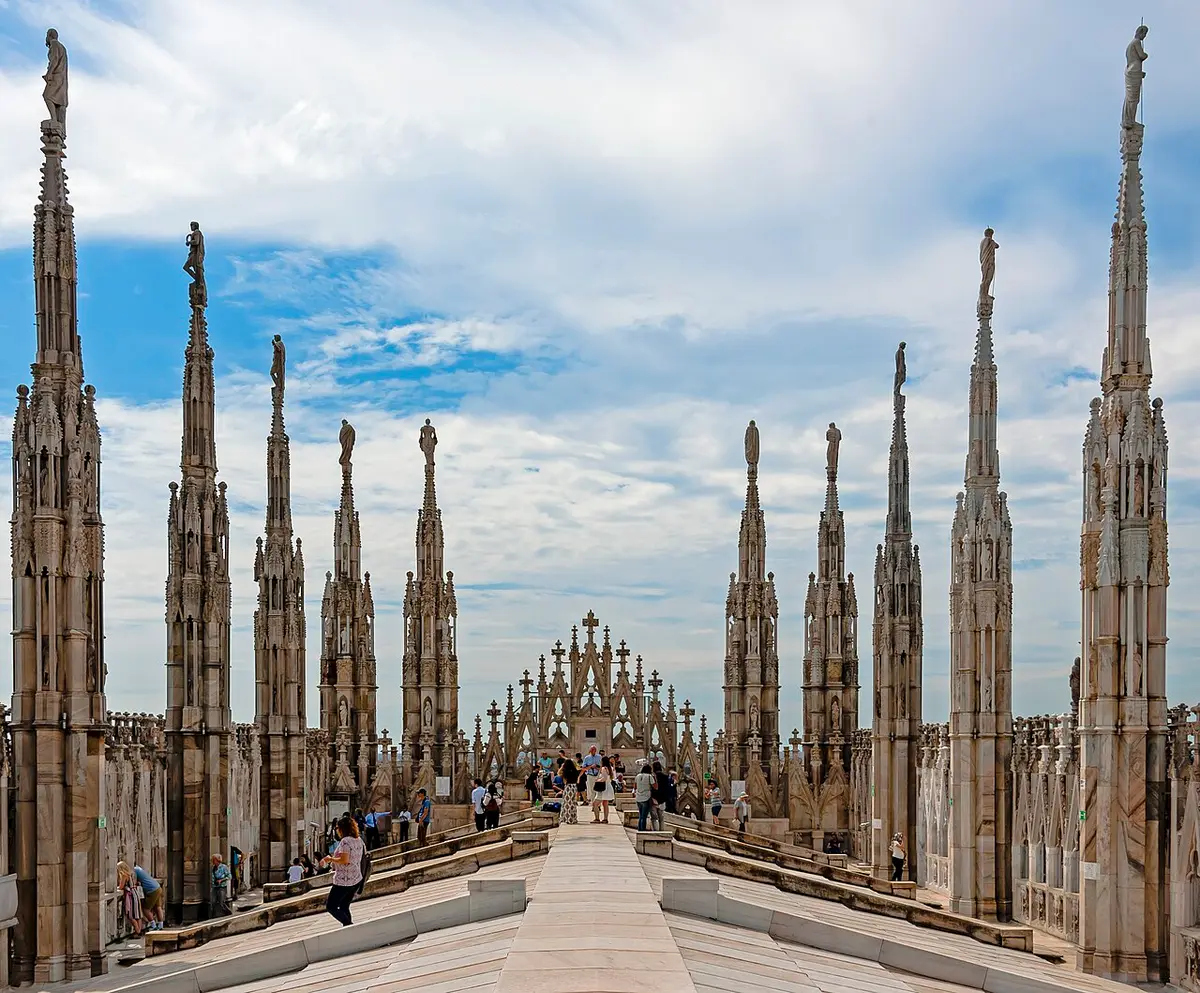
Begun in 1386 and finished, portal by portal, only in 1965, the cathedral is built of pinkish-white marble from Candoglia, near Lake Maggiore, and bristles with spires and statues. Inside, the five aisles are lit by tall stained-glass windows; outside, a gilded copper Madonna, the Madonnina, has stood on the highest spire since 1774.
Go up to the terraces, by stairs or by lift, and walk among the spires. Shoulders and knees must be covered inside the cathedral.
Photo: Daniel Case, CC BY-SA 3.0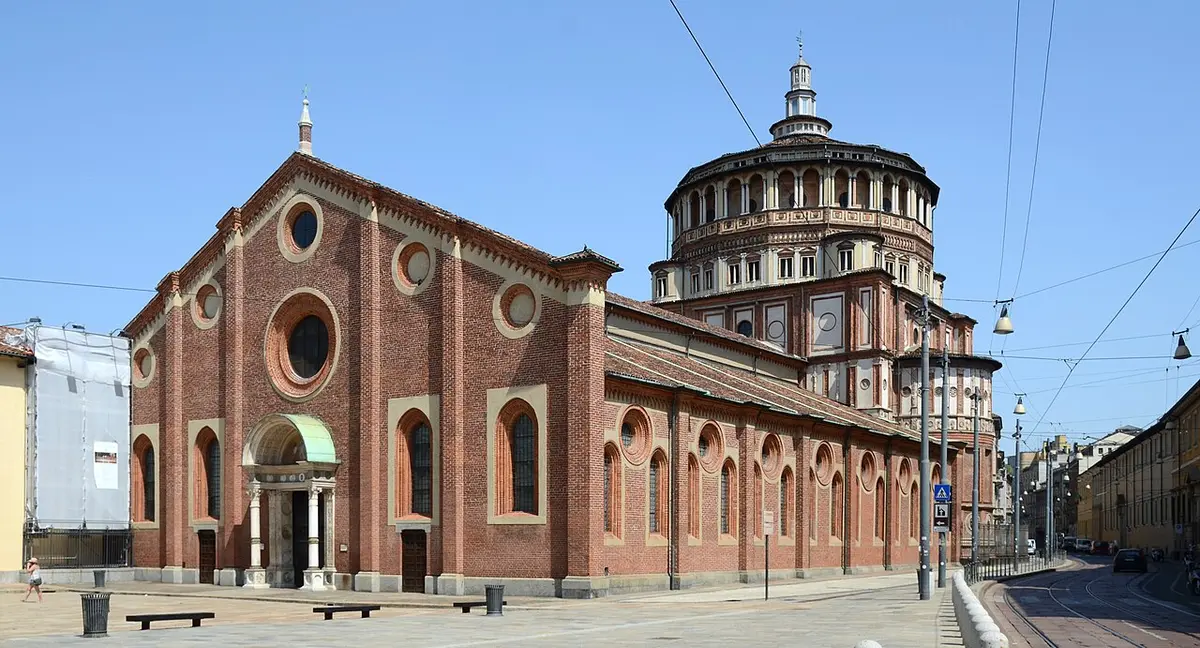 02
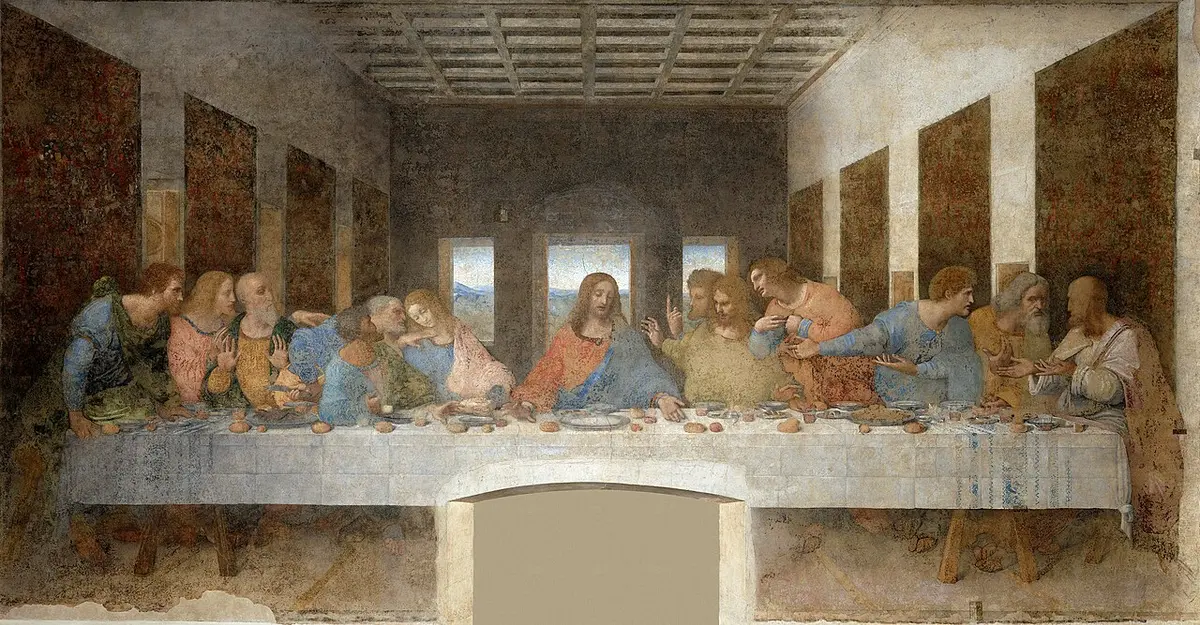
The Last Supper
Leonardo painted it from about 1495 to 1498 on the end wall of the refectory of Santa Maria delle Grazie, for Ludovico Sforza. He worked in tempera on dry plaster rather than fresco, and the paint began to flake in his own lifetime; what you see today came out of a restoration that ran from 1978 to 1999. The church next door has a tribune by Bramante.
Visits last 15 minutes, in small groups, with timed tickets released three months at a time. Closed on Mondays.
Photo: Marcin Białek, CC BY-SA 3.0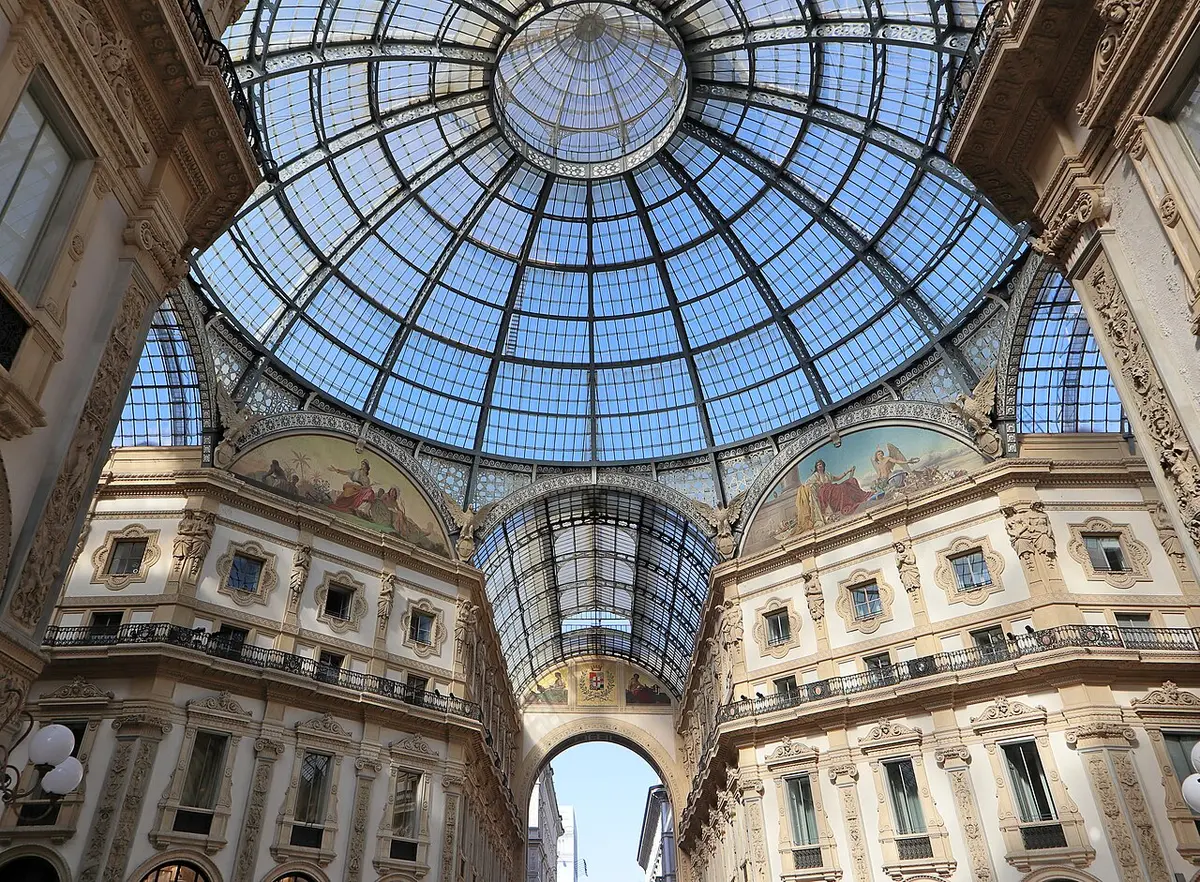 03
Galleria Vittorio Emanuele II
A glass-roofed arcade built from 1865 to 1877 to link Piazza del Duomo with Piazza della Scala, with cafés, restaurants and long-established shops under an iron and glass dome. Its architect, Giuseppe Mengoni, fell from the scaffolding in December 1877, just before the work was finished.
In the mosaic floor under the dome, the bull from the arms of Turin is worn into a hole by people spinning on it for luck.
Photo: Terragio67, CC BY-SA 4.0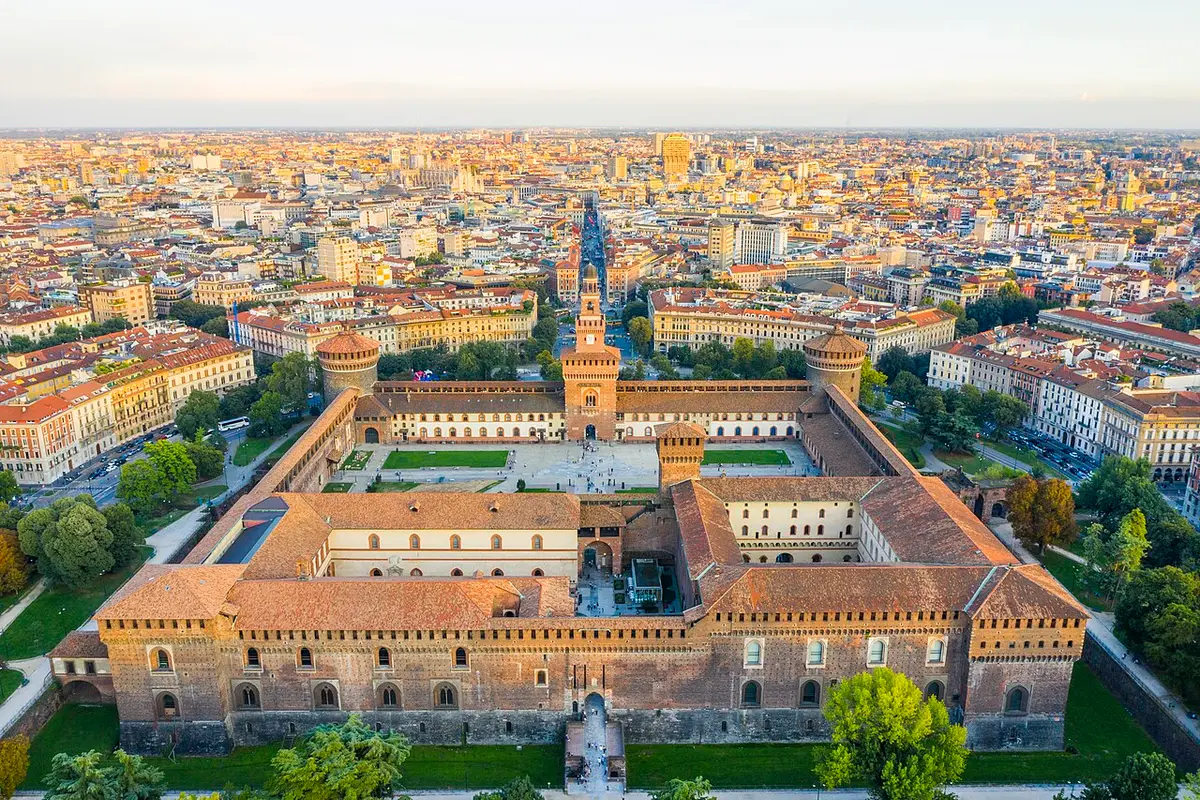 04
The Sforzesco Castle
Built by the Visconti in the 14th century and rebuilt by Francesco Sforza from 1450 as a fortress and a palace, the castle now holds the city’s museums of ancient art, furniture, musical instruments and Egyptian antiquities. The highlight is Michelangelo’s Rondanini Pietà, the sculpture he was still working on in the last days of his life, alone in the old Spanish hospital.
The courtyards are free and open every day; the museums close on Mondays. Leonardo’s painted Sala delle Asse is still being restored, so check before you go.
Photo: zheng.yan, CC BY-SA 4.0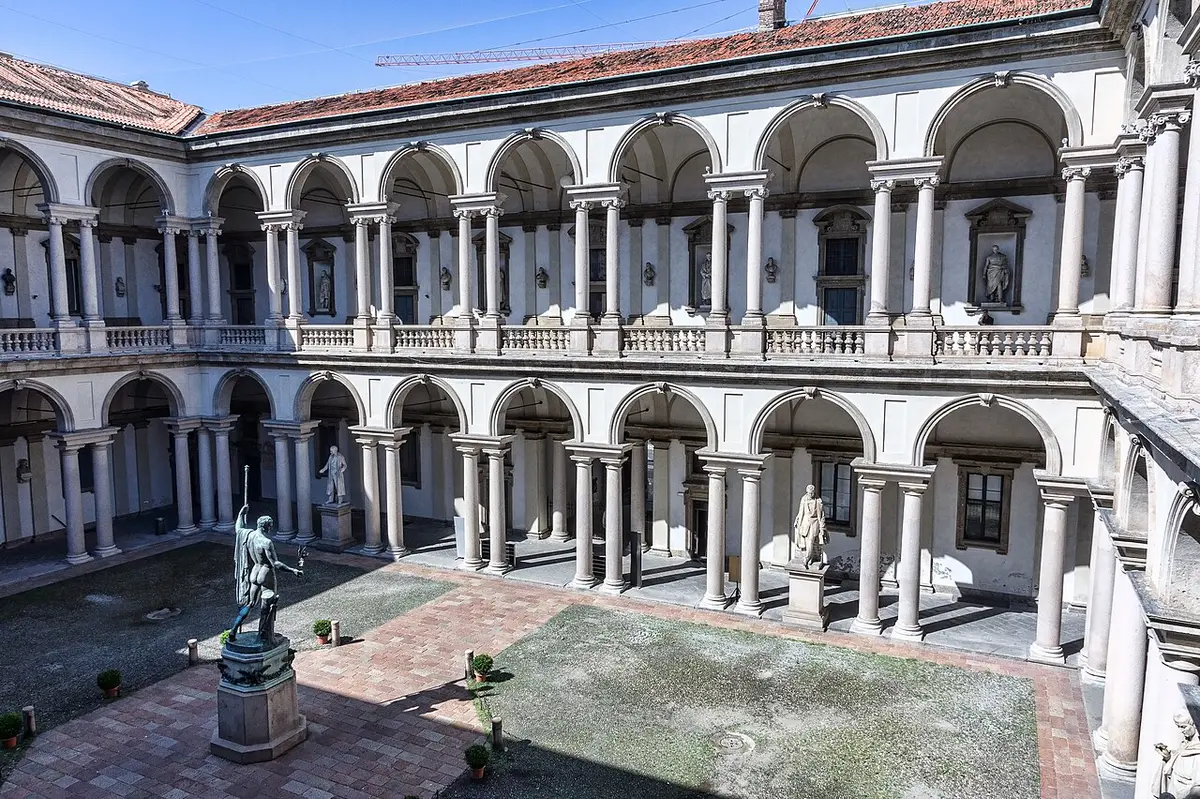 05
The Pinacoteca di Brera
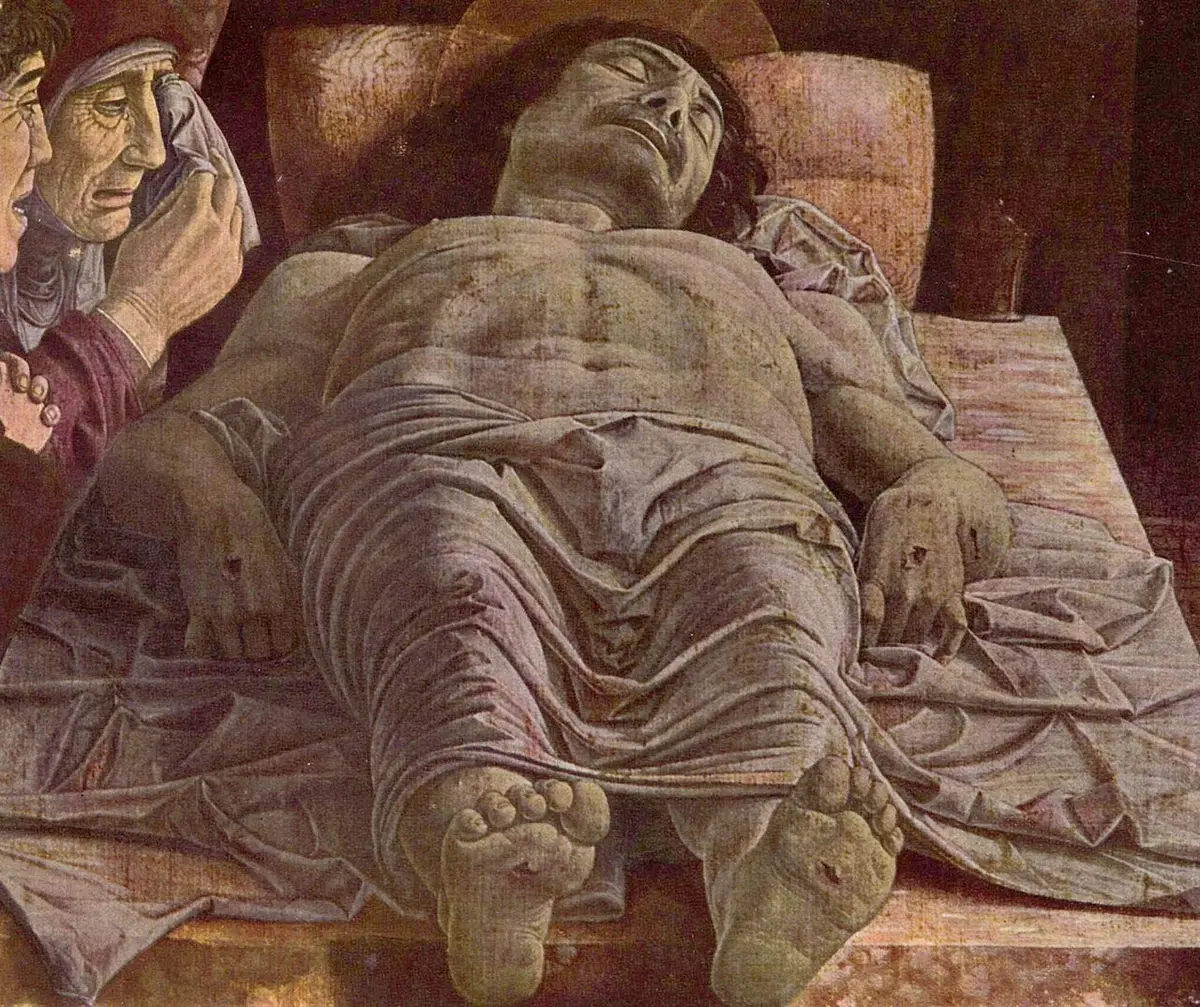
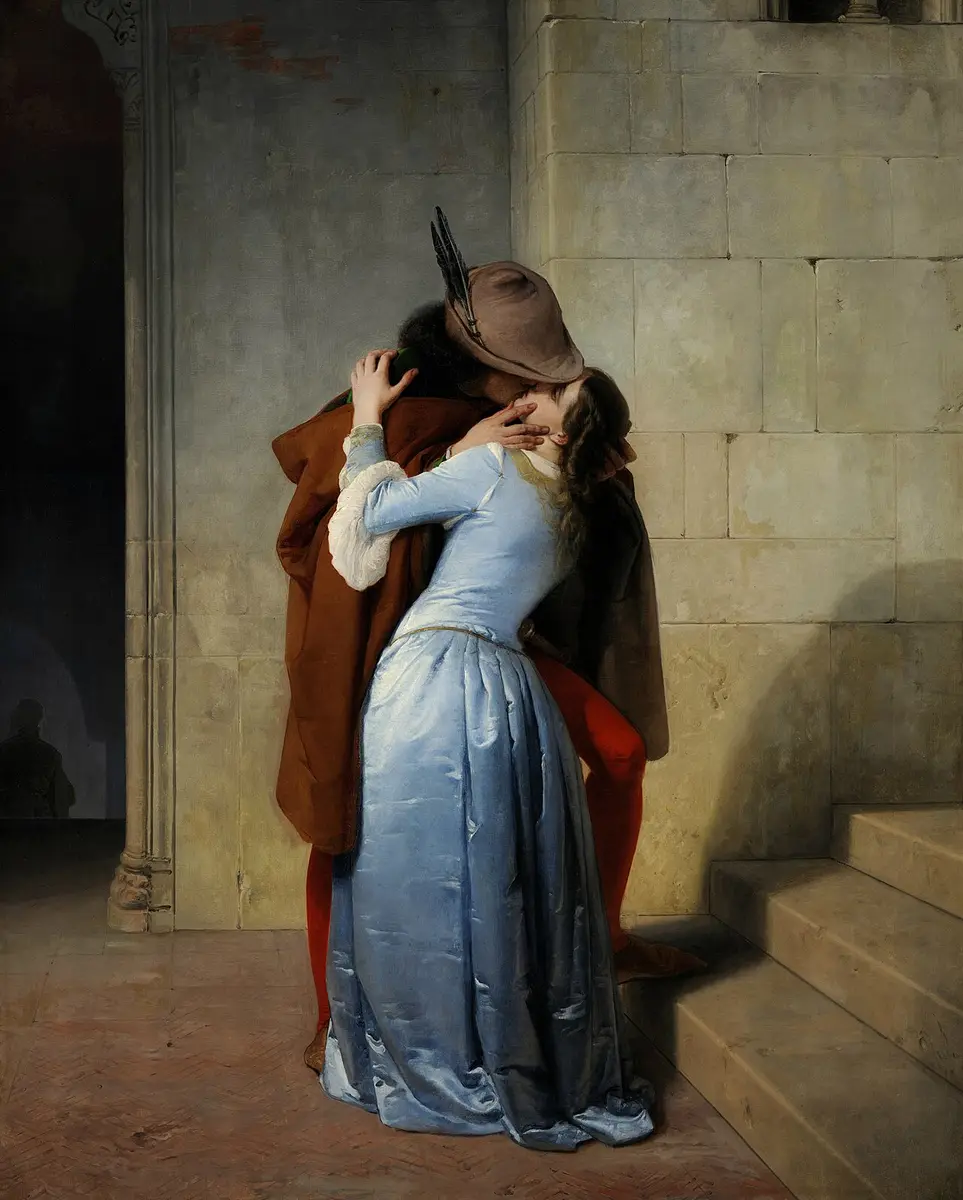
Opened on Napoleon’s birthday in 1809, in a former Jesuit college, the gallery holds some of the great paintings of northern Italy: Mantegna’s Lamentation of Christ, Raphael’s Marriage of the Virgin, Piero della Francesca’s Brera altarpiece, Caravaggio’s Supper at Emmaus and Hayez’s The Kiss. Since December 2024 its modern collection has had a home of its own at Palazzo Citterio nearby.
Closed on Mondays, and free on the first Sunday of the month, with lines to match. The Botanical Garden beside the palace is free.
Photo: Jean-Christophe BENOIST, CC BY 3.0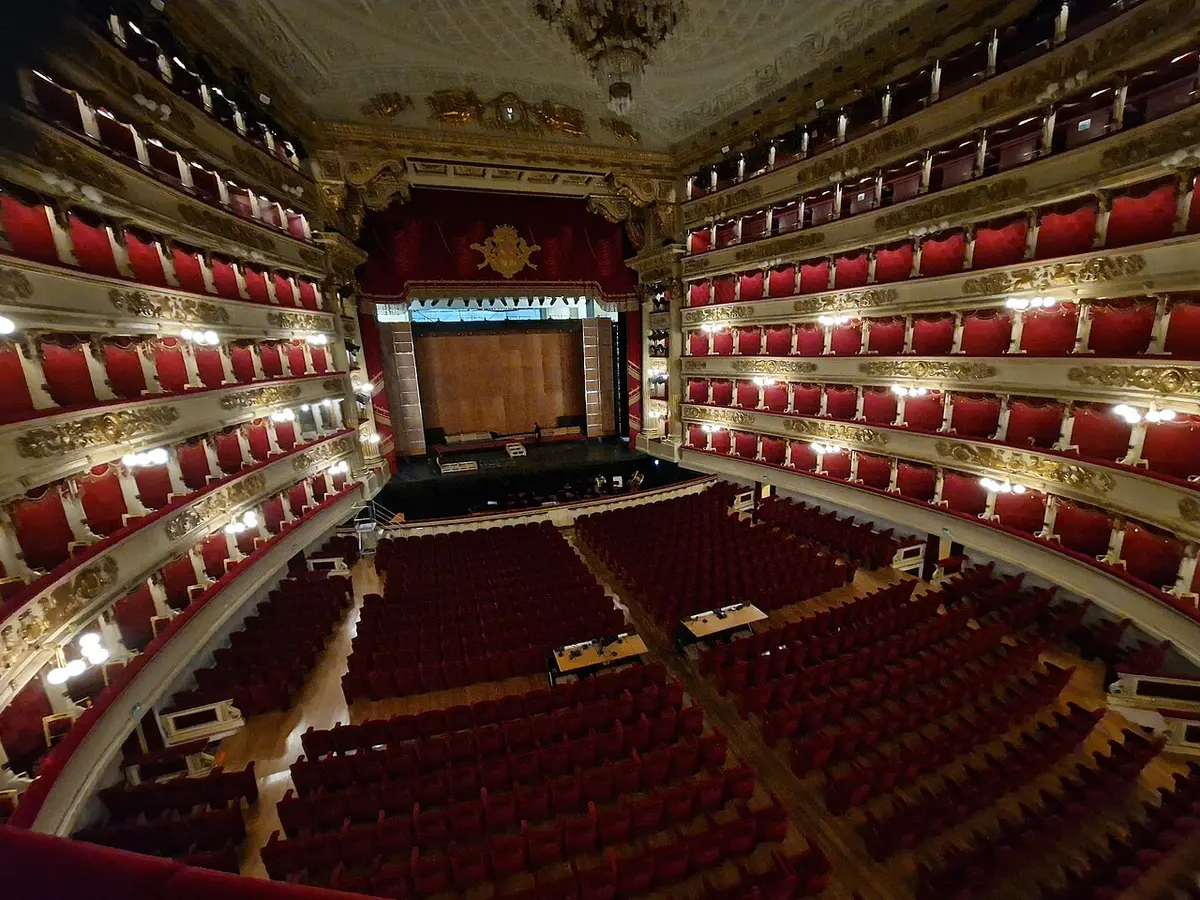 06
La Scala
Giuseppe Piermarini’s opera house opened in 1778 on the site of the church of Santa Maria della Scala. Verdi’s Nabucco, Otello and Falstaff had their first nights here, and so did Puccini’s Madama Butterfly and Turandot. The season opens every 7 December, the feast of Saint Ambrose.
The theater museum lets you look into the hall from a box when there is no rehearsal; its website lists the best times.
Photo: Efarestv, CC BY-SA 4.0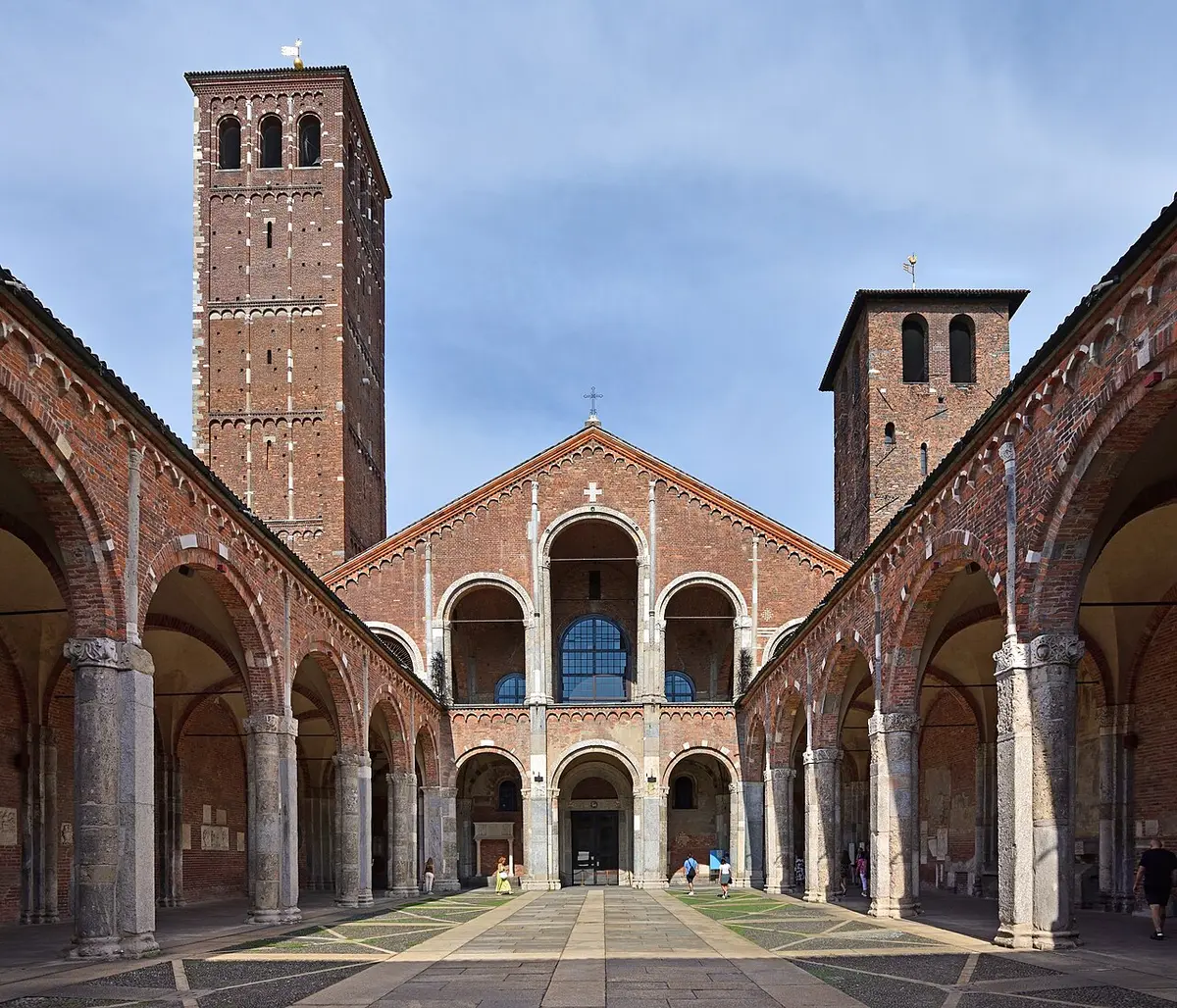 07
Sant’Ambrogio
Founded by Saint Ambrose in the 380s over the graves of martyrs and rebuilt in brick in the 11th and 12th centuries, it is the model of the Lombard Romanesque: an arcaded atrium, two bell towers and a golden altar from the 9th century. Ambrose, the city’s patron saint, lies in the crypt.
The Chapel of San Vittore in Ciel d’Oro keeps 5th-century mosaics, among them a portrait of Ambrose himself.
Photo: Ludvig14, CC BY-SA 4.0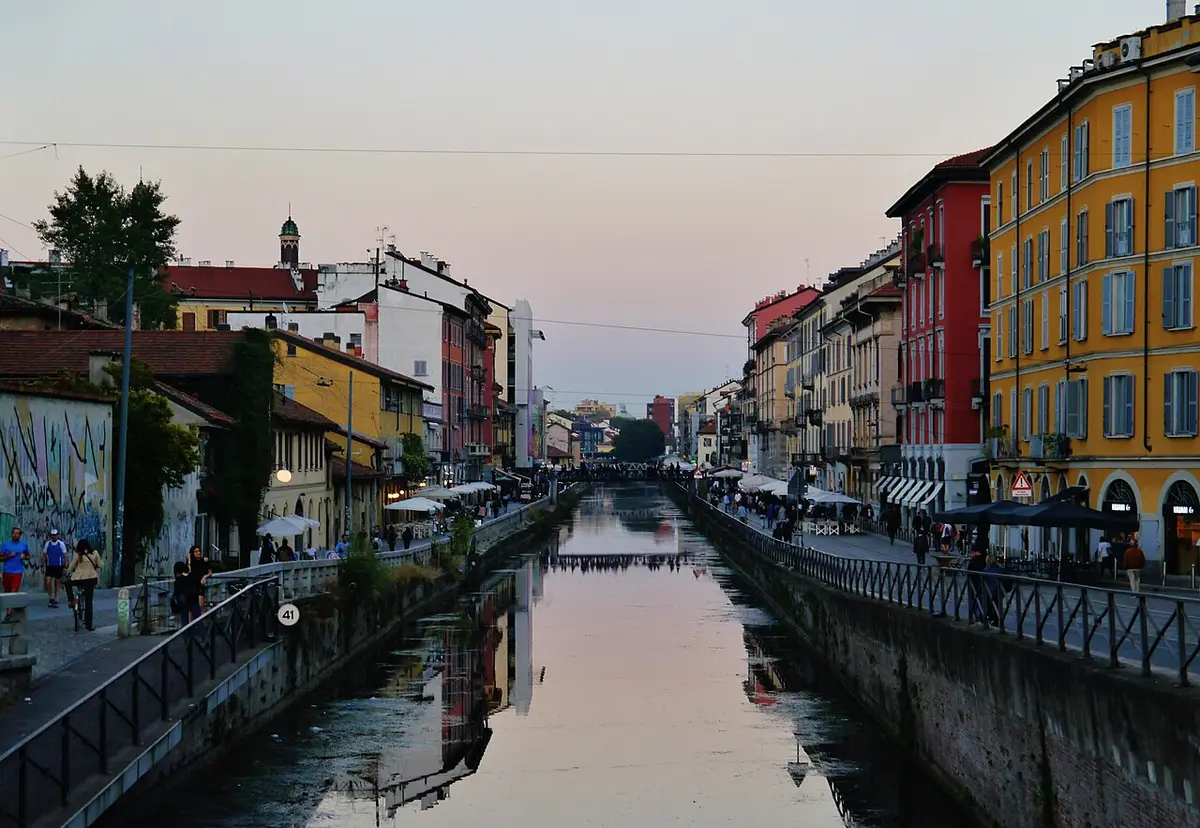 08
The Navigli
Milan was once a city of canals. The Naviglio Grande, dug from the 1170s, brought water from the Ticino and carried the marble for the Duomo; the inner ring of canals was covered over around 1930, but the Naviglio Grande and the Naviglio Pavese still meet at the Darsena, the old harbor. Today their banks are lined with bars and restaurants.
Come for aperitivo and stay for dinner. On the last Sunday of most months, an antiques market runs along the Naviglio Grande.
Photo: Zairon, CC BY-SA 4.0
Three hidden gems
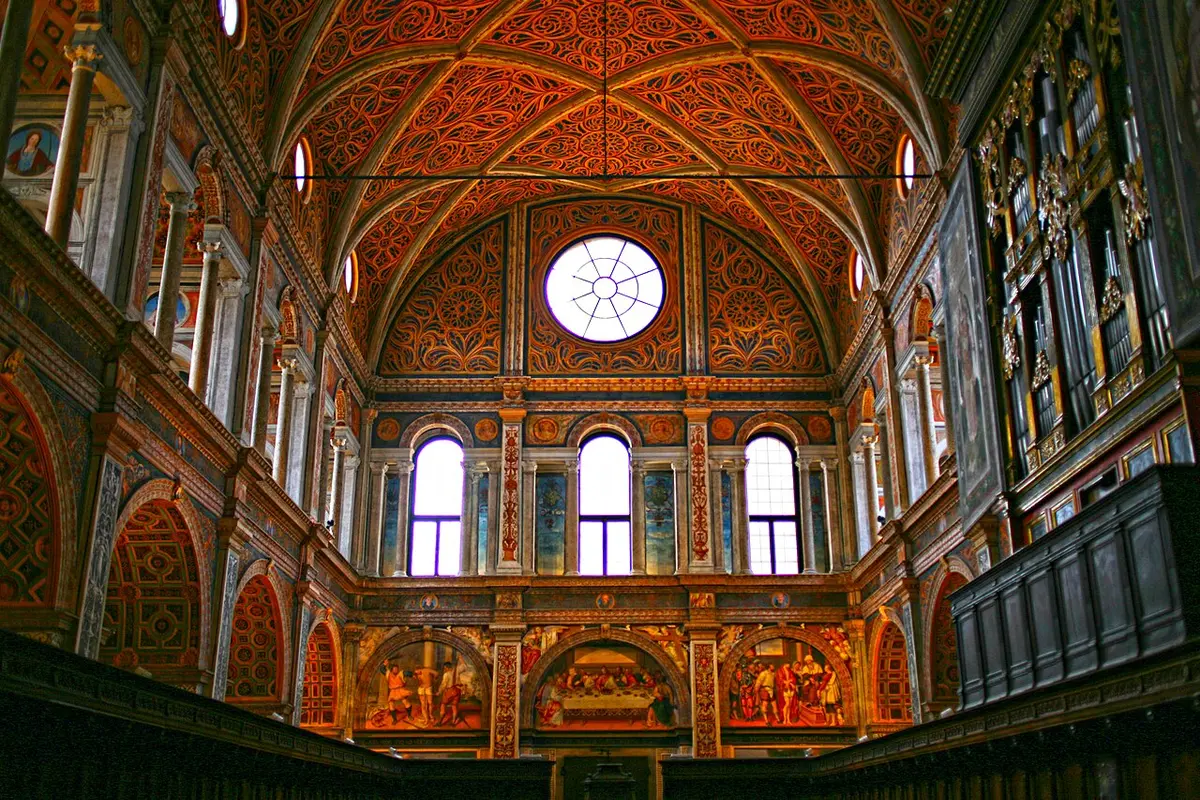
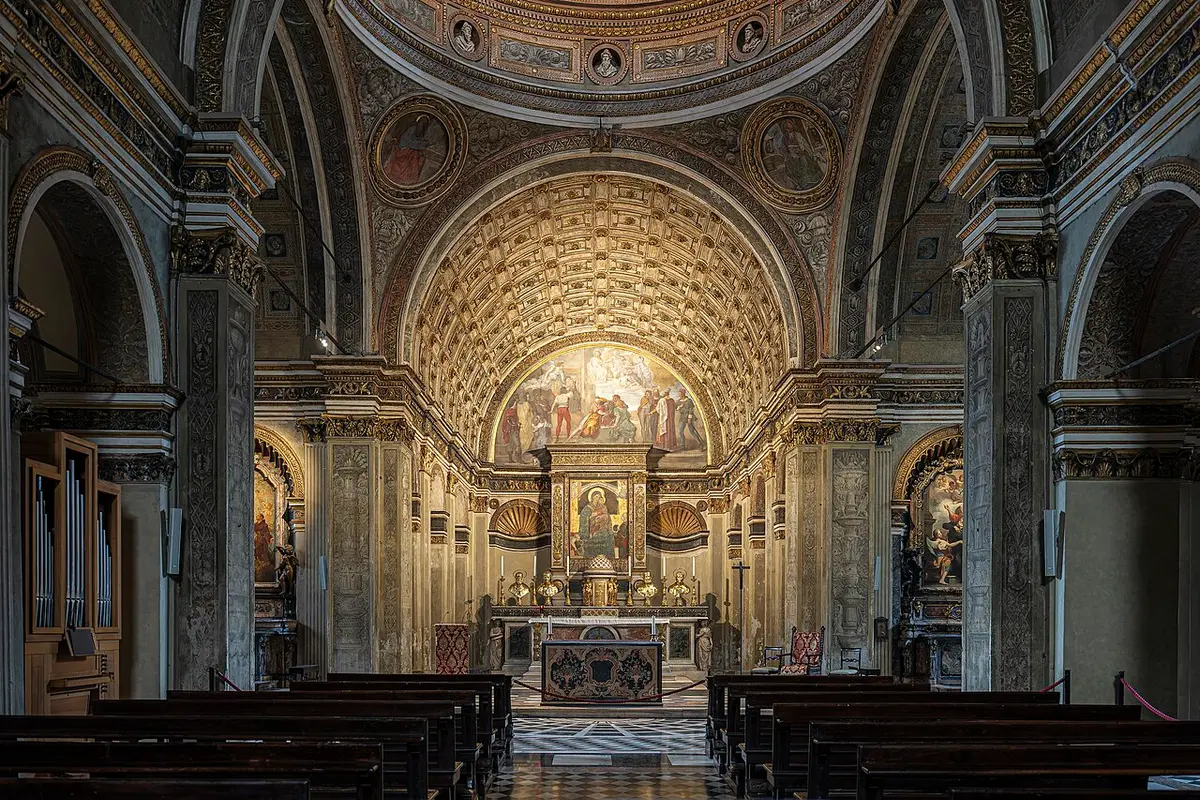
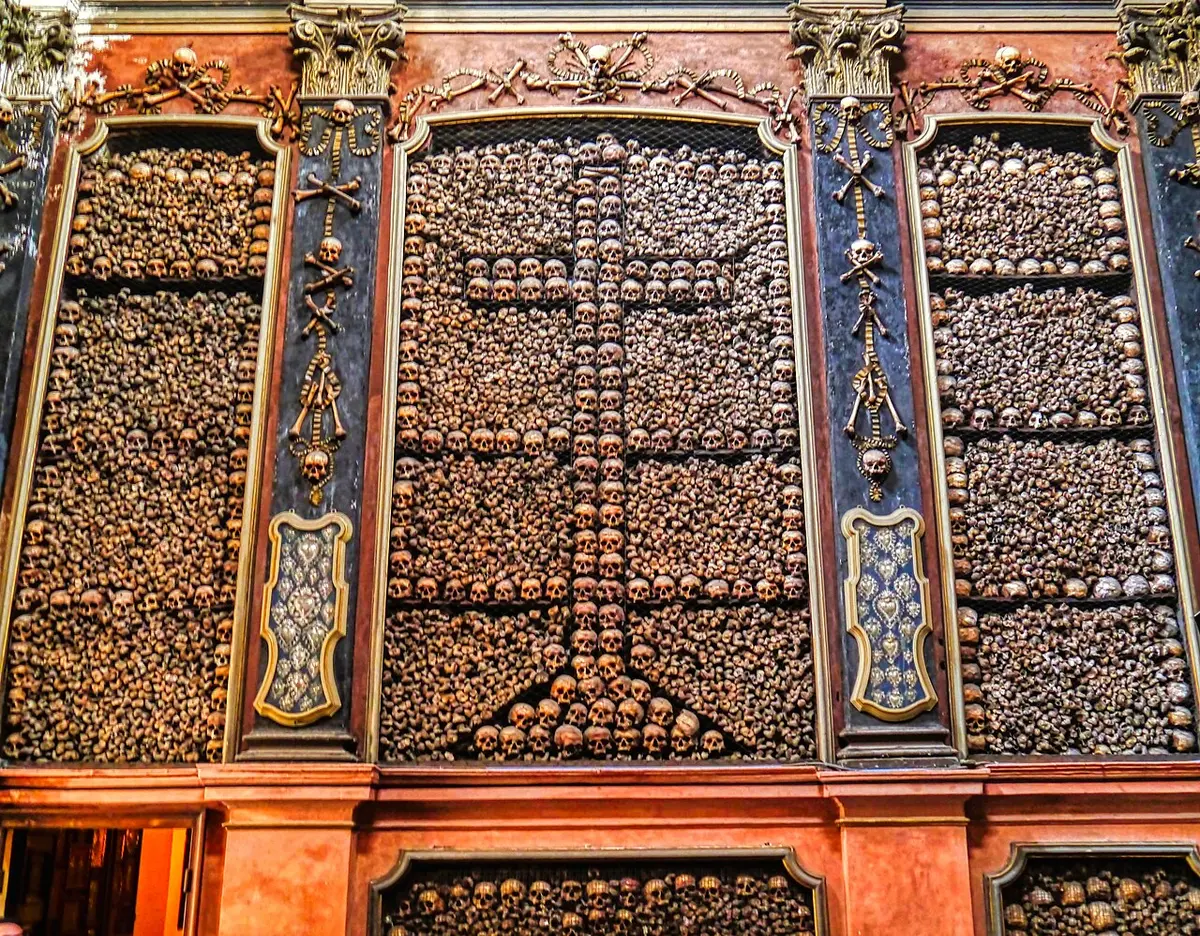
Milan in 4 days, routed
31 of Milan’s best-loved sights, routed into 4 days by the same engine that plans every SwipeSights trip: nearby stops share a day, walks stay short, and each stop is timed around its opening hours.
Friday
8 stops · 5.2 km between them · starts 10:00- 10:00
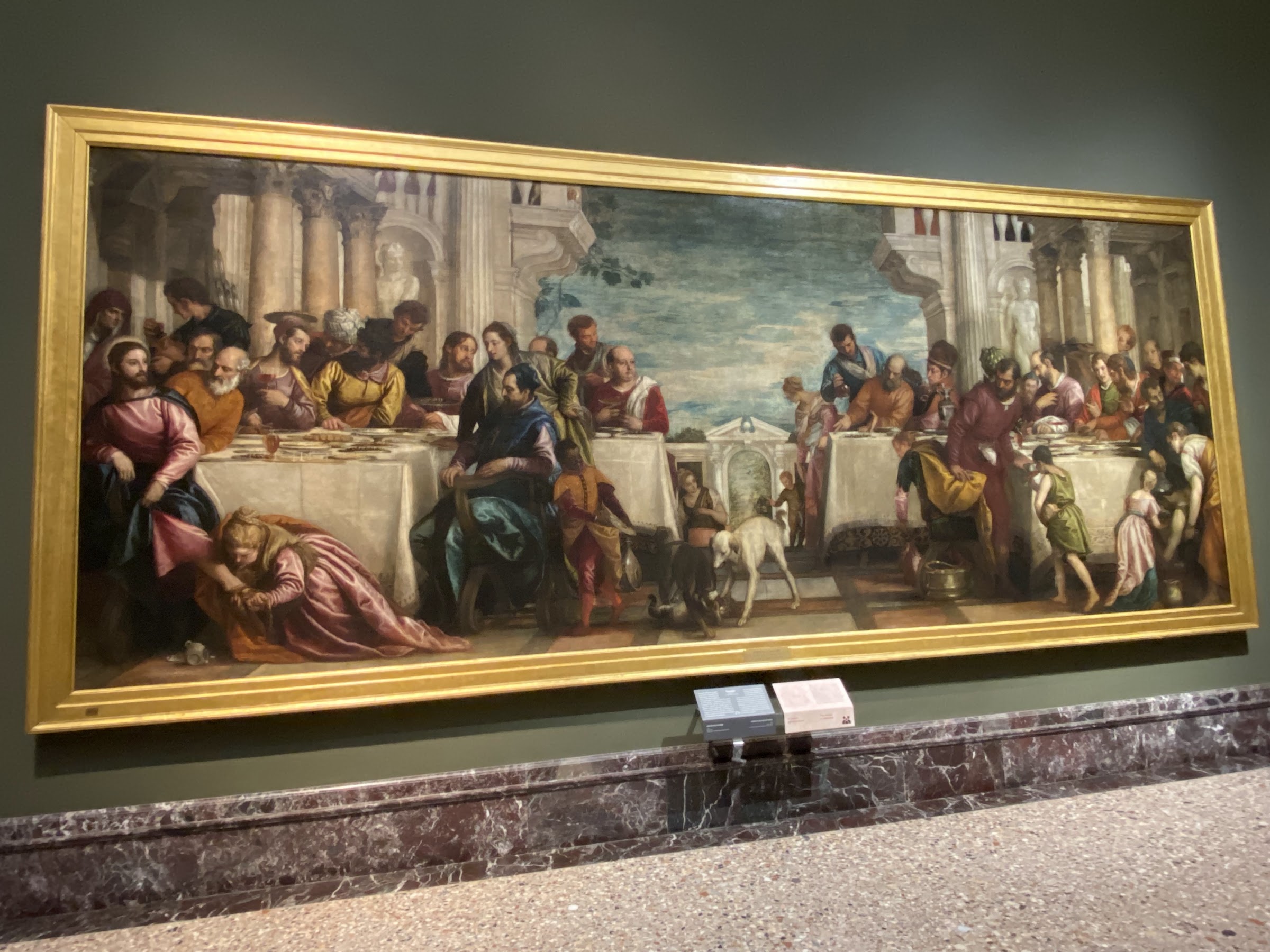 1Pinacoteca di Brera~2 hours
- ~10 min by taxi/transit (2.0km)
- 12:10
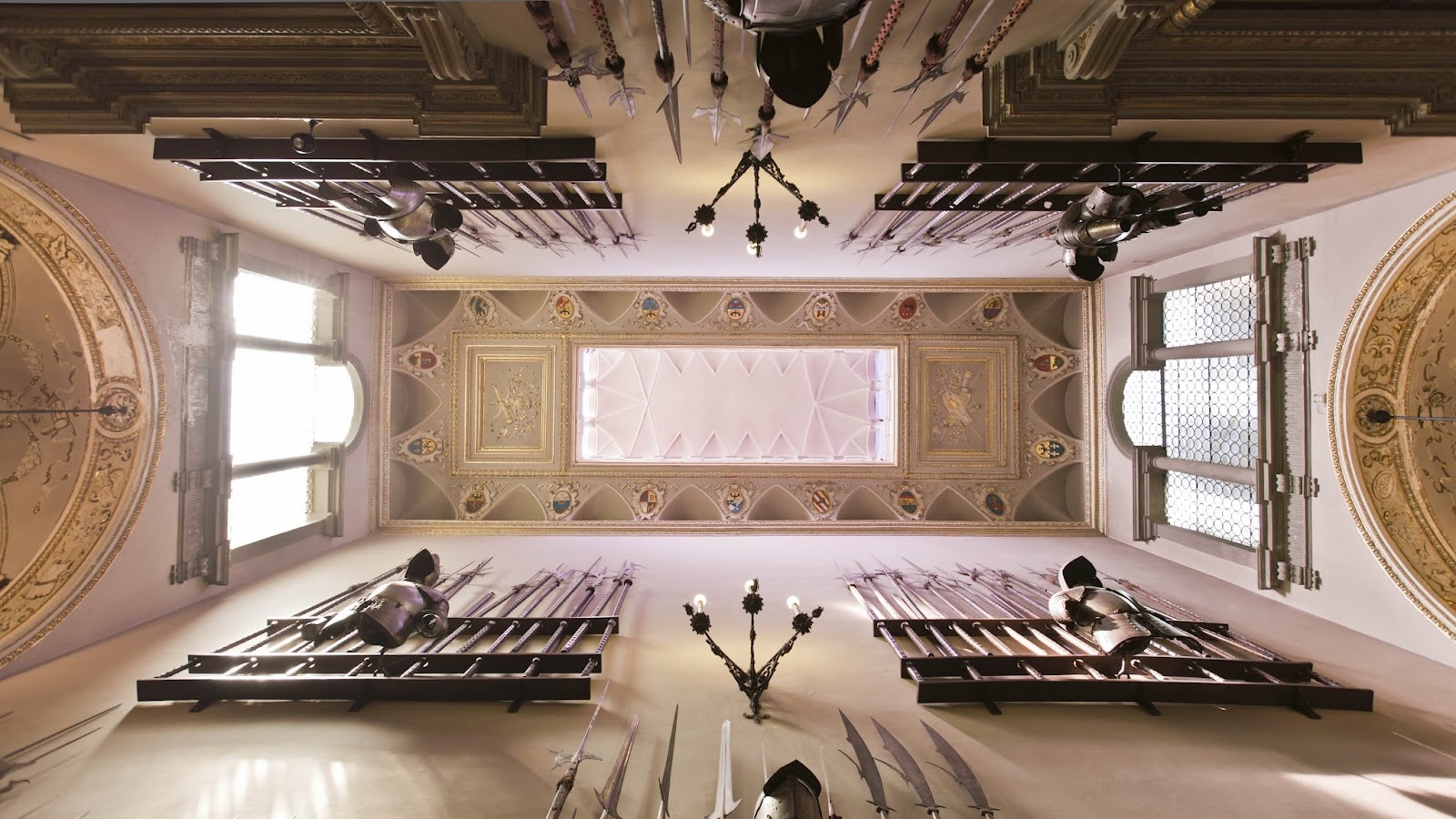 2Bagatti Valsecchi Museum~1.25 hours
- ~12 min walk (763m)
- 13:30Lunch Break1 hour
- 14:30
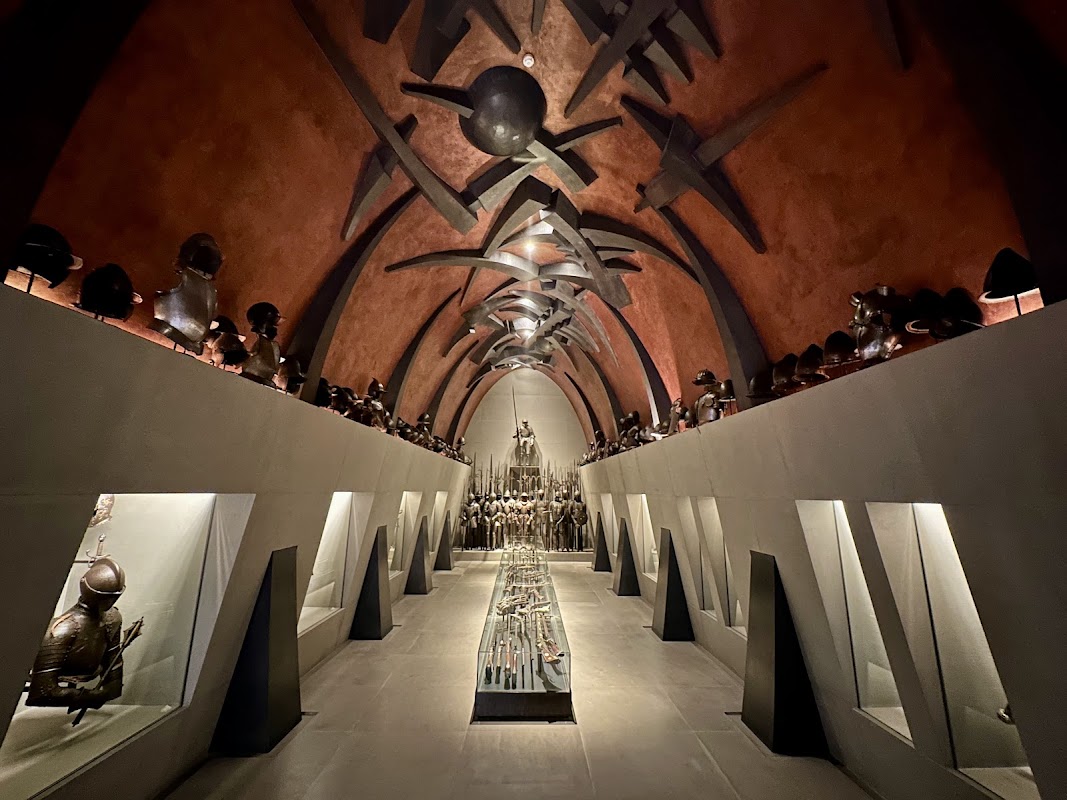 3Poldi Pezzoli Museum~1.25 hours
- ~9 min walk (529m)
- 15:47
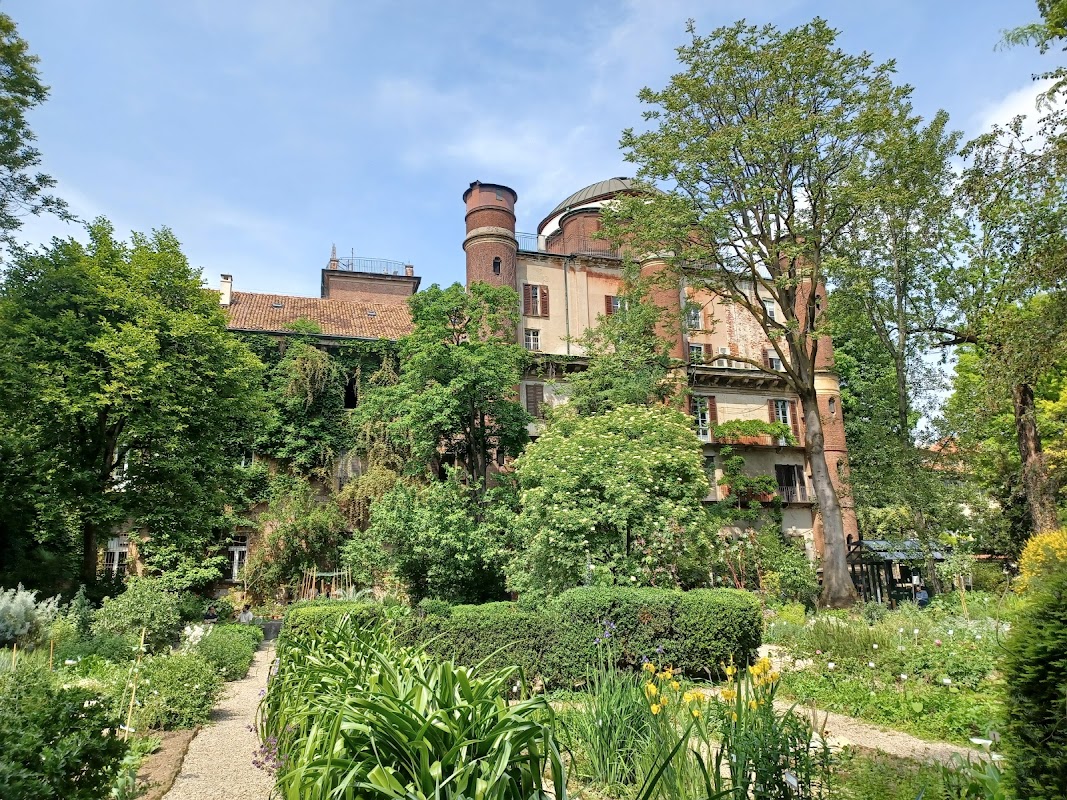 4Brera Botanical Garden~45 min
- ~10 min walk (587m)
- 16:42
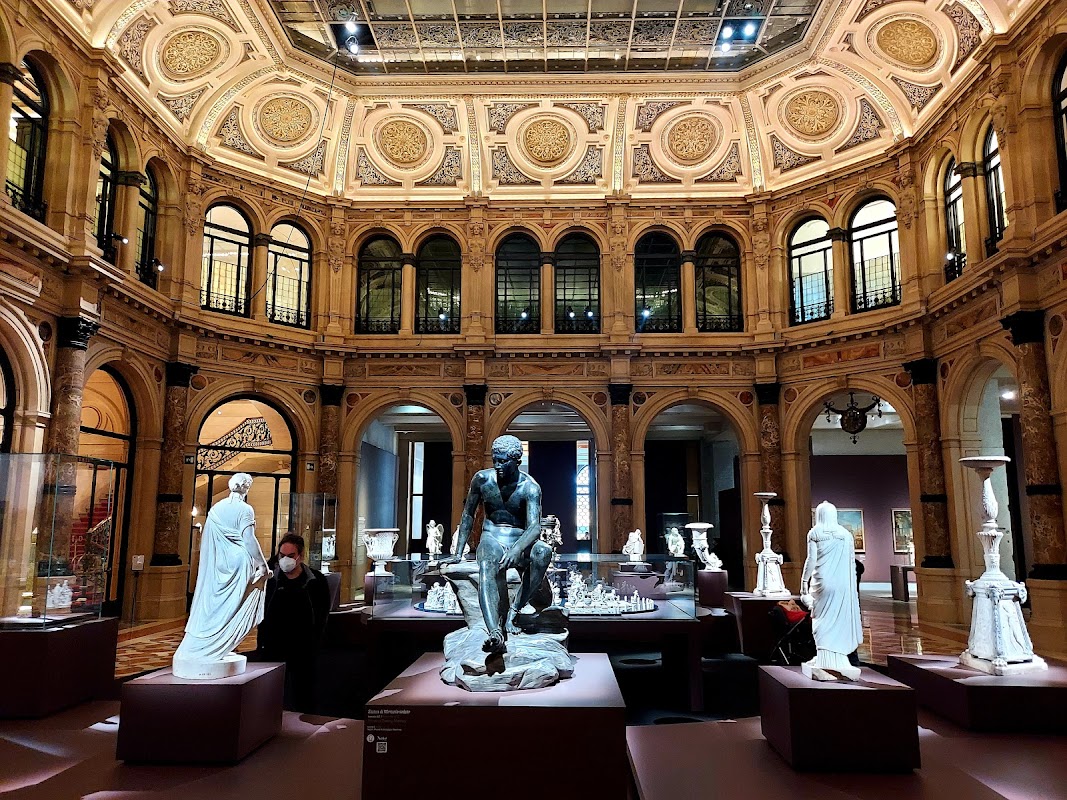 5Gallerie d’Italia~2 hours
- ~3 min walk (101m)
- 18:45Dinner Break1 hour
- 19:45
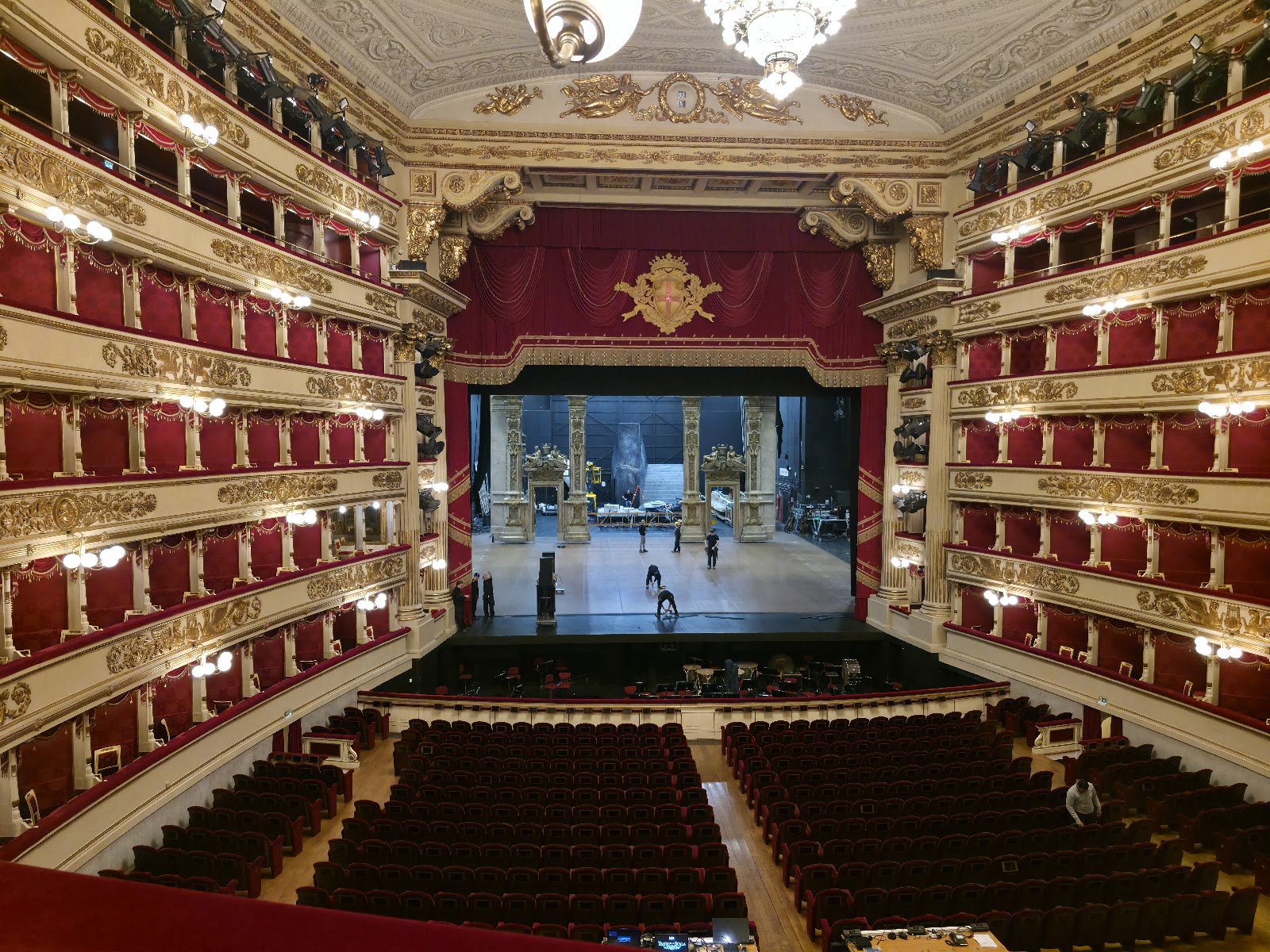 6Teatro alla Scala~1.5 hours
- ~3 min walk (83m)
- 21:11
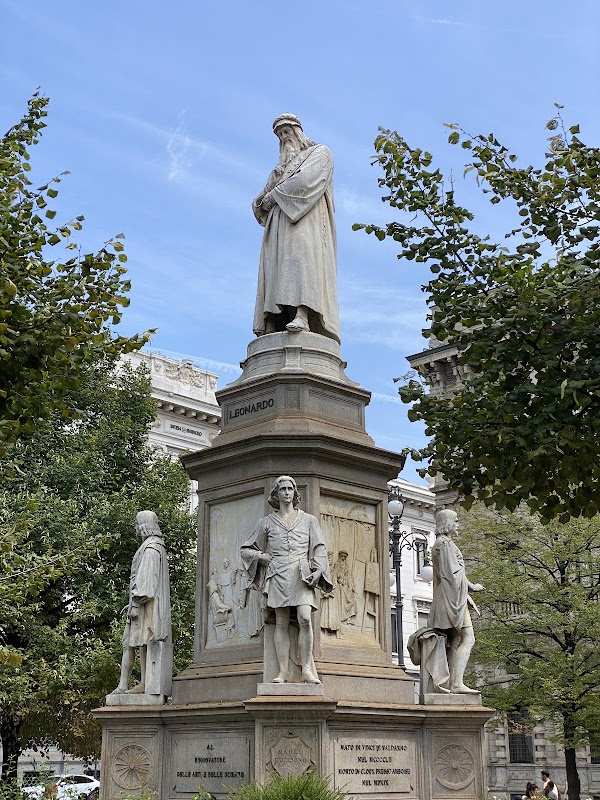 7Monument to Leonardo da Vinci~15 min
- ~17 min walk (1.1km)
- 21:43
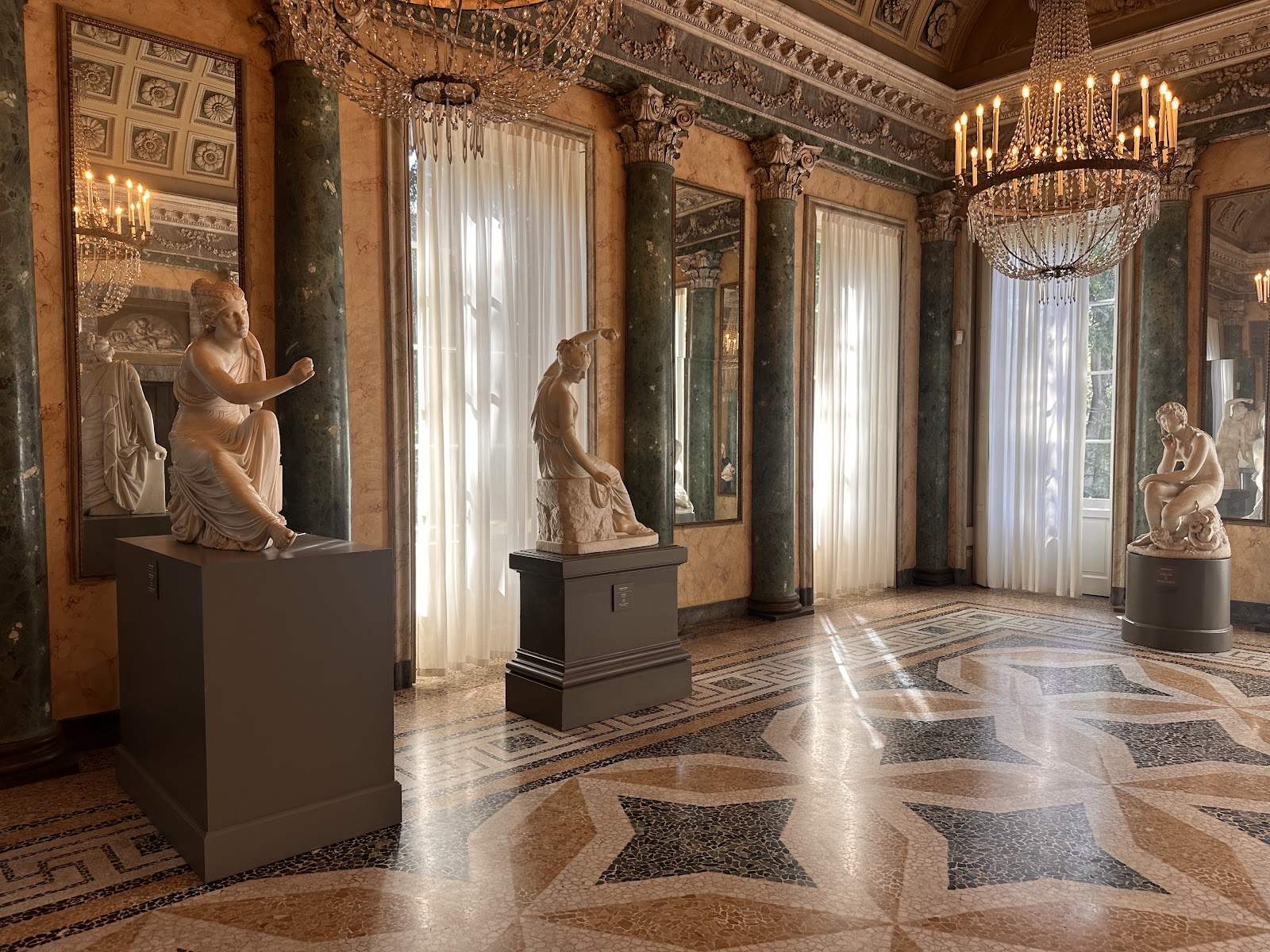 8Modern Art Gallery~1.5 hours
Saturday
8 stops · 17.1 km between them · starts 09:00- 09:00
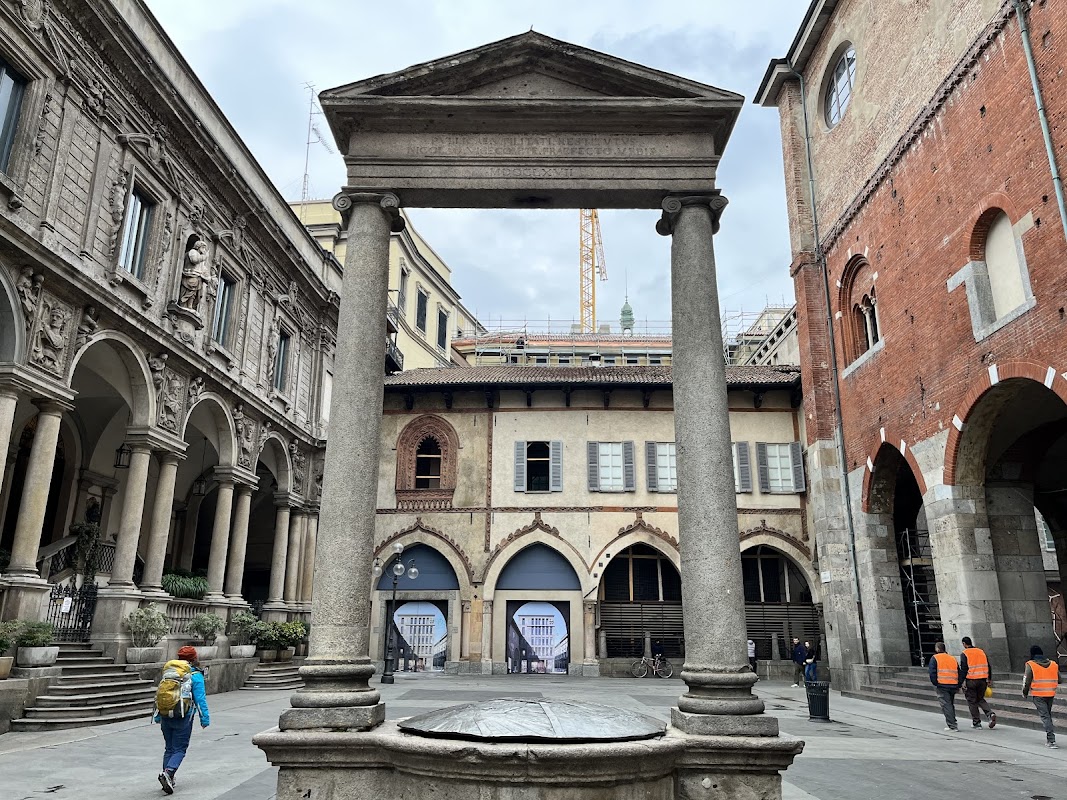 1Piazza Mercanti~25 min
- ~13 min by taxi/transit (3.5km)
- 10:00
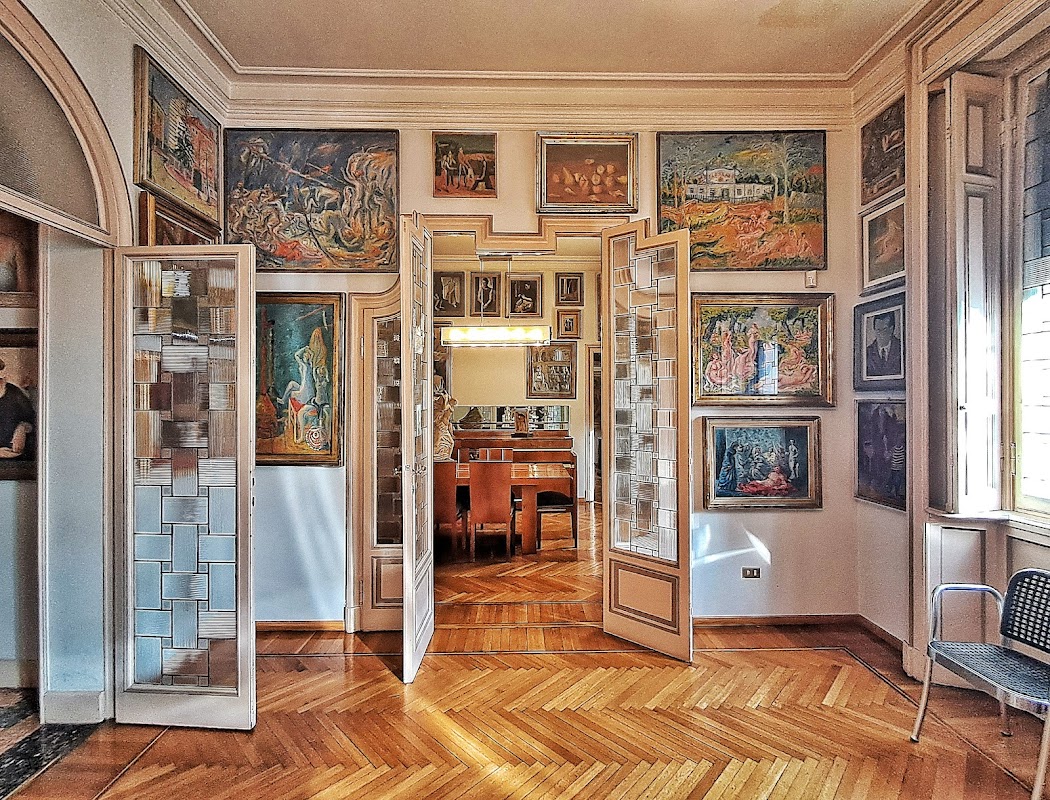 2Casa museo Boschi di Stefano~1 hour
- ~11 min by taxi/transit (2.5km)
- 11:11
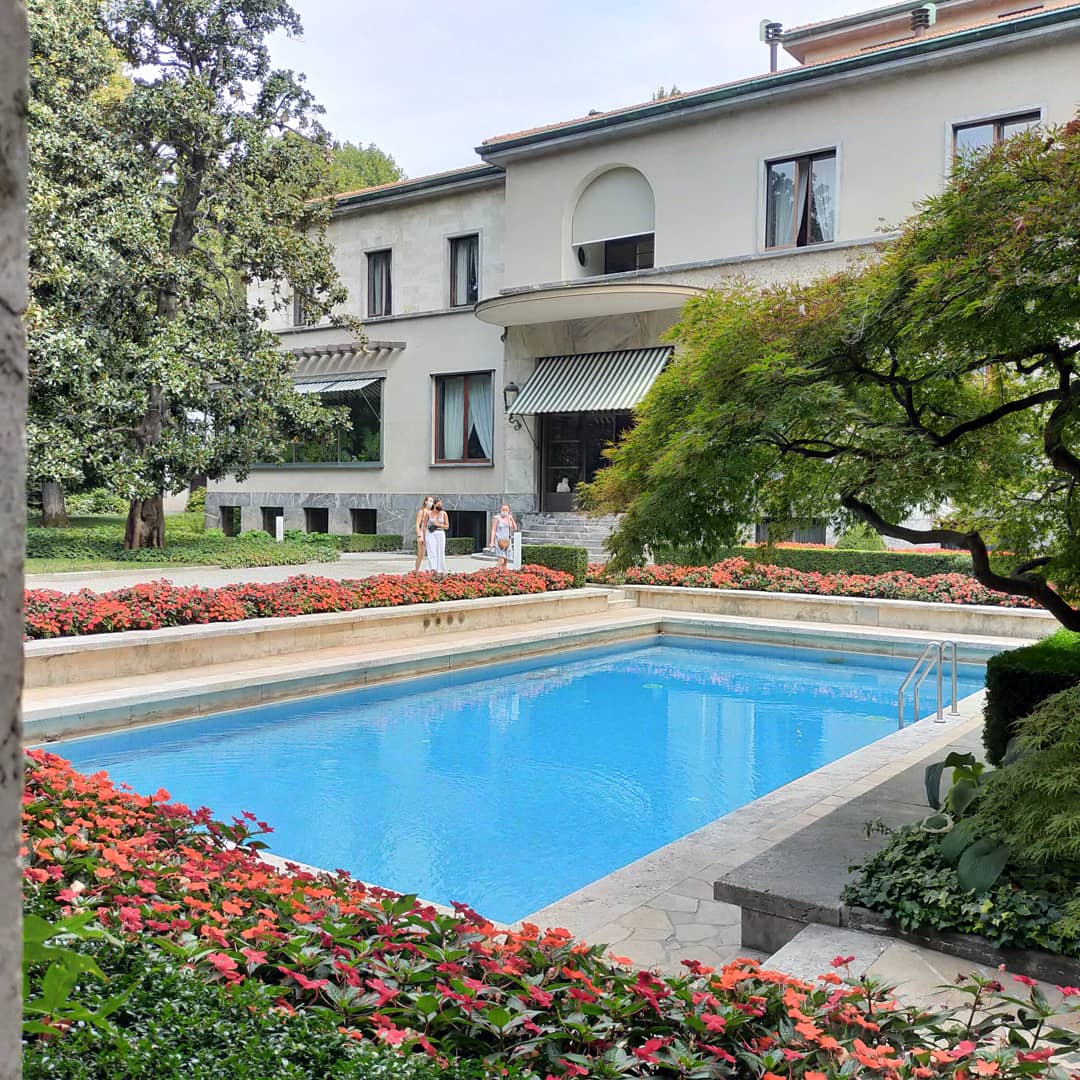 3Villa Necchi Campiglio~1 hour
- ~27 min walk (1.9km)
- 12:38Lunch Break1 hour
- 13:38
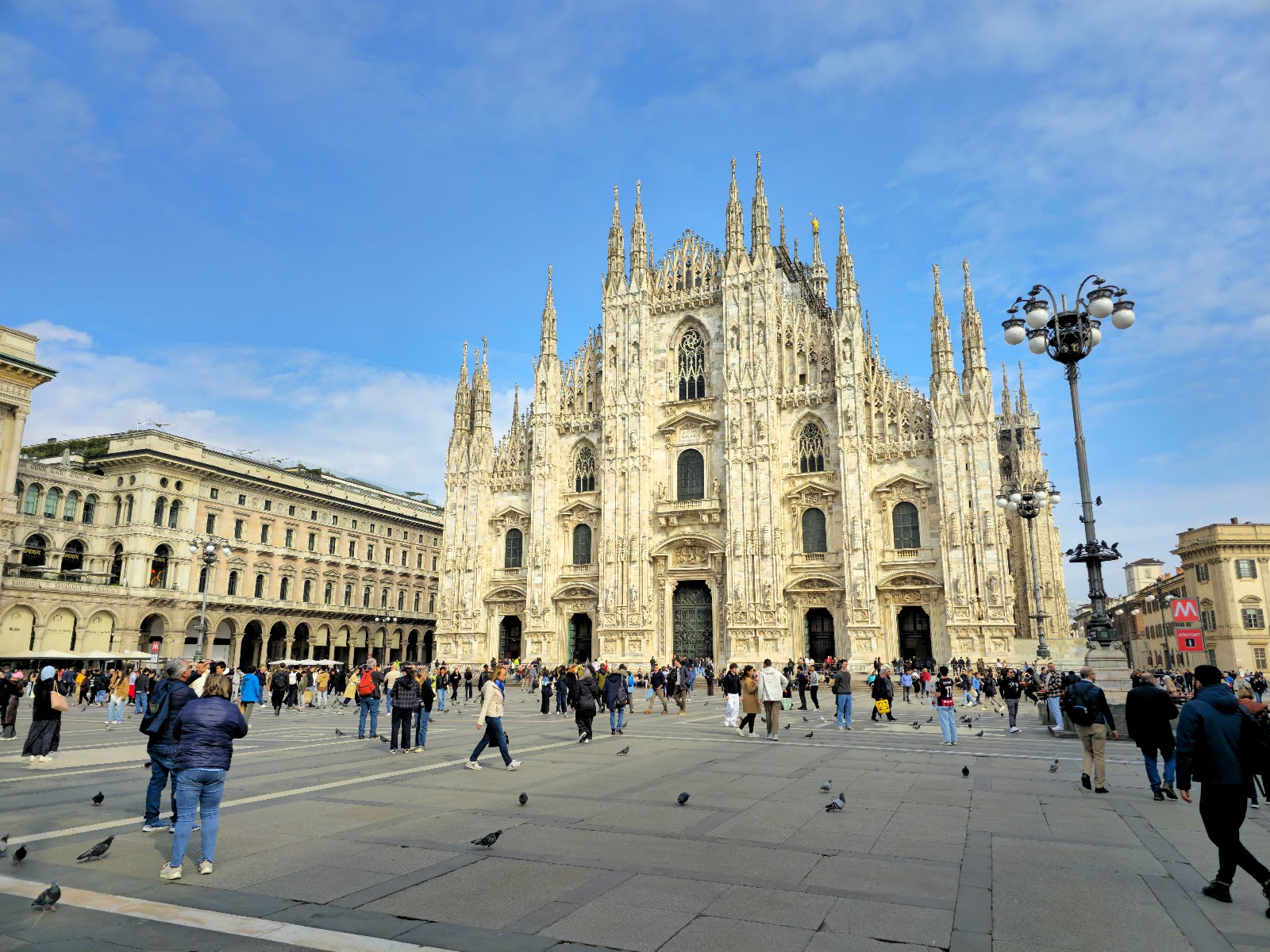 4Duomo di Milano~1.5 hours
- ~5 min walk (220m)
- 15:13
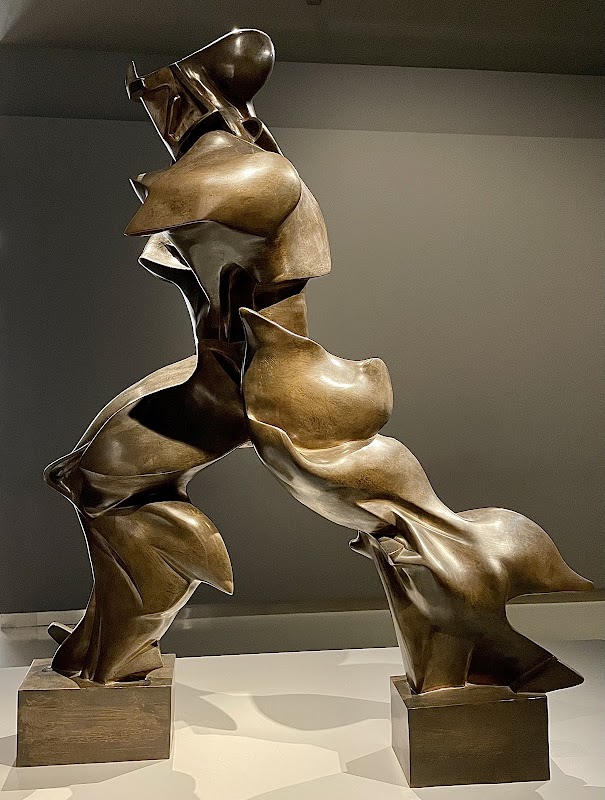 5Museo del Novecento~1.5 hours
- ~4 min walk (116m)
- 16:47
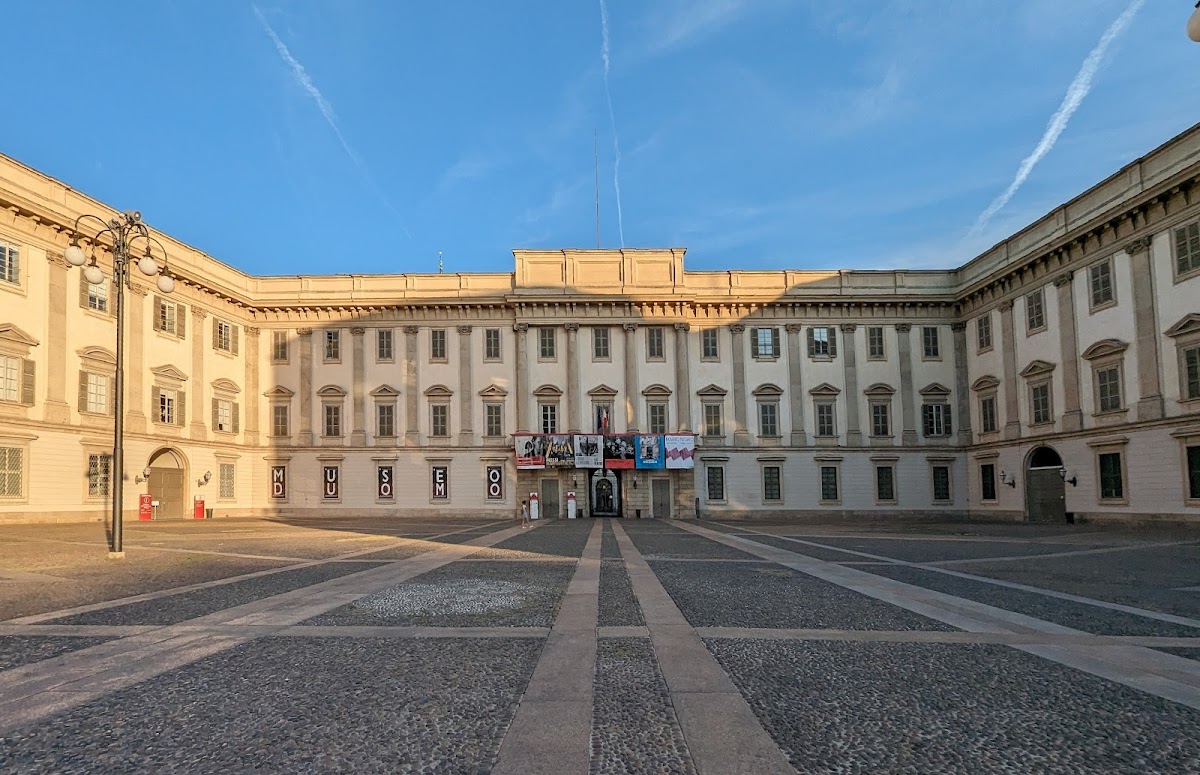 6Palazzo Reale di Milano~2.25 hours
- ~3 min walk (110m)
- 19:05Dinner Break1 hour
- 20:05
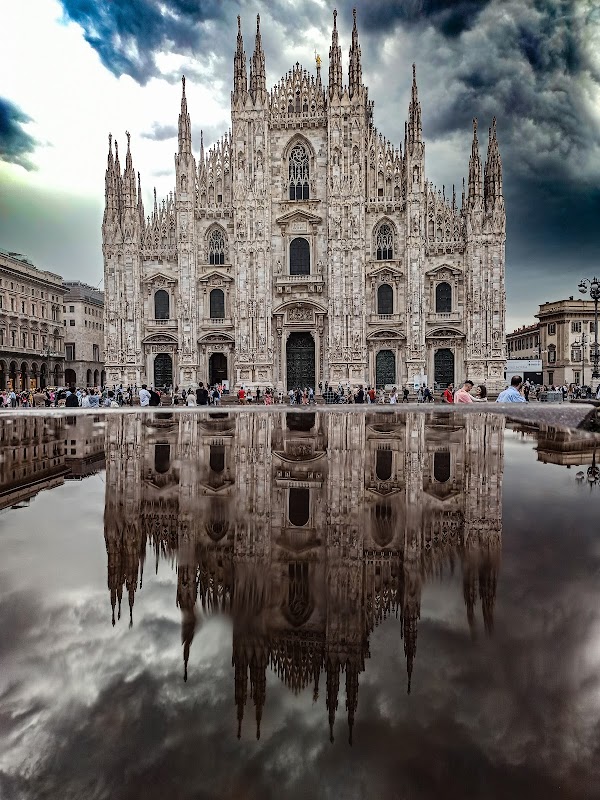 7Piazza del Duomo~25 min
- ~26 min by taxi/transit (8.8km)
- 20:54
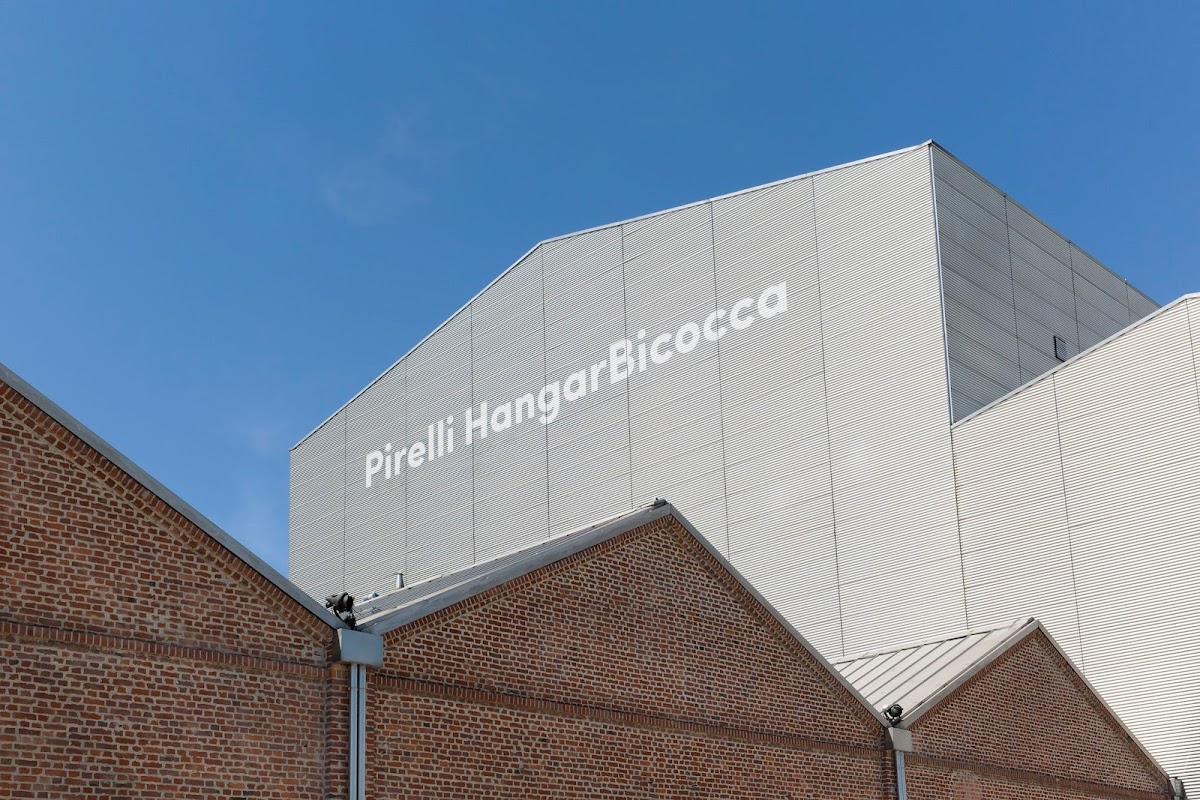 8Pirelli Hangar Bicocca~1.5 hours
Sunday
8 stops · 12.8 km between them · starts 09:00- 09:00
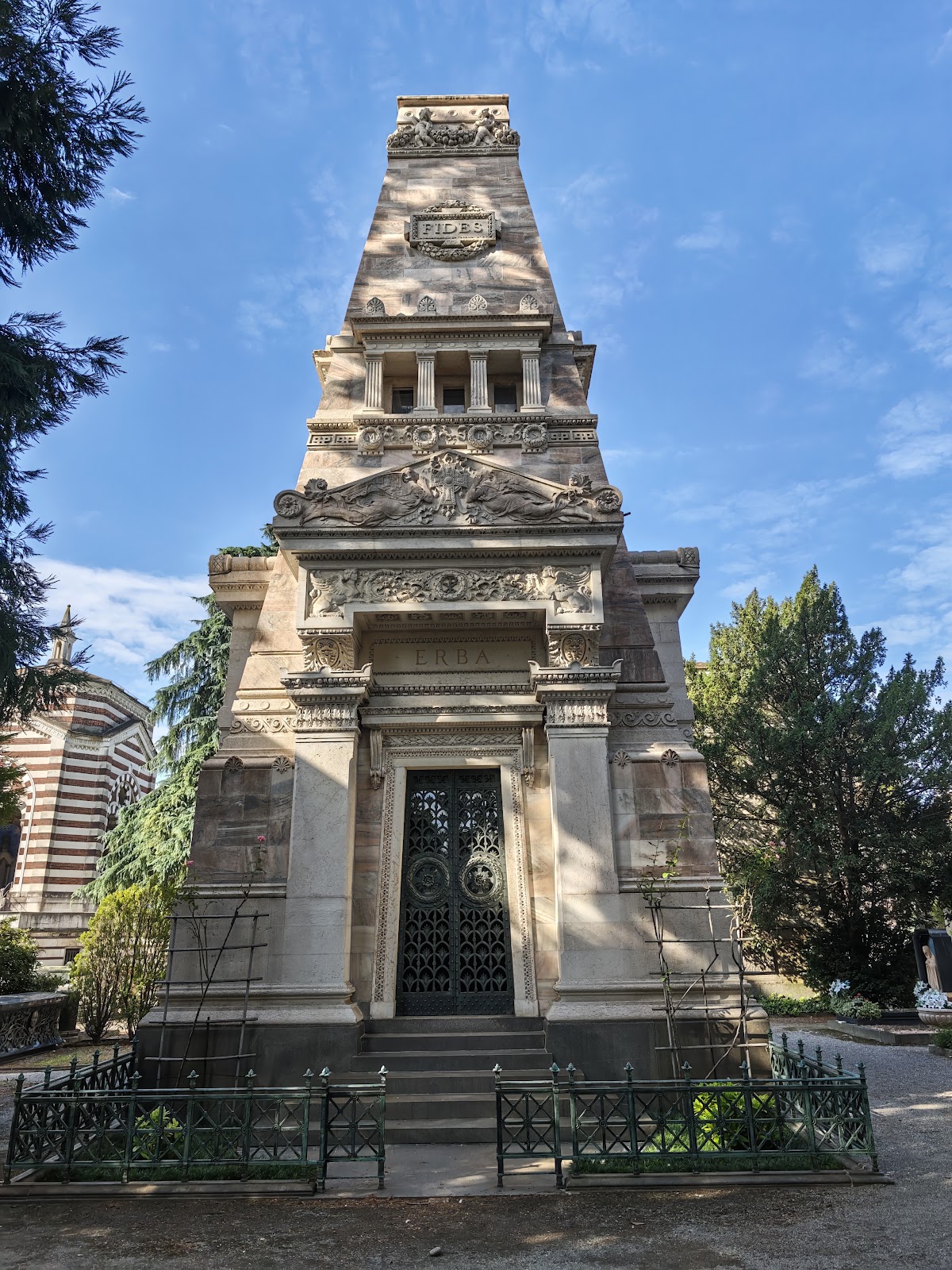 1Monumental Cemetery of Milan~1.75 hours
- ~10 min by taxi/transit (2.0km)
- 10:55
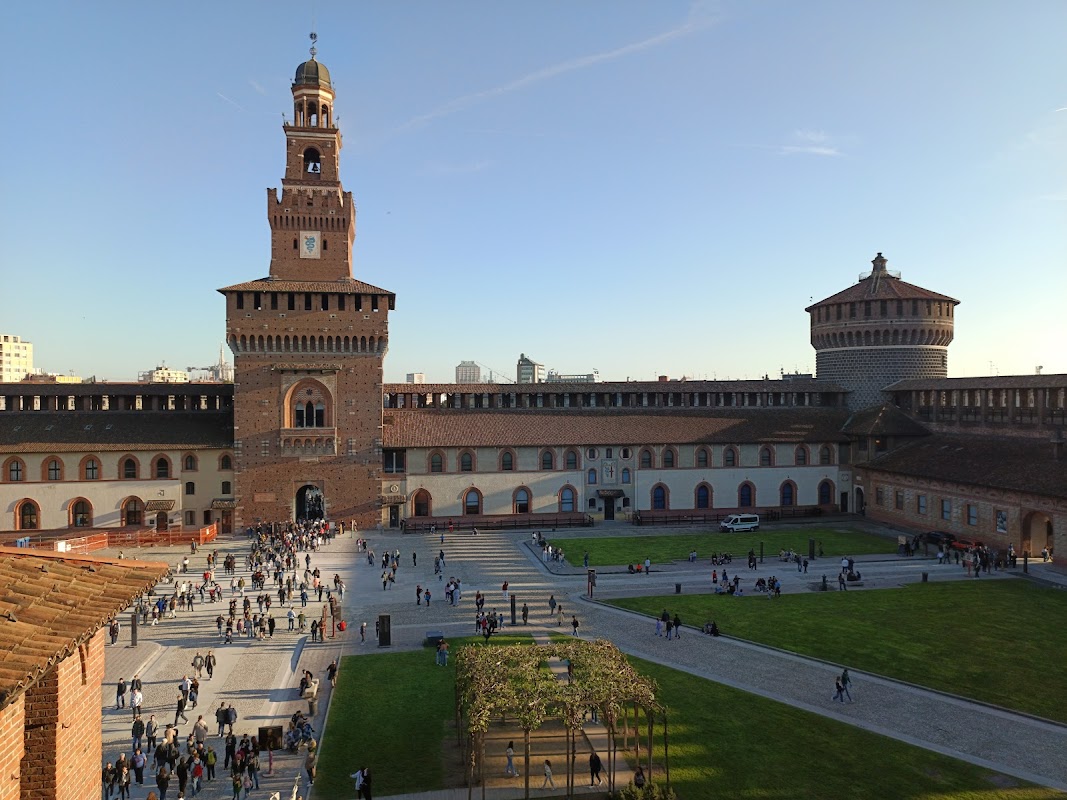 2Sforzesco Castle~2 hours
- ~11 min walk (682m)
- 13:06Lunch Break1 hour
- 14:06
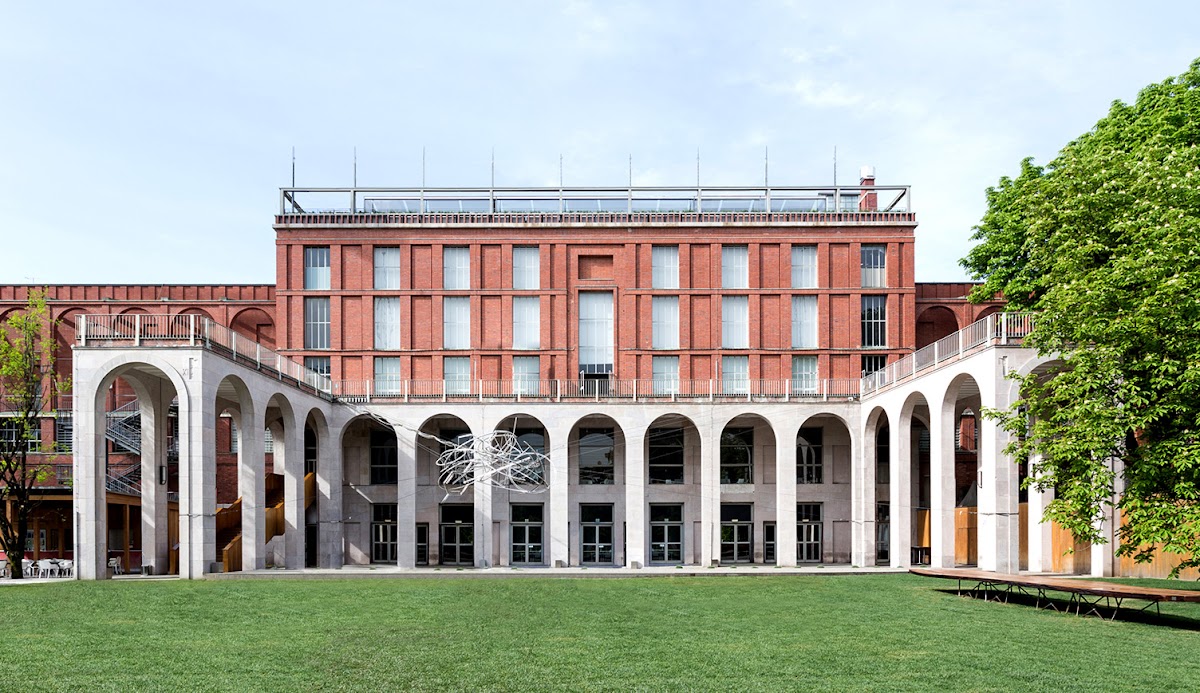 3Triennale di Milano~1.5 hours
- ~13 min by taxi/transit (3.3km)
- 15:49
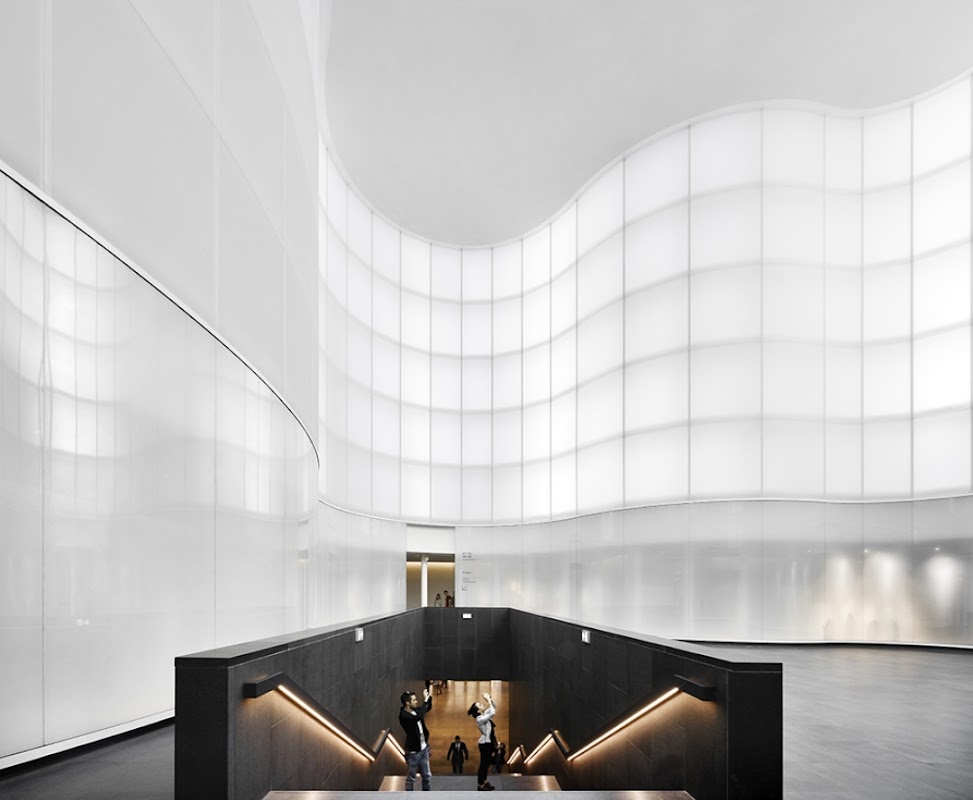 4Mudec~2 hours
- ~13 min by taxi/transit (3.2km)
- 18:02Dinner Break1 hour
- 19:02
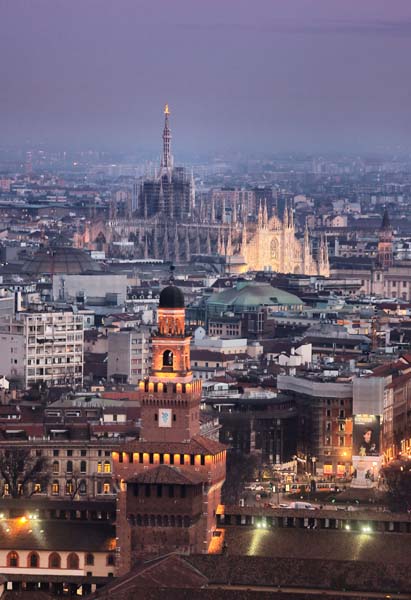 5Branca Tower~45 min
- ~9 min walk (519m)
- 19:56
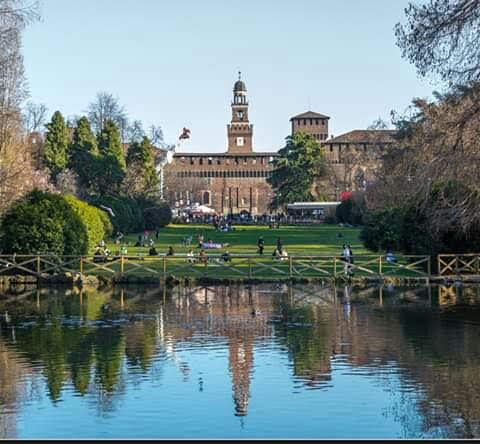 6Parco Sempione~1.25 hours
- ~12 min walk (756m)
- 21:16
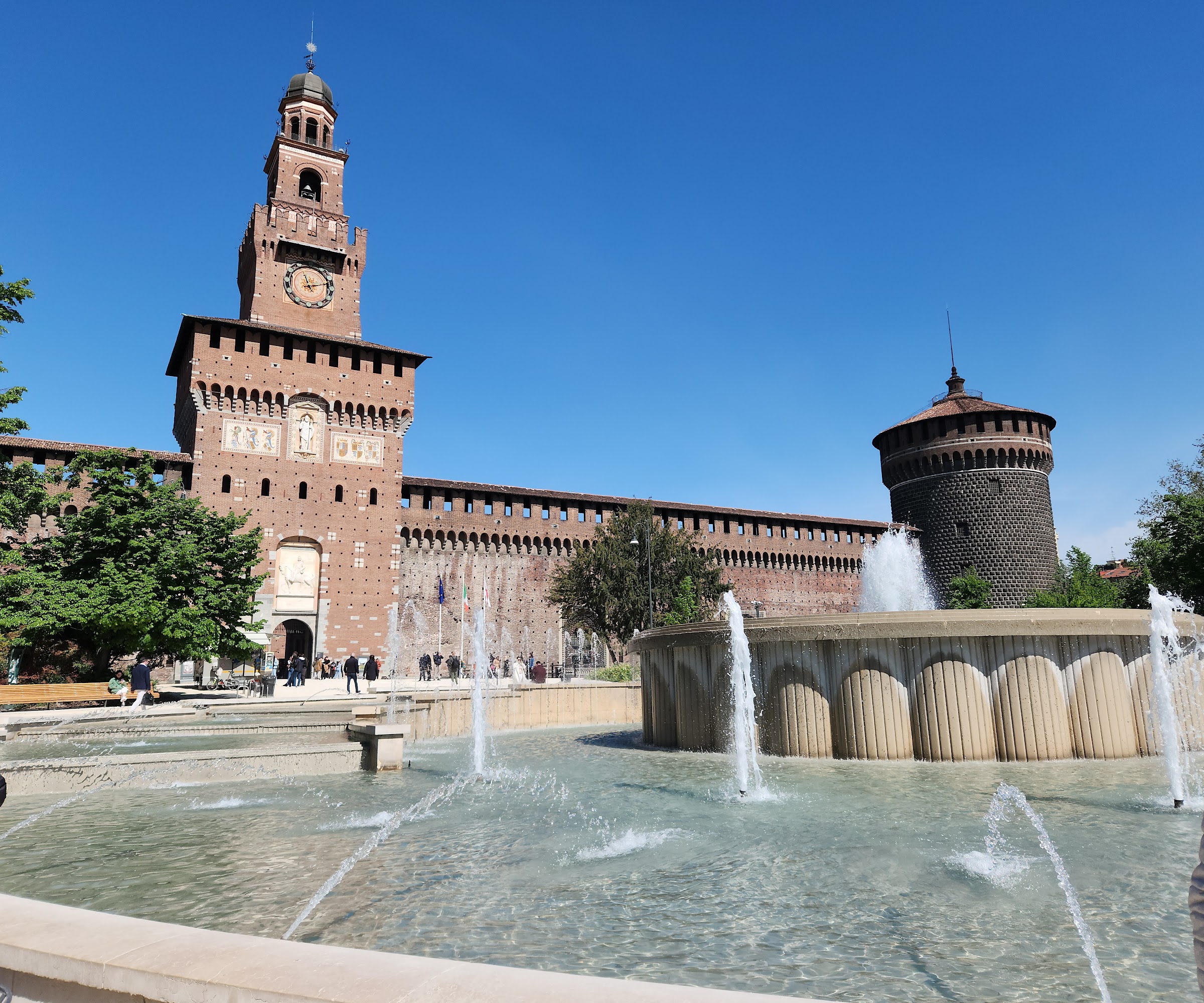 7Piazza Castello Fountain~15 min
- ~10 min by taxi/transit (2.3km)
- 21:41
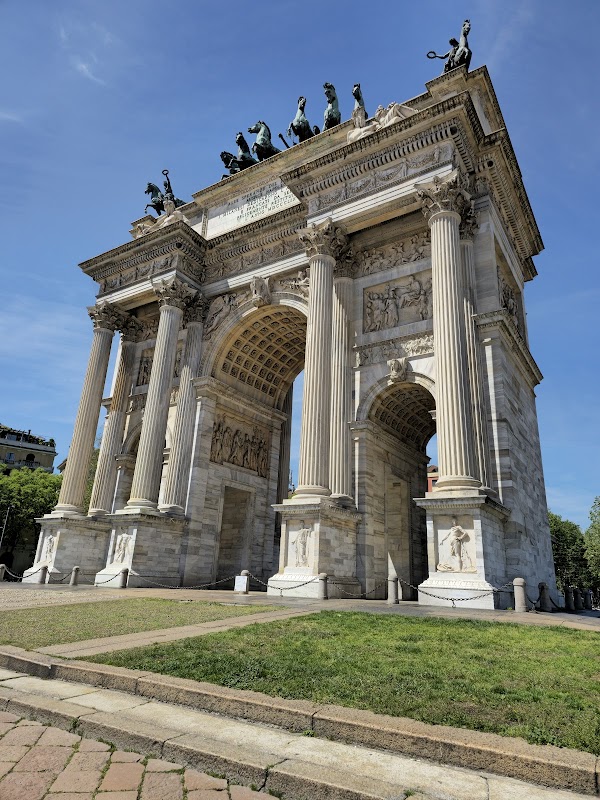 8Arco della Pace~15 min
Monday
7 stops · 25.0 km between them · starts 09:00- 09:00
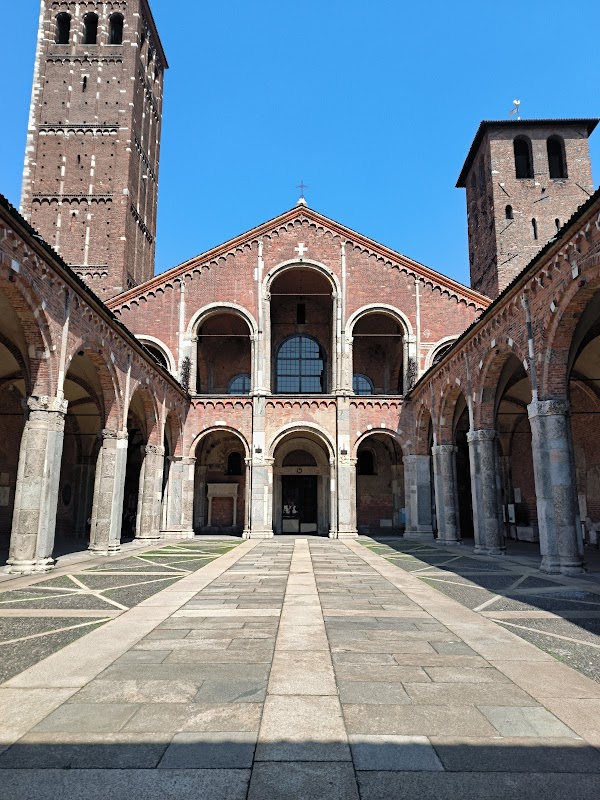 1Basilica of Sant'Ambrogio~45 min
- ~12 min walk (754m)
- 09:57
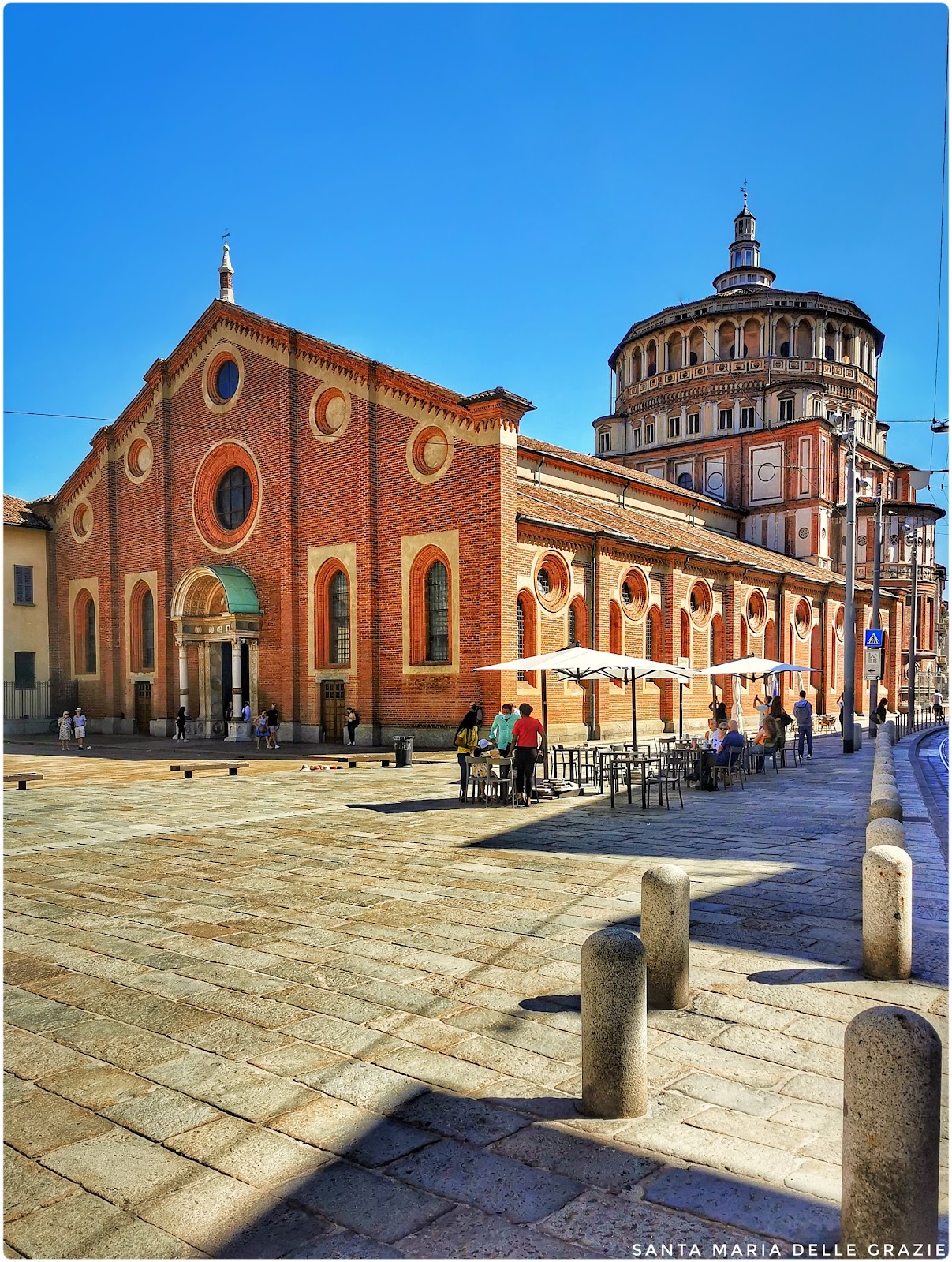 2Basilica di Santa Maria delle Grazie~45 min
- ~10 min by taxi/transit (2.3km)
- 10:52
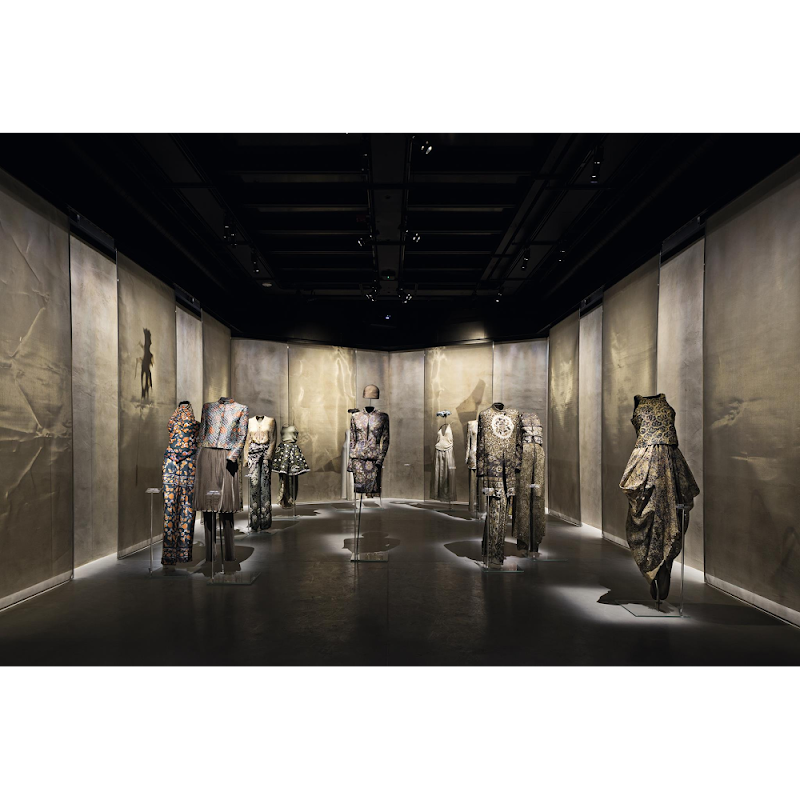 3Armani/Silos~1.25 hours
- ~25 min by taxi/transit (8.2km)
- 12:25Lunch Break1 hour
- 13:25
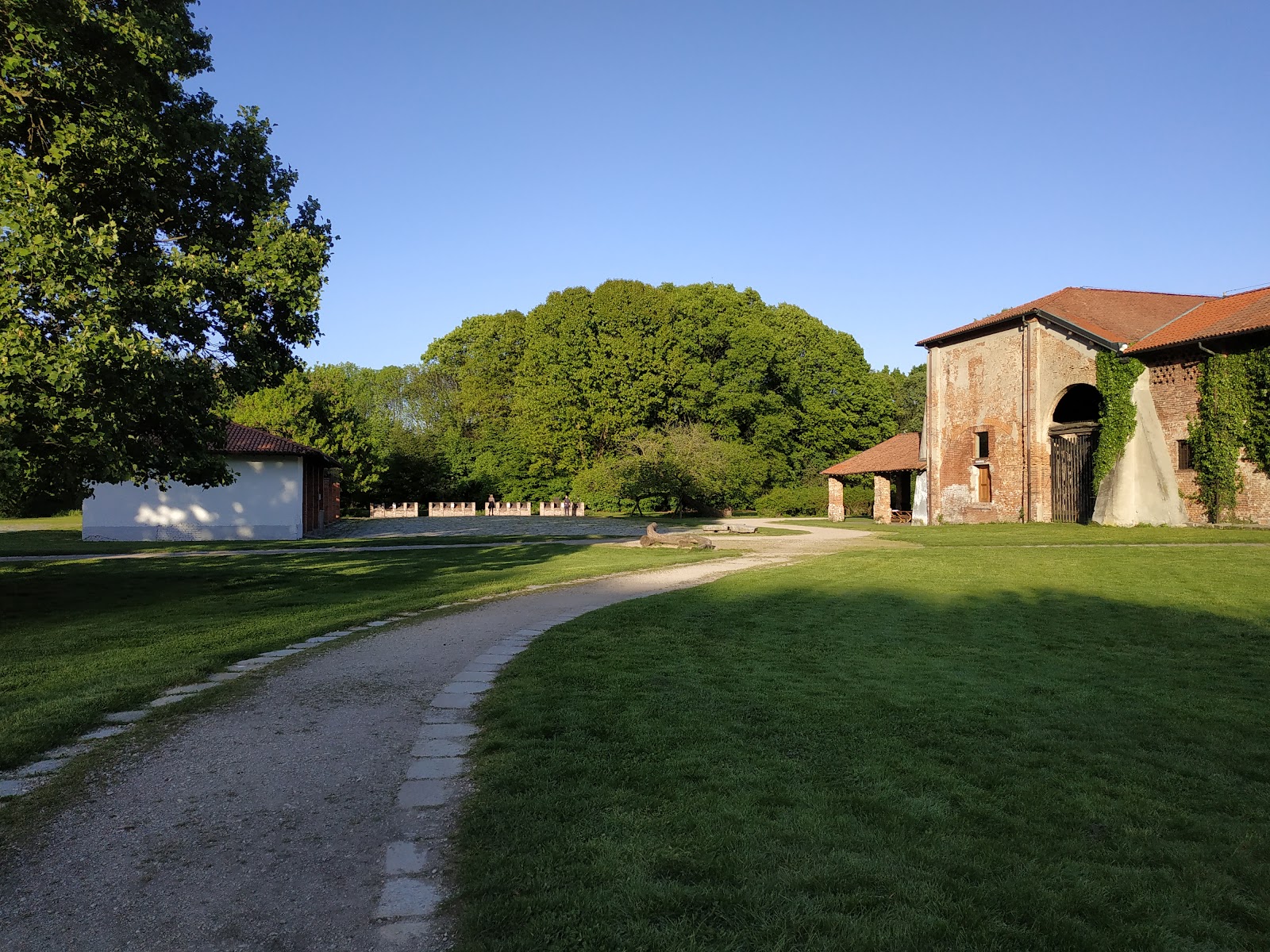 4Boscoincittà~2 hours
- ~14 min by taxi/transit (3.8km)
- 15:39
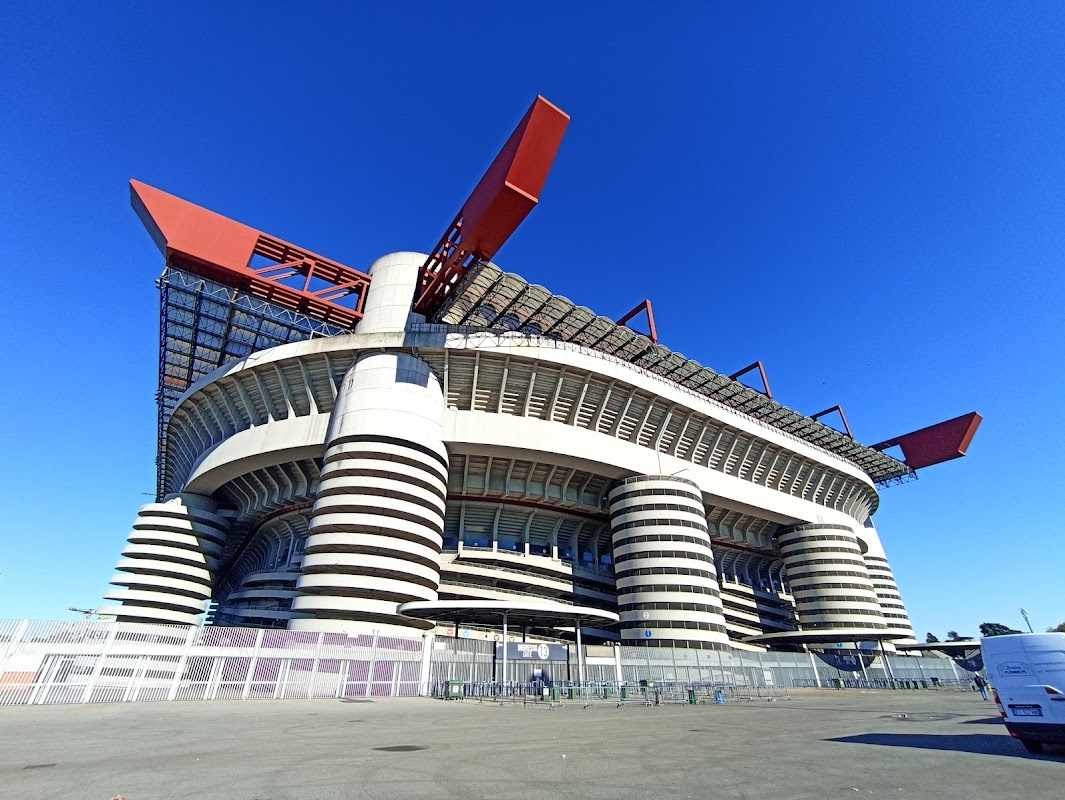 5San Siro Stadium~2 hours
- ~12 min by taxi/transit (2.8km)
- 17:51
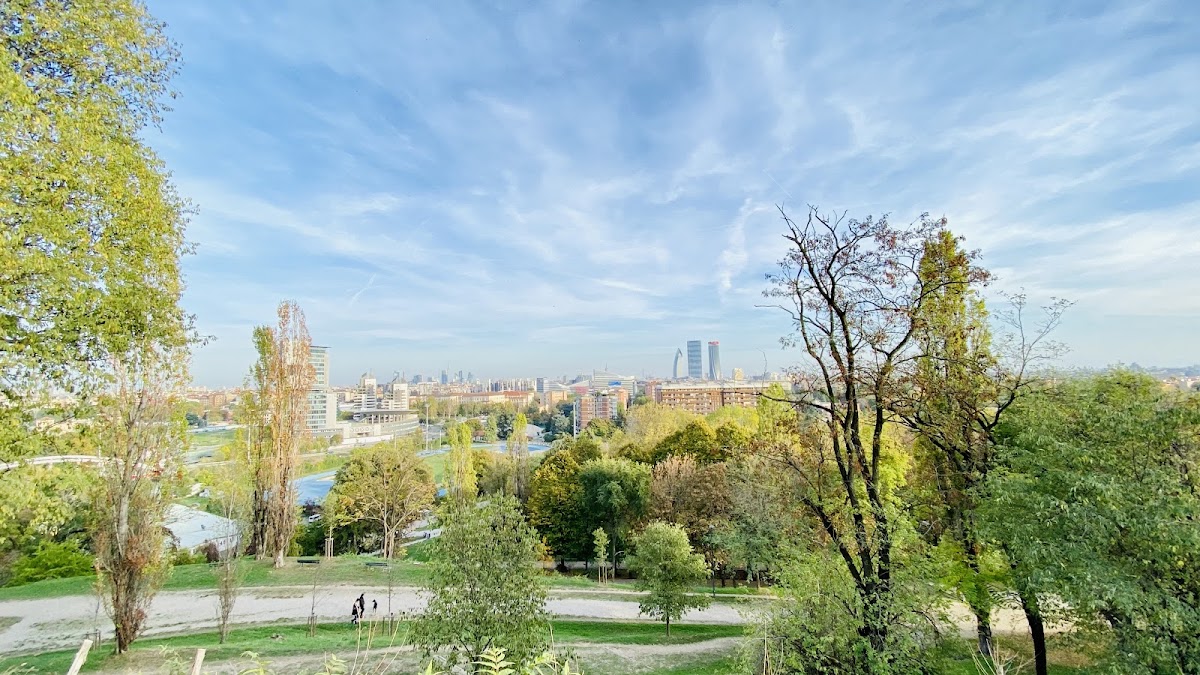 6Parco Monte Stella~1.5 hours
- ~22 min by taxi/transit (7.1km)
- 19:36
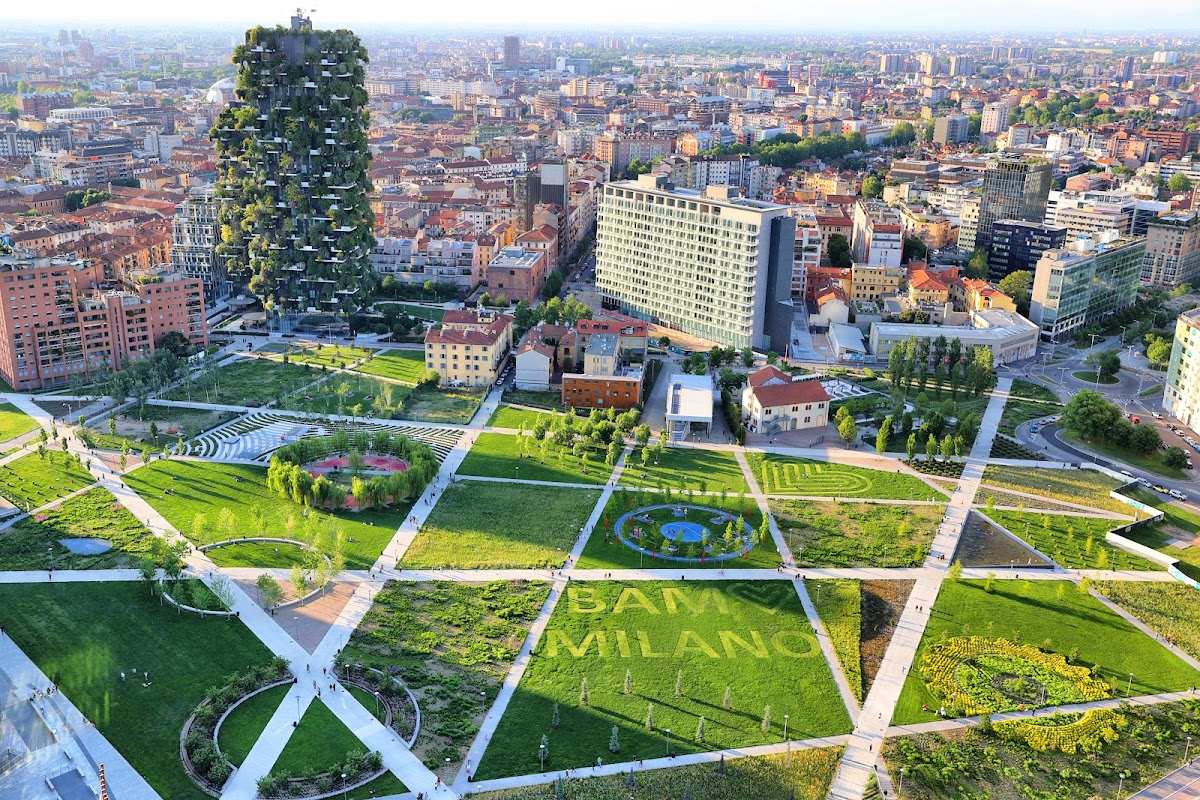 7BAM - Biblioteca degli Alberi Milano~55 min
- 20:29Dinner Break1 hour
From the Roman columns to the canals
South from the center along Corso di Porta Ticinese: Roman columns, two early basilicas, a Renaissance chapel and the old harbor, ending among the canals at aperitivo time.
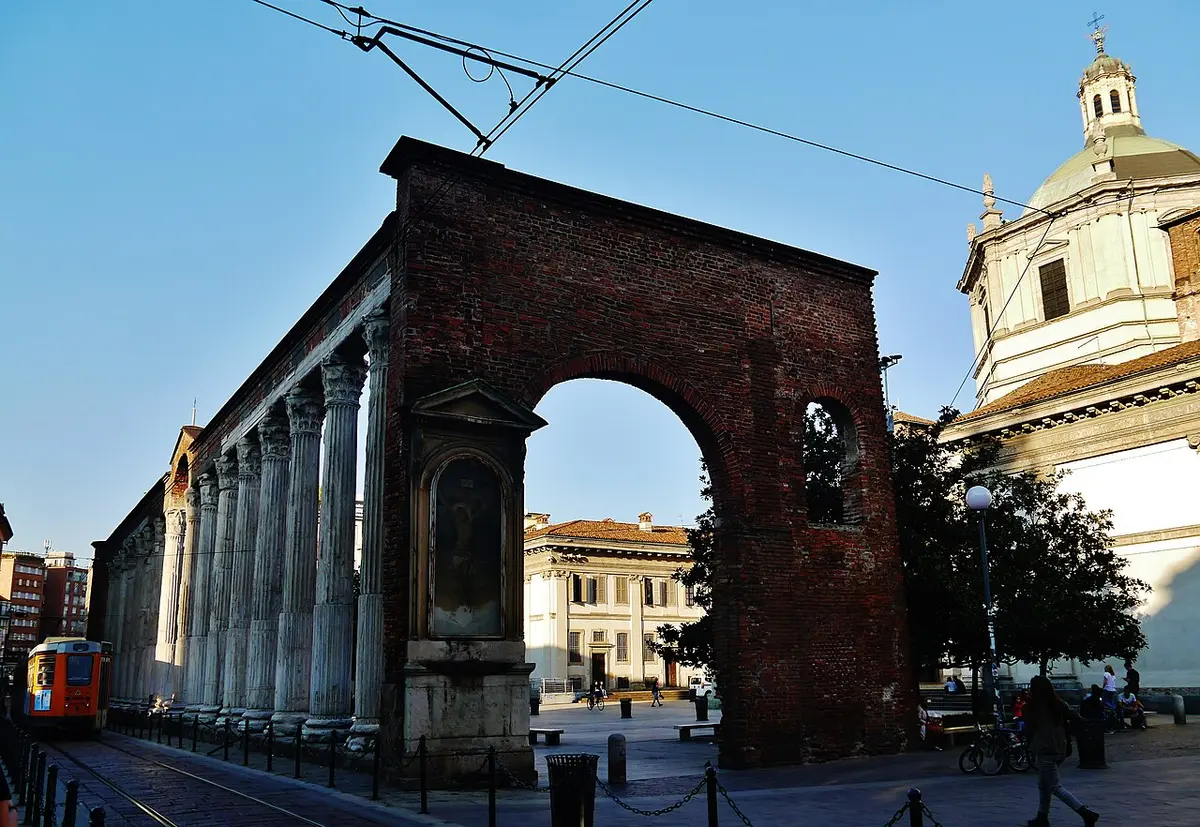
Start at the Columns of San Lorenzo, sixteen marble columns from a Roman building of the 2nd or 3rd century, brought here to stand in front of the basilica. In the square is a bronze copy of a Roman statue of Constantine, set up in 1937 to recall the edict he agreed in Milan. On warm evenings the steps fill with students and drinks from the bars across the road.
San Lorenzo itself was built around 400 and is one of the oldest churches in the city; its dome was rebuilt after the old one fell in 1573. Off the nave, the octagonal Chapel of Sant’Aquilino, perhaps built as an imperial mausoleum, keeps 4th-century mosaics of Christ among the apostles.
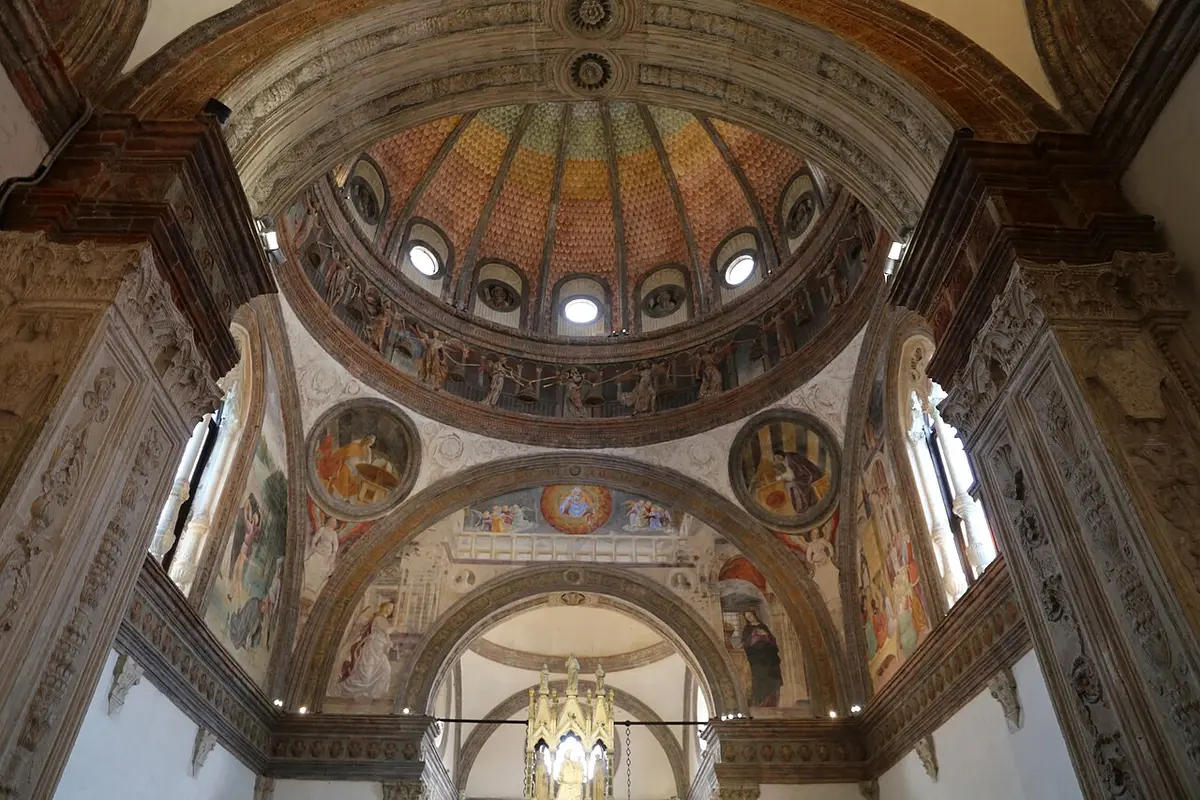
Walk south through the medieval gate of Porta Ticinese and on through the Parco delle Basiliche to Sant’Eustorgio. Its bell tower carries a star instead of a cross, for the relics of the Three Kings once kept here; Frederick Barbarossa took them to Cologne in 1164, and some fragments came back in 1903. Behind the church, the Portinari Chapel of 1462 to 1468 is one of the first Renaissance buildings in Milan, with frescoes by Vincenzo Foppa and the marble tomb of Saint Peter Martyr, carved in 1339.
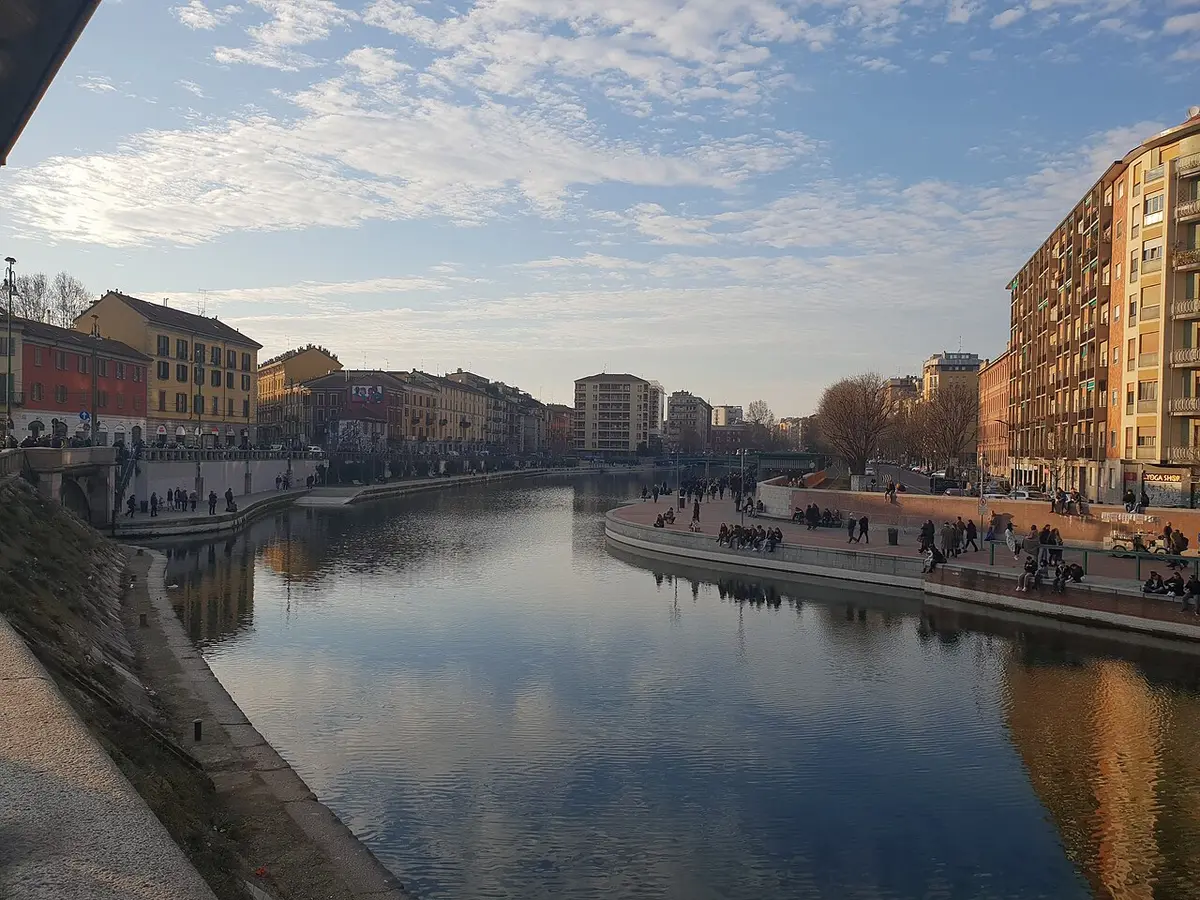
Corso di Porta Ticinese runs on past vintage shops to the neoclassical gate of Porta Ticinese, finished in 1814, and the Darsena beyond it, the harbor where the Naviglio Grande and the Naviglio Pavese meet. Barges brought sand into the harbor until 1979; for Expo 2015 the basin was cleaned and refilled and given new quays, where people now sit by the water.
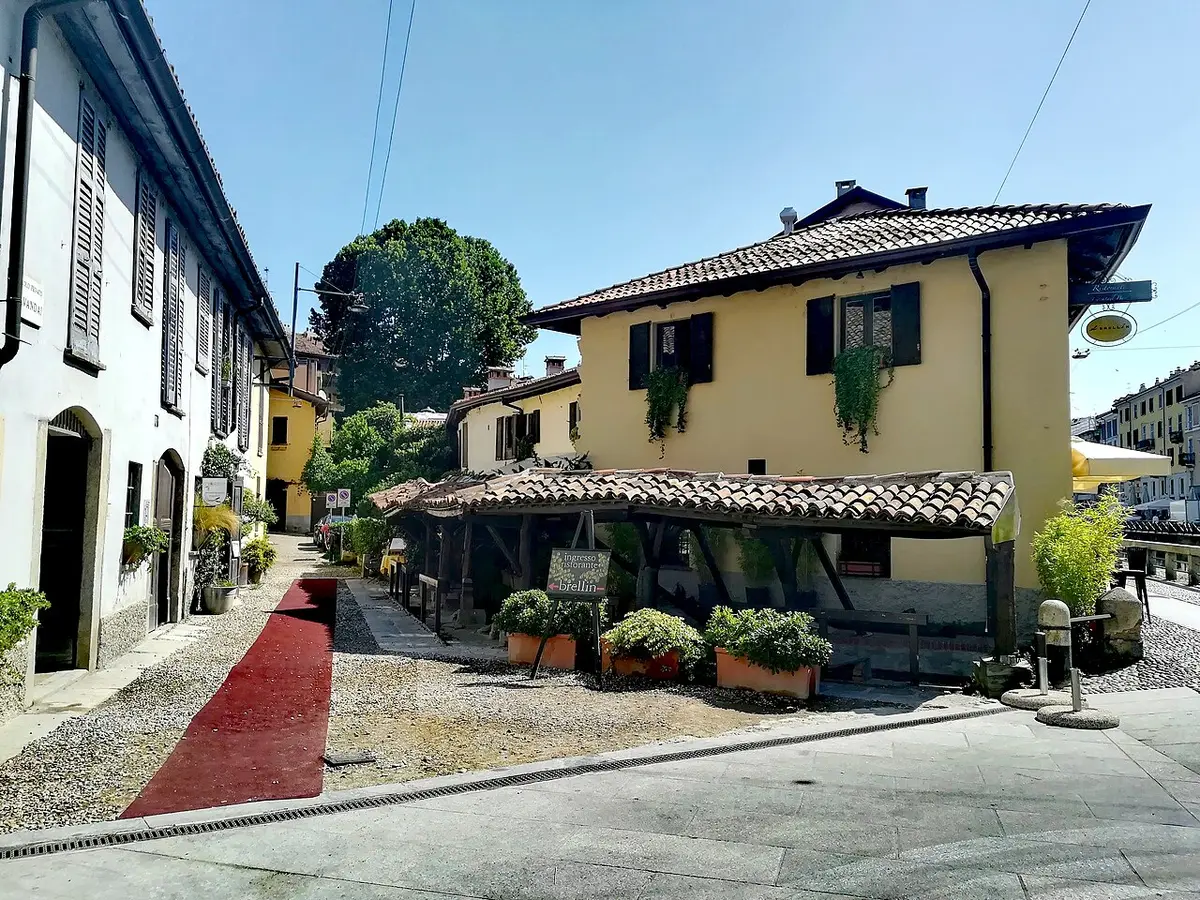
Follow the Naviglio Grande west along its towpath, past bars, bookshops and artists’ studios. A short way along, the Vicolo dei Lavandai keeps its old covered washhouse, with stone slabs where linen was scrubbed in canal water until the 1950s. Stay for aperitivo as the lights come on along the water.
Where to stay
Pick the neighborhood first, then the hotel. Each link opens a map of places to stay around it.
Centro Storico
First visitAround the Duomo, the Galleria and La Scala: everything within walking distance and two metro lines underfoot. The most expensive place to sleep, and busy all day.
See hotels in Centro StoricoBrera
CouplesCobbled lanes north of La Scala, with galleries, antique shops, small restaurants and the Pinacoteca. Elegant and walkable, and at its liveliest at aperitivo time.
See hotels in BreraNavigli
Nightlife and foodThe canal quarter south of the center, around the Darsena and the Naviglio Grande, with bars, restaurants and the busiest evenings in town. Fun to stay in, and loud on weekend nights.
See hotels in NavigliIsola and Porta Nuova
Friends and modern MilanThe glass towers and the Bosco Verticale of Porta Nuova, with the old working-class streets of Isola behind them: bistros, cocktail bars and the Blue Note jazz club. Close to Garibaldi station and two metro lines.
See hotels in Isola and Porta NuovaPorta Venezia
Local lifeLiberty-style apartment houses, the Giardini Pubblici and Corso Buenos Aires, one of the city’s main shopping streets, with a lively bar scene in the side streets around Via Lecco.
See hotels in Porta VeneziaCentrale
Budget and short staysAround the main station: the easiest arrival, direct trains to the lakes and the airports and plenty of mid-range hotels, with a more workaday feel after dark.
See hotels in CentraleThe 10 best budget hotels
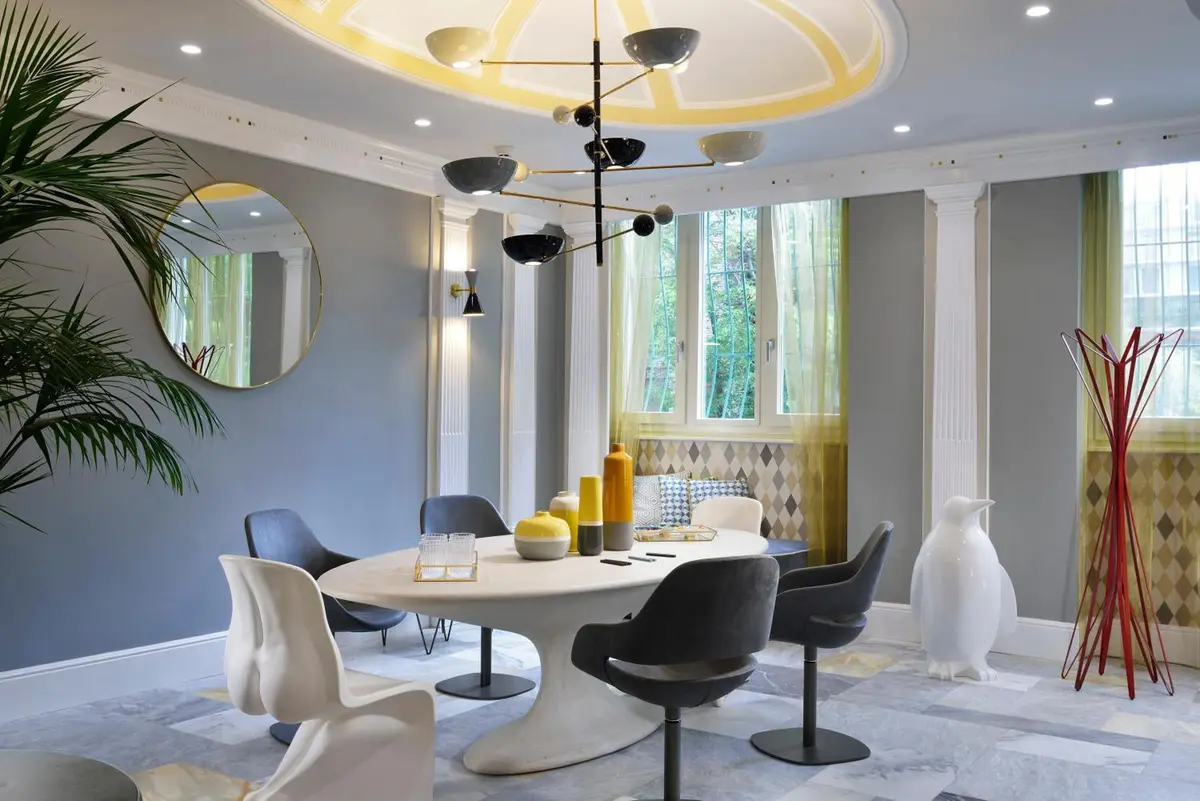
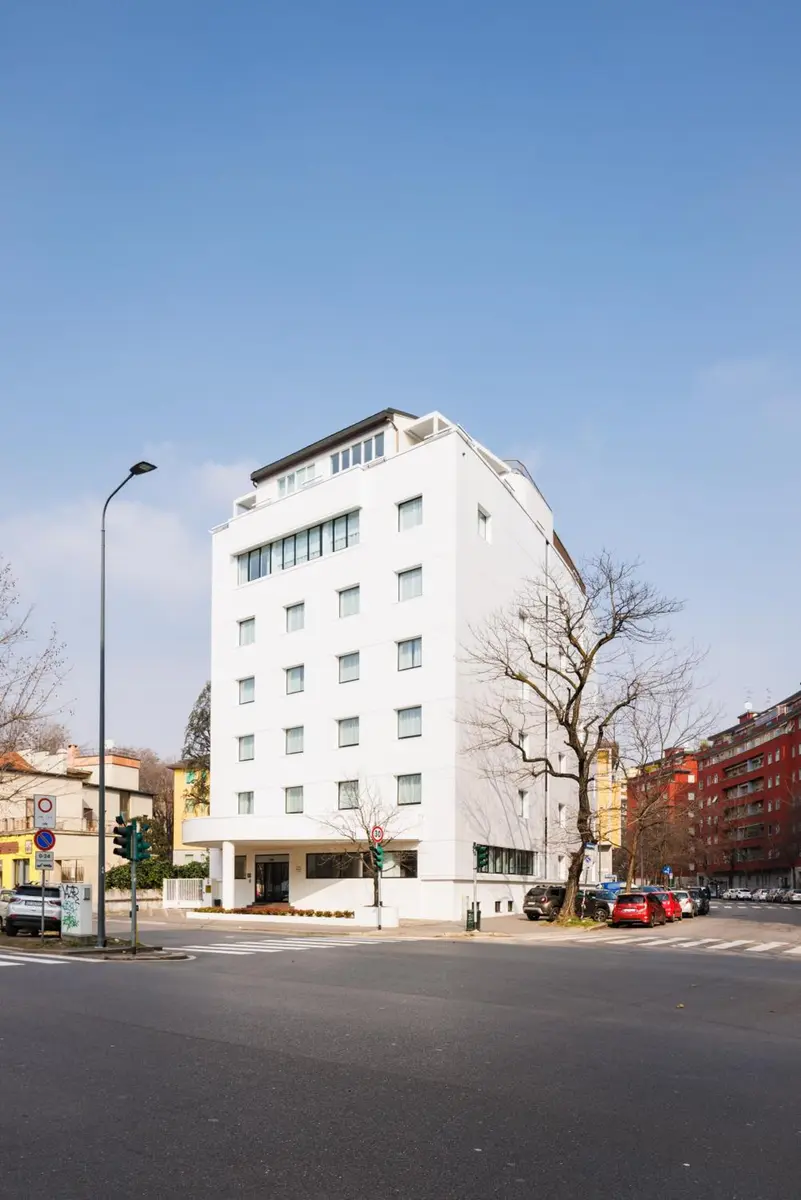
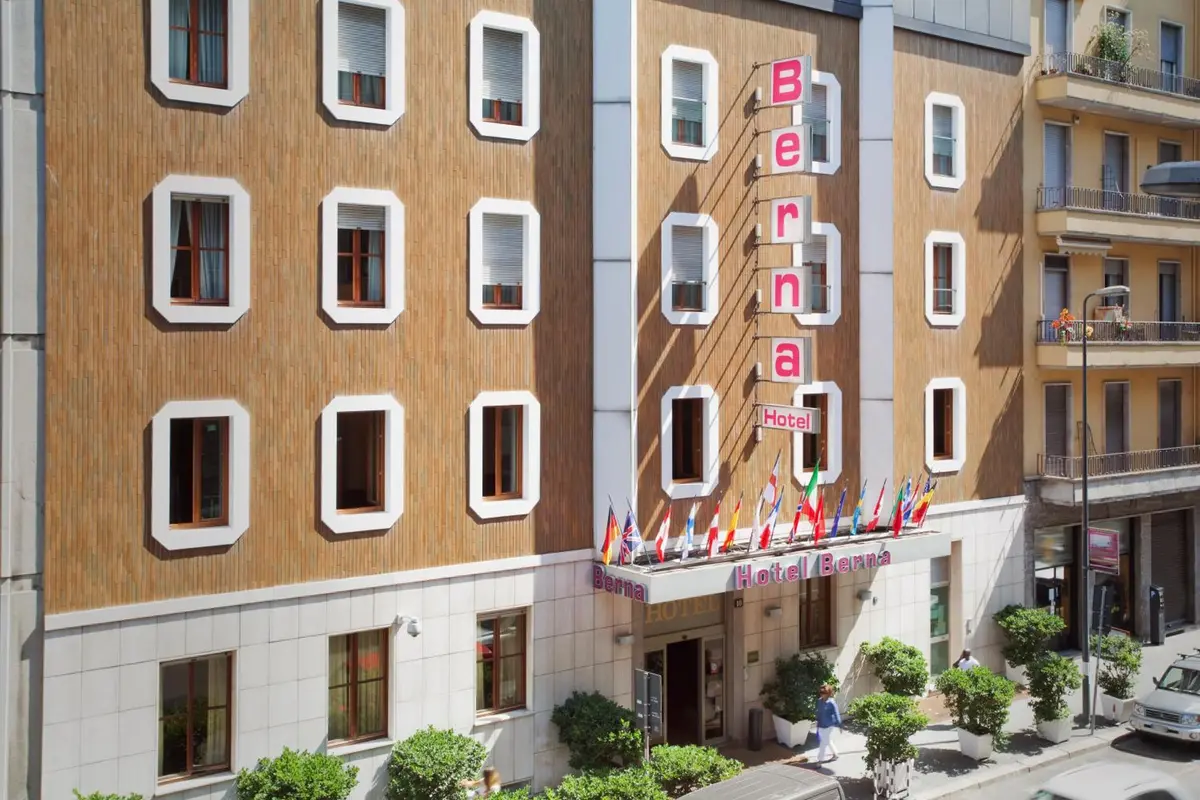
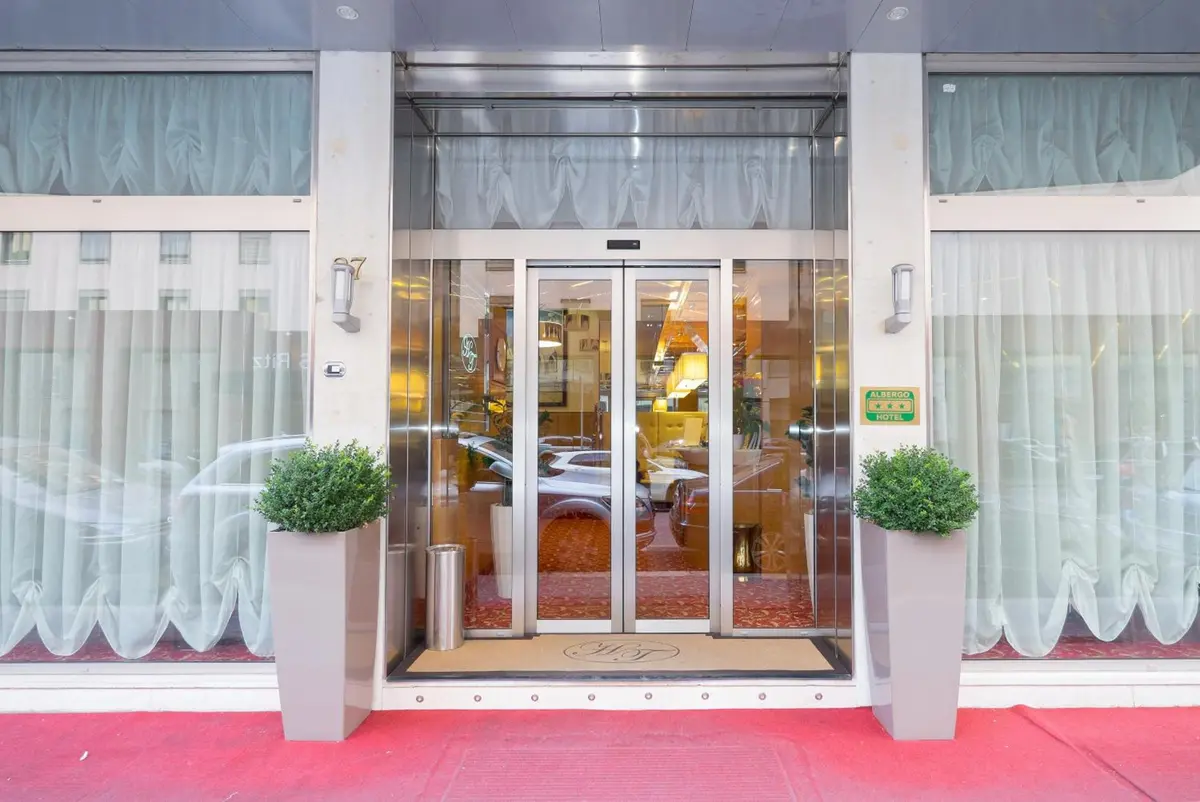
Well-reviewed hotels at the lower end of Milan’s prices, best-reviewed first. On a weeknight in November 2026 they cost about €125 to €230 for two; prices change daily, so check your own dates.
 01
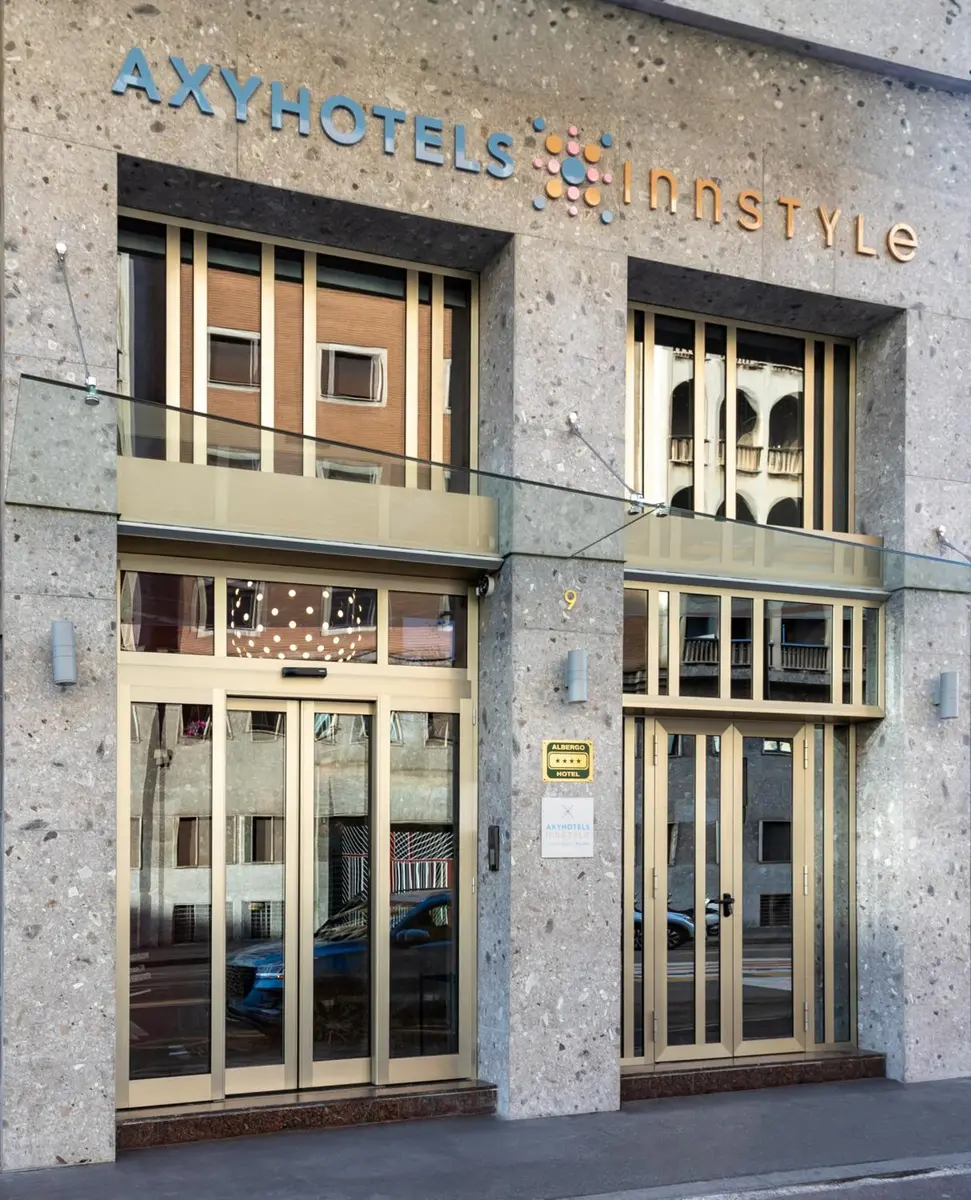
AXYHOTELS InnStyle Milano
9.52,732 reviewsPorta Venezia
16 min walk to Milano Centrale station
See prices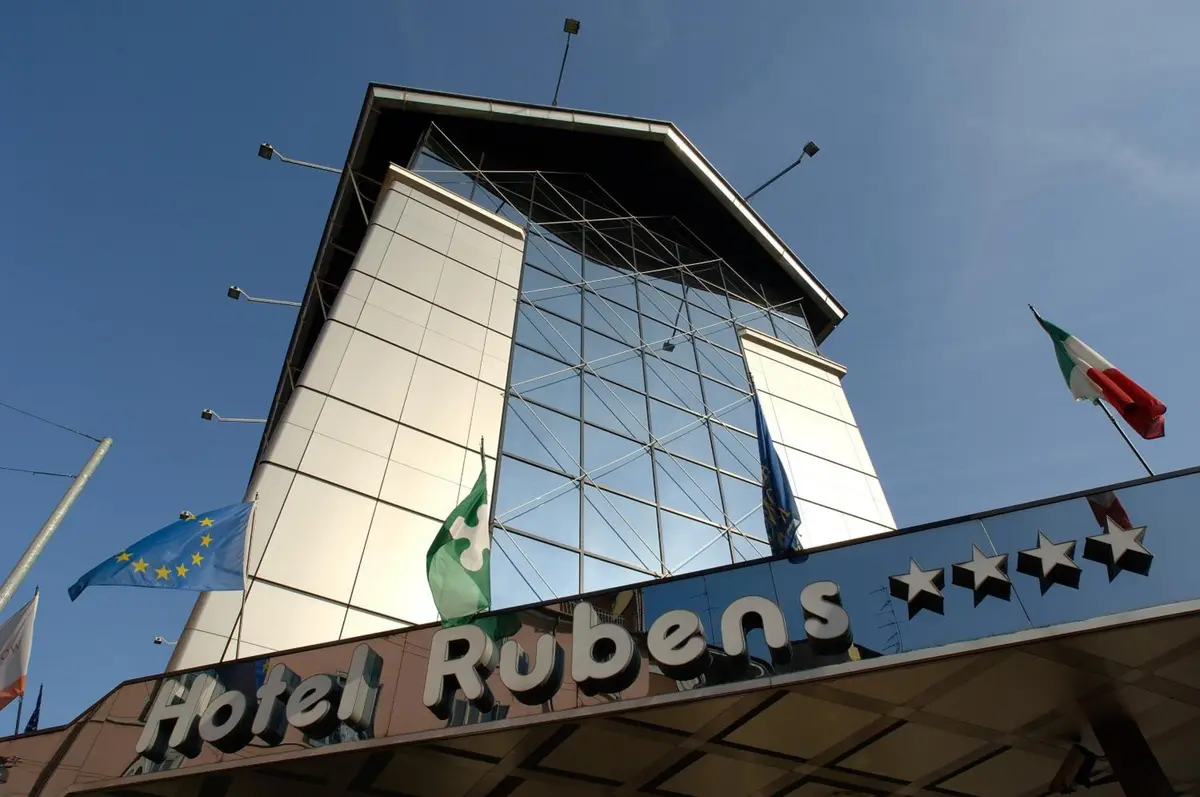 02
 03
 04
 05
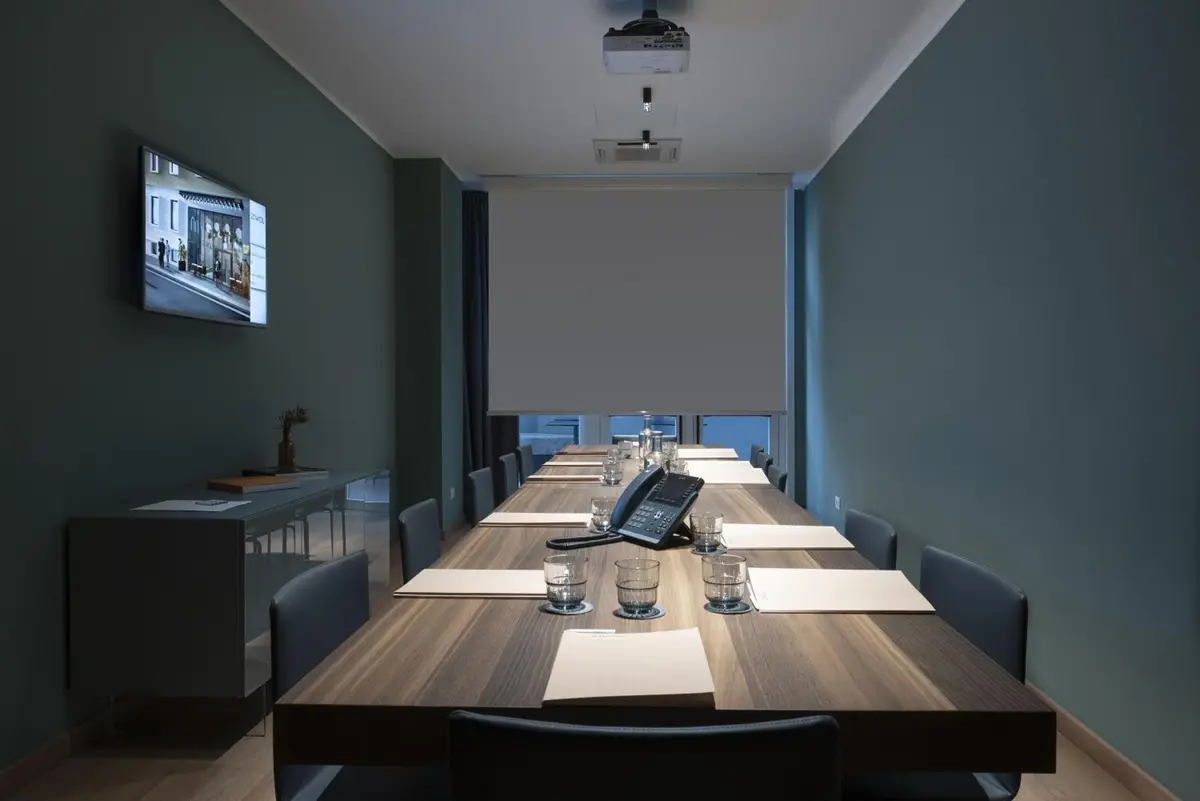 06
21 House of Stories Città Studi
9.17,897 reviewsCittà Studi
24 min walk to Milano Centrale station
See prices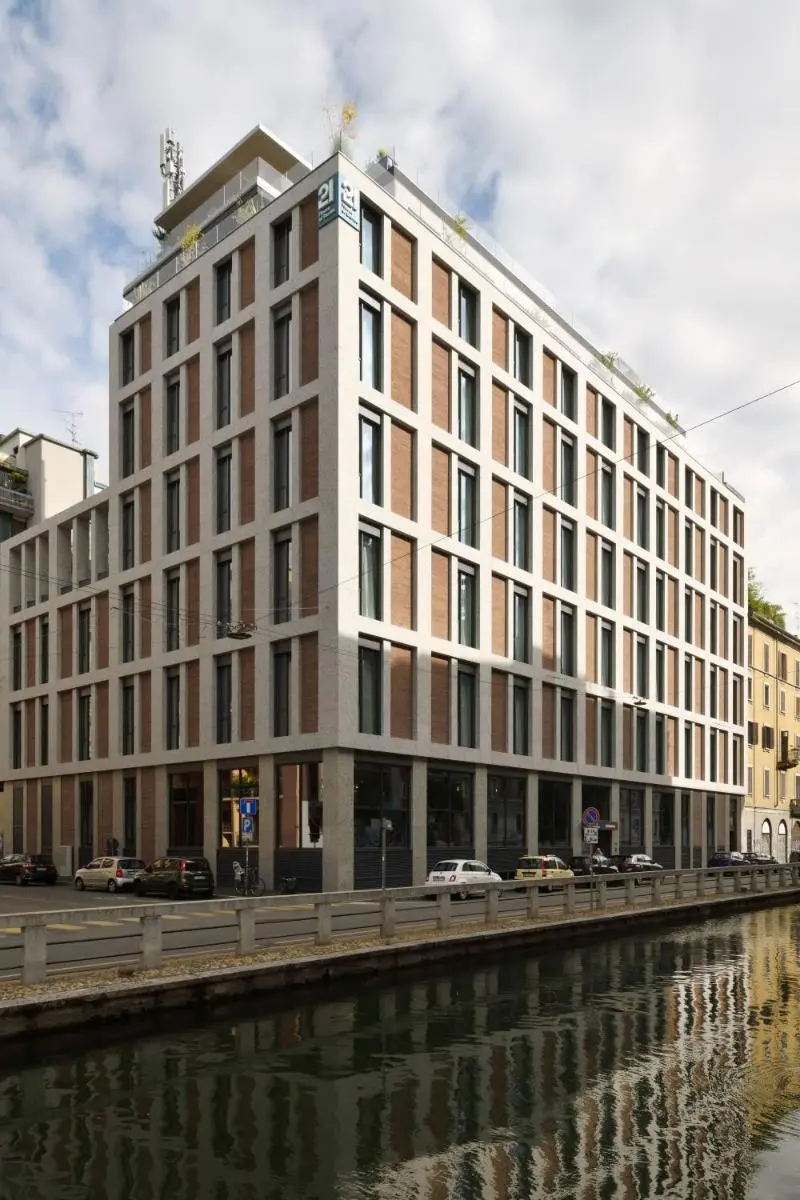 07
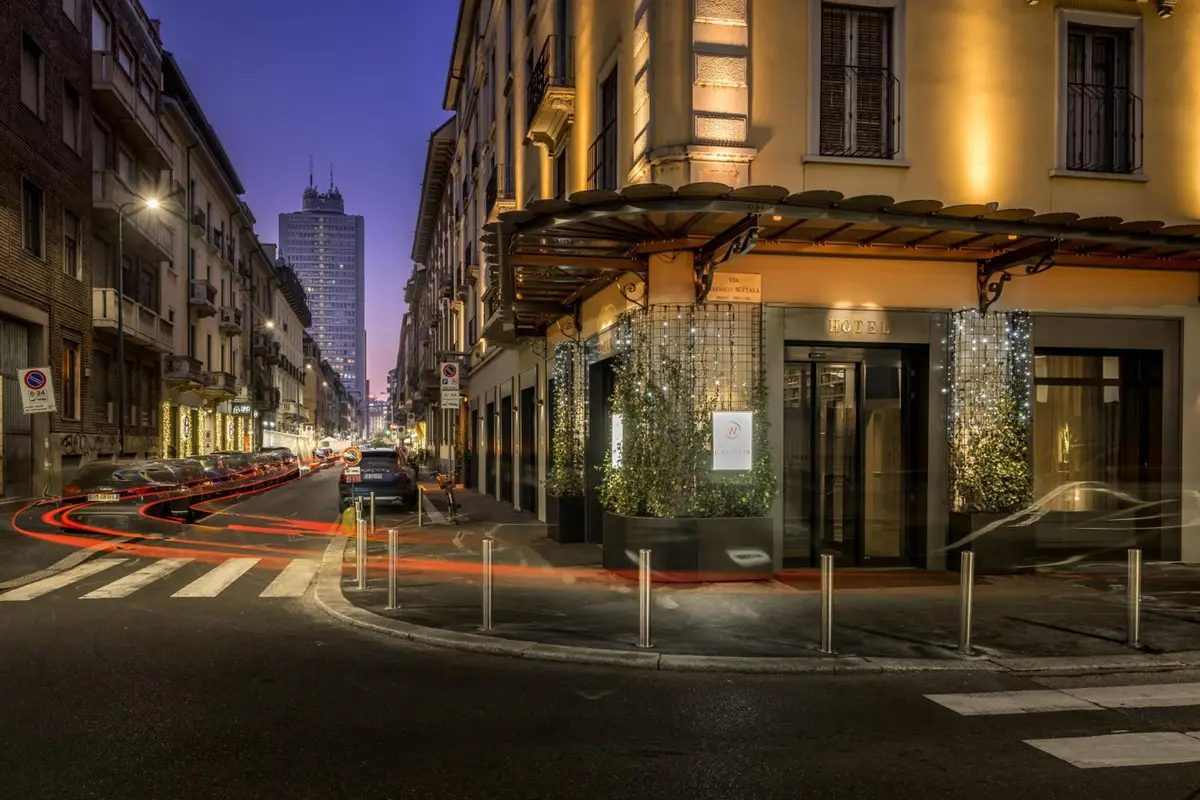 08
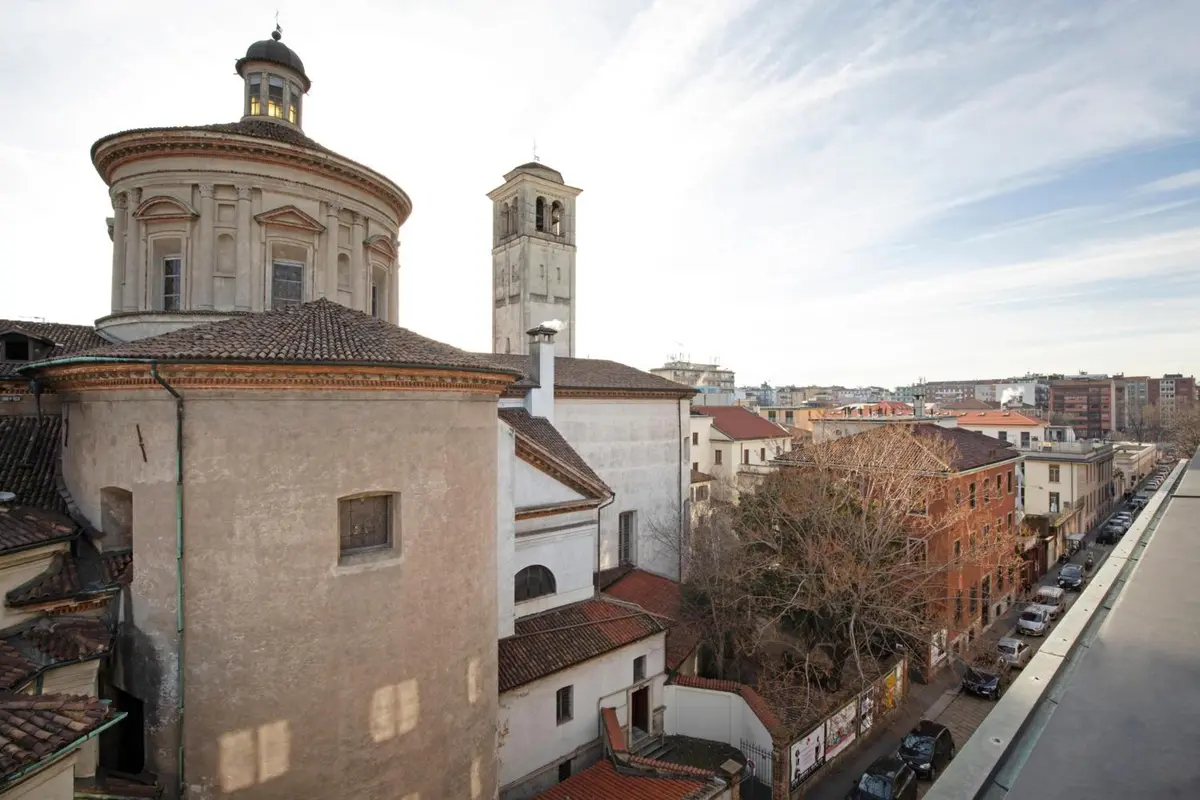 09
 10
Hotel links go to Stay22. If you book, we may earn a commission, at no cost to you.
Food and drink
Milanese cooking is northern Italian: butter more than olive oil, rice and polenta as much as pasta, and long braises for the cold months. Lunch runs from about 12:30, dinner from about 8pm, and in between comes the aperitivo.
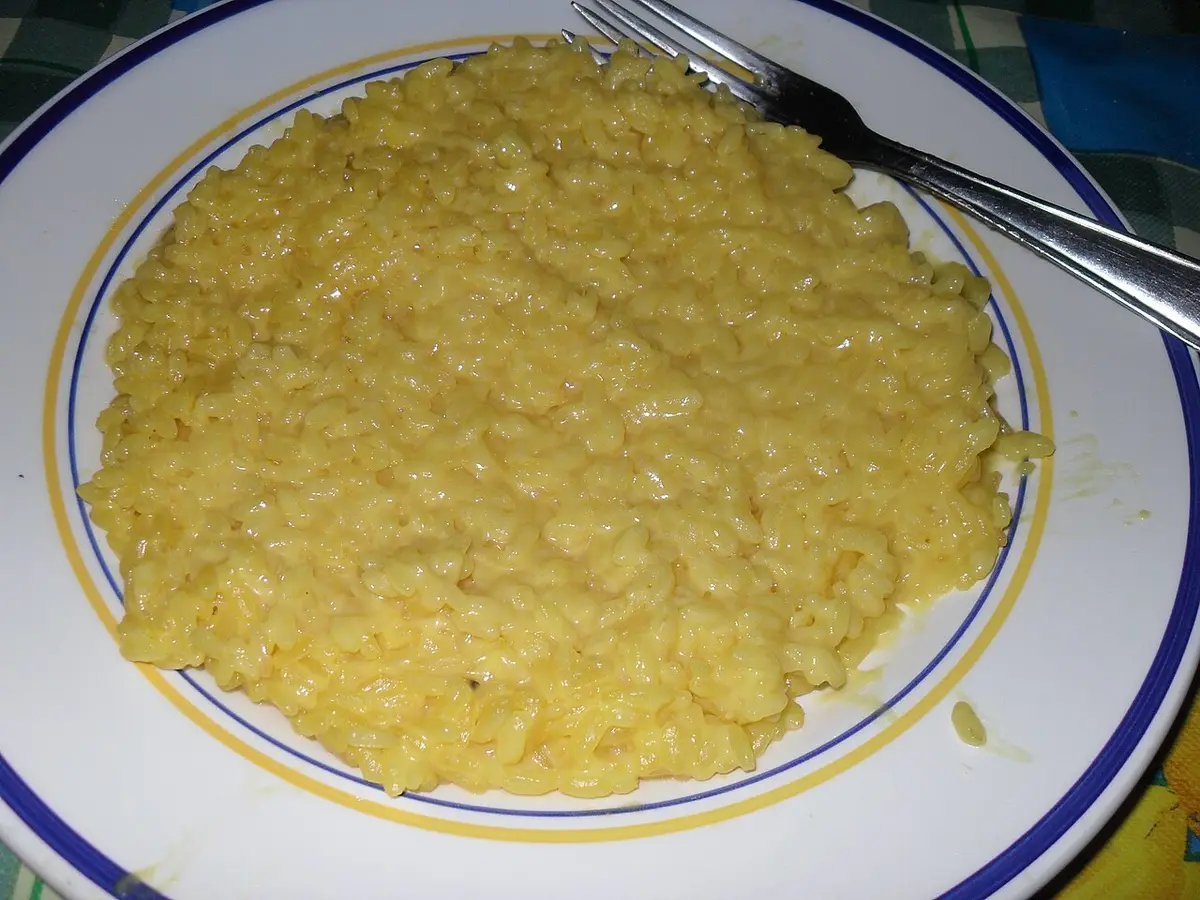
Risotto alla milanese
Rice cooked slowly in broth with saffron, butter and Parmesan, sometimes with beef marrow. A story says that in 1574 an assistant to the Duomo’s glassmakers, nicknamed Zafferano, colored a wedding risotto with the saffron he used for his glass.
Photo: Number55, CC BY-SA 3.0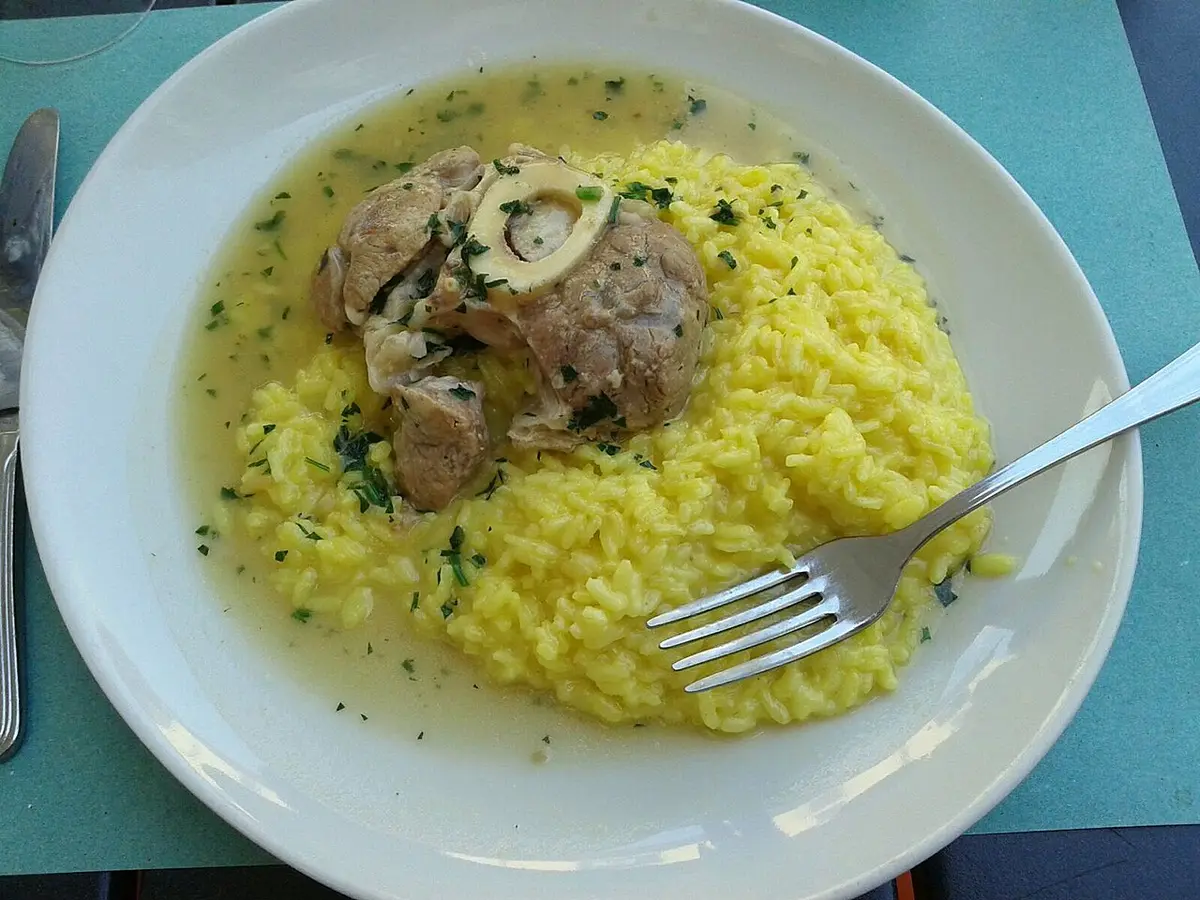
Ossobuco
A thick slice of veal shank braised until it falls from the bone, finished with gremolata, chopped lemon zest, garlic and parsley. The marrow is the prize, and the classic partner is risotto alla milanese.
Photo: pier, CC BY-SA 4.0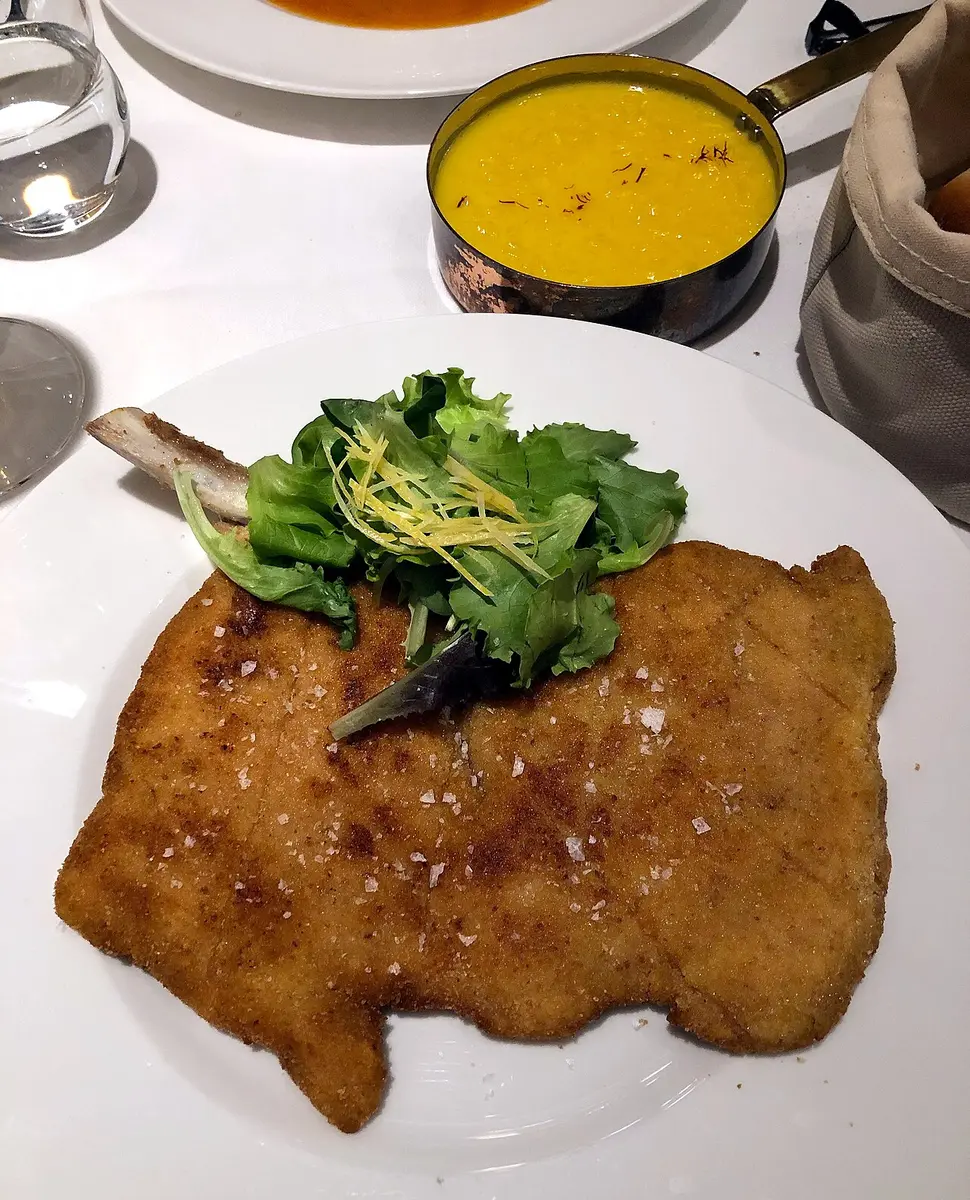
Cotoletta alla milanese
A veal chop on the bone, dipped in egg and breadcrumbs and fried in butter. The Milanese will tell you it came before the Wiener schnitzel.
Photo: Vaselineeeeeeee, CC BY-SA 4.0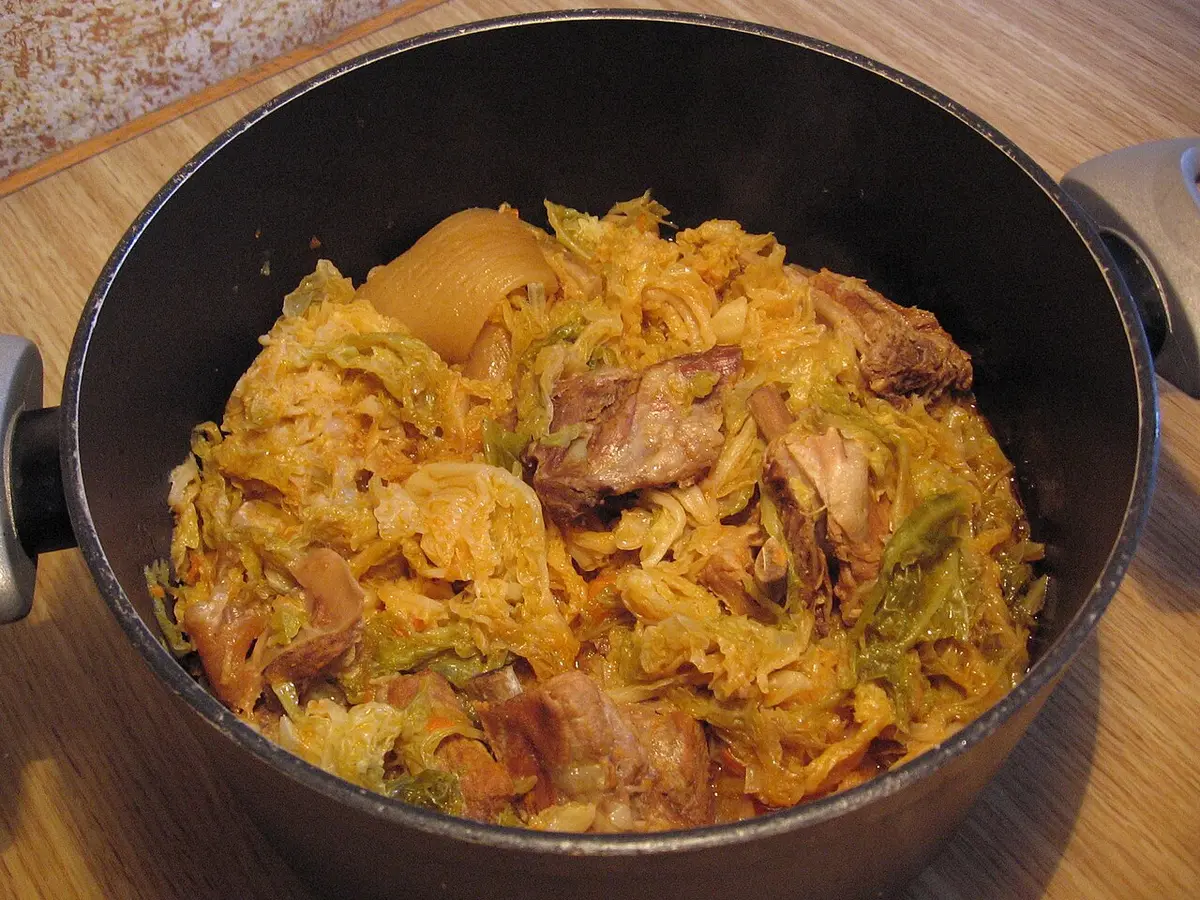
Cassoeula
Pork ribs, rind and small sausages stewed with savoy cabbage and served with polenta, a winter dish tied to the feast of Saint Anthony on 17 January, when the pig-slaughtering season ended.
Photo: Remulazz, CC BY-SA 4.0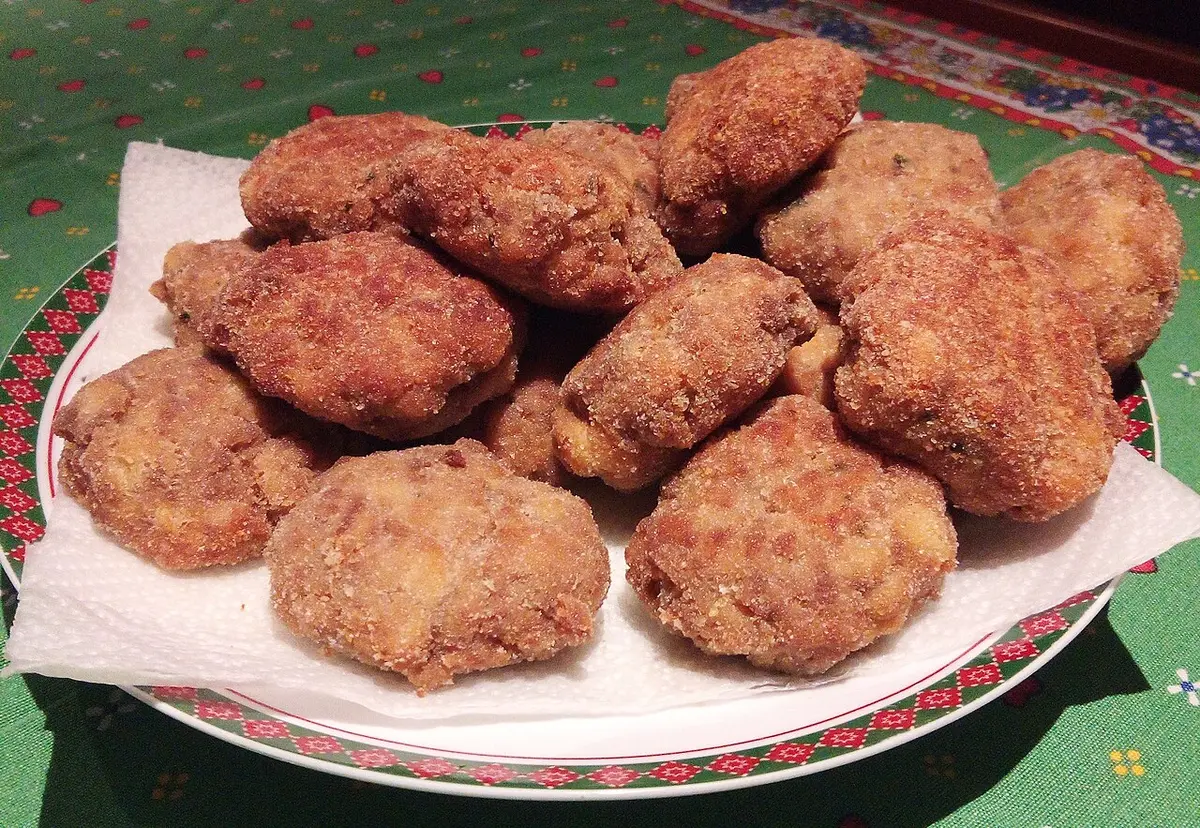
Mondeghili
Meatballs made from leftover boiled or roast meat, flattened, breaded and fried in butter. They often turn up with the aperitivo.
Photo: SWT666, CC BY-SA 4.0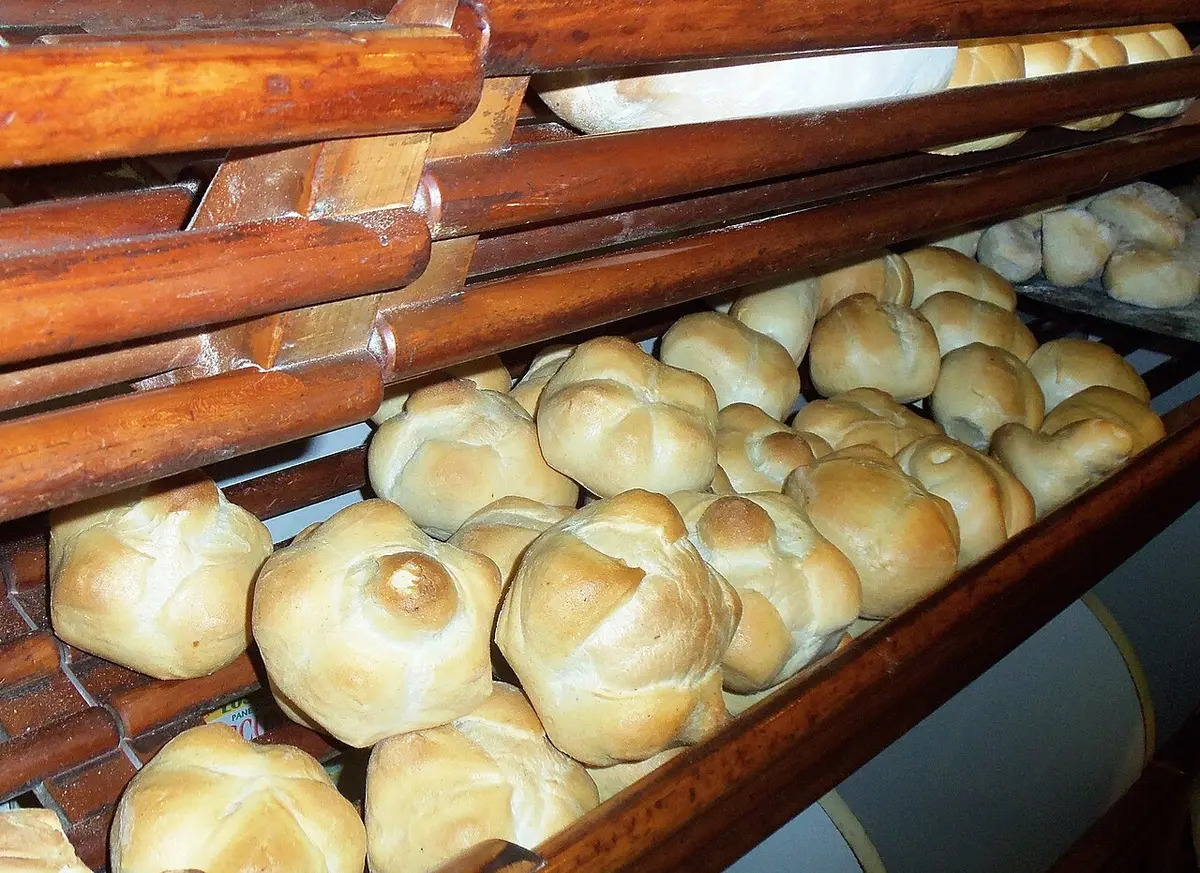
Michetta
Milan’s bread roll, puffed up and hollow inside, with a five-lobed star on top. Split, it holds a slice of mortadella or salami.
Photo: Yorick39 at Italian Wikipedia, CC BY-SA 3.0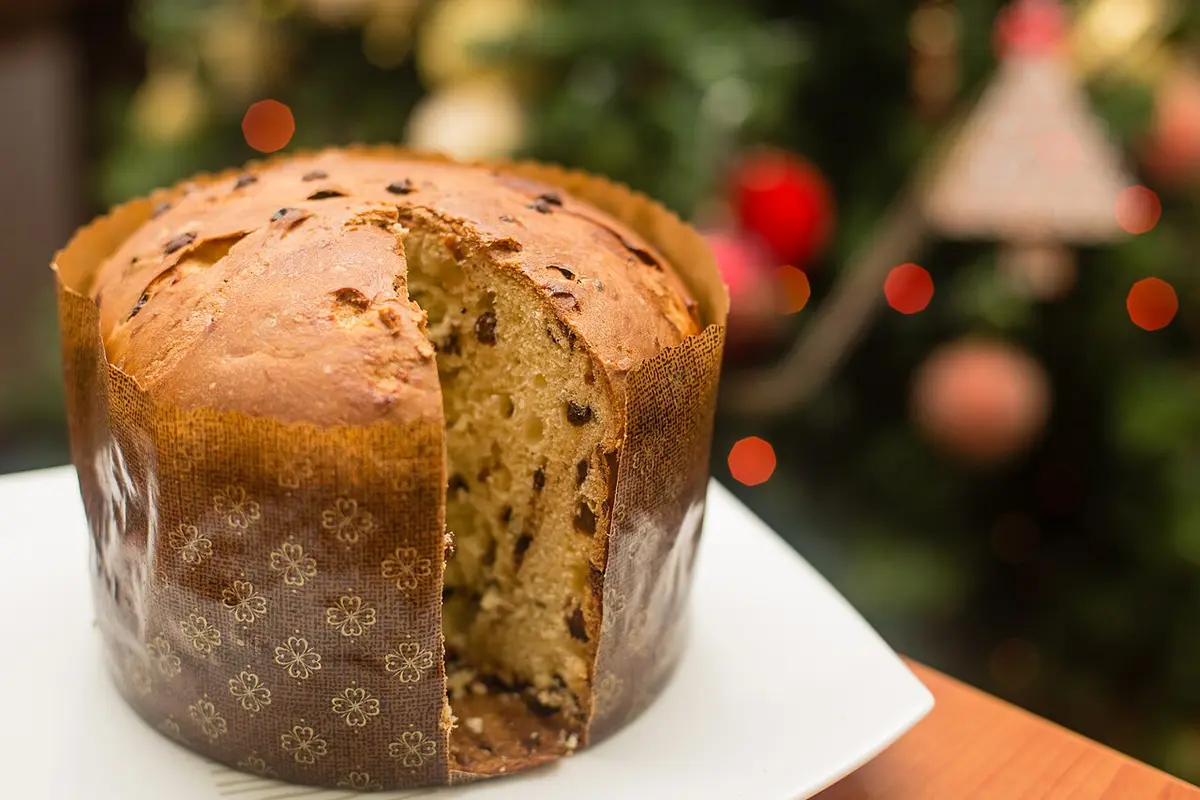
Panettone
The tall Christmas bread of Milan, slowly risen and studded with raisins and candied citrus peel. Tradition says to keep a slice for San Biagio on 3 February, to protect the throat.
Photo: N i c o l a from Fiumicino (Rome), Italy, CC BY 2.0Eat risotto and ossobuco in the old trattorias of the center and Brera, cotoletta in the osterie of Porta Romana and the Navigli, and fried panzerotti from Luini, a few steps from the Duomo. From about 6pm the aperitivo fills the Navigli, Brera and Porta Venezia, and in many bars a drink comes with a buffet.
The duke, the horse and the wall
Leonardo came to Milan offering to build war machines. He stayed for seventeen years, modeled a horse that was never cast and painted a wall that began to fail almost at once.
Around 1482 a Florentine painter of about thirty arrived in Milan. Leonardo da Vinci came, the early sources say, as a musician, bringing a silver lyre shaped like a horse’s head, a gift from Lorenzo de’ Medici to Ludovico Sforza, the man who ruled Milan. He had also drafted a letter to Ludovico listing what he could do: bridges, siege engines, cannons, covered carts that no army could break. Only near the end did he add that he could paint and sculpt as well as anyone.
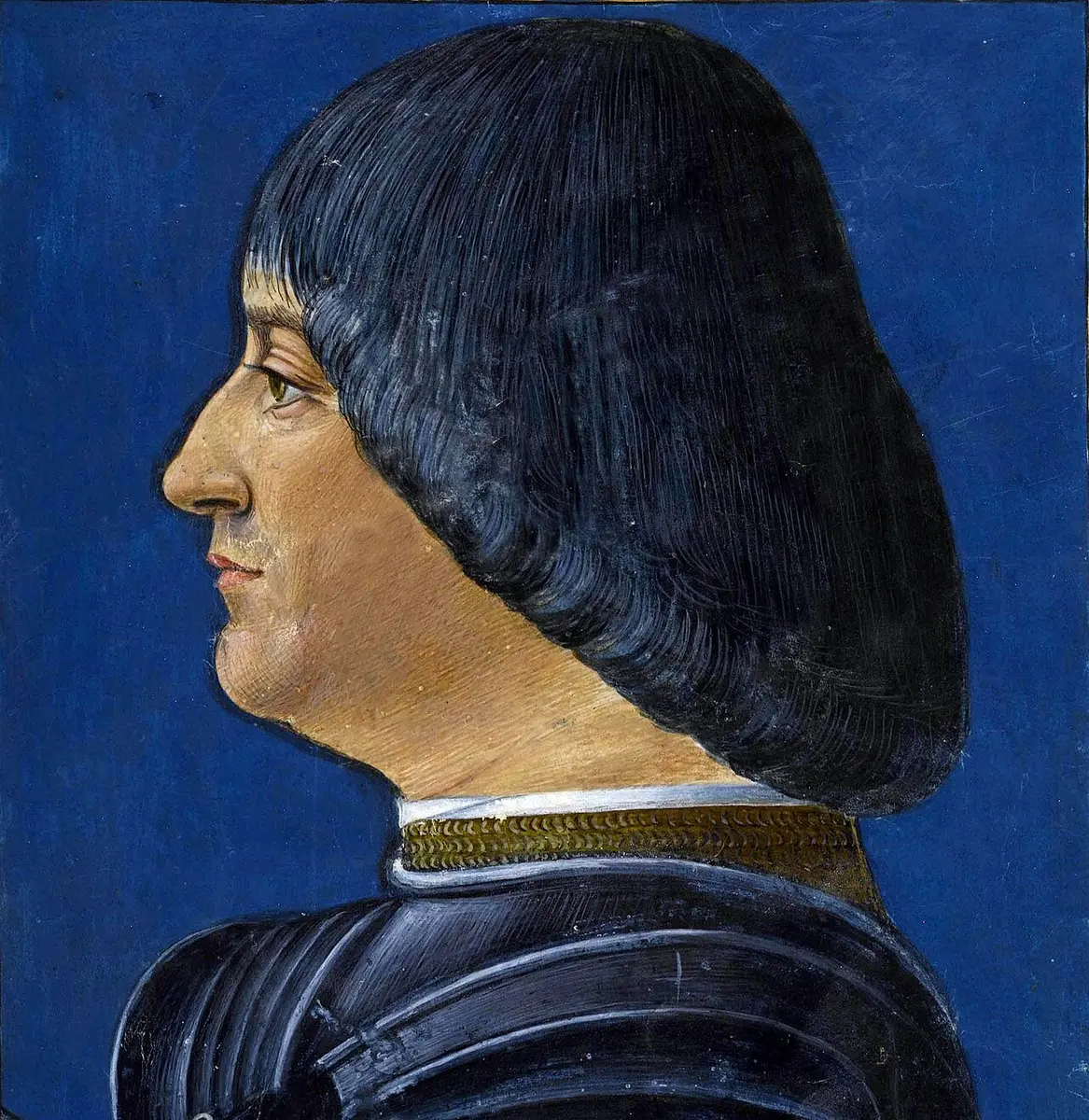
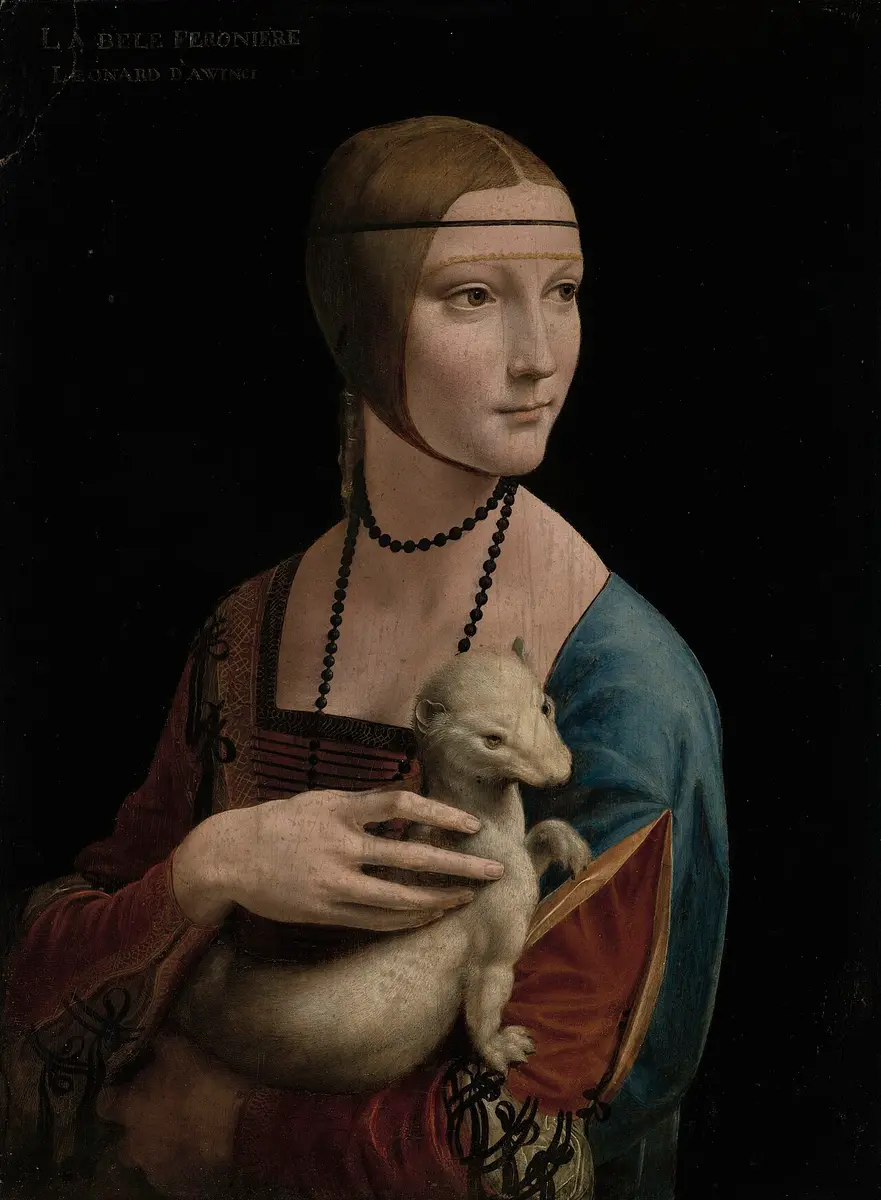
Ludovico, called il Moro, kept a brilliant court, and Leonardo served it in every way he could. He staged pageants, painted the duke’s young mistress, Cecilia Gallerani, with an ermine in her arms, and filled his notebooks with water, flight and anatomy. The commission that mattered most to Ludovico was a bronze horse for his father, Francesco Sforza, larger than any equestrian statue of the age.
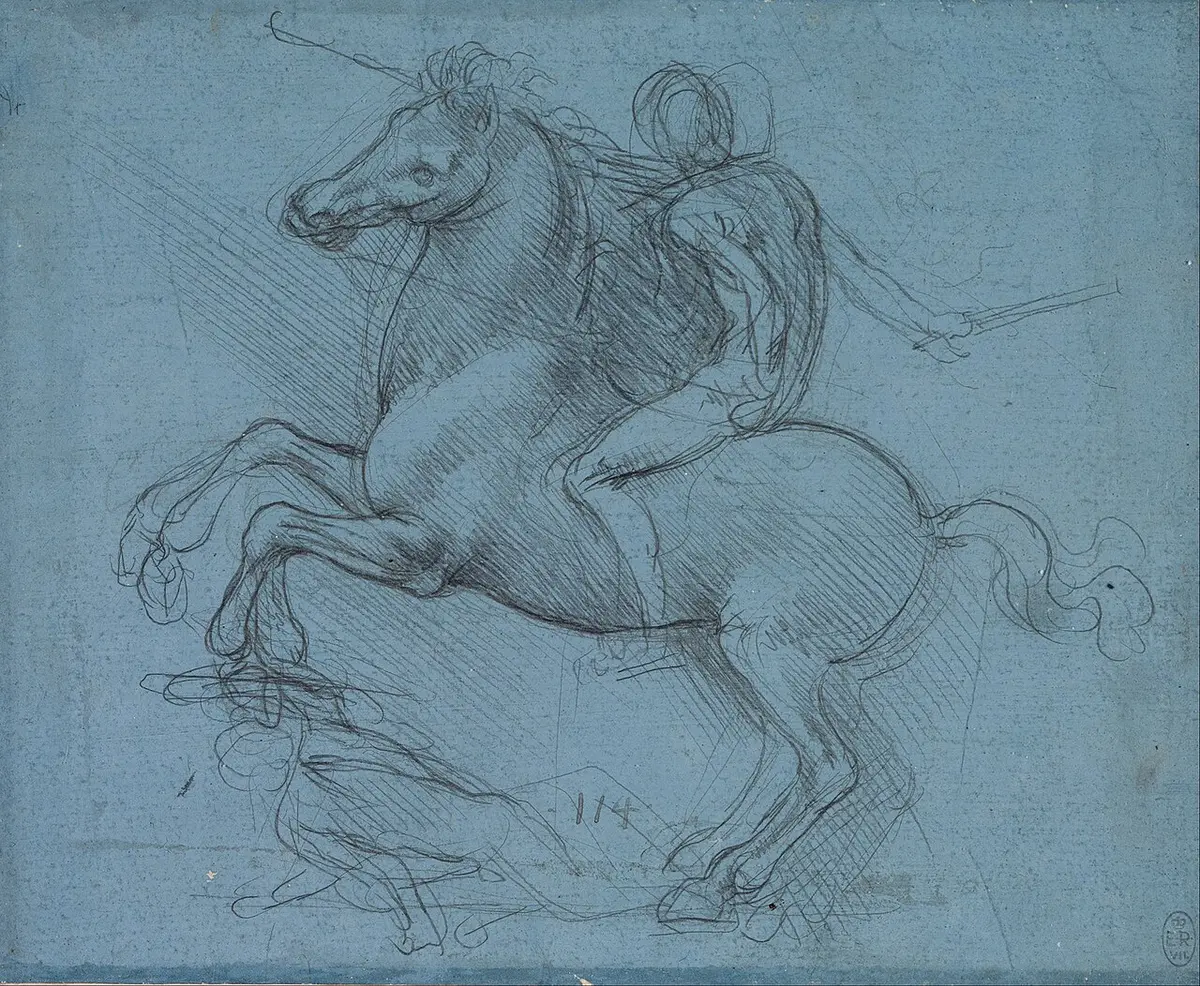
Leonardo worked on the horse for years. By November 1493 a full-size clay model, nearly eight meters tall, was on show for a Sforza wedding, and some seventy tons of bronze had been gathered to cast it. A year later, with the French king Charles VIII marching into Italy, Ludovico sent the bronze to his father-in-law, the Duke of Ferrara, to be made into cannons. The clay horse stayed where it was.
By then Leonardo had begun the Last Supper, on the end wall of the refectory of Santa Maria delle Grazie, the Dominican church Ludovico was remaking as his family’s burial place. Matteo Bandello, the prior’s nephew, remembered him climbing the scaffolding at dawn and painting until dark without stopping to eat, then leaving the brush alone for days and coming only to stand and look. Fresco would have forced him to work fast, one patch of wet plaster at a time, so he painted in tempera on the dry wall, as he did on wood.
A horse that was never cast and a painting that started to fade within twenty years: Leonardo’s Milan survives in fragments.
The method failed almost at once. In 1517, with Leonardo still alive, a visitor noted that the painting was beginning to spoil. By then Ludovico had lost Milan: in 1499 the French took the city, their archers used the clay horse for target practice, and Leonardo left. In 1652 the friars cut a doorway through the bottom of the wall, taking away Christ’s feet, and in 1796 French troops used the refectory as a stable.
On the night of 15 to 16 August 1943, a bomb brought down the roof and one wall of the refectory. The Last Supper, braced with sandbags and steel scaffolding, survived under the open sky. A restoration from 1978 to 1999 cleared away centuries of overpainting, and today the air in the room is controlled and visitors come in small groups for a quarter of an hour. In September 1999, a bronze horse based on Leonardo’s studies was unveiled at the San Siro racecourse, five centuries late.
Art
Leonardo beyond the Last Supper
The Biblioteca Ambrosiana owns the Codex Atlanticus, the largest collection of Leonardo’s drawings and notes, with pages on show in rotation, and his Portrait of a Musician hangs in the Pinacoteca Ambrosiana next door. His painted Sala delle Asse in the Sforzesco Castle is still being restored.
The Brera gallery
Mantegna’s dead Christ seen feet first, Raphael’s Marriage of the Virgin, Piero della Francesca’s altarpiece with the Duke of Urbino kneeling in armor, Caravaggio’s Supper at Emmaus and Hayez’s The Kiss, often read as a picture of the Risorgimento.
Michelangelo’s last Pietà
The Rondanini Pietà, which Michelangelo was still carving in the days before he died in 1564, stands on its own in the old Spanish hospital of the Sforzesco Castle.
The Ambrosiana
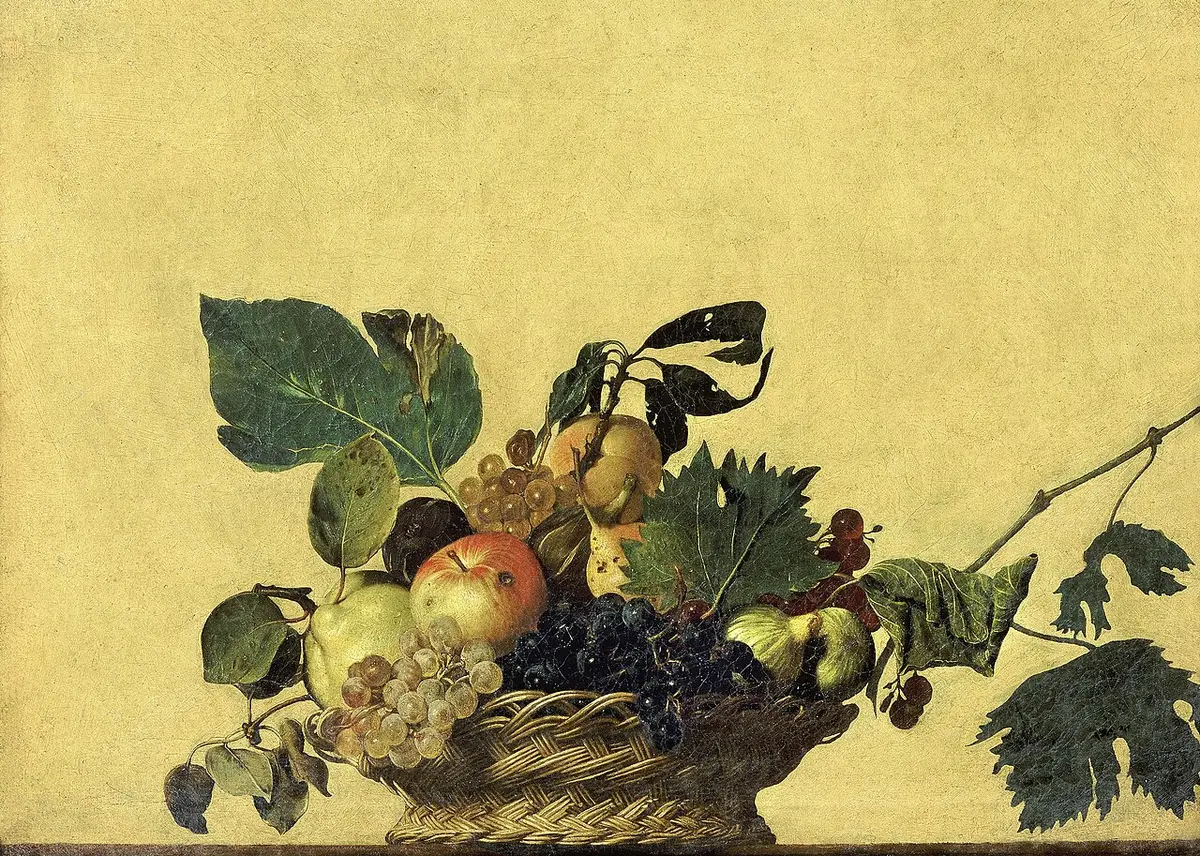
Founded by Cardinal Federico Borromeo in the early 1600s, with Caravaggio’s Basket of Fruit, Raphael’s full-size cartoon for The School of Athens and paintings by Titian and Botticelli.
Modern Milan
The Museo del Novecento, in the Arengario on Piazza del Duomo, follows Italian art of the 20th century from the Futurists on, with a Lucio Fontana neon looping across its top-floor window. Fondazione Prada fills a former distillery reworked by OMA, and Pirelli HangarBicocca shows Anselm Kiefer’s Seven Heavenly Palaces, free, in a vast former industrial hall.
Milan on the page
The novel every Italian reads at school, a Frenchman who asked to be remembered as Milanese, an American who recovered here in 1918, and an English poet on the cathedral roof.
Alessandro Manzoni
1785 to 1873
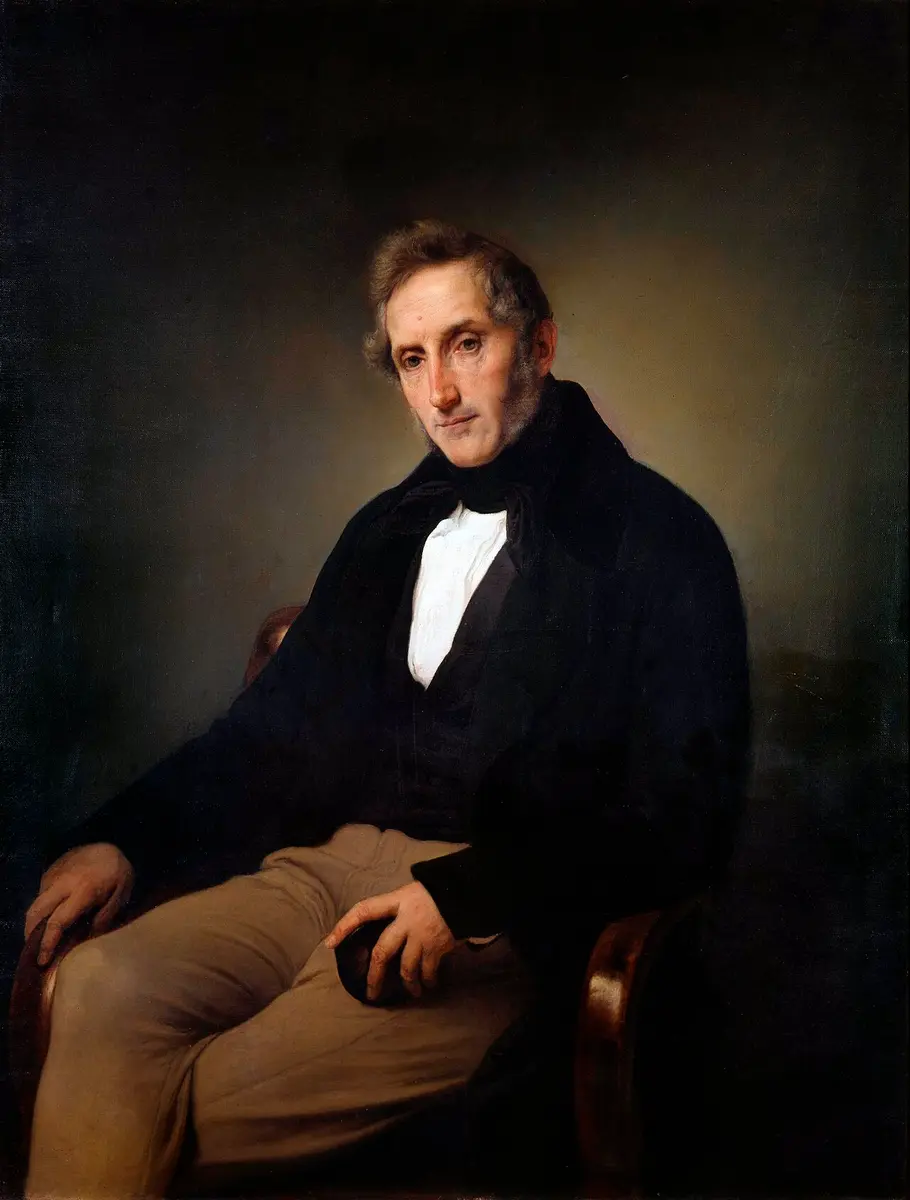
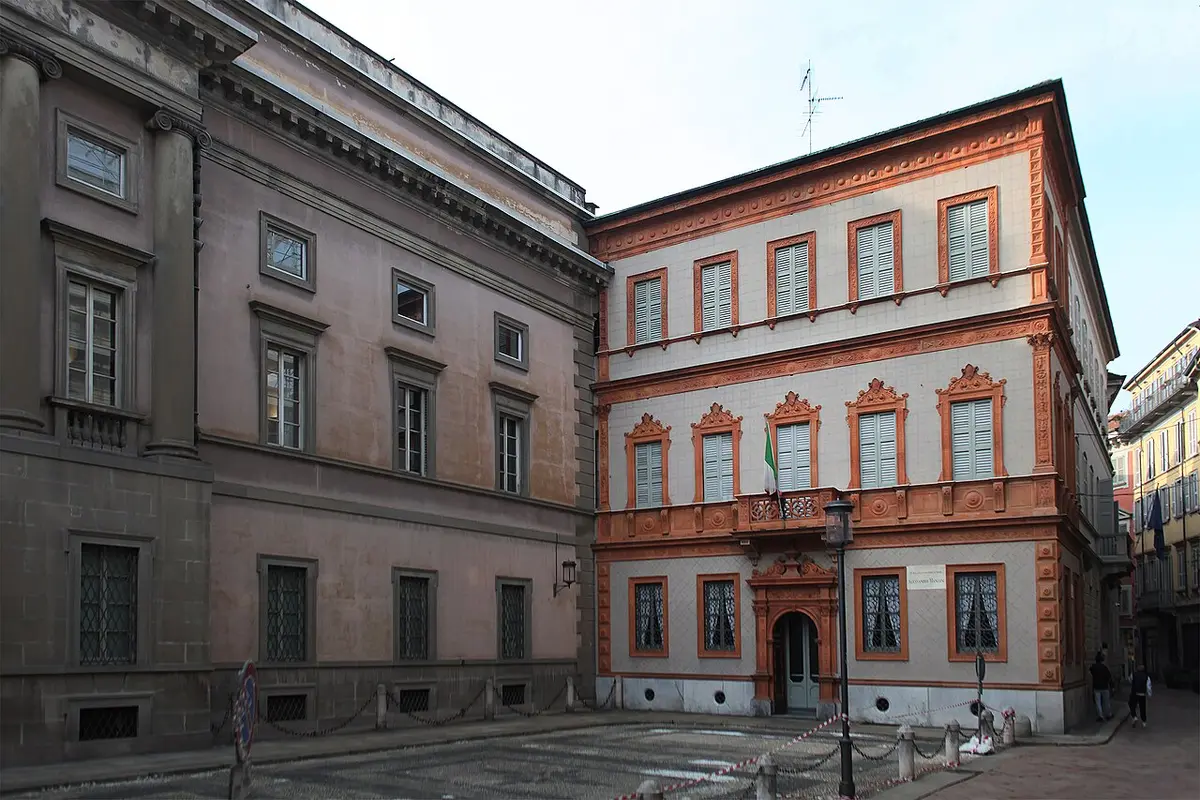
Born in Milan, Manzoni lived from 1814 until his death in the house on Via Morone that is now the Casa del Manzoni, a museum. The Betrothed (I promessi sposi), first published in 1827 and rewritten for an edition of 1840 to 1842 in the Italian of Florence, follows two young lovers through Lombardy in 1628 to 1630, through the bread riots in Milan and the plague. Verdi wrote his Requiem in Manzoni’s memory, and it was first sung in the church of San Marco on 22 May 1874, a year to the day after his death.
Stendhal
1783 to 1842
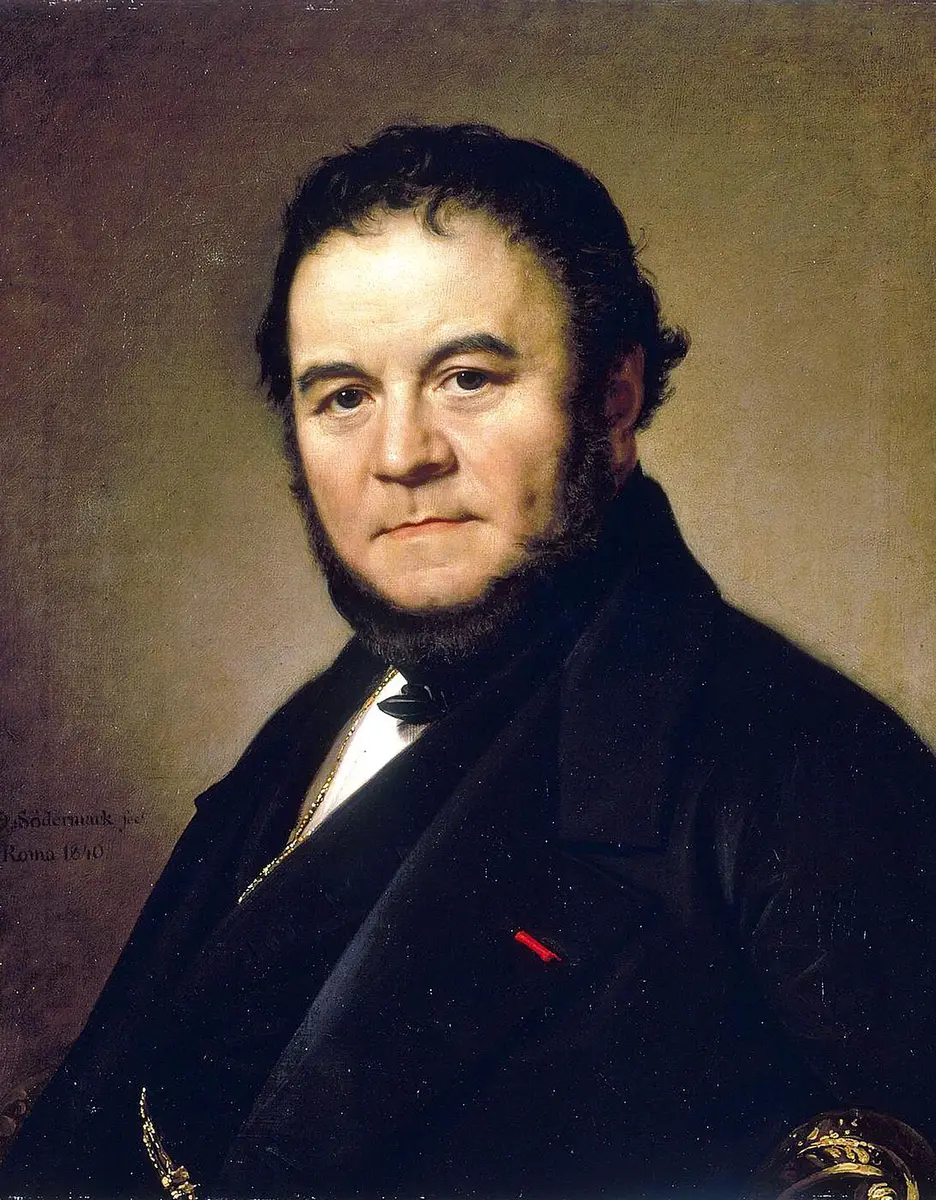
Henri Beyle first saw Milan in 1800, at 17, following Napoleon’s army, and lived there from 1814 to 1821, spending his evenings at La Scala. The Charterhouse of Parma (1839) opens with the French entering Milan in 1796. He asked for his grave to call him Milanese, and the stone in Montmartre reads, in Italian, Arrigo Beyle, Milanese: he wrote, he loved, he lived.
Ernest Hemingway
1899 to 1961
Hemingway came to Italy in 1918 as a Red Cross ambulance driver, was wounded near the Piave in July and spent months recovering at the American Red Cross hospital on Via Manzoni, where he fell in love with a nurse, Agnes von Kurowsky. A Farewell to Arms (1929) gives the story to Frederic Henry, who recovers in a Milan hospital and goes to the races at San Siro with Catherine.
Alfred Tennyson
1809 to 1892
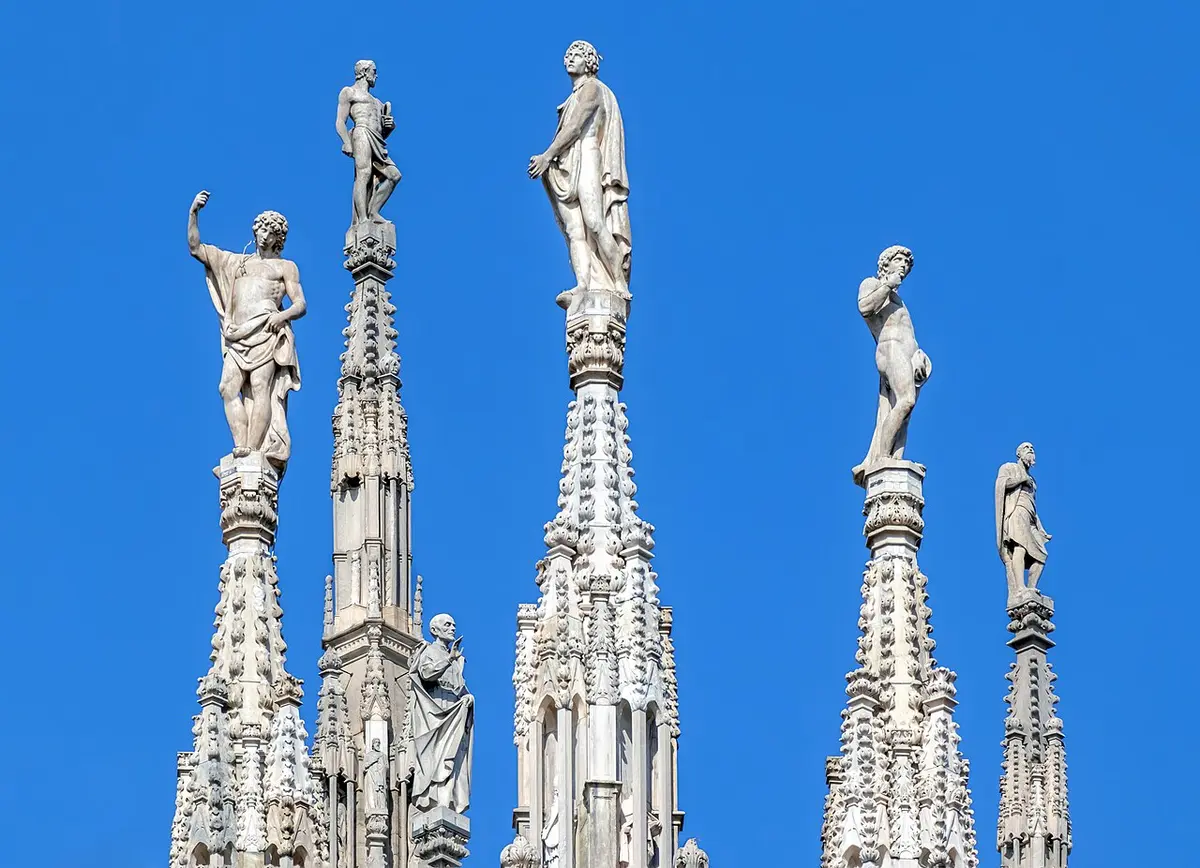
Tennyson traveled through Italy with his wife, Emily, in 1851, and remembered the journey in The Daisy, a poem written for her and published in 1855. In it he climbs the roof of the Duomo at break of day and sees the Alps.
O Milan, O the chanting quires,
The giant windows’ blazon’d fires,
The height, the space, the gloom, the glory!
A mount of marble, a hundred spires!
I climb’d the roofs at break of day;
Sun-smitten Alps before me lay.
I stood among the silent statues,
And statued pinnacles, mute as they.
Alfred Tennyson, The Daisy, in Maud, and Other Poems (1855)
Culture
Design Week
Every April the Salone del Mobile, the international furniture fair held since 1961, fills the fairgrounds at Rho, and the Fuorisalone spreads installations and parties through Brera, Tortona and the rest of the city.
Fashion weeks
Women’s collections show in February and September and men’s in January and June. The shops of the Quadrilatero della Moda, around Via Montenapoleone, are worth a look any time of year.
Saint Ambrose’s day
On 7 December, the feast of the city’s patron, La Scala opens its season, and the Oh bej! Oh bej! fair fills the streets around the Sforzesco Castle with stalls of sweets, toys and crafts.
A longer carnival
Milan keeps its own Ambrosian rite, in which Lent begins on the Sunday after Ash Wednesday, so the city’s carnival runs on to the Saturday, four days after everyone else’s.
Football
AC Milan and Inter share the San Siro stadium, and the derby between them, the Derby della Madonnina, divides families and offices.
Milan on film
Visconti’s Rocco and His Brothers (1960) follows a southern family in postwar Milan, Antonioni’s La Notte (1961) opens on the Pirelli Tower, and Luca Guadagnino’s I Am Love (2009) was filmed at Villa Necchi Campiglio.
Music and nights out
La Scala
Opera and ballet from December to November, with tickets on the theater’s own site. The gallery seats high under the roof are the cheapest way in.
Verdi’s city
Nabucco made Verdi’s name at La Scala in 1842. He died at the Grand Hotel et de Milan in January 1901, while straw was laid on the street outside to deaden the sound of carriages, and he lies at the Casa di Riposo per Musicisti, the home for retired musicians he founded.
Concerts
The Orchestra Sinfonica di Milano plays at the Auditorium in Largo Mahler, and the Giuseppe Verdi Conservatory hosts chamber music for much of the year.
Jazz
The Blue Note in Isola has booked international names since it opened in 2003.
The city’s song
O mia bela Madunina, written in 1934 by Giovanni D’Anzi for the gilded Madonna on the Duomo, is the city’s unofficial anthem, sung at San Siro and on public occasions.
Nights out
Aperitivo from about 6pm, then the bars of the Navigli, Brera, Isola and Porta Venezia, and the clubs around Corso Como and Garibaldi. In summer, big concerts fill San Siro and the racecourse next door.
Nature and day trips
Parco Sempione
The park behind the Sforzesco Castle, laid out at the end of the 19th century on the old parade ground, with the Arco della Pace at the far end and Gio Ponti’s Torre Branca, whose lift climbs to a view over the city.
Giardini Pubblici
Milan’s oldest park, laid out by Piermarini in the 1780s in Porta Venezia, with the Natural History Museum and the planetarium among its trees.
Porta Nuova
The Bosco Verticale, two apartment towers planted with hundreds of trees, rises over the Biblioteca degli Alberi, a new park of meadows and circles of trees.
Along the canals
The towpath of the Naviglio Grande runs west out of the city past farms and villas, a flat ride on a rented bike, and the Naviglio Pavese leads south toward the Certosa di Pavia.
The Idroscalo
A lake dug around 1930 for seaplanes, next to Linate airport, now a park with beaches and boating that the Milanese call their sea.
Day trips
Trains reach Como and Bergamo’s hilltop old town in under an hour, Varenna in about an hour, and Stresa on Lake Maggiore, for boats to the Borromean Islands, in about an hour.
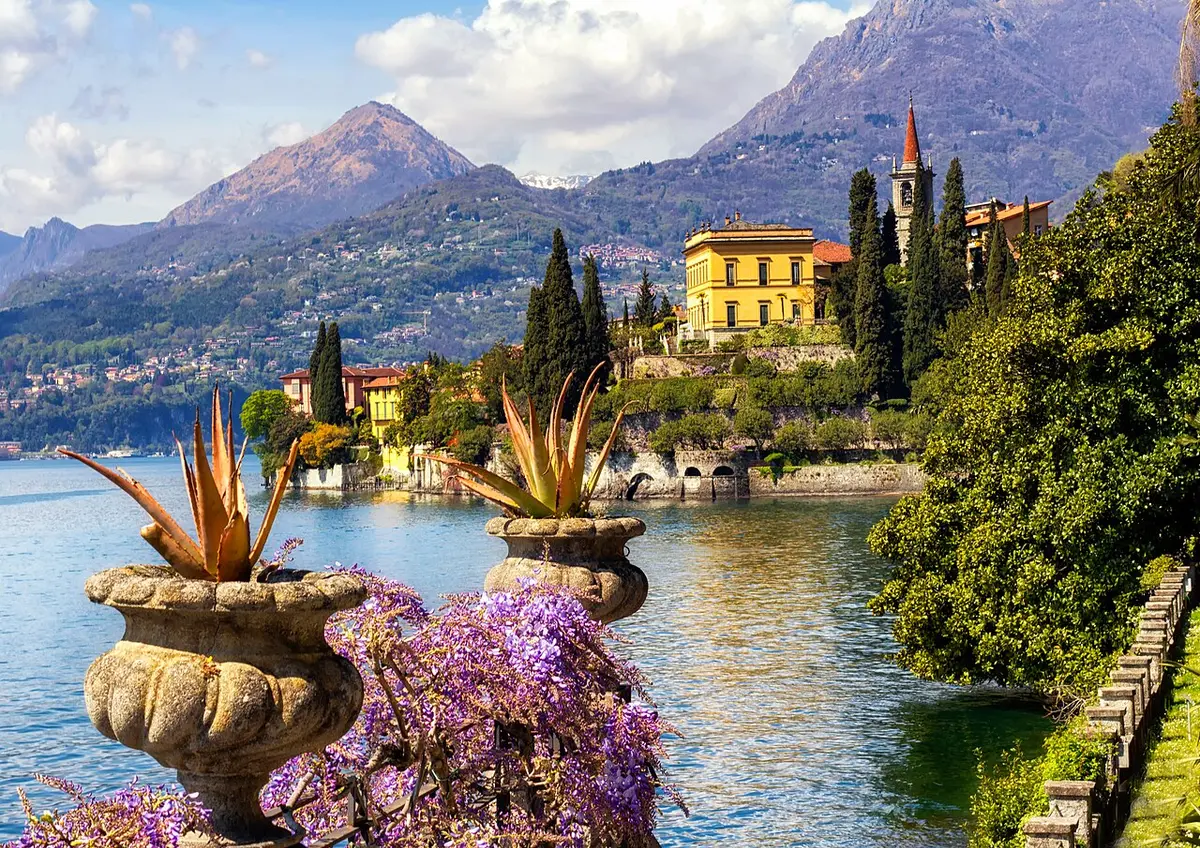
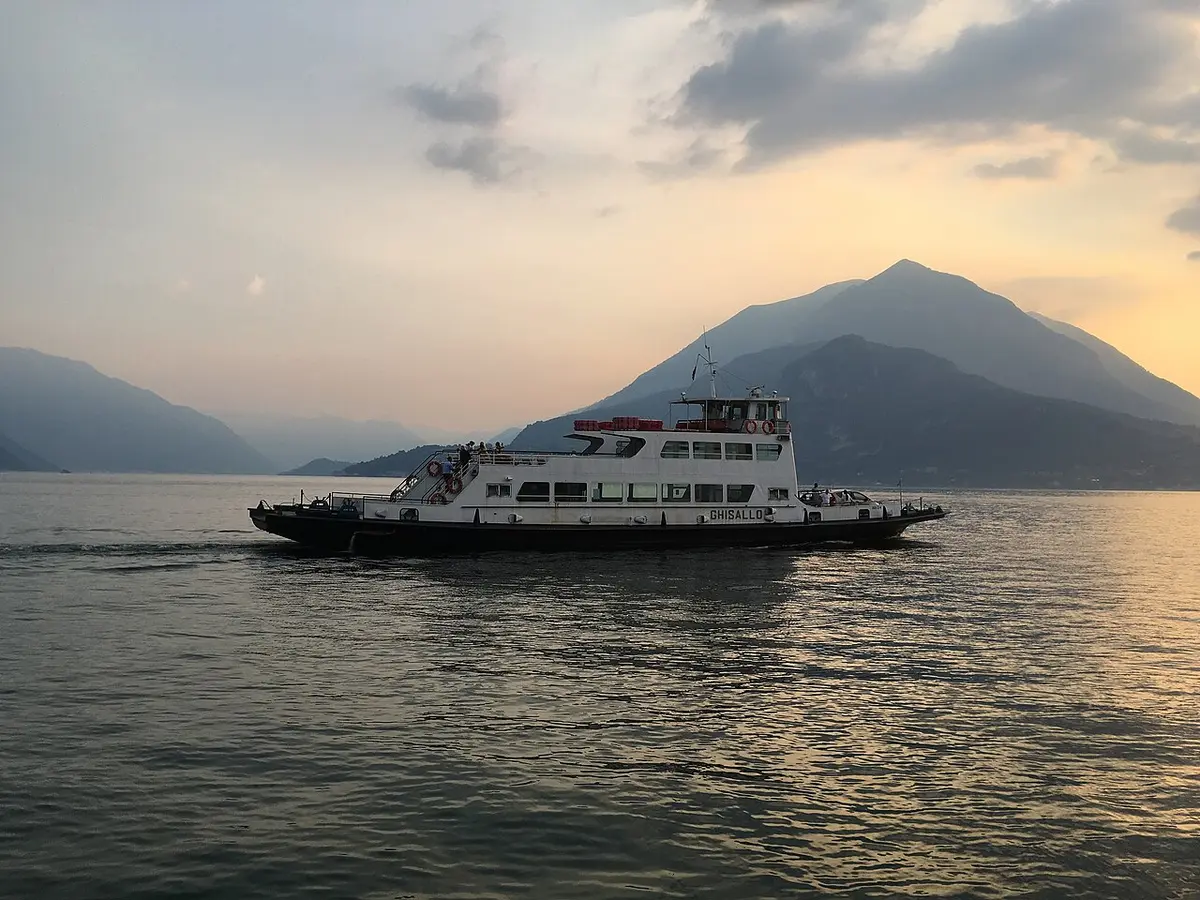
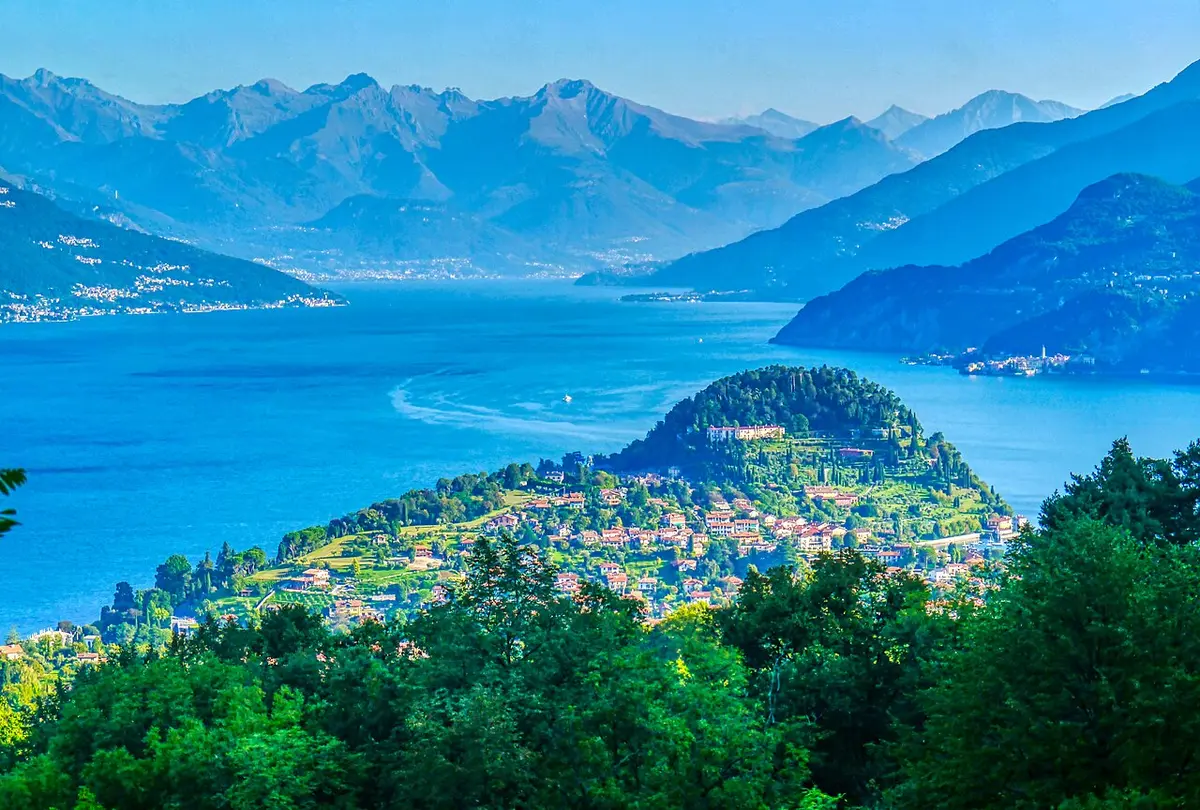
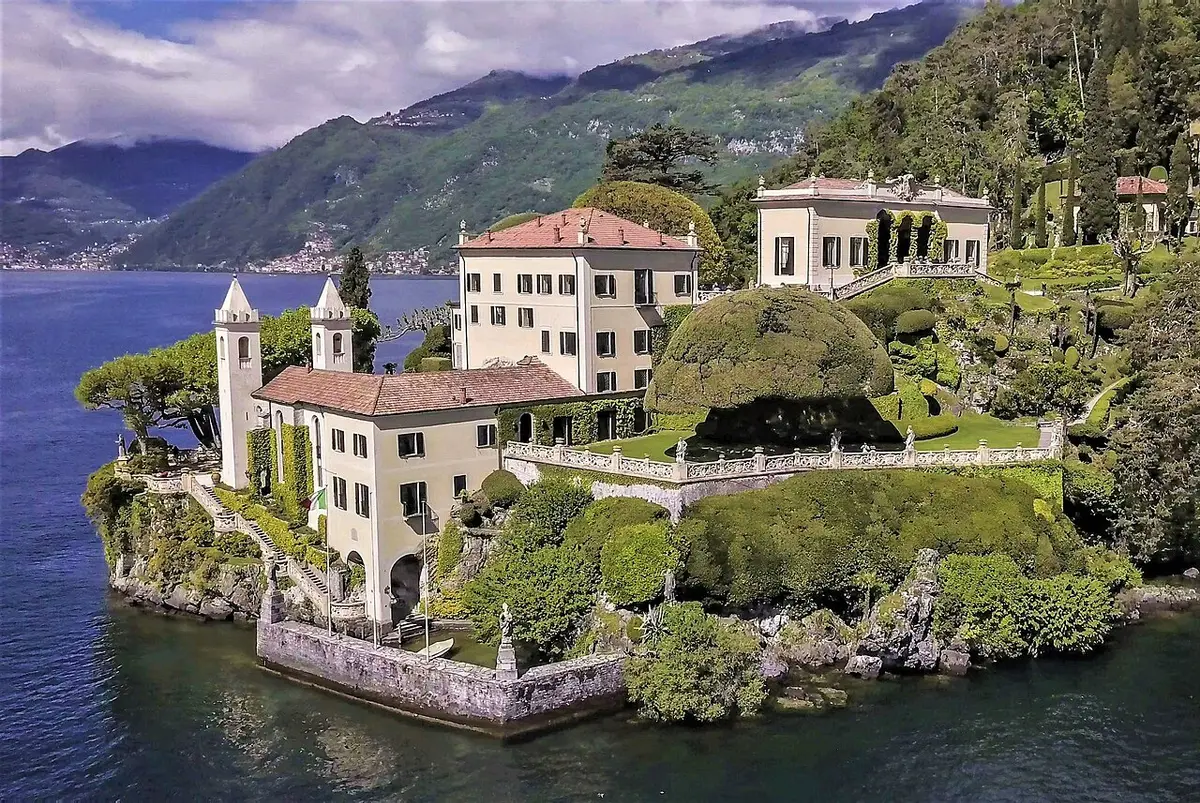
A day on Lake Como
About an hour by train from Milano Centrale, Lake Como runs north into the Alps between steep shores lined with villas. Take an early train to Varenna, cross by ferry and come back in the evening.
People and customs
Aperitivo
From about 6 to 9pm, a drink in most bars comes with olives, crisps or a whole buffet. It is meant to come before dinner, though many people make a meal of it.
Coffee at the bar
In many bars you pay first at the till, then hand the receipt to the barista. Cappuccino is a morning drink; after lunch, order un caffè.
Dress
The Milanese dress well, even for an errand. For the Duomo, shoulders and knees must be covered.
Pace
Milan works hard and moves fast: lunch is often quick, and on the metro escalators you stand on the right.
August
Many Milanese leave for the sea or the mountains in August, and some restaurants and shops close for two or three weeks around Ferragosto, 15 August.
A few words
Buongiorno, grazie and per favore go a long way. English is widely spoken in hotels, shops and museums.
Questions
How many days do you need in Milan?
Two days covers the Duomo, the Last Supper, the Sforzesco Castle and Brera. Three adds Sant’Ambrogio, the Navigli and a museum or two, and a fourth leaves time for a day on Lake Como.
Do I need to book the Last Supper in advance?
Yes. Booking is required, tickets go on sale three months at a time and sell out fast, and each visit lasts 15 minutes. If they are gone, guided tours that include the visit are the usual fallback.
How do I get from Malpensa Airport to central Milan?
The Malpensa Express train reaches Cadorna in about 40 minutes and Centrale in about an hour. Buses run to Centrale, and taxis charge a fixed fare into the city.
Where should I stay in Milan on a first visit?
Around the Duomo or in Brera, to walk everywhere. The Navigli is best for nightlife, Isola for bars and modern Milan, and the area around Centrale station is the best value and the easiest for day trips by train.
Can you visit Lake Como as a day trip from Milan?
Yes. Trains reach Como in under an hour and Varenna in about an hour, and from Varenna ferries cross to Bellagio in about a quarter of an hour.
Is Milan good for a bachelorette or a group trip?
Yes: aperitivo on the Navigli or in Brera, a Negroni sbagliato at Bar Basso, dinner and late bars in Isola, Corso Como and Porta Venezia, and a boat day on Lake Como.
Plan Milan with your group
Everyone swipes on the sights they want. SwipeSights builds the days around the picks, in walking order.