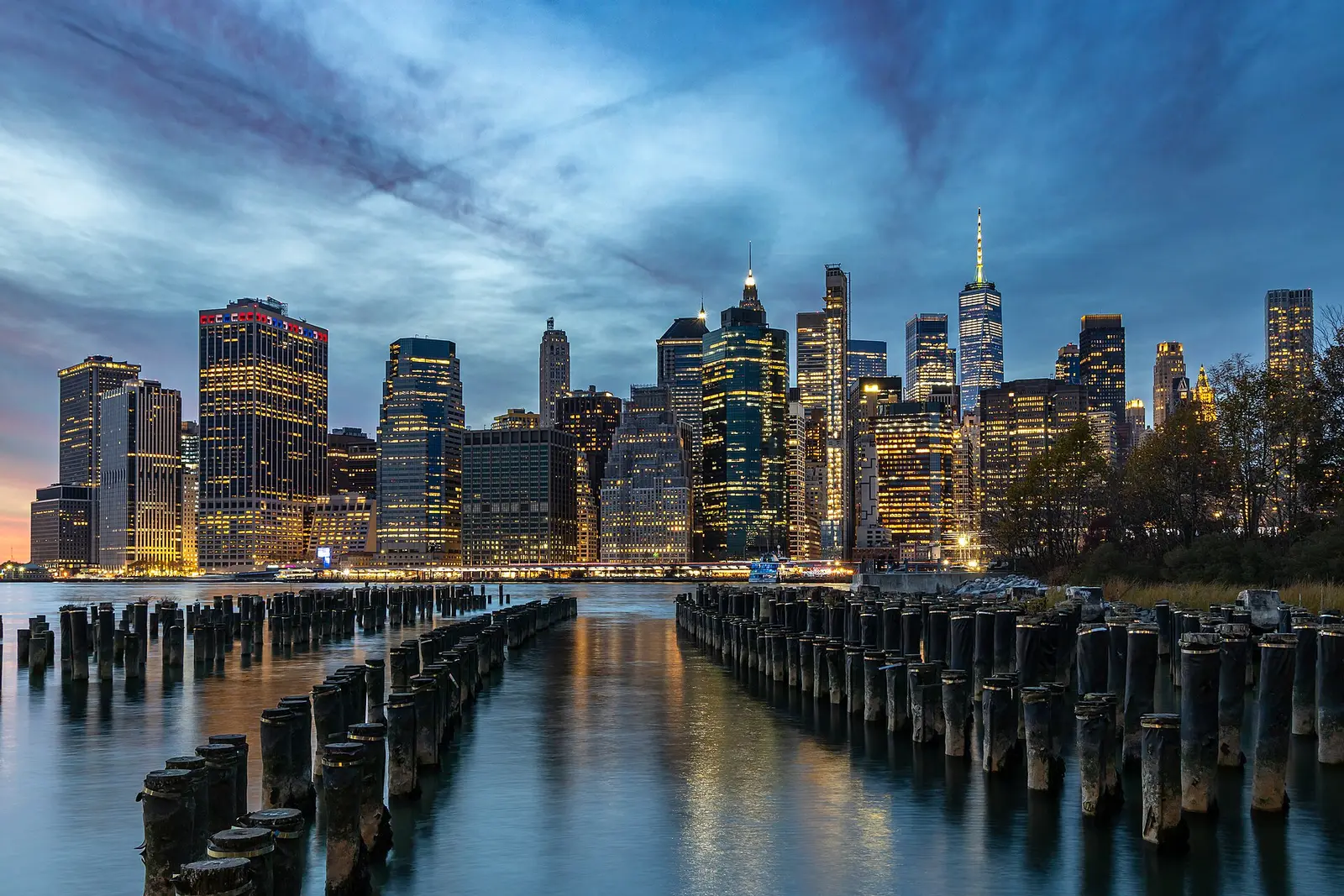
 Photo:
New York is five boroughs spread around a great natural harbor: the towers and grid of Manhattan, the brownstones and waterfront parks of Brooklyn, and Queens, the Bronx and Staten Island beyond. It is loud, fast and expensive, and it is also one of the easiest big cities to explore on foot, with a subway that runs all night and great museums, parks and food from every corner of the world a few stops apart.
This guide covers when to go, where to stay, what to see, a walk from Brooklyn Heights back over the Brooklyn Bridge, a day at Coney Island, what to eat, and the history, art and customs that make the city make sense.
What New York is good for
Friends' trips
Eat your way through Chelsea Market or Smorgasburg, walk the Brooklyn Bridge at sunset, ride the free Staten Island Ferry past the Statue of Liberty, and end up in the bars of the East Village or Williamsburg. The subway runs all night, so nobody has to drive.
Bachelorette and bachelor weekends
A Broadway show, a drag brunch in Hell’s Kitchen, private karaoke rooms in Koreatown and rooftop bars with a skyline view, then late nights on the Lower East Side or in Williamsburg, where bars stay open until 4am.
Weddings and honeymoons
Couples from anywhere can marry at the City Clerk’s Office in Lower Manhattan. There is no residency rule: apply for a license together, wait 24 hours, and a clerk performs a short civil ceremony with one witness. Photos follow in Central Park or on the Brooklyn waterfront, and the city makes a classic honeymoon.
Couples
A rowboat on the Lake in Central Park, sunset from the Brooklyn Heights Promenade, a late set at a jazz club in the Village and dinner in the West Village.
Families
Dinosaurs and the blue whale at the American Museum of Natural History, the zoo and the carousel in Central Park, a space shuttle on the aircraft carrier at the Intrepid Museum, and the free Staten Island Ferry. In summer, Coney Island has rides and a beach.
Solo travel
Easy to find your way around and made for exploring alone: museums, bookshops, counter seats at the bar, walking tours and free events in the parks. Stay somewhere central and take the usual big-city care late at night.
Food lovers
A slice folded in half, pastrami at Katz’s, bagels with lox, dumplings in Chinatown and Flushing, and the cooking of South Asia and Latin America in Jackson Heights.
History and art
Ellis Island and the Statue of Liberty, the Tenement Museum on the Lower East Side, Federal Hall where Washington took the oath, the 9/11 Memorial, and the great museums along Fifth Avenue.
Plan your trip
When to go
Spring (April to June) and autumn (September to early November) bring mild days and the best walking weather. December is cold and busy, with the tree at Rockefeller Center and holiday windows on Fifth Avenue. July and August are hot and humid; January to March is cold, with snow in some years, and the lowest hotel prices of the year.
How long to stay
Four days covers Lower Manhattan and the Statue of Liberty, Midtown and a Broadway show, Central Park and the Met, and an afternoon in Brooklyn. With five or six, add another museum, Harlem, Queens or a summer day at Coney Island.
Getting there
Most international flights land at JFK or Newark, and many domestic ones at LaGuardia. From JFK, the AirTrain runs to Jamaica, where Long Island Rail Road trains reach Penn Station or Grand Central in about 20 minutes; yellow taxis charge a flat fare to Manhattan. From Newark, the AirTrain meets NJ Transit and Amtrak trains to Penn Station, about half an hour away, though the AirTrain is being replaced and a shuttle bus stands in on some weekdays. From LaGuardia, the free Q70 bus runs to the subway at Jackson Heights. Amtrak trains from Boston, Philadelphia and Washington arrive at Penn Station.
Getting around
Walk, and take the subway, which runs 24 hours a day. Tap a contactless card or phone at the gate, and use the same one every time: OMNY caps what you pay in any seven days, and every ride after that is free. Above 14th Street, Manhattan is a grid, with avenues running north and south and numbered streets east and west; downtown, the older streets wander. The Staten Island Ferry is free, NYC Ferry boats link the waterfronts, and Citi Bike has docks all over.
Tickets
Book the Statue of Liberty through Statue City Cruises, the only official ferry: pedestal and crown tickets sell out, the crown months ahead in summer. The observation decks and the 9/11 Museum sell timed entries, and the Met is pay-what-you-wish only for New York State residents and some students. For Broadway, the TKTS booth in Times Square sells same-day seats at a discount.
Money and tipping
Cards and phones work almost everywhere, though a few old-school places take cash only. Prices exclude sales tax, 8.875 percent, which is added at the register. Tip 18 to 20 percent at restaurants and a dollar or two a drink at bars, and expect room taxes on top of hotel rates.
Weather, month by month
Spring
March to May
Cold snaps in March, mild by May, with cherry and magnolia blossoms in the parks in April. Pack layers: the days swing between warm and cool.
Summer
June to August
Hot and humid, with highs around 30°C, heat waves above 35°C in some years and sudden thunderstorms. The subway platforms are hotter still.
Autumn
September to November
September stays warm, October is crisp and clear, and the leaves turn in the parks in late October and early November.
Winter
December to February
Cold, often below freezing, with snowstorms in some years and a cutting wind between the towers. Many days are dry and bright.
Top sights
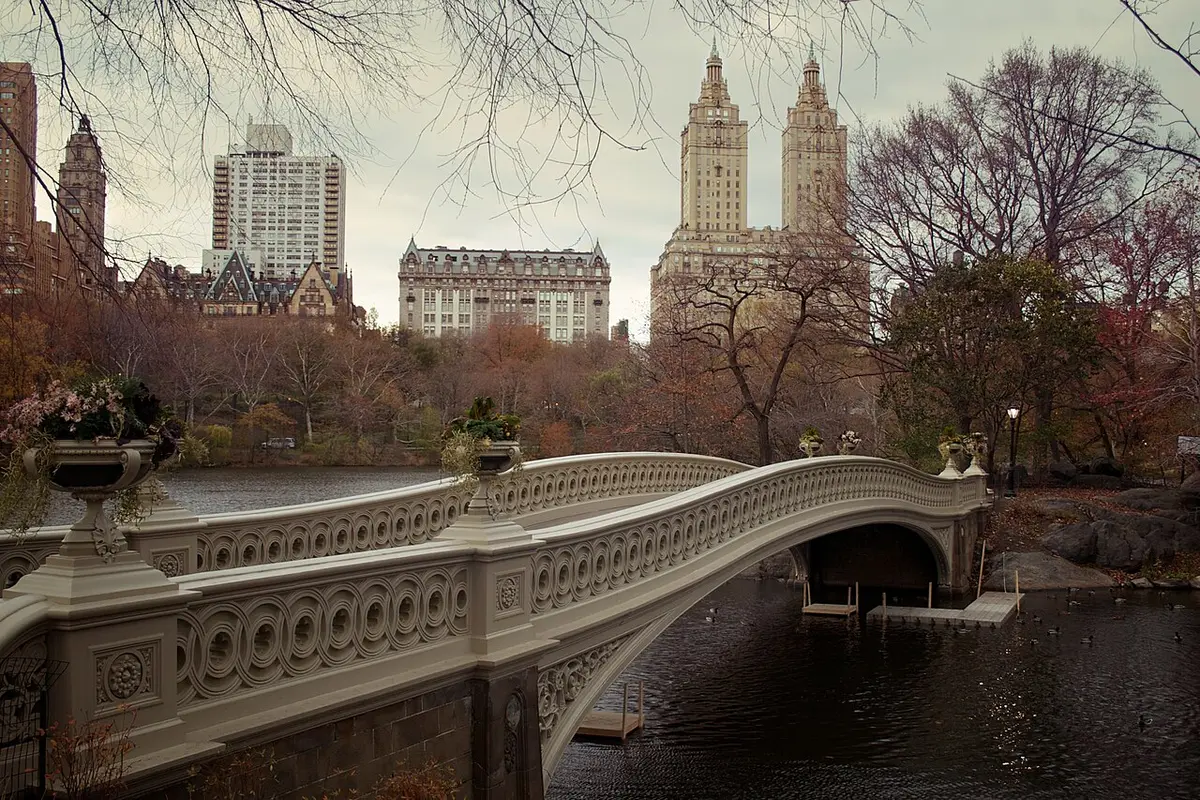 01
Central Park
Frederick Law Olmsted and Calvert Vaux won the design competition in 1858 and turned rocky, swampy ground into 843 acres of meadows, lakes and woods between 59th and 110th Streets. Walk the Mall under its elms to Bethesda Terrace and the Lake, cross Bow Bridge into the Ramble, and climb to Belvedere Castle for the view.
Rent a rowboat at the Loeb Boathouse from spring to autumn, or a bike for the six-mile loop drive, closed to cars since 2018.
Photo: David Joyce from Gray, TN, United States, CC BY-SA 2.0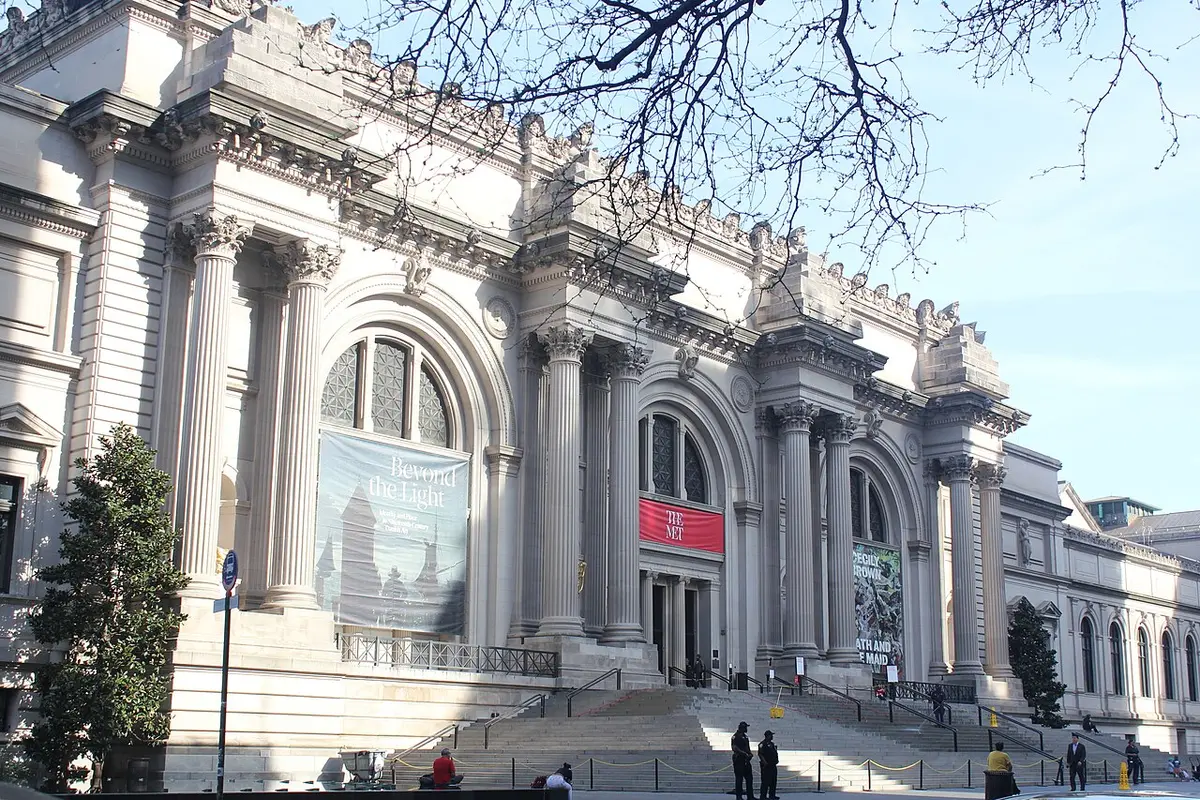 02
The Metropolitan Museum of Art
The largest art museum in the United States, founded in 1870: an Egyptian temple in a glass hall, a court of armor, the American Wing and room after room of European painting. From spring to autumn the roof garden opens, with a view over Central Park to the skyline.
Closed on Wednesdays, and open until 9pm on Fridays and Saturdays. Come at opening time and head for one wing, not the whole museum.
Photo: Epicgenius, CC BY-SA 4.0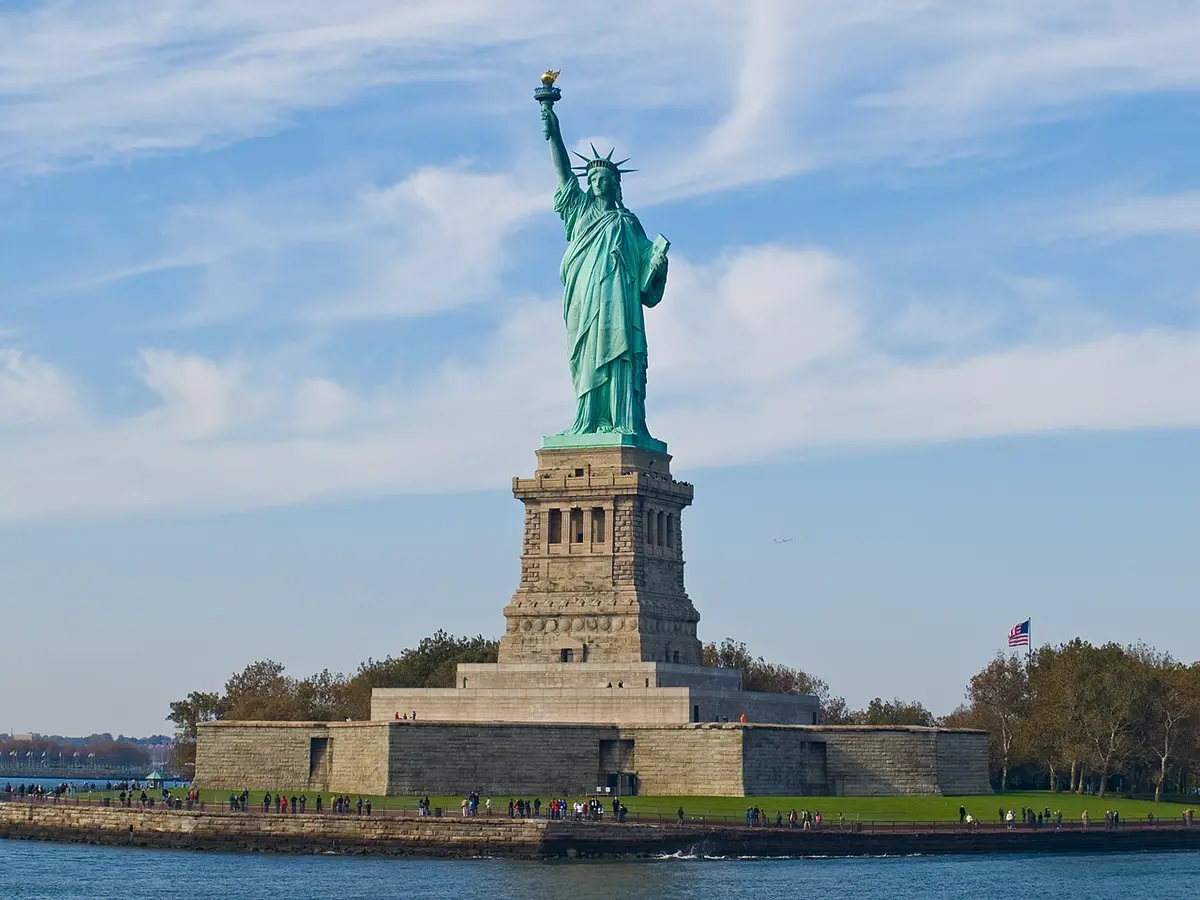 03
The Statue of Liberty and Ellis Island
A gift from France, designed by Frédéric Auguste Bartholdi around an iron frame by Gustave Eiffel and dedicated in 1886. The same ferry stops at Ellis Island, where about 12 million immigrants were processed between 1892 and 1954; the great registry hall upstairs is now a museum.
Book through Statue City Cruises, from Battery Park or Liberty State Park in New Jersey. Pedestal and crown tickets sell out, and the crown is 162 steps up a tight spiral stair.
Photo: William Warby, CC BY 2.0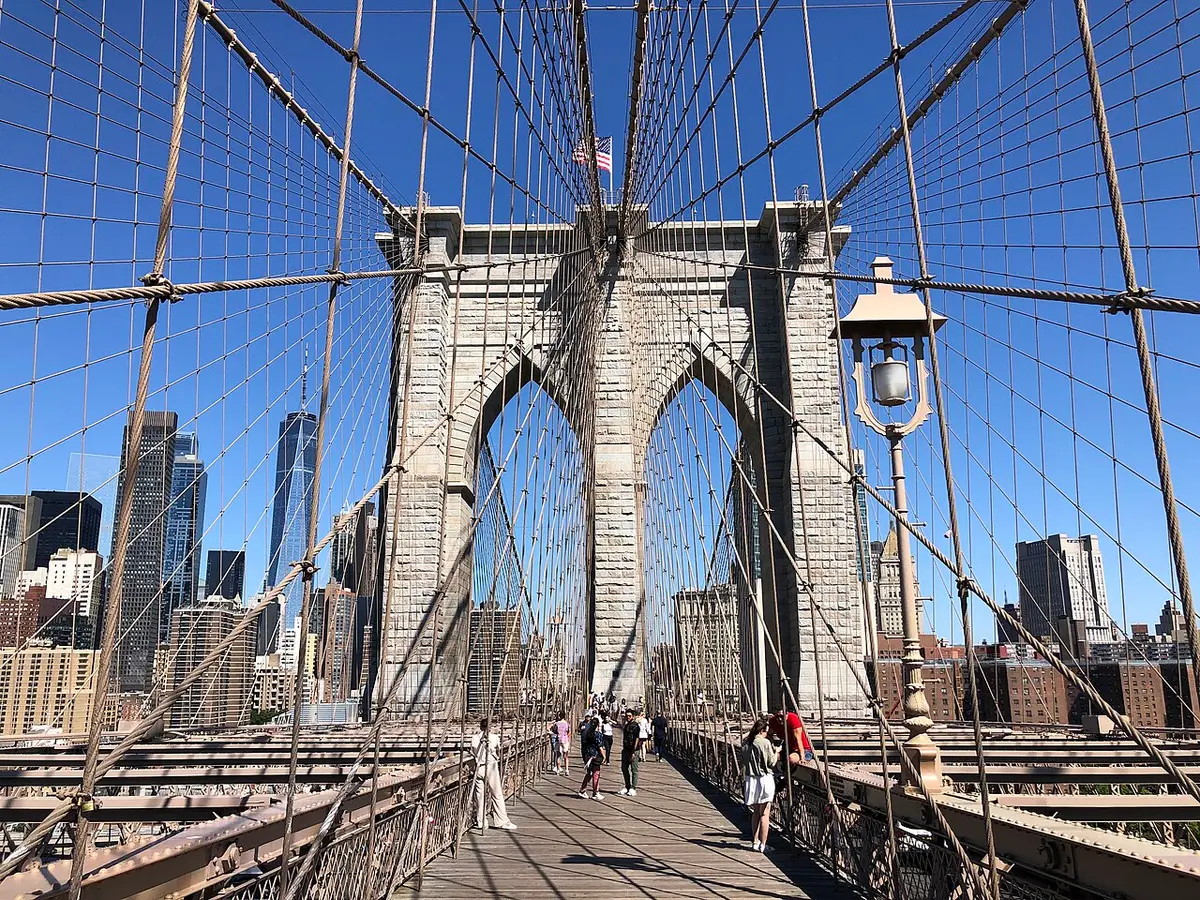 04
The Brooklyn Bridge
When it opened in 1883 it was the longest suspension bridge in the world and the first hung on steel wire. John A. Roebling designed it and died before work began; his son Washington ran the job until the bends left him an invalid, and his wife, Emily Warren Roebling, carried his instructions to the site for years.
Walk it toward Manhattan, starting in DUMBO or at High Street station, so the skyline is ahead of you. Early morning is quietest.
Photo: Famartin, CC BY-SA 4.0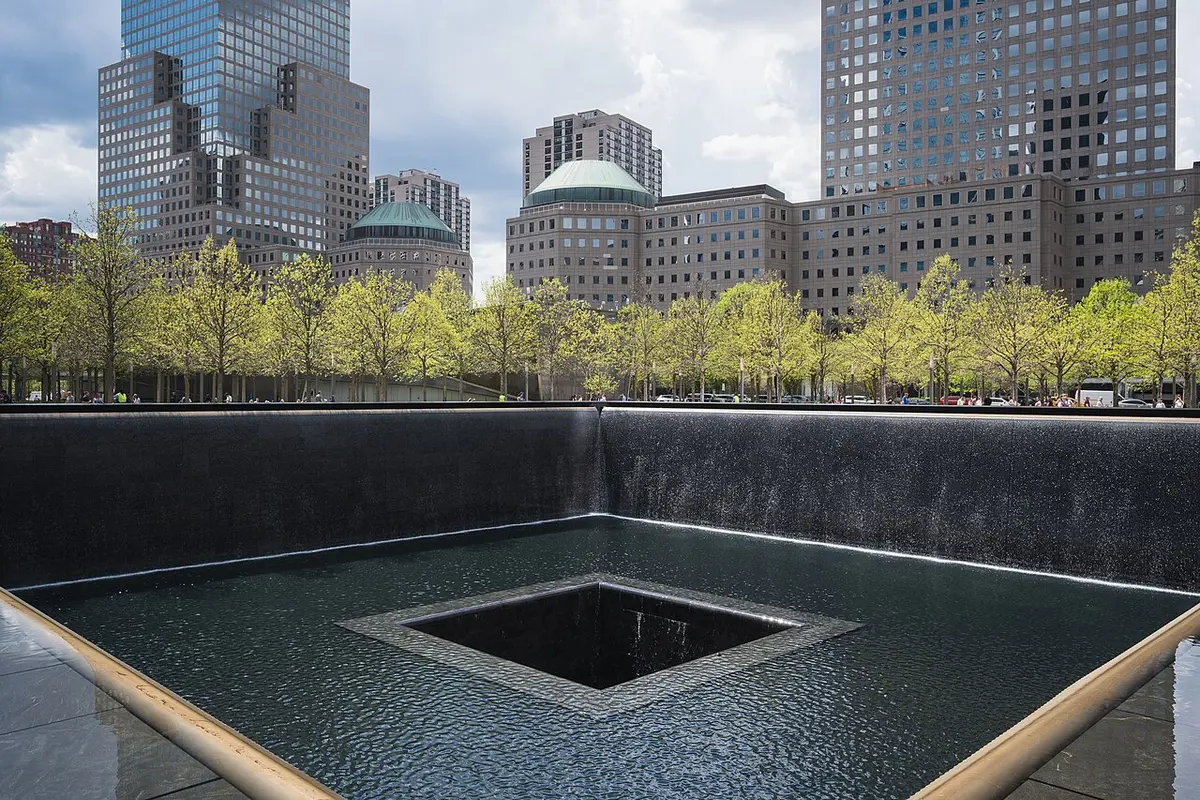 05
The 9/11 Memorial and Museum
Two pools, each close to an acre, fill the footprints of the Twin Towers, with water falling into a central void. The names of the 2,983 people killed in the attacks of 2001 and 1993 are cut into the bronze around them, and the museum below tells the story of the day.
The memorial is free and open daily from 8am to 8pm. The museum needs a timed ticket and is closed on most Tuesdays.
Photo: Christian David, CC BY-SA 4.0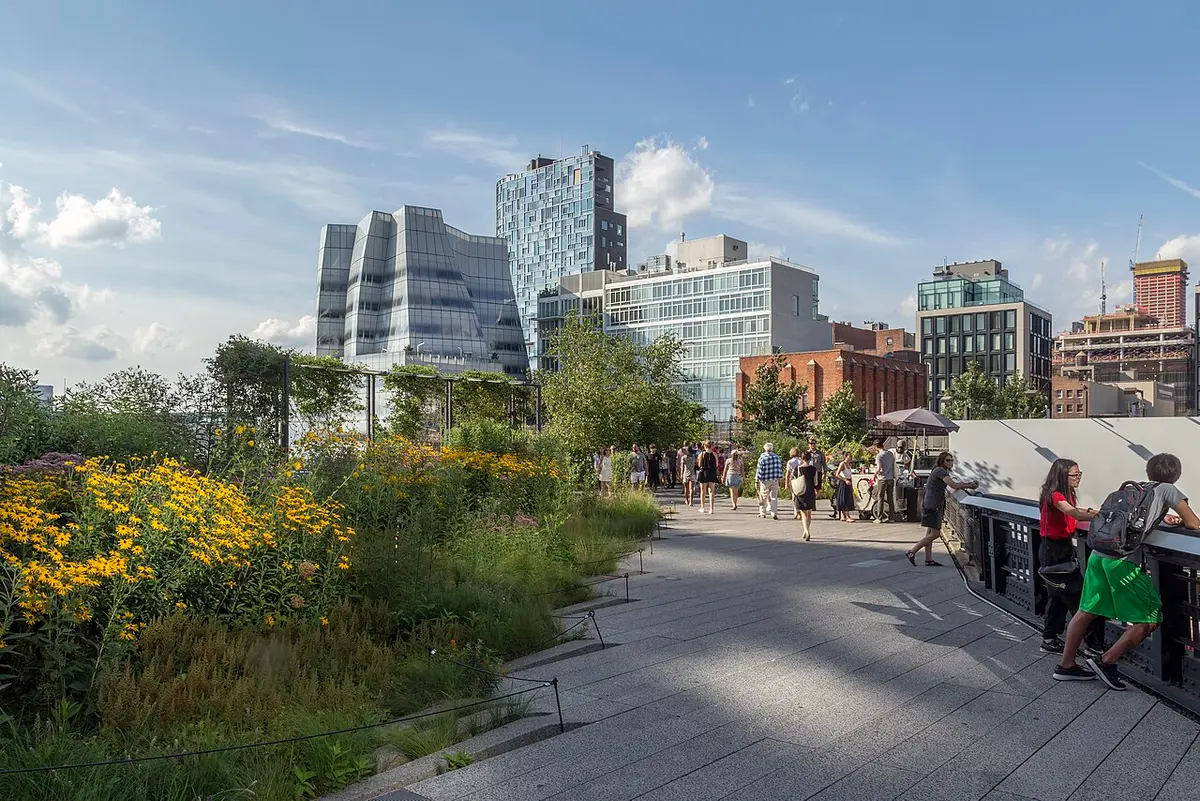 06
The High Line
A freight railway built above the West Side in the 1930s, abandoned in 1980 and turned into a park in stages from 2009. It runs for about a mile and a half from Gansevoort Street in the Meatpacking District to Hudson Yards at 34th Street, planted with grasses, flowers and trees above the traffic.
Start at the south end by the Whitney and walk north. It opens at 7am and closes at 10pm from April to November, earlier in winter.
Photo: Acroterion, CC BY-SA 4.0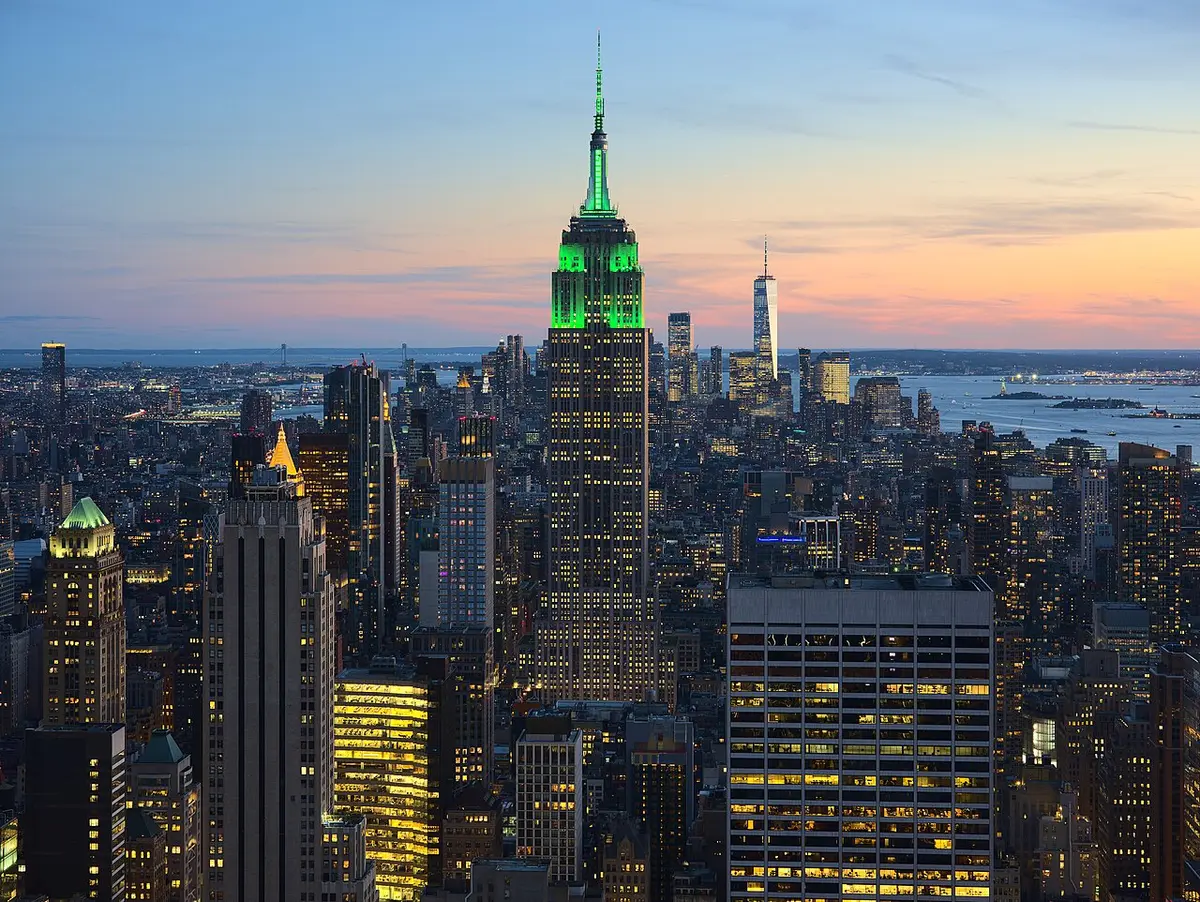 07
The Empire State Building
Finished in 1931 after little more than a year of building, it was the tallest building in the world for nearly forty years. The open-air deck on the 86th floor wraps around all four sides, with Central Park to the north and Lower Manhattan and the harbor to the south.
Go in the hour before sunset to see the city by day and then lit up. The tower itself glows in different colors at night.
Photo: Dllu, CC BY-SA 4.0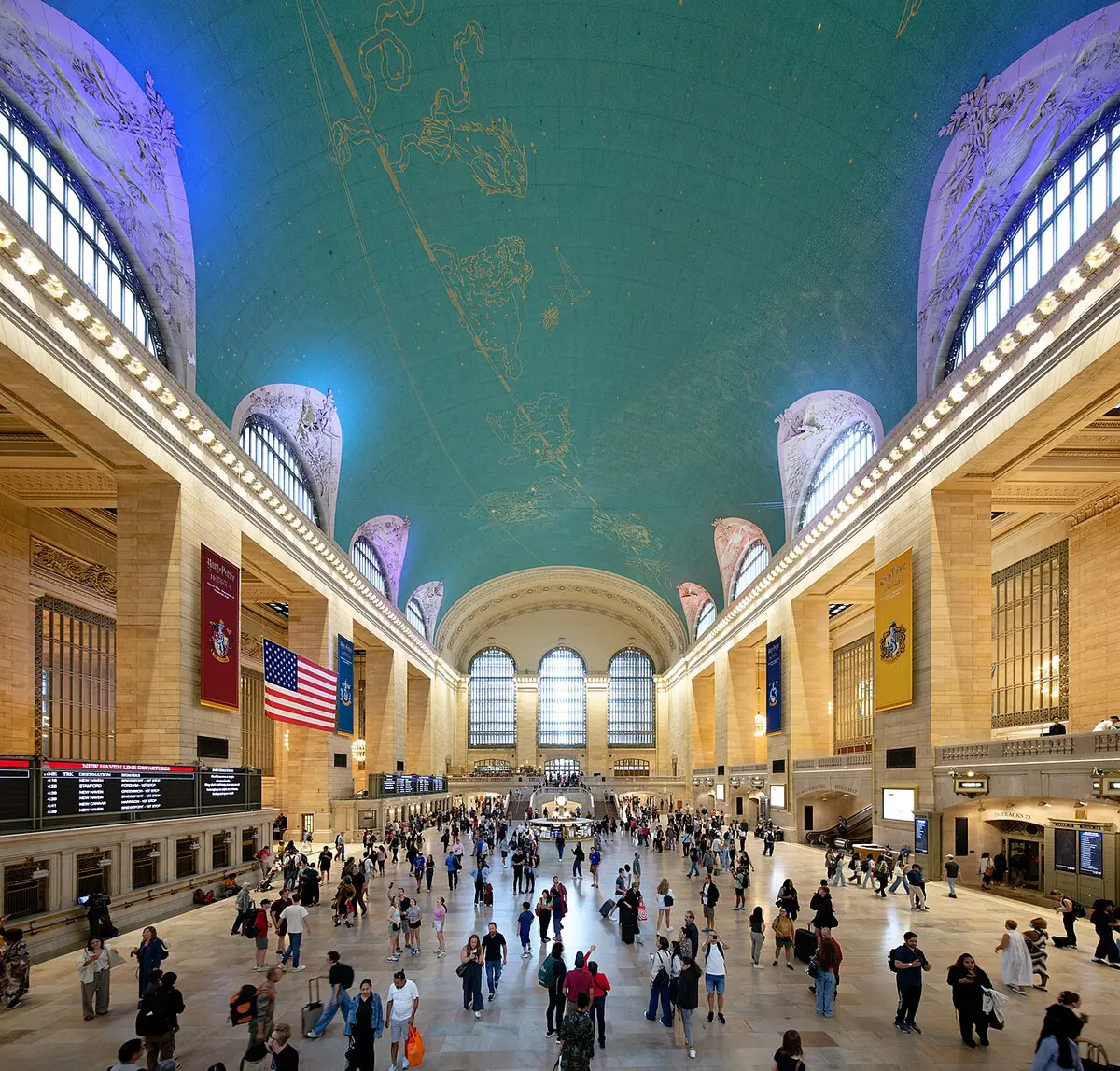 08
Grand Central Terminal
Opened in 1913 and saved from demolition in the 1970s after a long fight in which Jacqueline Kennedy Onassis took a leading part. Look up in the Main Concourse at the zodiac painted across the green ceiling, drawn backwards, and at the dark patch near one corner left uncleaned to show the grime the restorers removed in the 1990s.
Downstairs, outside the Oyster Bar, stand in one corner of the tiled arches and whisper: a friend in the opposite corner will hear you.
Photo: D. Benjamin Miller, CC0
Three hidden gems
Brooklyn Heights and back over the bridge
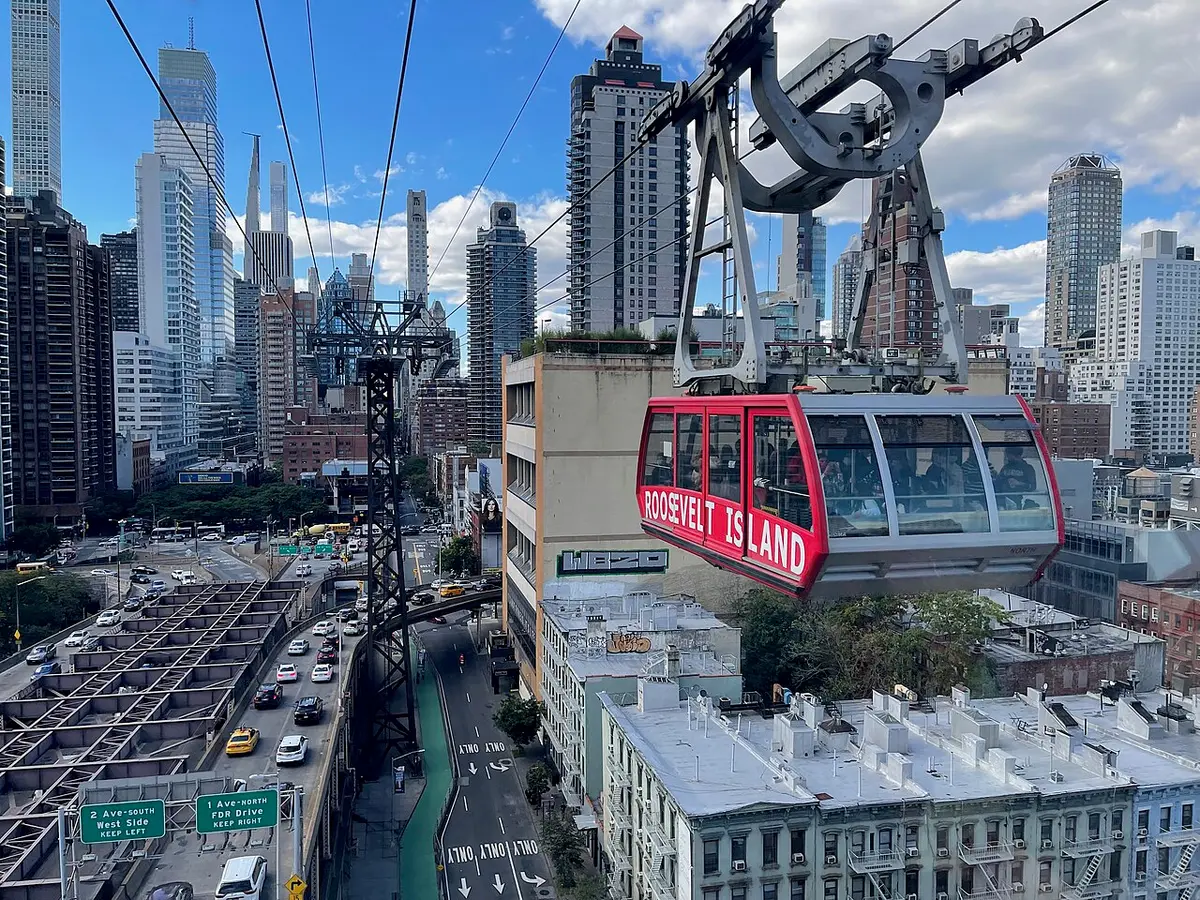
Brownstone streets, a promenade above the harbor, the ferry landing Whitman wrote about and a carousel between two bridges, then the walk home to Manhattan with the skyline ahead.
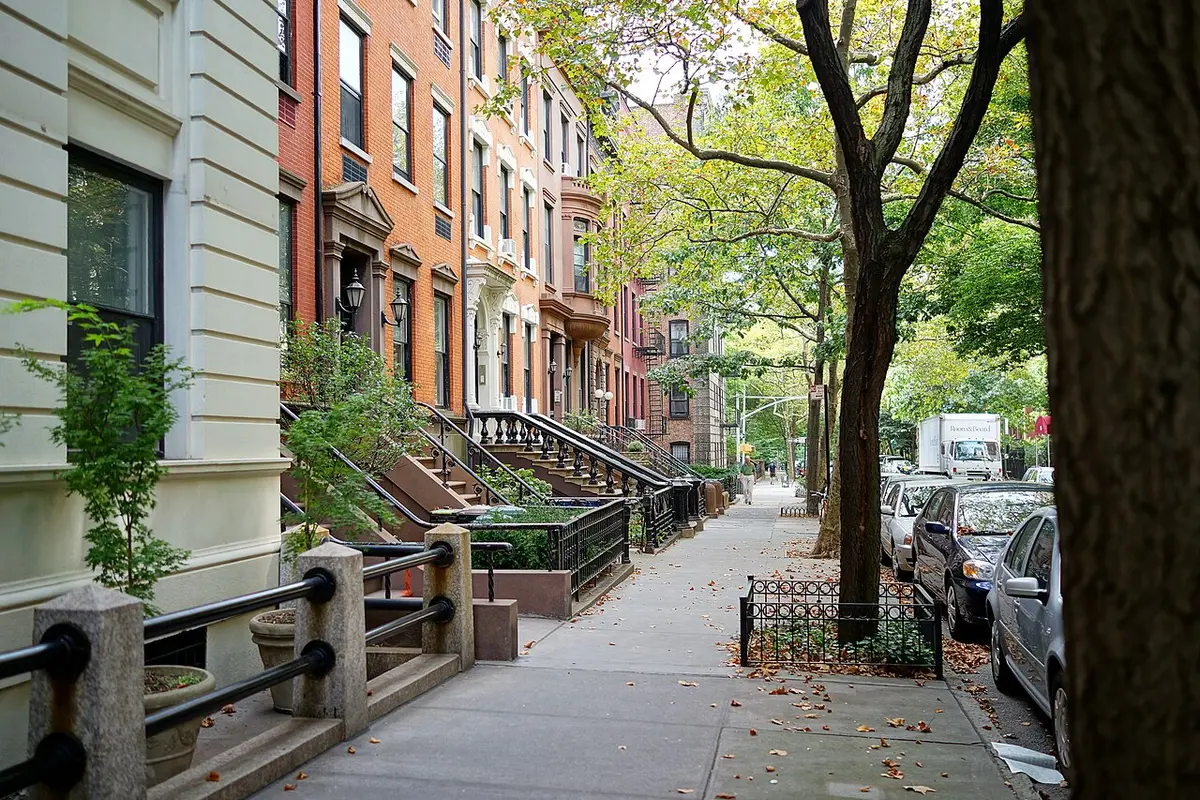
Take the 2 or 3 train to Clark Street and walk into Brooklyn Heights, which in 1965 became the city’s first protected historic district. Its quiet streets are lined with brick and brownstone row houses from the 1800s, and a few near the water are named for fruit: Cranberry, Orange and Pineapple.
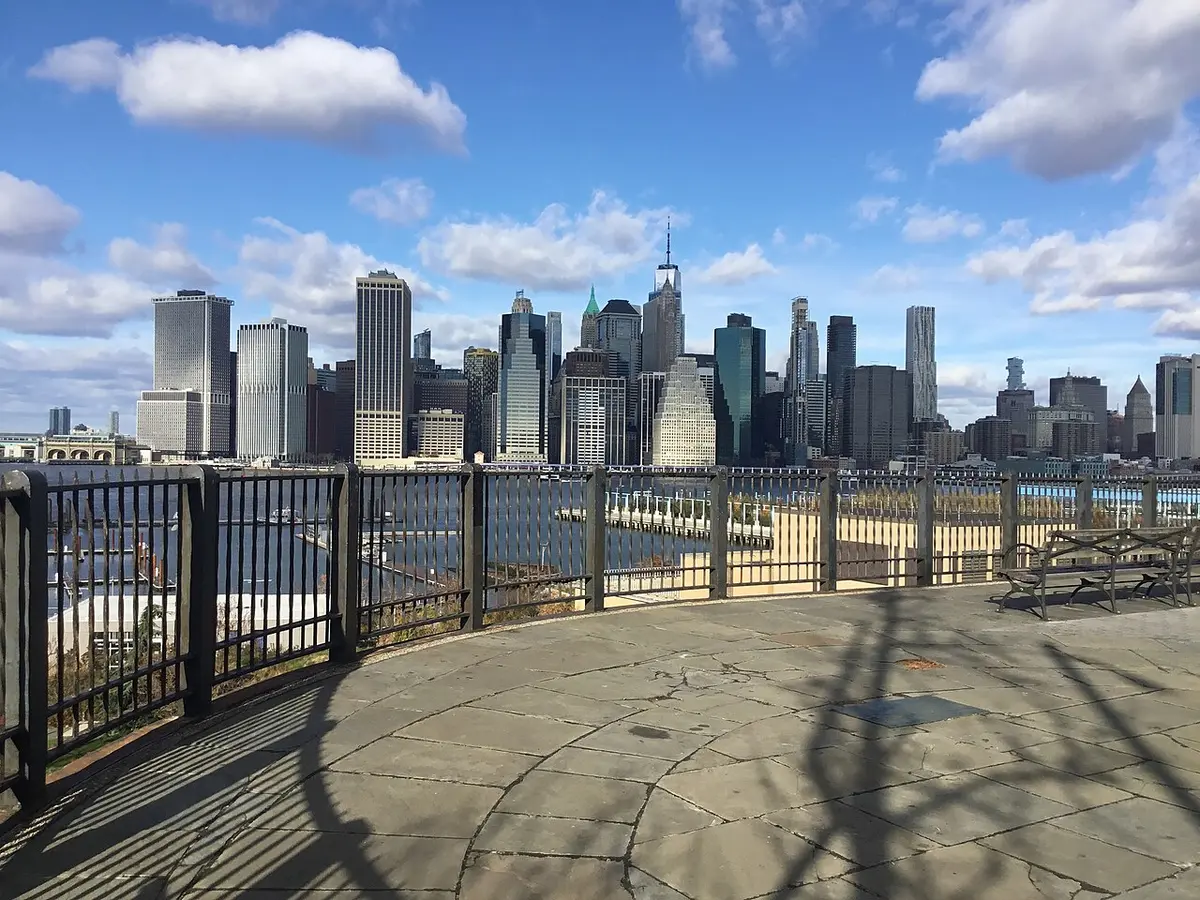
Follow Pierrepont Street to the Promenade, a walkway built in 1950 and 1951 over the expressway that runs along the bluff. Below you are the piers and the East River, straight across are the towers of Lower Manhattan, and out in the harbor to the left stands the Statue of Liberty.
At the north end of the Promenade, turn inland to Orange Street. Plymouth Church was the pulpit of Henry Ward Beecher, the antislavery preacher, and Abraham Lincoln sat in its pews in 1860. A block north, at the far end of Cranberry Street, stood the print shop where the first Leaves of Grass came off the press in 1855; Whitman set some of the type himself.
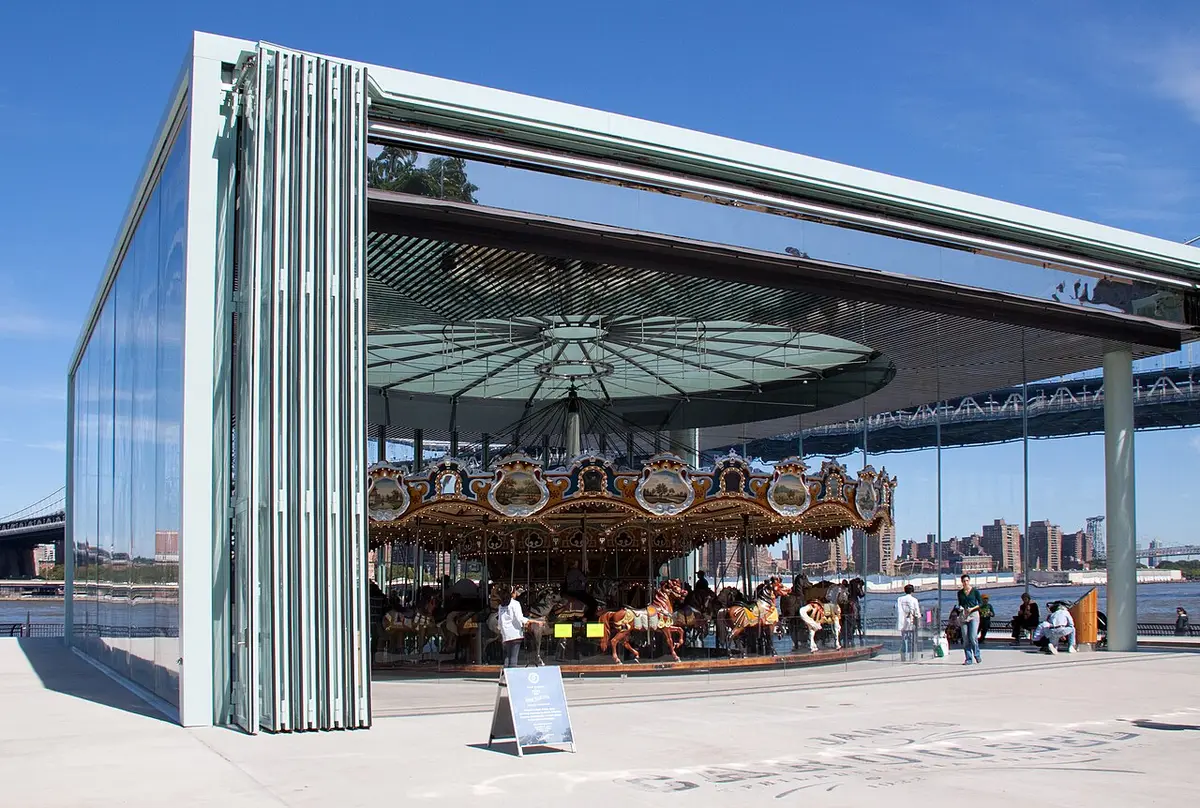
Walk down Old Fulton Street to the water. Before the bridge, the ferries to Manhattan crossed from here, and on the night of August 29, 1776, Washington’s beaten army slipped across the river from this shore, the last boats hidden by morning fog. Lines from Whitman’s Crossing Brooklyn Ferry are set into the railing of the landing. Next to it, Jane’s Carousel, built in 1922 and restored by Jane Walentas over more than two decades, turns inside a glass pavilion by the architect Jean Nouvel.
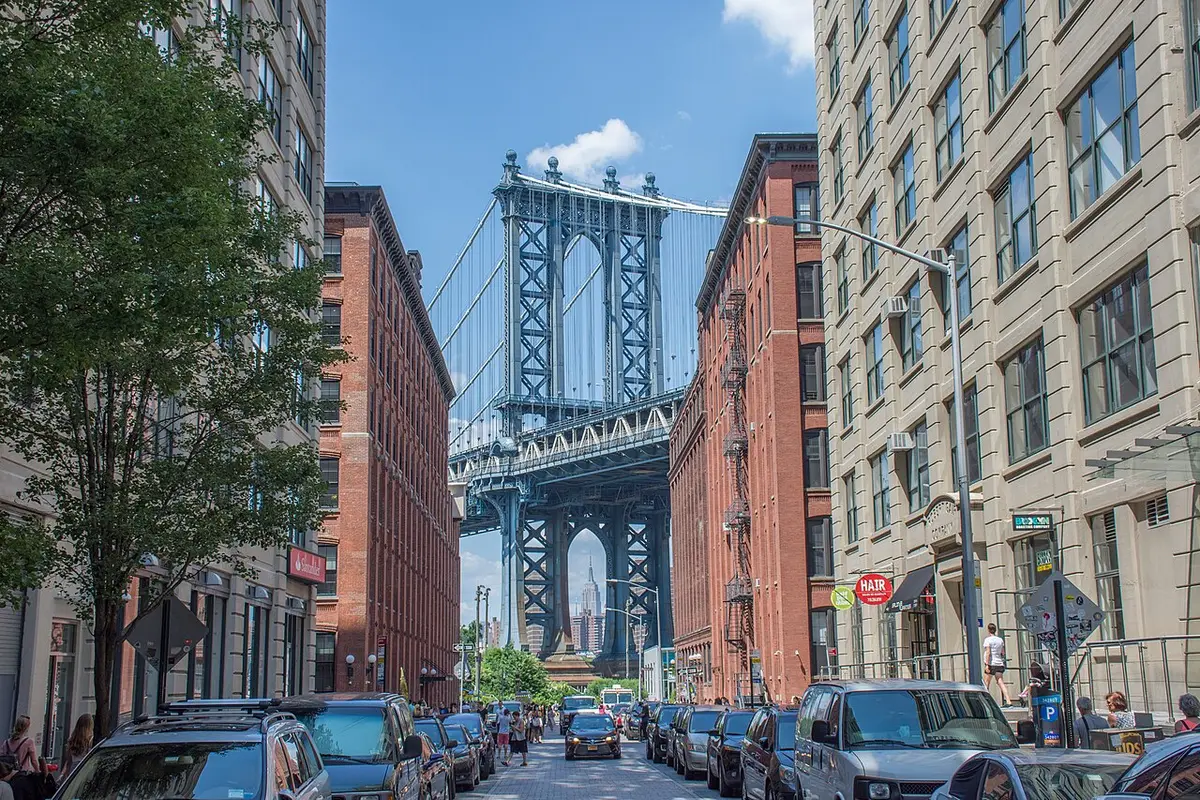
Walk up Water Street to Washington Street in DUMBO, where the Manhattan Bridge fills the end of the block and the Empire State Building sits inside one of its arches. Then climb the stairs on Washington Street to the Brooklyn Bridge walkway and cross back to Manhattan: the stone towers come closer, the cables fan out overhead, and the walk ends at City Hall Park.
Where to stay
Pick the neighborhood first, then the hotel. Each link opens a map of places to stay around it.
Midtown
First visitTimes Square, Rockefeller Center, Grand Central and the Broadway theaters, with most subway lines meeting here. Central, with the most hotels in the city; crowded and loud around Times Square, and short on neighborhood life.
See hotels in MidtownLower Manhattan
SightseeingWall Street, the 9/11 Memorial and the Battery, where the ferries leave for the Statue of Liberty, on the oldest streets in the city. Quiet at night and on weekends, once the offices empty.
See hotels in Lower ManhattanGreenwich Village
CouplesTree-lined streets of brick townhouses around Washington Square, with jazz clubs, small restaurants and the crooked lanes of the West Village. Charming and central, with few hotels, and those cost more.
See hotels in Greenwich VillageUpper West Side
FamiliesBrownstone blocks between Central Park and Riverside Park, with the American Museum of Natural History and Lincoln Center. Calm and residential, with express trains to Midtown.
See hotels in Upper West SideWilliamsburg
Food and nightlifeBrooklyn’s liveliest neighborhood, one stop from Manhattan on the L train: restaurants, bars, vintage shops and waterfront parks facing Midtown. Smorgasburg’s food market takes over the waterfront on Saturdays in season.
See hotels in WilliamsburgLong Island City
BudgetAcross the East River in Queens, a stop or two from Midtown on the subway, with newer hotels that often cost less than Manhattan’s, the MoMA PS1 art center and skyline views from Gantry Plaza State Park.
See hotels in Long Island CityThe 10 best budget hotels
Well-reviewed hotels at the lower end of New York’s prices, best-reviewed first. On a weeknight in November 2026 they cost about €260 to €335 for two; prices change daily, so check your own dates.
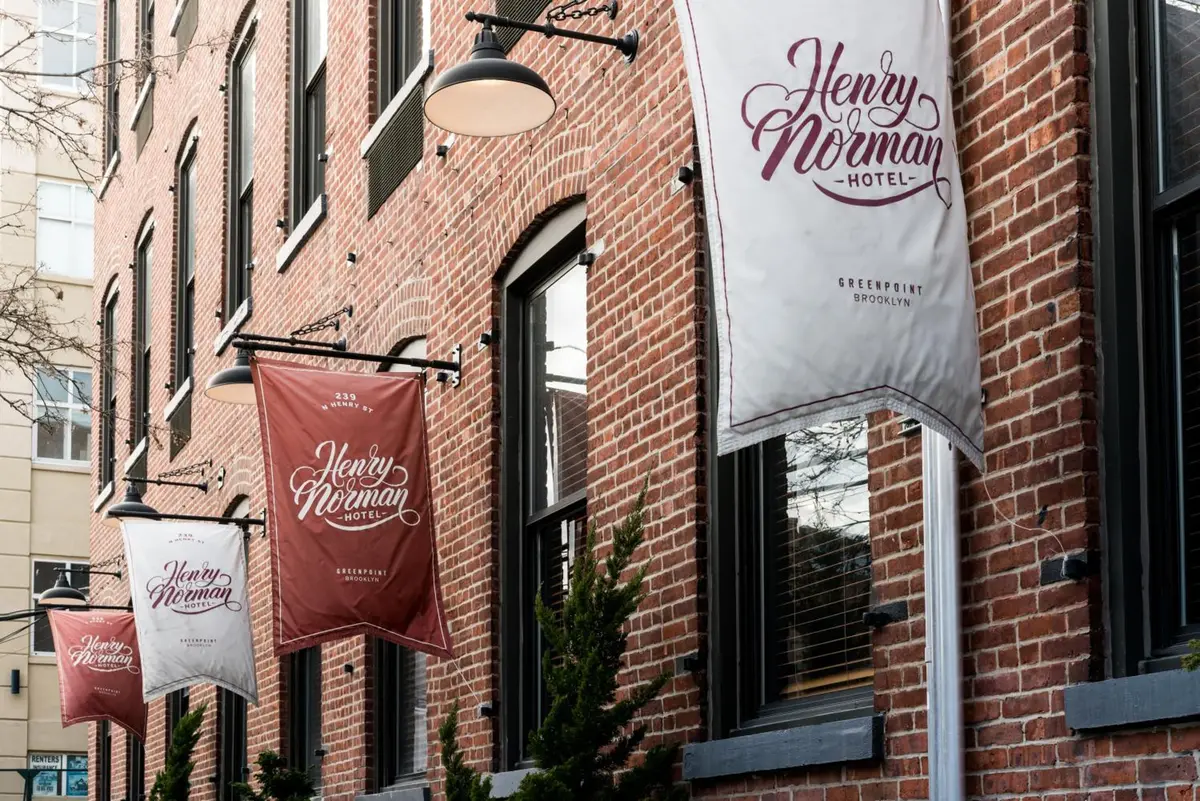 01
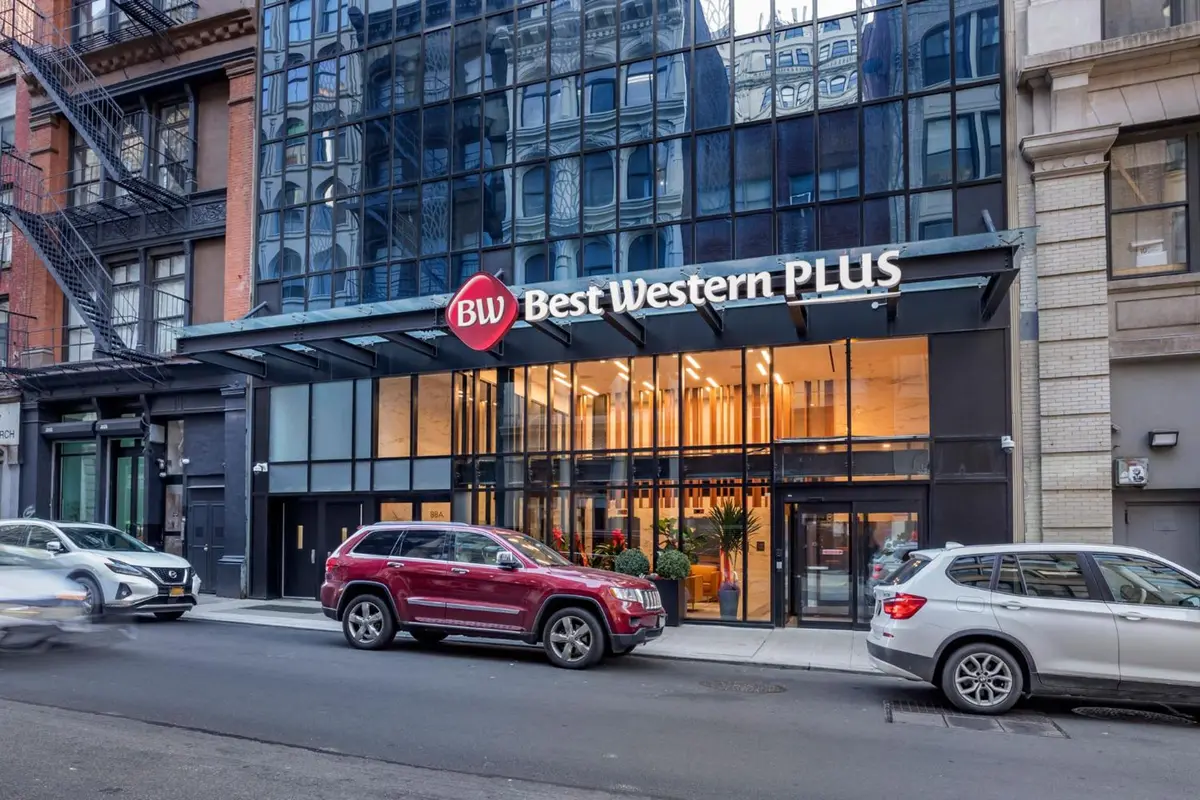 02
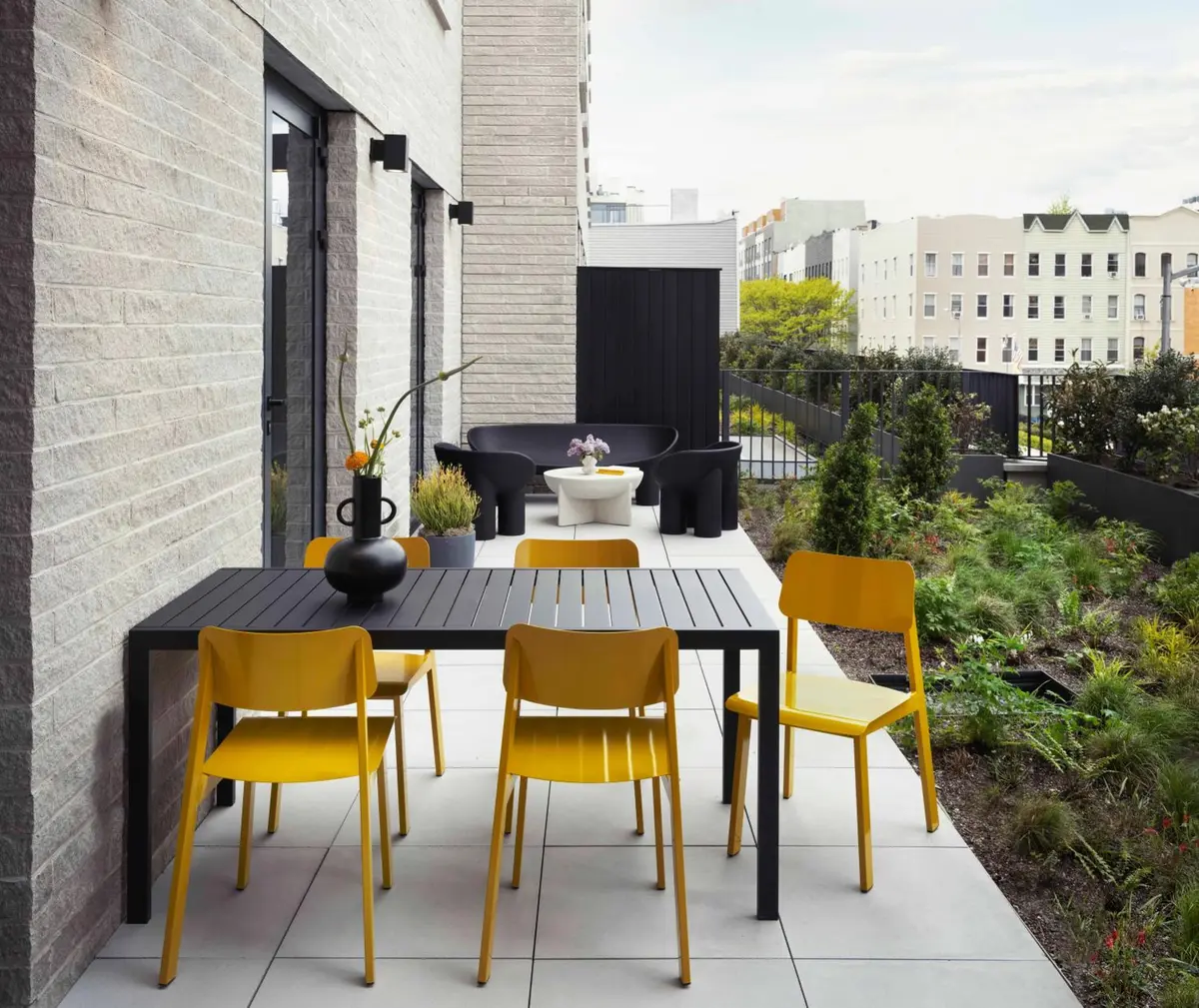 03
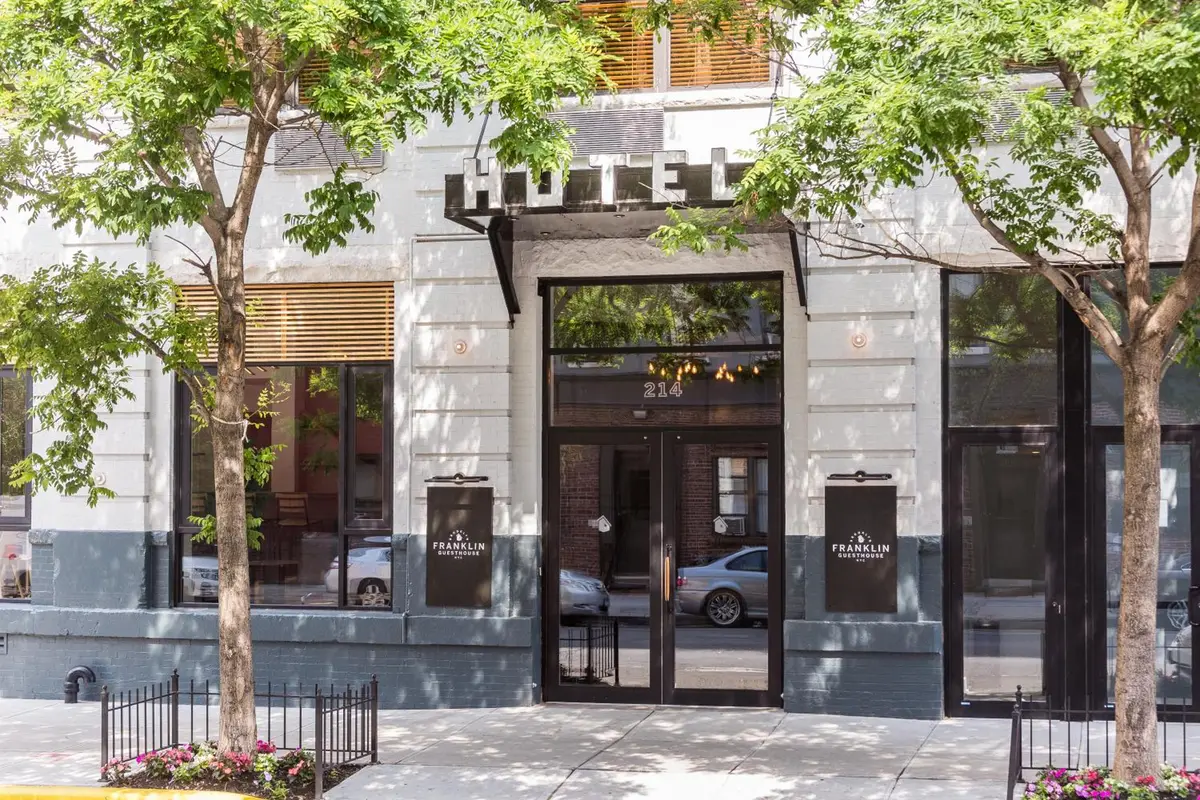 04
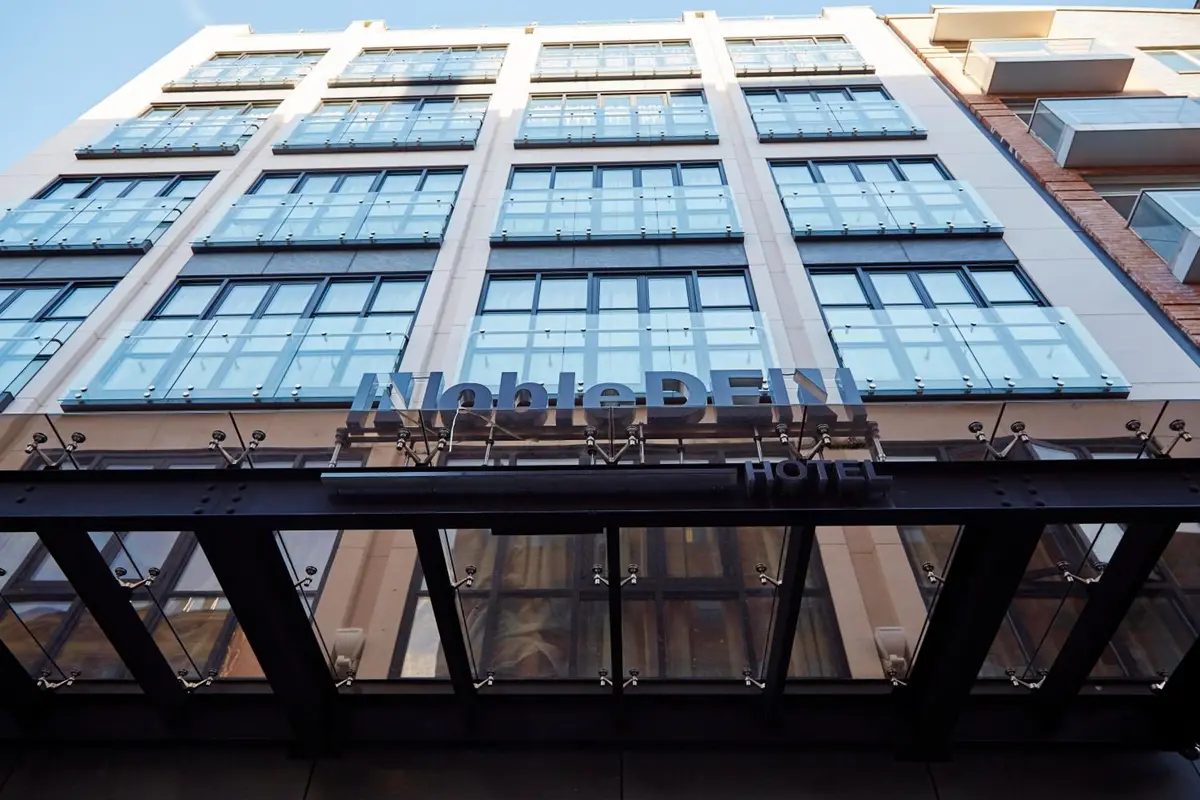 05
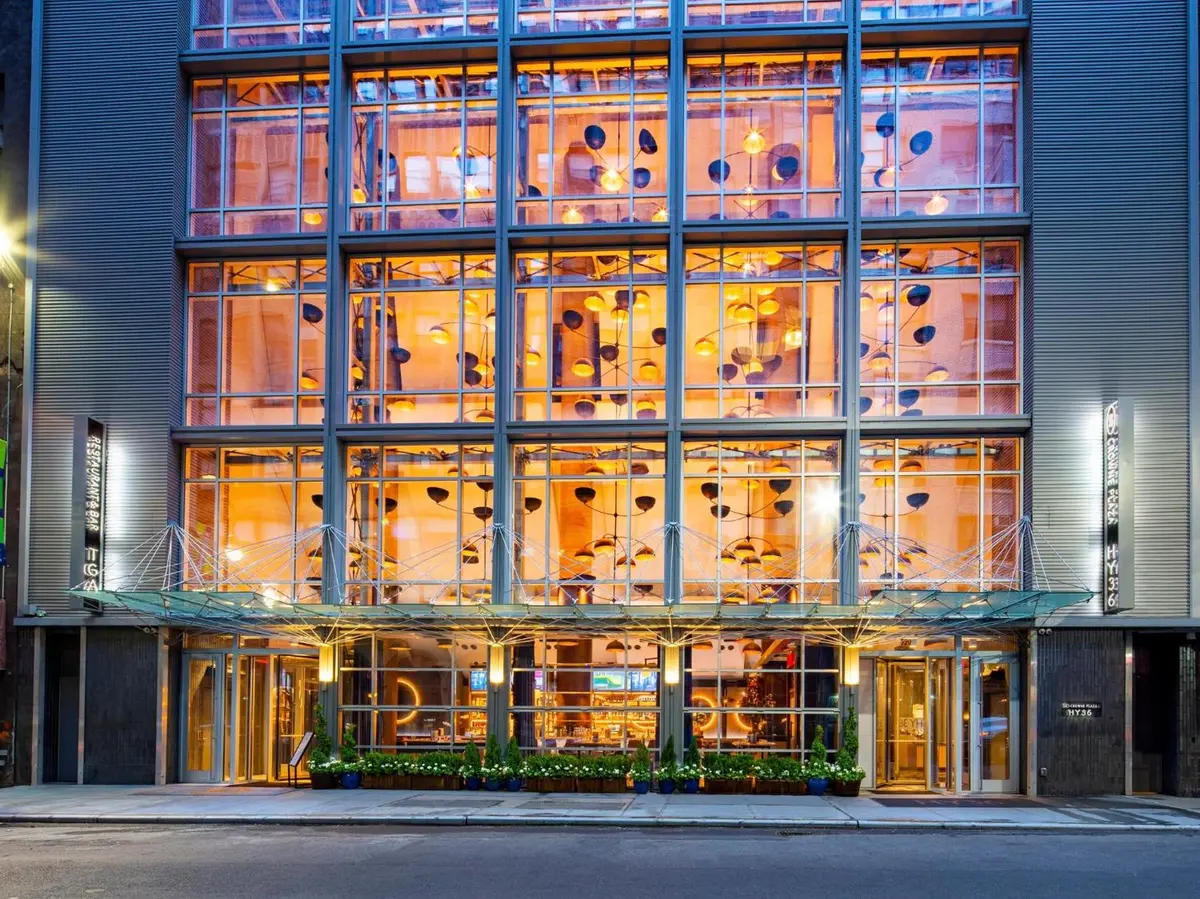 06
Crowne Plaza HY36 Midtown Manhattan by IHG
9.4954 reviewsHudson Yards
13 min walk to Times Square
See prices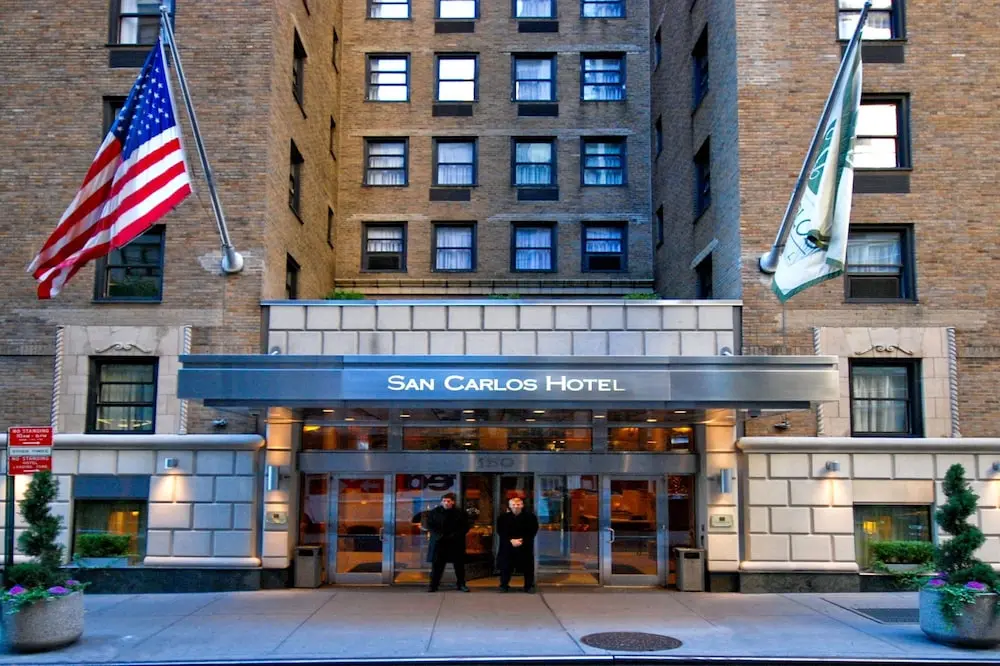 07
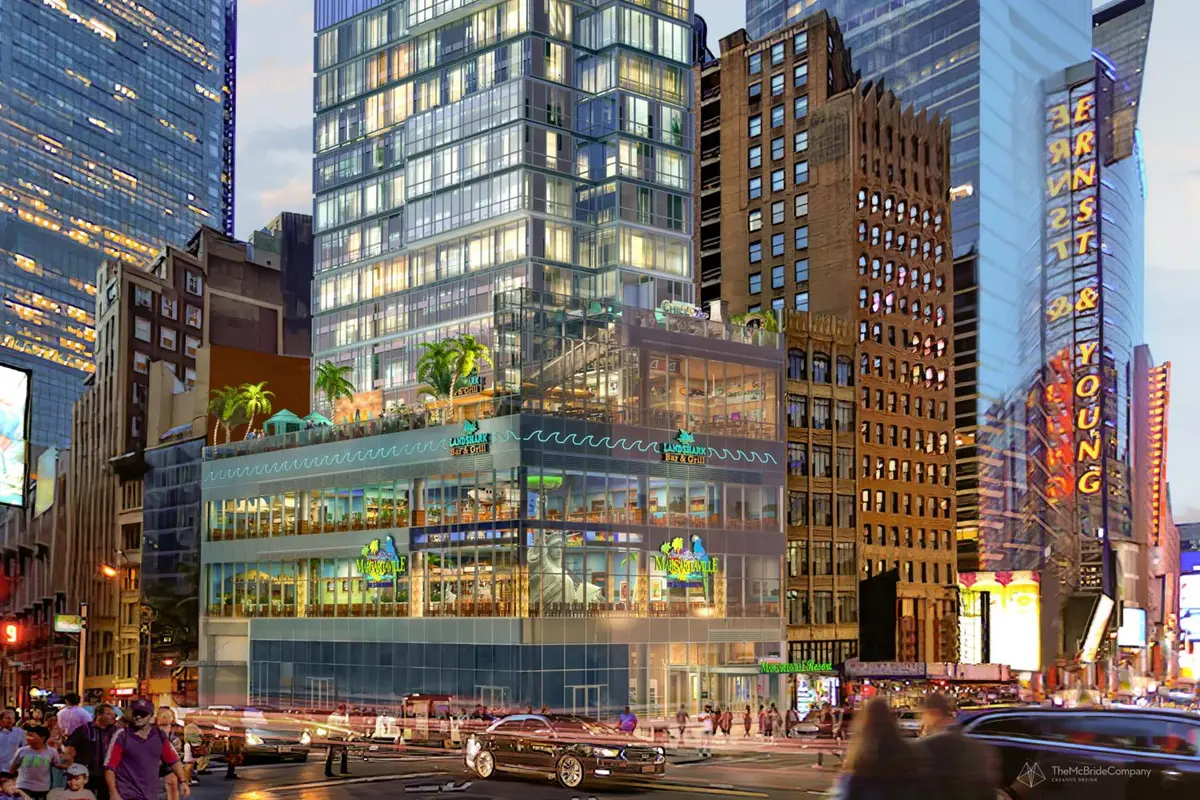 08
 09
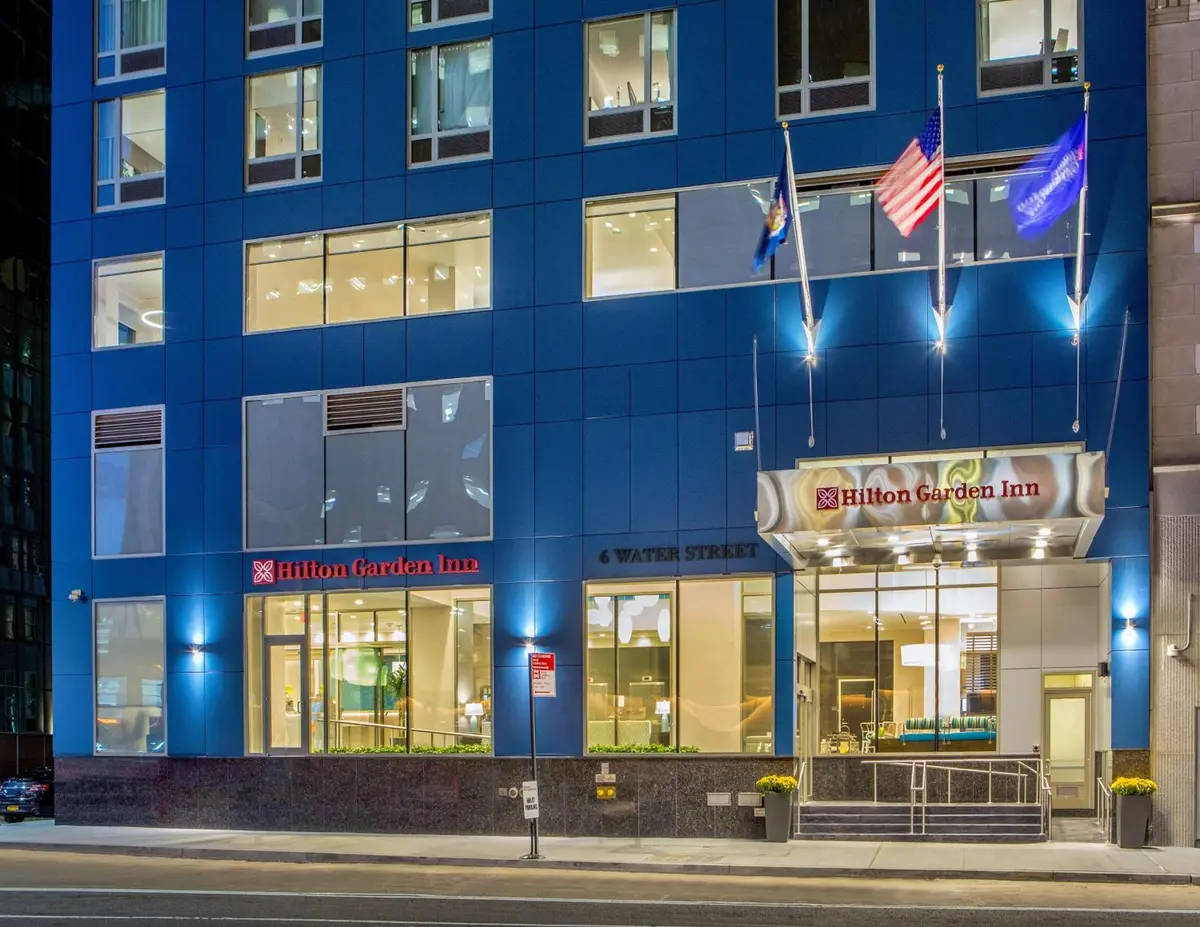
Hilton Garden Inn NYC Financial Center/Manhattan Downtown
9.26,177 reviewsLower Manhattan
16 min walk to the 9/11 Memorial
See prices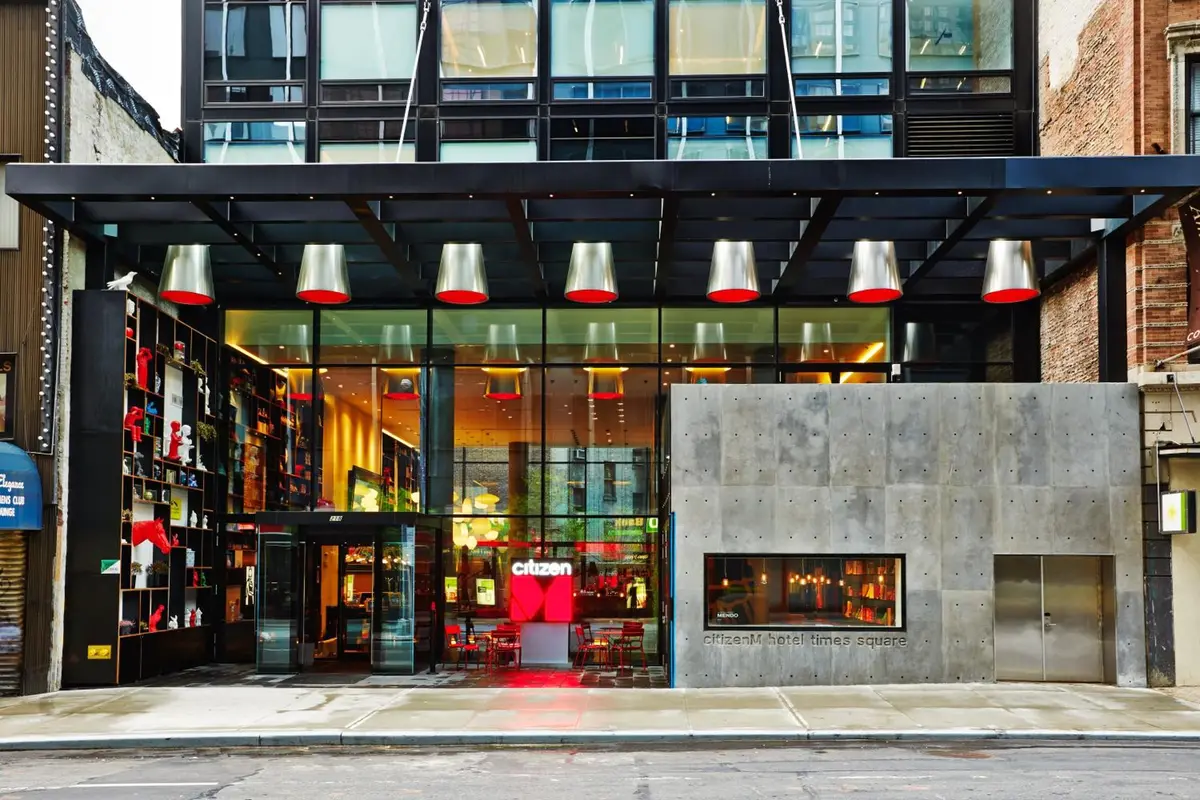 10
Hotel links go to Stay22. If you book, we may earn a commission, at no cost to you.
Food and drink
New York’s classics came with its immigrants: pizza with the Italians, bagels, pastrami and knishes with Jewish families from Eastern Europe, and every wave since has added its own. Lunch is often quick, a slice or a deli sandwich; dinner starts around 7pm, and popular restaurants need booking.
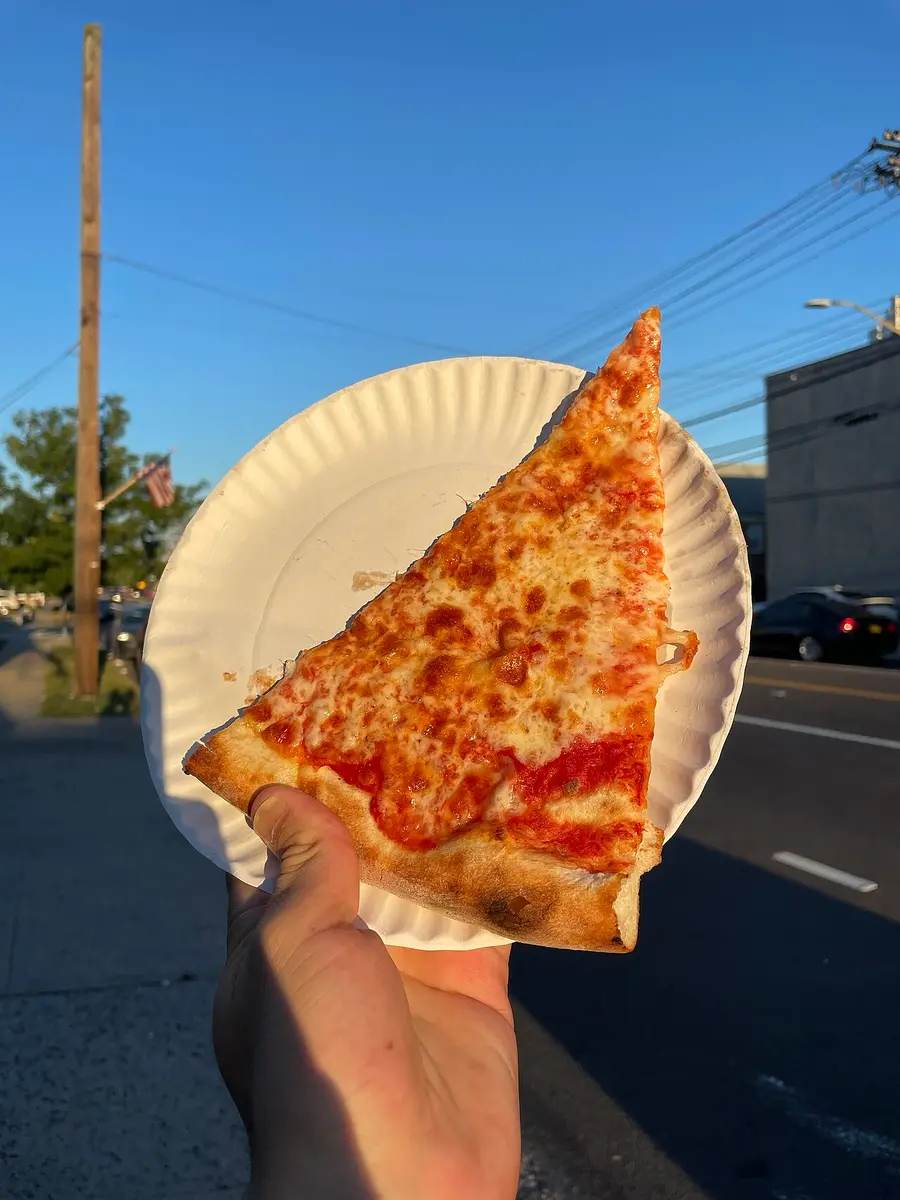
A slice
Thin, wide and foldable, sold by the slice from counters all over the city. Lombardi’s in Little Italy, licensed in 1905, is often called the first pizzeria in the United States.
Photo: Wil540 art, CC BY-SA 4.0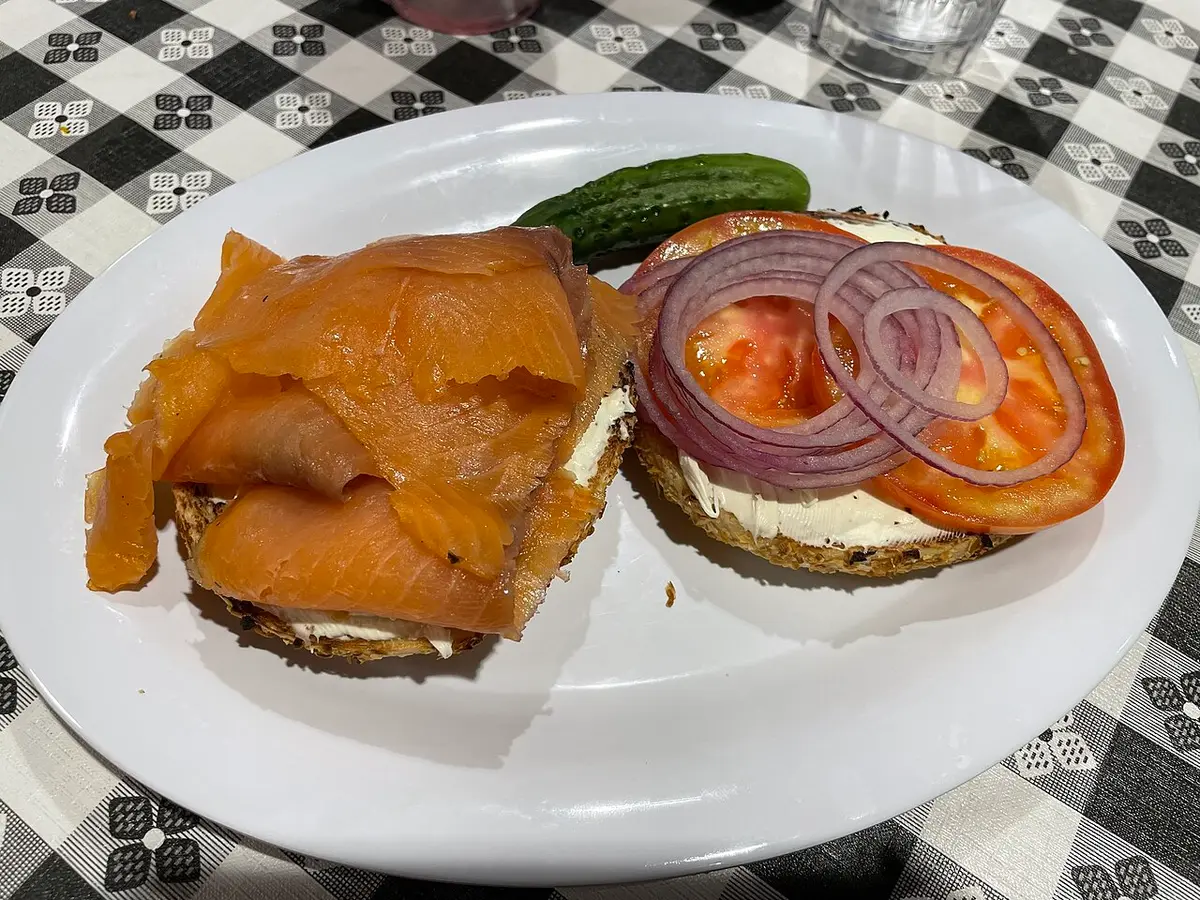
Bagel with lox
A bagel boiled, then baked, spread with cream cheese, the schmear, and topped with smoked salmon, red onion, tomato and capers.
Photo: LinguisticsGirl.Librarian, CC0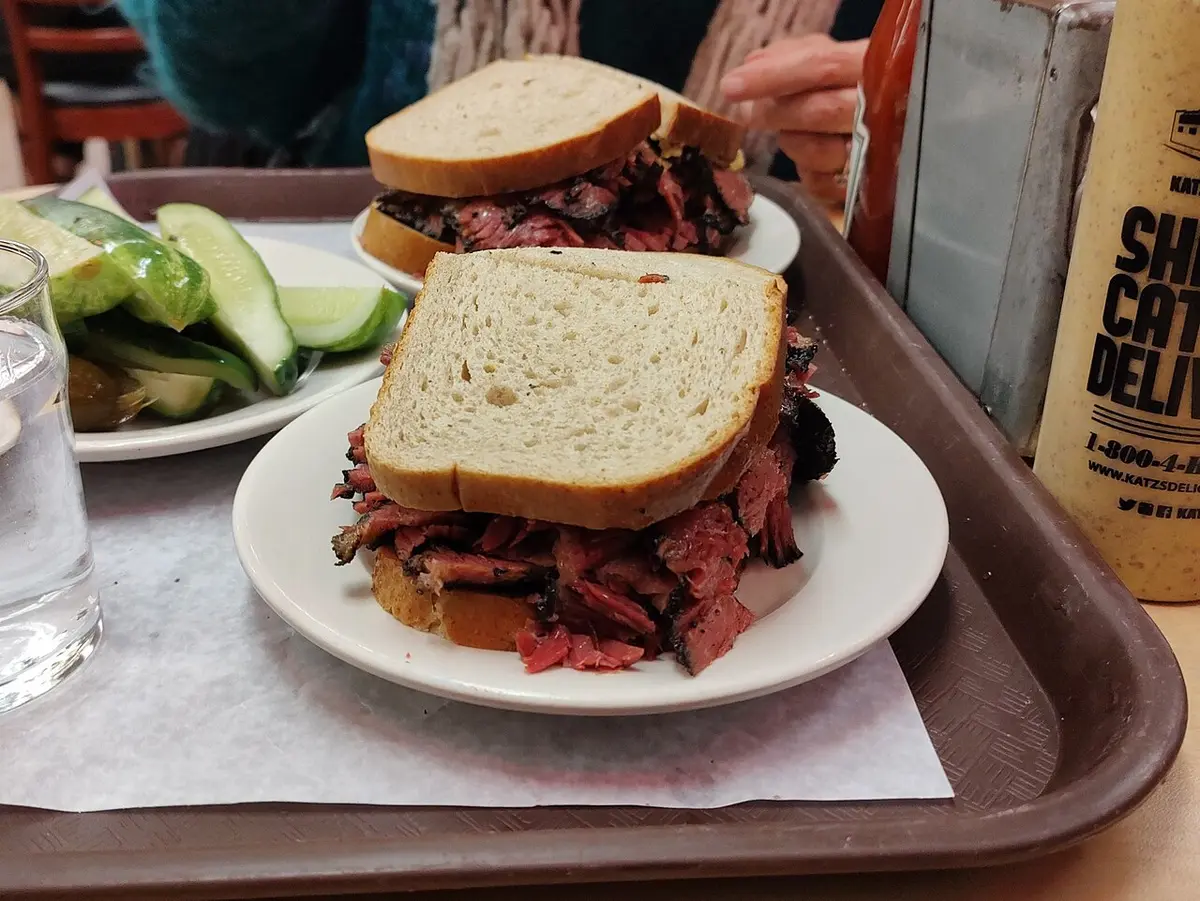
Pastrami on rye
Beef brisket cured, smoked and steamed, sliced thick and piled between two slices of rye with mustard. Katz’s on East Houston Street has served it since 1888.
Photo: Gerda Arendt, CC BY-SA 4.0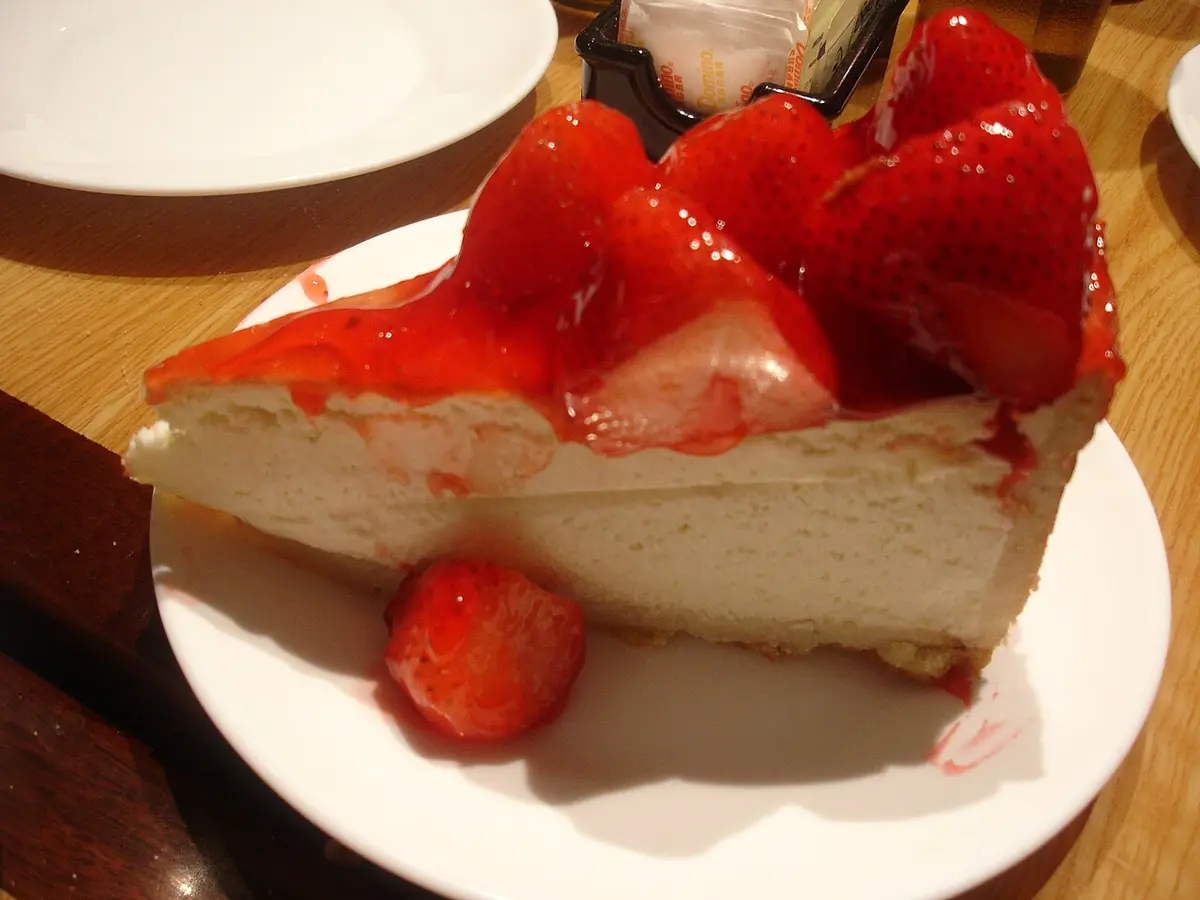
New York cheesecake
Dense and rich, made with cream cheese on a thin crust, plain or under fruit. Junior’s in Brooklyn has baked it since 1950.
Photo: Pilauricey, CC BY-SA 3.0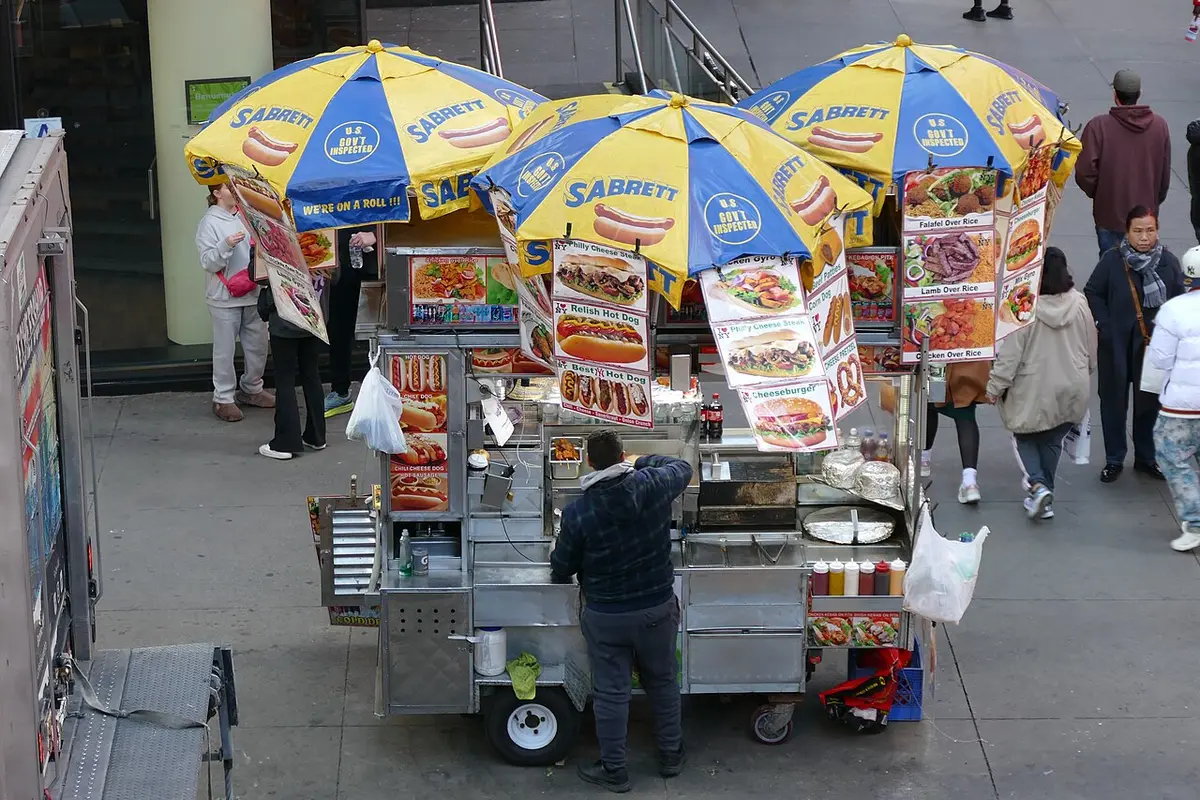
Hot dog
From a street cart, with mustard, sauerkraut or onions in a sweet tomato sauce. Nathan’s Famous has sold them at Coney Island since 1916.
Photo: Kritzolina, CC BY-SA 4.0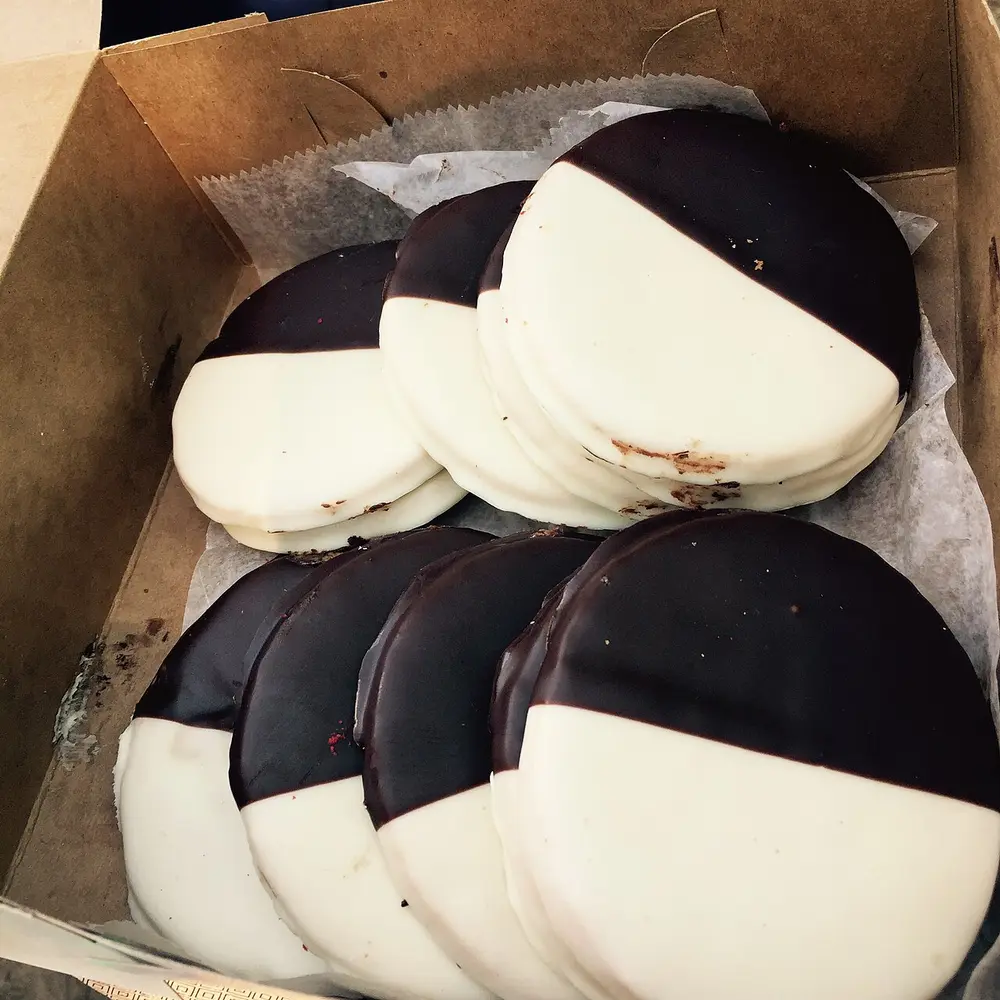
Black and white cookie
A soft, cakey cookie iced half in vanilla and half in chocolate, sold in delis and bakeries.
Photo: BrillLyle, CC0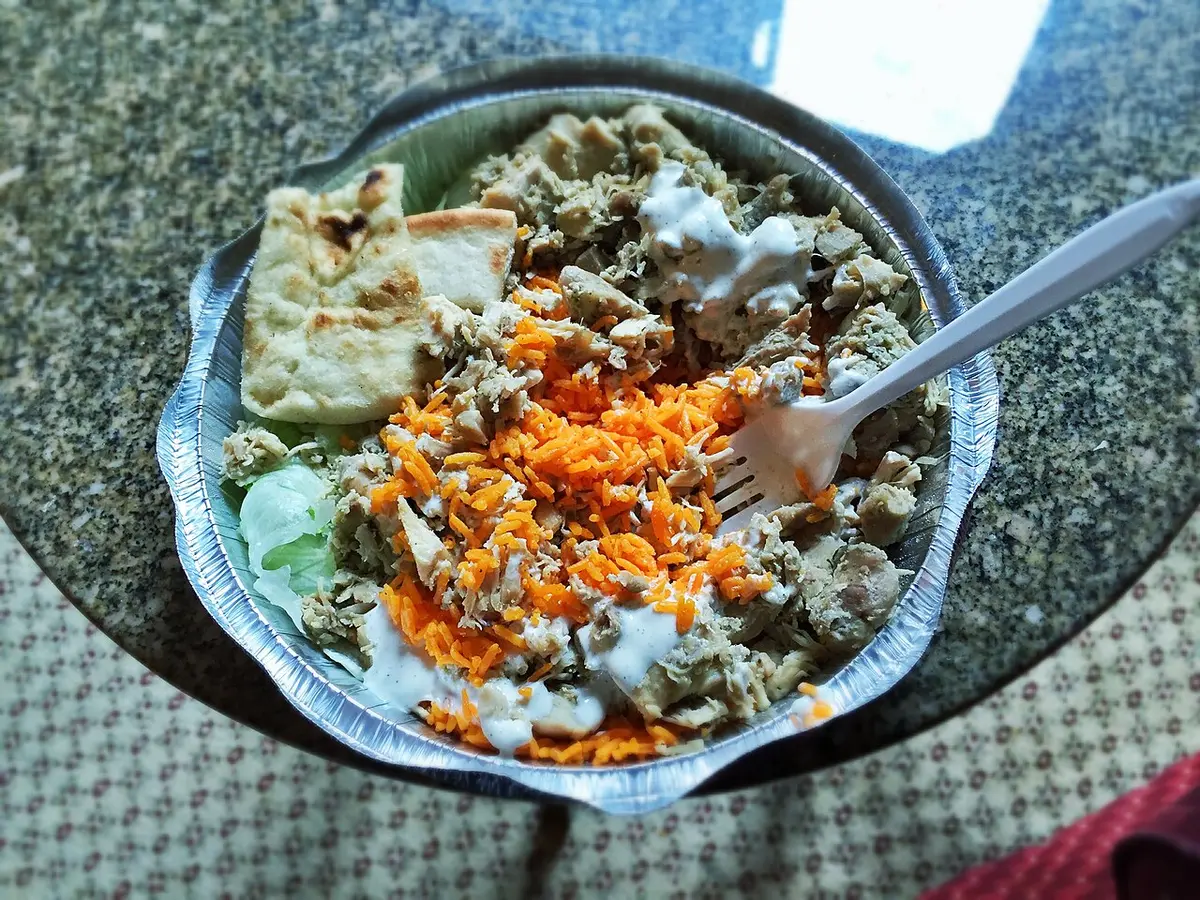
Chicken over rice
Chopped chicken on yellow rice with lettuce, white sauce and a fiery red one, from the halal carts on Midtown corners. The Halal Guys made it famous at 53rd Street and Sixth Avenue.
Photo: T.Tseng, CC BY 2.0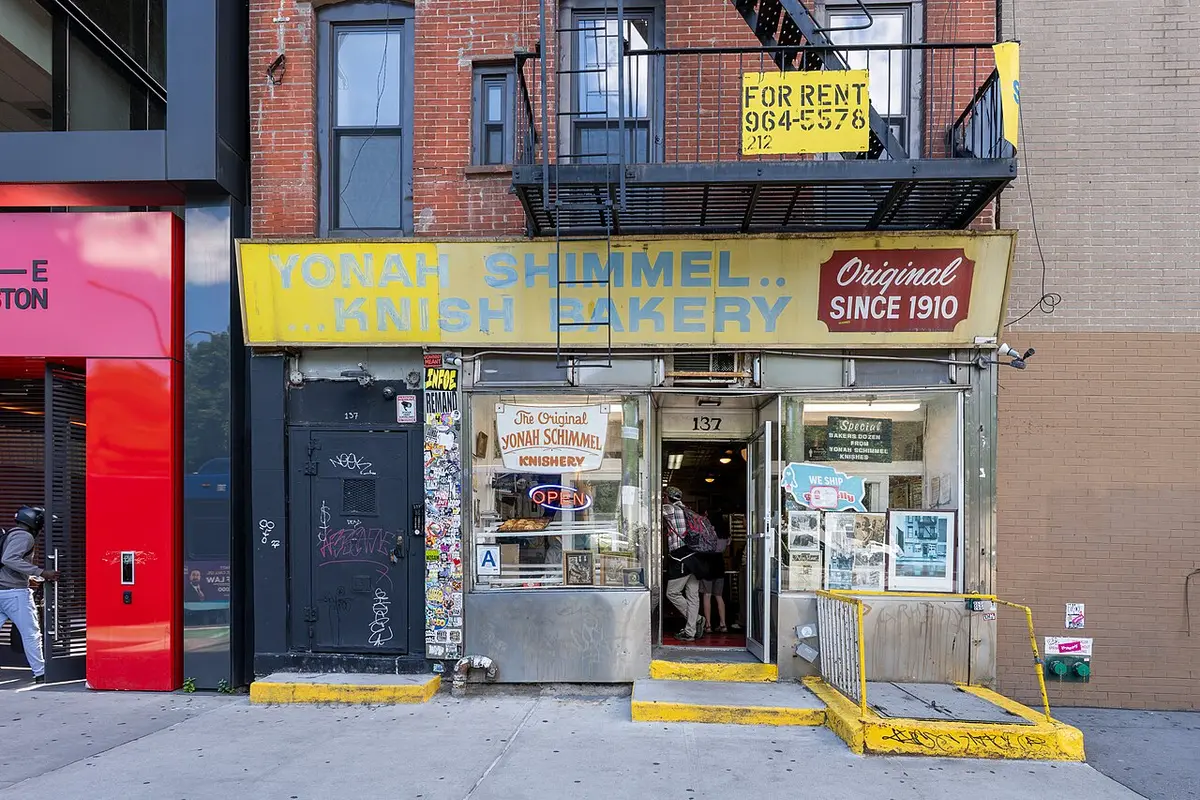
Knish
A baked pastry filled with potato, or kasha or spinach, brought by Jewish immigrants from Eastern Europe. Yonah Schimmel has baked them on East Houston Street since 1910.
Photo: Ajay Suresh, CC BY 4.0Eat pastrami, bagels and smoked fish on the Lower East Side, dumplings and noodles in Chinatown and in Flushing, Queens, the cooking of South Asia, Tibet and Latin America in Jackson Heights, and Italian on Arthur Avenue in the Bronx. From April to October, Smorgasburg fills the Williamsburg waterfront with food stalls on Saturdays and Prospect Park on Sundays.
When New York was New Amsterdam
A trading post, a wall, a canal and a governor with a wooden leg: how a Dutch company town at the tip of Manhattan became New York, and what it left on the map.
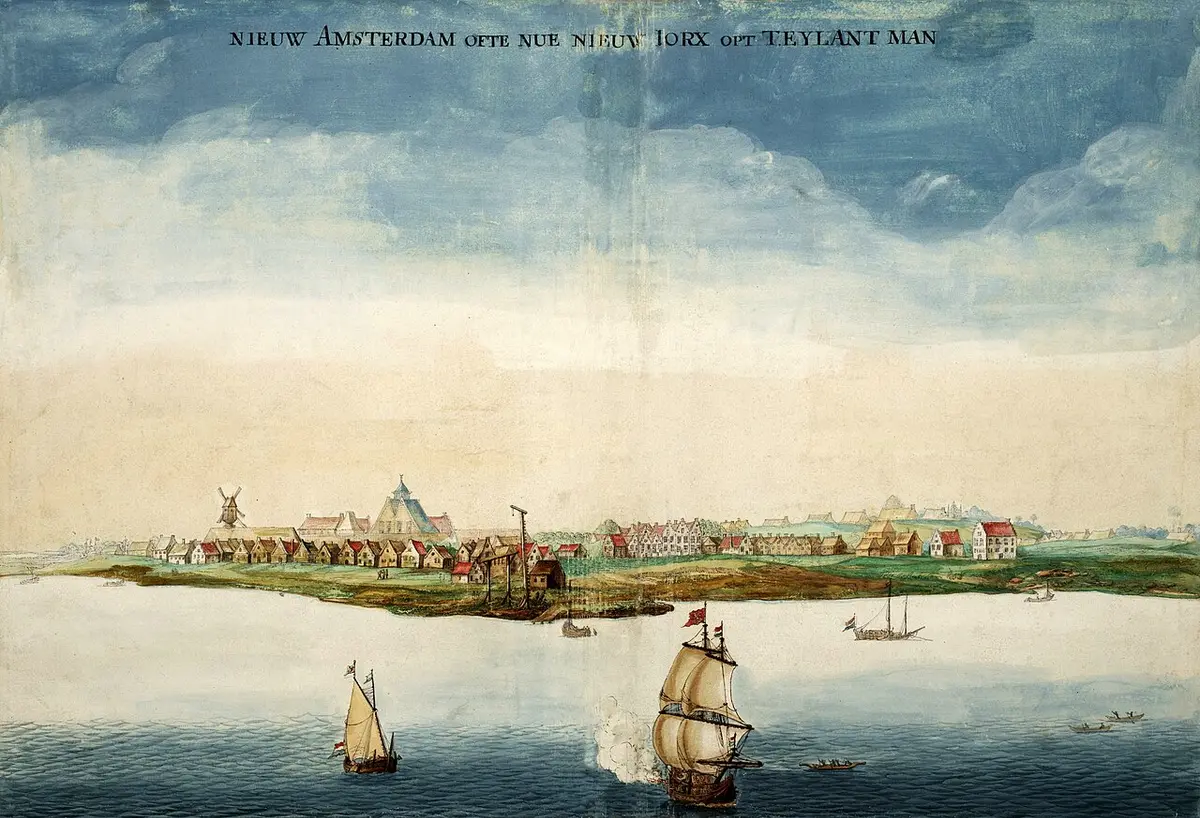
In September 1609 the Half Moon, a small ship of the Dutch East India Company commanded by the Englishman Henry Hudson, sailed into the harbor and up the river that now carries his name. Hudson was looking for a way to Asia. He found forests, marshes and oyster beds, and the Lenape, who fished the shores in summer and farmed inland. The word Manhattan comes from their language; what it meant is still argued over.
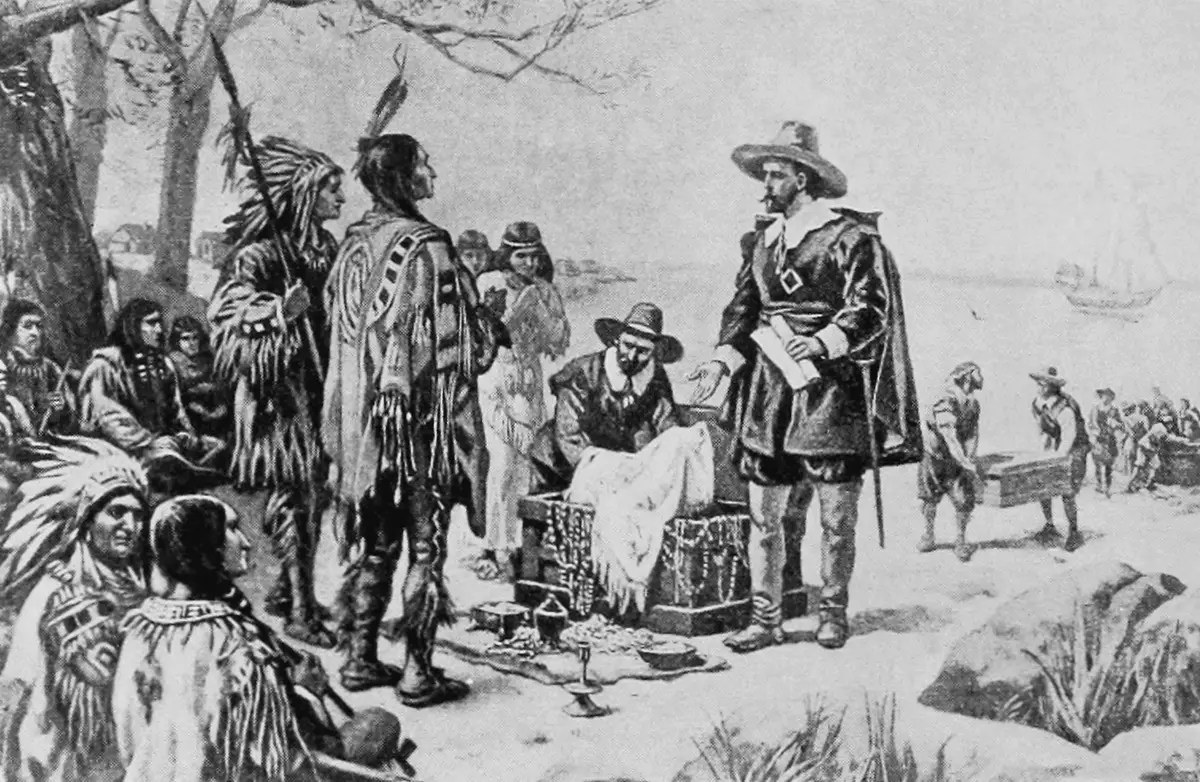
The Dutch came back for beaver pelts. In 1624 the West India Company sent about thirty families, most of them French-speaking Walloons. Some were set down on Nut Island, today’s Governors Island, and by 1625 work had begun on Fort Amsterdam at the southern tip of Manhattan. In 1626 the company’s director, Peter Minuit, bought the island from the Lenape for goods worth 60 guilders, a price known from a single letter written in the Netherlands that November. The famous 24 dollars is a 19th-century conversion, and the Lenape probably understood the deal as sharing the land, not selling it.
New Amsterdam was a small company town, with a windmill, a church inside the fort and a canal down the middle of what is now Broad Street, which is why that street is so wide. Enslaved Africans owned by the company, first brought to the colony in the 1620s, did much of the building. In 1653, with England and the Dutch Republic at war, they dug the trench for a timber wall across the island at the northern edge of town; the lane beside it became Wall Street, and the English took the wall down in 1699. In 1658 the people of Brewers’ Street paid to have it laid with cobbles, the first paved street in the town, and it has been Stone Street ever since.
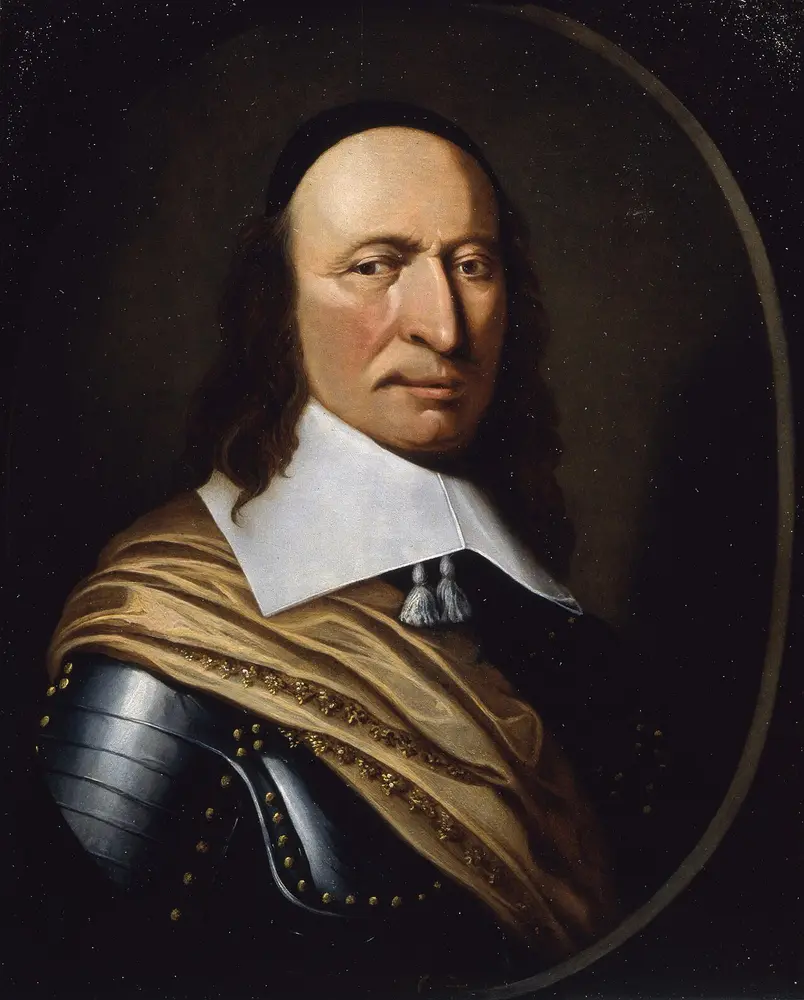
The last director, Peter Stuyvesant, arrived in 1647. He had lost his right leg to a cannonball in an attack on the island of Saint Martin and walked on a wooden one, and he ran the colony with a hard hand. When 23 Jewish refugees from Dutch Brazil landed in 1654, he tried to send them away, and the company overruled him. When he persecuted Quakers, the townsmen of Vlissingen, now Flushing in Queens, sent him a protest in 1657 that is remembered as an early plea for freedom of religion. A French Jesuit who passed through in 1643 had already been told that eighteen languages were spoken in the town.
Forty years of Dutch rule left a street plan, a trading habit and a map full of Dutch names.
In the late summer of 1664 four English frigates anchored off the town. Charles II had granted the whole colony to his brother James, Duke of York, and the fort was short of powder in a town with no wish for a siege. Stuyvesant is said to have torn up the letter demanding surrender, but the leading townsmen petitioned him to give in, and in September he did, without a shot. The English renamed the town New York. The Dutch took it back in 1673 and called it New Orange, then handed it over for good in 1674 under the Treaty of Westminster.
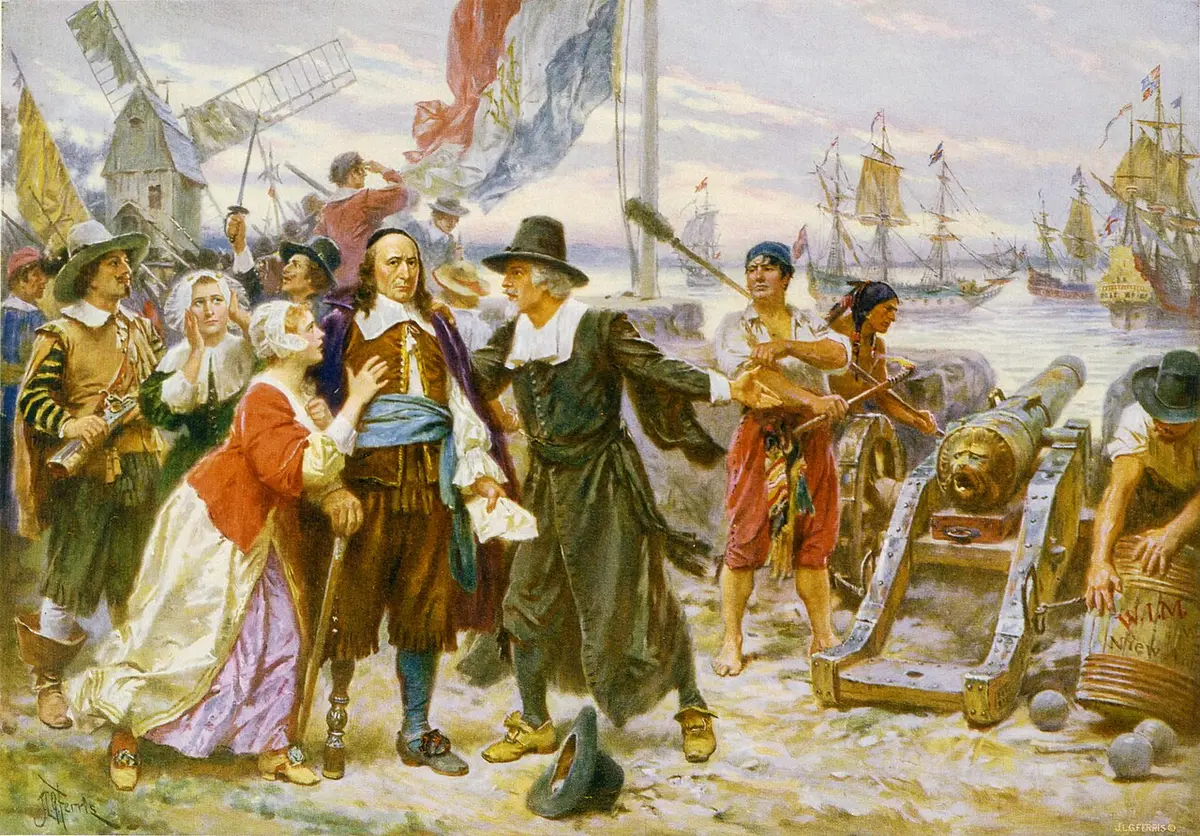
Stuyvesant, after a voyage home to answer for the surrender, spent his last years on his farm, his bouwerij, and died there in 1672; he is buried at St. Mark’s Church in-the-Bowery, on land that was part of it. The rest is on the map: the Bowery, Harlem after Haarlem, Brooklyn after Breukelen, Flushing after Vlissingen, Staten Island after the Dutch States General, and the Bronx after Jonas Bronck, who farmed there from 1639. At 85 Broad Street the outline of the Stadt Huys, the Dutch city hall, is marked in the pavement, and the foundations of an English tavern of 1670 show through glass underfoot.
Art
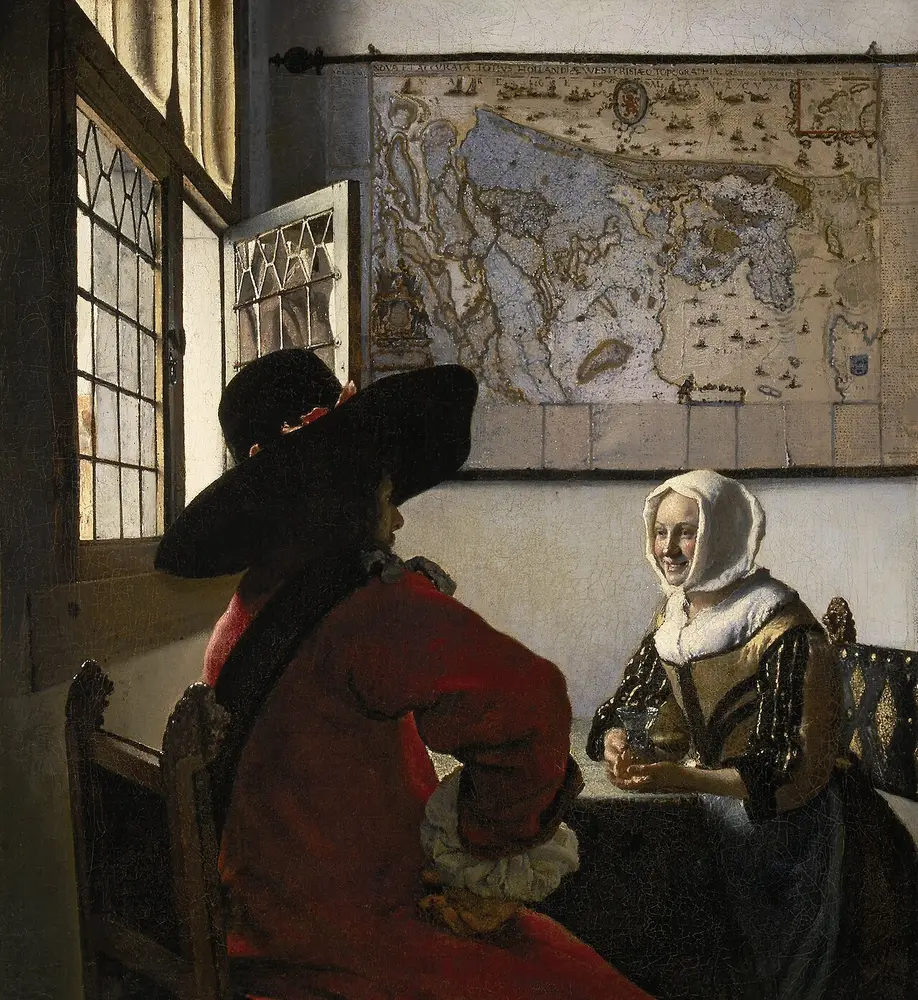
The Met
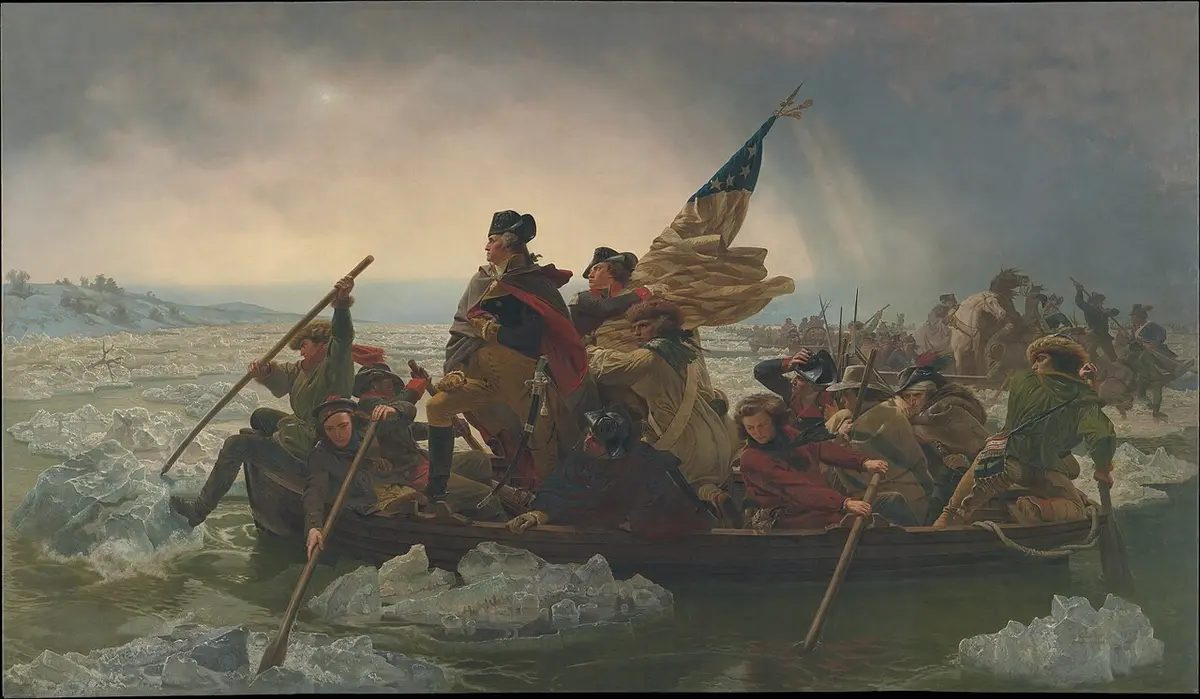
Five thousand years of art on Fifth Avenue: the Temple of Dendur in its glass hall, Washington Crossing the Delaware in the American Wing, and European painting from Rembrandt to Van Gogh. The Michael C. Rockefeller Wing, for the arts of Africa, the ancient Americas and Oceania, reopened in 2025 after a rebuild.
MoMA
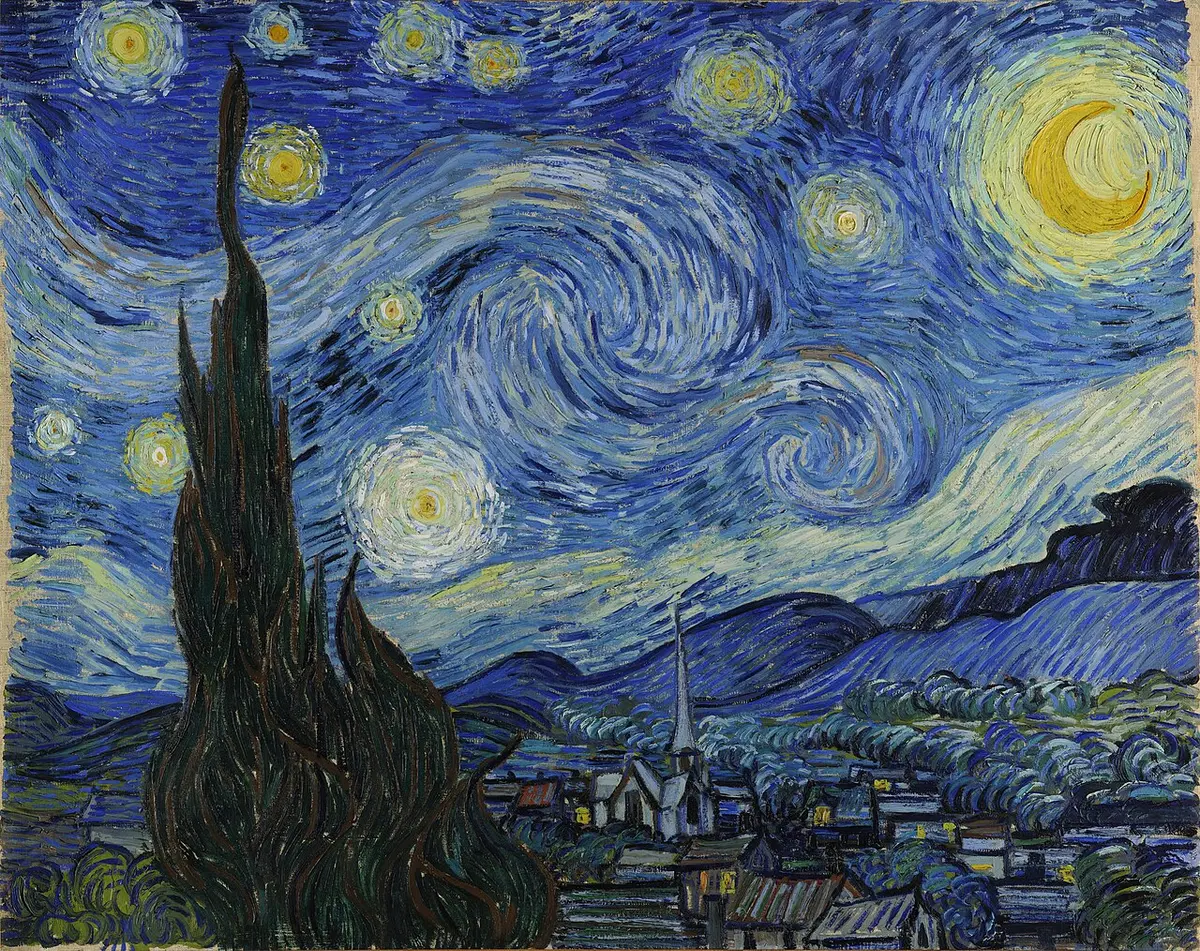
The Museum of Modern Art on West 53rd Street holds Van Gogh’s The Starry Night, Monet’s Water Lilies and Picasso’s Les Demoiselles d’Avignon, with design, film and photography alongside.
The Guggenheim
Frank Lloyd Wright’s white spiral on Fifth Avenue, opened in 1959. Take the elevator to the top and walk down the ramp.
The Frick Collection
Henry Clay Frick’s mansion on Fifth Avenue reopened in April 2025 after a renovation that opened its upstairs rooms to visitors for the first time. Three Vermeers, Rembrandts and Holbeins hang as they would in a private house; book a timed ticket.
The Cloisters and the Whitney
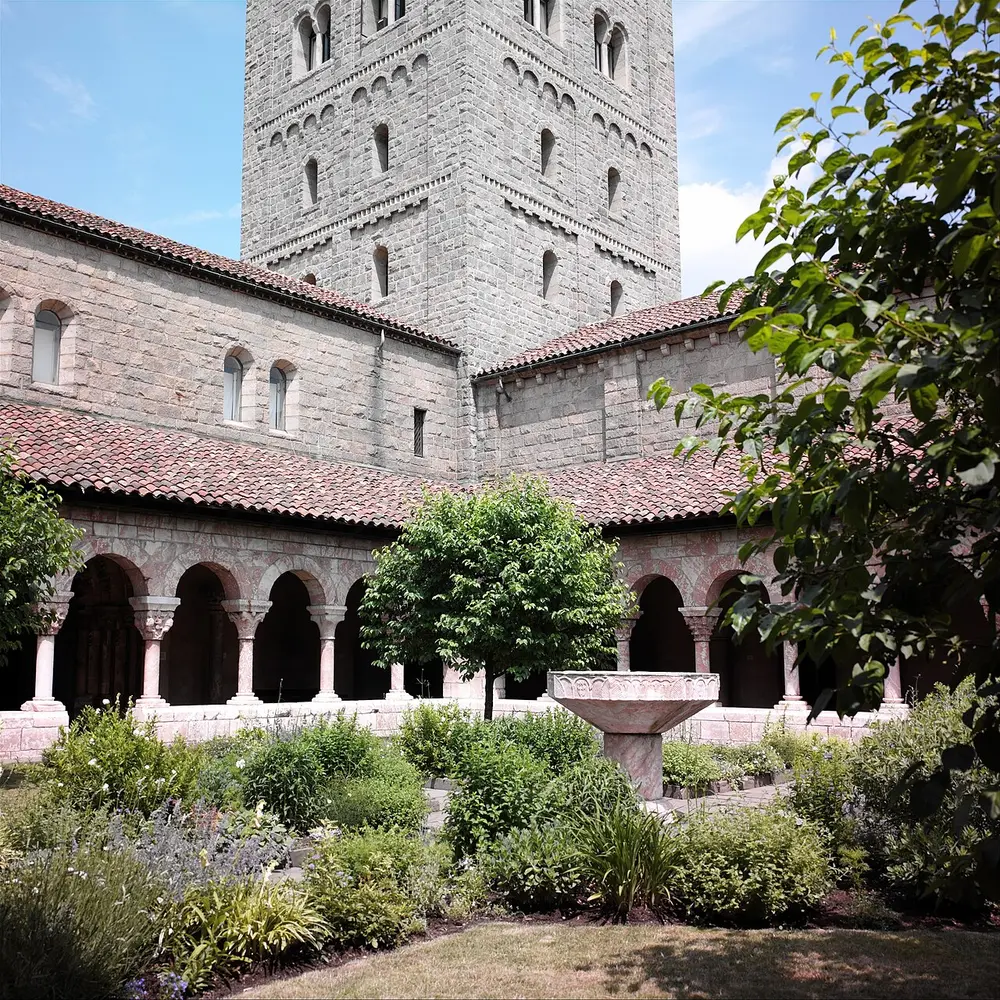
Uptown, the Met Cloisters shows medieval art, the Unicorn Tapestries among it, in rooms built from parts of French monasteries. Downtown, the Whitney’s building by Renzo Piano, open since 2015, holds American art at the south end of the High Line, with the galleries of Chelsea a short walk north.
Written in New York
A poet on the Brooklyn ferry, a whaling novelist who ended up inspecting cargo on the docks, a daughter of old New York society, and the voice of Harlem.
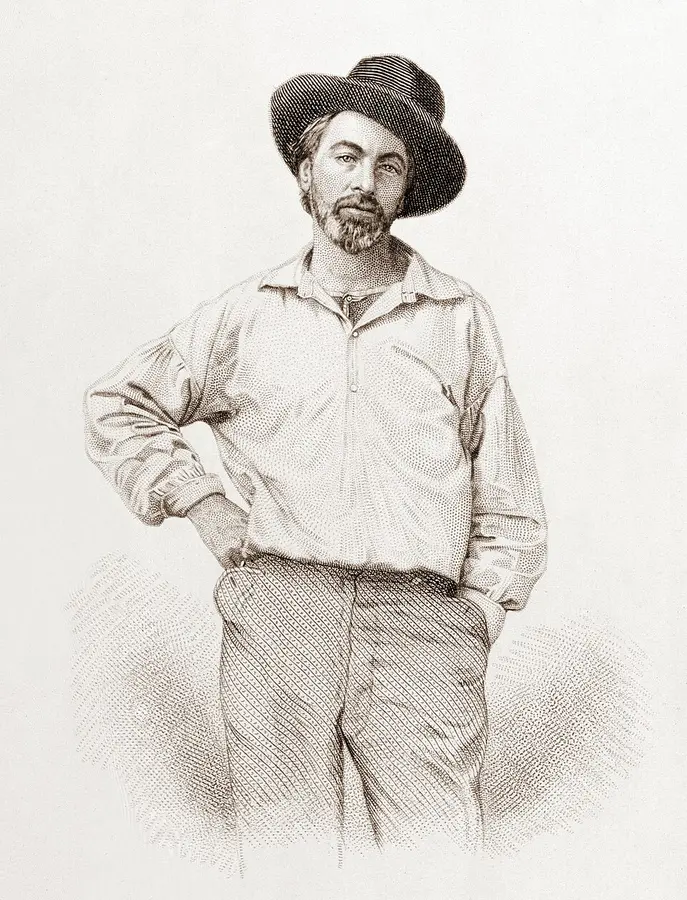
Walt Whitman
1819 to 1892
Whitman grew up in Brooklyn, learned the printing trade there and edited the Brooklyn Daily Eagle in the 1840s. In 1855 he published Leaves of Grass himself, printed in Brooklyn Heights, and the next year added the poem later called Crossing Brooklyn Ferry, about the crossing he made again and again between Brooklyn and Manhattan.
Herman Melville
1819 to 1891
Born on Pearl Street in Lower Manhattan, Melville opened Moby-Dick (1851) in the city, with crowds of office workers standing at the water’s edge on a Sunday afternoon, staring out to sea. Bartleby, the Scrivener (1853) is subtitled A Story of Wall-Street. When his books stopped selling, he worked for nineteen years as a customs inspector on the city’s docks, and he died in Manhattan nearly forgotten.
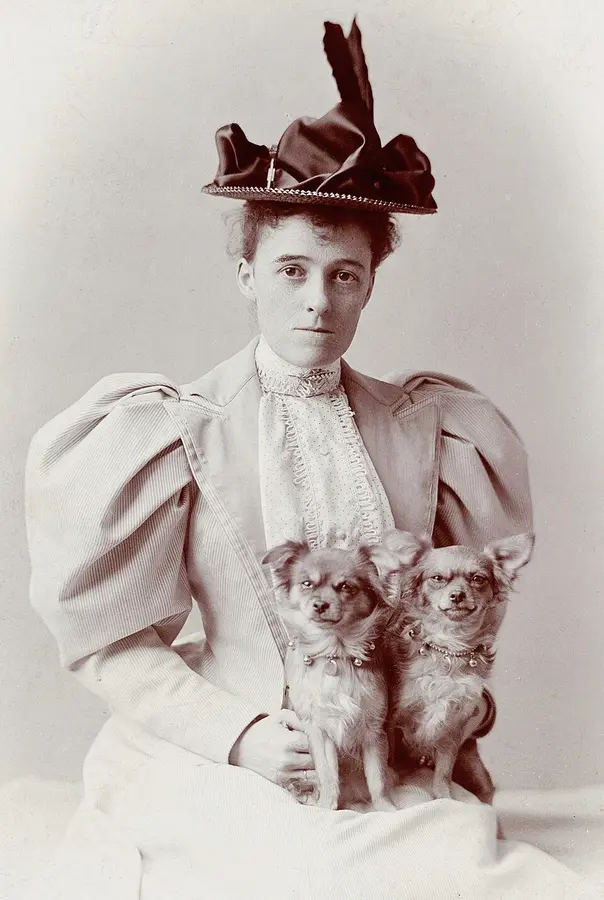
Edith Wharton
1862 to 1937
Born into old New York money on West 23rd Street, Wharton wrote the society she grew up in from the inside. The House of Mirth (1905) follows Lily Bart through its drawing rooms, and The Age of Innocence (1920), set in the New York of the 1870s, made her the first woman to win the Pulitzer Prize for fiction.
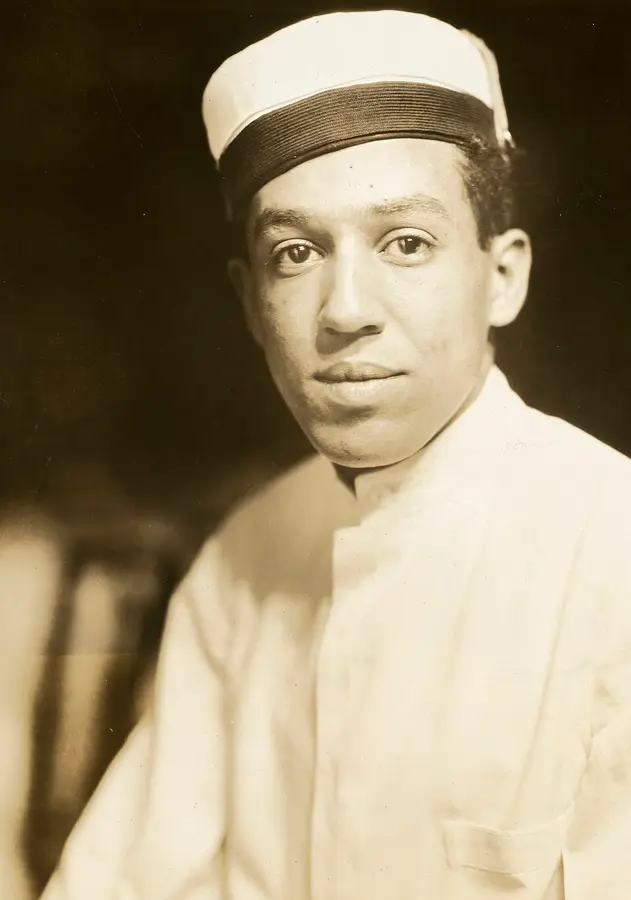
Langston Hughes
1901 to 1967
Hughes came to New York in 1921 to study at Columbia and found Harlem, where the movement later called the Harlem Renaissance was taking shape. His first book, The Weary Blues (1926), brought the rhythms of jazz and the blues into poetry. From 1947 until his death he lived at 20 East 127th Street, now a city landmark.
Flow on, river! flow with the flood-tide, and ebb with the ebb-tide!
Frolic on, crested and scallop-edg’d waves!
Gorgeous clouds of the sunset! drench with your splendor me, or the men and women generations after me!
Cross from shore to shore, countless crowds of passengers!
Stand up, tall masts of Mannahatta! stand up, beautiful hills of Brooklyn!
Walt Whitman, Crossing Brooklyn Ferry (1856), section 9, from the 1892 edition of Leaves of Grass
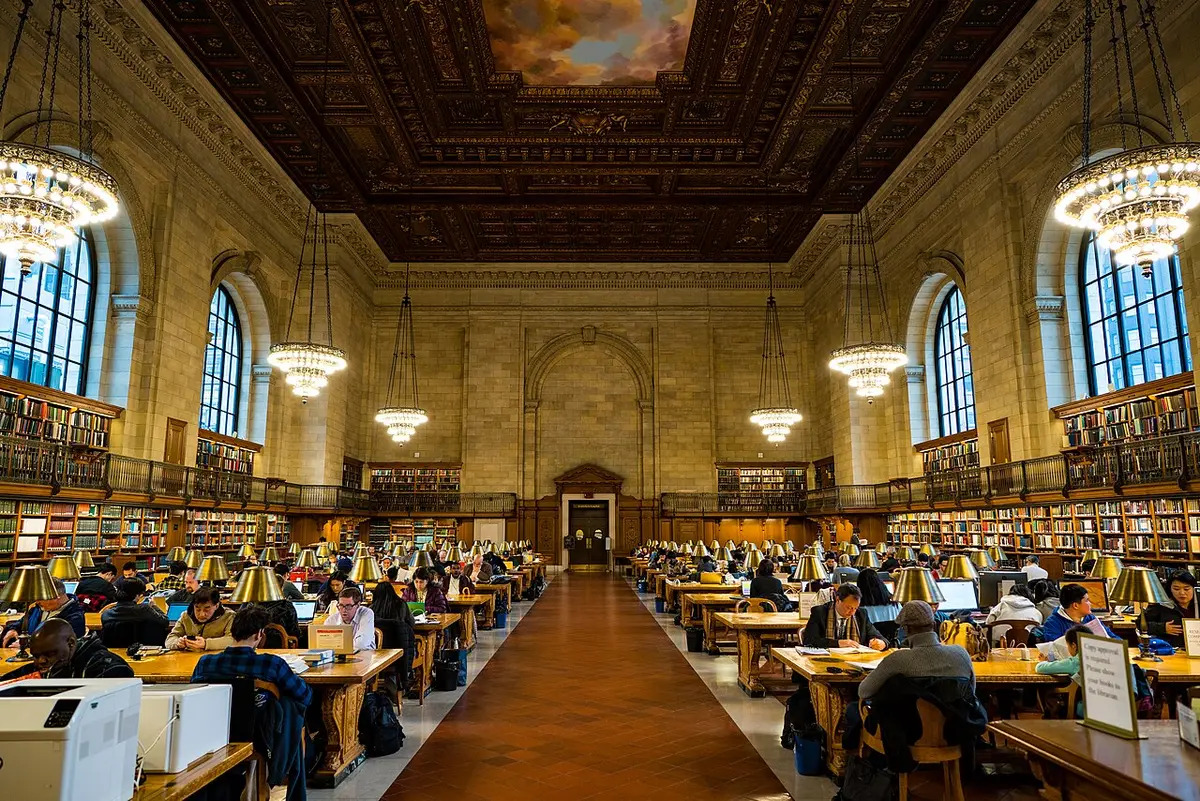
Culture
Broadway
Forty-one theaters, most of them between 41st and 54th Streets around Times Square. The TKTS booth under the red steps in Times Square sells same-day seats at a discount, and many shows run digital lotteries and rush tickets.
Parades
The Macy’s Thanksgiving Day Parade has marched to Herald Square since 1924, the Village Halloween Parade fills Sixth Avenue every October 31, and the Pride March takes over the last Sunday in June, in the city where the Stonewall uprising began in 1969.
The marathon
On the first Sunday of November the New York City Marathon runs through all five boroughs, and the whole route turns out to cheer.
New York on film
Breakfast at Tiffany’s on Fifth Avenue, When Harry Met Sally at Katz’s, Do the Right Thing on a single block in Bedford-Stuyvesant, and Taxi Driver in the Times Square of the 1970s.
Baseball
The Yankees play in the Bronx and the Mets in Queens from April to September, and the subway runs to both stadiums. A weeknight game is an easy night out.
The holidays
The tree at Rockefeller Center is lit above the skating rink in late November or early December, the stores on Fifth Avenue dress their windows, and at midnight on New Year’s Eve the ball drops in Times Square.
Music and nights out
Jazz
The Village Vanguard, in a basement on Seventh Avenue South since 1935, has been a jazz room since 1957. Smalls and the Blue Note are close by in the Village, and Harlem clubs hold jam sessions late into the night.
The Apollo
The Apollo Theater on 125th Street in Harlem has held Amateur Night since 1934; Ella Fitzgerald won it that year, at 17.
Hip-hop
Hip-hop began at a party in the Bronx in August 1973, in a building at 1520 Sedgwick Avenue. The Hip Hop Museum going up in the South Bronx has moved its opening to 2027, so check before you go.
Concert halls
Carnegie Hall opened in 1891 with Tchaikovsky on the podium. Lincoln Center is home to the Metropolitan Opera, the New York Philharmonic and New York City Ballet.
Summer in the parks
SummerStage puts on free concerts in Central Park and across the boroughs, and Shakespeare in the Park is free at the Delacorte Theater, renovated and reopened in 2025, with tickets handed out on the day.
Nights out
The East Village and the Lower East Side for bars, Williamsburg and Bushwick for clubs and live music, and hotel rooftops in Midtown for the view. Last call is 4am.
Nature and day trips
Central Park
Beyond the famous corners: the Ramble for birdwatching, the running track around the Reservoir, and the formal Conservatory Garden at 105th Street.
Prospect Park
Olmsted and Vaux’s Brooklyn park, opened in 1867, with the Long Meadow and a lake. Next door, the Brooklyn Botanic Garden is known for its cherry blossoms in April.
The Hudson waterfront
Hudson River Park runs along the west side of Manhattan with a path for walking and cycling, and Little Island, a park raised on concrete tulips over the river, opened in 2021.
Governors Island
A car-free island in the harbor, a few minutes by ferry from Lower Manhattan, with lawns, hammocks, old forts and man-made hills that look straight at the Statue of Liberty. It is open all year.
Beaches
The A train and NYC Ferry run to the Rockaways, the city’s surf beach, and the subway reaches Coney Island and Brighton Beach. Lifeguards are on duty from late May to early September.
Day trips
Metro-North trains follow the Hudson from Grand Central to Cold Spring and Beacon in about an hour and a half or less, for river views, hiking and Dia Beacon, an art museum in an old box-printing factory.
A day at Coney Island
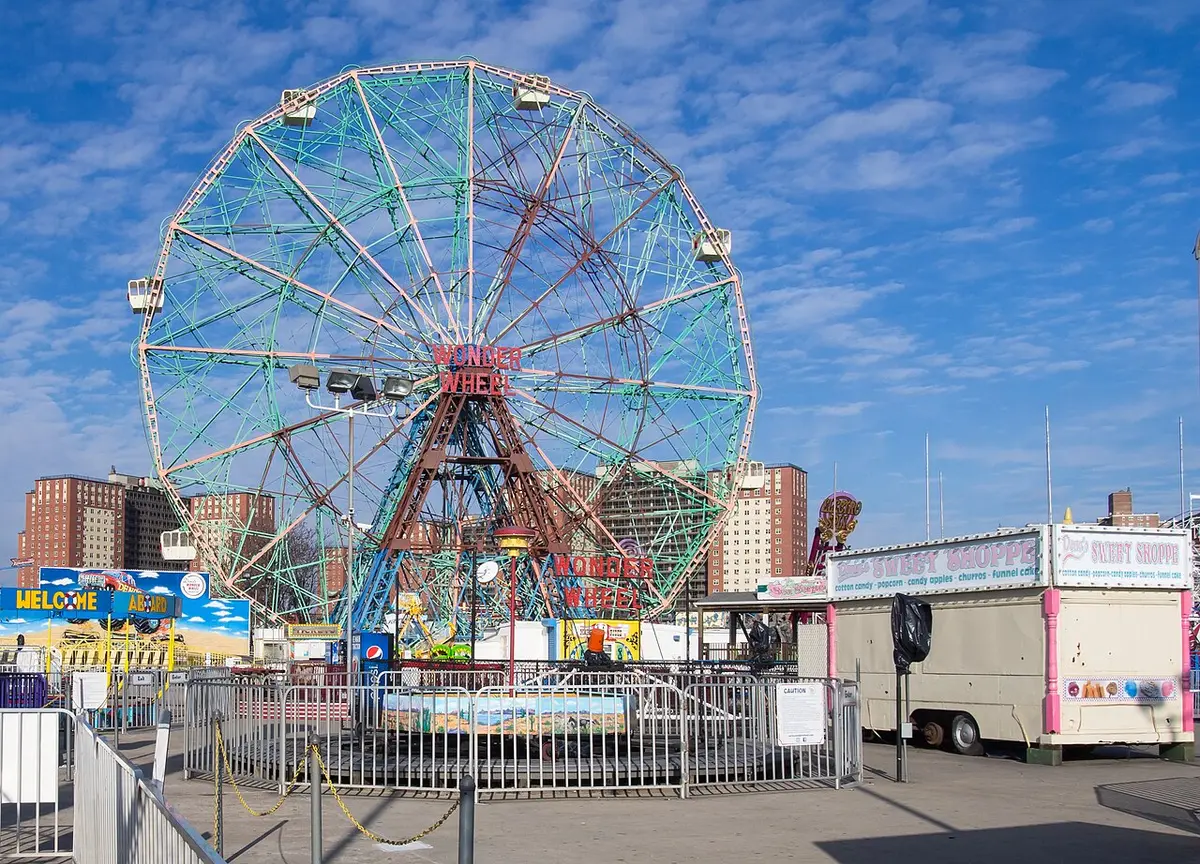
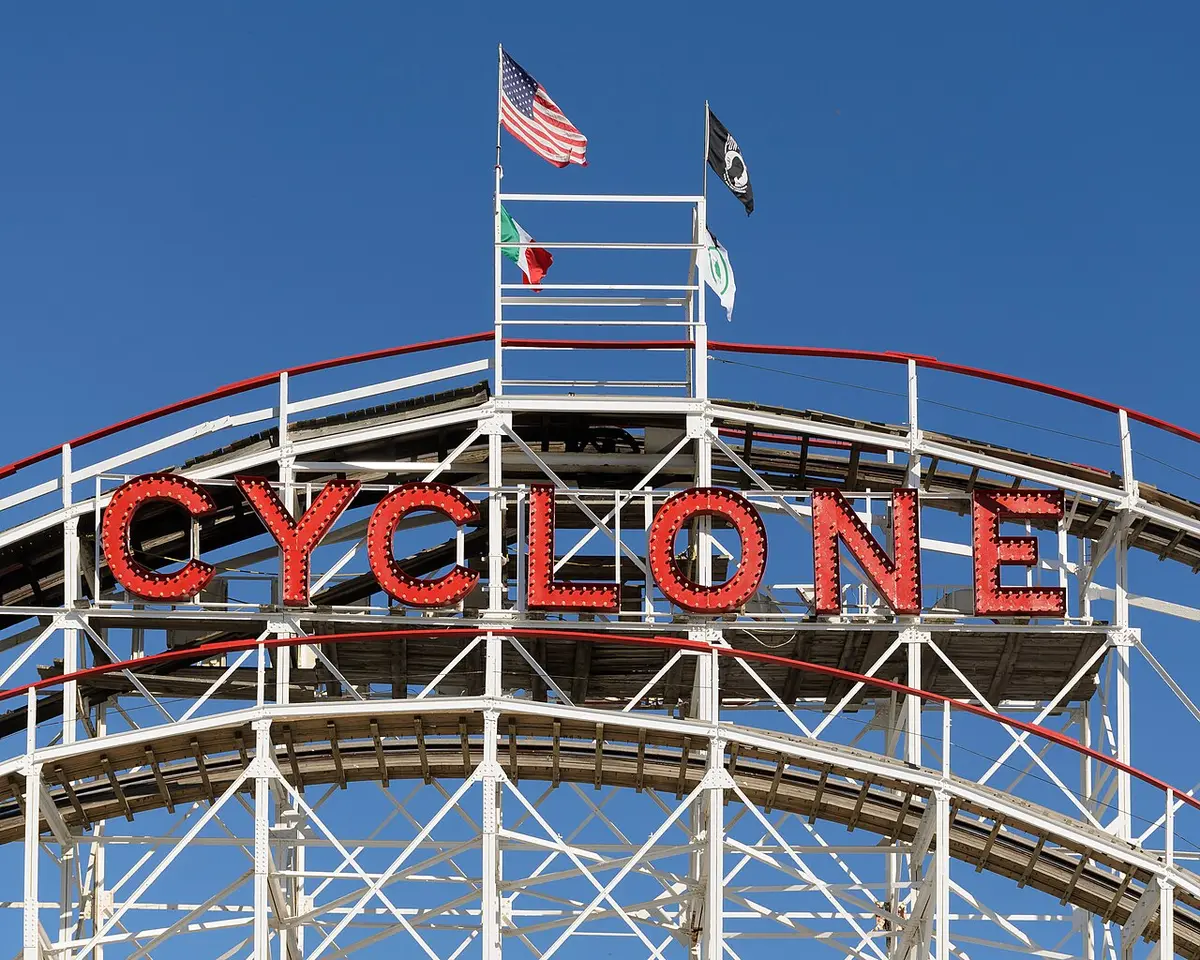
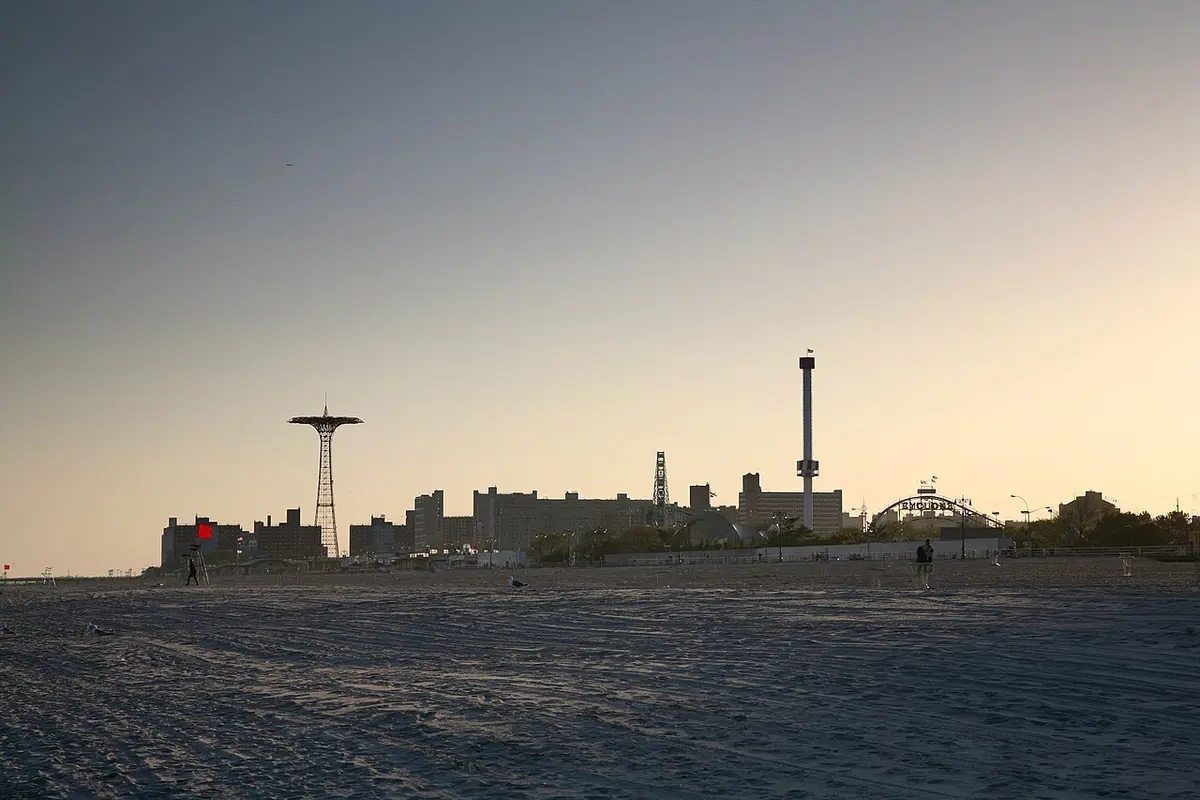
Take the D, F, N or Q train to the end of the line at Stillwell Avenue, about an hour from Midtown. The rides run from spring to autumn, the beach is best in summer, and Nathan’s has sold hot dogs on Surf Avenue since 1916.
People and customs
Sidewalk manners
Walk on the right, keep moving, and step to the side to check your phone or map. Never stop at the top of the subway stairs.
On the subway
Let people off before you get on, take off your backpack in a crowded car, and move in from the doors. Tap the same card or phone every time so the weekly cap counts your rides.
Tips are pay
Servers and bartenders earn much of their income from tips, so 18 to 20 percent at a table and a dollar or two a drink at the bar are the norm, not a bonus.
Bodegas
The corner delis, open late and often all night, sell coffee, sandwiches and the city’s breakfast, a bacon, egg and cheese on a roll. Many keep a cat.
Booking dinner
Popular restaurants release tables weeks ahead on booking apps, and many keep bar seats for walk-ins, so a table at 5:30 or 10pm is easier than at 8.
Direct, not rude
New Yorkers talk fast and to the point, and most will stop to give directions if you ask.
Questions
How many days do you need in New York?
Four to five days covers Lower Manhattan and the Statue of Liberty, Midtown and a Broadway show, Central Park and a museum or two, and an afternoon in Brooklyn. Three days is a rush; a week leaves time for Harlem, Queens and a beach or a day trip up the Hudson.
Where should I stay in New York on a first visit?
Midtown puts you near most subway lines and the theaters. Greenwich Village is the most charming base, the Upper West Side suits families, and Lower Manhattan is quiet at night, while Williamsburg in Brooklyn and Long Island City in Queens are often better value, a short ride from Manhattan.
When is the best time to visit New York?
April to June and September to early November, when the weather is mild. December brings holiday lights and crowds, July and August are hot and humid, and January to March is cold but has the lowest hotel prices.
How do I get from JFK Airport to Manhattan?
Take the AirTrain to Jamaica and a Long Island Rail Road train to Penn Station or Grand Central, about 20 minutes, or the subway from Jamaica or Howard Beach, closer to an hour. Yellow taxis charge a flat fare to Manhattan, plus tolls and tip.
How do I pay for the subway in New York?
Tap a contactless bank card or phone at the reader on the gate. Use the same card each time: OMNY caps what you pay in any seven days, and every ride after that is free. The old MetroCard has been phased out.
Is New York good for a bachelorette or a group trip?
Yes: a Broadway show, rooftop bars, a drag brunch in Hell’s Kitchen, karaoke in Koreatown and late nights in the East Village and Williamsburg. Book dinners and shows ahead for a group.
Plan New York with your group
Everyone swipes on the sights they want. SwipeSights builds the days around the picks, in walking order.