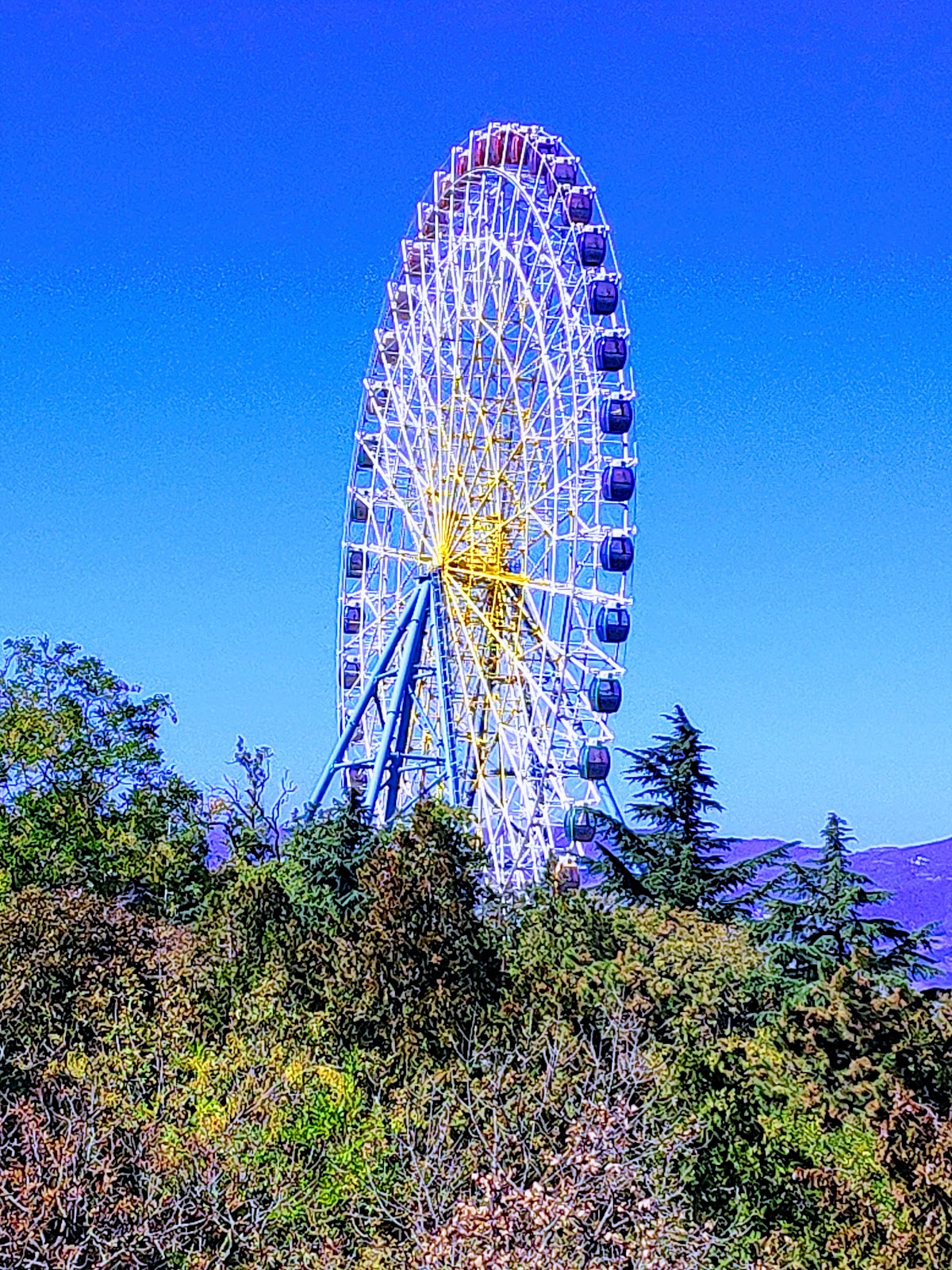
Tbilisi
Sulphur baths, balconies and brave color
You wander cobbled lanes where carved wooden balconies sag over sulphur bathhouses, then turn a corner into a glassy modern bridge or a wine bar in a courtyard. Tbilisi is gloriously layered: Persian, Soviet, European and defiantly its own. Endlessly hospitable.
How long to stay?
A day or two covers the Old Town: soak in the domed Abanotubani sulphur baths, ride the funicular up to Narikala Fortress and Mother of Georgia, cross the Bridge of Peace, and feast on khinkali and khachapuri.
Bohemian, warm and full of contrasts. Crumbling grandeur meets buzzing wine bars and street art. Hospitality is a religion here, and a stranger's toast can turn into a whole evening of feasting and singing.
The Old Town (Abanotubani and Sololaki) is atmospheric and walkable, full of guesthouses and wine bars. Vera and Vake are leafier and upscale. Marjanishvili across the river is artsy and lively.
Book a private room at the sulphur baths in Abanotubani for an hour of pure bliss after a day of walking. And never refuse a Georgian's invitation to a supra feast; it is the heart of the culture.
May to June and September to October bring warm, dry days perfect for walking. Summers can be hot, and the surrounding mountains are best then. Winters are cold but cozy, with cheap prices and few tourists.
Tbilisi International Airport (TBS) is 17km from the center, linked by a cheap city bus (No. 37), train, or a 20-minute taxi. Bolt is widely used and cheaper than hailing taxis on the street.
Currency is the Georgian lari; cards are common but carry cash for markets. Georgian has its own beautiful alphabet. Wine here is ancient, made in clay qvevri, and pouring your own is considered bad form.