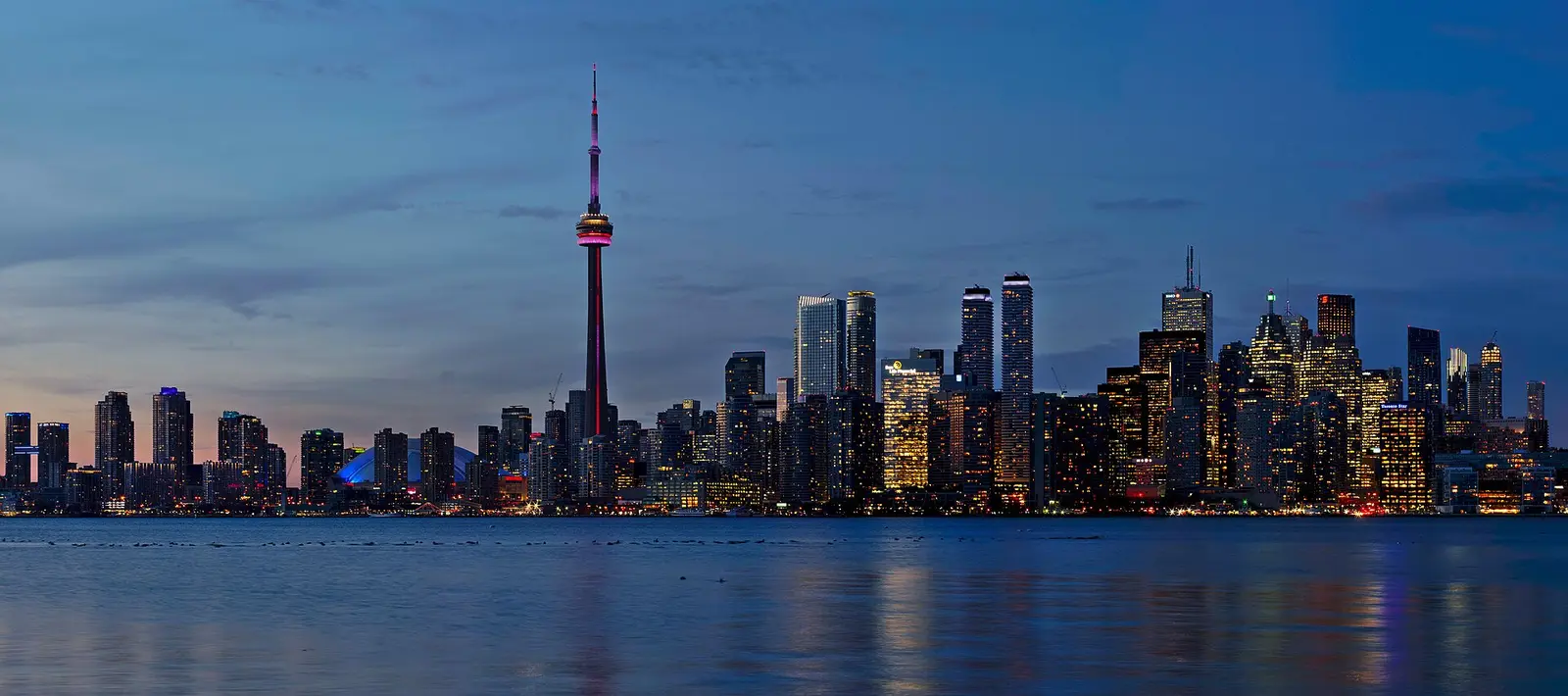
 Photo:
Toronto spreads along the north shore of Lake Ontario: glass towers and the CN Tower downtown, leafy streets of brick houses around them, wooded ravines running through the neighborhoods and a string of car-free islands just offshore. Nearly half of its people were born outside Canada, and you can taste it everywhere, from Chinatown and Little Italy to Greektown and Koreatown. It is an easy city to get around, by streetcar, by subway and on foot.
This guide covers when to go, where to stay, what to see, a walk through Cabbagetown to the Don Valley, a day on the Toronto Islands, what to eat, and the history, art and customs that make the city make sense.
What Toronto is good for
Friends' trips
A ferry to the islands for a beach and a bike ride, a Blue Jays game in the stadium at the foot of the CN Tower, a food crawl through Kensington Market and Chinatown, and the patios of Ossington and Queen West at night.
Bachelorette and bachelor weekends
Dinner and bars on King West and Ossington, a sunset cruise on the harbor, clubs in the Entertainment District and a day of tastings among the wineries of Niagara-on-the-Lake. Bars close at 2am.
Weddings and honeymoons
Visitors can marry in Ontario: there is no residency rule and no waiting period once you have a marriage license, and the City holds short civil weddings in the old council chamber of Old City Hall. Bring two witnesses. For a honeymoon, add Niagara Falls and the wine country of Niagara-on-the-Lake.
Couples
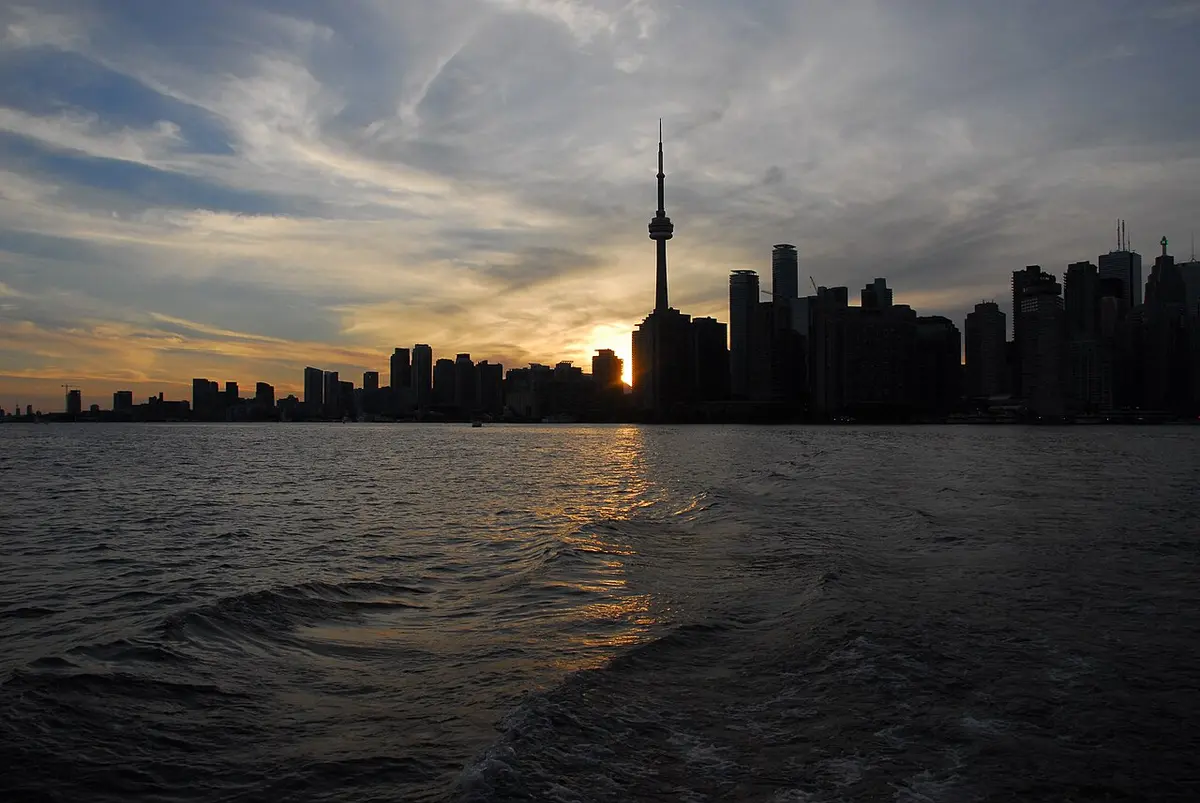
Sunset over the skyline from Ward’s Island, an evening in the lanes of the Distillery District, dinner in Little Italy and a day among the vineyards around Niagara-on-the-Lake.
Families
The rides of Centreville on Centre Island, sharks at Ripley’s Aquarium beside the CN Tower, dinosaurs at the Royal Ontario Museum, the free High Park Zoo and Riverdale Farm, and the big Toronto Zoo out in Scarborough.
Solo travel
Generally safe, easy to find your way around and friendly to people on their own, with food halls, markets, galleries and walking tours. In winter the PATH, a network of walkways under downtown, keeps you warm.
Food lovers
Peameal bacon on a bun at St. Lawrence Market, dim sum on Spadina, Jamaican patties and roti, butter tarts, Greek food on the Danforth and Korean on Bloor Street.
History and art
Fort York, where the town began and was fought over in 1813, the Victorian brick of the Distillery District and Cabbagetown, Casa Loma, and the collections of the AGO and the ROM.
Plan your trip
When to go
Late May to early October is patio season, with warm days, festivals most weekends and the islands at their best. July and August can be hot and humid. September and early October are clear and mild, with fall colors in the ravines by mid-October. Winter runs from December into March: cold, snowy and quiet, with the lowest prices.
How long to stay
Three days covers downtown and the CN Tower, the ROM and the AGO, Kensington Market and the Distillery District, and a ferry to the islands. With four or five, add a day trip to Niagara Falls.
Getting there
Toronto Pearson (YYZ), northwest of the city, is linked to Union Station by the UP Express train in about 25 minutes. Billy Bishop (YTZ), on the islands beside downtown, handles shorter flights, and you reach the mainland by a 90-second ferry or a pedestrian tunnel. VIA Rail trains from Montreal and Ottawa arrive at Union Station.
Getting around
Walk downtown, and use the TTC: a U-shaped subway line under Yonge Street and University Avenue, an east-west line under Bloor Street and the Danforth, streetcars on King, Queen, College, Dundas and Spadina, and buses. Tap a PRESTO card, a bank card or a phone at the reader; one fare covers transfers for two hours. In winter, the PATH links downtown towers underground.
Tickets
Book the CN Tower ahead on busy days, and Casa Loma and the ROM online to skip the line. The AGO is free on the first Wednesday evening of each month and the ROM on the third Tuesday evening, with tickets released in advance. The island ferries also sell tickets online, which saves a line at the terminal in summer.
Money and tipping
Canada uses the Canadian dollar, and cards are taken almost everywhere. Prices exclude HST, the 13 percent sales tax, which is added at the register. Tip 15 to 20 percent at restaurants and bars; card machines suggest amounts.
Weather, month by month
Spring
April to May
Cool and changeable, with the odd late snow in April, warming by late May. High Park’s cherry trees bloom in late April or early May.
Summer
June to August
Warm to hot and often humid, with highs of about 25 to 30°C and thunderstorms. A breeze off the lake cools the waterfront and the islands.
Autumn
September to November
September stays warm, October is crisp and bright, with red and gold leaves in the ravines, and November turns gray and cold.
Winter
December to March
Cold, often below freezing, with snow on the ground for weeks and wind off the lake. Dress in layers and use the PATH and the museums.
Top sights
 01
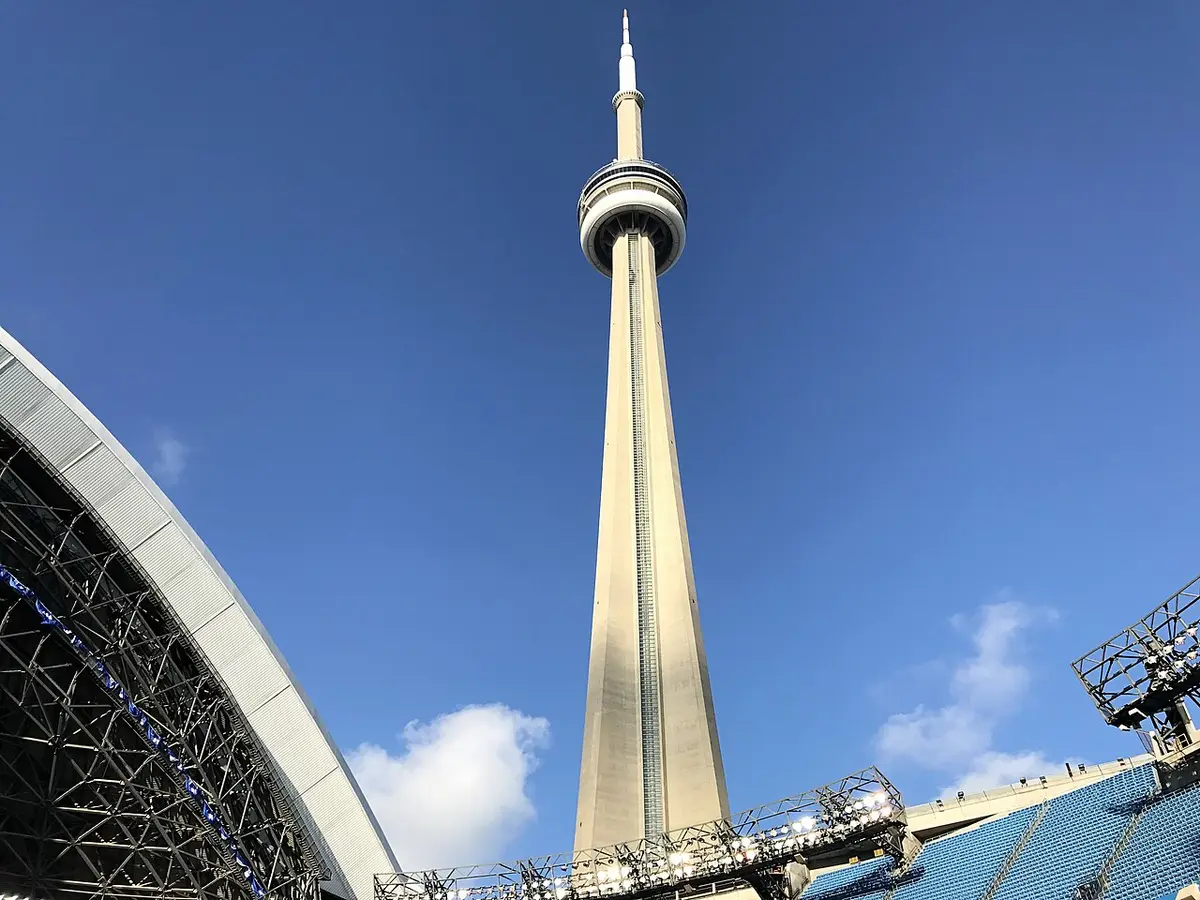
The CN Tower
At 553 meters, it was the tallest free-standing structure in the world for more than thirty years after it opened in 1976. Elevators climb to the LookOut level and the glass floor at 342 meters, the SkyPod sits higher still at 447 meters, and on a clear day you look straight across Lake Ontario.
Go near sunset, or book the EdgeWalk to circle the outside of the main pod in a harness, 356 meters up.
Photo: Arturo Pardavila III from Hoboken, NJ, USA, CC BY 2.0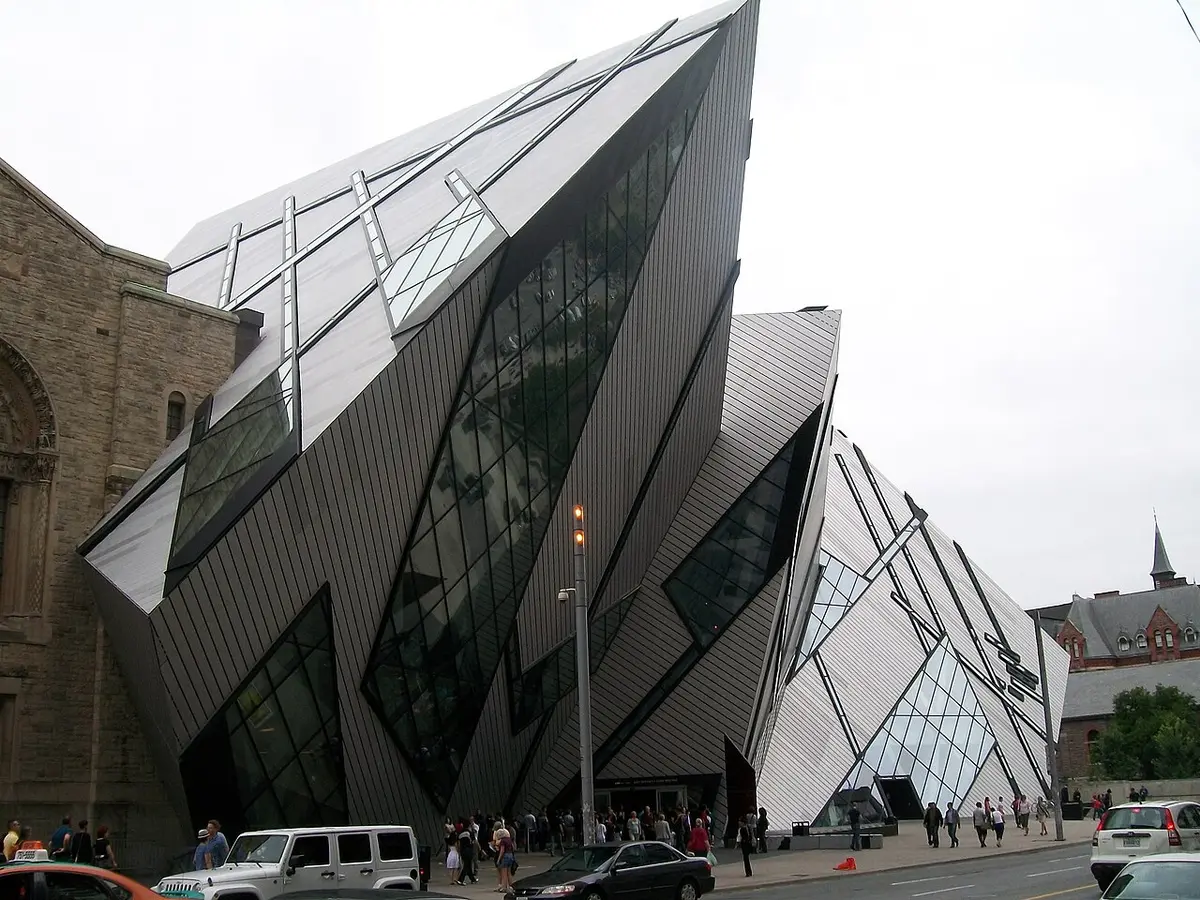 02
The Royal Ontario Museum
Canada’s largest museum of world cultures and natural history, opened in 1914: dinosaur halls, Egyptian mummies, a Chinese tomb of the Ming era and galleries of Canadian and Indigenous art. Daniel Libeskind’s Crystal, a burst of glass and metal shards over Bloor Street, was added in 2007.
Free on the third Tuesday evening of each month; tickets are released two weeks ahead.
Photo: fw_gadget, CC BY-SA 2.0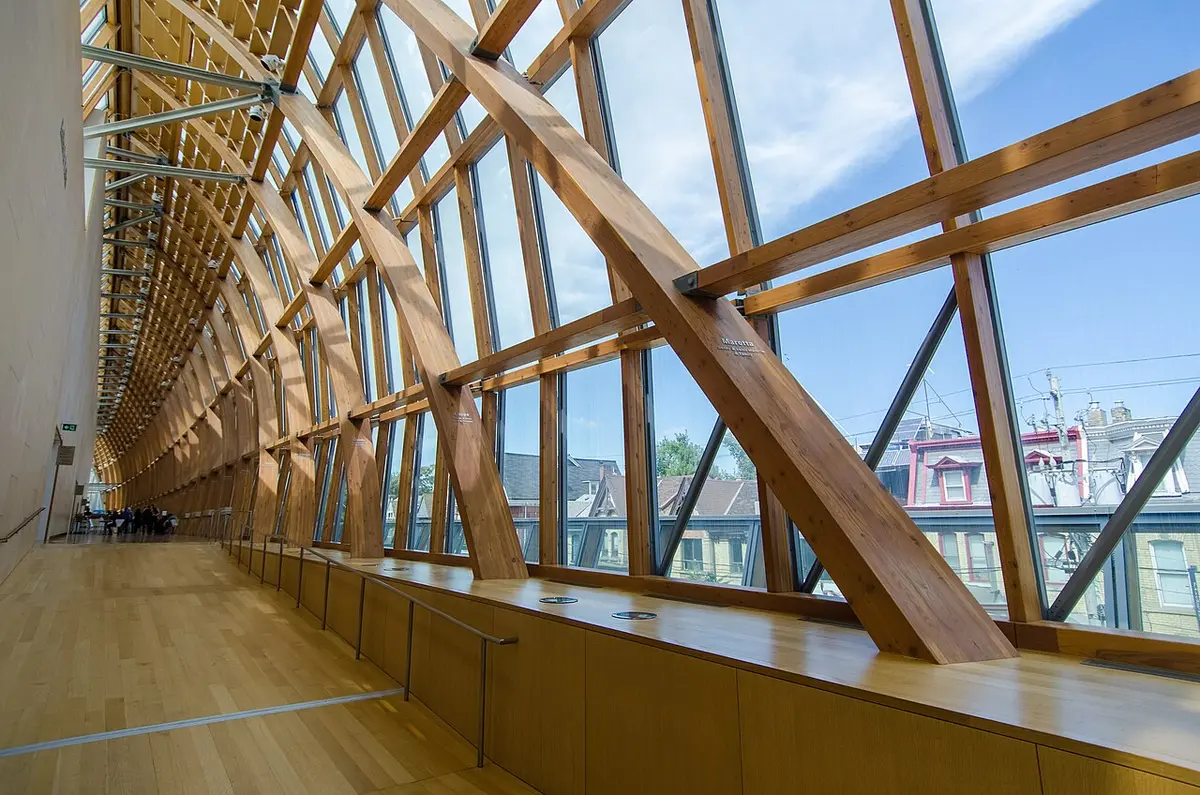 03
The Art Gallery of Ontario
Frank Gehry, who grew up a few blocks away, rebuilt the gallery in 2008, with a long gallery of Douglas fir and glass along Dundas Street and a blue titanium wing at the back. Inside hang Canadian painters from Tom Thomson to Emily Carr, Rubens’ The Massacre of the Innocents and the largest public collection of Henry Moore’s sculpture.
Closed on Mondays. Free on the first Wednesday evening of each month, with tickets booked ahead.
Photo: Jeff Hitchcock from Seattle, WA, USA, CC BY 2.0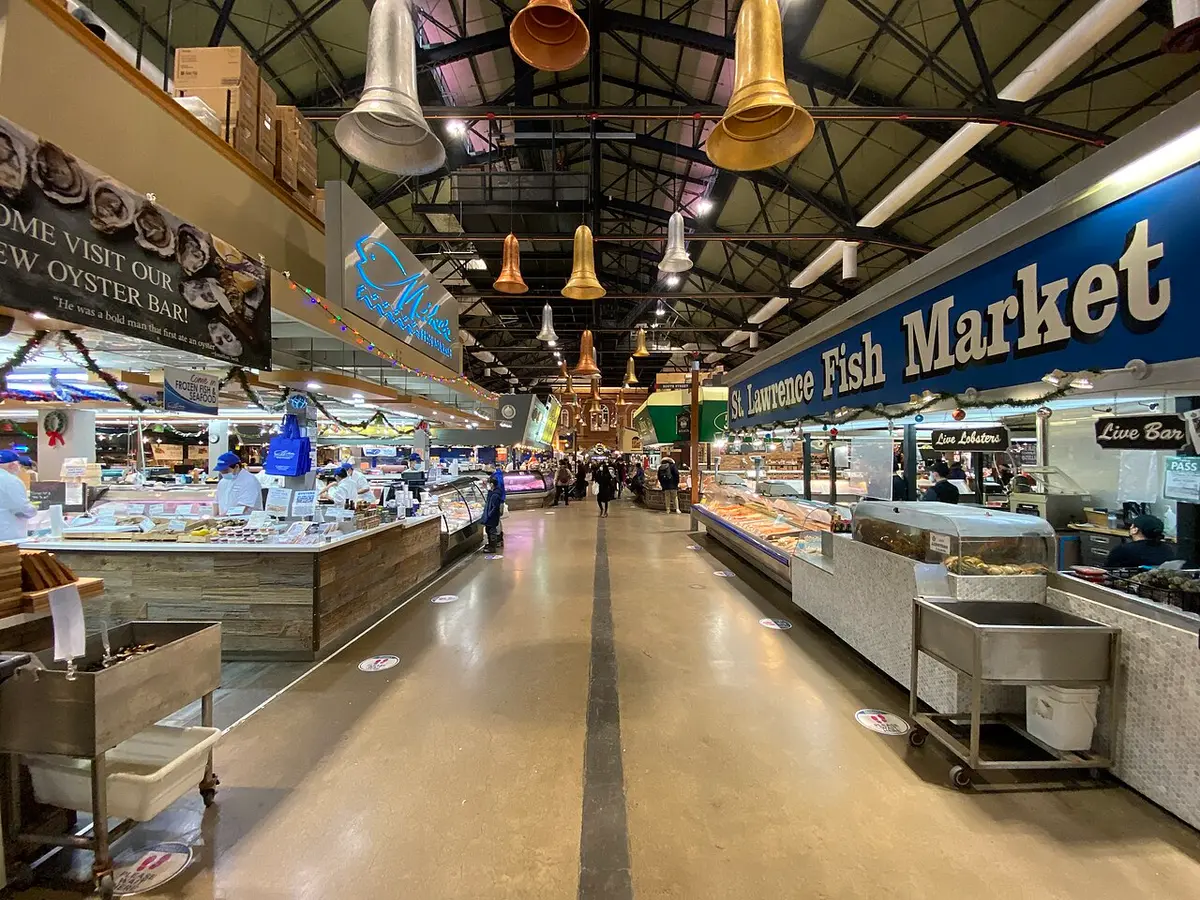 04
St. Lawrence Market
A market has stood on this site since 1803. The South Market, built around the hall that served as the city hall from 1845 to 1899, is packed with butchers, fishmongers, cheese counters and bakeries; across Front Street, the new North Market opened in 2025 and holds the Saturday farmers’ market from 5am.
The South Market is closed on Mondays. Have a peameal bacon sandwich at Carousel Bakery.
Photo: Canmenwalker, CC BY 4.0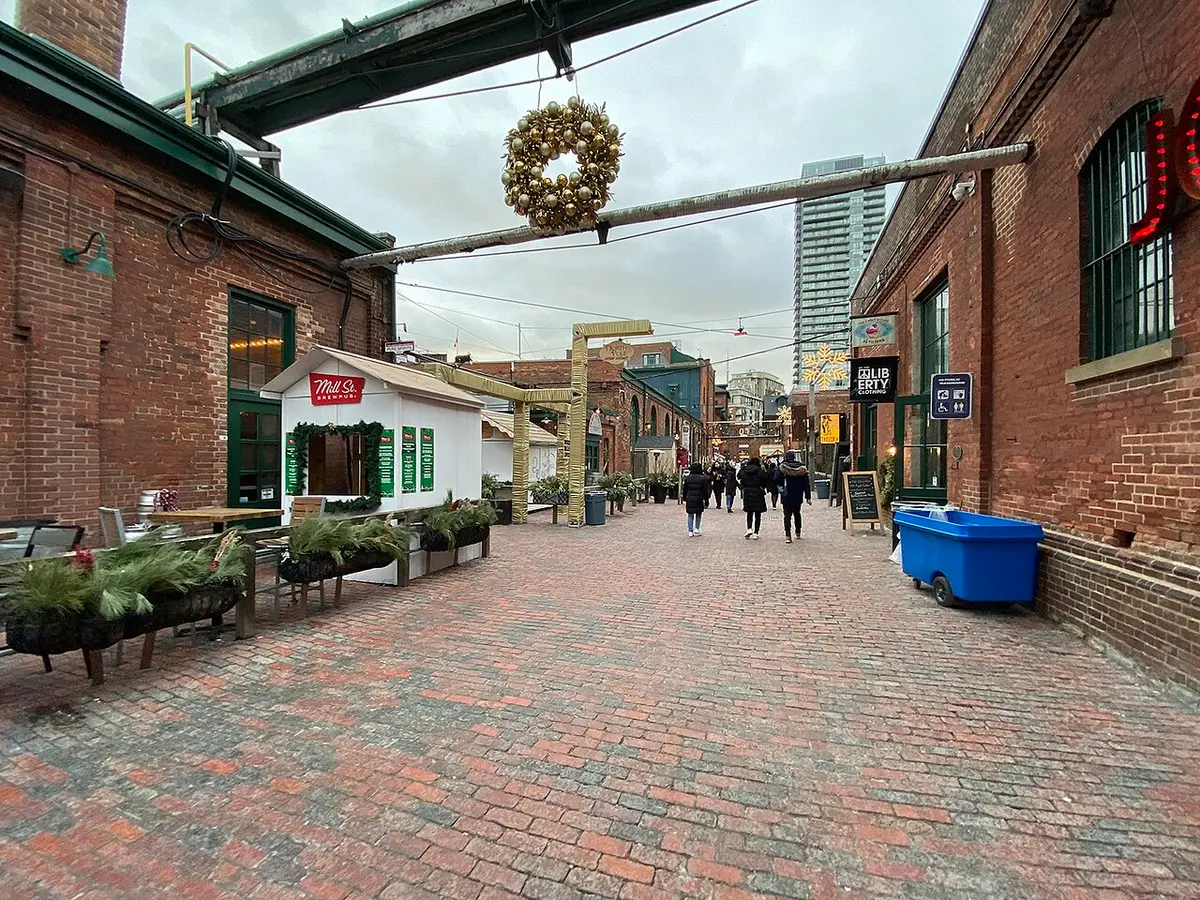 05
The Distillery District
Gooderham and Worts began with a windmill by the lake in 1832 and grew into the largest distillery in the British Empire. More than 40 of its Victorian brick buildings, on brick-paved lanes closed to cars, now hold galleries, cafés, theaters and shops.
From mid-November to early January the Winter Village fills the lanes: free by day, with paid tickets for evenings at busy times.
Photo: Canmenwalker, CC BY 4.0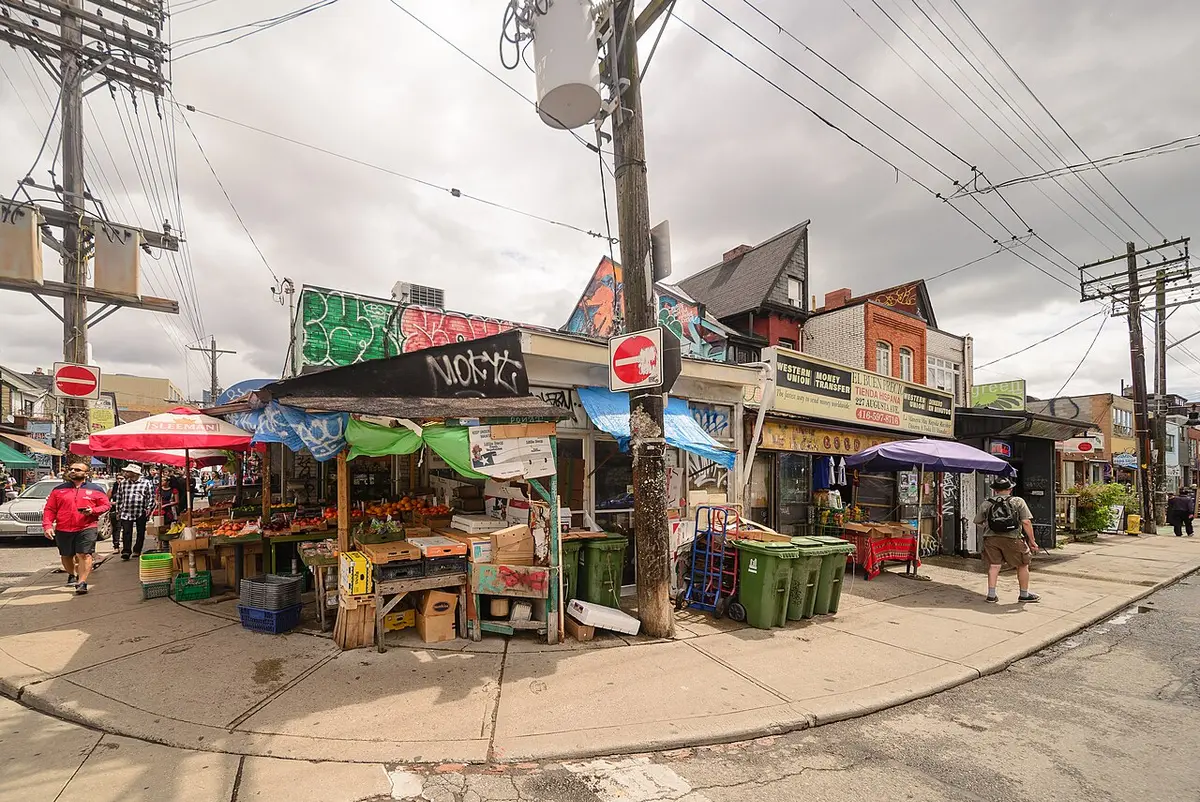 06
Kensington Market
A tangle of narrow streets west of Spadina where Jewish immigrants from Eastern Europe sold from pushcarts and front rooms in the early 1900s, followed by Portuguese, Caribbean, Latin American and Asian families. Today it is vintage clothing, cafés, bakeries, spice shops and cheap eats, and a National Historic Site since 2006.
On Pedestrian Sundays, once a month from May to October, the streets close to cars for music and stalls.
Photo: Arild Vågen, CC BY-SA 4.0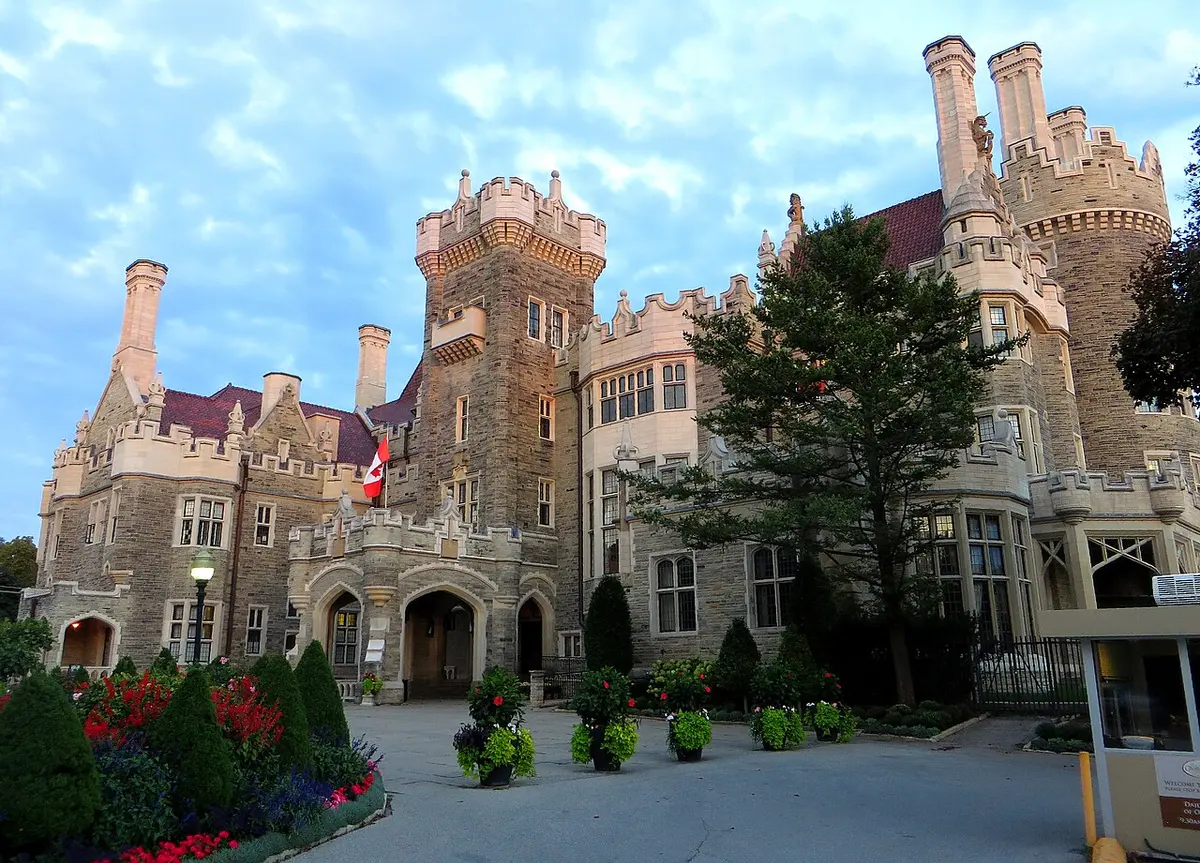 07
Casa Loma
A castle on the hill above midtown, built from 1911 to 1914 by the architect E. J. Lennox for Sir Henry Pellatt, a financier who made his fortune in electric power. It has towers, a conservatory, two secret passages in Pellatt’s office and a 243-meter tunnel to the stables. He lived in it only until 1923, when money troubles forced him out.
Open every day. Climb the towers for the view over the city, and walk the gardens in summer.
Photo: Ken Lund from Reno, Nevada, USA, CC BY-SA 2.0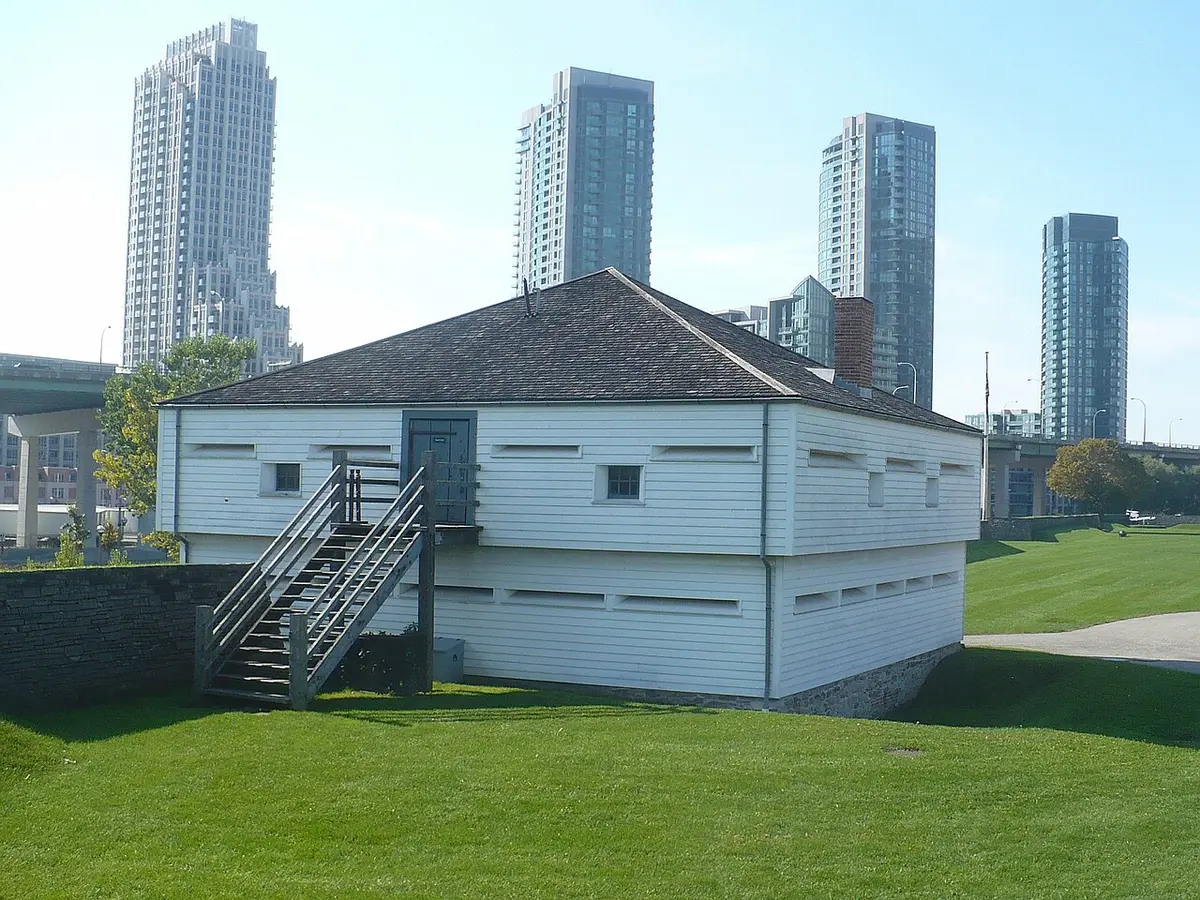 08
Fort York
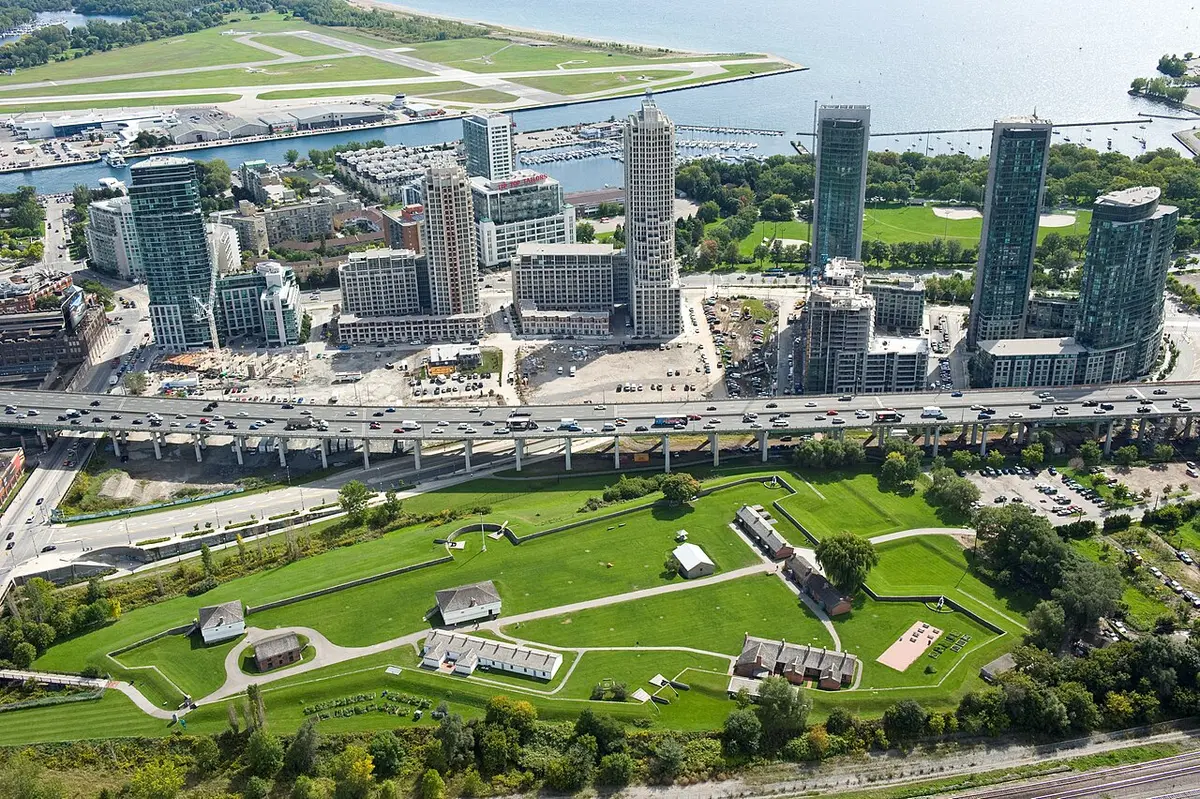
The garrison where Toronto began in 1793, taken by the Americans in 1813 and rebuilt soon after. It holds the largest collection of buildings from the War of 1812 in Canada, blockhouses, barracks and a stone powder magazine inside earthen walls, and from late June to August the Fort York Guard drills and fires muskets on the parade ground.
Free, open Wednesday to Sunday. It sits under the Gardiner Expressway, west of Bathurst Street.
Photo: Secondarywaltz, CC BY-SA 3.0
Three hidden gems
Cabbagetown and the Don Valley
From a Victorian glasshouse full of palms, through streets of 19th-century houses, past a city farm and a Gothic cemetery gate to the edge of the Don Valley, with the skyline across the ravine.
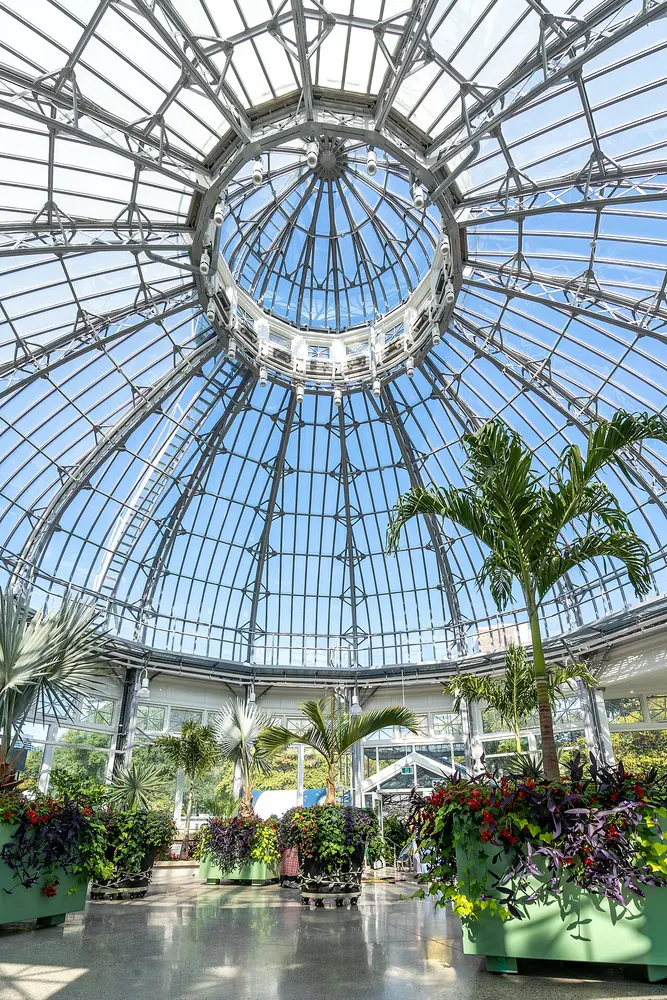
Start at Allan Gardens, on Carlton Street east of Jarvis, where the Palm House, a glass dome of 1910, shelters palms and tropical plants. It reopened in 2025 after a restoration, and entry is free, every day from 10am to 5pm.
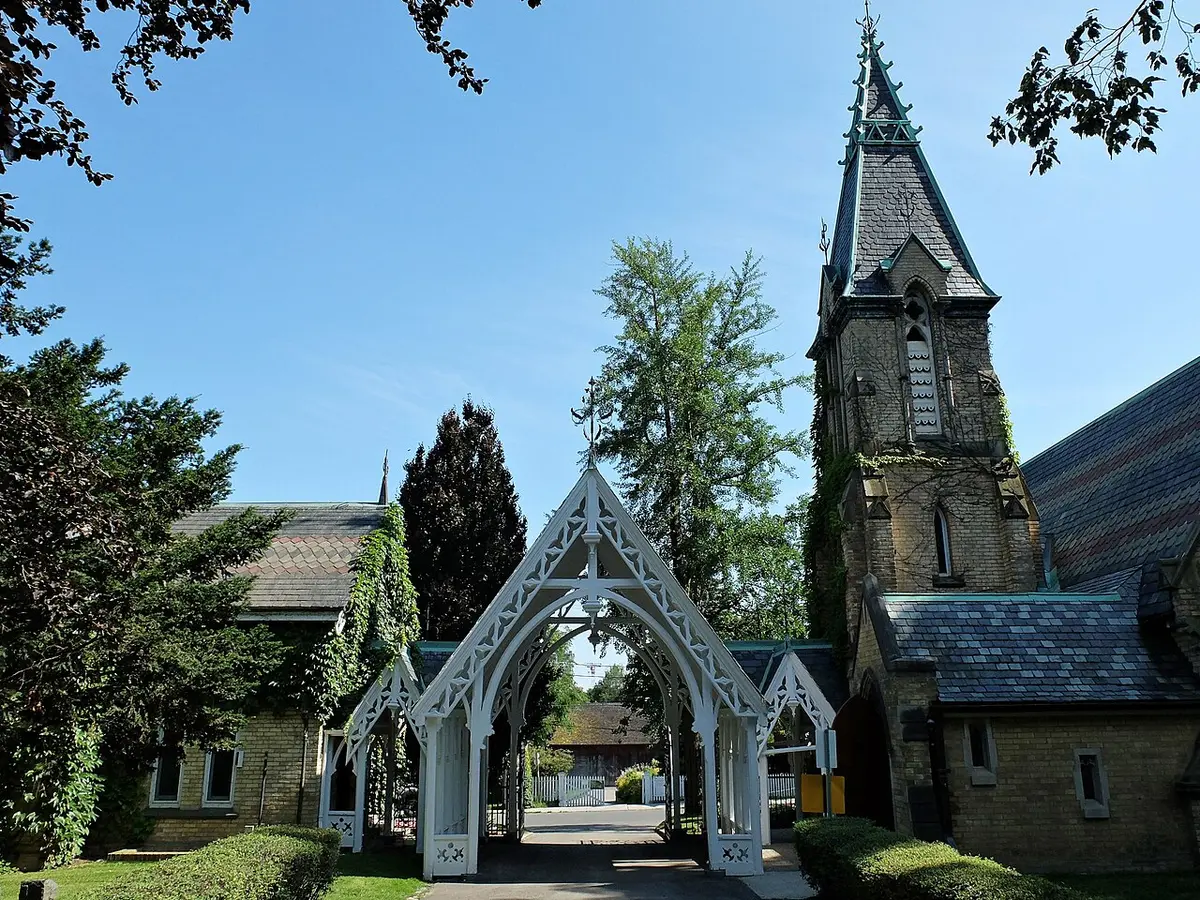
Walk east along Carlton Street into Cabbagetown. The name is usually traced to the Irish immigrants of the mid-1800s who grew cabbages in their front yards. Today the narrow streets are lined with Victorian houses, gables and porches, and the neighborhood’s preservation association calls it the largest continuous area of preserved Victorian housing in North America.
At the east end of Winchester Street, Riverdale Farm keeps cows, pigs, goats and horses on the slope where the city’s first zoo opened in 1894. It is free and open every day.
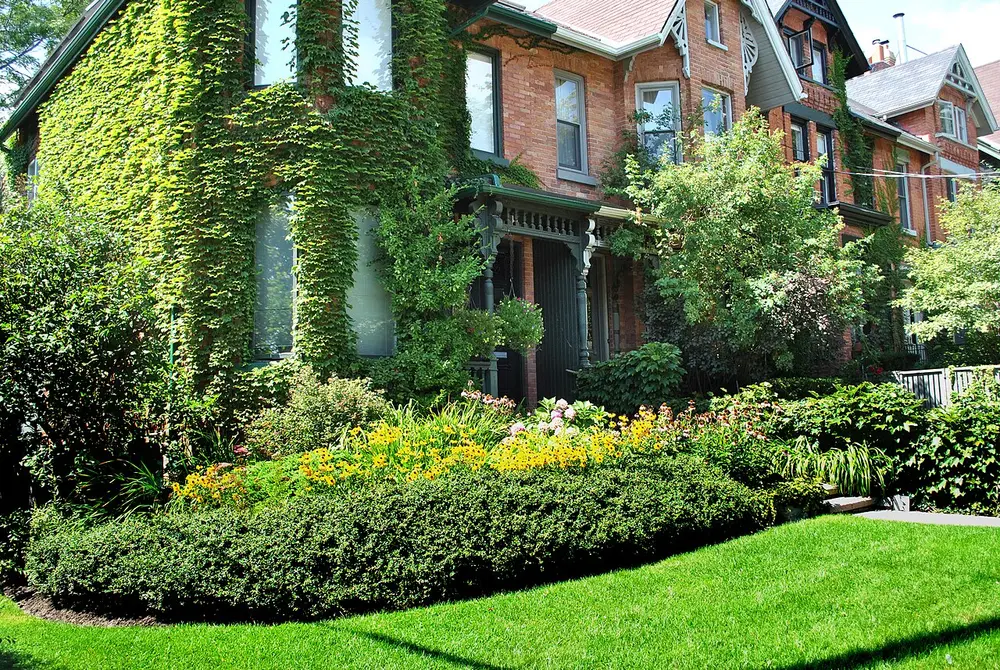
Next to it, the Toronto Necropolis, opened in 1850, is entered through a white Gothic gate beside a small chapel of 1872. William Lyon Mackenzie, the city’s first mayor, is buried here, near two of the men hanged after his rebellion of 1837.
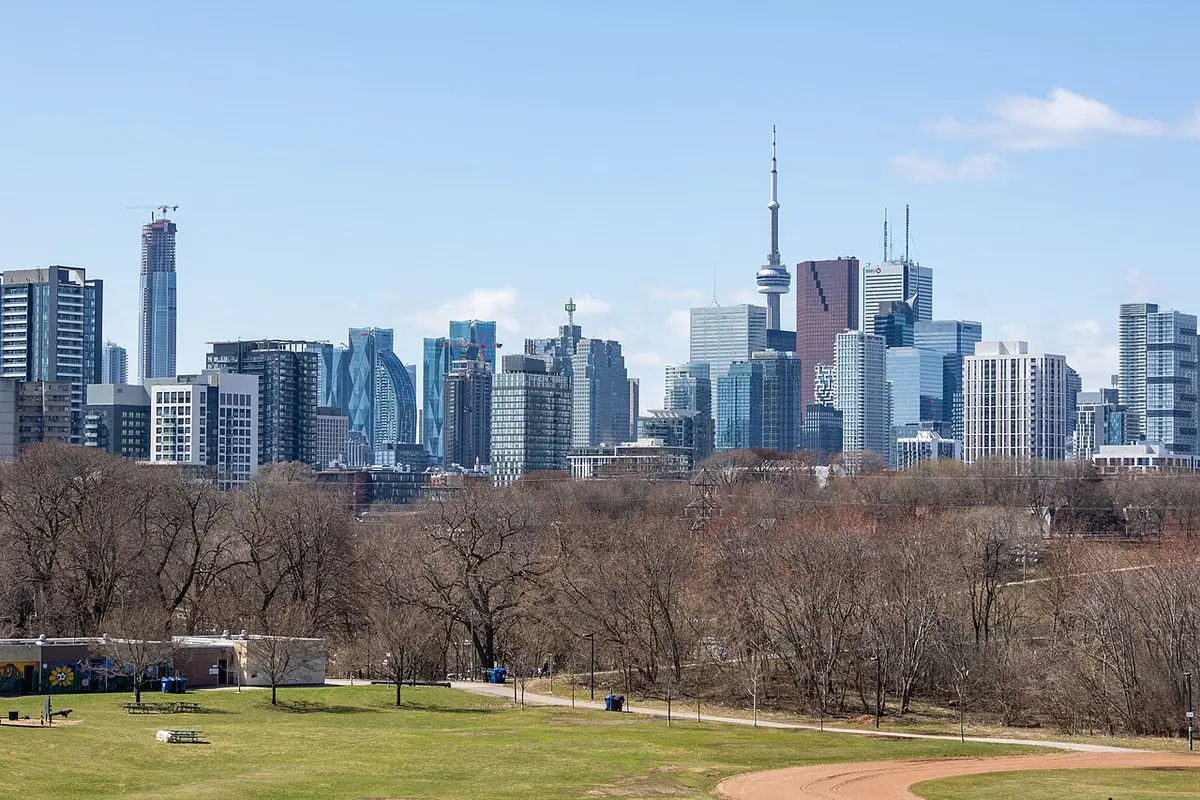
Cross the footbridge over the Don Valley Parkway and the river into Riverdale Park East, and climb the hill toward Broadview Avenue. Turn around at the top: the whole downtown skyline stands across the valley, and at sunset the towers turn to silhouettes against the sky.
Where to stay
Pick the neighborhood first, then the hotel. Each link opens a map of places to stay around it.
Downtown and the Entertainment District
First visitUnion Station, the CN Tower, the theaters of King Street and the TIFF Lightbox, with the subway and the PATH underfoot. Everything is close; the streets are busy, and rooms cost more.
See hotels in Downtown and the Entertainment DistrictSt. Lawrence and Old Town
CouplesThe oldest part of the city, around St. Lawrence Market and St. James Cathedral, with the Victorian brick of the Distillery District to the east. Calmer evenings, good restaurants and the waterfront a few blocks south.
See hotels in St. Lawrence and Old TownHarbourfront
FamiliesThe lakeshore below the CN Tower, with Ripley’s Aquarium, the Harbourfront Centre, the island ferries and paths along the water. Breezy and open, with big hotels and condo towers.
See hotels in HarbourfrontKensington Market and Chinatown
Food and budgetVintage shops, cafés, grocers and cheap eats in Kensington’s lanes, and the noodle and dumpling houses of Spadina Avenue next door. Lively and a little scruffy, with hostels and guesthouses rather than big hotels.
See hotels in Kensington Market and ChinatownYorkville and the Annex
Museums and shoppingAlong Bloor Street: the ROM, the Bata Shoe Museum and the designer shops of Yorkville, with the University of Toronto and the cafés and bars of the Annex to the west. Leafy, with two subway lines.
See hotels in Yorkville and the AnnexQueen West and Ossington
NightlifeGalleries, design shops and Trinity Bellwoods Park on West Queen West, with the bars and restaurants of Ossington Avenue close by. Streetcars rather than subway, and late, noisy weekends.
See hotels in Queen West and OssingtonThe 10 best budget hotels
Well-reviewed hotels at the lower end of Toronto’s prices, best-reviewed first. On a weeknight in November 2026 they cost about €165 to €295 for two; prices change daily, so check your own dates.
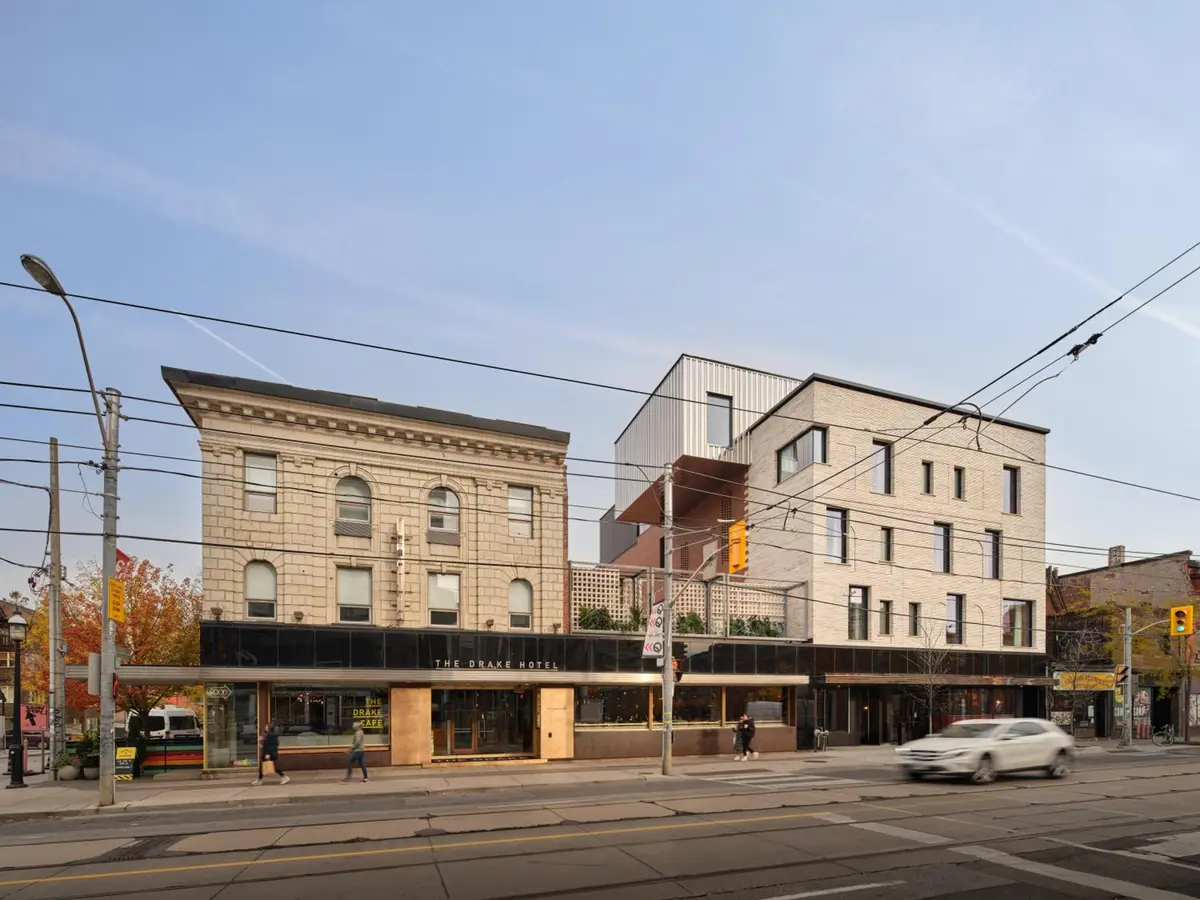 01
The Drake Hotel
9.4465 reviewsQueen West and Ossington
15 min walk to Trinity Bellwoods Park
See prices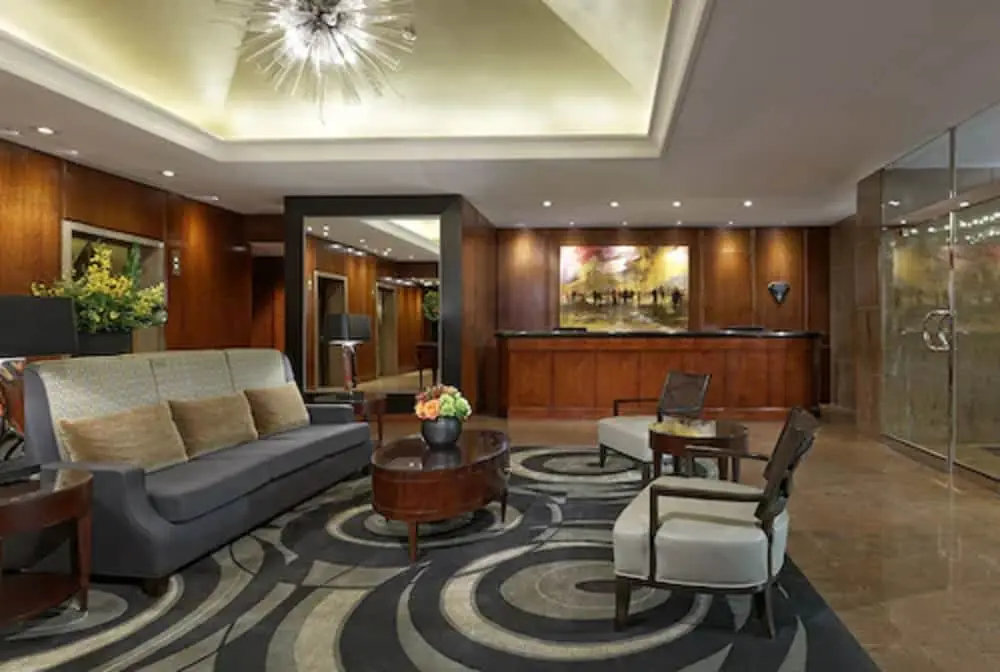 02
Cambridge Suites Toronto
9.2808 reviewsFinancial District
8 min walk to Nathan Phillips Square
See prices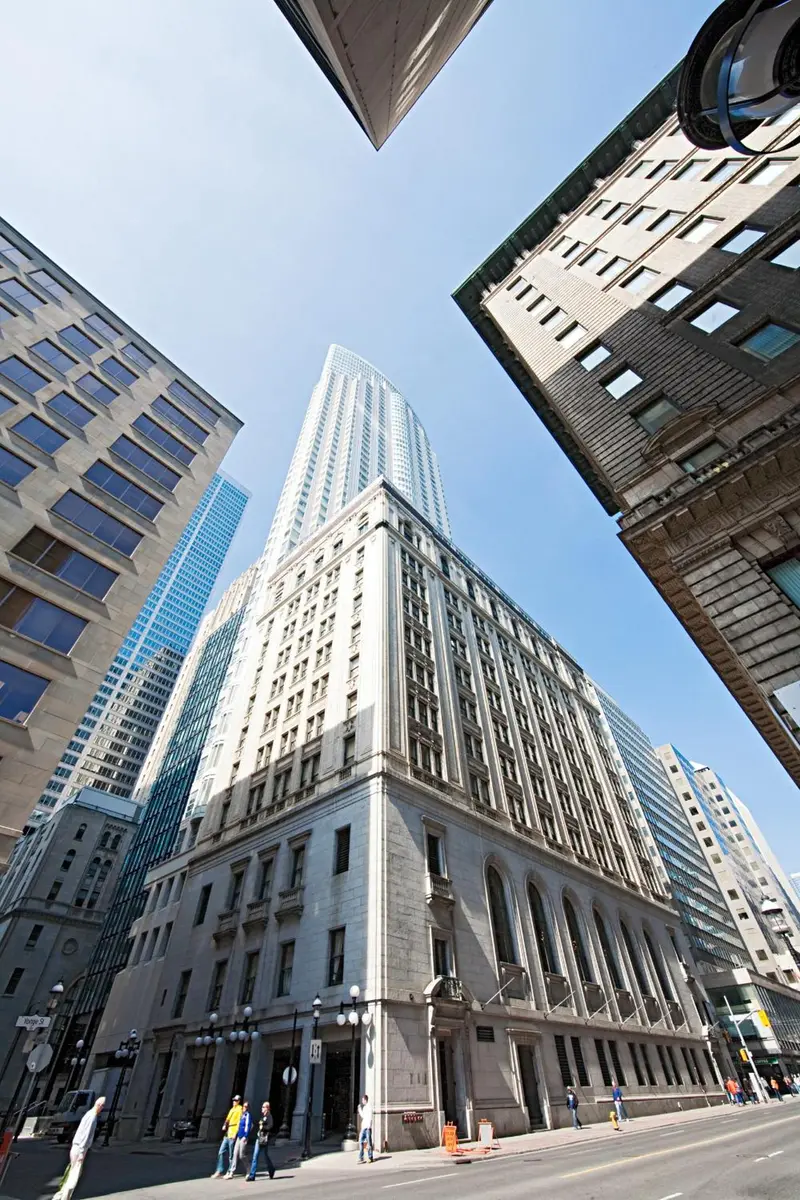 03
One King West Hotel and Residence
9.011,555 reviewsFinancial District
7 min walk to Union Station
See prices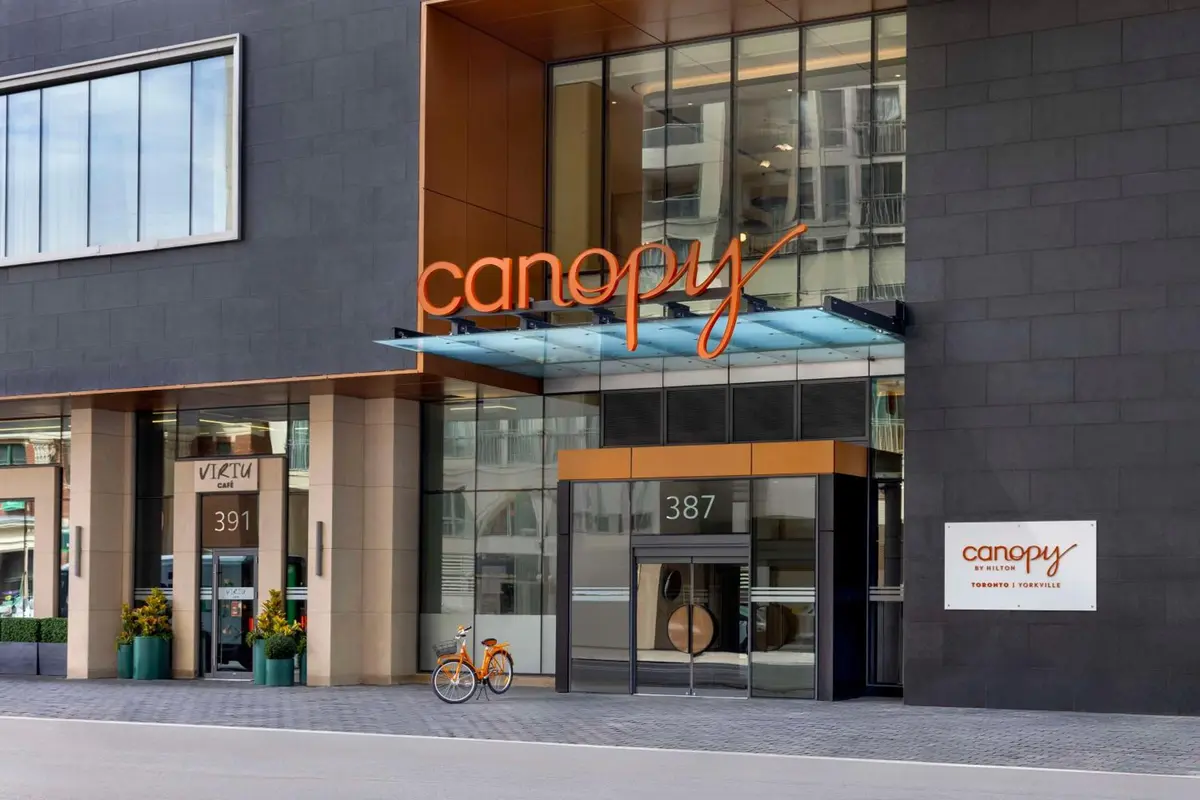 04
Canopy By Hilton Toronto Yorkville
9.01,100 reviewsChurch-Wellesley
24 min walk to the Royal Ontario Museum
See prices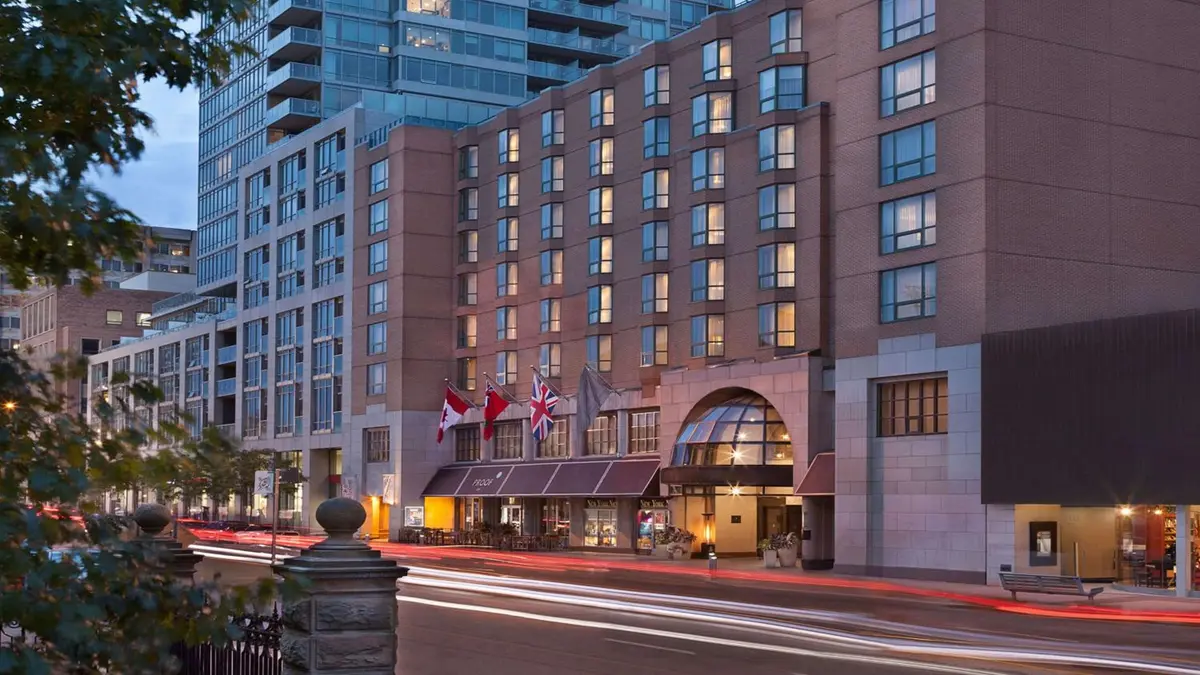 05
The Yorkville Royal Sonesta Hotel Toronto
8.93,174 reviewsYorkville and the Annex
2 min walk to the Royal Ontario Museum
See prices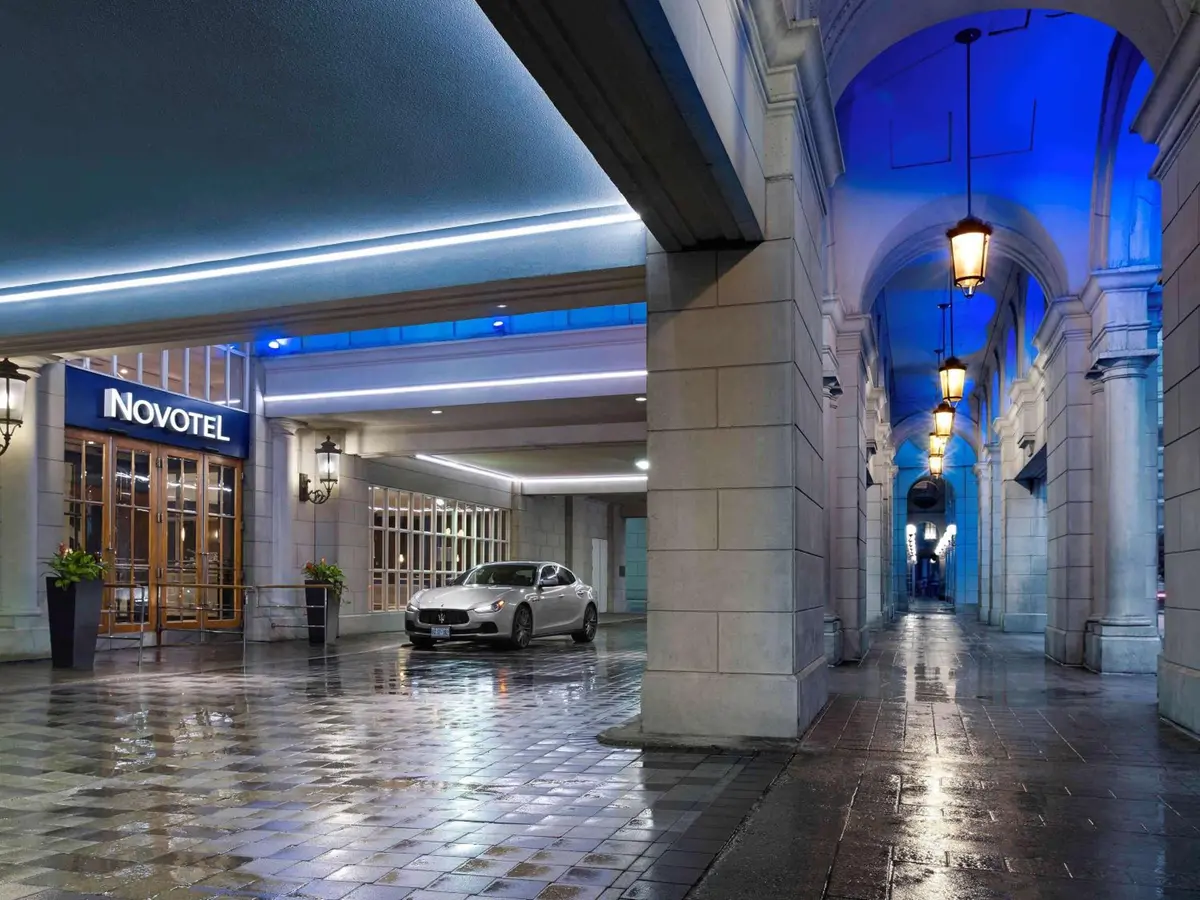 06
The Novotel Toronto Centre
8.83,471 reviewsSt. Lawrence and Old Town
5 min walk to St. Lawrence Market
See prices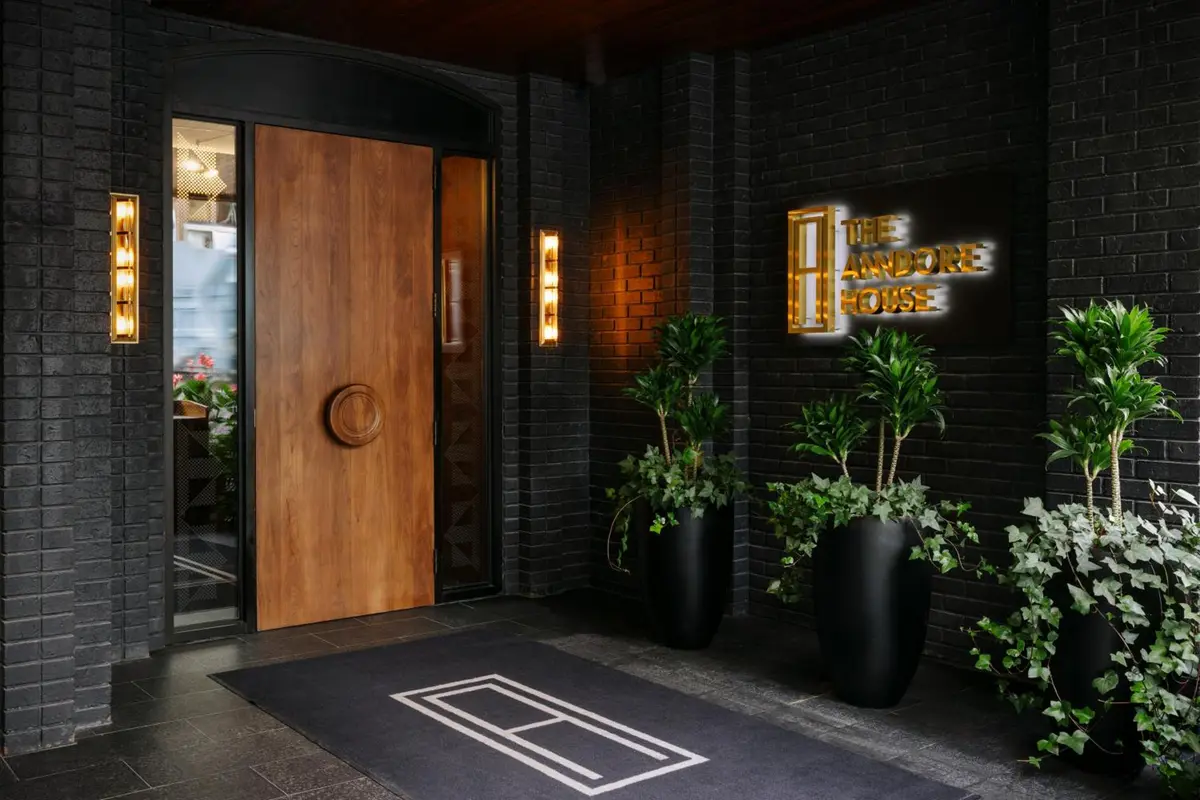 07
The Anndore House, part of JDV by Hyatt
8.81,378 reviewsChurch-Wellesley
12 min walk to the Royal Ontario Museum
See prices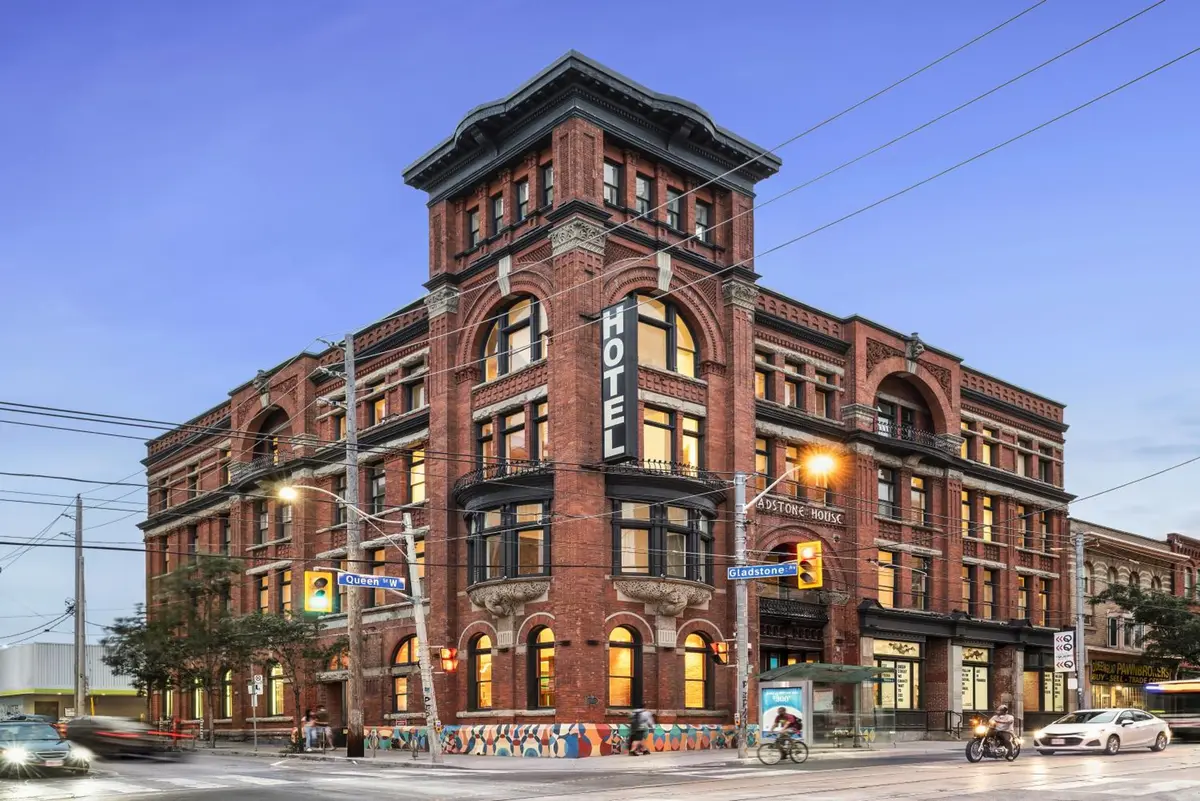 08
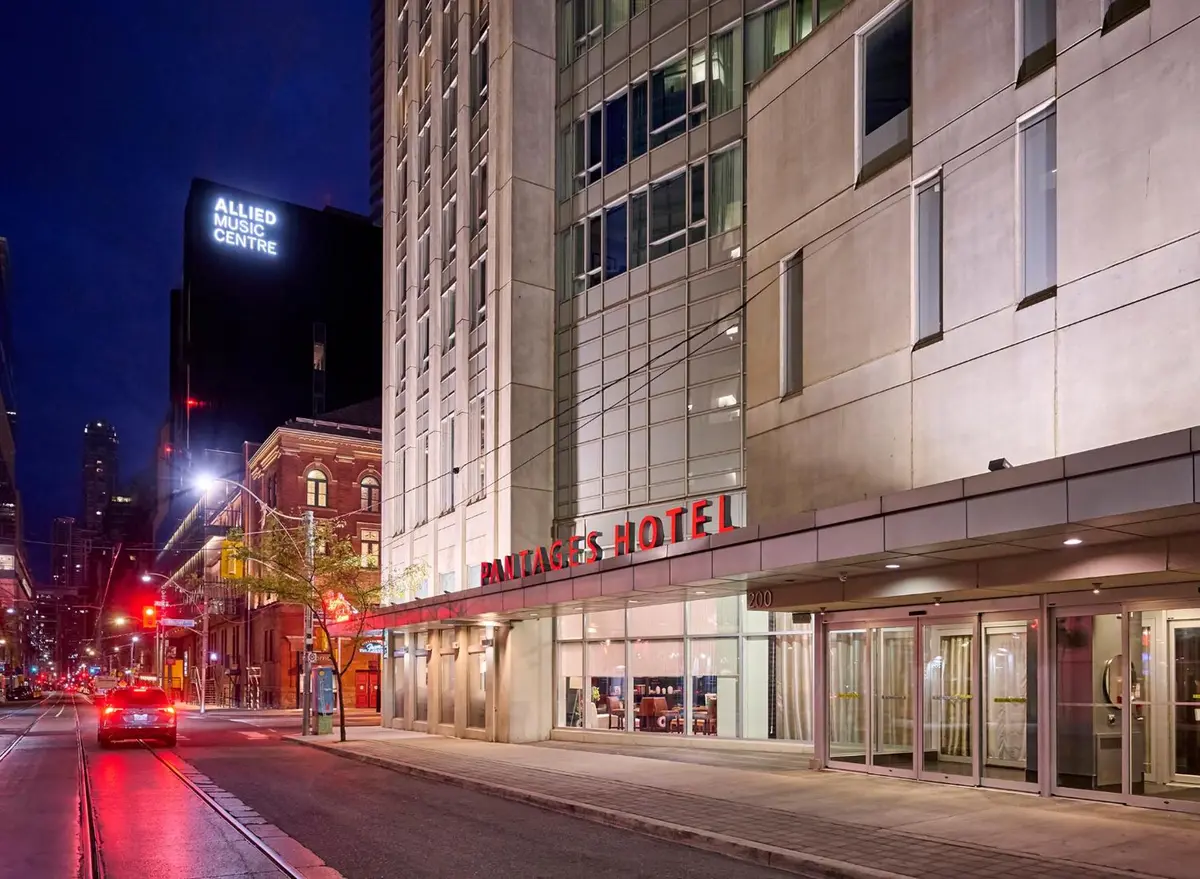 09
Pantages Hotel Toronto Centre
8.72,445 reviewsYonge-Dundas
7 min walk to Nathan Phillips Square
See prices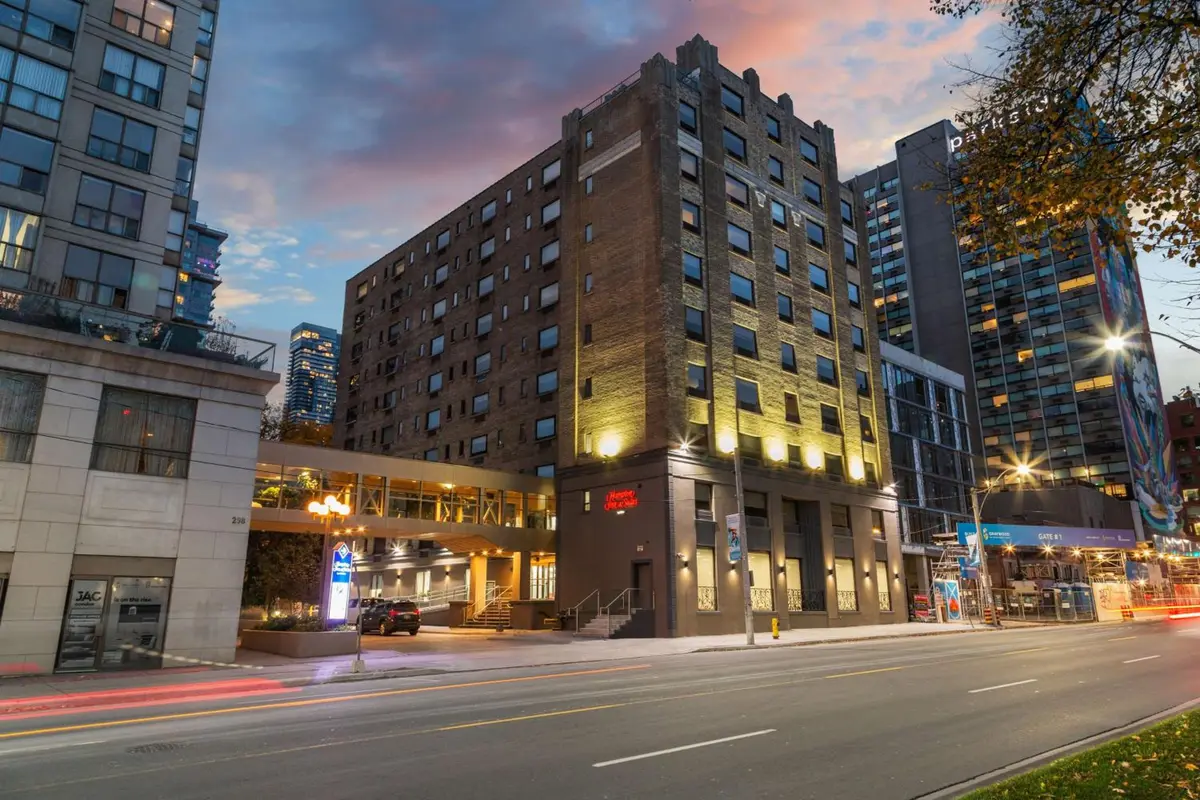 10
Hampton Inn & Suites by Hilton Toronto Downtown
8.51,393 reviewsGarden District
19 min walk to Nathan Phillips Square
See prices
Hotel links go to Stay22. If you book, we may earn a commission, at no cost to you.
Food and drink
Toronto eats from every corner of the world, often in restaurants run by the families who brought the recipes, and it has a few dishes of its own, from the peameal bacon sandwich to the butter tart. Weekend brunch is a ritual, and dinner starts earlier than in Europe, from about 6 to 8pm.
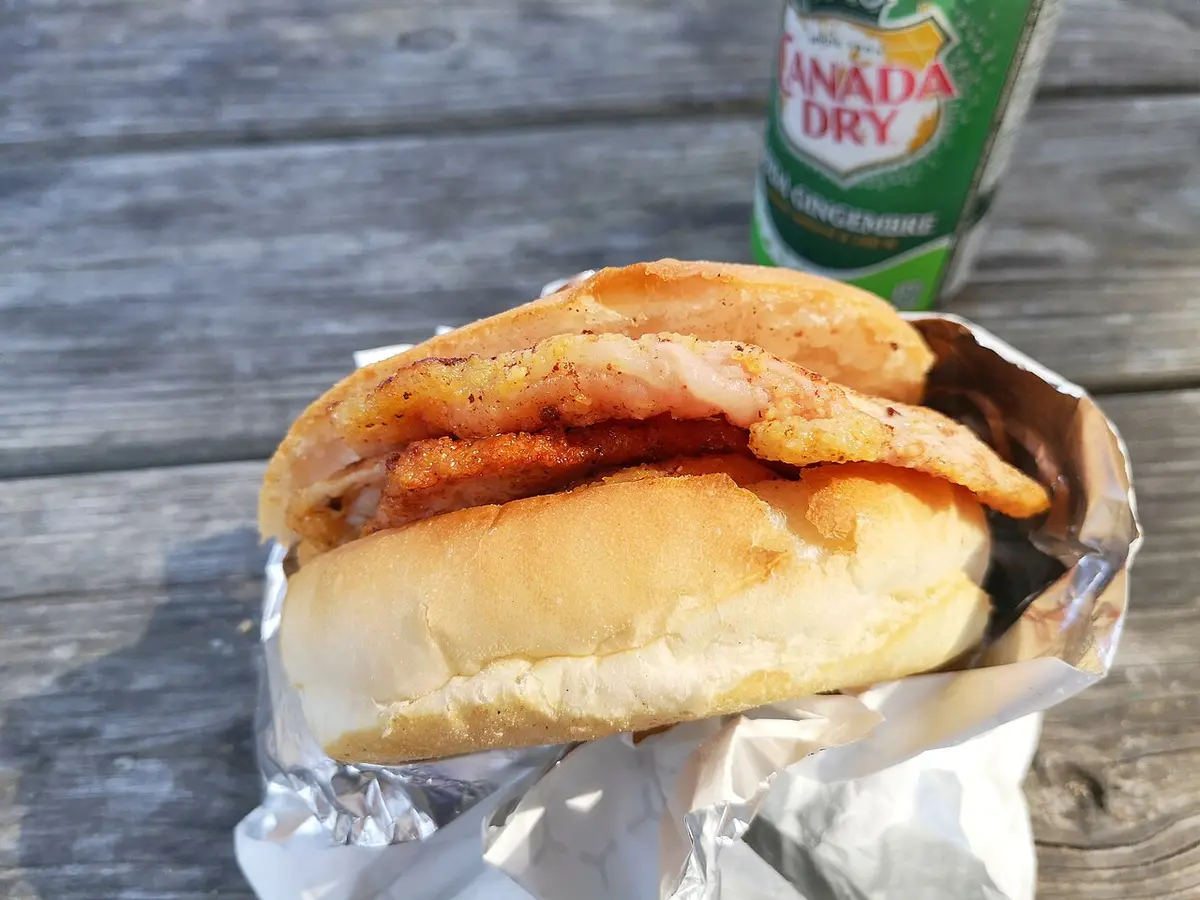
Peameal bacon sandwich
Lean pork loin, cured, rolled in cornmeal, grilled and piled on a soft bun with mustard. The pork packers who gave the city its old nickname, Hogtown, first rolled it in ground yellow peas; Carousel Bakery in St. Lawrence Market is the classic place to eat one.
Photo: Leventio, CC BY-SA 4.0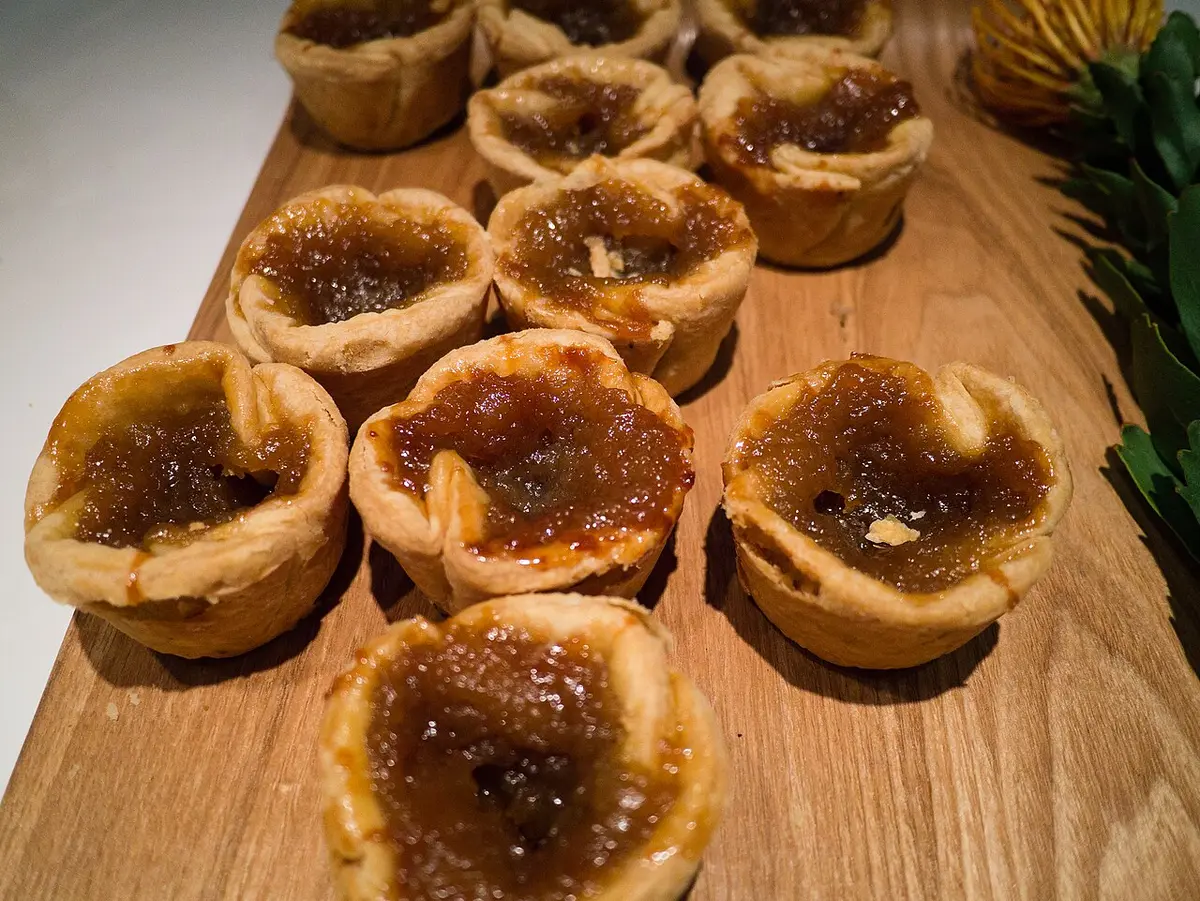
Butter tart
A small pastry shell filled with butter, sugar and egg that sets soft or stays runny, an Ontario favorite. Raisins or no raisins is a serious argument.
Photo: Rob Campbell from Toronto, ON, Canada, CC BY 2.0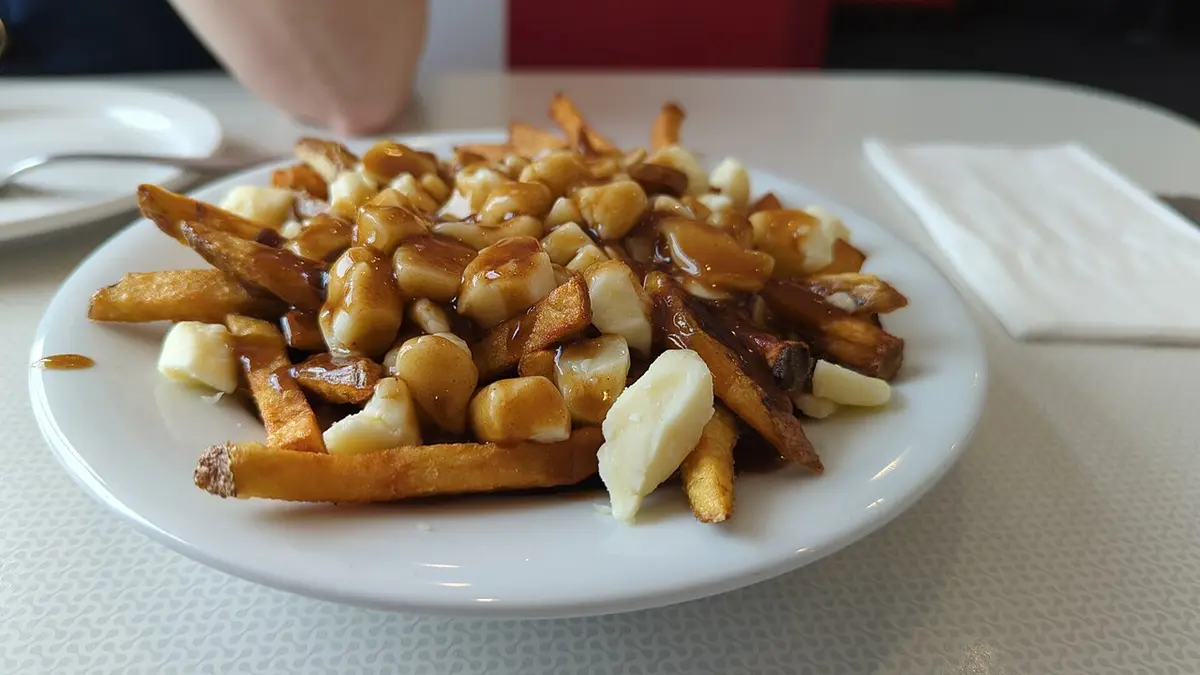
Poutine
Fries, squeaky cheese curds and hot gravy, from Quebec but sold all over the city, often late at night.
Photo: Antonydstevens, CC0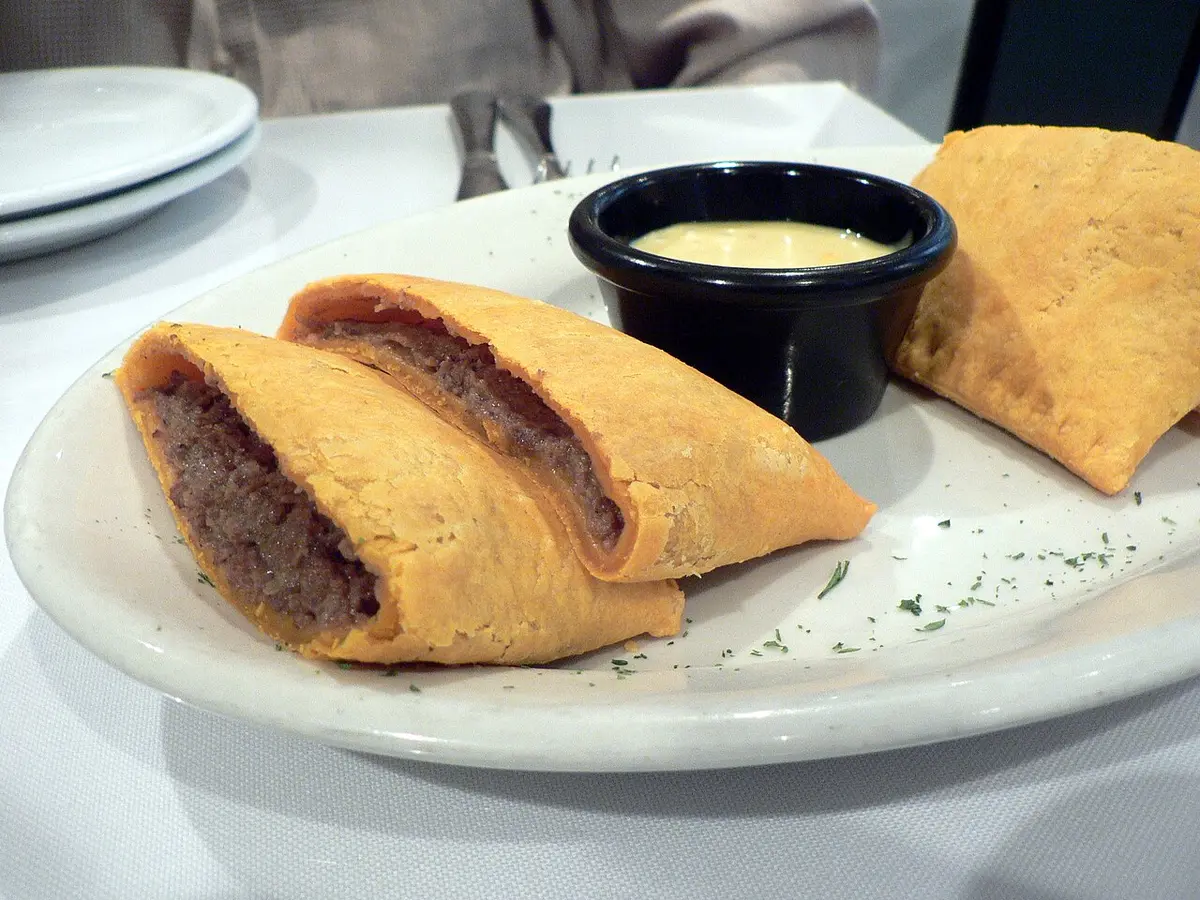
Jamaican patty
Flaky golden pastry around spiced beef, chicken or vegetables, sold in Caribbean bakeries and corner stores, sometimes tucked inside soft coco bread.
Photo: stu_spivack, CC BY-SA 2.0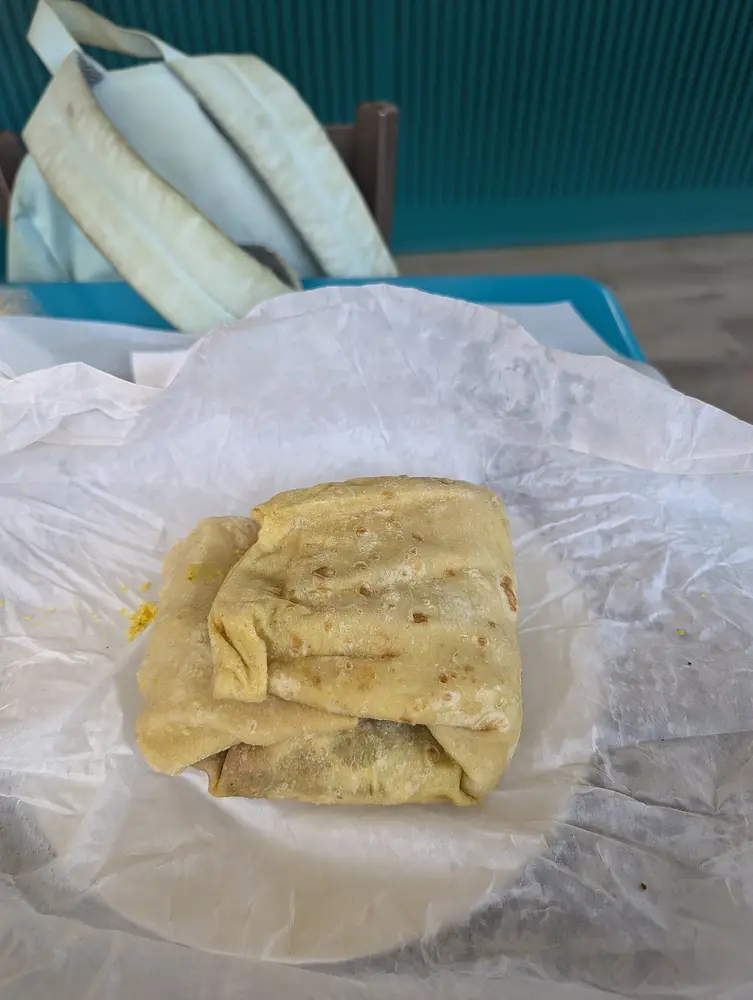
Roti
From the city’s Caribbean shops: a soft flatbread wrapped around curried chicken, goat, or potato and chickpeas.
Photo: Geo Swan from Toronto, Canada, CC0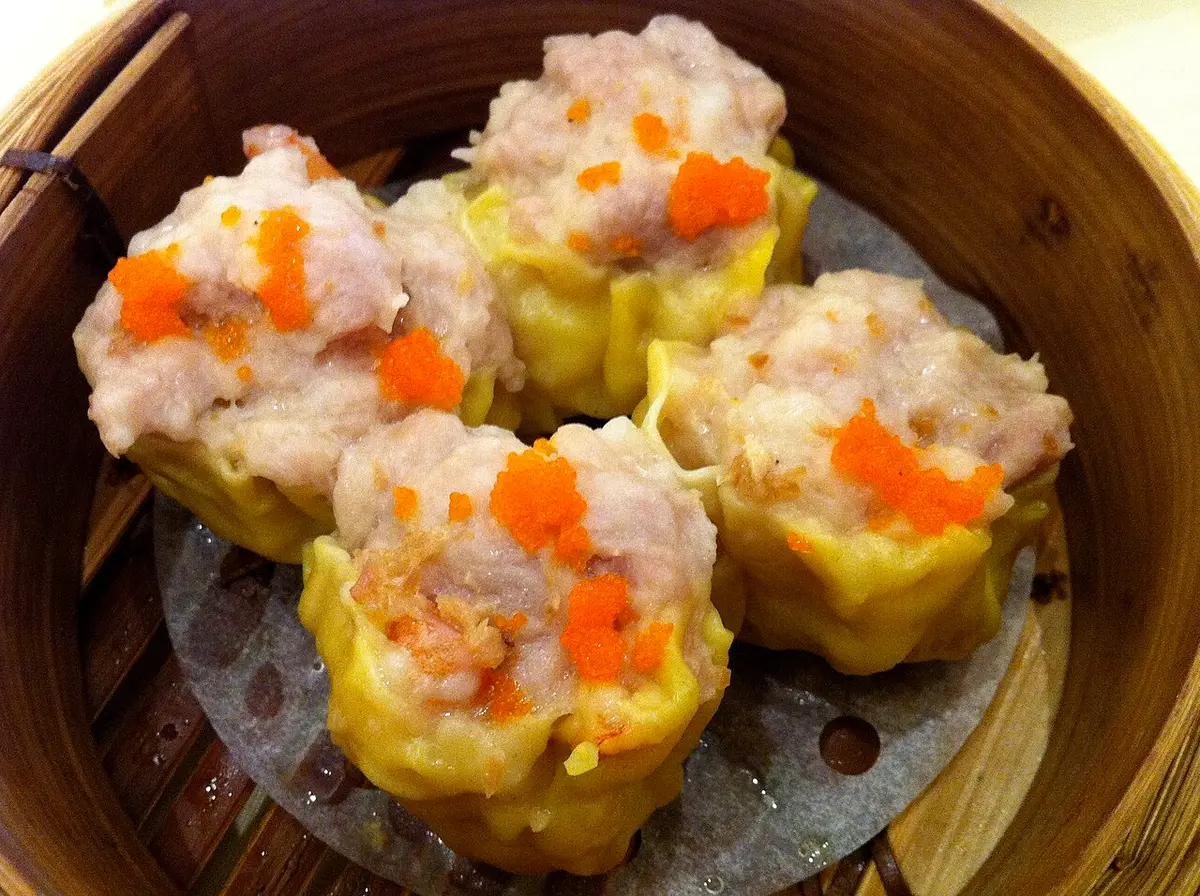
Dim sum
Dumplings, buns and rolls from carts or menus, busiest at weekend lunch in Chinatown or in the suburbs of Markham and Richmond Hill.
Photo: andrewarchy from Toronto, Canada, CC BY 2.0Souvlaki on the Danforth
Grilled skewers of pork or chicken with pita, potatoes and tzatziki in the Greek restaurants along Danforth Avenue.
Eat breakfast at St. Lawrence Market, dim sum and noodles in Chinatown on Spadina, everything from empanadas to Jamaican patties in Kensington Market, Greek on the Danforth, Italian on College Street, Korean on Bloor Street and South Asian on Gerrard Street East. For Cantonese and Hong Kong-style restaurants, many locals drive out to Markham and Richmond Hill.
The spring the Americans burned York
In April 1813 an American fleet crossed Lake Ontario, took the small capital of Upper Canada and set fire to its parliament. How the town that became Toronto came through its one battle, and where to see what is left.
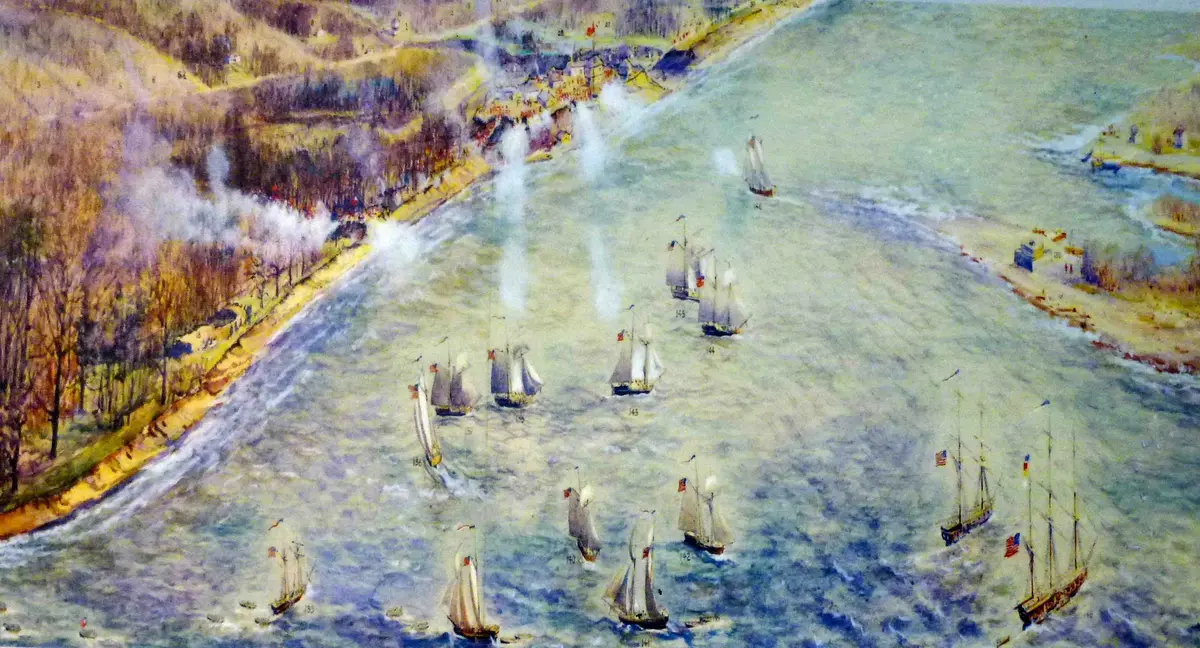
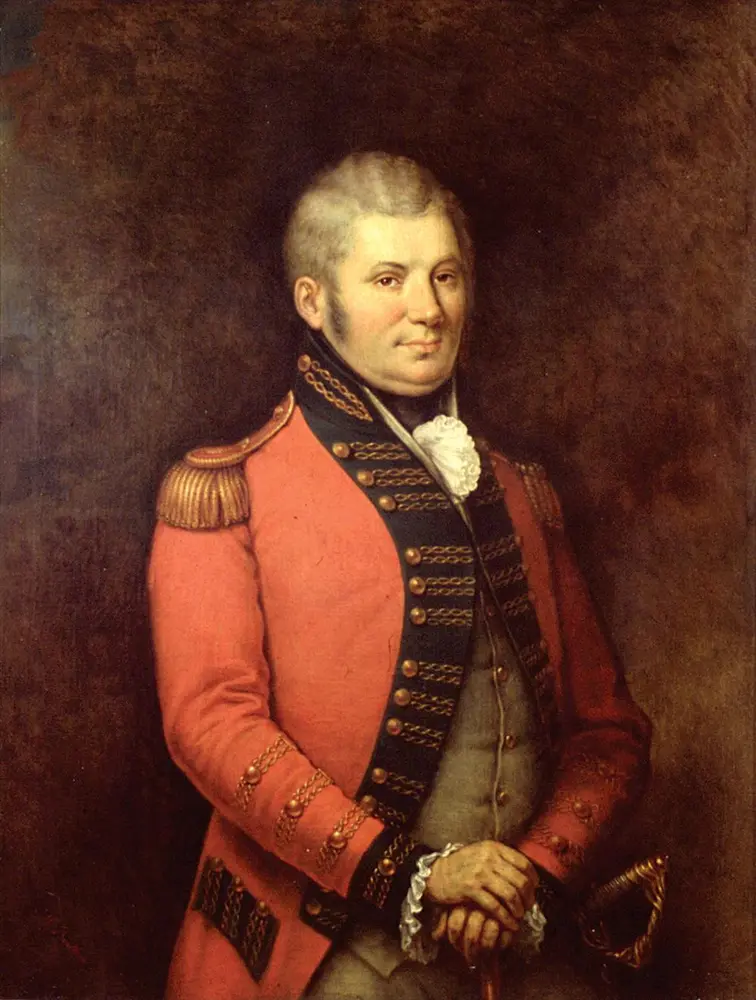
In 1793 John Graves Simcoe, the first lieutenant governor of the new province of Upper Canada, came to a sheltered harbor on the north shore of Lake Ontario, closed off by a long sandy peninsula that is now the Toronto Islands. He wanted a capital safer from the United States than Newark, which sat on the Niagara River border, and he named the new town York, after the Duke of York, a son of George III. At the harbor’s western entrance he built a garrison, Fort York.
York grew slowly. It was a town of a few hundred people and muddy streets, laid out in ten blocks by the water, with two brick buildings for the legislature at its eastern end, near today’s Front and Parliament Streets. When war broke out between Britain and the United States in June 1812, the little capital lay across the lake from the American naval base at Sackets Harbor, New York.
On April 27, 1813, the American fleet under Commodore Isaac Chauncey landed about 1,700 soldiers west of the fort, led by Brigadier General Zebulon Pike. Facing them were some 300 British regulars, about 300 militia and a few dozen Mississauga and Ojibwe warriors under Major General Roger Hale Sheaffe. After a morning of fighting, Sheaffe pulled his regulars back toward Kingston, and the fort’s main powder magazine was blown up as they left. The blast killed Pike and 37 of his men and wounded more than 200 others.
Militia officers negotiated the surrender of the town, and John Strachan, the Anglican rector, pressed the American commanders to honor it. Over the next days soldiers looted houses and set fire to the parliament buildings and Government House. They carried off the legislature’s ceremonial mace, which stayed in the United States until 1934, when President Franklin Roosevelt returned it as a gesture of goodwill. The Americans sailed away on May 8, after nearly two weeks.
York was small enough to take in a morning, and its burning was remembered as far away as Washington.
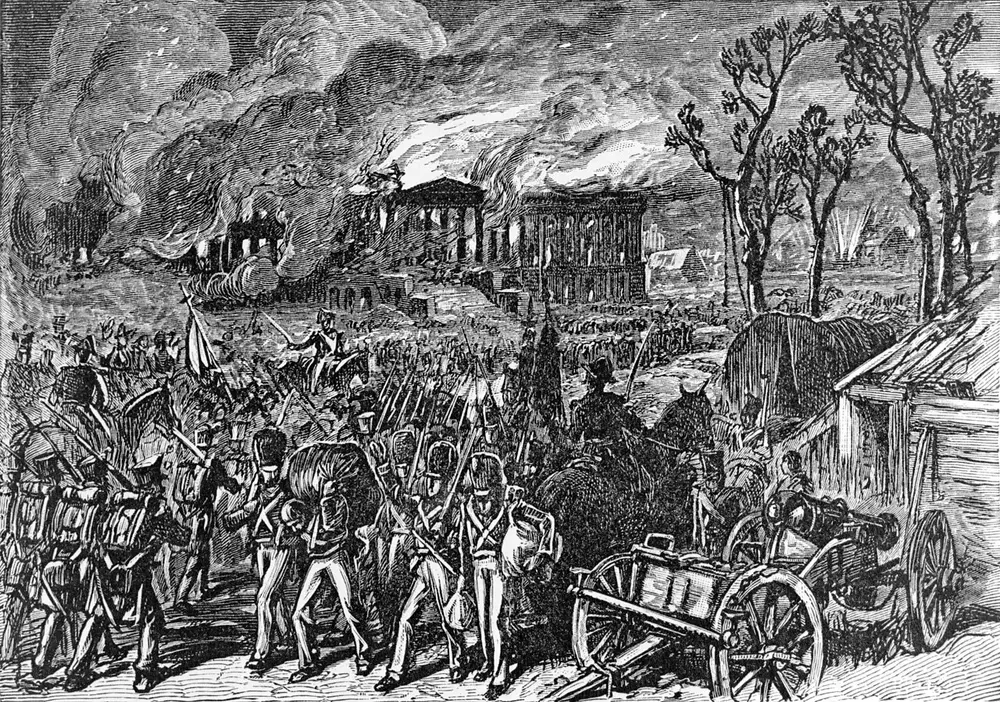
The burning of York was remembered. When British troops set fire to the Capitol and the President’s House in Washington in August 1814, voices in Upper Canada called it just retribution. Fort York was rebuilt between 1813 and 1815, the war ended in 1815, and in 1834 York was incorporated as a city and took back an older name, Toronto.
Fort York is still there, west of Bathurst Street under the Gardiner Expressway, with the largest collection of buildings from the War of 1812 in Canada: blockhouses, barracks and a stone powder magazine inside its earthen walls. Admission is free, and condo towers now look down on the parade ground. On the east side of downtown, archaeologists have found remains of the first parliament buildings at Front and Parliament Streets.
Art
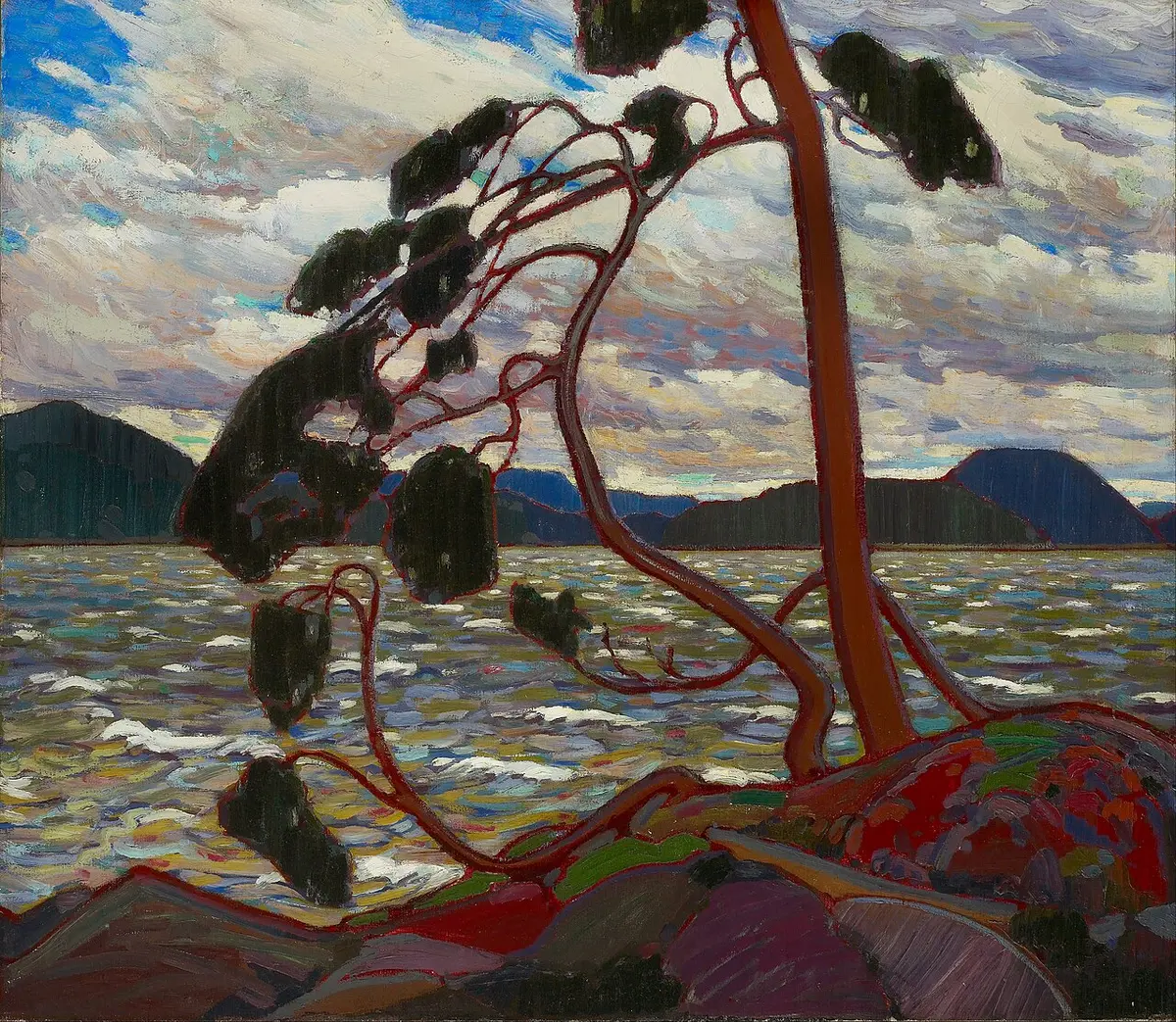
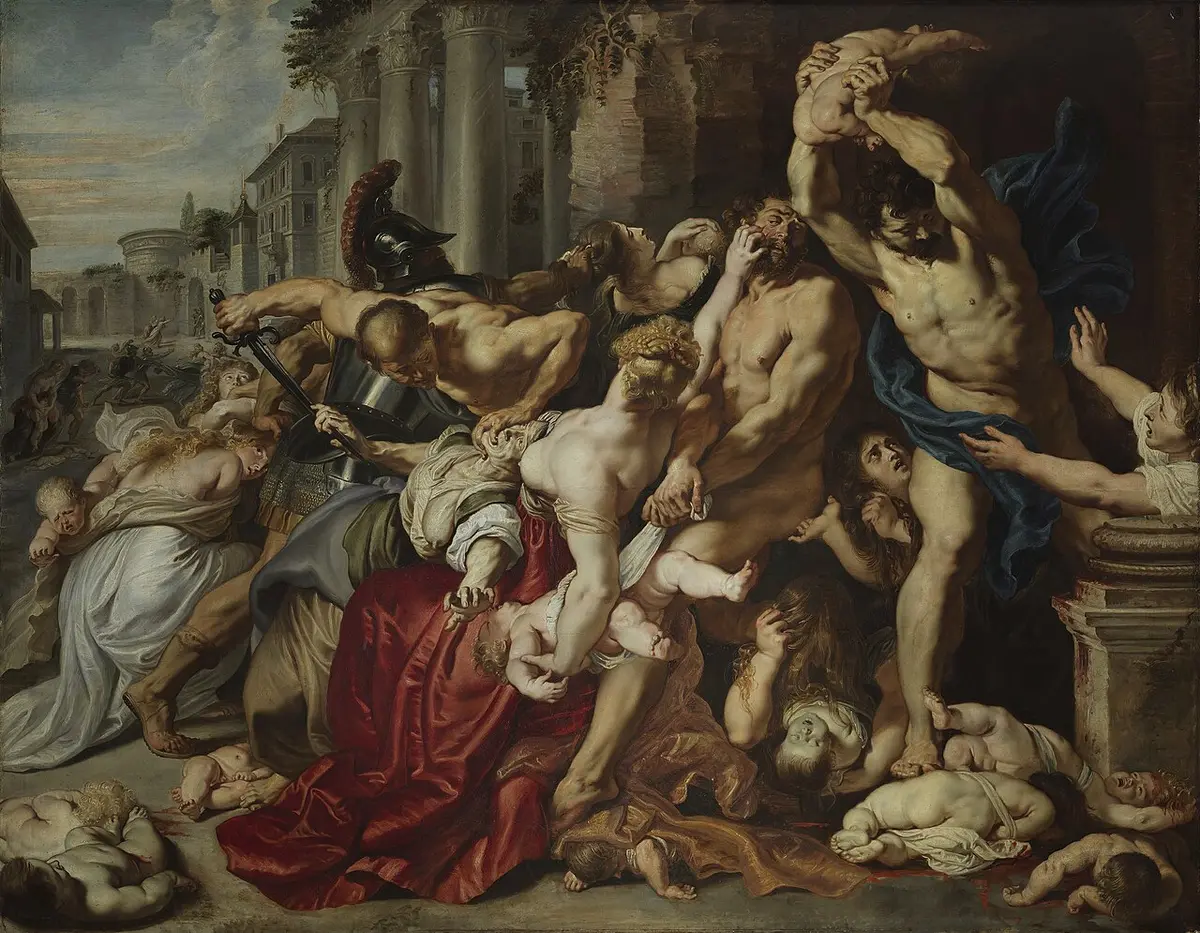
The AGO
Canadian painting from Tom Thomson and the Group of Seven to Emily Carr, European art from Rubens to Rembrandt, and the largest public collection of Henry Moore’s sculpture, in Frank Gehry’s 2008 rebuilding.
The Group of Seven
Painters who set out in 1920 to paint Canada’s own wilderness: the rocks, pines and lakes of northern Ontario. Tom Thomson, who died in 1917 before the group was formed, painted The West Wind, now at the AGO, and the McMichael Canadian Art Collection in Kleinburg, north of the city, is built around their work.
The ROM
The Royal Ontario Museum mixes art, world cultures and natural history, from Chinese bronzes and a Ming-era tomb to Egyptian mummies and First Nations art, inside a 1914 building and Daniel Libeskind’s Crystal.
Smaller museums
The Bata Shoe Museum and the Gardiner Museum of ceramics stand near the ROM, and the Aga Khan Museum shows Islamic arts in a building by Fumihiko Maki in the north of the city.
Street art and Nuit Blanche
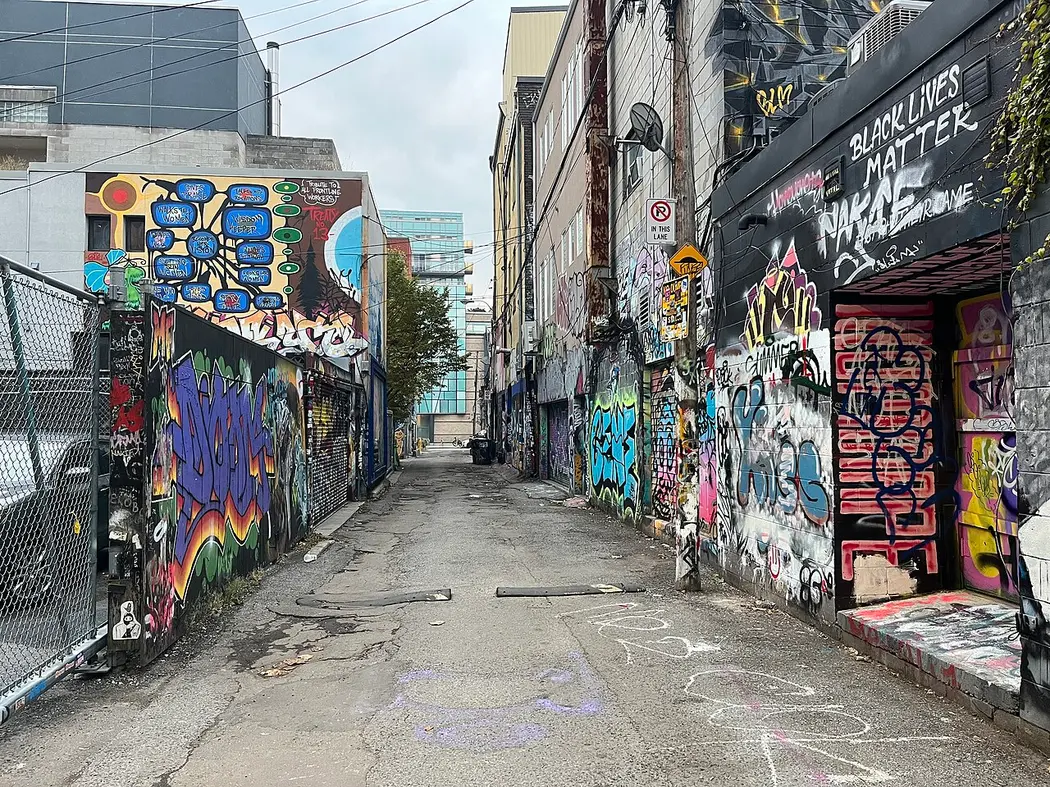
Murals cover Graffiti Alley and the lanes of Queen West, and for one night in early October Nuit Blanche fills the city with free art installations from dusk to dawn.
Toronto on the page
A poet who lived by her pen in rooming houses, a young reporter named Hemingway, and two novelists who wrote the city as it changed.
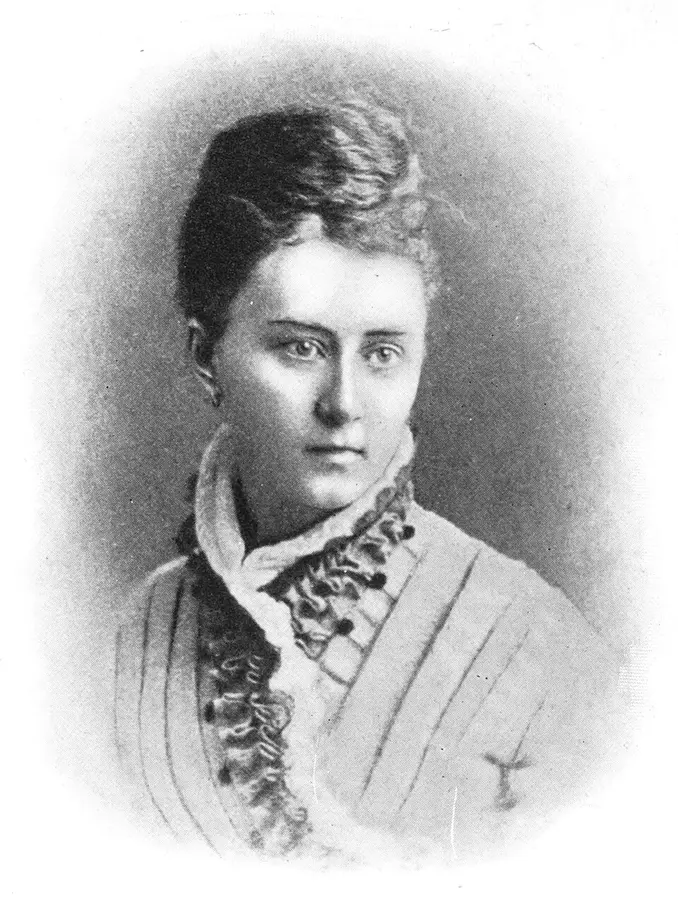
Isabella Valancy Crawford
1850 to 1887
Born in Dublin and raised in Ontario, Crawford lived in Toronto with her widowed mother from about 1883, in rooms on Adelaide Street and then on John Street at King, earning her living with verse for the Toronto papers and serial stories for New York magazines. In 1884 she paid to print Old Spookses’ Pass, Malcolm’s Katie, and Other Poems; reviewers praised it and few bought it. She died in 1887, at 36, and is now read as one of Canada’s first major poets.
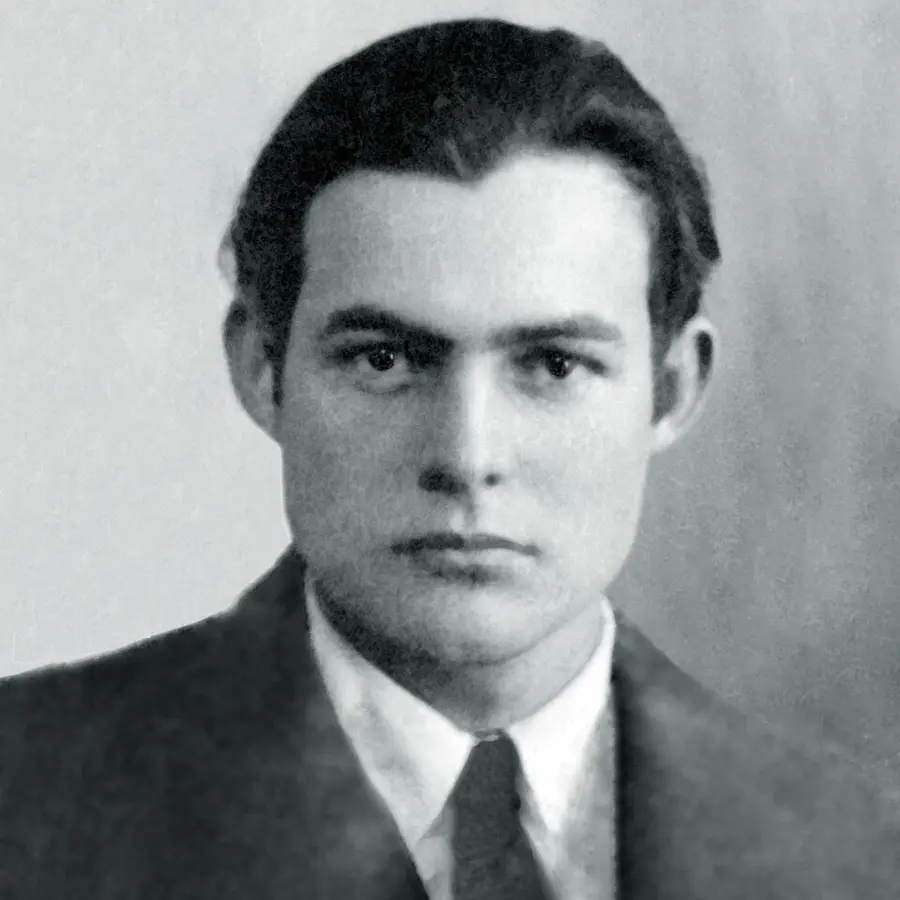
Ernest Hemingway
1899 to 1961
Hemingway first came to Toronto in 1920 and sold his first pieces to the Toronto Star Weekly. After two years reporting from Europe for the Star, he came back in 1923 as a staff reporter and lived in an apartment on Bathurst Street, where he and his wife brought home their first son, born in a Toronto hospital that October. He quit at the end of the year and went back to Paris.
Margaret Atwood
born 1939
In Cat’s Eye (1988), a painter returns to Toronto for a retrospective of her work and remembers growing up in the city of the 1940s and 1950s, and The Robber Bride (1993) follows three women through the Toronto of its own day.
Michael Ondaatje
born 1943
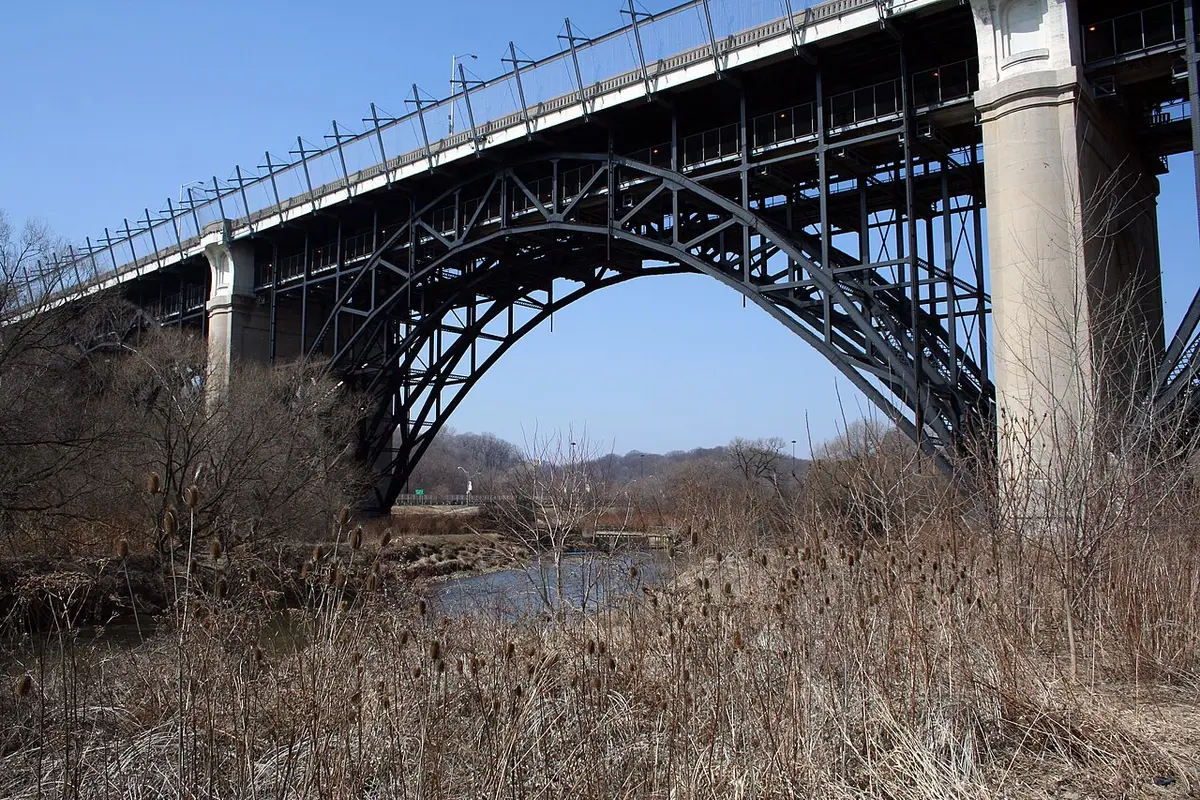
In the Skin of a Lion (1987) tells the story of the immigrant workers who built the city in the early 1900s, above all the Prince Edward Viaduct across the Don Valley and the R. C. Harris water treatment plant by the lake. Two of its characters reappear in The English Patient (1992).
I stand within the stony, arid town,
I gaze for ever on the narrow street;
I hear for ever passing up and down,
The ceaseless tramp of feet.
Isabella Valancy Crawford, The City Tree, from Old Spookses’ Pass, Malcolm’s Katie, and Other Poems (Toronto, 1884)
Culture
Caribana
The Toronto Caribbean Carnival, first held in 1967, ends with a Grand Parade of costumed masqueraders and steel pans along the lakeshore on the first weekend of August.
TIFF
The Toronto International Film Festival, held every September since 1976, fills King Street around the TIFF Lightbox with premieres, and many screenings are open to the public.
Pride
Pride Toronto fills the Church-Wellesley Village with a month of events in June, ending with a parade at the end of the month.
Hockey
The Maple Leafs play at Scotiabank Arena, and the Hockey Hall of Fame, in an old bank at Yonge and Front Streets, shows the Stanley Cup under a stained-glass dome.
The Ex
The Canadian National Exhibition, held since 1879, brings rides, food stalls and an air show to Exhibition Place for the last two weeks of summer.
Toronto on film
The city stands in for New York, Chicago and many other places on screen; Scott Pilgrim vs. the World (2010) is one of the few films that plays Toronto as itself, from Casa Loma to the bars of the Annex.
Music and nights out
Concert halls
Massey Hall, opened in 1894 and reopened in 2021 after a long restoration, is the city’s classic stage. Roy Thomson Hall is home to the Toronto Symphony Orchestra, and the Four Seasons Centre to the Canadian Opera Company and the National Ballet of Canada.
The Yorkville years
In the 1960s the coffeehouses of Yorkville, the Riverboat above all, gave early stages to Gordon Lightfoot, Joni Mitchell and Neil Young.
Live music
The Horseshoe Tavern on Queen Street West has put on bands since 1947, and the clubs of the Annex and Queen West have live music most nights.
Jazz
The Rex, a hotel bar on Queen Street West, has jazz every night, and the Toronto Jazz Festival takes over stages across the city in late June.
Nights out
King West and Ossington for bars, the Entertainment District for clubs, and patios everywhere in summer. Last call is 2am.
Nature and day trips
High Park
A large park in the west end, with oak savanna, ponds and trails, a small free zoo, and cherry trees given by Tokyo in 1959 that bloom in late April or early May.
The ravines
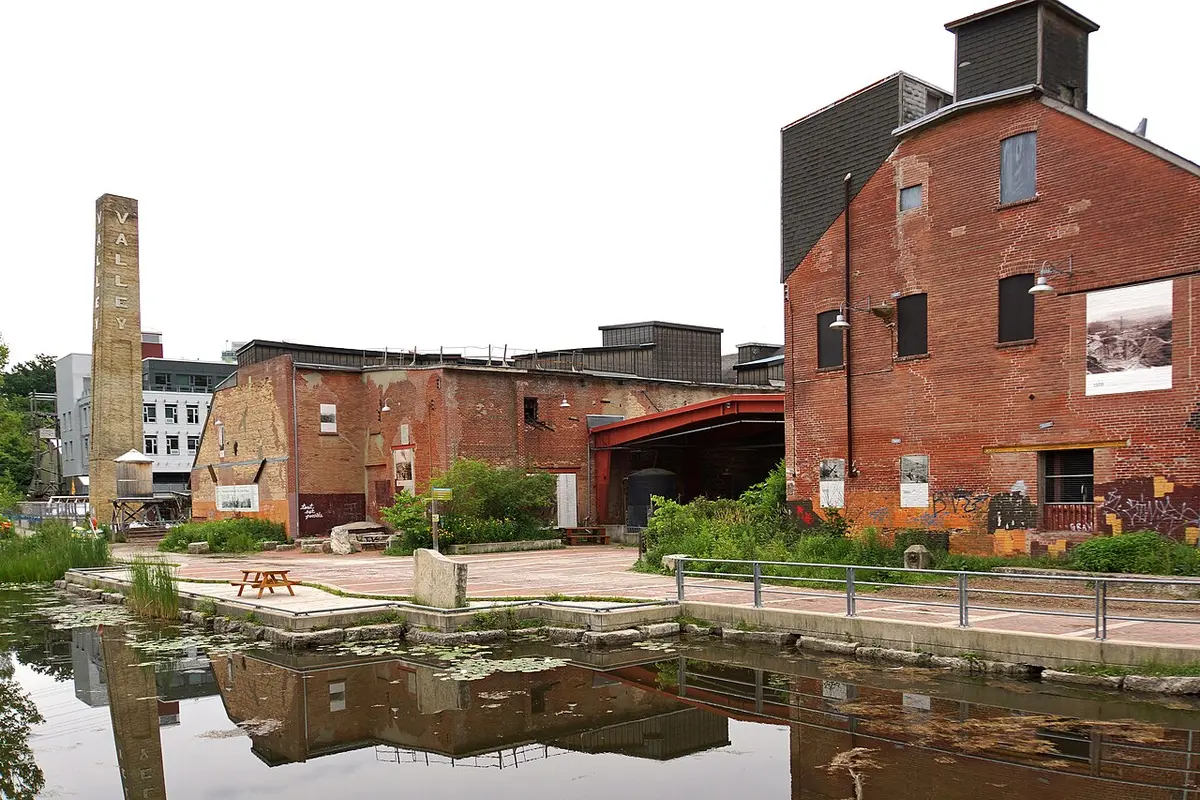
Wooded ravines cut through the city along the Don and Humber rivers and their creeks, with trails that feel far from downtown. Evergreen Brick Works is a good place to start.
The lakefront
The Martin Goodman Trail runs along the water for walking and cycling, past Sugar Beach and its pink umbrellas to the boardwalk of the Beaches in the east.
Beaches
Woodbine Beach in the east, Sunnyside in the west and the island beaches have lifeguards in summer; check the daily water-quality results, which can close a beach to swimming after heavy rain.
Winter skating
Outdoor rinks open at Nathan Phillips Square, at Harbourfront and in many parks from late November or December, weather permitting.
Day trips
Niagara Falls is about two hours away by GO train or bus from Union Station, and Niagara-on-the-Lake, a 19th-century town among vineyards, is close by.
A day on the Toronto Islands
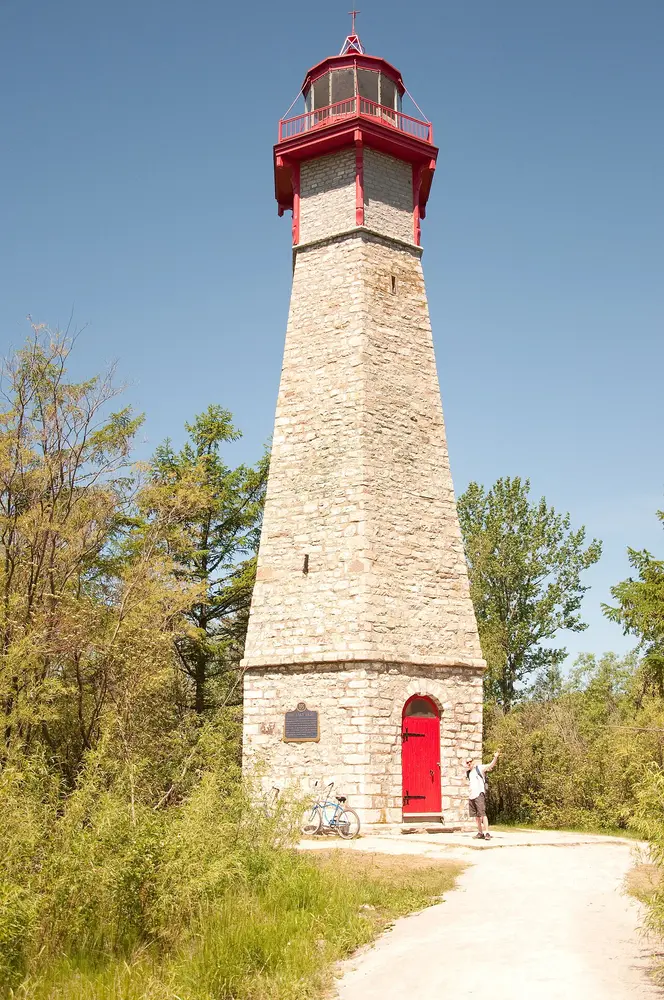
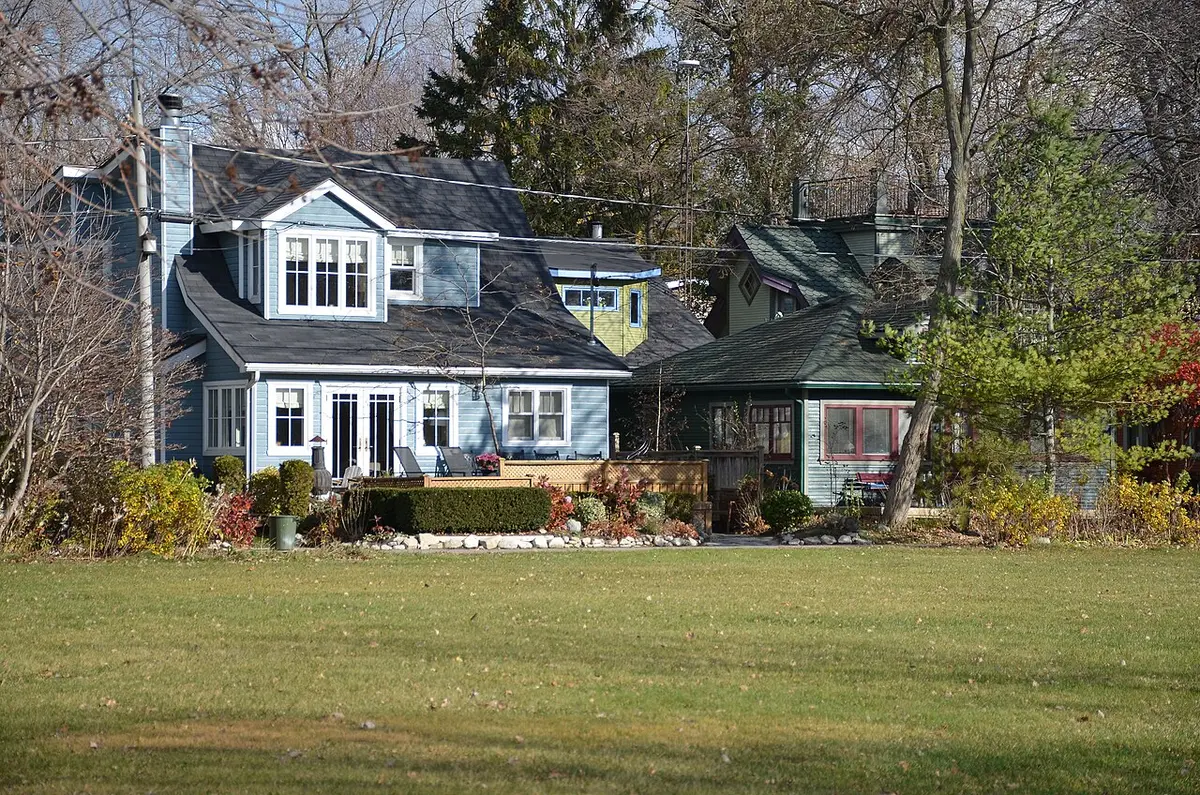
Ferries leave from the terminal at the foot of Bay Street, beside the Westin Harbour Castle hotel, for three docks on the islands: Centre Island, Hanlan’s Point and Ward’s Island. The islands are car-free, so bring a bike or rent one there, and take a late boat back.
People and customs
Tipping
Tip 15 to 20 percent at restaurants and bars, and a little more for good service. Servers earn much of their income from tips.
Tax on top
Shelf and menu prices do not include HST, the 13 percent sales tax, which is added when you pay.
Lining up
People queue in good order, at bus stops, streetcar doors, brunch spots and the ferry, and expect you to do the same.
Please and thank you
Expect plenty of sorry and thank you, and thank the driver when you get off the bus or streetcar.
Drinking
The legal drinking age is 19. Beer, wine and spirits are sold at LCBO stores, and beer and wine in many grocery and convenience stores.
Winter
Dress in layers and good boots, and use the PATH: about 30 kilometers of walkways under downtown link stations, offices and shops.
Questions
How many days do you need in Toronto?
Three days covers downtown and the CN Tower, the ROM and the AGO, Kensington Market and the Distillery District, and a ferry to the islands. Four or five leave time for a day trip to Niagara Falls.
Where should I stay in Toronto on a first visit?
Downtown and the Entertainment District put you near Union Station, the CN Tower and the theaters. St. Lawrence and Old Town are calmer and close to the market and the Distillery District, Yorkville suits museums and shopping, and Queen West and Ossington are best for nights out.
When is the best time to visit Toronto?
Late May to early October, when the patios are open and the islands are at their best; September and early October bring cooler days and fall colors. Winters are cold and snowy but quiet, with the lowest prices.
How do I get from Pearson Airport to downtown Toronto?
Take the UP Express train to Union Station, about 25 minutes. The TTC’s 900 Airport Express bus runs to Kipling subway station for a regular fare, and a taxi takes 30 minutes to an hour, depending on traffic.
Can you visit Niagara Falls on a day trip from Toronto?
Yes. The falls are about two hours away by GO train or bus from Union Station, with the most trains on weekends, or about an hour and a half by car without traffic. Leave time for Niagara-on-the-Lake and its wineries.
Is Toronto good for a bachelorette or a group trip?
Yes: dinners and bars on King West and Ossington, a sunset harbor cruise, clubs in the Entertainment District, a Blue Jays or Raptors game and a day of wine tasting in Niagara. Bars close at 2am.
Plan Toronto with your group
Everyone swipes on the sights they want. SwipeSights builds the days around the picks, in walking order.