Tskaltubo
Soviet ghosts in a healing forest
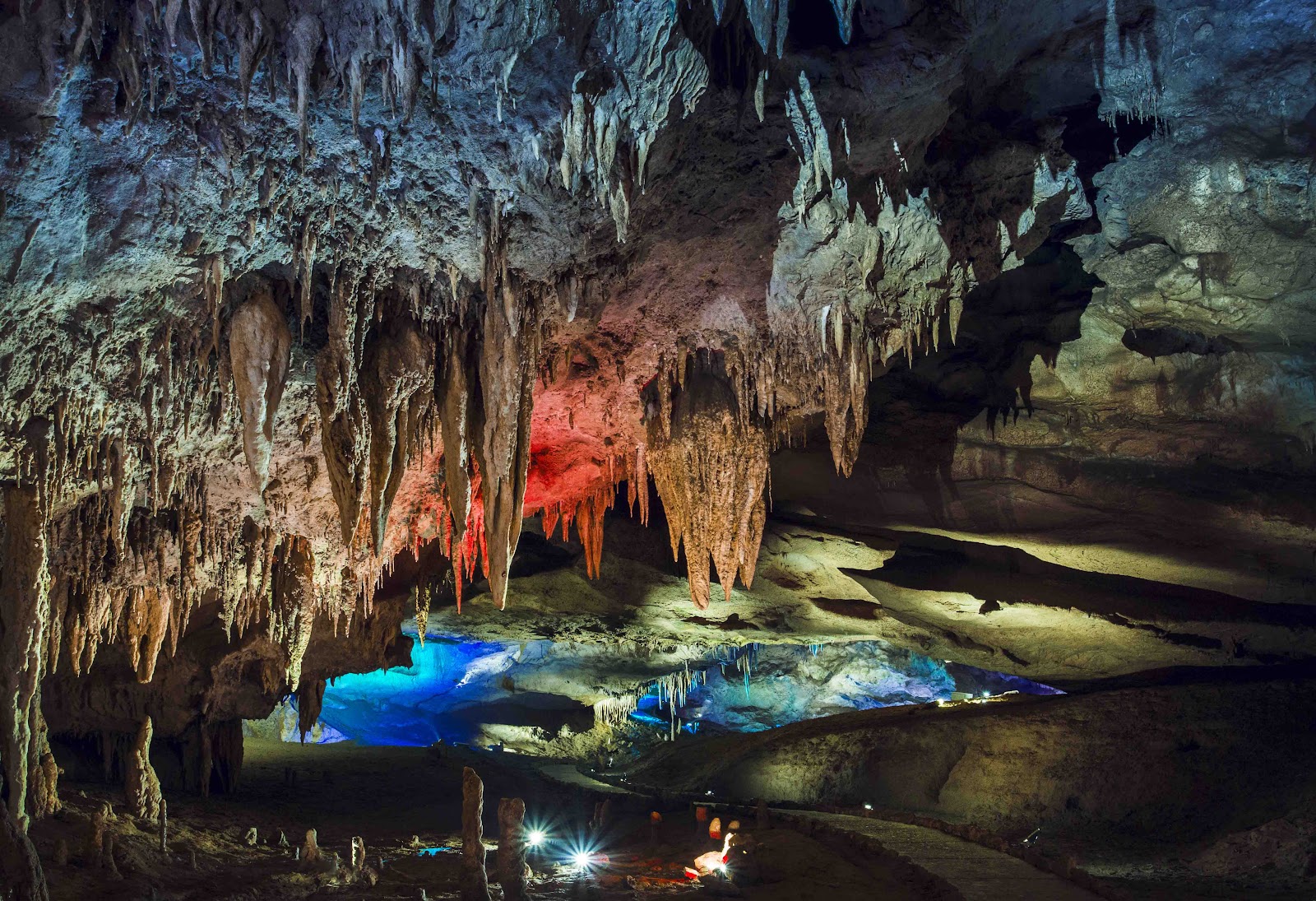
Once the USSR's spa capital, Tskaltubo is a hauntingly beautiful town where grand abandoned sanatoriums crumble among radon-rich springs and pine. You come for eerie urbex, mineral baths still flowing, and limestone caves nearby. It feels frozen mid-dream, equal parts melancholy and magic.
How long to stay?
One day covers the highlights: wander the colonnaded ruins of Sanatorium Medea and Metallurgist, soak at a working bathhouse, then loop the Colchis Fountain and central park before dusk softens the concrete.
Quiet, surreal, faintly melancholic. A faded resort town slowly being reclaimed by forest and ferns, where the past hums under everything. Drawn here are photographers, urban explorers, and slow travelers, not crowds.
Most visitors base in the central park area near the bathhouses, or commute the 15 minutes from Kutaisi, which has far more guesthouses, restaurants, and the regional airport. Both work well.
Many sanatoriums still house displaced families, so explore respectfully and ask before entering. Mornings bring the softest light and emptiest halls. A local guide unlocks the safest, most photogenic buildings.
Late spring and early autumn (May-June, September-October) are ideal: mild temperatures, green forest, comfortable for both caving and walking the ruins. Summer gets humid; winter is damp and grey.
Fly into Kutaisi International Airport, a major budget hub, then taxi or marshrutka 20 minutes to Tskaltubo. Tbilisi is roughly four hours by car or shared minibus across the country.
Georgia uses the lari and is famously affordable and hospitable. Georgian script looks unfamiliar but English helps among younger locals. The springs are mildly radioactive radon, considered therapeutic in moderation.