València
Where futurism meets the orange grove
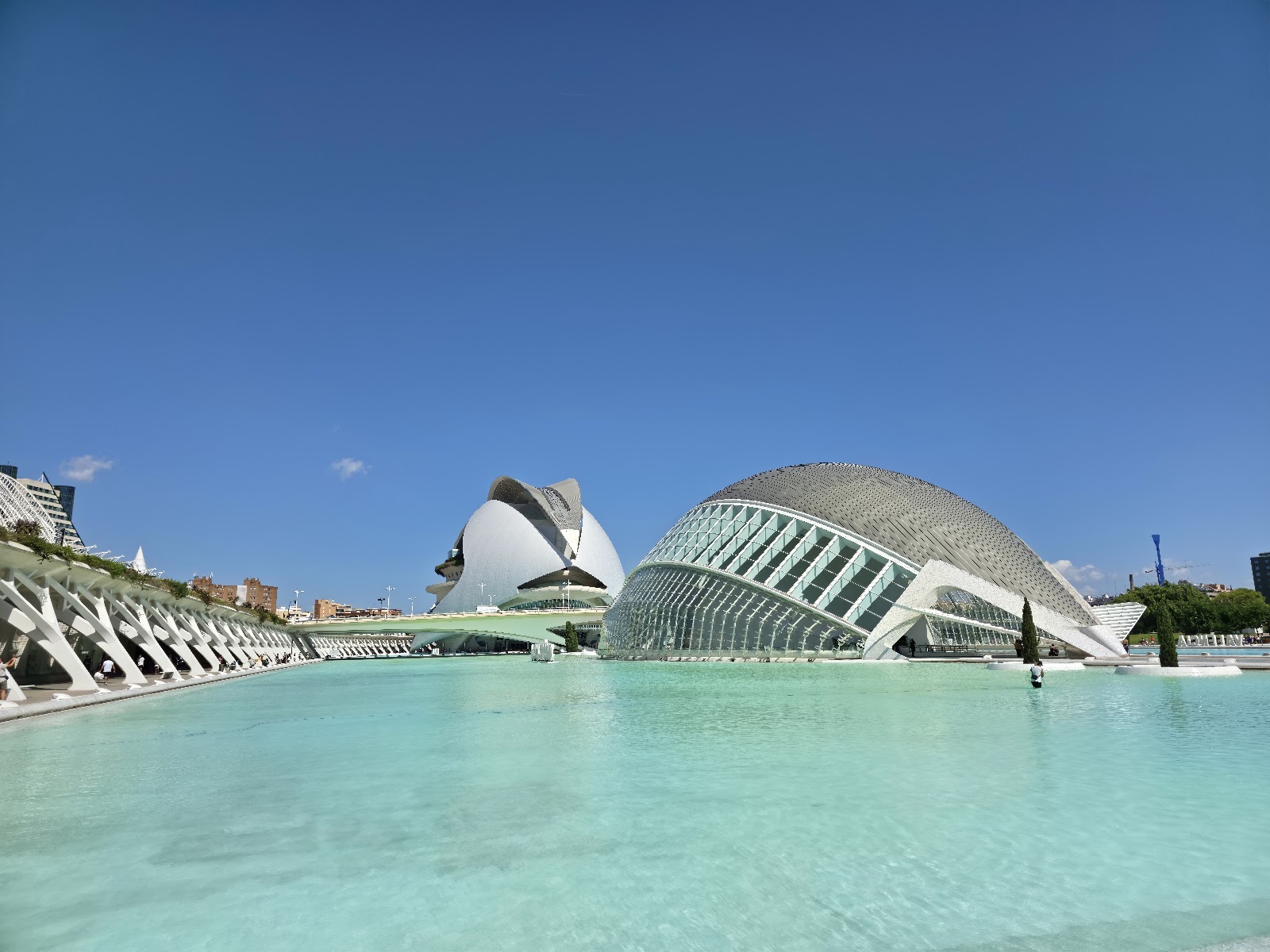
Spain's third city wears the sun lightly. You wander from a medieval silk exchange to a white spaceship-like science park, paella's birthplace simmers in the old town, and a dry riverbed turned into nine kilometers of green park threads it all together.
How long to stay?
One or two days covers Ciutat Vella: climb the Torres de Serranos, browse the Central Market, see the Cathedral and the Lonja, then bike the Turia gardens out to the futuristic Ciudad de las Artes y las Ciencias.
Relaxed and unpretentious, sunnier and cheaper than Barcelona. Locals linger over horchata, students fill Ruzafa's bars, and the pace stays gentle. A working Mediterranean city, not a theme park, with the beach a tram ride away.
Ciutat Vella (the old town) puts you among the monuments. Ruzafa is the hip, bar-heavy choice. El Carmen suits nightlife; for sand and seafood, base yourself near the Cabanyal or Malvarrosa beach.
Eat paella at lunch, never dinner, and head to the beachfront El Cabanyal or nearby Pinedo where Valencians actually go. Order it by the pan for two, with a glass of horchata after.
March and Las Fallas (mid-March) bring fireworks and bonfires but heavy crowds. May, June, and September are ideal: warm sea, long evenings, fewer tourists than high summer's heat.
Valencia airport sits 8km west, linked downtown in about 20 minutes by metro lines 3 and 5. Fast AVE trains reach Madrid in under two hours; Barcelona is roughly three by train.
Spanish and Valencian (a Catalan variant) are both official; signage often appears in both. Euros, of course. Meals run late, shops shut for siesta, and Valencians prize horchata and fartons.