
The destination is the decision everything else hangs on, which is why it is the one groups argue about longest.
The fix is not a better argument but a better method: agree on the limits, make a short list, vote once, and set a deadline. Here is how to do each step, with a few short lists to start from.
Step 1
Agree on the limits first
Write down the limits before anyone names a place. Once someone has fallen for Lisbon, every limit turns into a negotiation.
- Dates and length. A long weekend and a week away lead to very different places.
- The budget ceiling, asked privately. Plan to the lowest comfortable number, not the average.
- How far people will travel, in hours rather than miles, from wherever each person lives.
- Passports and visas, if anyone travels on a different passport from the rest.
- The kind of trip: city, beach, mountains, or a mix.
Our group trip survey asks all of this in five minutes, with a template you can copy.
Step 2
Make a short list
Three to five options is the sweet spot. Fewer feels like a done deal; more, and people stop reading.
- Everyone may suggest one place, so nobody feels shut out.
- Cross off anything that breaks a limit before the vote, not after it.
- Check the basics for each: getting there from where everyone lives, the weather that month, and what a stay costs on your dates.
- Give each option one line on why it would be a good trip for this group.
City guides make the checking quick. Ours cover what each city is like, when to go and how to get there, from Lisbon to Tbilisi.
Step 3
Vote once, fairly
How you vote matters as much as what you vote on. A show of hands in the group chat rewards whoever answers first.
Approval voting
Everyone ticks every option they would happily go to, and the most ticks wins. It finds the place nobody minds, which makes it the friendliest choice for most groups.
Points
Everyone gives 3 points to a first choice, 2 to a second and 1 to a third. The highest total wins, so strong second choices still count.
Veto, then vote
Everyone may strike out one option, then the group votes on the rest. Good when someone has a real reason to avoid a place.
Organizer picks from the top two
A quick first round narrows it to two, then the person doing the most work chooses. Fast, and fair enough for a weekend away.
Whichever you pick, vote privately and all at once, so early answers do not sway the rest. Any poll tool works, and WePlanify's polls can even be anonymous.
Step 4
Set a deadline and a tie-break
A decision without a deadline is just a long group chat. Give the vote two or three days and say up front what happens when it closes.
- Agree on the tie-break before the vote: the cheaper option, the shorter journey, or the organizer picks between the top two.
- Book something soon after. A refundable stay or the first flights make the decision real.
- Close the topic. Once it is decided, it is decided; the runner-up makes a good next trip.
Short lists to start from
Stuck at the first step? Pick the kind of trip, then take one of these short lists to the vote. Each city links to our guide.



Further away
Tokyo, New York or Mexico City
For something less obvious, try our list of Europe's most underrated cities for group travel.
Then decide what to do there, together
Once the city is chosen, the next debate starts: what to do there. That is the part SwipeSights is built for.
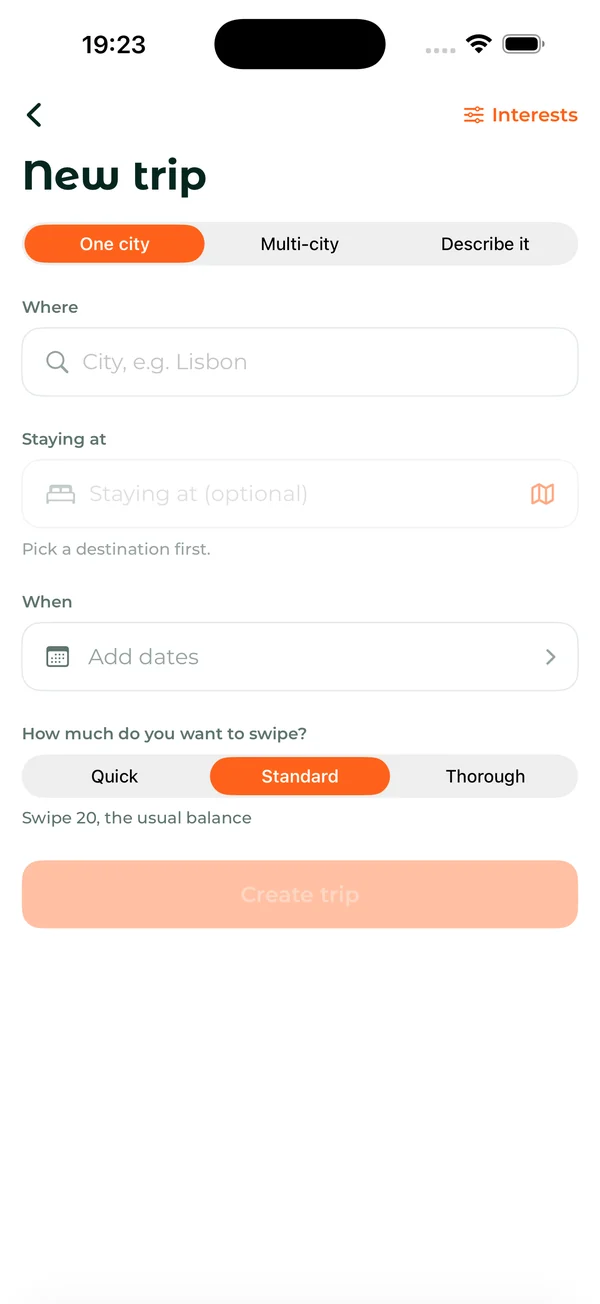
Create the trip, share the link, and everyone swipes through real places in the city: right to like, up for a must-see, left to skip. The plan is built from the votes, with days grouped by area and each day in walking order, around opening hours, with meals in between.

Can't choose between two cities close together? Do both. With Premium, SwipeSights plans multi-city trips too.
Mistakes to avoid
- Deciding in the group chat. The loudest or fastest person wins, and the quiet ones go along with it.
- Too many options. Ten destinations is a research project, not a vote.
- Talking money in public. People agree to budgets they cannot afford rather than say so.
- Booking before people confirm. Book for the people who said yes, not the ones who said maybe.
- One person doing all the research. Each person checks the place they suggested.
Frequently asked questions
How do you choose a destination for a group trip?
Agree on the limits first (the dates, a private budget ceiling, how far people will travel and the kind of trip), make a short list of three to five places that fit, vote once in private, and set a deadline with a tie-break agreed in advance.
What is the fairest way to vote on a destination?
Approval voting, where everyone ticks every place they would happily go to and the most ticks wins, finds the option nobody minds. Points also work well: 3 for a first choice, 2 for a second and 1 for a third, so strong second choices still count.
What if the group cannot agree?
Use the tie-break you agreed on before the vote: the cheaper option, the shorter journey, or the organizer chooses between the top two. If the two favorites are close together, consider doing both.
How many destinations should we vote on?
Three to five. Fewer feels decided in advance, and more turns the vote into a research project.
Can an app help a group decide where to go?
Poll apps such as WePlanify, or Let's Jetty's trip surveys, help choose the destination. Once the city is chosen, SwipeSights lets everyone vote by swiping on what to do there and builds the day-by-day plan from the votes.
Decided where? Now decide what to do
Create the trip, share the link, and let everyone swipe.


SwipeSights: plan the whole group trip together.